
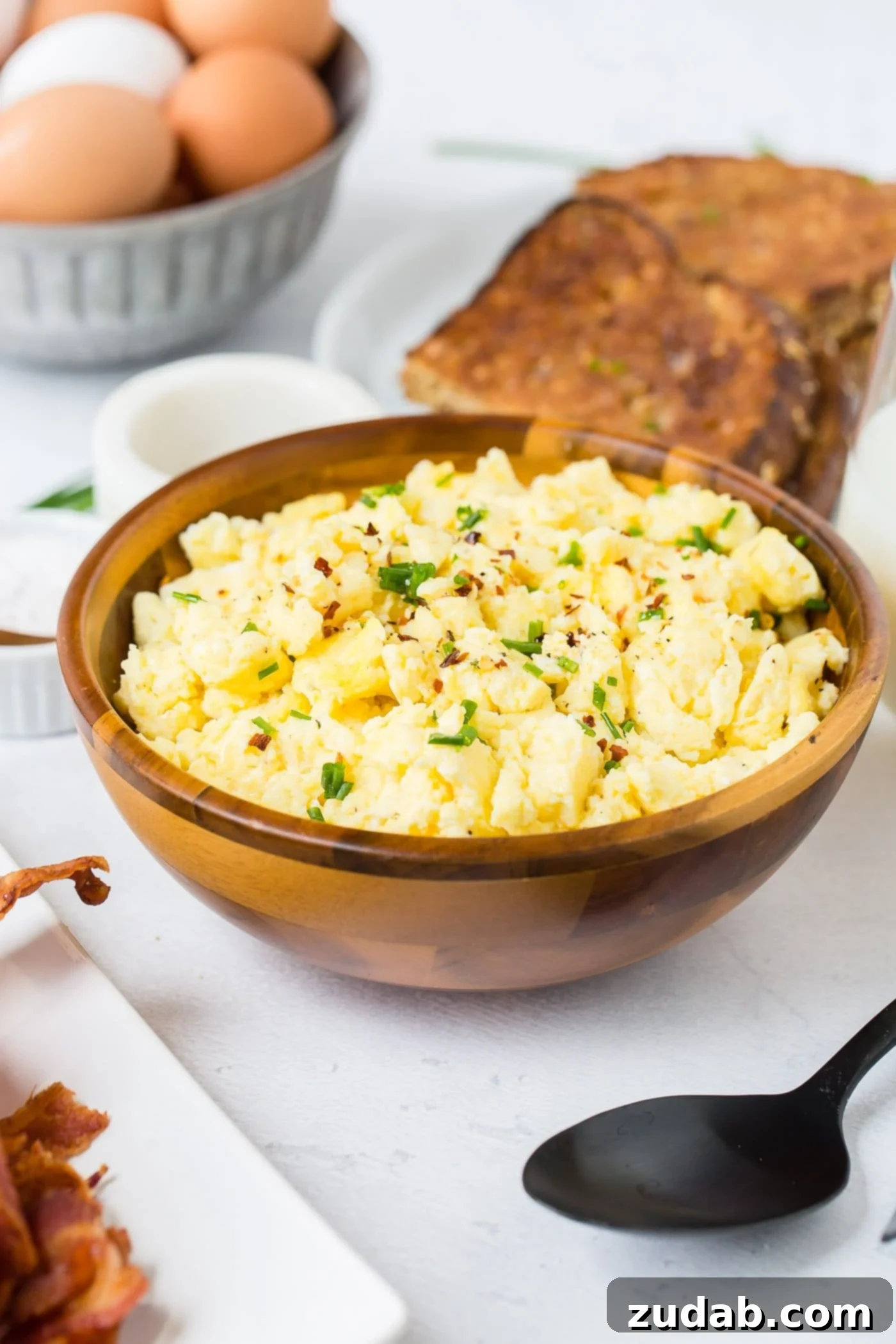
The Ultimate Guide to Making Perfect Fluffy Scrambled Eggs Every Time
Scrambled eggs are a beloved breakfast classic, cherished for their versatility and comforting taste. They seem deceptively simple, yet many home cooks struggle to achieve that ideal fluffy, moist, and flavorful consistency. Have you ever ended up with rubbery, dry, or undercooked eggs, leaving you frustrated at a seemingly straightforward recipe? You’re not alone! Mastering the art of perfect scrambled eggs is a culinary skill that transforms an ordinary breakfast into an extraordinary experience. This comprehensive guide will equip you with all the essential tips, tricks, and a foolproof recipe to ensure your scrambled eggs are consistently delectable, becoming a highlight of your morning routine.
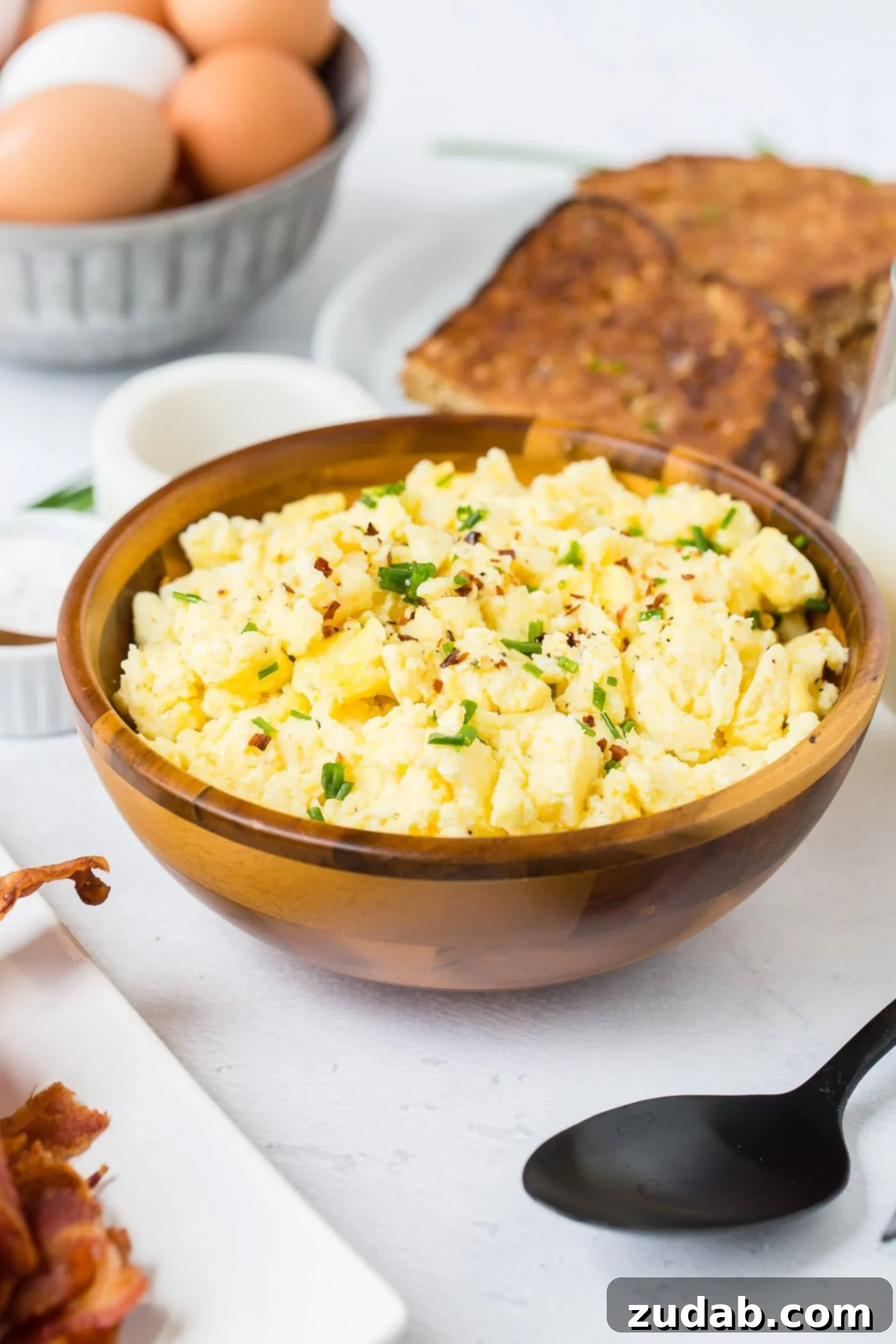
Essential Tips for Achieving the Best Scrambled Eggs
Creating truly exceptional scrambled eggs involves more than just cracking them into a pan. A few key techniques can make all the difference, transforming your eggs from good to gourmet. Pay attention to these foundational steps for scrambled egg success.
Choosing the Right Tools for Success
- Use a Fork for Beating: While a whisk might seem like the obvious choice, a simple kitchen fork is often the best tool for beating eggs for scrambling. Its design allows for effective breaking up of the egg whites and yolks without over-incorporating air. Overbeating can sometimes lead to tougher eggs, but a fork provides just enough agitation to combine the components and introduce a slight amount of air, contributing to a lighter texture. Aim for a mixture where the yolks and whites are fully combined, but don’t feel the need to create a frothy, airy mixture.
The Secret to Flavor and Fluffiness
- Add Milk and Spices Before Beating: This crucial step ensures that your eggs are not only fluffy but also evenly seasoned and moist. A small amount of milk (or cream, water, or even a splash of half-and-half) helps create steam as the eggs cook, which expands the egg proteins, resulting in a wonderfully fluffy texture. Furthermore, incorporating salt and pepper at this stage allows the seasonings to dissolve and disperse throughout the entire egg mixture. This guarantees every bite is perfectly seasoned, rather than having pockets of bland or overly salty egg. You can also experiment with other spices like a pinch of garlic powder or paprika for an extra flavor dimension.
Mastering Your Cookware
- Utilize a High-Quality Non-Stick Skillet: Eggs are notorious for sticking to pans, which can quickly ruin the texture and presentation of your scrambled eggs. Investing in a good non-stick skillet is paramount. Even with a non-stick surface, it’s still important to add a pat of butter or a drizzle of oil to the pan. This acts as an additional barrier and contributes to a rich flavor. Pairing your non-stick pan with a heat-resistant rubber spatula is equally important. A rubber spatula allows you to gently scrape the bottom and sides of the pan, ensuring all the egg cooks evenly and preventing sticking without scratching the delicate non-stick coating.
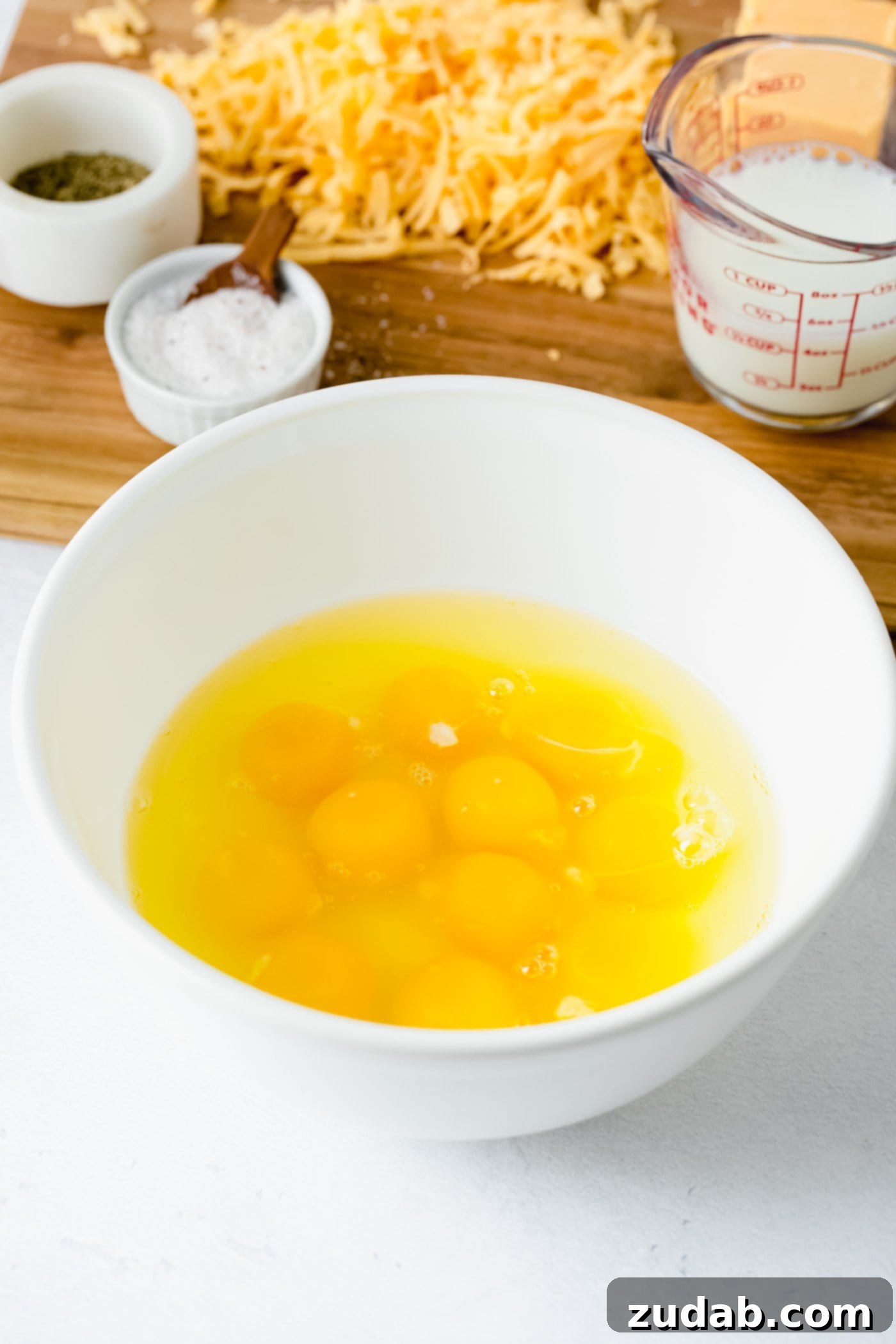
Gather Your Simple Ingredients for Scrambled Egg Perfection
One of the many joys of this classic breakfast staple is its simplicity. You don’t need a pantry full of exotic items to create incredibly delicious scrambled eggs. The magic truly lies in the freshness of your ingredients and the technique applied.
For this recipe, you will need:
- Large Eggs: The fresher, the better for optimal flavor and texture.
- Milk: Whole milk works wonderfully for richness, but any milk, half-and-half, or cream will add moisture and contribute to fluffiness. Some even use a splash of water for a lighter scramble.
- Shredded Cheddar Cheese: Adds a delightful creaminess and savory flavor. Feel free to substitute with other cheeses like Gruyère, Monterey Jack, or a sharp provolone.
- Salt: Essential for seasoning.
- Pepper: Freshly ground black pepper is always recommended for the best flavor.
- Butter: For cooking, adding a rich, golden flavor. You can substitute with a healthy oil or non-stick spray for a lighter option.
Pro Tip: When cooking for a larger crowd, maintain the perfect balance by using a ratio of 2 tablespoons of milk for every 3 large eggs. This ensures consistent fluffiness and flavor, regardless of the batch size.
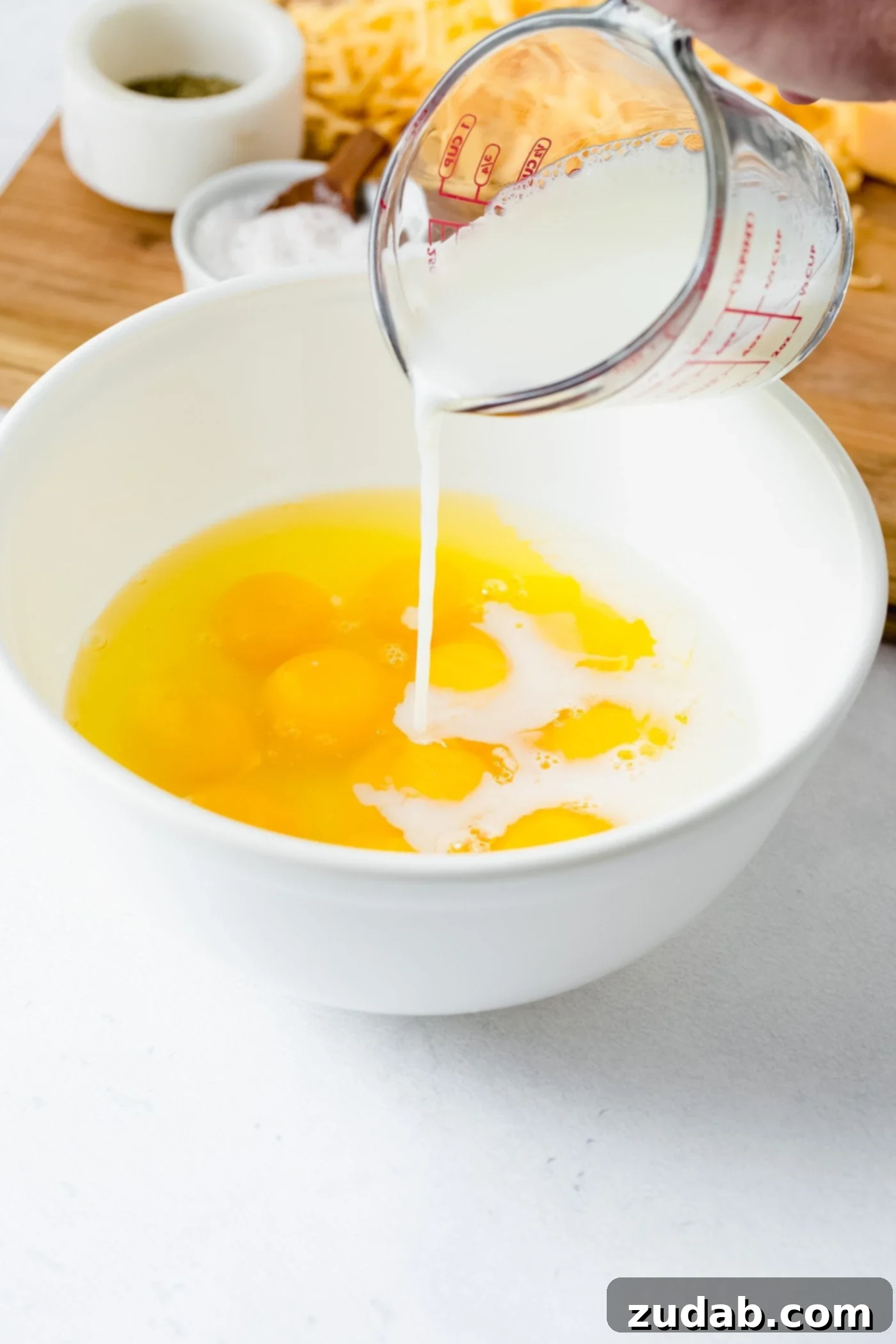
Step-by-Step: Crafting Your Fluffy Scrambled Eggs
Follow these precise instructions to achieve light, fluffy, and perfectly cooked scrambled eggs every single time. The key is in the timing and gentle handling.
- Prepare the Egg Mixture: In a large mixing bowl, combine the large eggs, milk, shredded cheddar cheese, salt, and pepper. Using a fork, whisk these ingredients together thoroughly until the yolks and whites are fully incorporated and the mixture is a uniform pale yellow. Ensure there are no streaks of unmixed white or yolk.
- Optional Resting Period: If time allows, let the egg mixture sit in the refrigerator for about 5-10 minutes while you prepare other breakfast items. The slight rest allows the salt to fully dissolve and begin to interact with the egg proteins, which can help trap moisture and result in a more tender scramble. If you’re short on time, don’t worry – you can proceed directly to cooking, and your eggs will still be delicious.
- Heat the Pan Correctly: Place a large, high-sided nonstick pan over medium-high heat. Allow the pan to heat for a minute or two. A properly preheated pan is crucial for achieving that desirable rapid cooking and fluffy texture, preventing the eggs from sticking.
- Add Fat and Pour Eggs: Add 1-2 tablespoons of butter to the hot pan. Swirl the butter until it’s completely melted and just beginning to foam or sizzle. Once the butter is ready, quickly pour the whisked egg mixture into the pan.
- Cook and Stir Gently: Allow the eggs to sit undisturbed for a few seconds (about 10-15 seconds) to set slightly around the edges. Then, using your rubber spatula, begin stirring the eggs. Gently push the cooked egg from the edges towards the center, tilting the pan to allow uncooked egg to flow underneath. Continue this gentle folding and stirring motion, ensuring you scrape the bottom and sides of the pan to prevent sticking. Cook until the eggs are mostly set but still look moist and slightly glossy. They will continue to cook slightly from residual heat once removed from the pan.
- Serve Immediately: Remove the scrambled eggs from the heat immediately and transfer them to a warm plate. If desired, season with a little more salt and freshly ground pepper, or garnish with fresh herbs like chives or parsley. Serve and enjoy your perfectly fluffy scrambled eggs!
Note for Runny Scrambled Eggs: If you prefer a softer, more custardy texture for your scrambled eggs, use medium-low heat and a slower, more gentle stirring motion. This allows the eggs to cook more slowly and retain more moisture, resulting in a creamier, slightly runny consistency.
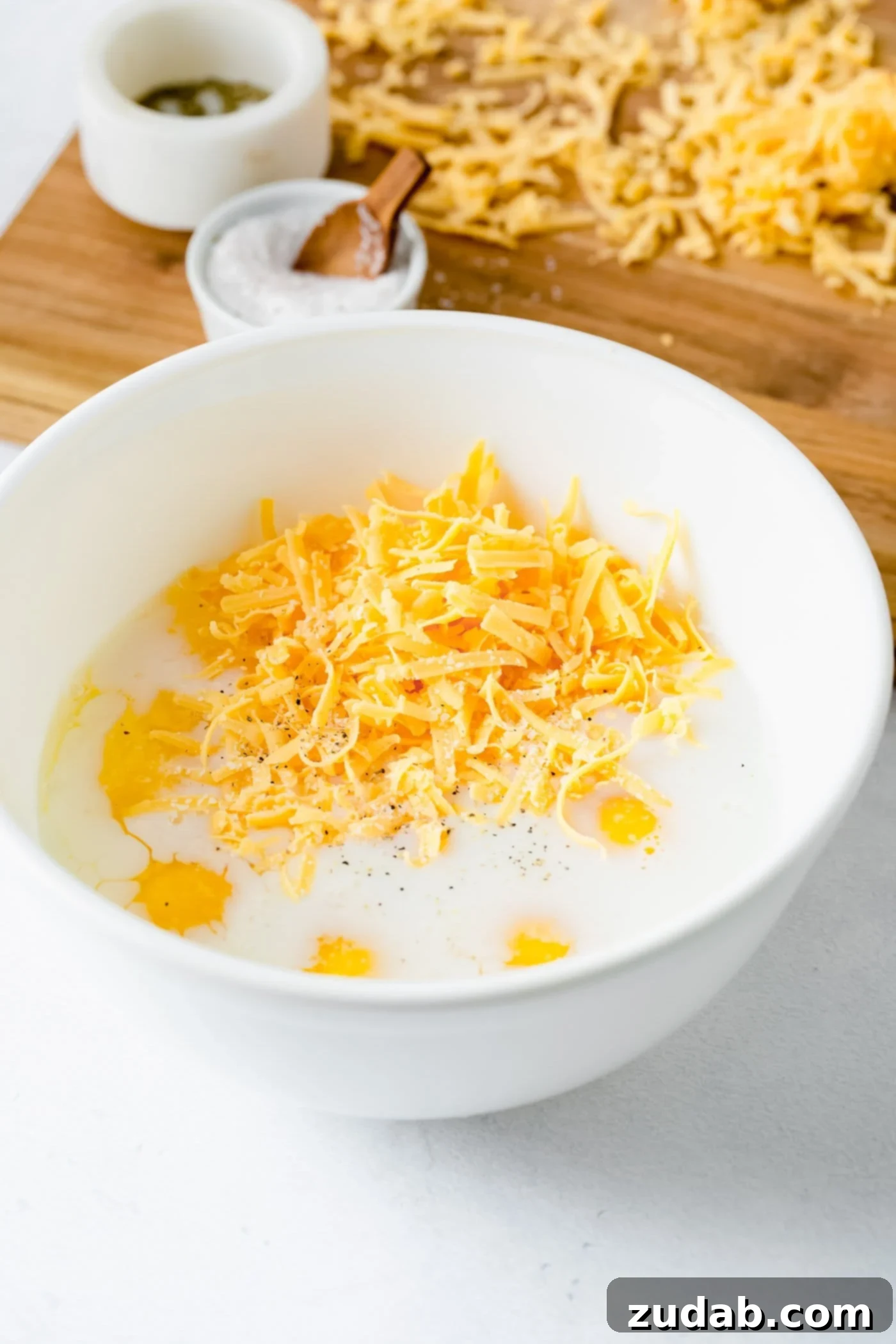
High Heat vs. Low Heat: The Scrambled Egg Debate
The debate over the ideal heat for scrambled eggs is a long-standing one in culinary circles, and the answer often depends on the desired outcome. For achieving the fluffy, curdy scrambled eggs that are widely popular, the best approach is to cook them over medium-high heat with constant, quick movement.
When you cook eggs over medium-high heat, the proteins set rapidly, creating distinct, soft curds and allowing steam to lift the eggs, making them light and airy. This method requires your full attention. For 2-3 eggs, this vigorous cooking process should take no more than 30-40 seconds. You need to continuously stir and fold the eggs from the moment they hit the pan until they are just set. The goal is to get them off the heat the moment they reach the perfect consistency, preventing overcooking.
On the other hand, the “low and slow” method, often associated with French-style scrambled eggs, yields a much creamier, more custardy result. If you must multitask or prefer a richer, more uniform texture, reduce the heat to low. With this method, you allow the eggs to cook slowly, stirring occasionally (every 30-60 seconds) until they reach your desired doneness. This process will naturally take longer, typically 8-10 minutes for a small batch, depending on the number of eggs. While it offers a different delightful texture, it won’t produce the distinct fluffy curds characteristic of the faster, higher-heat method.
Our recipe primarily focuses on the medium-high heat, quick-stir method to achieve that sought-after fluffy and tender scrambled egg texture. The rapid cooking minimizes the time the egg proteins spend over heat, reducing the chance of them toughening or becoming rubbery.
Serving Sizes: How Many Eggs Per Person?
When planning breakfast, a common question is how many eggs to prepare per person. A good rule of thumb is to plan on 2 large eggs per person. This amount typically provides a satisfying portion, whether served as a stand-alone breakfast or as a side dish to other elements. It strikes a perfect balance, ensuring everyone gets enough without being overly full or leaving too much on the plate.
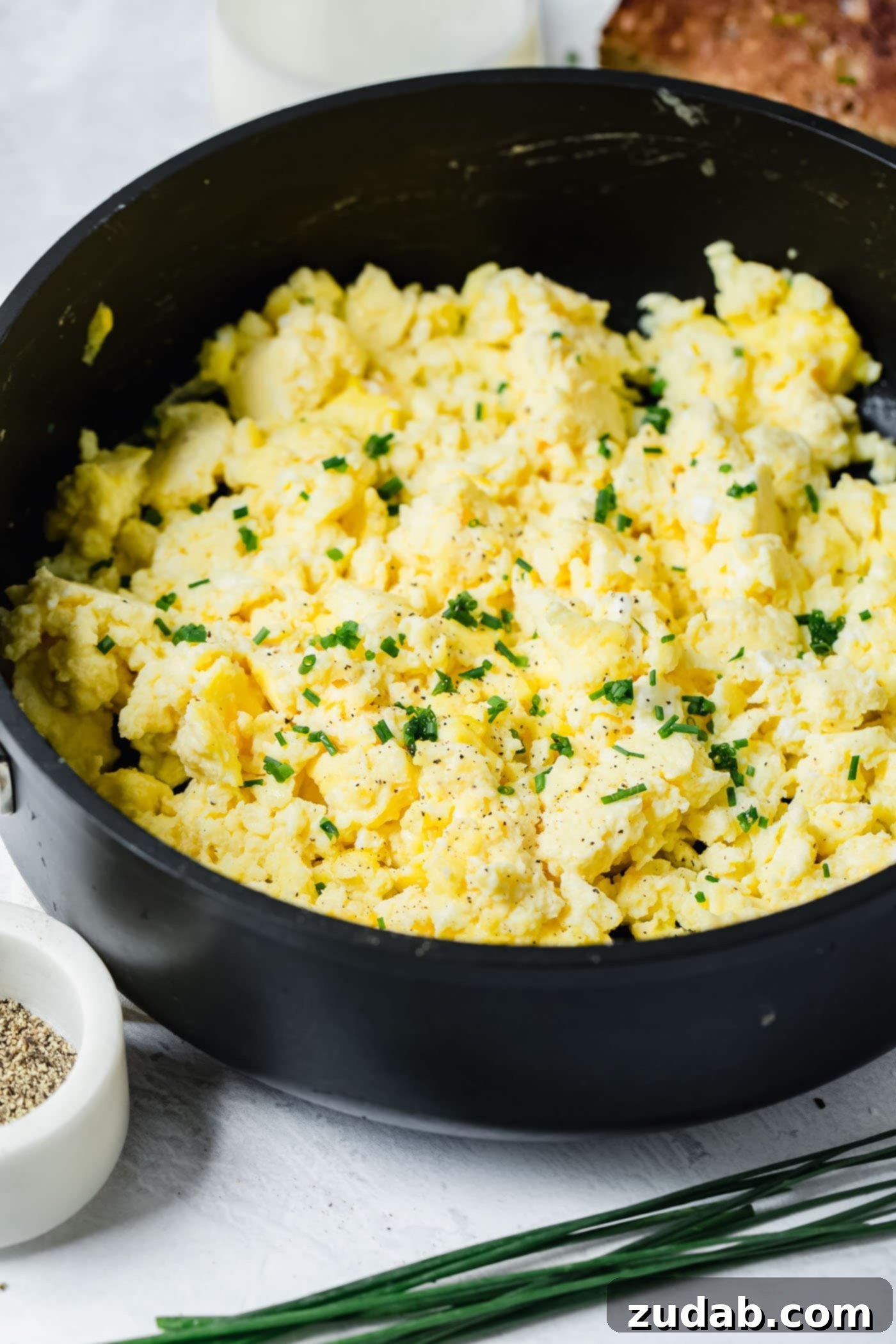
Storing and Reheating Scrambled Eggs
While scrambled eggs are undeniably best enjoyed fresh off the pan, sometimes you have leftovers or want to prepare them ahead of time. Proper storage and reheating techniques can help maintain their quality.
How Long Do Cooked Scrambled Eggs Last?
To keep scrambled eggs fresh, transfer them to an airtight container immediately after cooking and allow them to cool slightly before sealing. Store them in the refrigerator. Properly stored, cooked scrambled eggs will typically keep for up to 4 days. However, for optimal taste and texture, it’s always recommended to consume them within 1-2 days.
Reheating Scrambled Eggs Without Compromising Quality
Reheating scrambled eggs can be tricky, as they can easily become dry and rubbery. The microwave is a convenient option, but requires careful attention:
- Place your leftover scrambled eggs in a microwave-safe dish.
- Cover the dish loosely with plastic wrap or a microwave-safe lid, leaving a small vent for steam to escape. This helps retain moisture.
- Microwave on medium power for 15-20 second intervals.
- After each interval, stir the eggs gently. This distributes heat evenly and prevents hot spots.
- Continue heating and stirring in short bursts until the eggs are heated through to your desired temperature. Avoid overheating, as this is when they tend to become rubbery.
Alternatively, you can gently reheat scrambled eggs in a non-stick skillet over low heat, adding a tiny splash of milk or water and stirring frequently to reintroduce moisture. Another method is using a double boiler, which provides very gentle, indirect heat, ideal for delicate reheating.
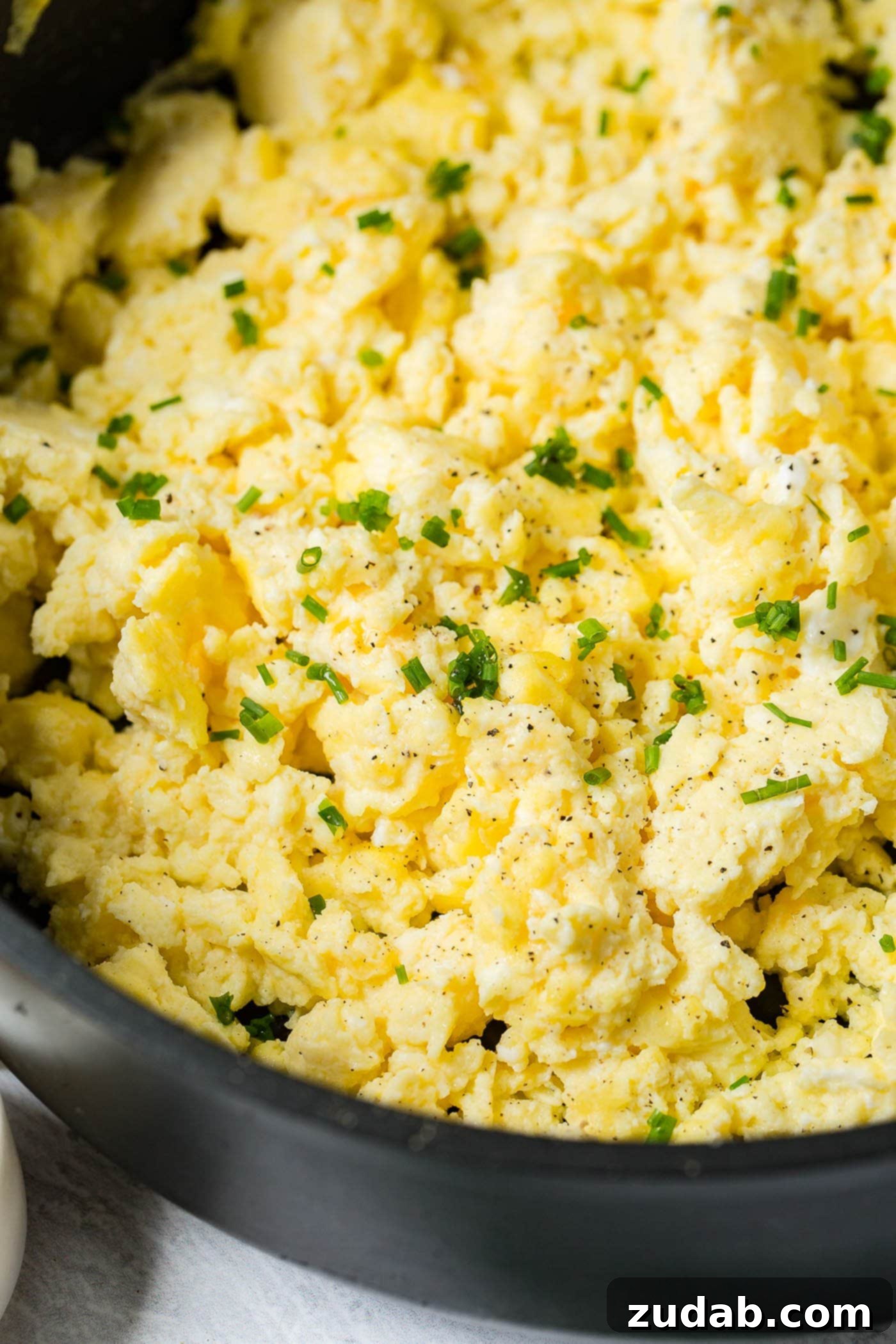
Troubleshooting: Why Are My Scrambled Eggs Rubbery?
The most common culprit behind rubbery, dry, or tough scrambled eggs is overcooking. Eggs are delicate, and their proteins denature and tighten quickly when exposed to heat for too long. This squeezes out moisture, resulting in that unpleasant rubbery texture.
To avoid rubbery eggs, remember these key points:
- Don’t Cook Too Long: Remove the eggs from the heat when they are just set but still visibly moist and glossy. They will continue to cook slightly from the residual heat in the pan.
- Control the Heat: For fluffy eggs, use medium-high heat and cook quickly. For creamy eggs, use low heat and cook slowly, but never leave them unattended.
- Continuous Movement: Gentle but consistent stirring prevents the eggs from setting too hard in one place and ensures even cooking.
- Use Enough Fat: Butter or oil not only prevents sticking but also helps insulate the eggs, contributing to a tender finish.
Scrambled eggs should be thoroughly cooked to eliminate any raw egg, but this doesn’t mean cooking them until they are completely dry. Aim for a delicate balance, and with practice, you’ll learn to recognize the perfect moment to take them off the heat.
Recommended Cookware for Egg Enthusiasts
A good nonstick skillet is truly a game-changer for making scrambled eggs. Here are a couple of highly-rated options that will serve you well:
- Steal of a Deal: T-Fal Nonstick Skillet – An excellent and affordable option for everyday use.
- Higher Quality and Much Longer Lasting: 2 piece Le Creuset Nonstick Set – A premium choice for those seeking durability and superior performance.
Explore More Delicious Egg & Breakfast Recipes
If you love eggs as much as we do, you’ll enjoy exploring these other fantastic recipes:
Our Favorite Egg Recipes
- Hard-Boiled Eggs – Learn the secret to perfectly cooked hard-boiled eggs every time.
- The BEST Deviled Eggs – A crowd-pleasing appetizer that’s always a hit.
- Scrambled Eggs Breakfast Burrito – Take your scrambled eggs on the go with this flavorful burrito.
- Eggs in a Nest – A fun and simple breakfast that looks impressive.
More Savory Breakfast Creations
- Maple Mustard Croissant Breakfast Sandwich – A gourmet twist on your morning meal.
- Cheesy Hashbrown Sausage Breakfast Casserole – Perfect for feeding a crowd or for meal prep.
- Cheesy Southern Grits – A comforting and rich side dish.
- Ham and Cheese Scones – Savory, flaky, and delicious.
- Avocado Toast 6 Ways – Get creative with this trendy breakfast staple.
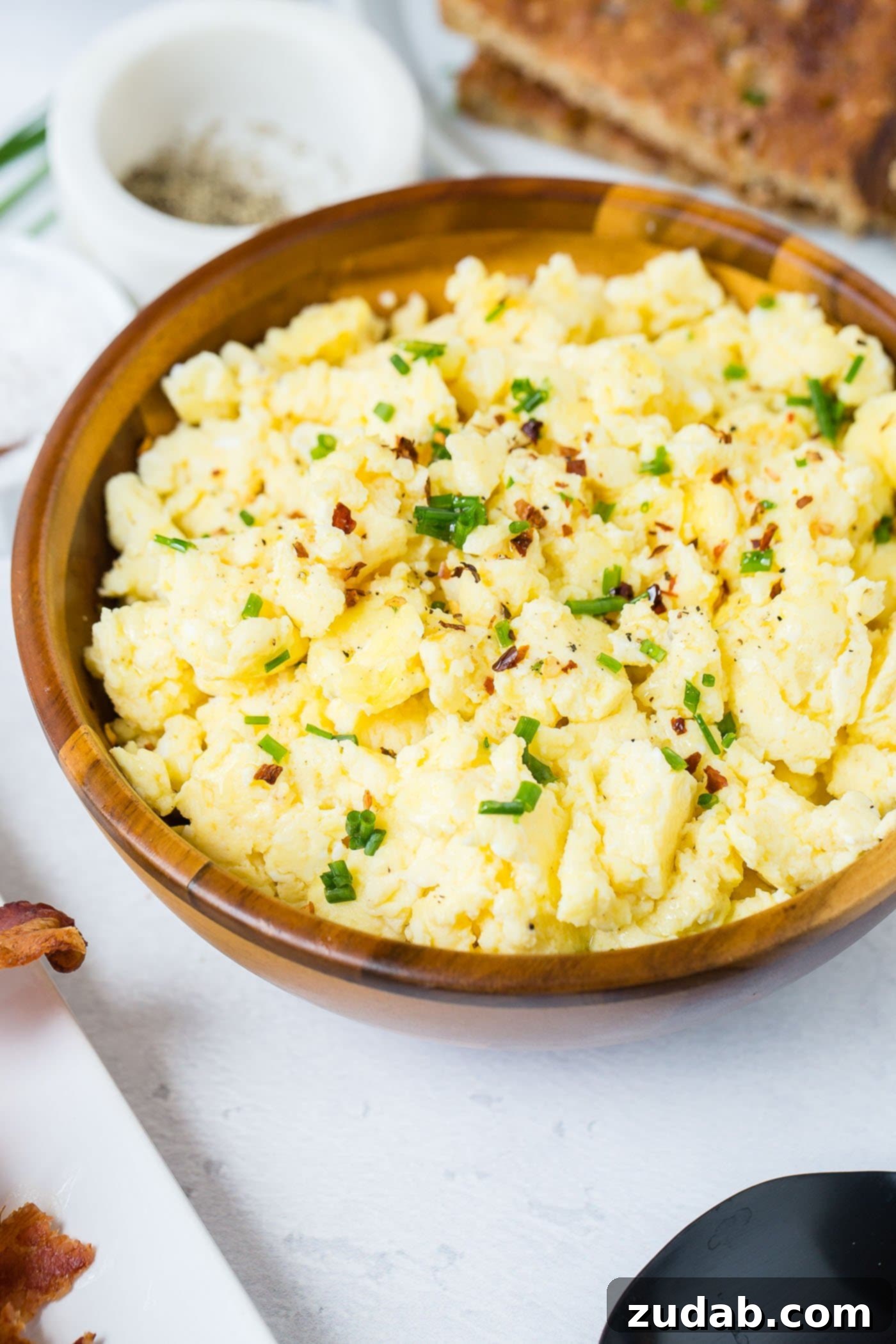
Perfect Pairings: What to Serve with Scrambled Eggs
A beautifully prepared batch of scrambled eggs can certainly stand alone as a delightful breakfast. However, they also serve as an incredibly versatile and satisfying component of a larger, more hearty breakfast or brunch. Here are some fantastic options to pair with your perfect scrambled eggs:
- Classic Toast or English Muffins: Simple and satisfying, perfect for soaking up any leftover egg goodness.
- Crispy Bacon or Sausage: The salty, savory crunch of breakfast meats is a natural complement.
- Fluffy Pancakes or French Toast: Create a sweet and savory spread with our buttermilk pancakes recipe, our BEST French toast recipe, or our copycat Waffle Love liege waffles recipe.
- Fresh Fruit or Berries: A light, refreshing counterpoint to the richness of the eggs.
- Roasted Potatoes or Hash Browns: Hearty and comforting, these add substance to your meal.
- Sliced Avocado: For healthy fats and a creamy texture.
- Salsa or Hot Sauce: A pop of vibrant flavor and heat for those who enjoy a kick.
- Fresh Herbs: A sprinkle of chopped chives, parsley, or dill adds freshness and visual appeal.
The Perfect Scrambled Eggs Recipe
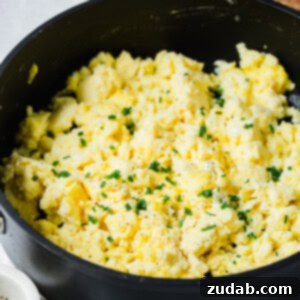
You might know how to scramble an egg, but now you’re equipped to make truly perfect, fluffy, and flavorful scrambled eggs every time! With these proven tips and tricks, your family will love them, and you’ll become a breakfast hero.
Prep Time: 5 minutes
Total Time: 10 minutes
Servings: 3
Ingredients
- 6 Large Eggs
- 4 Tablespoons Milk (If making for more people, the ratio is 2 tablespoons to every 3 eggs)
- 1/2 Cup Shredded Cheddar Cheese
- 1/2 teaspoon Salt
- 1 Dash Pepper
- 1-2 Tablespoons Butter (oil, or nonstick spray is fine for a healthier scramble)
Instructions
- In a large bowl, whisk together the eggs, milk, cheese, salt, and pepper until well combined.
- Allow the mixture to sit in the fridge for a few minutes while you prepare other breakfast items. This brief rest helps the salt trap moisture in the eggs, leading to a more tender scramble. If you’re short on time, you can skip this step.
- Heat a large, high-sided nonstick pan over medium-high heat.
- Add the butter to the pan. Once melted and just beginning to foam, quickly pour in the egg mixture.
- Allow the eggs to sit undisturbed for a few seconds (about 10-15 seconds) to set slightly. Then, using a rubber spatula, gently begin stirring and folding the eggs until they are mostly set but still moist and glossy.
- Remove the eggs to a plate and season with a little more salt and pepper if needed. Serve immediately.
Recipe Notes
- If you desire more runny scrambled eggs, use medium-low heat and a slower, more gentle stir throughout the cooking process.
- Leftover scrambled eggs should be stored in a covered container in the refrigerator and will keep for up to 4 days.
Nutrition Information (Approximate)
Serving: 2 eggs
Calories: 247kcal
Carbohydrates: 2g
Protein: 16g
Fat: 19g
Saturated Fat: 9g
Trans Fat: 1g
Cholesterol: 359mg
Sodium: 671mg
Potassium: 168mg
Fiber: 1g
Sugar: 1g
Vitamin A: 813IU
Calcium: 209mg
Iron: 2mg
Nutrition information is automatically calculated and should only be used as an approximation.
We hope these detailed tips and the easy-to-follow recipe have empowered you to create truly perfect scrambled eggs. With a little practice, you’ll consistently achieve that coveted fluffy texture and rich flavor. Don’t forget to customize with your favorite additions and toppings to make them uniquely yours!
REMEMBER TO SUBSCRIBE TO our FREE Oh Sweet Basil NEWSLETTER AND RECEIVE EASY RECIPES DELIVERED INTO YOUR INBOX EVERY DAY!
When you try a recipe, please use the hashtag #ohsweetbasil on INSTAGRAM for a chance to be featured in our stories! FOLLOW OH, SWEET BASIL ON FACEBOOK | INSTAGRAM | PINTEREST | TWITTER FOR ALL OF OUR LATEST CONTENT, RECIPES AND STORIES.