
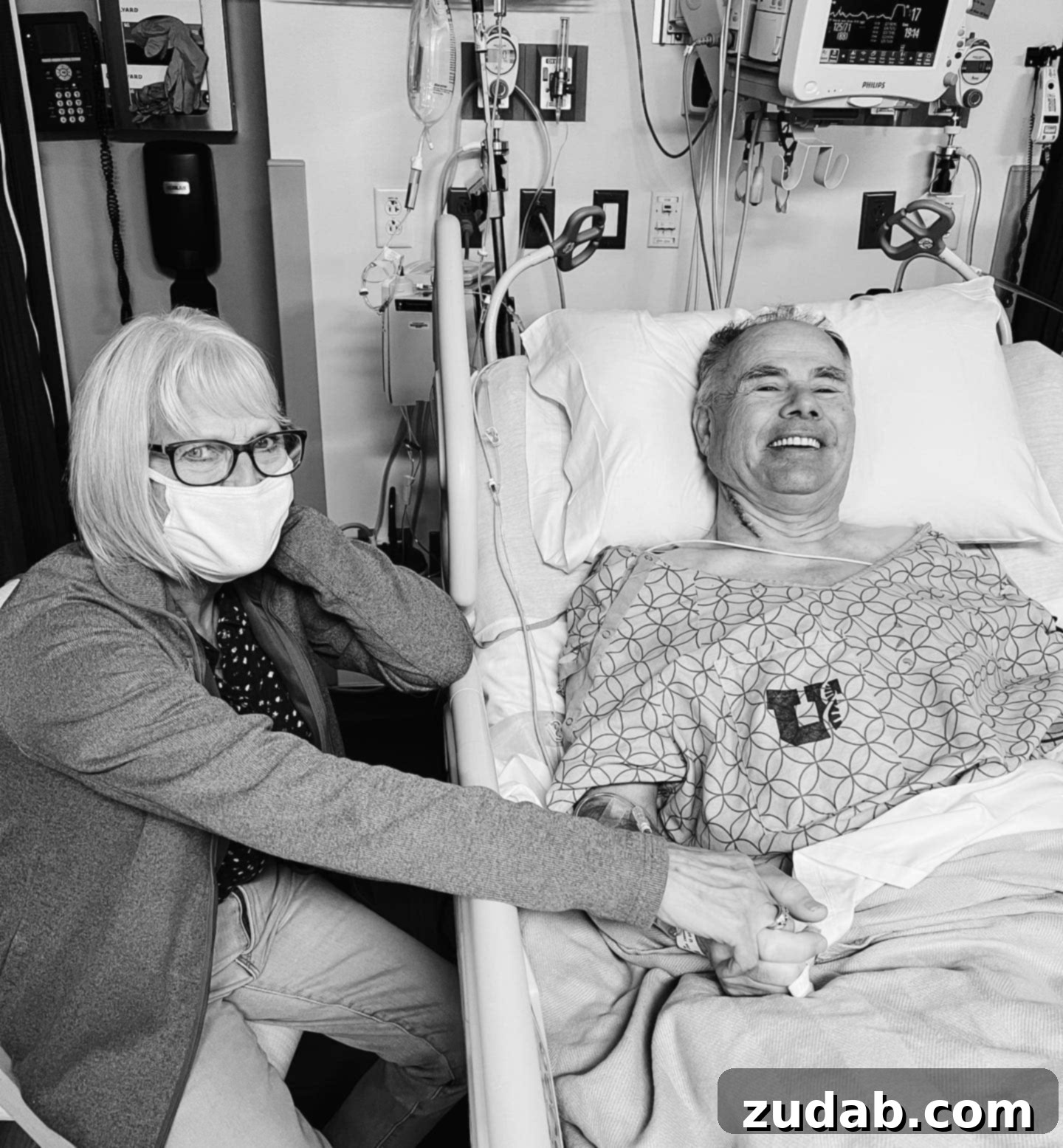
The thin, yellow sticky note felt surprisingly heavy in my hand as I slowly peeled it from the windshield. Each word printed on its surface seemed to reverberate through my chest, quickening my heartbeat, making my head pound. A wave of indignation mixed with profound exhaustion washed over me. Quickly, I crumpled it and shoved it deep into my pocket, casting a swift glance at my mother. Thankfully, she hadn’t noticed the small, accusatory note that had just pierced the fragile bubble of our shared exhaustion.
We were utterly spent, physically and emotionally drained. The day had been an arduous marathon, stretching our spirits to their absolute limits. As we finally prepared to exit the hospital parking garage, our deepest desire was to leave all the worry and fear behind, symbolically driving into a new horizon of hope and faith. We desperately needed to gather every last shred of our dwindling energy, knowing that the coming week would demand even more from us as we supported Dad on his recovery journey.
The car’s interior was heavy with unspoken anxieties and a quiet, profound relief. The hum of the engine was a welcome sound, a gentle promise of movement away from the sterile confines that had held us captive for what felt like an eternity. But the sting of that small, yellow note remained, an unwelcome reminder that the world outside had continued its indifferent spin, oblivious to the silent battles fought within.
The Unseen Battle: What Others Couldn’t Know
It was well past 7 PM, the day having long bled into night. We had arrived at the hospital just before 7 AM, almost exactly twelve hours earlier. The individual who had penned that curt note about our parking did not, could not, know the depth of our ordeal, the harrowing reality we had navigated throughout that seemingly endless day.
They didn’t know that only a few days prior, a routine check-up had unearthed a terrifying discovery: an almost totally blocked carotid artery in my father. The news had come as a shock, a sudden, brutal reminder of life’s fragility. There had been no time to process, only to act. The surgeon had scheduled an immediate, life-saving operation, recognizing the critical urgency of the situation. This wasn’t a planned procedure; it was an emergency, an unexpected plunge into the unknown.
They didn’t know we had spent countless hours in the cold, antiseptic waiting room, fasting and praying with fervent desperation. What was initially described as a “shorter surgery” had stretched into many agonizing hours, then eventually consumed the entire day. Each minute that ticked by felt like an eternity, amplifying our fears, testing our resolve. The silence of the waiting room was punctuated only by our whispered prayers and the rhythmic thumping of our anxious hearts. We clung to each other, a silent pact of solidarity against the terrifying uncertainty that enveloped us.
They didn’t sit with us when the surgeon finally emerged, his face etched with a grave seriousness, his hands unconsciously wringing. His words, delivered with a solemn tone, echoed in the quiet space: “It was much worse than I had expected.” Those words had sent a chill down our spines, confirming our darkest fears while simultaneously bringing a wave of relief that the danger had been confronted. The complexity of the operation, the unforeseen complications, had turned a medical procedure into a profound test of faith and endurance.
They didn’t know we had just confronted the stark reality that, at any given moment, a seemingly innocuous step off a curb, a sudden turn of the head, could have irrevocably altered our lives. A silent, hidden threat had been lurking within my father, a ticking time bomb capable of taking a beloved husband, a cherished father, and a doting grandfather from us in an instant. The magnitude of that near-miss, the understanding of how close we had come to an irreparable loss, weighed heavily on our minds and hearts.
They didn’t know that amidst our profound exhaustion, there was also an overwhelming sense of relief, a deep gratitude for having witnessed a miracle of medical discovery and successful removal. The surgery, despite its difficulties, had been a success, averting a catastrophic stroke. Yet, this relief was intricately woven with the lingering exhaustion and the weight of the day’s emotional toll. We were celebrating a victory, but we were also carrying the raw, visceral experience of battle. Our minds were not on parking lines; they were on the thin line between life and loss, a line that had been precariously balanced just hours before.
All they saw, apparently, was that the left side of our car had too much space between the parking lines, while the right side was sitting too close to the yellow divider. And for them, in their limited perspective, that was enough to warrant a written critique. They saw a minor infraction, not the culmination of a family’s twelve-hour vigil against an unforeseen medical crisis.
Points of Intersection: Understanding Human Connection
Life, in its intricate tapestry, is often like a vast world map, and each of us represents a distinct line, charting our unique course. Inevitably, these lines will intersect, creating what mathematicians refer to as “the point of intersection.” These moments of convergence are daily occurrences, often fleeting and unnoticed, yet they hold profound potential. They are the instances when our individual paths briefly cross with others, and how we navigate these points defines much of our human experience.
The sticky note on our windshield served as a stark reminder of these intersections, particularly when viewed through the lens of limited information. What might appear as a total annoyance to one person – a poorly parked car, a momentary delay, a seemingly thoughtless act – could, in fact, be another’s desperate effort of survival, a byproduct of a much larger, unseen struggle. Lines cross lines constantly, yet we often do so without truly seeing where the other line is coming from, what trajectory it has taken, or what burdens it carries.
This incident, though initially painful, became a powerful lesson. The sticky note, initially crumpled and dismissed, held an enduring message. I hadn’t known that it had followed us during a recent move, tucked away within the pages of a book. But today, months later, as I lifted that very book, there it was – a vivid, yellow reminder. It wasn’t just a piece of paper; it was a potent symbol, a silent testament to a pivotal moment and the enduring wisdom it imparted.
This sticky reminder gently nudges my conscience, urging me to always strive to act in a way that, when my line intersects with another’s, they might feel gratitude, not irritation. It encourages me to pause, to consider the unseen narratives, to extend grace and understanding even when the immediate circumstances seem to warrant judgment. It’s a call to look beyond the surface, to recognize that every individual carries a complex world within them, filled with their own triumphs, struggles, and silent battles.
The person who left that note didn’t know our story that day. They couldn’t have. But the profound truth is, neither do we know theirs, or anyone else’s for that matter. We walk through life, constantly encountering others whose paths briefly merge with our own. These intersections are omnipresent: in the grocery store aisle, on the road during a commute, in a brief exchange with a service provider, or even in the virtual spaces we inhabit. Each interaction is a potential point of intersection, an opportunity to either clash or connect.
The question then becomes a daily contemplation, a guiding principle: Whose line shall intersect mine today? And more importantly, how will I choose to meet that intersection? Will I meet it with quick judgment, assuming I understand the full context? Or will I approach it with an open heart, a spirit of empathy, and a willingness to acknowledge the vast, unknown narratives that every human being carries? This simple sticky note, born out of a moment of frustration, transformed into a constant beacon, reminding me that the greatest impact we can have on others often comes not from what we know, but from how much we care to understand.
Embracing Empathy in a World of Intersecting Paths
In a world that often encourages swift judgments and quick reactions, the humble sticky note serves as a powerful testament to the necessity of empathy. It reminds us that behind every action, every perceived misstep, every moment of frustration, there often lies a deeper story, an unseen struggle that shapes an individual’s immediate reality. Our lives are a complex web of intersecting paths, and rarely do we have the full picture of another person’s journey when our lines briefly meet.
The incident at the hospital parking garage, initially a source of renewed stress, evolved into a profound lesson on perspective and human connection. It illuminated the critical difference between seeing an event and understanding its context. The hurried scrawl on that yellow paper highlighted how easily we can jump to conclusions, how effortlessly we can critique a superficial aspect without ever grasping the profound depths of what might be unfolding beneath the surface. True kindness, genuine compassion, often stems from the willingness to acknowledge this inherent lack of knowledge, to extend grace where judgment might instinctively arise.
The journey from that traumatic day to the rediscovery of the note months later cemented its message. It transformed from a symbol of a painful moment into a cherished reminder to live with greater awareness and intentionality. It’s an ongoing challenge, of course, to consistently operate from a place of empathy. Life is fast-paced, and it’s easy to fall back into patterns of reactive thinking. Yet, the memory of that day, and the persistent presence of that sticky note, continues to inspire a conscious effort to pause, to reflect, and to consider the unseen before passing judgment.
Ultimately, this experience became a cornerstone in understanding the power of human connection and the responsibility that comes with it. Every interaction is an opportunity to either widen the gap of misunderstanding or to build bridges of empathy. By choosing to approach each “point of intersection” with an open mind and a compassionate heart, we contribute to a more understanding and gracious world. The lesson from a simple note, left by an unknowing stranger, became a timeless guide: to live a life where our presence, when it intersects with others, is a source of understanding and support, rather than a cause for complaint. It’s a call to actively seek to make a positive impact, no matter how small, in the countless moments our paths inevitably cross.