
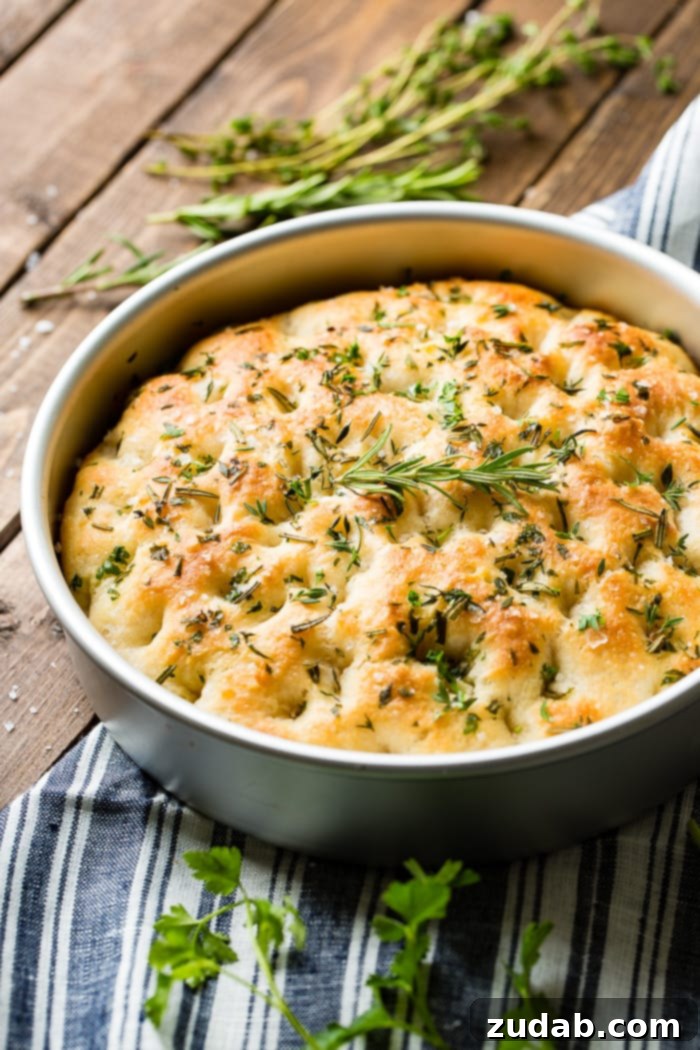
Welcome to the world of effortless baking with our recipe for Easy Herbed Focaccia Bread. This isn’t just any bread; it’s a culinary revelation that proves simplicity can lead to extraordinary flavor. Imagine a loaf that’s wonderfully light and airy, boasting a delightful olive oil richness and vibrant notes from fresh herbs. This Italian classic is more than just a side dish; it’s a versatile foundation for gourmet sandwiches, a perfect companion for your favorite soups, or simply a heavenly treat on its own. Get ready to impress your taste buds and elevate your home baking game with this remarkably simple yet utterly delicious focaccia.
Why You’ll Adore This Easy Herbed Focaccia Bread Recipe
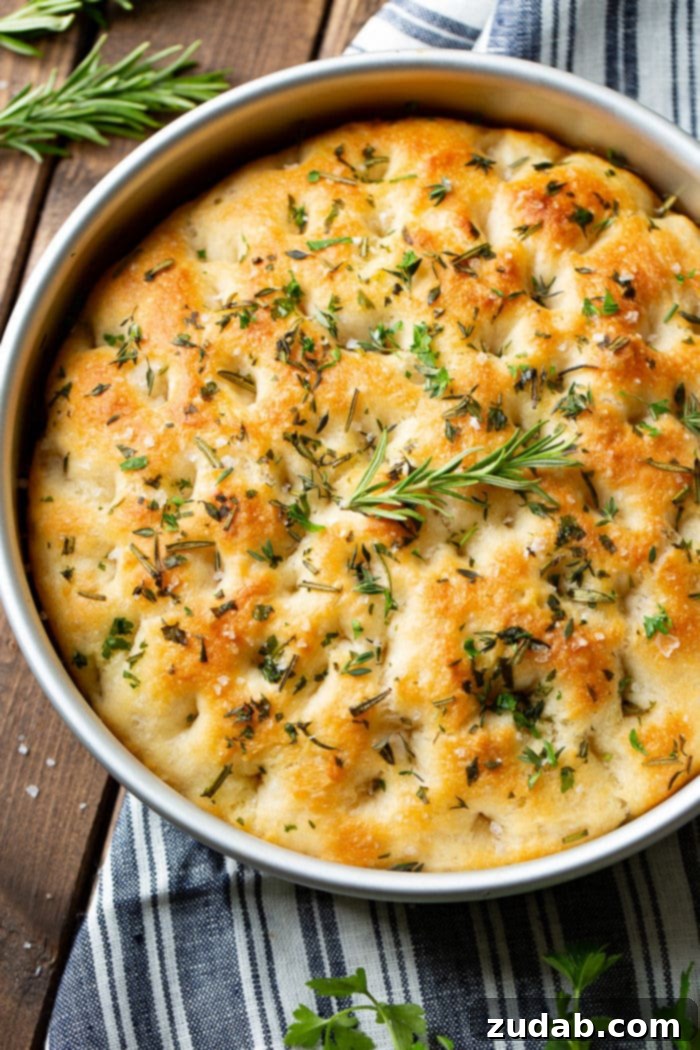
In our kitchen, bread isn’t just food; it’s pure joy. While mastering some bread varieties can be a lengthy process, this easy herbed focaccia bread recipe stands out as the perfect introduction to the rewarding world of yeast baking. Whether you’re a seasoned baker looking for a no-fuss recipe or a complete novice eager to try your hand at homemade bread, this focaccia is designed for success. Its forgiving nature makes it an ideal starting point for understanding how yeast works and how simple ingredients can transform into something truly spectacular.
Now, a quick heads-up: while the process itself is straightforward, this focaccia does require patience. The dough needs a minimum of 8 hours to rest in the refrigerator, and we often prefer to let it chill overnight. This extended cold fermentation is key to developing its complex flavor and signature airy texture. Think of it as a low-effort, high-reward endeavor – the prep is minimal, but the waiting period is essential. Trust us, the incredibly rich flavor and perfect texture you achieve will make every minute of anticipation absolutely worth it. You’ll be amazed at how a few basic steps can yield a loaf that looks and tastes like it came straight from an artisan bakery.
What Exactly is Focaccia Bread? A Dive into Italian Tradition
Focaccia (pronounced “fuh-KA-cha”) is a beloved flat oven-baked yeast bread with ancient Italian origins. Traditionally, it’s characterized by its dimpled surface, generous drizzle of olive oil, and aromatic toppings like fresh rosemary and coarse sea salt. However, focaccia is incredibly versatile, inviting countless adaptations to suit any palate. From savory variations incorporating olives, sun-dried tomatoes, or caramelized onions, to sweet versions topped with raisins, sugar, or honey – the possibilities are endless. Its airy interior and slightly crisp, savory crust make it a truly unique and satisfying bread experience that has captured hearts worldwide. This particular recipe focuses on a classic herbed rendition, showcasing the bread’s simple elegance and robust flavor profile.
Simple Ingredients for Extraordinary Flavor
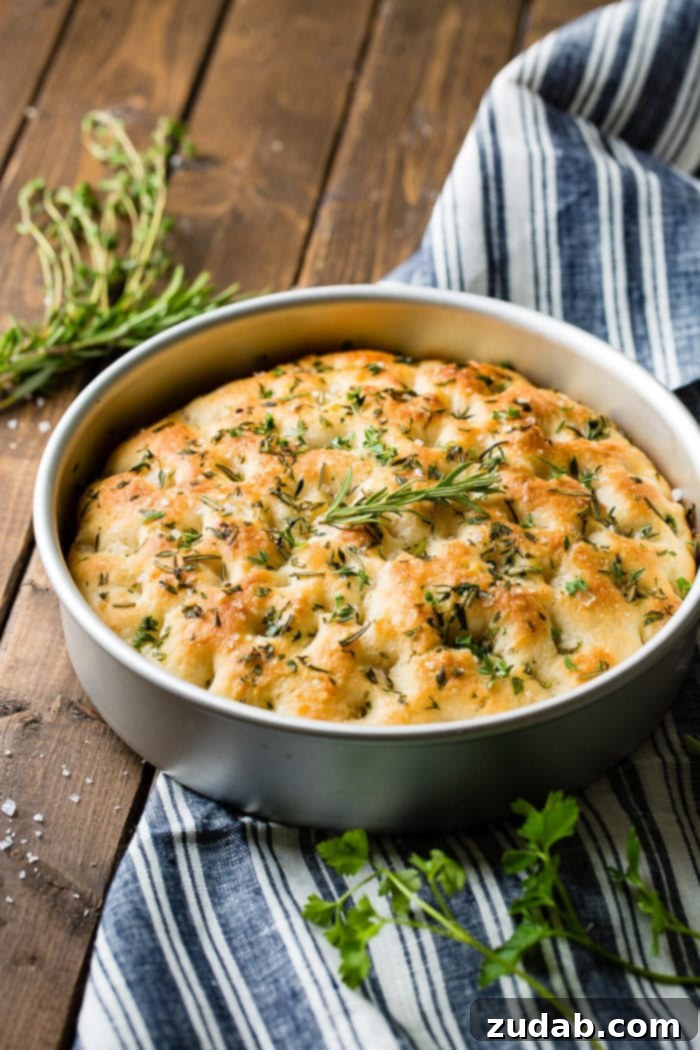
One of the beauties of this homemade focaccia recipe lies in its minimalist ingredient list. You don’t need exotic items or a trip to a specialty store. With just a few pantry staples, you can create a bread that tastes incredibly gourmet. The quality of each ingredient, particularly the olive oil and fresh herbs, plays a significant role in the final flavor, so choose the best you can find.
Here’s what you’ll need to make this outstanding herbed focaccia:
- Bread Flour: Essential for a high-gluten structure that gives focaccia its characteristic chew.
- Kosher Salt: Provides a clean, briny flavor that enhances the entire loaf.
- Warm Water: Crucial for activating the yeast.
- Instant Yeast: Our choice for consistent and reliable rising without extra steps.
- Granulated Sugar: A small amount helps activate the yeast and adds a touch of sweetness to balance the savory notes.
- Good Quality Olive Oil: The heart of focaccia’s flavor and texture. Don’t skimp here!
- Fresh Rosemary: A classic and aromatic herb that pairs perfectly with olive oil.
- Fresh Parsley: Adds a bright, fresh counterpoint to the richer flavors.
- Fresh Thyme: Offers subtle earthy notes that complement the other herbs.
- Maldon Sea Salt Flakes: For that irresistible crunchy, salty finish on top.
Can I Substitute Dried Herbs Instead of Fresh?
Absolutely! While fresh herbs deliver the most vibrant flavor and appealing aesthetics, dried herbs are a perfectly acceptable alternative. If using dried herbs, remember that their flavor is more concentrated. As a general rule, use half the amount of dried herbs compared to fresh. For instance, if the recipe calls for 1 teaspoon of fresh rosemary, use 1/2 teaspoon of dried rosemary. You can also opt for a convenient sprinkle of Italian seasoning for a pre-blended aromatic profile.
Step-by-Step Guide to Baking Perfect Focaccia
Crafting this homemade focaccia is a surprisingly straightforward process, despite the resting time involved. By following these simple steps, you’ll achieve a beautifully textured and incredibly flavorful loaf that will make you feel like a master baker. The key is to respect the resting periods, which allow the dough to develop its signature airy structure and deep flavor.
- Activate the Yeast: In a glass measuring cup or small bowl, combine the warm water, instant yeast, and granulated sugar. Give it a gentle stir and let it sit for about 5-10 minutes. You’ll know your yeast is active and healthy when the mixture becomes frothy and bubbly on the surface. If it doesn’t foam, your yeast might be old or the water temperature was off, and it’s best to start again.
- Prepare the Dough: In a large glass mixing bowl, whisk together the bread flour and kosher salt. Once your yeast mixture is frothy, pour it into the flour mixture. Using a sturdy wooden spoon, stir until all the flour is hydrated and the dough just comes together. It will be a shaggy, sticky dough – resist the urge to overmix or knead it vigorously. The minimal handling is part of what keeps focaccia tender.
- First Fermentation (Cold Proof): Cover the mixing bowl tightly with plastic wrap to prevent a skin from forming. Place it in the refrigerator for at least 8 hours, or ideally, overnight (up to 24 hours). This long, slow cold fermentation significantly enhances the flavor and develops the gluten structure, contributing to focaccia’s characteristic chewiness.
- Prepare for Second Rise: The next day, remove the bowl from the fridge. Drizzle a generous amount of olive oil into an 8-inch round cake pan (or a similar-sized baking dish). Gently transfer the chilled focaccia dough into the center of the oiled pan, tucking the edges underneath to form a neat circle.
- Second Rise (Room Temperature): Cover the pan loosely with plastic wrap or a clean kitchen towel. Let the dough rise at room temperature for approximately 2 hours. During this time, the dough will relax, spread, and increase in volume, filling out the pan.
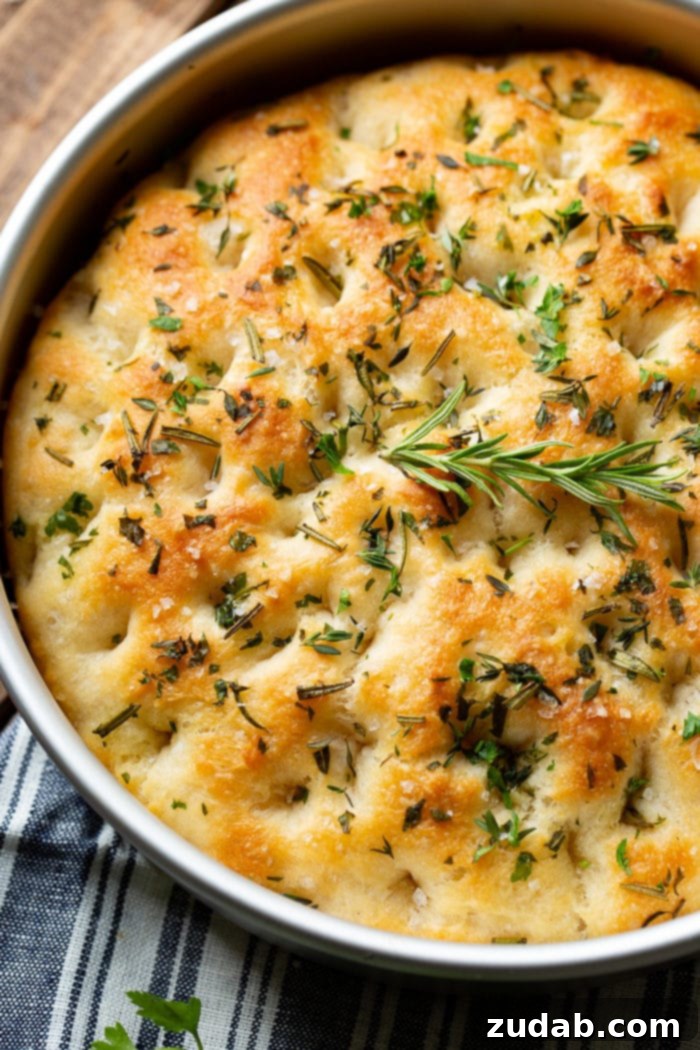
- Dimple and Season: Once the dough has risen beautifully and nearly fills the pan, it’s time for the signature focaccia dimples! Drizzle a bit more olive oil over the top of the dough. Using your oiled fingertips, gently but firmly press indentations all over the surface, going almost down to the bottom of the pan but without tearing the dough.
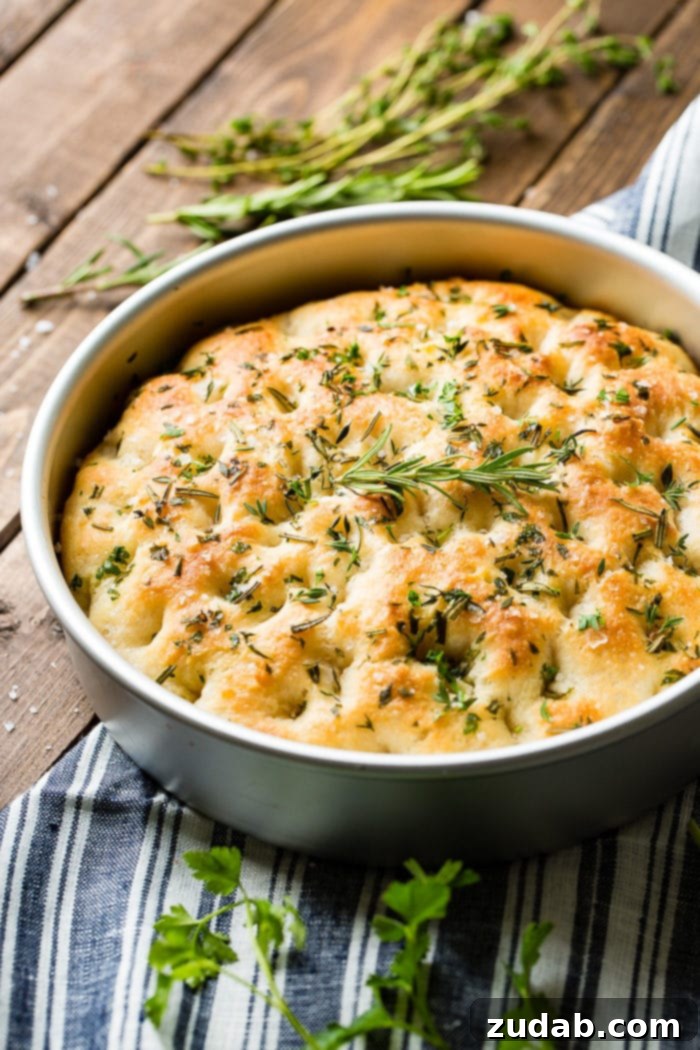
- Top and Bake: Generously sprinkle your chosen fresh herbs (rosemary, parsley, and thyme) and Maldon sea salt flakes over the dimpled surface. Transfer the pan to a preheated oven at 450°F (232°C). Immediately reduce the oven temperature to 425°F (218°C) and bake for 22-24 minutes, or until the focaccia is beautifully golden brown and sounds hollow when tapped on the bottom.
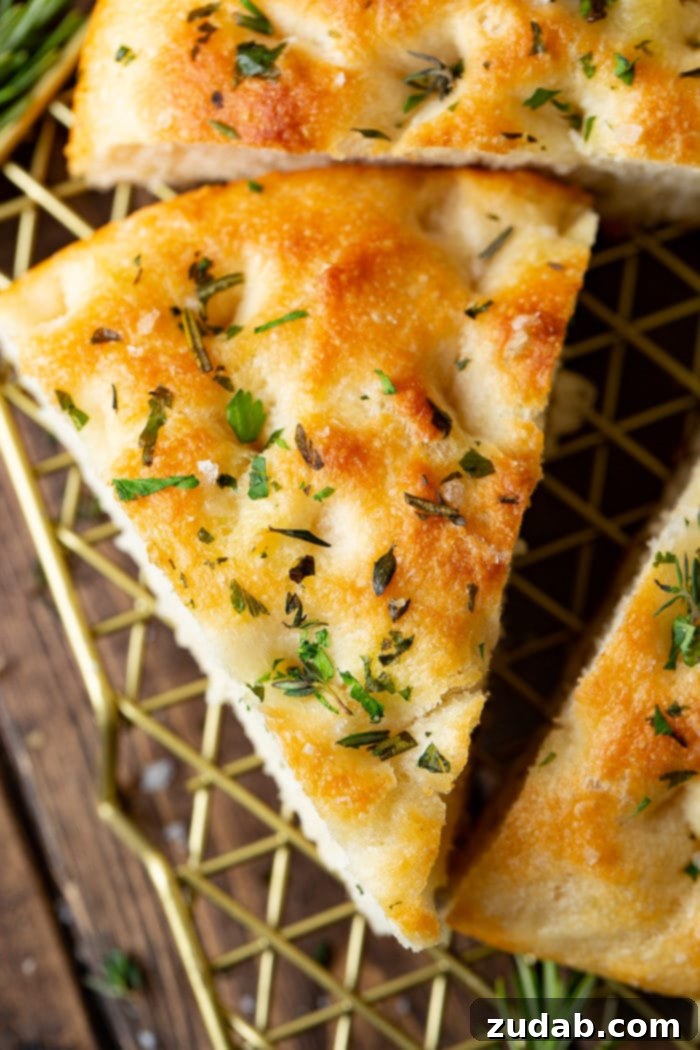
- Cool and Serve: Once baked, carefully remove the focaccia from the pan and transfer it to a wire rack to cool slightly. While delicious warm, letting it cool for about 15-20 minutes allows the flavors to meld and the texture to set perfectly. Slice and enjoy!
The Art of Dimpling Focaccia Dough: More Than Just Decoration
The distinctive dimples on focaccia are more than just a charming visual trademark; they serve a crucial purpose in achieving that perfect focaccia experience. While opinions on their exact function vary, the most widely accepted reason is that these indentations create little pockets. When you drizzle olive oil over the dimpled dough, these pockets capture and hold the oil, ensuring every bite is infused with its rich flavor and contributes to a wonderfully crispy, golden crust. Furthermore, dimpling helps prevent the focaccia from puffing up too much in the oven, maintaining its desired flatbread structure. It’s a simple technique that yields significant flavor and textural rewards.
Storing Your Homemade Focaccia for Lasting Freshness
When we bake this easy herbed focaccia, leftovers are a rare luxury – our family devours it! But for those fortunate moments when you have extra, or if you intentionally bake two loaves (a brilliant idea!), proper storage ensures its deliciousness lasts. Thanks to the generous amount of olive oil in the dough, focaccia retains its moisture and flavor remarkably well at room temperature. Simply wrap any cooled leftovers tightly in plastic wrap or place them in a zip-top bag. Stored this way, your focaccia will remain fresh and flavorful for 4-5 days on the countertop. It’s perfect for quick snacks, impromptu sandwiches, or a last-minute addition to any meal.
Freezing Focaccia: Enjoy Fresh Bread Anytime
Want to enjoy homemade focaccia whenever a craving strikes? This recipe is excellent for freezing! Freezing your baked focaccia is a fantastic way to extend its shelf life and have a delicious, ready-to-eat bread option on hand. To freeze, ensure the focaccia has completely cooled to room temperature. Wrap the entire loaf or individual slices tightly in plastic wrap, then place it in a freezer-safe zip-top bag or use a FoodSaver for optimal preservation. This method will keep your focaccia fresh in the freezer for up to 3 months.
When you’re ready to enjoy it, simply remove the focaccia from the freezer and let it thaw on the counter at room temperature for a few hours. For an extra touch of warmth and that freshly baked texture, you can also warm it gently in a preheated oven (around 350°F or 175°C) for 5-10 minutes. The aroma alone will transport you back to baking day! There’s nothing quite like warm, tender focaccia, especially when it feels like instant gratification.
Delicious Pairings: What to Serve with Homemade Focaccia
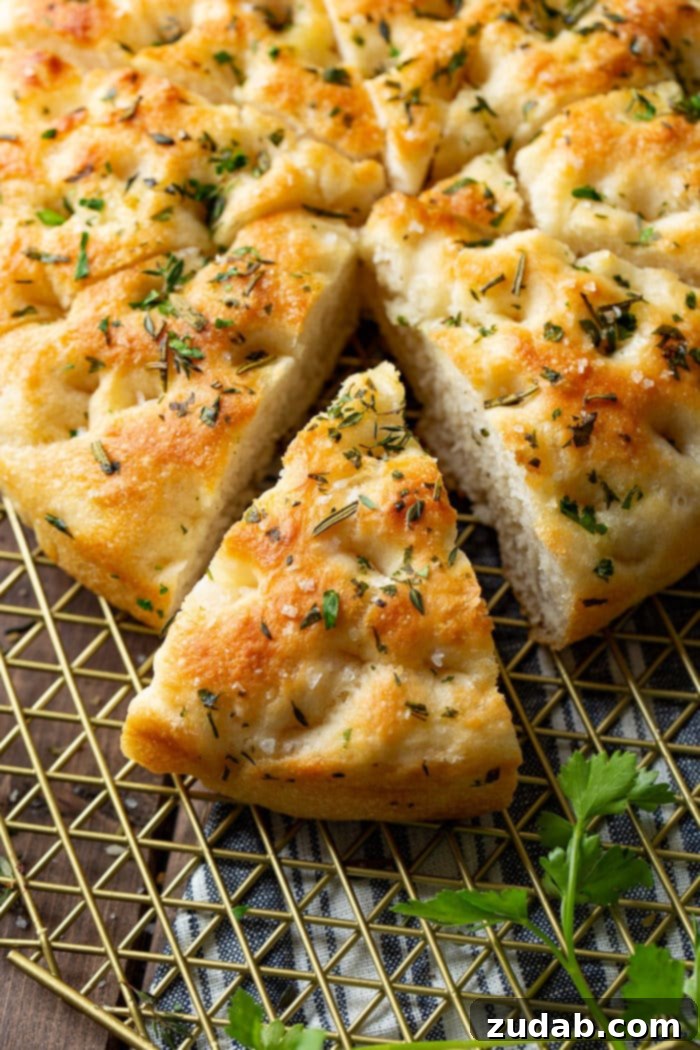
This herbed focaccia bread is so incredibly flavorful, it’s absolutely phenomenal on its own. The tender crumb, crisp crust, and aromatic herbs make it an irresistible snack. However, its robust structure and rich taste also make it a versatile companion for a wide array of dishes.
One of the most popular ways to enjoy focaccia is as a foundation for sandwiches. Its thick, sturdy slices are perfect for piling high with your favorite fillings, creating gourmet sandwiches that are far superior to those made with regular sandwich bread. Imagine it with fresh mozzarella, ripe tomatoes, basil, and a drizzle of balsamic glaze, or as the base for a hearty Italian deli sandwich.
But arguably, our favorite way to enjoy this bread is for dipping! Focaccia’s absorbent texture and olive oil base make it an ideal candidate for soaking up flavorful broths and sauces. It pairs exceptionally well with a variety of soups, stews, and even simple olive oil dips enhanced with balsamic vinegar. Here are a few of our favorite dip-worthy soups that truly shine alongside a slice of warm focaccia:
- Brown Butter Cauliflower Soup: A creamy, rich soup that complements the focaccia’s savory notes beautifully.
- Zupas Copycat Tomato Basil Orzo Soup: The bright, tangy flavors of this soup are a perfect match for the herbed bread.
- Creamy Tortellini Butternut Squash Soup: A comforting and sweet pairing that creates a delightful contrast.
- Irish Beef Stew: The hearty, robust flavors of a classic stew are wonderfully complemented by the focaccia’s texture and herbs.
- The Ultimate Cheeseburger Soup: A fun, savory pairing that makes for a satisfying meal.
- Homemade Cream of Tomato Soup: A timeless combination, where the focaccia acts as an elevated grilled cheese.
Creative Focaccia Flavor Variations
While our herbed focaccia recipe is a classic, one of the most exciting aspects of focaccia is its adaptability. It’s an open canvas for your culinary imagination! Don’t hesitate to experiment with different toppings and mix-ins to create your own signature loaf. Here are a few ideas to inspire your next focaccia adventure:
- Garlic & Parmesan: Before baking, press minced garlic cloves into the dimples and sprinkle generously with grated Parmesan cheese. A truly aromatic and savory delight.
- Sun-Dried Tomato & Olive: Chop sun-dried tomatoes and Kalamata olives, then scatter them over the dough before dimpling. The briny, sweet, and tangy notes are exquisite.
- Caramelized Onion & Thyme: Sauté onions until deeply caramelized, then spread them over the dough. Finish with fresh thyme for a sweet and savory masterpiece.
- Cherry Tomato & Basil: Halve small cherry tomatoes and gently press them into the dough’s surface. Add fresh basil leaves after baking for a burst of summer flavor.
- Pesto Swirl: After the second rise and dimpling, drizzle a good quality pesto over the dough and gently swirl it with a knife before baking.
- Spicy Calabrian Chili: For those who love a kick, finely chop Calabrian chilies (or red pepper flakes) and sprinkle them over the focaccia with a hint of red onion.
- Za’atar & Sesame: A Middle Eastern-inspired twist, sprinkle generously with Za’atar spice blend and sesame seeds for an earthy, nutty flavor.
Each variation brings a unique character to the focaccia, making it suitable for different meals and occasions. Feel free to mix and match or discover your own favorite combinations!
Expert Tips for Focaccia Baking Success
Achieving a consistently perfect focaccia is simple with a few key considerations. These tips, gleaned from years of bread-making experience, will help ensure your loaf is always light, airy, and bursting with flavor:
Use a Strong Flour: Focaccia thrives on high-gluten flour. Bread flour is ideal because its higher protein content develops a strong gluten network, which is essential for that signature chewy, airy texture. If bread flour isn’t available, all-purpose flour can work, but the final texture might be slightly less chewy and more tender.
Opt for a Glass Mixing Bowl: While not strictly mandatory, many bakers prefer using a glass bowl for mixing yeast doughs. Some believe metal can subtly affect the taste over long fermentation periods, though this is debated. Practically, a glass bowl allows you to easily observe the dough’s rise and texture without disturbing it, ensuring you hit the perfect consistency. Plus, it’s easy to clean!
Stir with a Wooden Spoon: When initially combining your ingredients, a wooden spoon is an excellent tool. Its sturdy nature allows for effective mixing of the sticky dough without incorporating too much air, and its non-reactive surface is gentle on the ingredients. In our experience, wooden spoons seem to incorporate ingredients more thoroughly and with less effort than flexible spatulas for this type of dough.
Ensure Proper Water Temperature: Yeast is a living organism, and its activity is highly dependent on temperature. Warm water (around 105-115°F or 40-46°C) is crucial for activating instant yeast without killing it. Water that’s too hot will kill the yeast, while water that’s too cold won’t activate it effectively, leading to a flat loaf. A kitchen thermometer can be very helpful here.
Don’t Overwork the Dough: Unlike some breads that require extensive kneading, focaccia benefits from minimal handling. The long cold fermentation process does most of the work in developing gluten. Over-kneading can result in a tough, dense focaccia, so resist the urge to fuss with it once the ingredients are just combined.
Invest in Good Quality Olive Oil: Since olive oil is a prominent flavor in focaccia, choosing a good quality extra virgin olive oil can make a significant difference. It contributes to the bread’s rich flavor, tender crumb, and crispy crust. Don’t be shy with the oil – focaccia loves it!
Don’t Forget the Salt Flakes: Finishing with Maldon sea salt flakes (or any coarse sea salt) is not just for appearance; it provides bursts of briny crunch that contrast beautifully with the soft interior and aromatic herbs. It’s the perfect final touch.
More Irresistible Side Dishes You’re Sure to Love:
- Brazilian Coconut Rice
- Macaroni Salad
- Wild Rice and Chickpeas
- Sweet Cornbread
- Instant Pot Refried Beans
- Cilantro Lime Cauliflower Rice
- Best Mashed Potatoes
- Easy 7-Up Biscuits
- Grilled Corn
- Best Baked Beans
- Southern Macaroni and Cheese
- Best Potato Rolls
- All our SIDE DISH recipes!
Discover More Easy Bread Recipes You’ll Love:
- Homemade Baguette
- Garlic Parmesan Focaccia
- Buttermilk Biscuits
- Skillet Cornbread
- Bread Blossom
- Easy Hoagie Rolls
- Feta Muffins
- Awesome Cheesy Herb Rolls
- Homemade Naan
- Best Potato Rolls
- Easy No-Knead Artisan Bread
- One Hour Rolls
- 7-Up Biscuits
- Whole Wheat Potato Rolls
- Sweet Potato Rolls
- Cheesy Ranch Rolls
- All our BREAD RECIPES here!
Rated 4.15 from 225 votes
The Easiest Herbed Focaccia Bread
Sweet Basil
10 minutes
22 minutes
10 hours
32 minutes
10

Ingredients
- 2 Cups Flour, Bread, (or all-purpose)
- 1 teaspoon Kosher Salt
- 1 Cup Water, Warm
- 1 1/8 teaspoon Instant Yeast
- 1/2 teaspoon Granulated Sugar
- Olive Oil
- 1 teaspoon Rosemary, Fresh, chopped (or 1/2 teaspoon dried)*
- 1 teaspoon Parsley, Fresh, chopped (or 1/2 teaspoon dried)*
- 1/2 teaspoon Thyme leaves, Fresh, chopped (or 1/4 teaspoon dried)*
- Maldon Flaked Sea Salt
Instructions
-
In a glass bowl, add the flour and salt. Mix to combine.2 Cups Flour, 1 teaspoon Kosher Salt
-
In a glass measuring cup, mix the warm water, yeast and sugar. Allow to sit for a minute (see note) and stir into the flour with a wooden spoon until the dough just comes together.1 Cup Water, 1 1/8 teaspoon Instant Yeast, 1/2 teaspoon Granulated Sugar
-
Cover the bowl with tight plastic wrap and place in the fridge for 8 hours or up to overnight.
-
Remove the bowl from the fridge.
-
In an 8-inch round cake pan, drizzle oil and place the dough in the center, tucking ends under.Olive Oil
-
Cover with plastic wrap and allow to rise 2 hours.
-
Heat the oven to 450ºF.
-
Once risen the dough should fill the pan. Drizzle with additional oil and use your fingers to press holes down to the bottom of the pan but not through the dough.Olive Oil
-
Sprinkle with herbs and salt.1 teaspoon Rosemary, 1 teaspoon Parsley, 1/2 teaspoon Thyme leaves, Maldon Flaked Sea Salt
-
Place in the oven and turn down to 425ºF and bake 22-24 minutes or until golden.
Recipe Notes
- *If you don’t have fresh herbs you can use the dry herbs as stated above or just sprinkle with Italian Seasoning.
- Activated yeast should bubble and foam up within a few minutes if your yeast is good.
Focaccia bread should be wrapped in plastic wrap and stored at room temperature for 2-3 days.
Nutrition
Calories: 96kcal,
Carbohydrates: 20g,
Protein: 3g,
Fat: 1g,
Saturated Fat: 1g,
Sodium: 235mg,
Potassium: 40mg,
Fiber: 1g,
Sugar: 1g,
Vitamin C: 1mg,
Calcium: 4mg,
Iron: 1mg
Nutrition information is automatically calculated, so should only be used as an approximation.
Like this? Leave a comment below!
REMEMBER TO SUBSCRIBE TO our FREE Oh Sweet Basil NEWSLETTER AND RECEIVE EASY RECIPES DELIVERED INTO YOUR INBOX EVERY DAY!
When you try a recipe, please use the hashtag #ohsweetbasil on INSTAGRAM for a chance to be featured in our stories! FOLLOW OH, SWEET BASIL ON FACEBOOK | INSTAGRAM | PINTEREST | TWITTER FOR ALL OF OUR LATEST CONTENT, RECIPES AND STORIES.