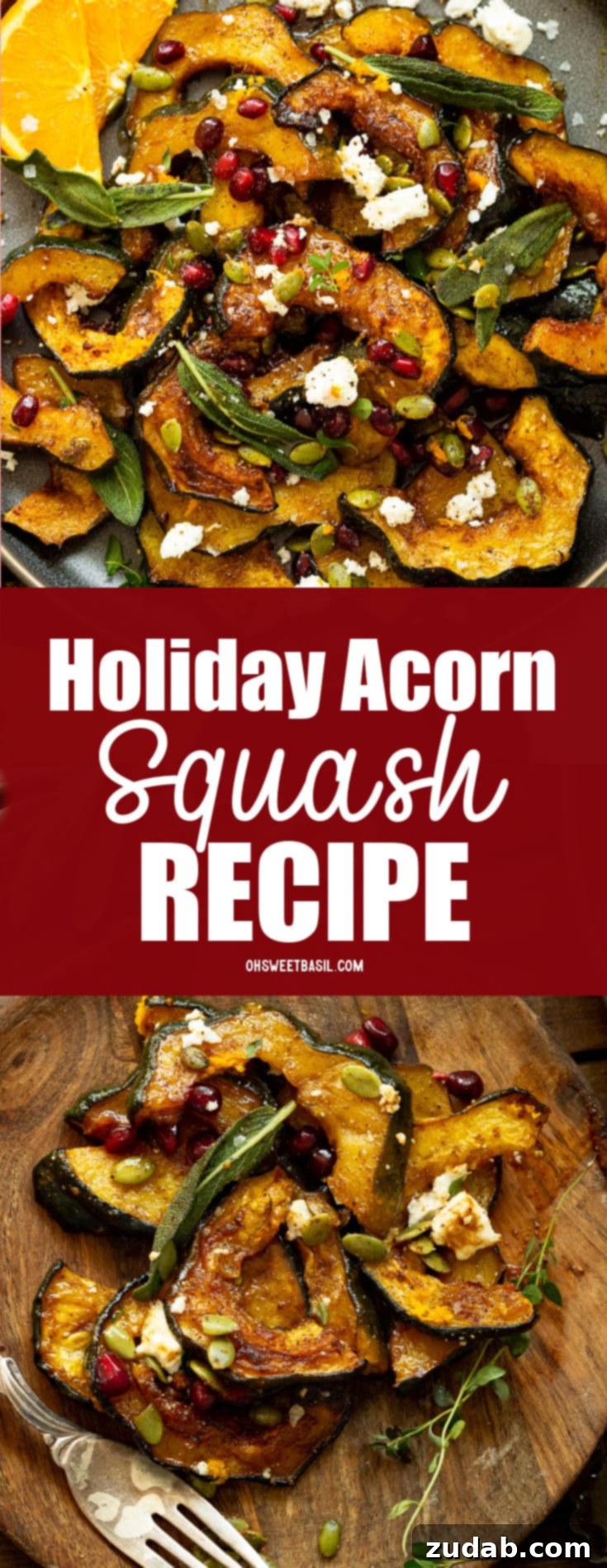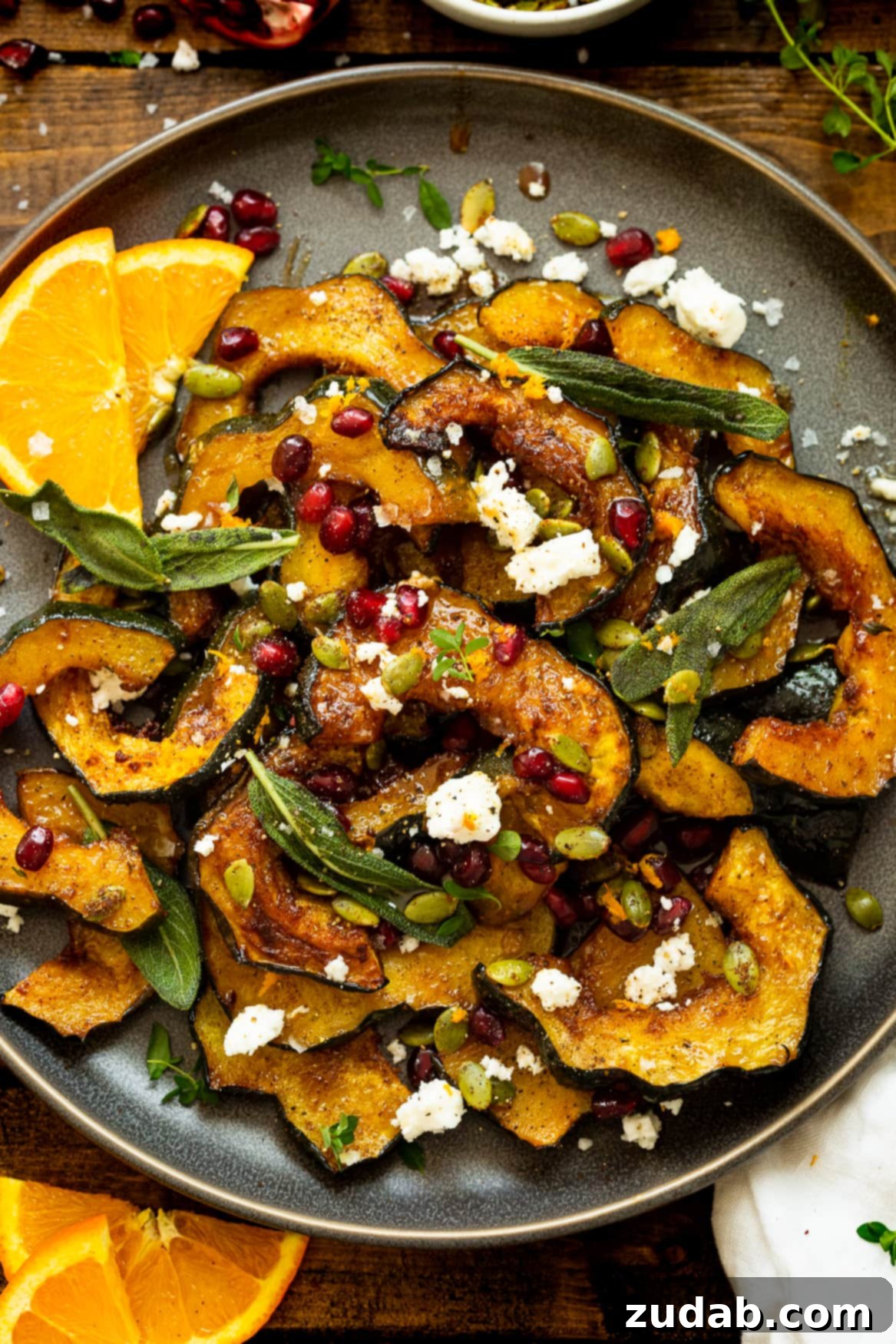
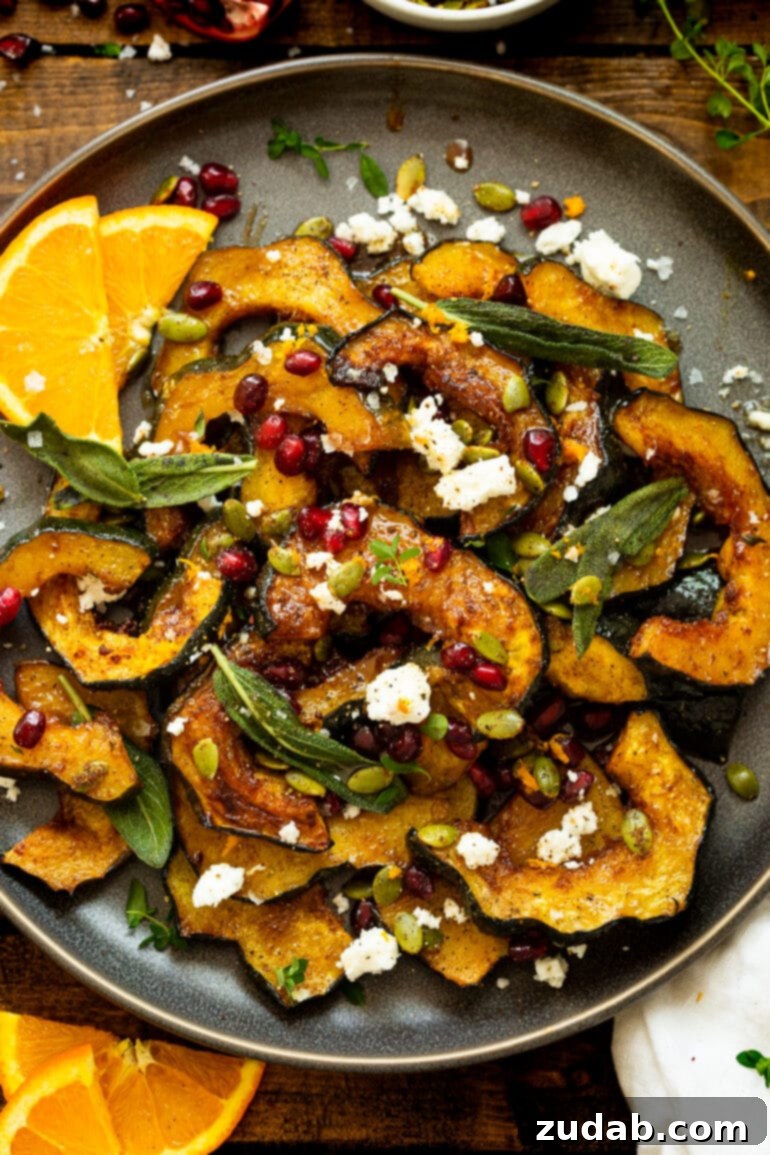
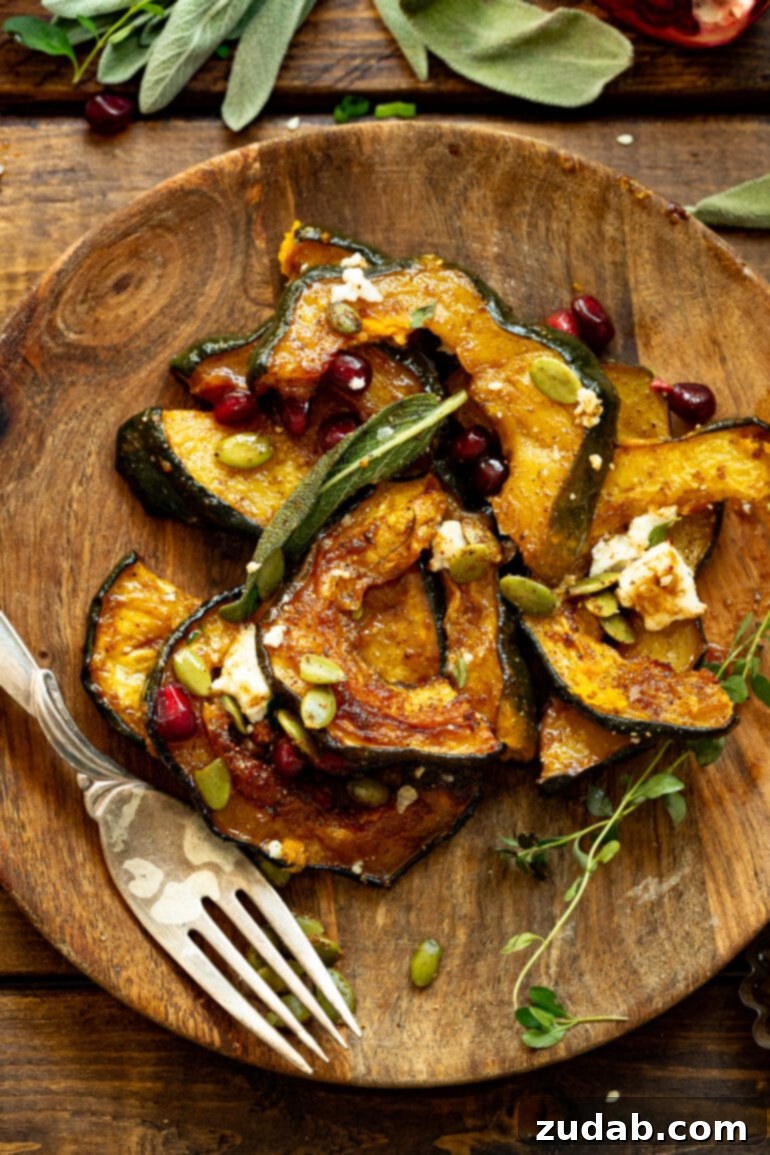
Transform your holiday table with this exquisite roasted acorn squash recipe, a truly sweet and savory masterpiece designed to be the highlight of your festive gatherings. This elegant holiday side dish features tender, caramelized acorn squash, beautifully seasoned with a medley of aromatic herbs and warming spices. Once perfectly roasted, it’s crowned with a vibrant mix of glistening pomegranate seeds, creamy feta cheese, and crunchy toasted pumpkin seeds. A delicate drizzle of rich extra virgin olive oil and pure maple syrup enhances its complex flavors, making it an unforgettable addition to any holiday feast.
Many who have tried this dish, including my partner Cade, declare it the best side dish they’ve ever experienced. That’s high praise, considering the beloved recipes we’ve shared on this blog, from our easiest herbed focaccia bread to our indulgent cheesy gruyere sweet potato stacks! This holiday acorn squash recipe is perfectly suited for both Thanksgiving and Christmas, promising to delight your guests with its festive flavors and stunning presentation. You are absolutely going to adore it!
Essential Equipment for Roasting Acorn Squash
Preparing this delightful holiday side dish requires only a few fundamental kitchen tools. Having the right equipment ensures both safety and efficiency, allowing you to achieve perfectly roasted squash with minimal effort. Here’s what we recommend:
- Sharp Knives: A good quality, sharp chef’s knife is crucial for safely and efficiently cutting through the tough skin of acorn squash. A dull knife can slip, making the task more difficult and potentially dangerous. Investing in a sharp knife makes all the difference for prepping winter squash.
- Baking Sheet: A sturdy baking sheet, ideally a half-sheet pan, provides ample space for roasting your acorn squash slices evenly. Look for one with raised edges to prevent any precious maple-butter sauce from dripping off. A non-stick surface or lining with parchment paper will make cleanup a breeze.
- Cutting Board: A stable, non-slip cutting board is essential for safely slicing the squash.
- Small Mixing Bowls: Useful for preparing your pepita seasoning and the flavorful squash sauce.
- Small Skillet: For achieving perfectly crispy fried sage leaves.
- Vegetable Peeler/Zester: For peeling fresh ginger and zesting the orange.
Preparing for Perfection: Toasting Pepitas First!
Before diving into the main event, you’ll want to embark on the crucial first step: toasting your pepitas, also known as pumpkin seeds. This seemingly small detail makes a significant impact on the final dish, elevating it from good to absolutely extraordinary. Toasting the pepitas in the oven unlocks their full potential, transforming them into golden, nutty, and irresistibly crunchy morsels. This process intensifies their inherent flavor, providing a delightful textural contrast to the tender, sweet squash. It’s a simple step that takes only minutes but adds layers of complexity and satisfaction to every bite. Don’t skip it!
Ingredients for Your Festive Acorn Squash Creation
At first glance, the ingredient list for this holiday acorn squash might appear extensive, but don’t let that deter you! Many of these items are common pantry staples, particularly the assortment of warming spices that lend this dish its distinctive festive aroma and flavor. We’ve carefully selected each component to build a harmonious balance of sweet, savory, and tangy notes, creating a side dish that’s both comforting and exciting. Here’s a detailed look at what you’ll need to gather:
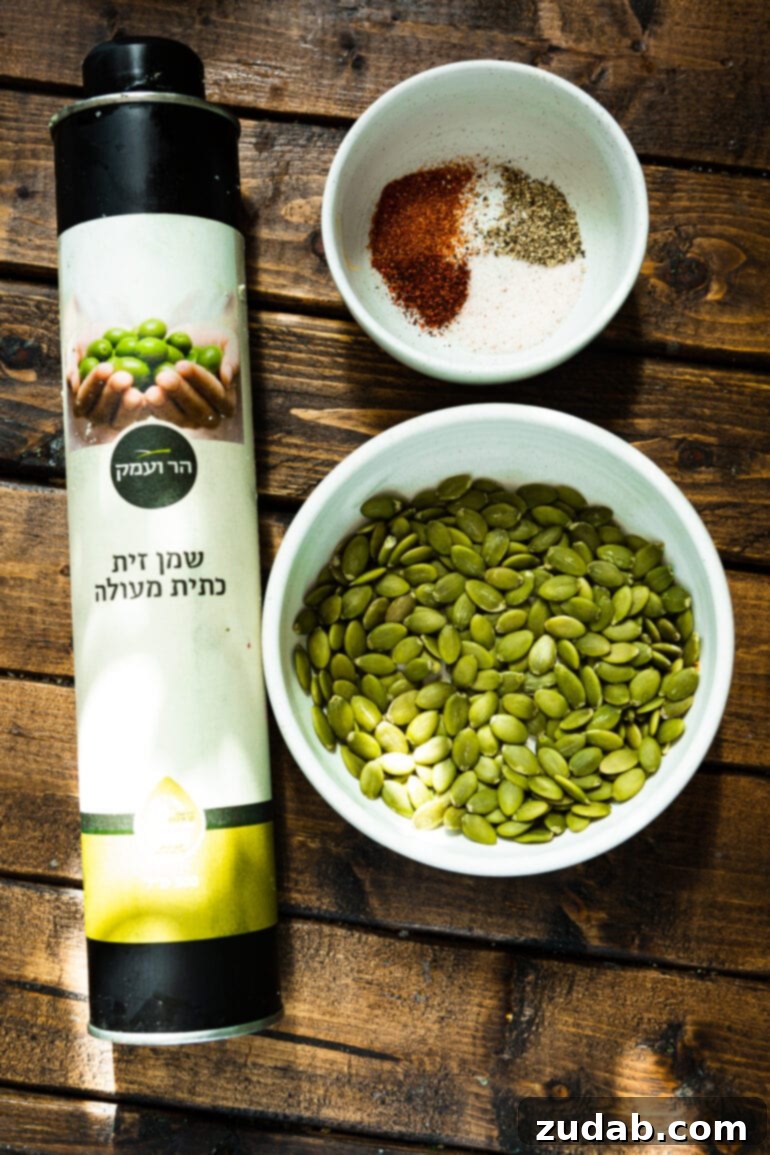
For the Crispy Toasted Pepitas (Pumpkin Seeds)
These crunchy seeds provide a fantastic textural contrast and nutty depth to the dish. They’re surprisingly easy to prepare and well worth the small effort:
- Pumpkin Seeds (Pepitas): Unsalted and raw. These are the star of our crunchy topping.
- Olive Oil: Just a touch helps the seasonings adhere and promotes even toasting, yielding a golden, crispy finish.
- Seasonings: A simple yet impactful blend of Kosher Salt, freshly ground Black Pepper, smoky Smoked Paprika, and a pinch of Chili Powder (optional, for a subtle warmth).
For the Star of the Show: The Roasted Squash
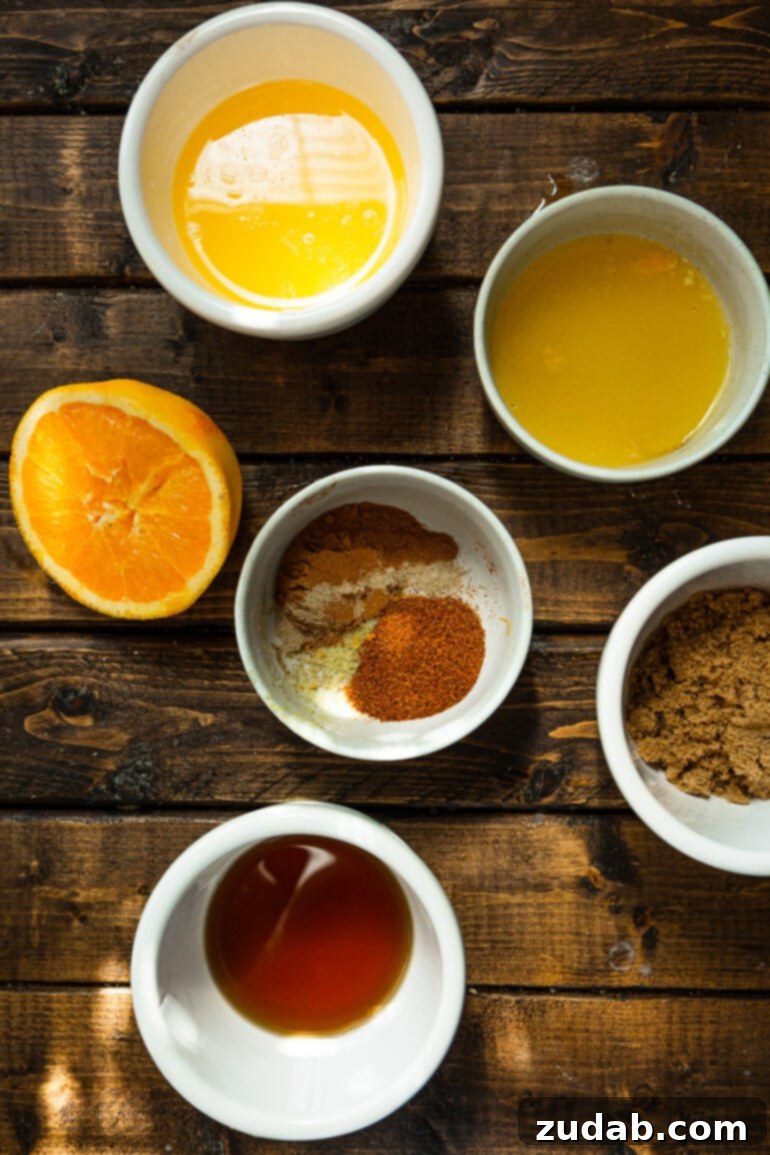
The squash itself forms the foundation of this dish, providing a naturally sweet and earthy base that perfectly absorbs the rich, spiced sauce:
- Acorn Squash: Known for its distinctive ribbed shape and slightly nutty flavor, acorn squash roasts beautifully to a tender, creamy consistency. If acorn squash isn’t readily available or you prefer other varieties, you can easily substitute with butternut or honeynut squash, adjusting roasting times as needed.
- Pure Maple Syrup: This is where quality matters! Insist on pure maple syrup for its rich, complex sweetness and signature flavor profile. Avoid imitation pancake syrups, as they lack the depth and natural taste essential for this recipe.
- Orange: We’ll harness the power of both its juice and zest. The fresh orange juice adds a bright, tangy counterpoint to the sweetness, while the finely grated orange zest infuses a delicate, aromatic citrus note that brightens the entire dish.
- Butter: Unsalted butter is essential. It contributes to the squash’s beautiful golden-brown caramelization, adding richness and a luscious mouthfeel as it roasts.
- Seasonings: A captivating blend of warming spices truly makes this dish sing. You’ll need aromatic Ground Cinnamon, pungent Fresh Ginger (finely grated and peeled for maximum flavor), earthy Smoked Paprika, and a hint of exotic Cardamom Powder. This combination creates a deeply comforting and festive aroma.
And for the finishing touches, these ingredients provide color, texture, and an explosion of flavor:
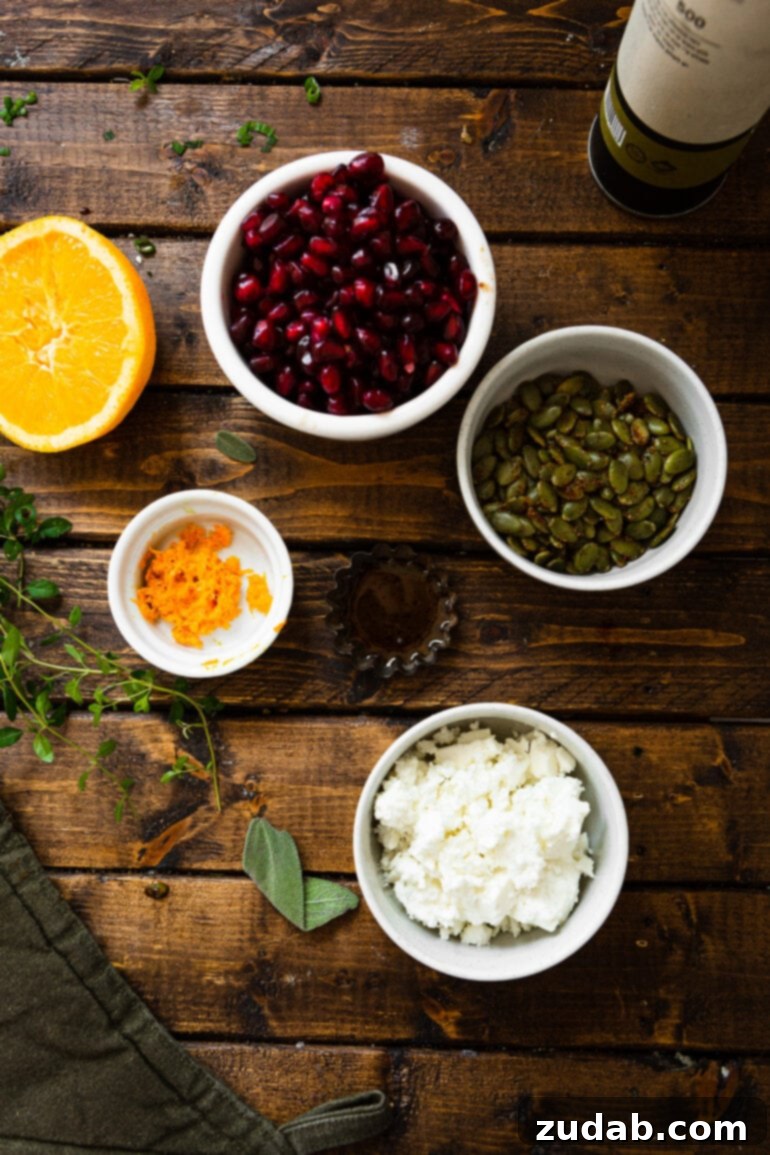
- Pomegranate Arils: These jewel-like seeds offer a burst of tart, juicy sweetness and a delightful pop of texture. You can either extract the seeds yourself from a fresh pomegranate (we’ll show you how below!) or purchase pre-packaged pomegranate seeds for convenience.
- Brown Sugar: A touch of brown sugar enhances the caramelization process, adding a deeper, richer sweetness and a beautiful glazed finish to the roasted squash.
- Extra-Virgin Olive Oil: Used specifically for frying the sage leaves, it imparts a subtle fruity note and helps them achieve that desired crispness.
- Fresh Sage Leaves: Fried until crispy, fresh sage leaves contribute an incredible aromatic, savory, and slightly peppery crunch that is synonymous with holiday flavors.
- Fresh Thyme: A few sprigs of fresh thyme are used as a garnish, adding a beautiful green hue and a fragrant herbaceous note that complements the other flavors.
- Kosher Salt: Essential for seasoning throughout the dish, balancing the sweetness and enhancing all the individual flavors.
- Crumbled Feta Cheese: The salty, tangy notes of feta cheese cut through the richness of the squash and sauce, adding an unexpected but incredibly delicious layer of flavor. For a slightly different profile, you can substitute with creamy goat cheese, or omit the cheese entirely if you prefer a dairy-free option.
The precise measurements for each of these incredible ingredients are detailed in the comprehensive recipe card located at the conclusion of this post.
Understanding Pomegranate Arils
When we talk about adding pomegranate to a dish, we’re specifically referring to pomegranate arils. These are the translucent, juicy, ruby-red seed pods found within the leathery skin of the pomegranate fruit. Each aril encases a tiny, edible seed and is bursting with a tart, slightly sweet juice and a refreshing flavor. They provide an incredible “pop” of flavor and a beautiful visual appeal, making them a fantastic addition to both sweet and savory dishes, especially during the holiday season.
Effortless Method: How to Seed a Pomegranate
Don’t be intimidated by seeding a pomegranate; it’s much simpler than it looks! With this easy technique, you’ll have a bowl of glistening arils ready in minutes:
- Prepare the Fruit: Begin by gently rolling the whole pomegranate on a sturdy surface with the palm of your hand. This action helps to loosen the arils inside, making them easier to extract.
- Score and Split: Using a sharp knife, carefully score around the middle circumference of the pomegranate, cutting just deep enough to break through the skin, but not into the arils themselves. Once scored, gently tear the fruit open into two halves.
- PRO TIP: For even easier seeding, you can also score 4 lines from top to bottom, effectively quartering the pomegranate before tearing it open. This exposes more arils and makes the tapping process more efficient.
- Extract the Seeds: Hold one half of the pomegranate, seeds facing downwards, over a large bowl. With a wooden spoon or similar utensil, firmly tap the back of the pomegranate’s skin. As you tap, the arils will fall into the bowl below. Gently squeeze the fruit as you go to help release any stubborn seeds. Repeat with the other half until all the arils are extracted. Remove any white membrane that falls into the bowl, and your beautiful pomegranate arils are ready to use!
Crafting the Perfect Holiday Acorn Squash: Step-by-Step Guide
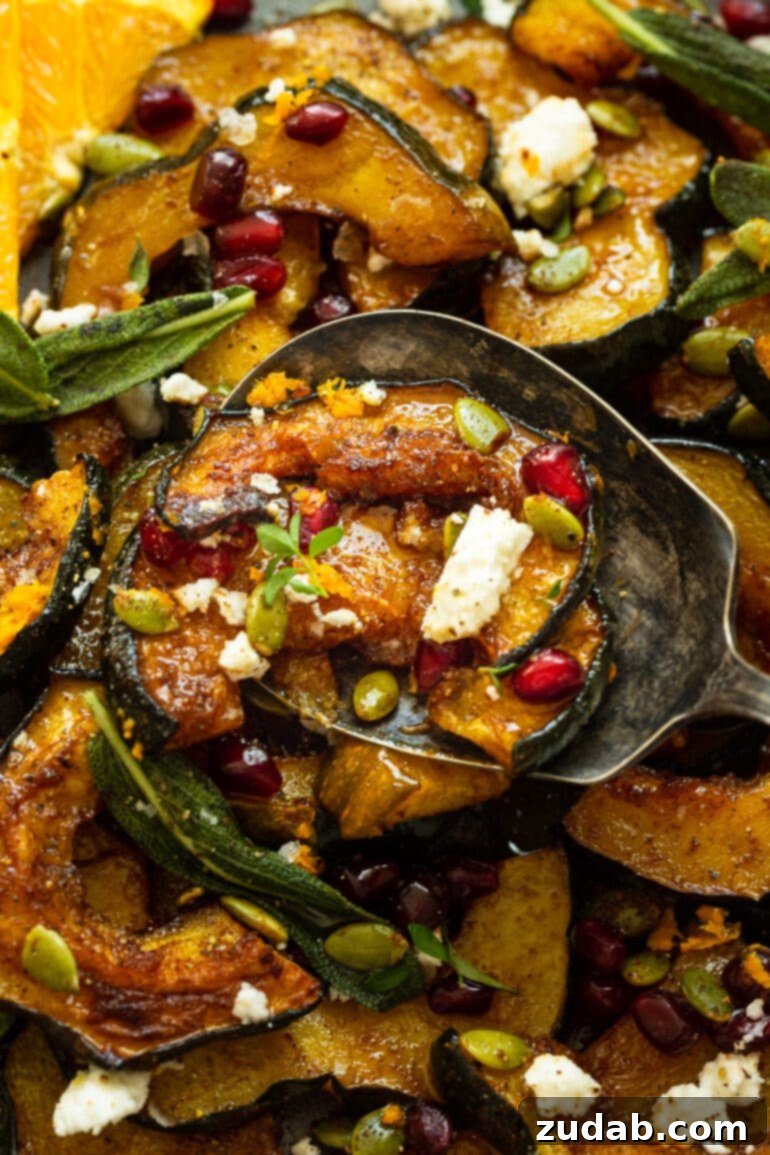
Creating this sensational roasted acorn squash is a straightforward process, broken down into simple, manageable steps that will ensure your dish is both stunning and delicious. Get ready to impress all your holiday guests with a side that’s bursting with festive flavor and visual appeal! Here’s a detailed walkthrough of the basic steps:
- Toast the Pepitas: Your culinary journey begins by preheating your oven to 400°F (200°C). In a small bowl, toss the pumpkin seeds with a hint of olive oil, salt, pepper, smoked paprika, and chili powder (if using). Spread them evenly on a baking sheet and toast them in the preheated oven for just 3 to 5 minutes, or until they are lightly golden and fragrant. Keep a close eye on them, as they can burn quickly. Once toasted, remove them from the oven and set them aside to cool, allowing them to crisp up further.
- Prepare the Squash: While the oven is still at 400°F (200°C), line a clean baking sheet with aluminum foil and lightly spray it with non-stick cooking spray for easy release. Carefully cut your acorn squash in half lengthwise, scoop out all the seeds and fibrous strands, then lay the halves flat-side down and slice them into uniform ½-inch thick crescent-shaped pieces. Arrange these slices in a single layer on your prepared baking sheet, ensuring they don’t overlap too much for optimal roasting.
- Craft the Flavorful Sauce: In a small microwave-safe bowl, melt the butter. To the melted butter, add 1 tablespoon of brown sugar, the pure maple syrup, the freshly squeezed juice from your orange, ground cinnamon, finely grated fresh ginger, smoked paprika, and cardamom powder. Stir all these ingredients together until well combined. This aromatic mixture will form the luscious coating for your squash.
- Season and Roast: Generously spoon the prepared sauce over the acorn squash slices on the baking sheet, ensuring each piece is well-coated. Then, sprinkle the remaining 2 tablespoons of brown sugar evenly over the top of the squash. Place the baking sheet into the preheated oven and roast for 12 to 15 minutes, or until the squash is fork-tender and beautifully caramelized. Remember to flip the squash slices halfway through the roasting time to ensure even browning and tenderness on both sides.
- Crispy Sage Perfection: While the squash is roasting, heat a small skillet over medium-high heat with a dash of extra-virgin olive oil. Add the fresh sage leaves to the hot oil and fry them, tossing occasionally, until they become wonderfully crispy and fragrant. This process happens very quickly, so watch them carefully to prevent burning. Once crispy, remove the sage leaves from the skillet and place them on a plate lined with paper towels to drain any excess oil.
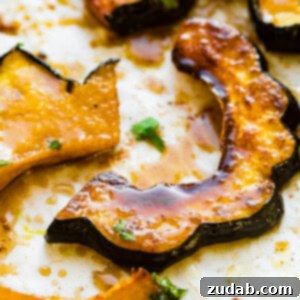
- Assemble and Garnish: Once the roasted squash is tender and caramelized, carefully transfer the slices to a beautiful serving platter. Any residual “sauce” left on the baking pan is liquid gold – gently scrape it into a small dish. Now for the grand finale: generously top the roasted squash with your toasted pumpkin seeds, the crispy fried sage leaves, the jewel-like pomegranate arils, a sprinkle of fresh orange zest, and crumbled feta cheese. Add a pinch of kosher salt and a grind of fresh black pepper to taste.
- Serve with Flair: Drizzle the reserved caramelized sauce from the roasting pan over the top of the assembled squash. Finally, garnish with a few fresh thyme leaves to add an extra layer of herbaceous aroma and visual charm. Serve immediately and watch your holiday guests marvel at this stunning and delicious creation!
All of these detailed instructions, along with ingredient measurements and nutritional information, are conveniently located in the printable recipe card at the very end of this article. You can easily print or save the recipe there for future holiday gatherings.
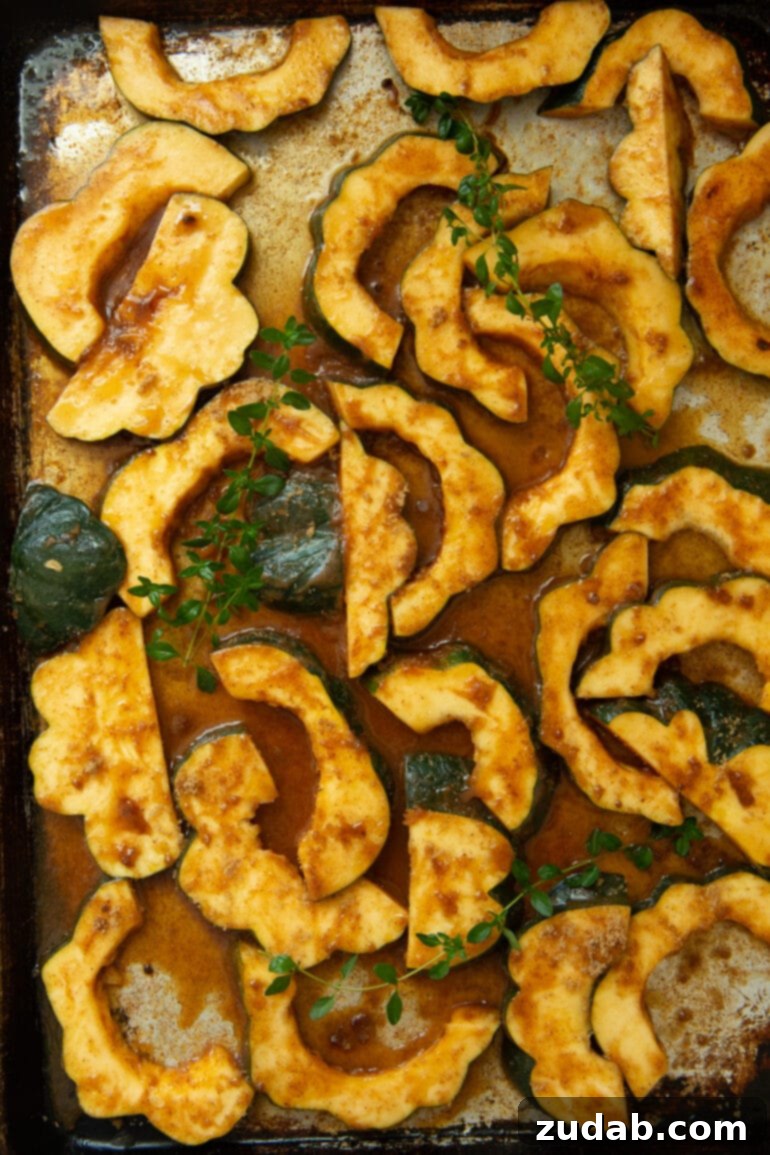
Mastering the Cut: How to Safely Slice an Acorn Squash
Cutting through the tough exterior of an acorn squash, or any hard winter squash, can seem daunting at first due to their round shape and firm texture. However, with a few safety tips and the right technique, you can easily and safely prepare your squash for roasting. Precision and caution are key here:
- Ensure a Stable Surface: Always work on a stable, non-slip cutting board. You can place a damp paper towel or a non-slip mat underneath your cutting board to prevent it from shifting.
- Use a Sharp Knife: As mentioned in our equipment section, a very sharp, heavy-duty chef’s knife is non-negotiable. A dull knife is more likely to slip and cause injury.
- Initial Score: Lay the acorn squash on its side on the cutting board. Identify one of the natural furrows (the indentations between the bumps) running from stem to blossom end. Carefully place the tip of your sharp knife into this furrow.
- Steady Pressure and Rocking Motion: Keeping your fingertips tucked safely away from the blade, gently but firmly push down on the knife. You’ll feel it begin to penetrate the tough skin. Once the blade is engaged, use a rocking motion, applying downward pressure, to slowly work the knife through the squash until it reaches the hollow center.
- Circumvent the Stem: Continue sliding and rocking the knife around the entire circumference of the squash. The goal is to cut all the way around, meeting your initial cut. Do not attempt to cut directly through the stem; it’s incredibly tough and can be dangerous.
- Pry Open: Once you’ve cut all the way around the squash, set your knife down. Gently grasp each half of the squash and pry them apart with your fingertips. The stem, being the toughest part, will either crack or cleanly break away to one side.
- Seed Removal: Use a sturdy spoon to scoop out all the seeds and the stringy, fibrous pulp from both halves of the squash. Discard these.
- Slice for Roasting: Now that the squash halves are clean, lay them flat, flesh-side down, on your cutting board. This creates a stable base. Proceed to cut the halves into uniform ½-inch thick slices, creating those appealing crescent shapes perfect for roasting. This method ensures both safety and consistent results.
Can You Eat Acorn Squash Skin?
Yes, absolutely! Unlike some other winter squash varieties, the skin of acorn squash is entirely edible and, in fact, quite delicious when roasted. As the slices of squash roast in the oven, the skin undergoes a transformation, becoming wonderfully tender and slightly crispy, especially around the edges. It’s thin enough that it doesn’t detract from the texture of the flesh, and it adds an extra layer of nutrients and a rustic appeal to the dish. You can easily slice and enjoy the roasted skin along with the sweet, creamy squash flesh.
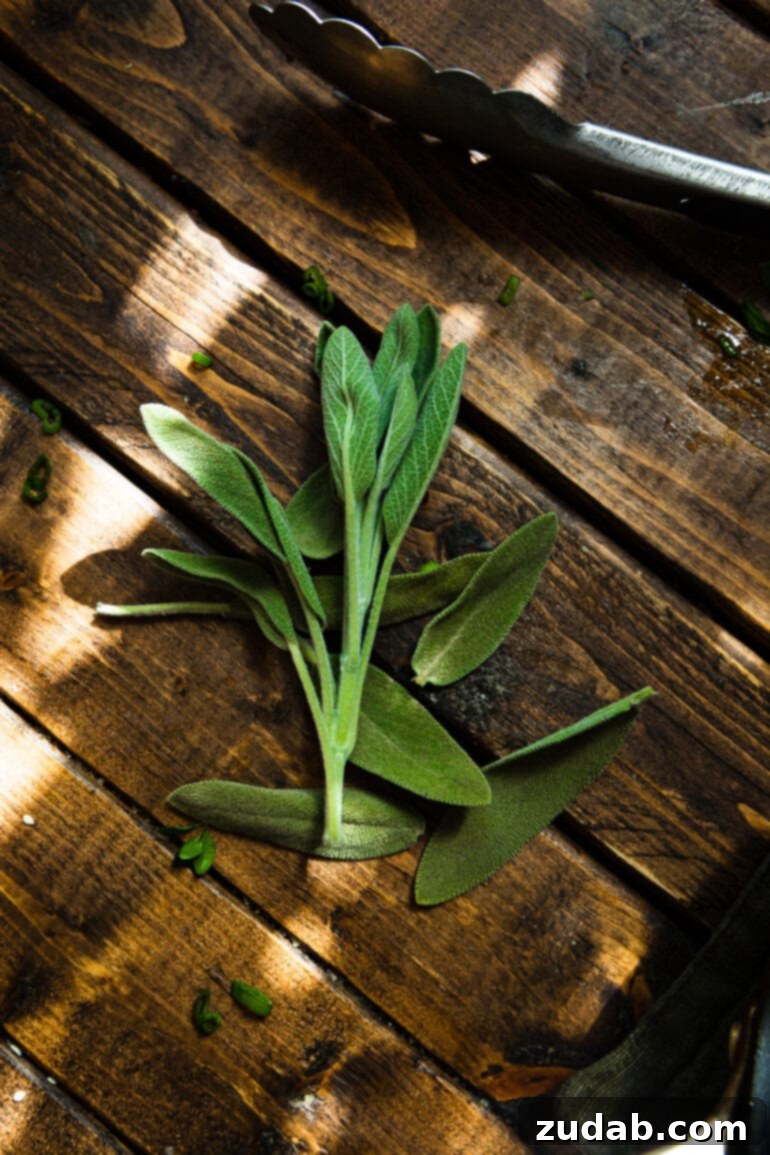
Achieving Perfection: How to Make Crispy Fried Sage Leaves
Crispy fried sage leaves are a simple yet incredibly impactful garnish that adds both visual appeal and a burst of savory, aromatic flavor to our holiday acorn squash. Here’s how to achieve that perfect crispness:
- Heat the Oil: Pour a small amount of extra virgin olive oil into a small skillet. Just enough to lightly coat the bottom, about 1-2 tablespoons. Place the skillet over medium-high heat. You’re looking for the oil to shimmer, but not smoke.
- Fry the Sage: Once the oil is hot, carefully add the whole, fresh sage leaves to the skillet. Don’t overcrowd the pan; fry them in batches if necessary to ensure even crisping.
- Watch Closely: This step happens very quickly! The sage leaves will crisp up in a matter of seconds. Use tongs to flip them gently, ensuring they turn vibrant green and become delicately brittle. You’ll hear a subtle crackle as they cook.
- Drain and Season: As soon as the leaves are crispy, remove them immediately from the skillet and transfer them to a plate lined with paper towels. The residual heat will continue to cook them, so prompt removal is essential to prevent burning. Lightly sprinkle with a pinch of salt if desired. These fragile, aromatic crisps are ready to elevate your dish!
Perfect Pairings: What to Serve with Roasted Acorn Squash
This sweet and savory roasted acorn squash is incredibly versatile and pairs beautifully with a wide array of holiday entrees and other side dishes. Its rich flavors and vibrant colors make it a natural complement to classic festive meals. Here are some of our favorite main courses and additional sides that create a harmonious holiday spread:
- Herb Roasted Turkey Breast: The earthy notes of sage and thyme in the squash beautifully echo the herbs used in a classic roasted turkey, creating a cohesive flavor profile.
- The Best Prime Rib Recipe: The richness of prime rib is perfectly balanced by the sweet, tangy, and bright flavors of the acorn squash and its pomegranate topping.
- Smoked Whole Chicken: The smoky depth of a smoked chicken finds a delightful contrast in the sweetness of the maple-glazed squash.
- Turkey in a Bowl: For a more casual yet equally delicious holiday meal, this squash provides an elevated touch to a comfort food classic.
- Glazed Ham: The sweetness of a holiday ham is wonderfully complemented by the savory and spiced notes of the roasted acorn squash.
- Pork Loin: A tender pork loin would be beautifully enhanced by the vibrant flavors and textures of this squash dish.
Consider serving it alongside a fresh green salad with a light vinaigrette to cut through the richness, or a creamy potato gratin for a truly indulgent meal. The possibilities are endless when building your perfect holiday plate!
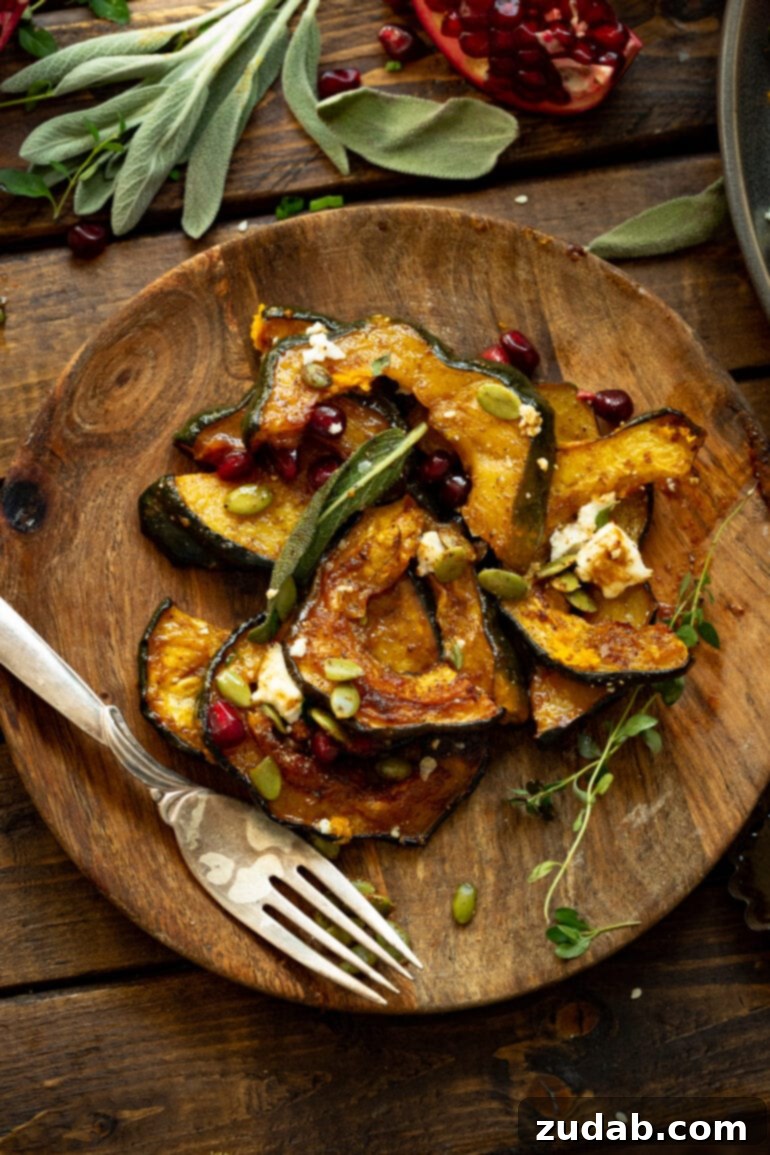
Storing and Reheating Your Holiday Acorn Squash
Should you have any delectable leftovers of this roasted holiday acorn squash (which is a rare occurrence!), proper storage ensures you can enjoy its festive flavors for days to come. Here’s how to keep it fresh and reheat it effectively:
- Storage: Allow the roasted acorn squash to cool completely to room temperature before storing. Transfer the cooled squash, along with any leftover toppings and sauce, into an airtight container. Store the container in the refrigerator, where it will maintain its quality for up to 5 days. This makes it an excellent make-ahead option for busy holiday meal prep.
- Reheating:
- Microwave Method: For a quick reheat, place individual servings of the squash on a microwave-safe plate. Heat on high for 1-2 minutes, or until warmed through. Be careful not to overcook, as this can make the squash mushy.
- Oven Method: For best results and to help restore some of its crispy texture, reheat the squash in the oven. Preheat your oven to 300°F (150°C). Spread the leftover squash slices evenly on a baking sheet (you may want to add fresh pepitas or sage if you have them, or just a fresh drizzle of maple syrup and olive oil). Reheat for 10-15 minutes, or until thoroughly warmed through and slightly re-crisped around the edges. This method is ideal if you’re reheating a larger quantity.
While the toppings may lose a bit of their initial crispness upon reheating, the overall flavor of the squash remains outstanding, making leftovers a delightful treat!
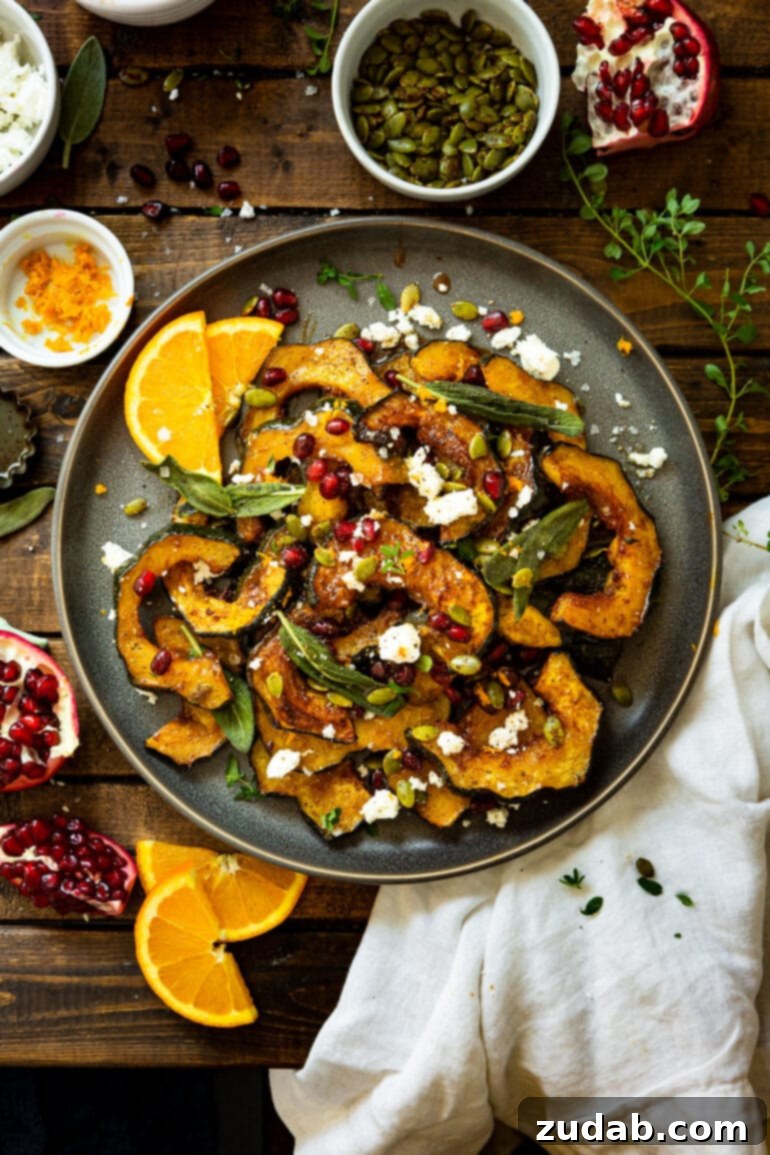
Are you ready to truly elevate your holiday side dishes this year? Once you experience the unparalleled flavors and textures of this roasted holiday acorn squash recipe, it is guaranteed to become a cherished and regular fixture at all your future holiday feasts! Its beautifully balanced sweet and savory profile, combined with the delightful crunch of pepitas and sage, the tangy burst of pomegranate, and the creamy richness of feta, makes every bite a celebration. The vibrant colors are also perfectly festive, making it an ideal choice for both your Thanksgiving and Christmas dinner tables. Prepare to receive endless compliments on this easy yet impressive dish!
More Irresistible Holiday Side Dishes:
No holiday meal is complete without an array of stunning side dishes. If you’re looking for more inspiration to round out your festive spread, or simply want to discover new family favorites, explore these other delicious recipes that promise to add flavor and cheer to your holiday table:
- Honey Garlic Roasted Carrots: Sweet, savory, and perfectly tender, these carrots are an easy and flavorful addition.
- Instant Pot Green Beans and Potatoes: A quick and convenient way to prepare a comforting and hearty vegetable side.
- Classic Sweet Potato Casserole: The quintessential holiday side, creamy and topped with a buttery, sugary pecan streusel.
- Roasted Pear and Apple Salad with Caramelized Shallot Maple Vinaigrette: A refreshing and elegant salad that offers a lighter contrast to heavier holiday fare.
- Cheesy Gruyere Sweet Potato Stacks: Individual portions of thinly sliced sweet potatoes baked with rich Gruyere cheese, perfect for a sophisticated touch.
- Lemon Roasted Carrots and Parsnips: Bright and zesty, these roasted root vegetables are simple yet packed with flavor.
- Sweet Potato Rounds with Cranberries and Hazelnuts: A beautiful and festive appetizer or side, combining sweet, tart, and nutty elements.
- Garlic Herb Mashed Potatoes: Creamy, dreamy mashed potatoes infused with fragrant garlic and fresh herbs.
- Brussels Sprouts with Bacon and Balsamic Glaze: A perfect balance of savory, sweet, and tangy, transforming a often-maligned vegetable into a crowd-pleaser.
Roasted Holiday Acorn Squash
Pin
Ingredients
For the Pumpkin Seeds
- 4 Tablespoons Pumpkin Seeds
- 1 teaspoon Olive Oil
- 1/2 teaspoon Salt
- 1/2 teaspoon Pepper
- 1/2 teaspoon Smoked Paprika
- Pinch Chili Powder, optional
For the Squash
- 2 Acorn Squash , halved, seeds removed, and cut into 1/2 inch slices
- 3 Tablespoons Pure Maple Syrup
- 1 Orange, for juice and zest
- 6 Tablespoons Butter
- 1 1/2 teaspoons Ground Cinnamon
- 1 teaspoon Fresh Ginger , finely grated, peeled
- 1 teaspoon Smoked Paprika
- 1/4 teaspoon Cardamom Powder
- Arils (seeds), from 1 pomegranate
- 3 Tablespoons Brown Sugar, divided
- 4-6 Sage Leaves
- 1 1/2 Tablespoons Extra-Virgin Olive Oil
- 3 Sprigs Thyme, plus thyme leaves for garnish
- Kosher Salt
- Feta , or goat cheese
Instructions
For the Pumpkin Seeds
-
Preheat the oven to 400 degrees Fahrenheit (200°C). Place the pumpkin seeds in a small bowl and drizzle with the olive oil. Add the salt, pepper, smoked paprika, and the pinch of chili powder (if using) and toss to coat evenly.
-
Spread the seasoned pumpkin seeds on a baking pan in a single layer and bake for 3 to 5 minutes until they are lightly toasted and fragrant. Remove from the oven immediately and set aside to cool and crisp up.
For the Squash
-
Line a large baking sheet with aluminum foil and lightly spray it with non-stick cooking spray for easy cleanup.
-
Carefully cut the acorn squash in half lengthwise and use a spoon to scoop out all of the seeds and stringy pulp. Lay the squash halves flat-side down on your cutting board and cut them into ½-inch thick crescent-shaped slices. Arrange these slices in a single layer on the prepared baking sheet.
-
In a small, microwave-safe bowl, melt the butter. To the melted butter, add 1 tablespoon of brown sugar, the pure maple syrup, the freshly squeezed juice from the orange, ground cinnamon, finely grated fresh ginger, smoked paprika, and cardamom powder. Stir everything together until well combined. Generously spoon this flavorful sauce over the acorn squash slices on the baking sheet.
-
Sprinkle the remaining 2 tablespoons of brown sugar evenly over the top of the sauced squash slices.
-
Place the baking pan in the preheated oven (still at 400°F/200°C) and roast for 12 to 15 minutes, or until the squash is tender when pierced with a fork and beautifully caramelized. Remember to flip the slices halfway through roasting to ensure even cooking and browning.
-
Meanwhile, as the squash roasts, heat a small skillet over medium-high heat with a dash of extra-virgin olive oil. Add the fresh sage leaves and toss them gently until they are just slightly toasted and crispy. Watch them very carefully, as they can burn quickly. Remove the crispy sage leaves to a plate lined with paper towels to drain any excess oil.
-
Once the squash is finished roasting, carefully transfer the tender, caramelized slices to a serving plate. Scrape any delicious excess “sauce” leftover on the baking sheet into a small dish. Generously sprinkle the roasted squash with the toasted pumpkin seeds (pepitas), the vibrant pomegranate arils, the crispy fried sage leaves, a sprinkle of fresh orange zest, and crumbled feta cheese. Finish with a pinch of kosher salt and fresh black pepper to taste.
-
Drizzle the reserved “sauce” from the baking pan over the top of the squash, garnish with a few fresh thyme leaves, and serve immediately. (See note for an alternative serving suggestion).
Recipe Notes
Nutrition
Nutrition information is automatically calculated and should be used as an approximation only.
Enjoyed this recipe? Share your thoughts below!
Your feedback helps us create more delicious recipes for you.