
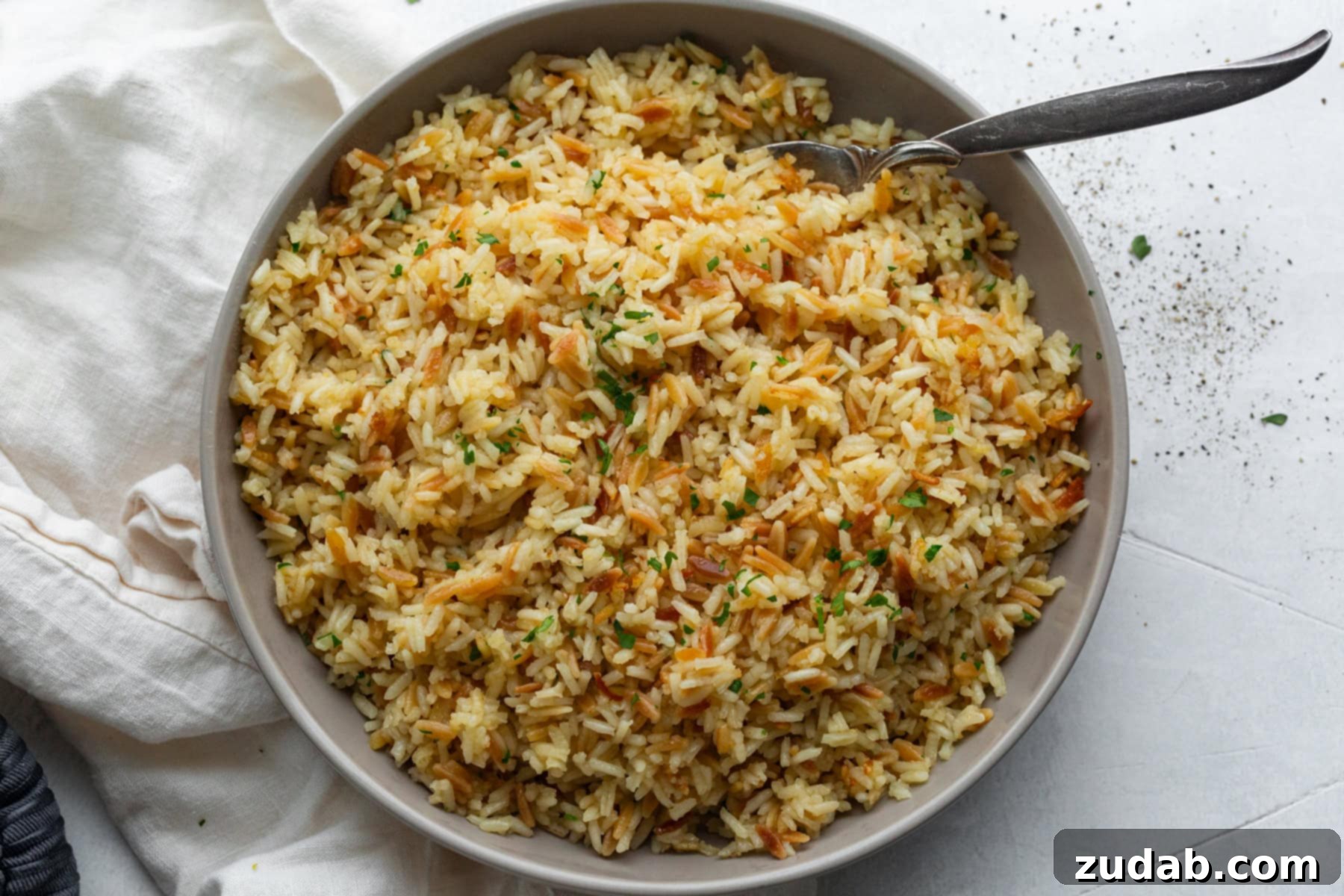
Perfect Rice Pilaf: A Timeless Side Dish Recipe
Rice pilaf stands as a cornerstone of side dishes, a recipe that gracefully withstands the test of time. This easy rice pilaf recipe ensures a buttery and wonderfully fluffy outcome, elevating almost any dining experience. Crafted with long-grain rice, subtly toasted pasta, and a rich, savory broth, this dish comes together effortlessly, offering both simplicity and exceptional flavor.
Whether you’re pairing it with grilled chicken or salmon, this homemade rice pilaf is destined to become a cherished go-to recipe in your culinary repertoire.
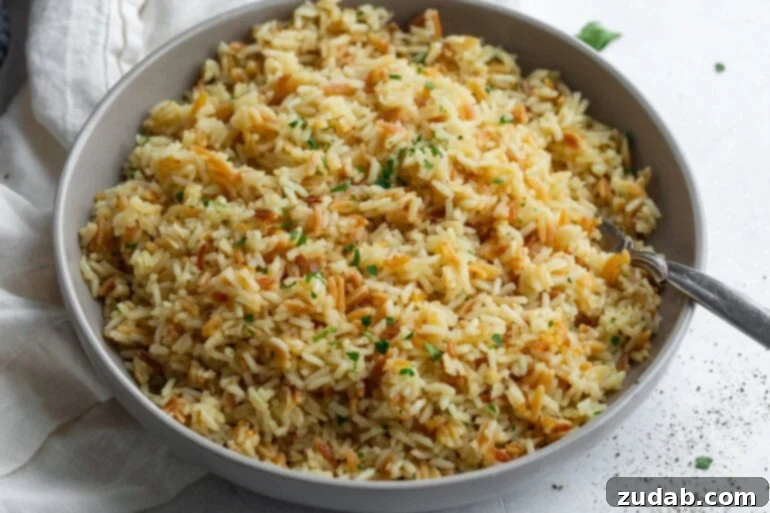
Essential Ingredients for Exceptional Rice Pilaf
Each ingredient in this rice pilaf recipe plays a pivotal role, contributing to the overall flavor and texture. From the deeply savory broth to the final touch of buttery richness, every element harmonizes to create a pilaf that’s irresistibly fluffy and delicious.
- Chicken Broth: Serves as the cooking medium for the rice, infusing it with a robust, savory depth.
- Unsalted Butter: Imparts richness and lends the pilaf its signature, silky-smooth finish.
- Kosher Sea Salt: Acts as an essential flavor enhancer, balancing and accentuating all the other ingredients.
- Garlic Powder: Introduces a subtle savory complexity without overpowering the dish.
- Black Pepper: Provides a gentle warmth and well-rounded seasoning.
- Smoked Paprika: Adds a delicate smoky note, introducing an additional layer of flavor.
- Olive Oil: Used to toast the pasta and rice, enhancing their natural nuttiness.
- Vermicelli or Orzo: Contributes textural interest and a lightly toasted flavor to the pilaf.
- Long-Grain White Rice: Forms the fluffy, tender base of this delightful dish.
- Fresh Parsley: Garnishes the pilaf with a refreshing burst of freshness and a vibrant touch of color.
This rice pilaf recipe is incredibly adaptable, making it suitable for everyday family dinners and grand special occasions alike.
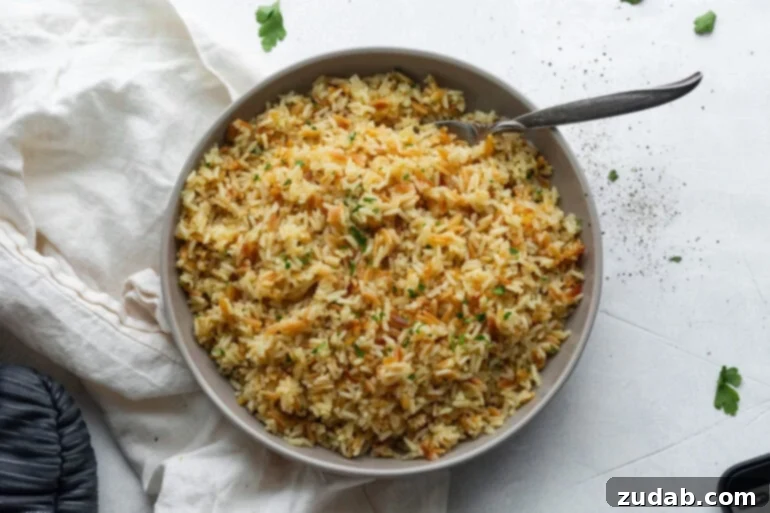
Mastering the Art of Perfect Rice Pilaf: A Step-by-Step Guide
Have you ever had the misfortune of biting into a spoonful of rice pilaf only to find it marred by crunchy, undercooked grains? Or perhaps even worse, encountered a mushy, utterly bland concoction? This foolproof recipe eliminates all guesswork, ensuring a consistent and delightful result every time.
- Simmer: In a saucepan over medium heat, combine the chicken broth, butter, salt, garlic powder, black pepper, and smoked paprika. Stir well to ensure all ingredients are thoroughly mixed. Once the mixture begins to gently simmer, reduce the heat to low and keep warm throughout the cooking process.
- Toast: In a large skillet set over medium-low heat, drizzle in the olive oil. Add the vermicelli or orzo and cook, stirring frequently, until it achieves a beautiful golden-brown color. Exercise caution to prevent burning, as this can impart a bitter taste to the pilaf.
- Add: Incorporate the long-grain white rice into the skillet with the toasted pasta. Continue to cook, stirring occasionally, until the rice is lightly toasted, enhancing its natural nutty flavor. This usually takes about 3-5 minutes.
- Combine: Carefully pour the warm broth mixture into the skillet containing the rice and pasta. Stir gently to combine all ingredients, ensuring the rice and pasta are evenly distributed in the broth. Bring the mixture to a gentle simmer, then cover the skillet tightly. Reduce the heat to low and cook for approximately 15-18 minutes.
- Finish: Remove the lid from the skillet and stir in a small amount of freshly chopped parsley. Cover the skillet again and continue cooking for an additional 5-7 minutes, or until all the liquid has been completely absorbed by the rice. The rice should be tender and fluffy, with no remaining liquid in the skillet.
- Fluff: Remove the skillet from the heat. Uncover it and gently fluff the rice with a fork. This helps to separate the grains and create a light, airy texture. Serve the rice pilaf warm as a delightful accompaniment to your favorite dishes.
Now armed with this guide, you possess the knowledge to consistently create perfectly fluffy, tender rice pilaf, boasting just the right bite and an irresistible flavor profile… every single time you prepare it.
Proper Reheating and Storage Instructions
This rice pilaf stores exceptionally well once it has been fully cooked and allowed to cool completely. To store it properly, transfer the pilaf to an airtight container and place it in the refrigerator for later enjoyment. When reheating, warm it gently on the stovetop or in the microwave. For stovetop reheating, add a small splash of broth or water to help restore moisture. If using the microwave, cover the pilaf with a microwave-safe lid or plastic wrap to prevent it from drying out. Before serving, fluff the reheated pilaf with a fork to restore its light and airy texture. Garnish with fresh parsley for a final touch of freshness, if desired.
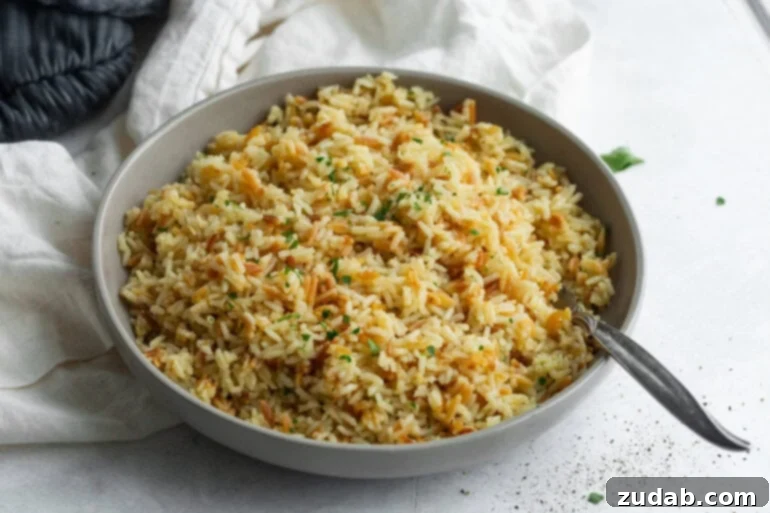
Exciting Variations and Flavorful Substitutions
This rice pilaf recipe lends itself beautifully to customization, allowing you to adapt it based on your personal preferences and the ingredients you have readily available. For instance, you can easily swap the long-grain white rice for a different variety, such as brown rice, keeping in mind that brown rice typically requires a longer cooking time and slightly more liquid to achieve the desired tenderness. To enhance the pilaf’s texture, consider stirring in a handful of crushed pistachios or slivered almonds, either toasted alongside the vermicelli or sprinkled on top just before serving.
To elevate the flavor profile, you can experiment with additional spices or herbs such as cumin, dried thyme, or a bay leaf. Alternatively, you can sauté finely diced celery, carrots, or onion in the skillet before adding the pasta and rice, creating a more complex flavor base. For a burst of color and sweetness, stir in frozen peas near the end of the cooking process. I’ve also had rice pilaf with sun-dried tomatoes, lemon zest, and parmesan cheese, which is an absolute delight! For those seeking a vegetarian-friendly option, simply replace the chicken broth with an equal amount of high-quality vegetable broth.
Perfect Pairings: What to Serve With Rice Pilaf
Rice pilaf is an incredibly versatile side dish that harmonizes seamlessly with a wide array of main courses. It’s particularly delectable when served alongside tender salmon or succulent grilled chicken, where its buttery, savory notes beautifully complement lighter proteins. To create a balanced and complete meal, consider adding simple yet flavorful vegetables such as roasted or sautéed asparagus, vibrant green beans, tender carrots, or a refreshing side salad. Rice pilaf also pairs wonderfully with baked chicken, juicy pork chops, or even as a hearty side dish for festive holiday dinners and family gatherings.
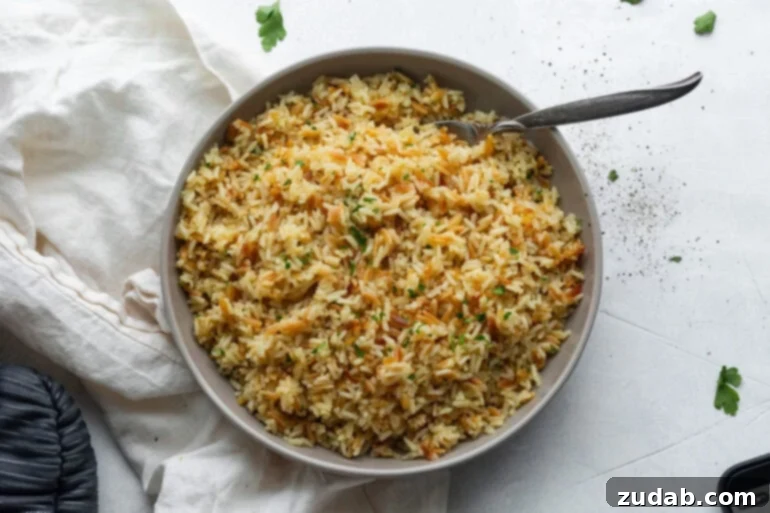
This rice pilaf recipe prioritizes simplicity without compromising on exceptional texture and flavor. Regardless of the occasion, it’s a dependable side dish that you can always rely on to deliver a satisfying and memorable culinary experience!
Explore Other Delicious Side Dish Recipes
Looking to expand your repertoire of side dishes? Here are a few suggestions to spark your culinary creativity:
- Wild Rice and Chickpeas with Crispy Shallots
- Balsamic Vinaigrette Grilled Vegetables
- Oven Roasted Vegetables
- Gruyere Potatoes