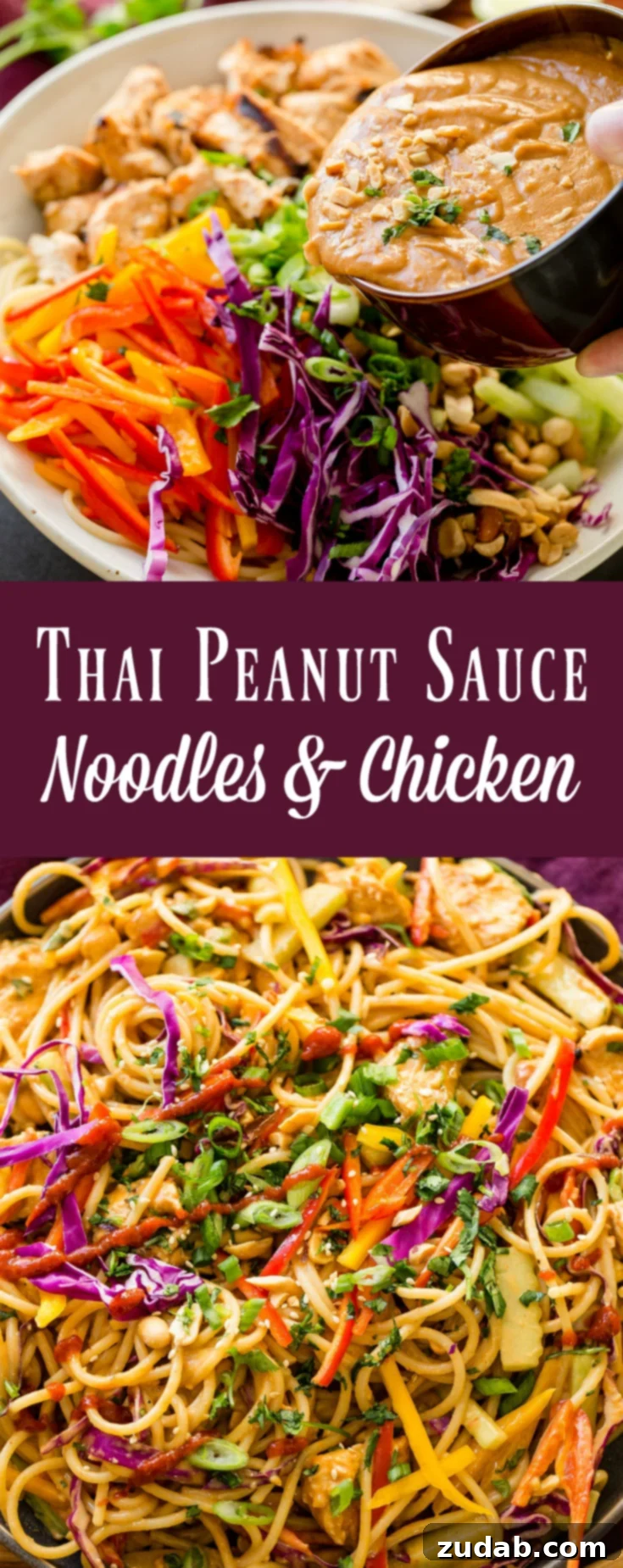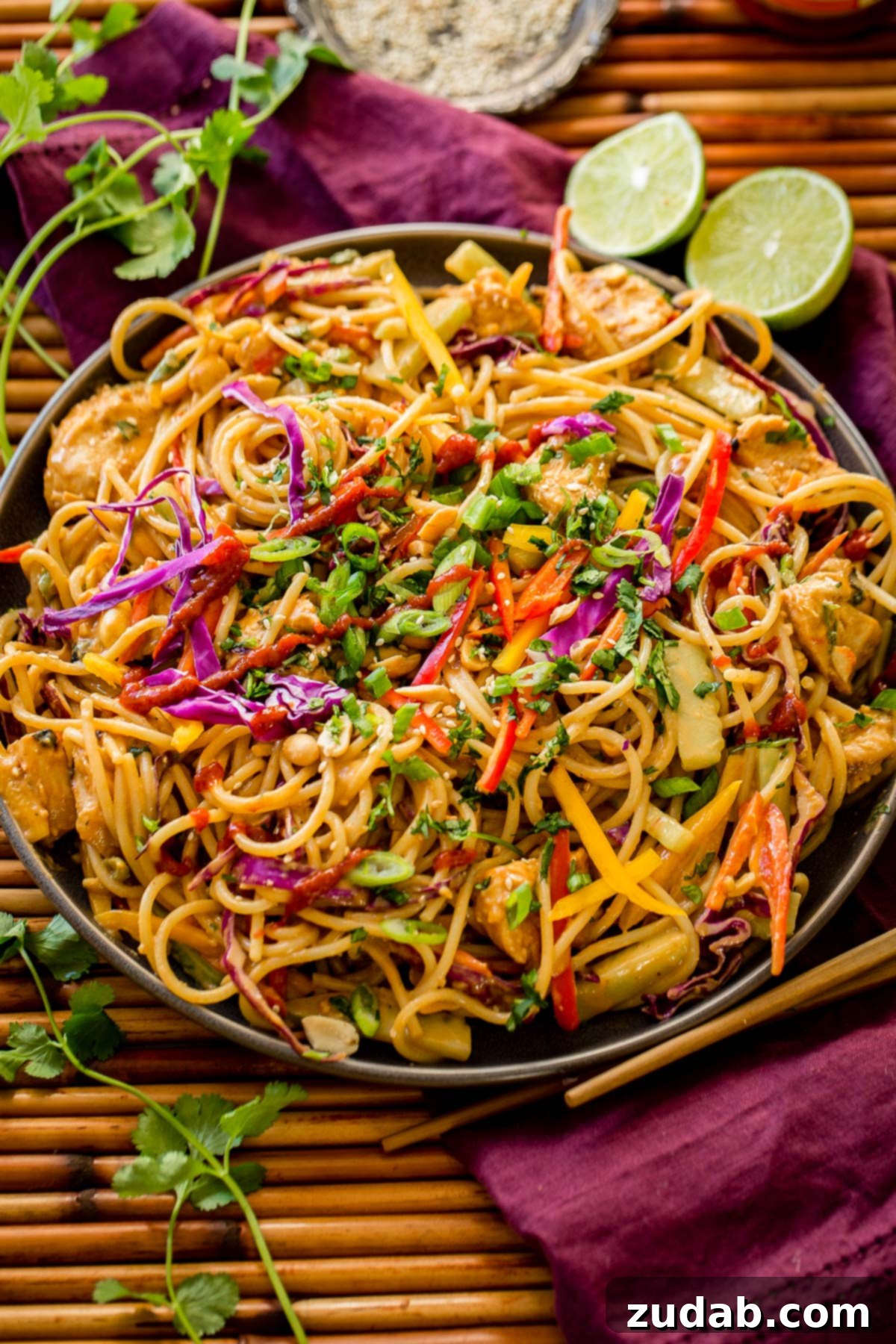
Craving the vibrant, irresistible flavors of Thai cuisine? Forget the takeout menu and discover how incredibly simple it is to prepare the most delicious Thai Peanut Noodles with Chicken right in your own kitchen! This recipe promises a creamy, savory, and perfectly balanced Thai peanut sauce that transforms everyday noodles and chicken into an extraordinary meal. Get ready to impress your taste buds and your family with this easy-to-make, healthier, and utterly delightful homemade Thai classic.
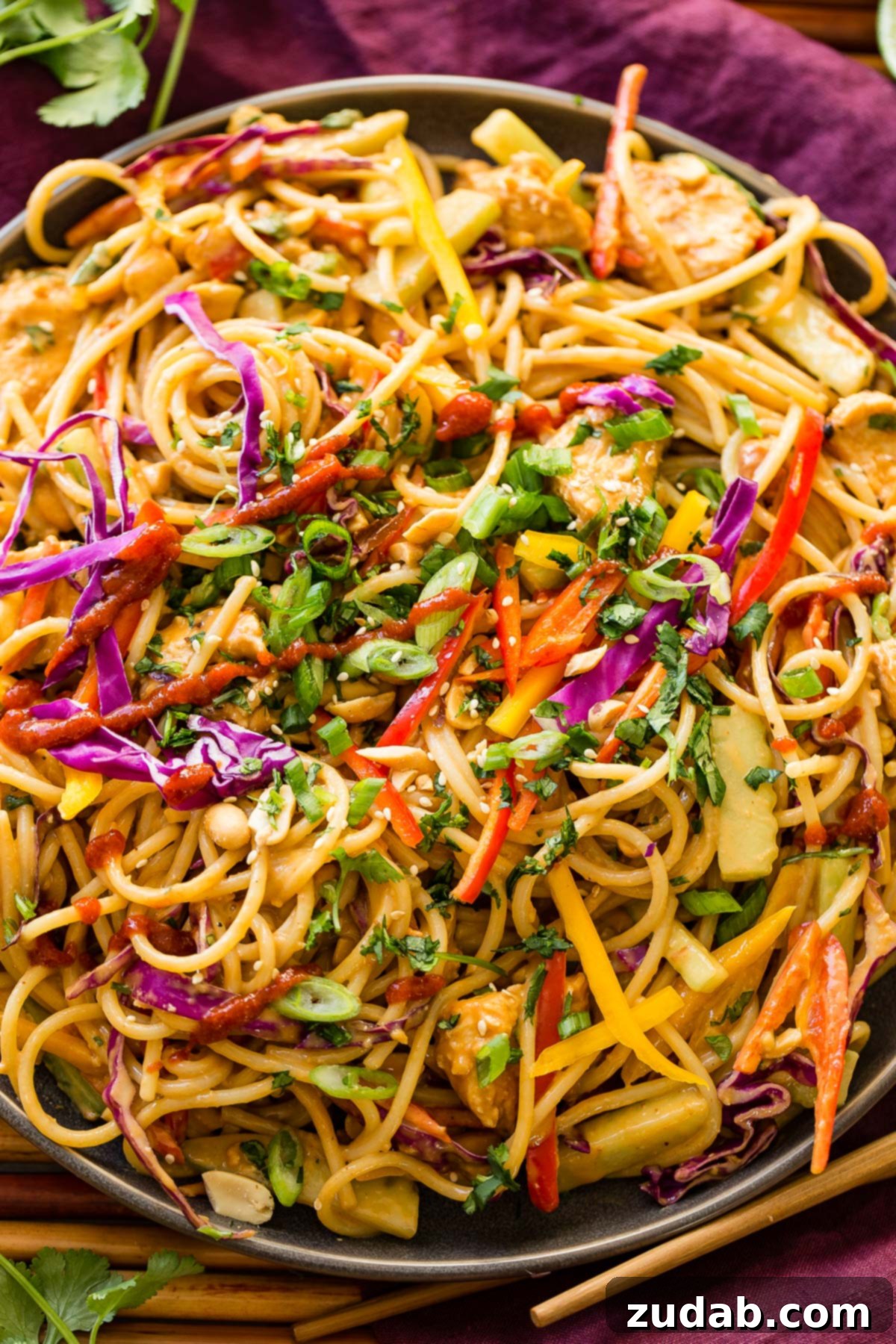
Mastering Easy Peanut Noodles with Thai Peanut Sauce
For a long time, I hesitated to share too many Asian-inspired recipes, mainly because my palate isn’t a fan of intense spice. Many popular Asian dishes boast a fiery kick, which isn’t always my preference. However, these Thai Peanut Noodles are a game-changer because they can be perfectly customized to suit any spice level, from completely mild to delightfully zesty. Whether you love a good splash of Sriracha or prefer your flavors subtly spiced, this dish delivers. It has quickly become my new favorite weeknight meal!
My journey to craft the ultimate homemade Thai peanut sauce involved extensive testing and a deep dive into traditional and adapted recipes. Initially, I encountered a wide array of ingredient suggestions, ranging from rich coconut milk and pungent fish sauce to simple peanut butter and Sriracha. The key was to find the perfect harmony, balancing authenticity with accessibility and a flavor profile that truly shines.
Through my culinary explorations, I discovered that certain ingredients consistently appeared, while others seemed like inventive additions by home cooks. For instance, while coconut milk adds a creamy texture, it often diluted the distinct peanut flavor I was striving for. Therefore, I opted for warm water to achieve the desired sauce consistency without compromising the nutty essence. Sriracha, or even chili flakes, frequently made an appearance, but Sriracha ultimately won out because of how effortlessly it incorporated into the sauce, providing an even distribution of heat.
Fish sauce, a staple in many Asian dishes, initially seemed like a must-have. However, it tended to overpower other delicate flavors in this particular sauce. Instead, I found that high-quality soy sauce (or tamari for a gluten-free alternative) provided the essential salty and umami depth without introducing an unwanted fishy note. The soy sauce also beautifully deepened the color of the sauce and contributed to its smooth texture. Finally, I noticed vinegar and sesame oil frequently debated in various recipes. After trying versions with and without them, I realized their subtle yet complex contributions were indispensable. They add a vital tang and nutty aroma that completes the sauce, ensuring a truly exceptional culinary experience.
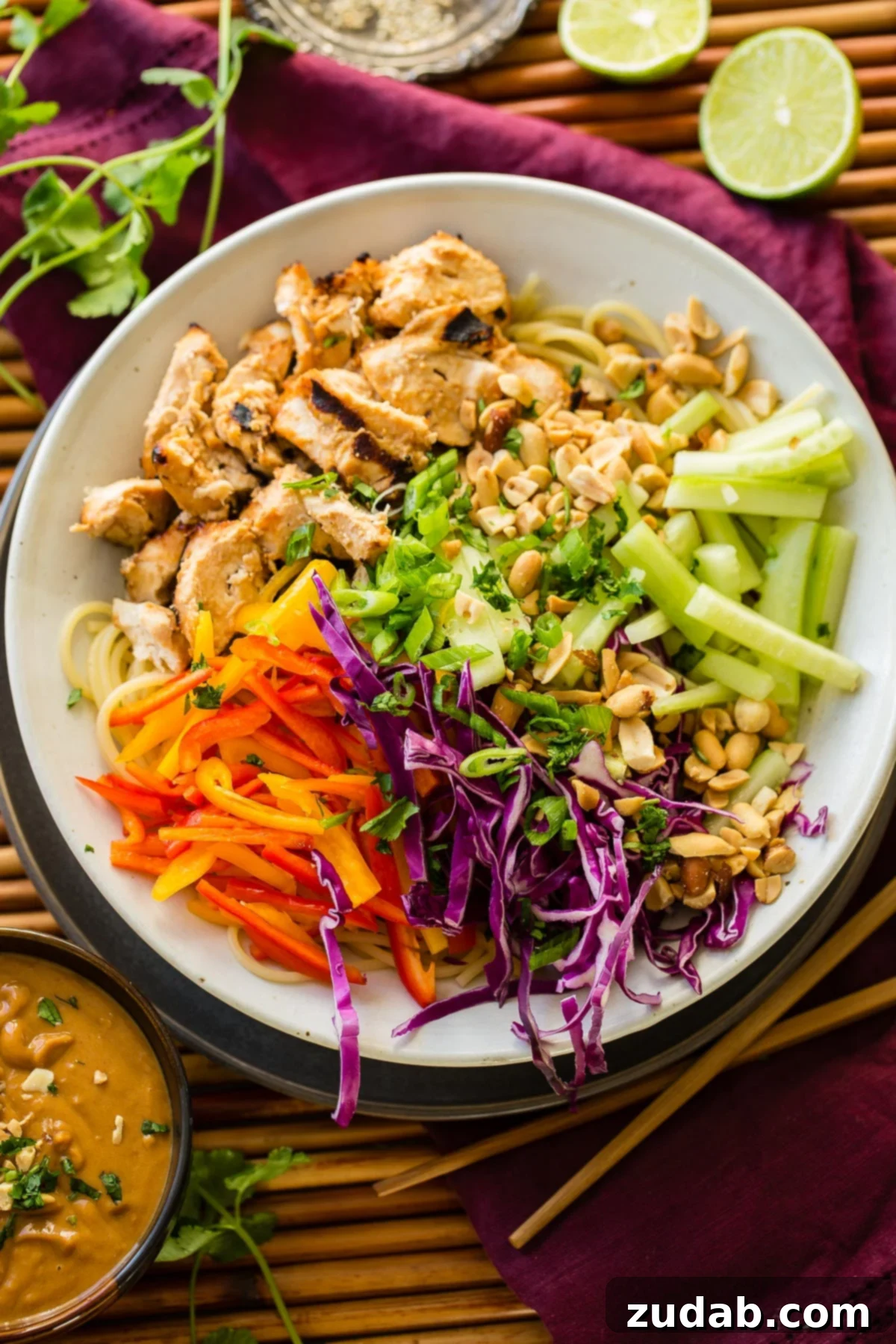
The final composition of our signature Thai peanut sauce includes fresh ginger and garlic for their aromatic foundation, creamy peanut butter and Sriracha for the basic flavor profile, and a generous squeeze of fresh lime juice to brighten everything up with a zesty finish. We meticulously balanced these elements to create a sauce that is both robust and refreshing. We use warm water to thin the sauce, allowing you to easily adjust its thickness to your preference. This thoughtful combination of ingredients ensures a sauce that is both easy to make and bursting with authentic Thai-inspired flavors.
Now, let’s talk about the noodles! Selecting the right pasta for a dish like this can sometimes be a bit challenging. While traditional Pad Thai noodles or various rice noodles are excellent choices, they aren’t always readily available to everyone. Our goal was to find a noodle that would perfectly complement the rich, savory sauce without being too thick and overwhelming the delicate flavors. After some experimentation, we found that common pantry staples like angel hair pasta or spaghetti work wonderfully. They are convenient, absorb the sauce beautifully, and provide a satisfying texture, making them ideal for a delicious and easy weeknight Thai peanut noodle dish. These accessible alternatives ensure that anyone can recreate this fantastic recipe without a special trip to an Asian market.
And let’s not overlook the Thai peanut chicken—it truly elevates this meal! Simply grilling or baking plain chicken and then drizzling sauce over it often falls short. The sauce tends to slide off, and the chicken itself lacks deep flavor, resulting in a rather uninspired dish. To infuse every bite with that irresistible peanut goodness, we discovered that marinating the chicken directly in our homemade peanut sauce is absolutely essential. Even if it’s chilly outside, don’t underestimate the power of a grill (or a quality grill pan!) to impart a smoky, enhanced flavor. The marinade penetrates the chicken, ensuring moisture and taste throughout, while grilling adds those delightful char marks that are not only visually appealing but also amplify the overall deliciousness of the meat, taking this dish to an entirely new level.
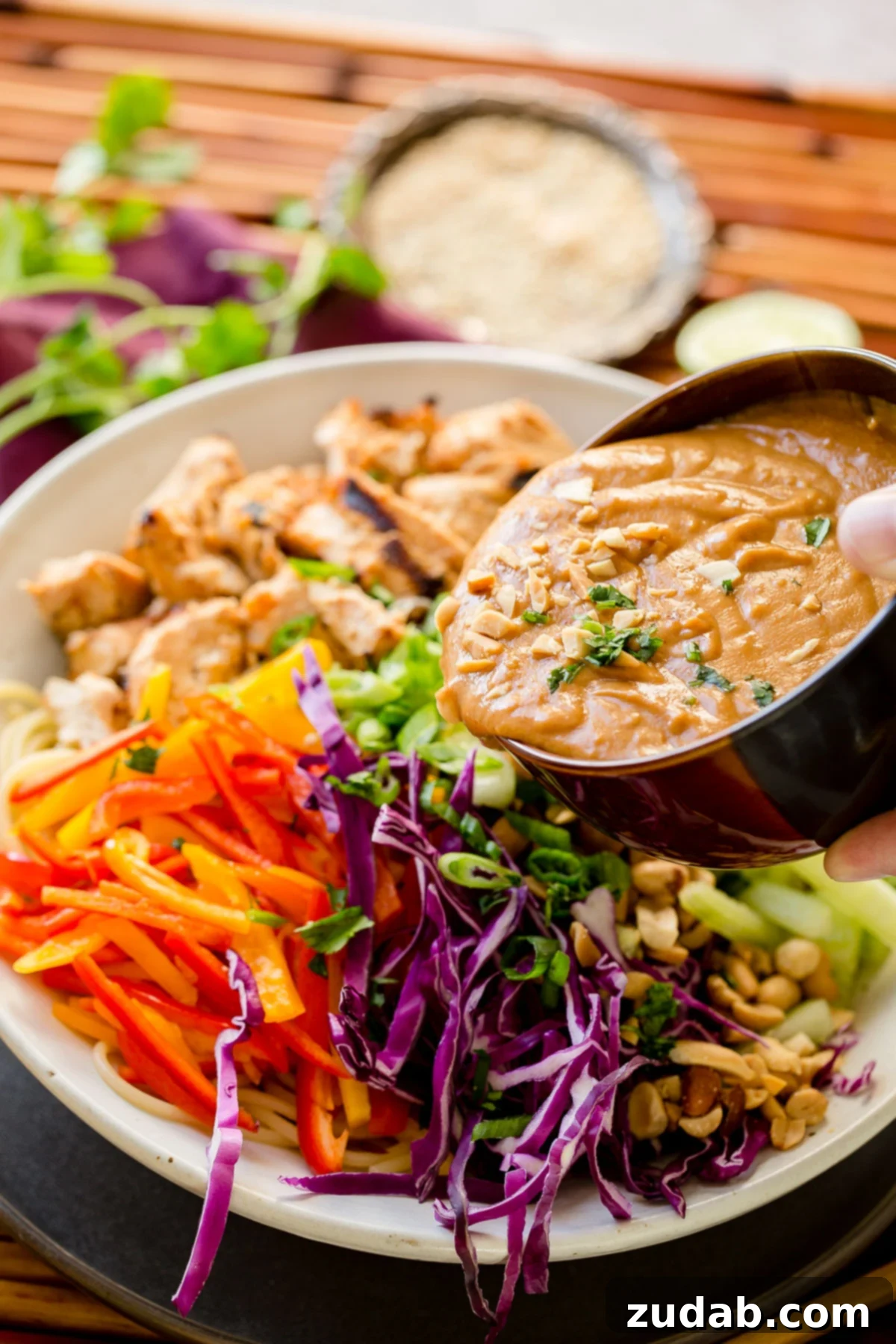
Essential Ingredients for Your Thai Peanut Noodles & Chicken
To create this incredibly flavorful Thai Peanut Noodles with Chicken, you’ll need a selection of fresh and pantry-friendly ingredients that come together to form a truly satisfying meal. For the main components and vibrant additions, gather the following:
- Boneless, skinless chicken breasts, cut into uniform 1-inch pieces for even cooking and optimal sauce absorption.
- Crisp bell peppers, ideally a mix of red and orange for a pop of color and sweet crunch.
- Finely sliced red cabbage, adding a beautiful hue and refreshing texture.
- Cool cucumber, peeled and thinly sliced, then cut into bite-sized pieces for a refreshing contrast.
- Toasted sesame seeds, perfect for garnishing and adding a subtle nutty flavor.
- Fresh cilantro, chopped, for a burst of herbaceous freshness.
- Roasted salted peanuts, roughly chopped, to provide a delightful crunch and intensify the peanut flavor.
- Sliced green onions, for a mild oniony zest and bright garnish.
- Your choice of pasta, such as angel hair or spaghetti, which are excellent for absorbing the rich sauce.
And to whisk together the luscious, easy homemade Thai peanut sauce, ensure you have these key ingredients on hand:
- Creamy peanut butter, serving as the rich base of the sauce (natural, unsweetened varieties are ideal for controlling sweetness).
- Sriracha, allowing you to adjust the spice level from mild to fiery according to your preference.
- Fresh lime juice, crucial for adding a bright, zesty tang that cuts through the richness of the peanut butter.
- Honey, to provide a natural sweetness that balances the savory and spicy notes.
- Toasted sesame oil, for its distinct nutty aroma and flavor, a hallmark of Asian cuisine.
- Warm water, used to thin the sauce to your desired pouring consistency.
- Fresh ginger, finely grated, an indispensable aromatic that adds warmth and zing.
- Garlic, minced, another essential aromatic contributing depth and robust flavor.
- Soy sauce (or tamari for a gluten-free option), for umami depth and salty seasoning.
- Rice vinegar, delivering a mild, slightly sweet acidity that brightens the entire sauce.
Can I Make These Thai Peanut Noodles Without Chicken?
Absolutely! This recipe is incredibly versatile and easily adaptable if you prefer to skip the meat or are short on time. Whether you’re vegetarian, vegan, or simply looking for a lighter meal, you can confidently omit the chicken. You’ll still be left with a wonderfully flavorful and satisfying Thai peanut noodle recipe.
If you choose to make it vegetarian or vegan, consider adding plant-based protein alternatives such as pan-fried tofu, tempeh, or edamame. You could also boost the vegetable content by incorporating extra bell peppers, snap peas, shredded carrots, or broccoli florets. Just keep in mind that by removing the chicken, you’ll likely have a generous amount of leftover peanut butter sauce. You can either halve the sauce recipe when preparing it or, even better, save the delicious leftovers for future meals. This versatile homemade peanut sauce is fantastic on salads, as a dipping sauce for spring rolls, or even tossed with roasted vegetables.
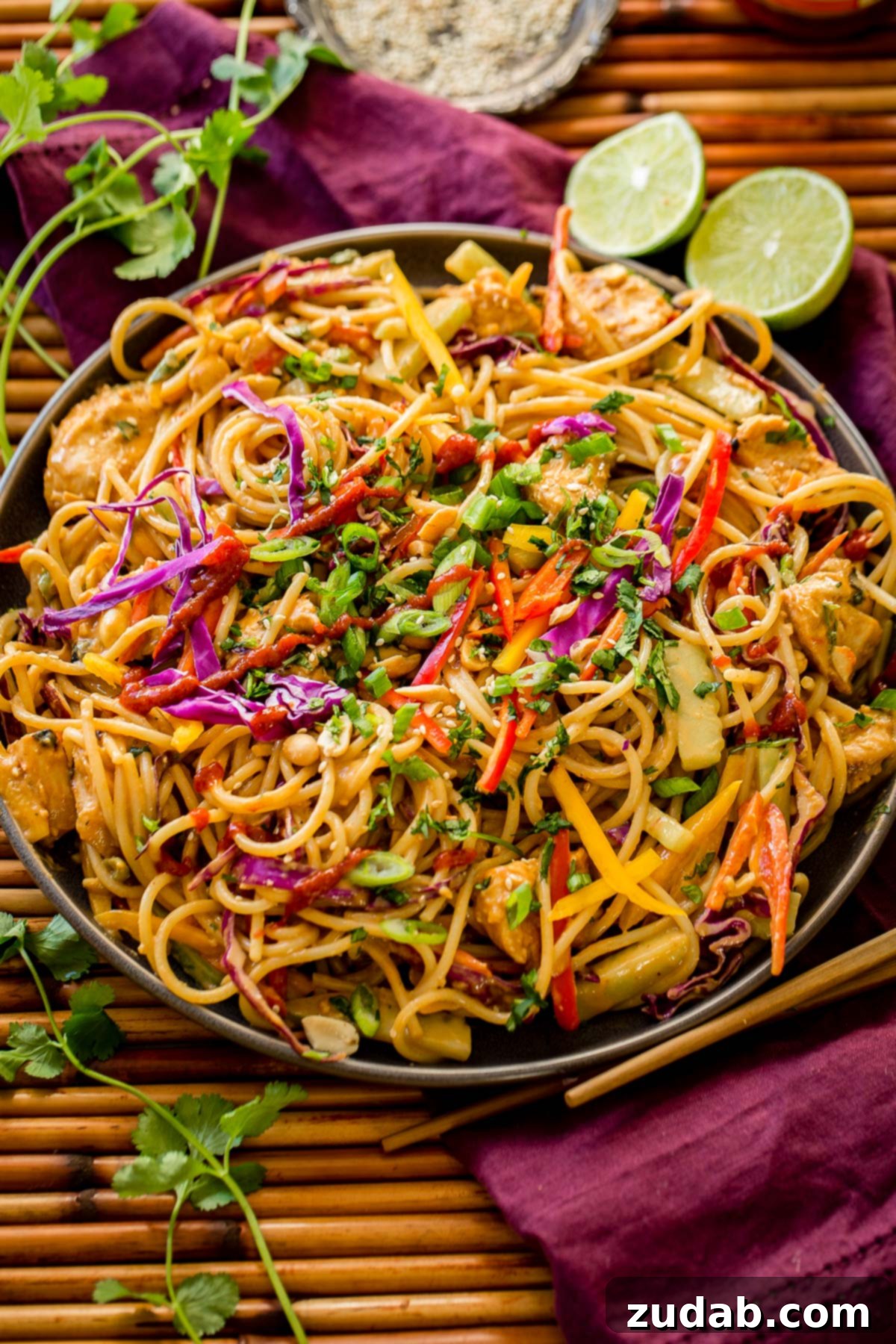
How to Assemble Your Thai Peanut Sauce Noodles with Chicken
Creating this delightful Thai Peanut Noodles with homemade peanut butter sauce is a straightforward process that yields incredible results with minimal prep time. Here’s a step-by-step guide to bringing this flavorful dish to life:
- **Prepare the Easy Peanut Sauce:** In a medium bowl, whisk together all the Thai peanut sauce ingredients until smooth and well combined. The consistency should be thick but pourable. Taste and adjust seasonings – add more Sriracha for heat, lime juice for tang, or honey for sweetness, if desired.
- **Marinate the Chicken:** Pour about half of the prepared peanut sauce into an 8×8 inch baking pan or a shallow dish. Add the cut chicken pieces and toss thoroughly to ensure every piece is coated. Cover the dish with plastic wrap and refrigerate for at least one hour to allow the flavors to meld beautifully. For the most tender and flavorful chicken, an overnight marination is highly recommended. Set aside the remaining half of the peanut sauce for the noodles.
- **Grill the Marinated Chicken:** Preheat your outdoor grill to medium-high heat. If using skewers, thread the marinated chicken pieces onto them. Place the chicken on the hot grill and cook for approximately 8-12 minutes, turning occasionally, until the chicken is cooked through and reaches an internal temperature of 165°F (74°C). The chicken should have nice char marks and be juicy. Remove from the heat and tent loosely with foil to rest for a few minutes.
- **Cook the Noodles:** While the chicken is grilling, cook your chosen pasta (such as angel hair or spaghetti) according to the package instructions until al dente. Drain the cooked pasta thoroughly.
- **Combine and Toss:** In a large mixing bowl, combine the drained pasta, grilled chicken, sliced bell peppers, cucumber, and red cabbage. Pour the reserved half of the Thai peanut sauce over the mixture. Toss everything gently until all the ingredients are evenly coated in the rich, creamy sauce.
- **Garnish and Serve:** Divide the Thai Peanut Noodles with Chicken among serving bowls. Generously top each serving with roasted peanuts, fresh cilantro, sliced green onions, and toasted sesame seeds. For those who enjoy an extra kick, offer additional Sriracha on the side. Serve immediately and savor every delicious bite!
Recommended Grill Pan for Indoor Cooking
If the weather isn’t cooperating for outdoor grilling, or you simply prefer the convenience of cooking indoors, I highly recommend using a quality grill pan. My top choice is the Lodge Cast Iron Grill Pan. This pan is fantastic because its deep ridges effectively mimic the char marks of an outdoor grill, without causing the meat to cook unevenly. At around $12, it’s an incredible value that will last a lifetime. Cast iron requires specific care, so investing in the Lodge Cleaning Kit is also worthwhile. For about $20, it provides all the tools you need to maintain your pan, ensuring it stays in perfect condition without requiring excessive scrubbing.
How Long Does Homemade Thai Peanut Sauce Last?
Proper storage is key to enjoying your delicious homemade Thai peanut sauce for as long as possible. If stored in an airtight container in the refrigerator, the Thai peanut sauce will maintain its freshness and flavor for up to two weeks. Always ensure the container is tightly sealed to prevent air exposure, which can affect both taste and texture. This makes it an excellent component for meal prepping, as you can prepare a larger batch of sauce ahead of time and use it for quick meals throughout the week. Always use a clean spoon each time you retrieve sauce to prevent contamination and further extend its shelf life.
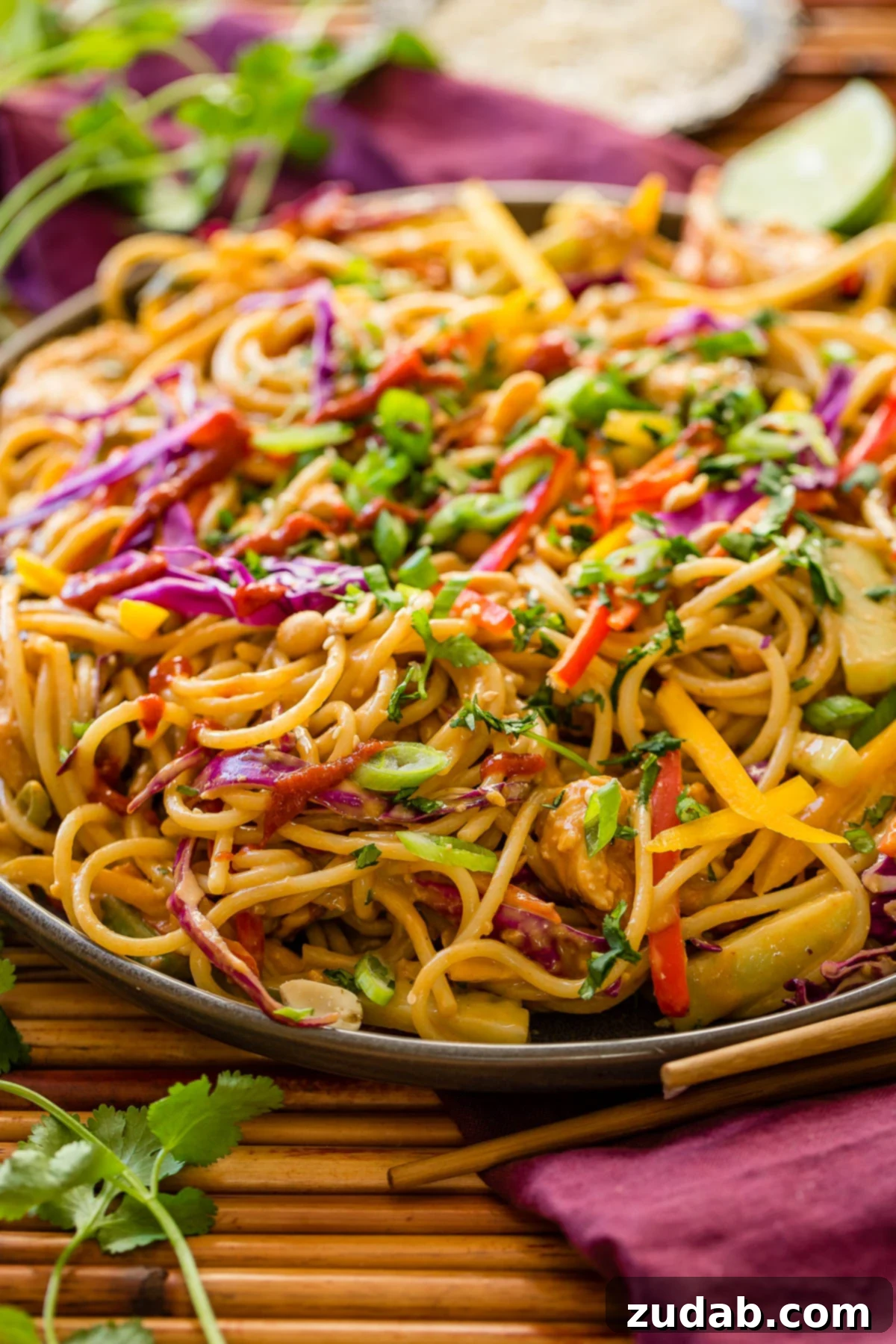
Expert Tips for the Best Thai Peanut Sauce & Peanut Noodles
Achieving restaurant-quality Thai Peanut Noodles and Chicken at home is easier than you think, especially with these insider tips:
- **Mastering Fresh Ginger:** Fresh ginger is absolutely crucial for the vibrant flavor of this peanut sauce. If you find peeling ginger tricky, here’s a game-changing hack: use the edge of a spoon instead of a knife or vegetable peeler. The spoon scrapes away the skin effortlessly, minimizing waste. Once peeled, use a fine-holed cheese grater for perfectly grated ginger, or finely mince it with a sharp knife. This small effort makes a huge difference in the sauce’s aromatic depth.
- **Maximize Chicken Flavor with Overnight Marination:** While an hour of marination will work in a pinch, I highly recommend marinating your chicken in the Thai peanut sauce overnight. This extended period allows the flavors to deeply penetrate the chicken, resulting in incredibly tender, juicy, and flavorful bites that truly stand out. It’s a simple step that significantly elevates the dish.
- **Efficient Veggie Prep:** To streamline your cooking process, prepare all your vegetables once the chicken is marinating. Slice your bell peppers, shred the cabbage, and dice the cucumber. Store these prepped veggies in a 3-compartment storage container. This keeps each vegetable fresh and separate, preventing flavors from mingling prematurely and ensuring everything is ready to toss in when your chicken and noodles are cooked. This simple meal prep strategy saves time and maintains crispness.
- **Achieving Perfect Sauce Consistency:** The ideal consistency for your peanut sauce is thick enough to coat the noodles and chicken generously, but still pourable. If your sauce is too thick, gradually whisk in a little more warm water until it reaches your desired consistency. If it’s too thin, you can add a small amount of extra peanut butter or let it chill in the fridge for a short while, as it tends to thicken as it cools.
- **Customization is Key:** Don’t hesitate to personalize your Thai peanut noodles. Add extra vegetables like shredded carrots, snap peas, or broccoli florets. For an added protein boost, consider shrimp or thinly sliced pork. A sprinkle of chopped fresh basil or mint can also introduce another layer of herbaceous freshness.
- **Serving Suggestions for an Enhanced Experience:** Serve your noodles with extra lime wedges for a fresh squeeze of citrus. A side of crushed red pepper flakes or a small bowl of Sriracha allows everyone to adjust their spice level individually. For an extra textural contrast and nutty flavor, don’t skimp on the roasted peanuts!
More Delicious Asian-Inspired Recipes to Explore:
- Teriyaki Veggie Bowls
- 15-Minute Chicken Stir-Fry
- Teriyaki Chicken Casserole
- Classic Chinese Orange Chicken
- Quick Cashew Chicken
- Slow Cooker Asian Sticky Ribs
- Sweet and Sour Meatballs
- Healthy Thai Peanut Steak Salad
- Slow Cooker Korean BBQ Beef
- All of Our Asian Recipes!
Thai Peanut Sauce Noodles and Chicken
Thai Peanut Noodles and Chicken
Ingredients
- 3 Boneless, Skinless Chicken Breasts, cut in 1″ Pieces
- 1/2 Package Pasta, * see note
- 1 Red Bell Pepper, sliced
- 1 Orange Bell Pepper, sliced
- 1/2 Cup Red Cabbage, sliced
- 1 Cucumber, peeled and sliced thin then cut in 1-2″ pieces
- 1/2 Cup Dry Roasted, Salted Peanuts, roughly chopped
- 1/3 Cup Cilantro, chopped
- 2 Tablespoons Green Onions, sliced
- Sesame Seeds
Thai Peanut Sauce
- 1 Cup Creamy Peanut Butter
- 2-3 Tablespoons Sriracha
- 1/4 Cup Fresh Lime Juice
- 1/4 Cup Honey
- 2 Tablespoons Toasted Sesame Oil
- 1/2 Cup Warm Water
- 3 Tablespoons Fresh Grated Ginger
- 6 Cloves Garlic, minced
- 1/3 Cup Soy Sauce
- 1 teaspoon Rice Vinegar
Instructions
-
Whisk together the peanut sauce ingredients and pour half into an 8×8″ baking pan. Add the chicken and toss to coat. Cover with plastic wrap and refrigerate for 1 hour or up to overnight.
-
Reserve the remaining peanut sauce for the noodles.
-
Heat a grill to medium high heat. Place the chicken on skewers and grill for 8 minutes or until cooked through. Remove from the heat and tent with foil.
-
Meanwhile, cook the noodles according to package instructions.
-
Drain the pasta and toss with the chicken, peppers, cucumbers, cabbage, and sauce.
-
Top with peanuts, cilantro, green onions and sesame seeds. Serve with additional sriracha if desired.
Recipe Notes
Store in refrigerator for up to 5 days.
Nutrition
Nutrition information is automatically calculated, so should only be used as an approximation.