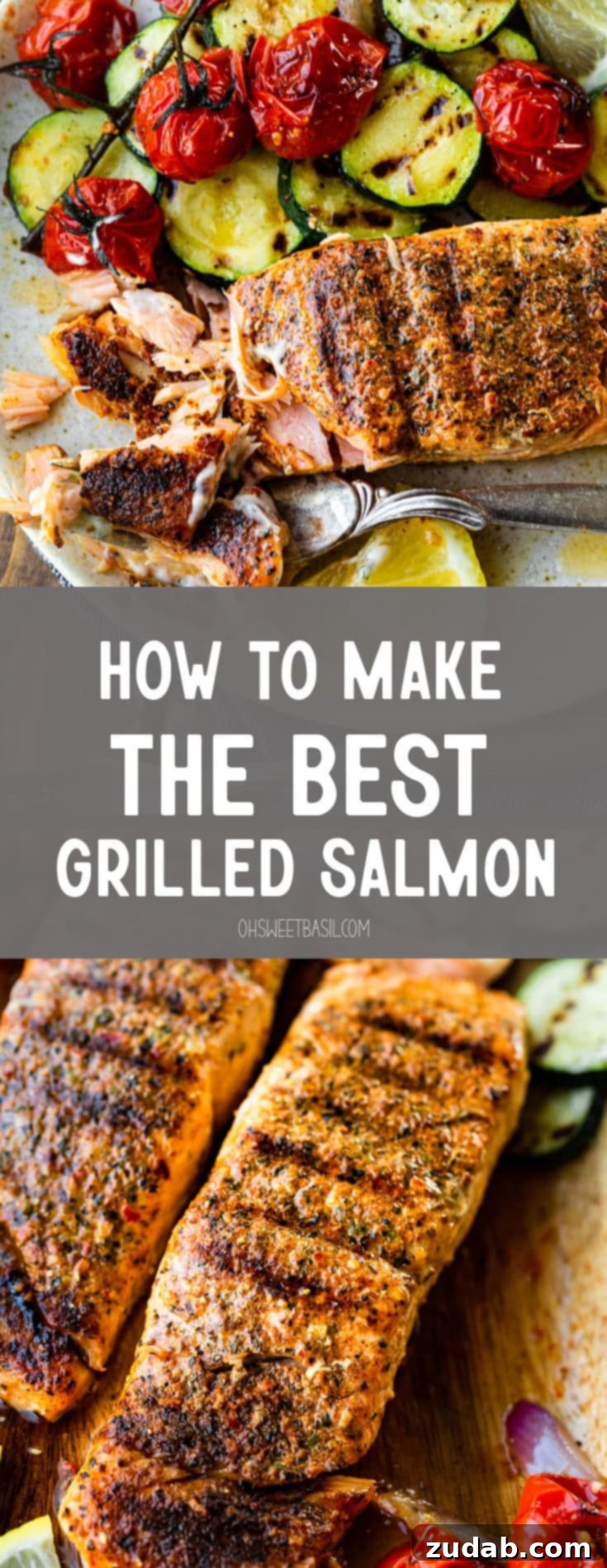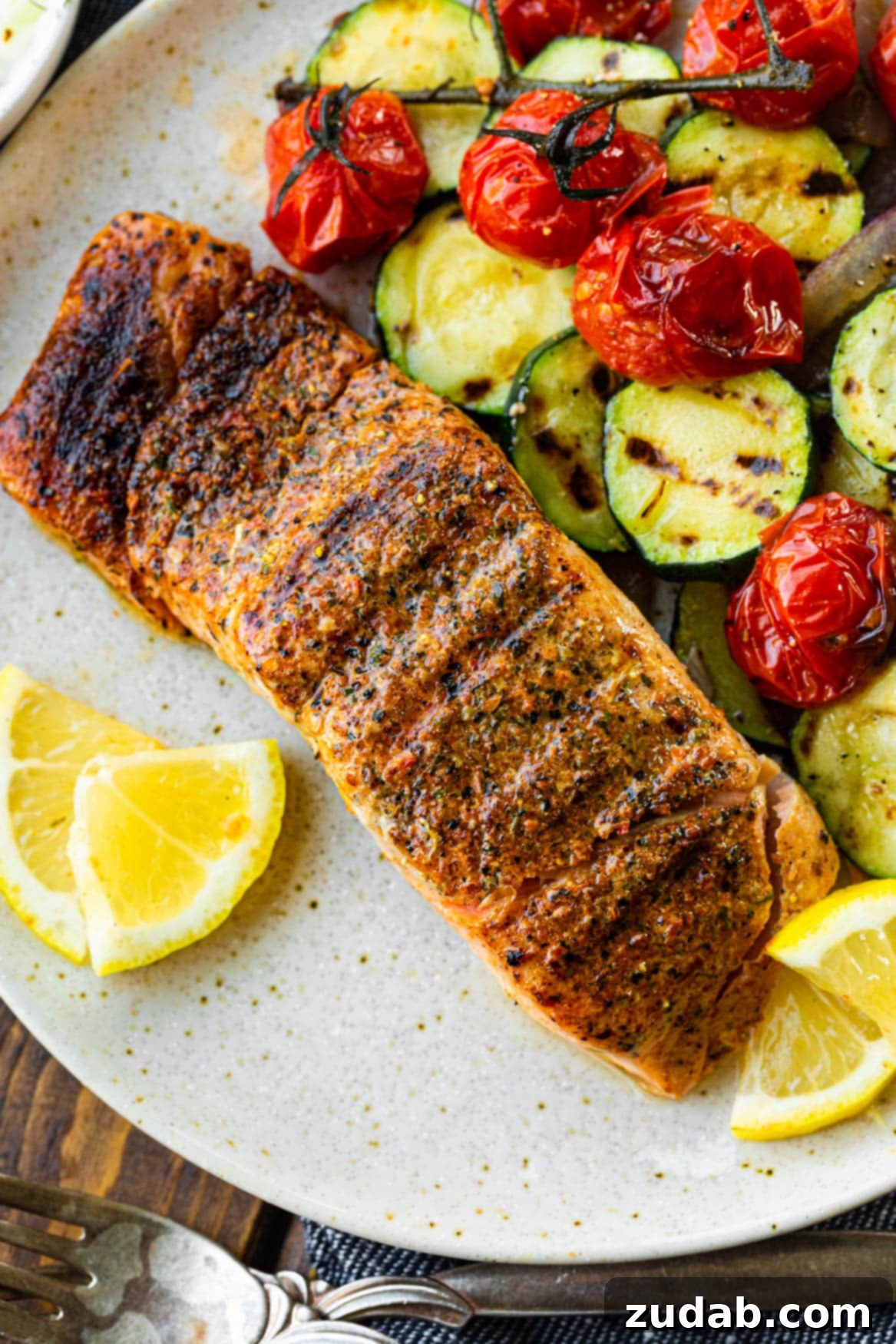
Unlock the secret to a perfectly flaky, irresistibly tender, and incredibly flavorful meal with our ultimate guide to **grilled salmon**! This recipe goes beyond just cooking fish; it’s a celebration of vibrant flavors, featuring a unique, mouth-watering seasoning rub and a creamy, zesty **homemade tartar sauce** that will elevate your summer grilling experience. Say goodbye to dry, bland salmon and hello to your new favorite weeknight dinner, ready in under 20 minutes!
As the last chill of winter fades, there’s an undeniable call to fire up the grill and embrace the warmth of the **summer grilling season**. And what better way to kick off outdoor cooking than with an **easy grilled salmon recipe** that promises both health and unparalleled taste? Whether you’re a seasoned grill master or a novice, this foolproof method ensures a delicious result every time.
From Skeptic to Salmon Enthusiast: My Journey
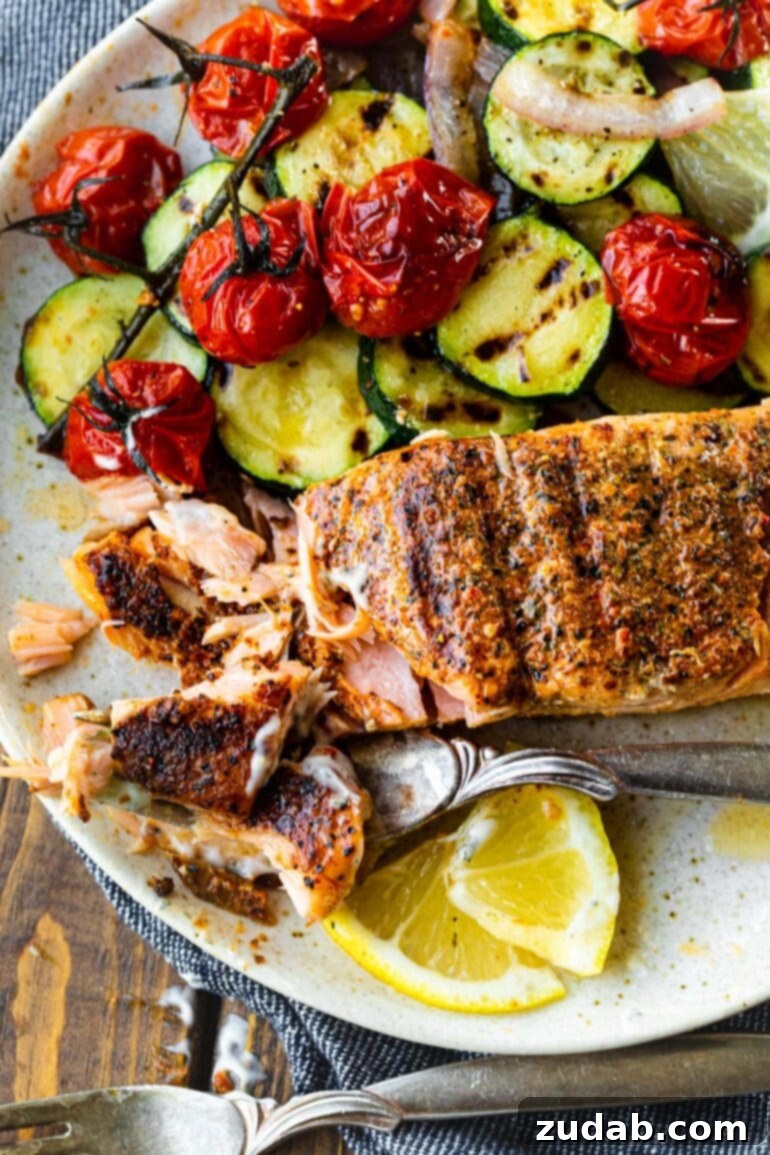
For many years, salmon was a fish I actively avoided, despite growing up in the Pacific Northwest where it holds significant cultural importance. My childhood memories are filled with stories of “the salmon people” from Native American traditions, their chants, songs, and dances often celebrating this magnificent creature. Yet, the taste of salmon itself was something I simply couldn’t get behind. It wasn’t until much later that I embarked on a mission to truly appreciate this nutritious powerhouse.
My culinary journey with salmon was transformed by a simple yet profound trick: cooking it with the skin on. This method acts as a natural barrier, protecting the delicate flesh from the direct heat of the grill, locking in moisture and flavor. Once cooked, the skin peels away effortlessly, leaving you with a perfectly cooked fillet. No more awkward knife struggles or unpleasant textures! I vividly recall one of my first encounters with skin-on salmon as an adult, where I gingerly ate the smallest piece, skin and all, trying desperately not to cringe. Thankfully, with this skin-on grilling technique, those days are long behind me, and I can now truly savor every bite of a perfectly **cooked grilled salmon**.
Essential Ingredients for Your Perfect Grilled Salmon Dish
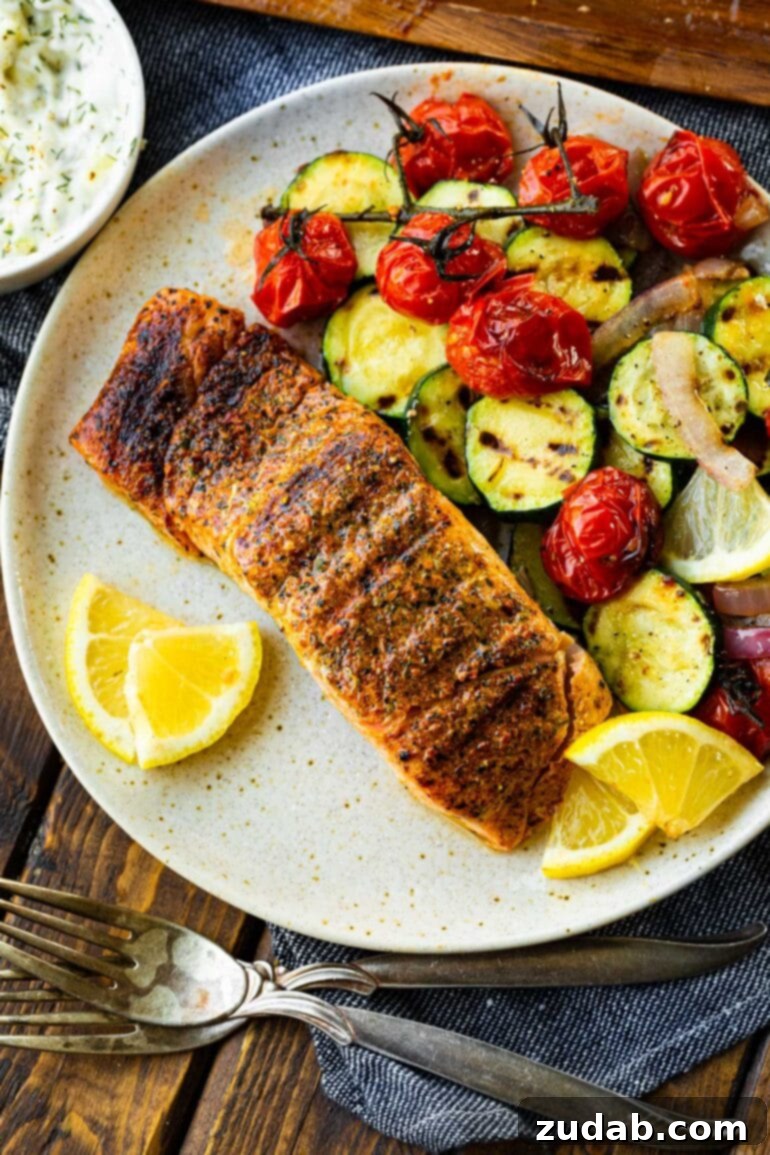
Crafting the perfect **grilled salmon** involves two key components: a robust seasoning rub for the salmon fillets and a bright, creamy **homemade tartar sauce**. This combination ensures every bite is packed with a delightful balance of smoky, savory, and tangy notes. Here’s a detailed look at the ingredients you’ll need to create this culinary masterpiece:
For the Flavorful Salmon Fillets:
- Salmon Fillets (skin-on): Opt for fresh, high-quality fillets with the skin intact. The skin is crucial for maintaining moisture and crispness during grilling.
- Olive Oil: Used to coat the salmon, helping the seasoning adhere and preventing sticking to the grill.
- Kosher Salt: A fundamental seasoning that enhances all the other flavors.
- Smoked Paprika: Adds a beautiful smoky depth and a vibrant red hue to the rub, making the salmon visually appealing and deeply flavorful.
- Chili Powder: Provides a subtle warmth and earthy undertone without being overly spicy. Adjust to your preference.
- Granulated Garlic: Offers a concentrated garlic flavor that permeates the fish. You can substitute with a smaller amount of garlic powder.
- Parsley Flakes: Contributes a touch of herbaceous freshness to the seasoning blend.
- Ground Mustard: A secret ingredient that adds a subtle pungent note, complementing the richness of the salmon.
- Black Pepper: Freshly ground black pepper adds a sharp, aromatic kick.
- Lemon: Essential for serving, providing a burst of refreshing acidity that perfectly balances the rich flavor of the grilled salmon.
For the Creamy Homemade Tartar Sauce:
- Mayonnaise: The creamy base for a classic tartar sauce. Use a good quality mayonnaise for the best flavor.
- Dill Pickles (finely chopped): These add a crucial tangy, briny crunch that defines tartar sauce.
- Fresh Dill (chopped): Fresh herbs are key! Dill brings a bright, aromatic freshness that pairs wonderfully with seafood.
- Lemon Juice (freshly squeezed): A squeeze of fresh lemon juice brightens the sauce and adds a zesty finish.
- Sugar: A pinch of sugar balances the acidity from the pickles and lemon, creating a harmonious flavor profile.
- Salt and Pepper: Season to taste, ensuring the sauce is perfectly seasoned to complement your grilled salmon.
Exact measurements for all these ingredients, along with step-by-step instructions, are provided in the comprehensive recipe card below. This list offers a perfect overview, preparing you for a grilling adventure!
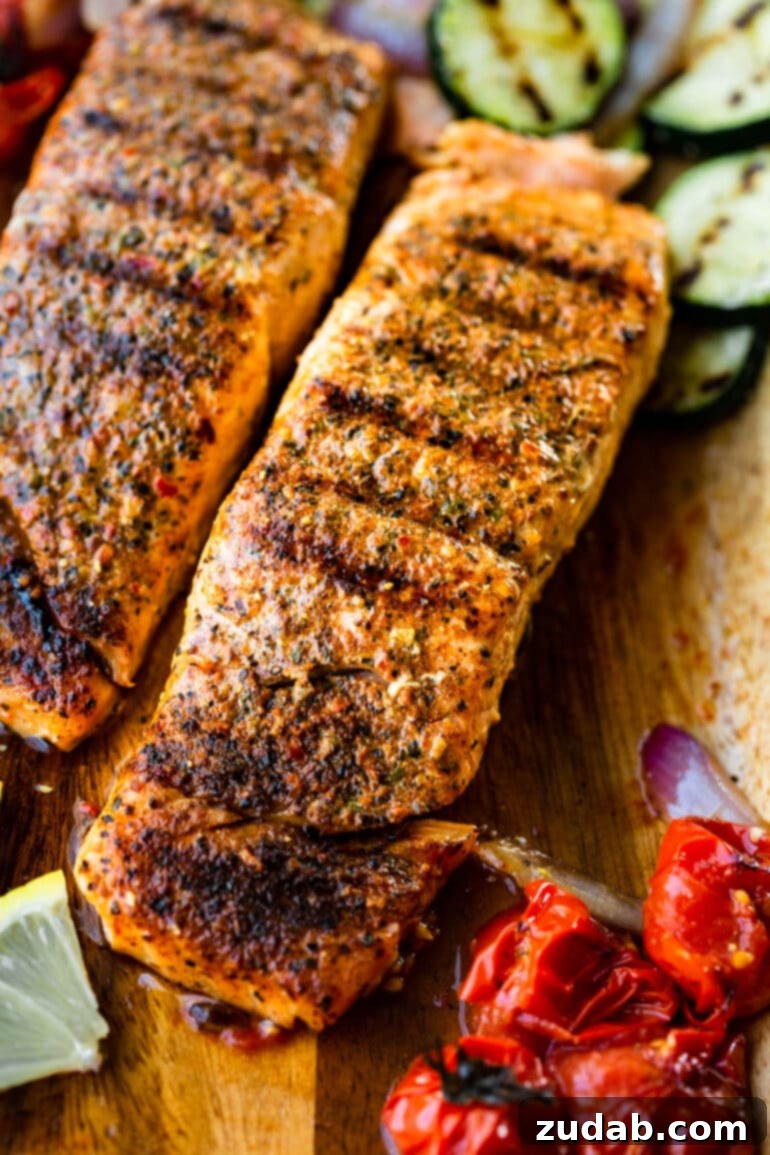
Mastering the Art of Grilling Salmon: A Simple Guide
Grilling salmon is surprisingly simple, allowing the natural flavors of the fish to shine while achieving that perfect smoky char. The beauty of this method lies in its efficiency—a quick prep followed by the magic of the grill. Here are the straightforward steps to achieving flawlessly **grilled salmon**:
- Preheat Your Grill to High Heat: Aim for a temperature range of 450°F-550°F. A hot grill is essential for a beautiful sear and to prevent sticking.
- Prepare the Grill Grates: Start by thoroughly cleaning your grill grates to remove any residual food. Then, using tongs, wipe the hot grates with a paper towel generously coated in vegetable or olive oil. This crucial step creates a non-stick surface. Close the lid and let the grill continue to heat up.
- Prepare the Salmon Seasoning: In a small bowl, combine all the dry ingredients for your seasoning mixture (Kosher salt, smoked paprika, chili powder, granulated garlic, parsley flakes, ground mustard, and black pepper). Mix well until fully combined.
- Season the Salmon Fillets: Pat your skin-on salmon fillets dry with paper towels—this helps achieve a crispier skin. Brush the flesh side of each fillet with a light coating of olive oil, then generously and evenly season with your prepared spice rub. Don’t be shy; a good rub makes all the difference!
- Grill Skin-Side Down First: Carefully place the seasoned salmon fillets, skin-side down, directly over the high heat on the preheated grill. Close the lid immediately. Cook for approximately 6-8 minutes. During this time, the skin will crisp up, and the fish will cook most of the way through.
- Gentle Flip and Finish: Using a wide, thin spatula, gently flip each fillet. Close the lid again and continue to cook for another 2-5 minutes, or until the internal temperature reaches your desired doneness (aim for 130-135°F for medium-rare, as it will continue to cook while resting).
- Rest and Serve: Carefully transfer the **perfectly grilled salmon** fillets to a plate or serving platter. Let them rest for a few minutes. This allows the juices to redistribute, ensuring a moist and tender result. Gently slide a spatula between the skin and the flesh to remove the crispy skin (if desired), and serve immediately with fresh lemon wedges and your creamy homemade tartar sauce.
- Whip Up the Tartar Sauce: While the salmon rests, simply whisk together all the ingredients for the homemade tartar sauce. This can be prepared up to a day in advance for convenience, allowing the flavors to meld beautifully.
These detailed instructions, along with precise measurements, are also available in the recipe card found just below, ensuring you have all the information you need for a successful **grilled salmon dinner**.
Achieving Perfect Doneness: How Long to Cook Grilled Salmon
One of the most common questions when grilling fish is about cook time. Fortunately, salmon fillets cook remarkably quickly on the grill, typically requiring only about 8-12 minutes in total. For standard 6-8 ounce portions, expect to cook skin-side down for 6-8 minutes, followed by a quick flip and another 2-5 minutes on the flesh side.
If you’re grilling a larger, whole salmon fillet, the cooking time will naturally be a little longer, but still surprisingly fast. The key to knowing when your salmon is perfectly cooked is not just the clock, but also visual cues and, for precision, a meat thermometer. The flesh should be opaque throughout and easily flake with a fork. However, to avoid overcooking and ensure the most tender results, using a thermometer is highly recommended.
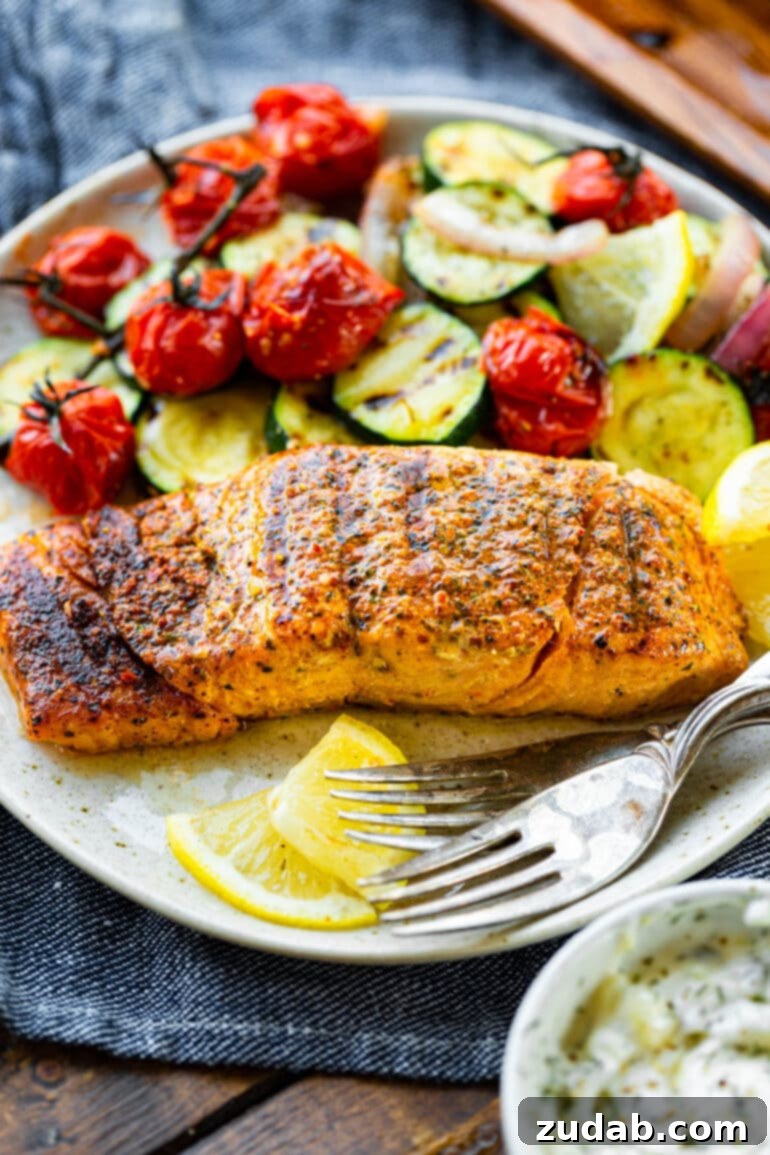
Top Tips for Unforgettable Grilled Salmon
Transforming a simple salmon fillet into a culinary delight on the grill is all about technique and a few key pointers. Follow these essential tips to ensure your **grilled salmon** is nothing short of perfection:
- Always Choose Skin-On Fillets: This is arguably the most important tip for grilling salmon. The skin provides a protective barrier against the high heat, preventing the delicate flesh from drying out and sticking. It also crisps up beautifully, adding a desirable texture that’s easily removed before serving if preferred.
- Season Generously and Accompany with Lemon: The flesh side of the fillet is where all the flavor magic happens. Don’t be shy with your seasoning rub! A generous coating ensures a rich, savory crust. Always serve your **perfectly grilled salmon** with fresh lemon wedges; the bright acidity cuts through the richness of the fish, enhancing its flavor profile.
- Ensure Your Grill Grates Are Impeccably Clean and Piping Hot: A clean, very hot grill grate is paramount for achieving those coveted grill marks and preventing the salmon from sticking. Heat your grill to high, then use a sturdy grill brush to scrape off any residue. The cleaner and hotter the grates, the better the sear and the easier the release.
- Flip Only Once: Patience is a virtue, especially when grilling salmon. Place the salmon skin-side down and resist the urge to move or flip it until it’s ready. The fish will naturally release from the grates when it has formed a crust and is partially cooked. Flipping prematurely will cause it to stick and break apart.
- Avoid the Cardinal Sin: Don’t Overcook! Salmon goes from perfectly moist to dry and unappetizing in a matter of seconds. Keep a close eye on it and use a meat thermometer for accuracy. Trust the recommended temperatures and remember that salmon continues to cook slightly after being removed from the heat.
Understanding Salmon Doneness: What Temperature is Salmon Safe to Eat?
For optimal safety and flavor, knowing the correct internal temperature for salmon is crucial. According to the USDA, salmon is safe to eat when it reaches an internal temperature of 145 degrees F (63°C). However, for a perfectly moist and tender fillet, many chefs recommend pulling the salmon off the grill when its internal temperature reaches between 130-135 degrees F (54-57°C). This is because the fish will continue to cook due to residual heat as it rests, bringing it up to the ideal doneness.
To accurately check the internal temperature, insert a reliable meat thermometer into the thickest part of the salmon fillet. This small investment will save you from guesswork and ensure consistently delicious results every time you make **grilled salmon**.
Choosing Your Catch: Which Salmon is Best for Grilling?
When I first delved into the world of salmon (a late bloomer to fish, I admit!), the sheer variety was overwhelming. Wild-caught vs. farmed, skin-on vs. skin-off, and then the different types: Atlantic, Coho, King, Sockeye, and more. Making the right choice can significantly impact your **grilled salmon** experience.
For grilling, I personally prefer to use **farm-raised salmon**. Why? Because it generally has a higher fat content compared to its wild-caught counterparts. This extra fat makes it more forgiving under the high heat of the grill, reducing the chances of it drying out and resulting in a richer, more tender fillet. Furthermore, as emphasized earlier, always opt for salmon with the **skin on**. This acts as a protective layer, preventing sticking and ensuring a moist interior.
As for specific types, **Atlantic Salmon** is a popular choice for grilling due to its mild flavor and buttery texture, and it’s almost exclusively farm-raised. **Sockeye Salmon**, while leaner and more intensely flavored (and typically wild-caught), can also be excellent on the grill if you prefer a bolder taste and watch the cooking time carefully. King Salmon (Chinook) is often considered the best for grilling due to its rich, fatty flesh, but it can be pricier. Coho Salmon offers a milder flavor and firm texture, making it another great option for the grill. Ultimately, select what’s available fresh and looks vibrant at your local market, prioritizing the skin-on aspect for grilling.
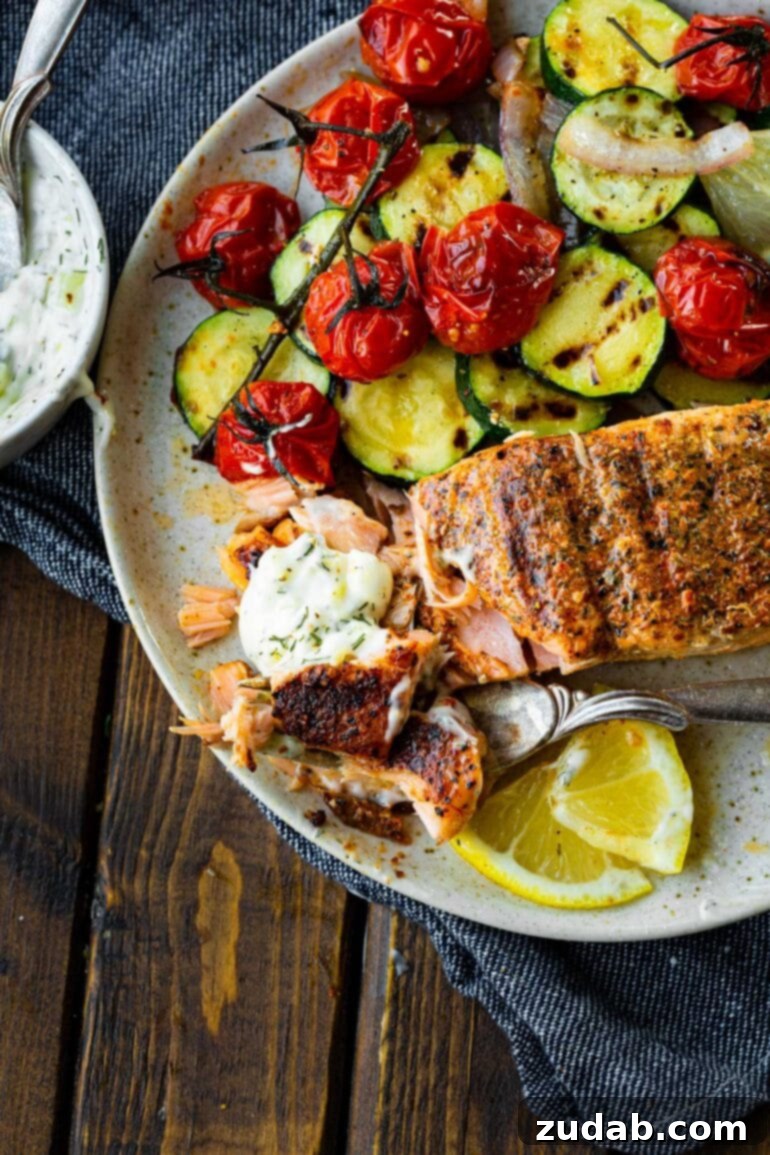
Perfect Pairings: What to Serve with Grilled Salmon
**Grilled salmon** is incredibly versatile and pairs beautifully with a wide array of side dishes. Its rich flavor can stand up to hearty sides, yet its delicate nature also complements lighter accompaniments. Some of our personal favorites that enhance the entire meal include:
- Grilled Vegetables with Balsamic Vinaigrette: A medley of tender-crisp vegetables, lightly charred on the grill, makes a fantastic and healthy companion.
- Easy Grilled Lemon Pepper Asparagus: The earthy notes of asparagus, brightened by lemon and pepper, are a classic pairing for salmon.
- Fresh Tomato Cucumber Salad: A crisp, refreshing summer salad provides a wonderful contrast to the warmth of the grilled fish.
- Strawberry Feta Spinach Salad: For something a bit different, the sweet and tangy notes of this salad offer a delightful flavor profile.
- Crusty Artisan Bread: Perfect for soaking up any delicious juices or serving alongside your meal.
- Warm Homemade French Bread: A soft, warm loaf is always a welcome addition to any dinner table.
Feel free to experiment with your own favorite sides; the possibilities are endless!
Beyond the Grill: Other Delicious Ways to Cook Salmon
While this **grilled salmon recipe** promises an exceptional outdoor cooking experience, we understand that sometimes you might be looking for a different flavor profile or cooking method. If grilling isn’t an option or you simply want to explore other delicious ways to enjoy salmon, we have several fantastic oven-baked recipes that offer a variety of incredible flavors:
- Sweet and Spicy Orange Salmon
- Maple Bacon Mustard Salmon
- Teriyaki Salmon in a satisfying rice bowl
- Garlic Butter Salmon
- Apricot Lemon Salmon
Each of these recipes offers a unique twist, proving that salmon is a versatile protein that can be enjoyed in countless flavorful ways.
The Skin Debate: Is It Better to Cook Salmon with the Skin Off or On?
When it comes to grilling salmon, my steadfast recommendation is always to cook it with the skin on. The skin serves as a crucial natural protector, acting almost like a built-in pan that shields the delicate flesh from the intense heat of the grill. This not only helps to prevent the salmon from drying out but also contributes to a perfectly crisp exterior.
Moreover, the skin helps the fillet hold its shape, making it much easier to handle and flip on the grill without it flaking apart. Once your **grilled salmon** is cooked to perfection, the skin becomes incredibly easy to remove, sliding off effortlessly to reveal tender, moist fish underneath. It truly makes for a superior grilling experience.
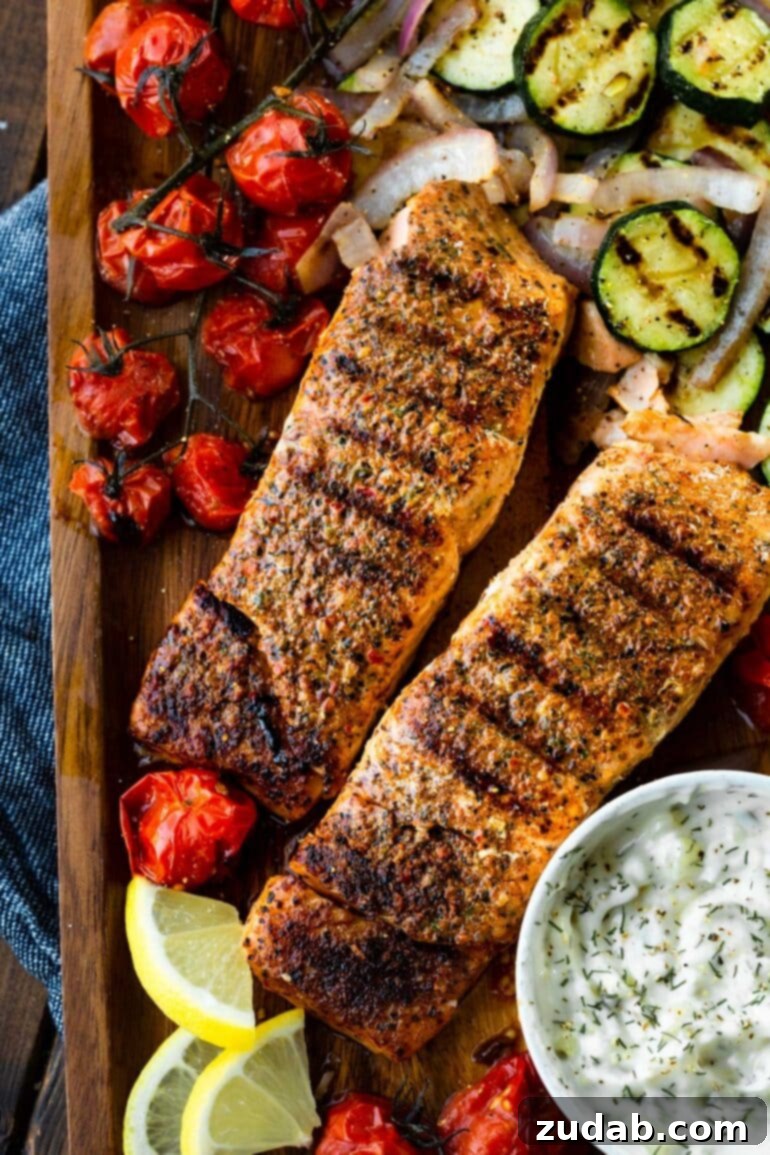
Grilling Strategy: Which Side of the Salmon Do You Grill First?
For the best results when grilling salmon, always start by placing the fillet skin-side down on the hot grates. This is the side that should bear the brunt of the initial, longer cooking time. Grilling skin-side down first allows the skin to crisp up beautifully while protecting the more delicate flesh from direct heat, preventing it from overcooking or sticking. You’ll only need to flip the salmon once, near the end of the cooking process, to briefly cook the flesh side and achieve those attractive grill marks on top. This method ensures a moist interior with a desirable, slightly charred exterior.
Foil or No Foil: Is It Better to Grill Salmon on Foil or Not?
While grilling salmon on foil is an option, it’s generally not recommended if you’re aiming for that signature **grilled salmon** flavor and texture. When salmon is cooked on foil, it essentially steams the fish within its own moisture. This method, while preventing sticking and making cleanup easier, defeats the primary purpose of grilling, which is to achieve those delicious crispy edges and a beautiful, slightly smoky crust on the fish. Direct contact with the hot grates is what imparts that unique grilled flavor and texture that makes **grilled salmon** so appealing. If sticking is a concern, follow our tips below for a perfect non-stick grilling experience without foil.
The Non-Stick Secret: How to Keep Fish From Sticking on the Grill
One of the most common anxieties when grilling fish, particularly delicate salmon, is the fear of it sticking to the grates and falling apart. But with a few simple techniques, you can confidently grill fish without any crumbling disasters. Here’s how to ensure your **grilled salmon** releases effortlessly:
- Start with a Spotlessly Clean Grill: Before you even think about placing your fish on the grates, make sure your grill is thoroughly scrubbed clean. Any leftover residue from previous cooks can act as an adhesive, making your fish stick.
- Oil Those Grates Generously: Once the grill is hot, use a pair of tongs to hold a paper towel dipped in high-smoke-point vegetable oil or olive oil. Carefully rub the oiled paper towel all over the hot grates. This creates an immediate non-stick surface, essential for delicate proteins.
- Patience is Key: Let the Fish Release Naturally: This is a crucial, often surprising, tip. When salmon is properly cooked on a hot, oiled grill, it will naturally develop a crust and release itself from the grates. If you try to flip it and it resists, it’s simply not ready yet. Give it another minute or two, allowing that crust to fully form, and then try again. You’ll be amazed at how easily it lifts once it’s truly done.
By following these steps, you’ll master the art of grilling fish without any sticking issues, ensuring beautiful, intact **grilled salmon** fillets every time.
Storage and Reheating Best Practices for Grilled Salmon
Enjoying leftover **grilled salmon** can be just as delightful as the freshly cooked meal, provided you store and reheat it correctly. Here’s how to maintain its deliciousness:
- Storage: Once your grilled salmon has cooled completely, transfer it to an airtight container. It will store beautifully in the refrigerator for up to 3-4 days, making it perfect for meal prep or quick lunches.
- Reheating: While the microwave might be tempting for speed, its high, uneven heat can quickly turn delicate salmon dry and rubbery. For best results, **reheat salmon** gently in the oven. Place the fillets in a baking dish, set the oven temperature to 300 degrees F (150°C), and loosely cover the dish with aluminum foil to trap moisture. It will typically take about 10-15 minutes to heat through, ensuring your salmon remains moist and flavorful.
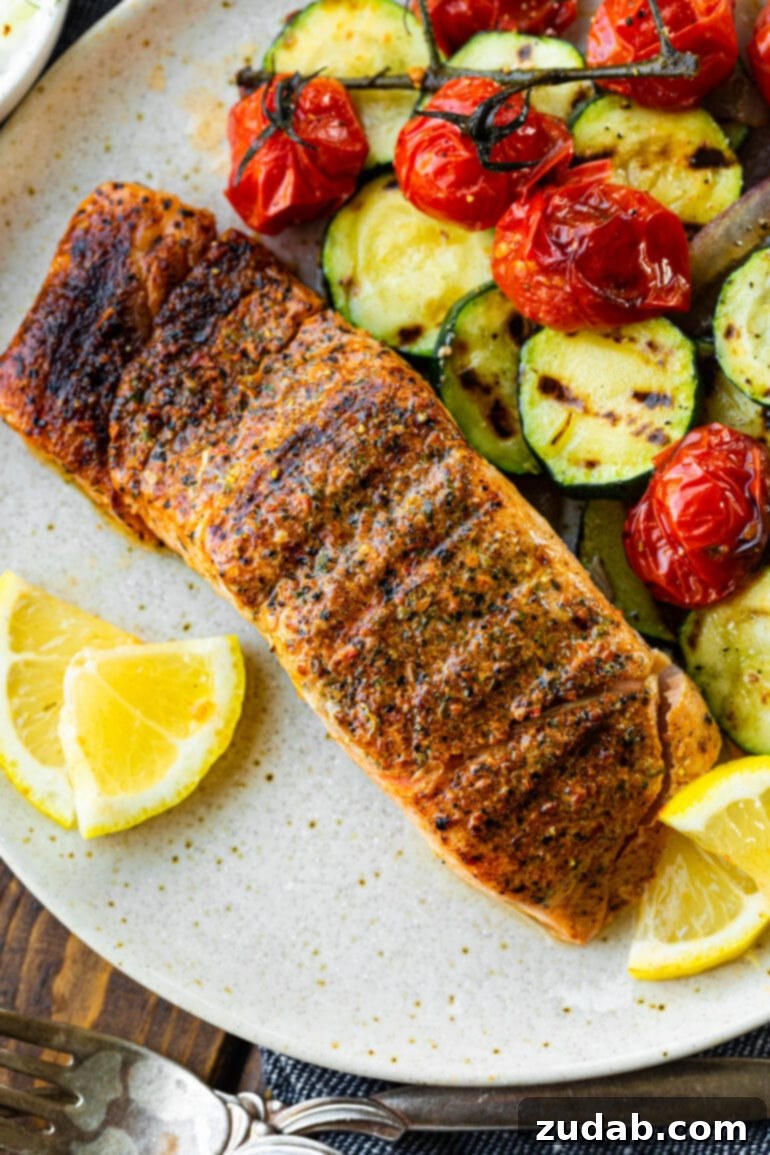
This season, let’s step away from the usual burgers and chicken and make **grilled salmon** the star of your dinner table tonight! Our recipe, seasoned to absolute perfection and complemented by a bright, zesty homemade tartar sauce, delivers that extra punch of flavor you crave. It’s not just healthy and incredibly easy; it’s a complete, satisfying dinner ready in **less than 20 minutes**.
Embrace the simplicity and deliciousness of perfectly **grilled salmon** – a meal that truly celebrates the flavors of summer!
Explore More of Our Favorite Summer Grilling Recipes
If you’re eager to keep the grilling season going strong, check out some of our other top-rated recipes designed for your outdoor adventures:
- Best Grilled Chicken Marinade
- Flavorful Grilled Flank Steak
- Tender Grilled BBQ Baby Back Ribs
- Easy Huli Huli Grilled Chicken
- Garlic Parmesan Grilled Chicken Wings
How to Make the Best Grilled Salmon
Sweet Basil
10 minutes
10 minutes
20 minutes
2
Ingredients
For the Salmon
- 2 Salmon Fillets, 6-8 ounce, skin-on
- 2 Tablespoons Olive Oil
- 2 teaspoons Kosher Salt
- 1/2 teaspoon Smoked Paprika
- 1 teaspoon Chili Powder
- 1/2 teaspoon Granulated Garlic, or 1/4 teaspoon garlic powder
- 1/4 teaspoon Parsley Flakes
- 1/4 teaspoon Ground Mustard
- 2 teaspoons Freshly Ground Black Pepper
- 1 Lemon, sliced into wedges
For the Tartar Sauce
- 1 Cup Mayonnaise
- 3/4 Cup Dill Pickles, finely chopped
- 1 Tablespoon Fresh Dill, chopped
- 1 teaspoon Lemon Juice, fresh
- 1 teaspoon Sugar
- Salt and Pepper, to taste
Instructions
For the Salmon
-
Heat a grill to high heat, 450°F-550°F.
-
Brush the cooking grates clean, rub an oiled paper towel over them and close the lid.
-
Mix together the seasoning. Generously coat the flesh side of the salmon fillets with oil and season evenly with the seasoning mix.
-
Grill the salmon skin side down over direct high heat with the lid closed, for about 6-8 minutes. Gently turn the salmon over, close the lid, and cook to 130°F or about 2-5 minutes until desired doneness.
-
Transfer to a platter to rest for 1-2 minutes. Gently lift the salmon skin from the fillets and serve with lemon and tartar sauce.
For the Tartar Sauce
-
Whisk all the ingredients together and serve. It can be made up to a day ahead of time.
Nutrition
Serving: 1fillet
,
Calories: 661kcal
,
Carbohydrates: 17g
,
Protein: 35g
,
Fat: 50g
,
Saturated Fat: 8g
,
Polyunsaturated Fat: 21g
,
Monounsaturated Fat: 20g
,
Trans Fat: 0.1g
,
Cholesterol: 111mg
,
Sodium: 3778mg
,
Potassium: 1006mg
,
Fiber: 2g
,
Sugar: 7g
,
Vitamin A: 816IU
,
Vitamin C: 6mg
,
Calcium: 77mg
,
Iron: 2mg
Nutrition information is automatically calculated, so should only be used as an approximation.