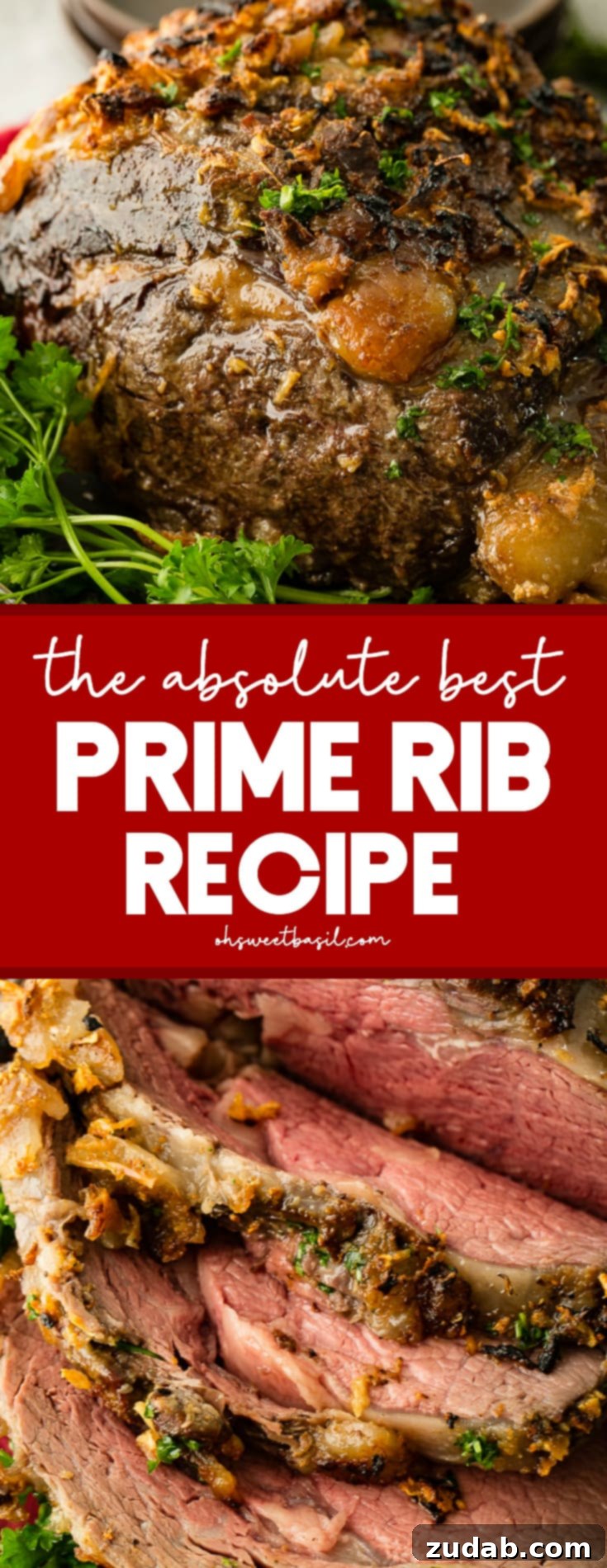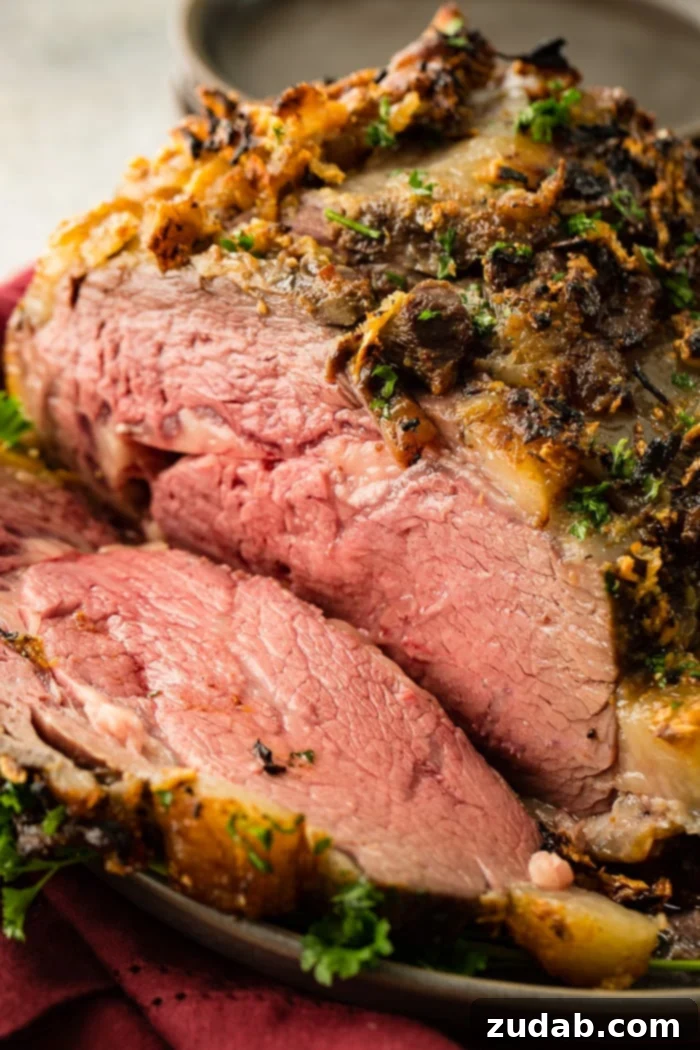
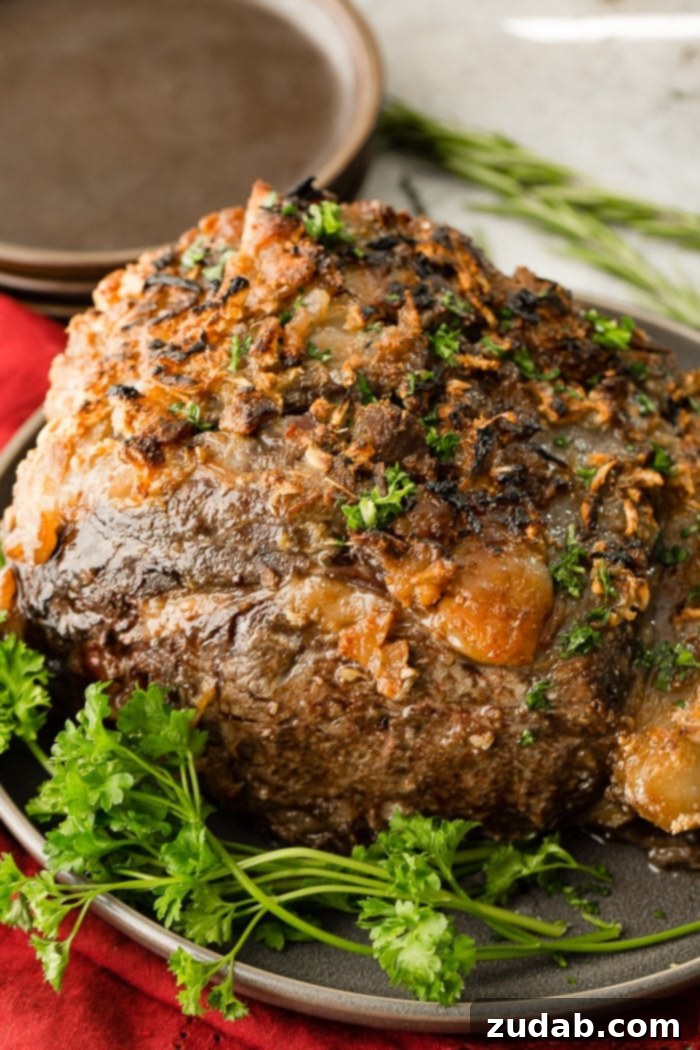
Every year, the promise of a magnificent holiday feast often includes a show-stopping centerpiece. For many, nothing quite rivals the sheer elegance and exquisite flavor of a perfectly cooked prime rib. We’re not just talking about *any* prime rib; we’re talking about The Absolute Best Prime Rib Recipe – a dish so succulent, so tender, and so richly flavorful it will become a cherished tradition in your home. This year, I’m thrilled to finally share my foolproof method, complete with all the insights and tips needed to transform a simple roast into an unforgettable culinary masterpiece.
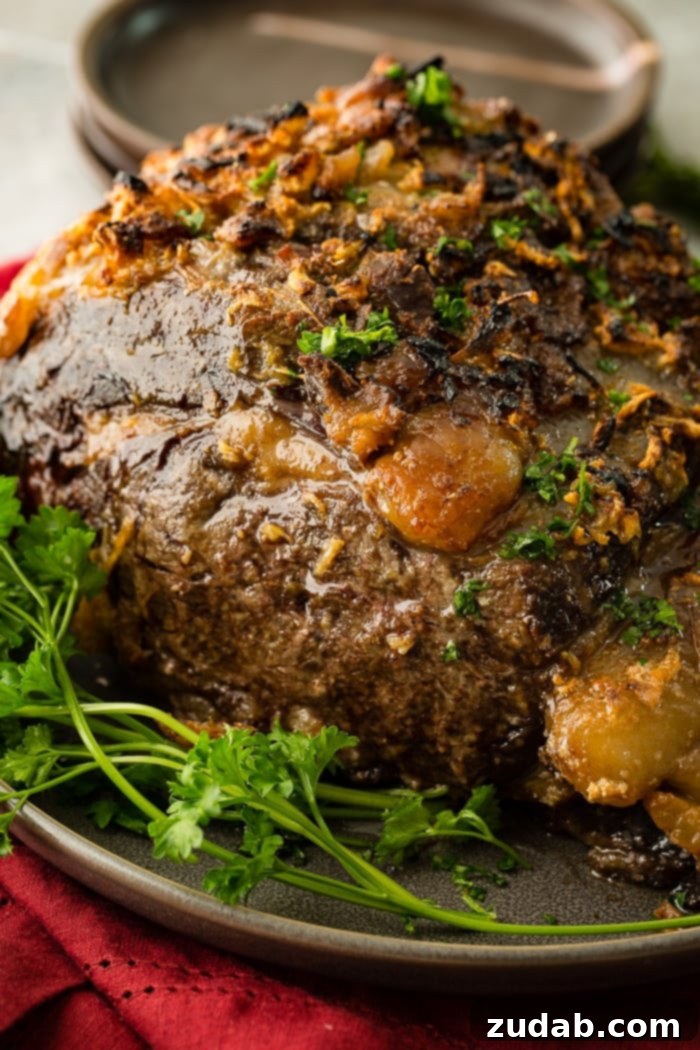
There’s something truly magical about a perfectly roasted prime rib. It’s more than just a meal; it’s an experience that brings people together, creating lasting memories. The tender, juicy meat practically melts in your mouth, infused with incredible savory notes. But for me, the magic truly happens on the outside. That beautifully caramelized crust, packed with savory herbs and garlic, is like the burnt ends of a brisket – rich, intensely flavorful, and utterly irresistible. It’s a texture and taste sensation that perfectly complements the buttery tenderness of the interior.
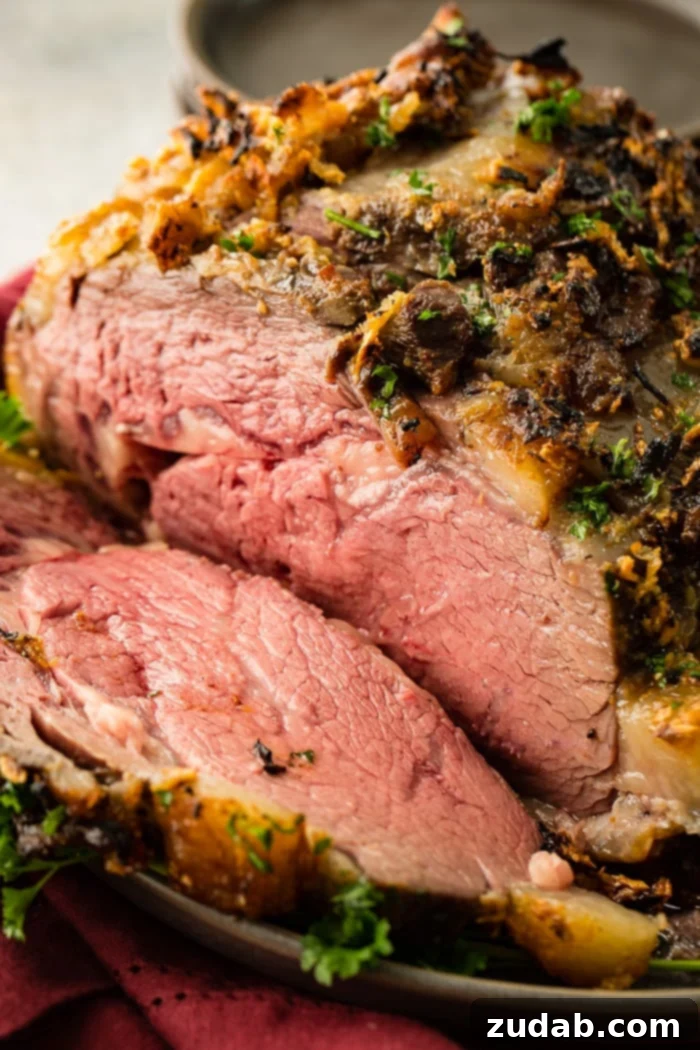
While prime rib is traditionally served rare to medium-rare, this recipe allows you to achieve your desired level of doneness, from a vibrant red center to a more robust medium. I’ve included a comprehensive guide to prime rib temperatures and cooking times below, ensuring your roast turns out exactly how you envision it. Over the years, I’ve had my share of prime rib mishaps, which means I’ve learned exactly what works and, more importantly, what to avoid. So, let’s dive in and unlock the secrets to creating the absolute best prime rib you’ve ever tasted!
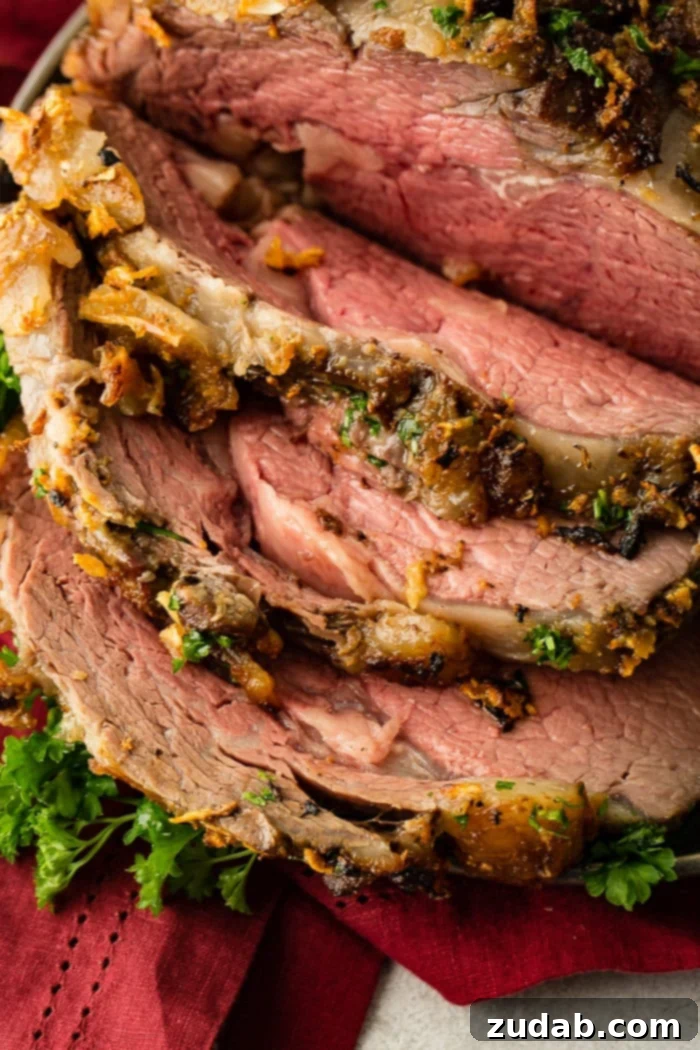
What is Prime Rib? Unveiling the King of Roasts
Often referred to interchangeably as a Standing Rib Roast, prime rib is a premium cut of beef derived from the primal rib section of a steer, specifically encompassing ribs six through twelve. This magnificent cut is renowned for its rich marbling, which contributes significantly to its exceptional tenderness and flavor. While the entire rib section can yield a full prime rib, standing rib roasts are commonly sold with anywhere from two to seven ribs, offering flexibility depending on the size of your gathering. Understanding this foundational cut is the first step to mastering your holiday centerpiece.
Prime Rib vs. Ribeye: What’s the Difference?
The terms “prime rib” and “ribeye” are often a source of confusion, but they refer to different preparations of the same foundational cut of beef. Essentially, a Prime Rib, or Standing Rib Roast, is a large roast from the primal rib section, typically cooked bone-in. It’s often associated with a special occasion or holiday feast due to its impressive size and presentation. On the other hand, a Ribeye Roast is the exact same cut of meat, but it has been carved off the bone. When individual steaks are cut from a boneless ribeye roast, they are then called Ribeye Steaks. So, while a ribeye steak is a portion of the prime rib, a prime rib itself is the larger, usually bone-in, roast that yields those delicious individual cuts.
How to Select and Buy the Best Prime Rib
Procuring a high-quality prime rib is paramount to the success of your roast. Many conventional grocery stores may not offer the top-tier cuts required for truly exceptional results. Your first and best course of action should be to visit a reputable butcher who you trust. A skilled butcher can guide you to the perfect cut and often has access to superior quality beef.
When selecting your prime rib roast, look for one with an untrimmed fat cap, ideally about ½ inch thick. This layer of fat is crucial as it bastes the meat during cooking, imparting incredible flavor and ensuring a moist, juicy interior. As for grade, we highly recommend prime-grade beef for its superior marbling and unparalleled flavor and texture. However, choice-grade will also yield excellent results; don’t hesitate to ask your butcher about their available grades and recommendations.
Furthermore, if possible, opt for a prime rib roast with the bones still attached. While a boneless roast will certainly work, having the bones attached provides several advantages. The bones act as a natural rack, promoting even heat circulation and protecting the meat from drying out. Tying the bones back onto the roast (which we’ll cover in the cooking steps) helps maintain the roast’s shape and ensures more consistent cooking, leading to a more evenly juicy result.
Why is Prime Rib So Expensive? Understanding the Price Tag
It’s true, prime rib roast often comes with a hefty price tag, and for good reason! The cost is a reflection of several factors that contribute to its premium status. Firstly, it’s about the marbling – the intramuscular fat that weaves through the meat. The more marbling, the more tender, juicy, and flavorful the roast will be, commanding a higher price. Prime-grade beef, specifically, is highly marbled, hence its cost.
Secondly, the prime rib cut originates from the 6th through 12th ribs of the cow, a section that produces some of the most tender and desirable muscles. This entire section contains seven ribs, meaning you’re purchasing a substantial amount of high-quality meat and bone. Finally, preparing this cut often involves extra work for the butcher, whether it’s carefully trimming, tying, or separating the bones. This specialized handling, combined with the inherent quality and size of the cut, contributes to its higher price point. Consider it an investment in a truly decadent and unforgettable dining experience.
How Much Prime Rib Per Person? Planning Your Feast
Accurately estimating the amount of prime rib needed is key to a successful gathering, ensuring everyone gets a generous portion without excessive waste. As a general rule of thumb, I recommend planning for about 1 pound of prime rib per adult. This accounts for both the meat and the bone weight, and typically leaves a little room for very hearty eaters or some coveted leftovers.
- How much prime rib for 8 adults? A 4-bone prime rib roast, weighing approximately 8-10 pounds, will comfortably feed 8 to 10 people.
- How much prime rib for 20 adults? For a larger gathering of 20 people, you’ll want a more substantial roast. An 8 to 10-bone prime rib, or even two smaller roasts, would be ideal to ensure everyone is well-fed.
Remember that the number of ribs directly correlates to the weight of the roast. A good butcher can help you select the appropriate size for your guest list.
Essential Equipment for the Best Prime Rib
Having the right tools makes all the difference when cooking a show-stopping prime rib. Here’s what you’ll need to ensure culinary success:
- Roasting Pan with Rack: A sturdy roasting pan with a V-rack or flat rack is crucial. The rack elevates the roast, allowing hot air to circulate evenly around all sides and preventing the bottom from steaming. This ensures a beautifully crusted exterior.
- Meat Thermometer: This is arguably the most important tool. A reliable probe thermometer that stays in the roast while it cooks and sends readings to an external display is ideal. An instant-read thermometer is also essential for quick checks without leaving the oven door open for too long. Accuracy here prevents over or undercooking.
- Very Sharp Knife: A long, sharp carving knife (like a Wusthof boning knife) is indispensable for cleanly separating the bones and carving even slices of the cooked roast.
- Butcher’s Twine: Essential for tying the bones back onto the roast after salting, helping the roast maintain its shape and cook evenly.
- Large Skillet or Dutch Oven: A heavy-bottomed, oven-safe skillet or Dutch oven (cast iron is excellent) is needed for searing the prime rib before roasting, developing that deep, flavorful crust.
How to Cook The Absolute Best Prime Rib: A Step-by-Step Guide
Achieving a melt-in-your-mouth tender prime rib with a perfectly crusted exterior might seem daunting, but with these detailed instructions, you’ll master it every time. This method focuses on a dry brine, a low-and-slow roast, and a final sear to achieve maximum flavor and tenderness.
- Prepare the Roast (Dry Brine): Begin by making shallow cuts (about 1 inch apart, in a crosshatch pattern) on the outer layer of fat, being careful not to cut into the meat. Next, use a very sharp knife to carefully slice the meat away from the bones, following their contours as closely as possible. Do not discard the bones! This separation allows for better salt penetration. Rub a generous amount of good quality kosher salt all over the prime rib, ensuring it gets into the slits in the fat cap and covers the entire surface. Reattach the meat to the bones and place the entire roast on a plate. Refrigerate, uncovered, for at least 24 hours, and up to 96 hours. This crucial dry-brining step enhances the beefy flavor, tenderizes the meat, and helps achieve that desirable crispy crust.
- Bring to Room Temperature: On the day of cooking, remove the prime rib from the refrigerator 2-3 hours before you plan to roast it. Allowing the meat to come to room temperature ensures more even cooking.
- Preheat Oven and Prepare for Searing: Adjust your oven rack to a middle position and preheat the oven to 200ºF (93ºC). Heat a large, heavy-bottomed skillet or Dutch oven over high heat until it begins to smoke lightly.
- Sear for Flavor and Crust: Add a high-smoke-point oil to the hot skillet. Carefully sear all sides of the prime rib until a deep, golden-brown crust forms. Focus on searing the fatty sides and the top, avoiding the bottom where the bones were removed initially. This step is vital for developing rich flavor and an appealing exterior through the Maillard reaction.
- Tie and Season: Once the seared roast is cool enough to handle (about 10 minutes), position the meat back onto the reserved rib bones, ensuring they fit snugly. Use butcher’s twine to securely tie the meat to the bones in two places, between the ribs. Transfer the roast, fat-side up, to a wire rack set on top of a rimmed baking sheet. Season generously with black pepper.
- Apply Garlic Butter: In a small bowl, combine softened unsalted butter with minced garlic. Rub this aromatic garlic butter mixture generously all over the surface of the prime rib.
- Low and Slow Roasting: Roast the prime rib in the preheated 200ºF (93ºC) oven until the internal temperature reaches 120ºF (49ºC) for rare. This will typically take 3 ½ to 4 ½ hours, depending on the size and initial temperature of your roast. For faster cooking, consider an Instant Pot Prime Rib recipe.
- The Crucial Rest (with carry-over cooking): Once the roast reaches your desired initial temperature, turn off the oven but leave the prime rib inside. Keep the oven door closed as much as possible. Allow the roast to continue cooking with the residual heat until it reaches the final target temperature (refer to the Prime Rib Temperatures section below). This can take an additional 30 to 75 minutes. Remove the roast from the oven (keeping it on the baking sheet), tent it loosely with aluminum foil, and let it rest for at least 30 minutes, or up to 75 minutes. This resting period is critical for the juices to redistribute, ensuring an incredibly tender and moist final product.
- Final Broil for Crispy Top: After the resting period, adjust your oven rack about 8 inches from the broiler element and preheat the broiler. Remove the foil from the roast. Broil the prime rib until the top is well-browned and deliciously crisp, typically 2 to 8 minutes. Watch it closely to prevent burning.
- Carve and Serve: Transfer the magnificent roast to a carving board. Carefully cut the twine and separate the meat from the ribs. Slice the meat into ¾-inch-thick slices. Season with coarse salt to taste, and serve with any delicious drippings (which can be turned into a savory gravy) and your favorite accompaniments.
This method truly is how to make the best prime rib roast ever! The combination of dry brining, slow roasting, and a final broil yields an unmatched texture and flavor profile.
How to Remove the Bones from a Prime Rib Roast
If your prime rib roast comes with bones attached, detaching them before salting, as outlined in step 1, is crucial for maximizing flavor and tenderness. To do this, you’ll need a very sharp, long knife. We highly recommend a quality boning knife from Wusthof for precision and ease. Carefully run the knife along the length of the bones, following the natural contours of the roast as closely as possible. Apply steady pressure to ensure a clean cut, separating the entire piece of meat from the bone section. Be sure to keep the bones, as they will be reattached for roasting to protect the meat and enhance flavor.
Prime Rib Doneness Guide: Internal Temperatures to Remember
Achieving your preferred level of doneness is crucial for an enjoyable prime rib experience. Remember that the internal temperature will continue to rise by 5-10 degrees Fahrenheit during the resting period (known as carry-over cooking), so it’s essential to pull the roast out of the oven a little early. Use a reliable meat thermometer inserted into the thickest part of the meat, avoiding the bone, for accurate readings.
- Rare Prime Rib: Pull from oven at 120ºF – 125ºF (49ºC – 52ºC). After resting, the final temperature will be around 125ºF – 130ºF (52ºC – 54ºC). Visually, it will be mostly red in the center, cool.
- Medium Rare Prime Rib: Pull from oven at 125ºF – 130ºF (52ºC – 54ºC). After resting, the final temperature will be around 130ºF – 135ºF (54ºC – 57ºC). This is often considered the ideal doneness for prime rib, with a deep, nearly red center that transitions to pink.
- Medium Prime Rib: Pull from oven at 130ºF – 135ºF (54ºC – 57ºC). After resting, the final temperature will be around 135ºF – 140°F (57ºC – 60ºC). The center will be pink throughout, warm.
- Medium Well Prime Rib: Pull from oven at 135ºF – 140ºF (57ºC – 60ºC). After resting, the final temperature will be around 140ºF – 145°F (60ºC – 63ºC). The meat will be mostly gray with a faint pink center.
- Well Done Prime Rib: Pull from oven at 140ºF – 145ºF (60ºC – 63ºC). After resting, the final temperature will be around 145ºF – 150°F (63ºC – 66ºC). The meat will be fully gray, with no pink. While possible, this doneness is generally not recommended for prime rib as it can compromise its natural tenderness and juiciness.
Tips for Making the Best Prime Rib Ever
Mastering prime rib involves a few key techniques that guarantee a succulent, flavorful result. These crucial tips will elevate your roasting game and ensure your prime rib is nothing short of spectacular.
The Power of Overnight Salting (Dry Brining)
Without a doubt, the most transformative step for prime rib is the overnight salting, also known as dry brining. While resting the roast after cooking is indeed vital, the initial salting sets the foundation for flavor and texture that no other step can replicate.
Rub a generous amount of high-quality kosher salt thoroughly over the entire surface of the meat the day before you plan to cook it. Pay special attention to working the salt into the scored fat cap. Then, place the roast, uncovered, in the refrigerator overnight (or even for up to 3-4 days). This process does two amazing things: it allows the salt to draw moisture from the meat’s surface, creating a drier exterior that will brown beautifully for a crispy crust. Simultaneously, the salt dissolves and then reabsorbs into the meat, breaking down some of the proteins. This results in a roast that is not only deeply seasoned but also incredibly tender, juicy, and with a buttery texture throughout.
Maintain Oven Temperature: Keep the Oven Door Shut!
Cooking prime rib can feel intimidating, especially if it’s your first time. There’s a natural urge to frequently check on its progress, but resisting this urge is critical for success. Opening the oven door repeatedly causes significant temperature fluctuations, which can prolong the cooking time and lead to uneven cooking or even overcooking (as happened to me once!).
The best practice is to monitor your roast with a meat-probe thermometer that stays inserted in the thickest part of the meat (avoiding the bone) and provides continuous readings to an external display. If you’re using an instant-read thermometer, open the oven door as minimally and quickly as possible. For even greater precision, consider briefly removing the entire roasting pan from the oven to take the temperature, then swiftly returning it, to prevent unnecessary heat loss.
Troubleshooting: My Prime Rib is Still Not Done!
Sometimes, despite your best efforts, your roast may not reach the desired internal temperature within the expected time frame. Don’t panic! If your prime rib is still undercooked, you can gently bring it to temperature. Heat your oven to 200°F (93°C), let it stabilize for about 5 minutes, then turn the oven off. Return the roast to the warm oven (keeping the door closed) and continue to monitor its internal temperature with your probe thermometer. The residual heat will slowly and gently bring the meat to your desired doneness without risking overcooking the exterior.
The Golden Rule: Let the Standing Rib Roast Rest
After all the careful preparation and precise cooking, the final, non-negotiable step is to give your prime rib ample time to rest. This resting period, after removing the roast from the oven and before carving, is absolutely crucial for achieving maximum juiciness.
Here’s why it’s so important: during cooking, heat drives the meat’s natural juices towards the center. If you were to cut into the roast immediately, these juices would simply spill out onto the carving board, leaving you with dry, chewy meat. A proper rest allows the muscle fibers to relax and the juices to redistribute evenly throughout the entire roast. This results in every slice being incredibly tender, moist, and flavorful, much like the perfectly cooked steaks you enjoy at a high-end restaurant.
To rest your roast effectively, simply tent it loosely with aluminum foil. This helps retain heat while allowing the steam to escape, preventing the crust from becoming soggy. Let it rest for a minimum of 20-30 minutes, or even up to 75 minutes for very large roasts, before carving. Patience during this stage will be richly rewarded.
Serving Suggestions & Perfect Pairings
A glorious prime rib deserves equally splendid accompaniments. Here are some classic and delicious serving suggestions to complete your holiday feast:
- Yorkshire Pudding: A traditional and utterly delicious pairing, perfect for soaking up the rich pan drippings.
- Creamy Mashed Potatoes: A comforting and classic side that complements the richness of the beef.
- Roasted Vegetables: Think asparagus, Brussels sprouts, carrots, or green beans, roasted to tender-crisp perfection with herbs and garlic.
- Au Jus: A simple, flavorful sauce made from the pan drippings, essential for enhancing the prime rib’s natural juices.
- Creamy Horseradish Sauce: The sharp, zesty kick of horseradish provides a fantastic contrast to the rich beef.
- Dinner Rolls: Serve with warm, soft rolls for a complete meal. Our Best Potato Rolls are always a hit!
For wine pairings, a robust Cabernet Sauvignon, Merlot, or a Zinfandel will beautifully complement the rich flavors of the prime rib.
Storing & Reheating Leftover Prime Rib
Should you be so lucky to have leftovers, proper storage and reheating are key to enjoying your prime rib even after the main event. Store any leftover prime rib in an airtight container in the refrigerator for up to 3-4 days.
To reheat, avoid high heat which can dry out the meat. Instead, slice any remaining roast into desired portions. Place the slices in a baking pan, pour a little beef broth or au jus over them to add moisture, and cover the pan tightly with aluminum foil. Bake in a preheated 300°F (150°C) oven for about 20-30 minutes, or until just warmed through. This gentle method ensures the prime rib remains tender and juicy.
More Delicious Holiday Recipes:
Looking for more festive HOLIDAY recipes to complete your spread? Here’s an entire list:
- Award Winning Instant Pot Turkey
- Cade’s Bananas Foster French Toast
- Orange Cinnamon Butterflake Rolls
- Instant Pot Blueberry French Toast Bake 3 Ways
- Candied Pecan Brussel Sprouts
- Mom’s Sticky Buns
- The Best Potato Rolls
- World’s Best Brown Sugar Ham
- Southern Macaroni and Cheese
Or if you want a different beef recipe, try this Corned Beef Brisket!
More Decadent Main Dishes You Must Try:
- Oven Braised Short Ribs
- Smoked Prime Rib
- Instant Pot Turkey Breast
- Carolina Pulled Pork
- Korean Oven Braised Short Ribs
- Oven Braised Beef Roast
- Creamy Herb Chicken with Sun-Dried Tomatoes
- Herb Roasted Turkey Breast
- Smoked Tri Tip
- Easy Garlic Butter Steak
- Authentic Italian Bolognese Sauce
- Beef Ribs with Charred Pepper Cream Gnocchi
- All our MAIN DISH recipes!
Best Prime Rib Roast
Carrian Cheney
1 day
3 hours
4 hours
1 day
7 hours
10
Ingredients
- 7 Pound Standing Rib Roast, Prime Rib
- 2 Tablespoons Kosher Salt, heaping
- 1 ½ teaspoons Black Pepper
- 4 Tablespoons Butter, unsalted
- 4-6 Cloves Garlic, minced
Instructions
-
Using a very sharp knife, cut slits in the outer surface layer of fat, spaced 1 inch apart, in a cross pattern, much like crossing on a baked ham. Do not cut into the meat.7 Pound Standing Rib Roast
-
Gently slice down through the meat, following the bones to remove them from the meat. Do not discard the bones.
-
Rub 2 heaping tablespoons of Kosher salt over the entire roast and especially rub it into the slits.2 Tablespoons Kosher Salt
-
Place the meat back on the bones and onto a plate.
-
Refrigerate the meat, uncovered, for at least 24 hours and up to 96 hours.
-
Place the meat on the counter to rest for 2-3 hours so it takes the chill off and comes to room temperature.
-
Adjust the oven rack to a middle position and preheat the oven to 200ºF (93ºC).
-
Heat oil in a 12-inch skillet or Dutch oven over high heat until smoking.
-
Sear all sides of the meat (avoiding the bottom where you removed the bones) until deeply browned. Remove from heat and let cool for 10 minutes so you can handle it. Place the meat back on the rib bones, ensuring the bones fit where they were cut, and tie the meat to the bones with 2 pieces of butcher’s twine between the ribs.
-
Transfer the roast, fat side up, to a wire rack set in a rimmed baking sheet and season with pepper.1 ½ teaspoons Black Pepper
-
Mix the butter and garlic in a bowl, and rub it all over the meat.4-6 Cloves Garlic, 4 Tablespoons Butter
-
Roast at 200ºF (93ºC) until the meat registers 120ºF (49ºC) for rare (this can take 3 ½ to 4 ½ hours, depending on the roast size).
-
Turn off the oven; leave the roast in the oven, opening the door as little as possible, until the meat registers about 125℉ for rare, 130-135℉ for medium-rare, 135-140°F for medium, and 140-145°F for well done (final internal temperature). This additional carry-over cooking can take 30 to 75 minutes longer.
-
Remove roast from the oven (leave roast on baking sheet), tent loosely with aluminum foil, and let rest for at least 30 minutes and up to 75 minutes.
-
Adjust the oven rack about 8 inches from the broiler element and preheat the broiler. Remove foil from the roast. Broil until the top of the roast is well browned and crisp, 2 to 8 minutes (watch carefully to prevent burning).
-
Transfer roast to a carving board; cut twine and remove the roast from the ribs.
-
Slice meat into ¾-inch-thick slices. Season with coarse salt to taste along with any drippings turned to gravy, and serve immediately.
Recipe Notes
Nutrition
Nutrition information is automatically calculated, so should only be used as an approximation.
REMEMBER TO SUBSCRIBE TO our FREE Oh Sweet Basil NEWSLETTER AND RECEIVE EASY RECIPES DELIVERED INTO YOUR INBOX EVERY DAY!
When you try a recipe, please use the hashtag #ohsweetbasil on INSTAGRAM for a chance to be featured in our stories! FOLLOW OH, SWEET BASIL ON FACEBOOK | INSTAGRAM | PINTEREST | TWITTER FOR ALL OF OUR LATEST CONTENT, RECIPES AND STORIES.