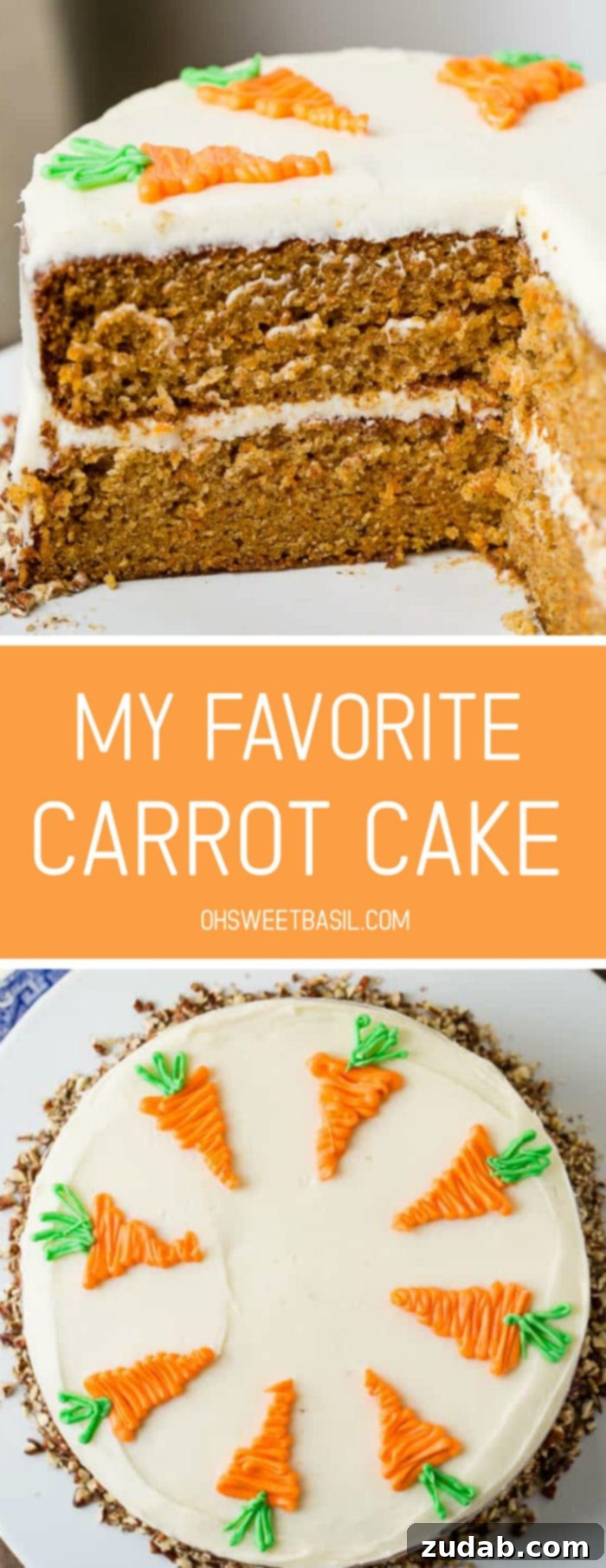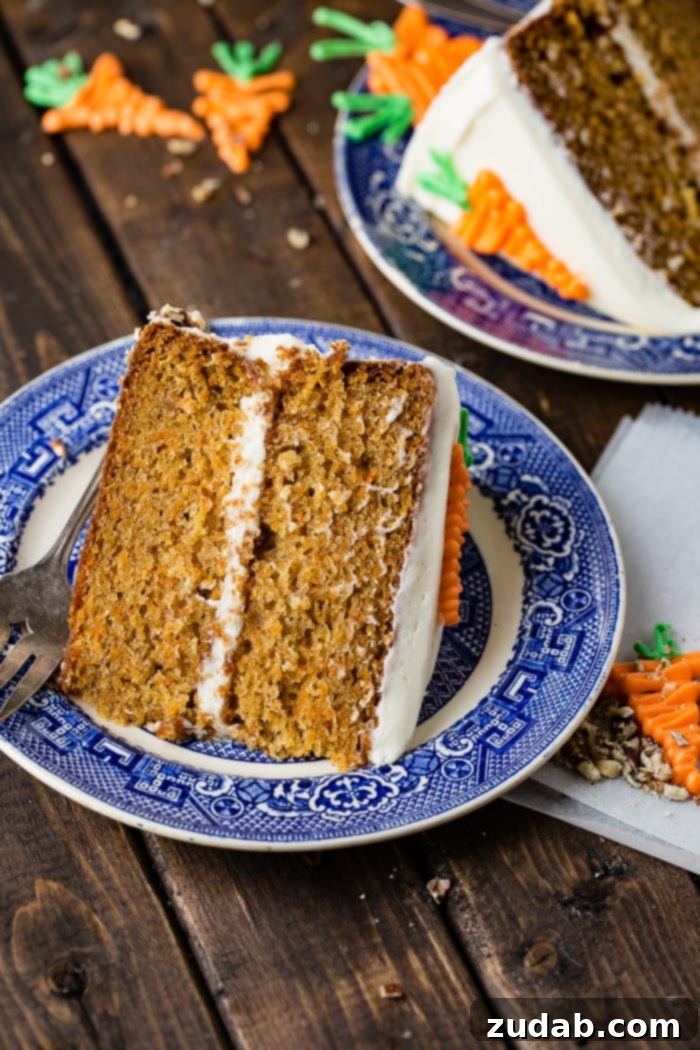
If you’re seeking the ultimate homemade delight, look no further: this is truly the best carrot cake recipe you will ever find. Prepare to be enchanted by its perfectly moist texture, an exquisite balance of warm spices, and generous layers of rich, velvety cream cheese frosting. This isn’t just a cake; it’s a timeless classic perfected, designed to be the star of any occasion, from cozy family gatherings to festive holiday celebrations.
What makes this recipe stand out? Its unwavering commitment to pure, unadulterated carrot cake flavor. You won’t find any distracting raisins, crunchy nuts (unless you choose to add them!), or other unconventional add-ins trying to steal the spotlight. Instead, we focus on simple, high-quality ingredients that come together to create a deeply satisfying and authentically delicious experience. This is classic carrot cake done exceptionally well, promising a comforting taste that will keep you coming back for more.
My journey to perfecting this carrot cake recipe began just a few years ago, sparked by an unforgettable culinary moment. Until then, carrot cake had never really been on my radar. That all changed during the Sundance Film Festival when my dear friend, Melissa Brandley, was in town. We met for dinner, eager to catch up on life, sharing laughter until our sides ached and even shedding a few tears right there in the restaurant. Amidst all the emotions, we ordered a slice of carrot cake, and it was simply divine. That single slice left such an impression that it inspired me to embark on a mission: to create my own version, a recipe that would capture that same magic. The result is what I proudly call My Favorite Carrot Cake.
In my opinion, the beauty of carrot cake lies in its straightforward charm. I’ve never been a fan of carrot cakes that are overloaded with an abundance of disparate ingredients like orange zest, candied ginger, walnuts, pecans, and raisins all vying for attention. While some enjoy these complex flavor profiles, I find they often make the cake feel too busy, blurring the lines of what a true carrot cake should taste like. My preference is for a cake that is unmistakably a carrot cake – fresh, incredibly moist, and bursting with the nuanced flavors of its core components, allowing the natural sweetness of the carrots and the warmth of the spices to truly shine.
Why This is the Ultimate Carrot Cake Recipe
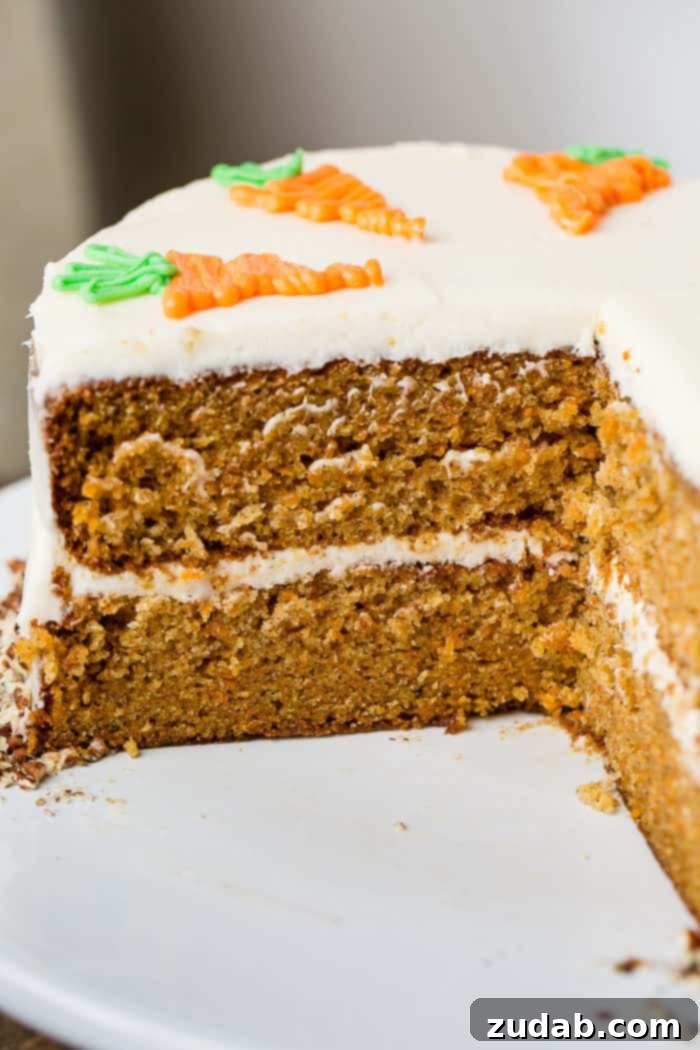
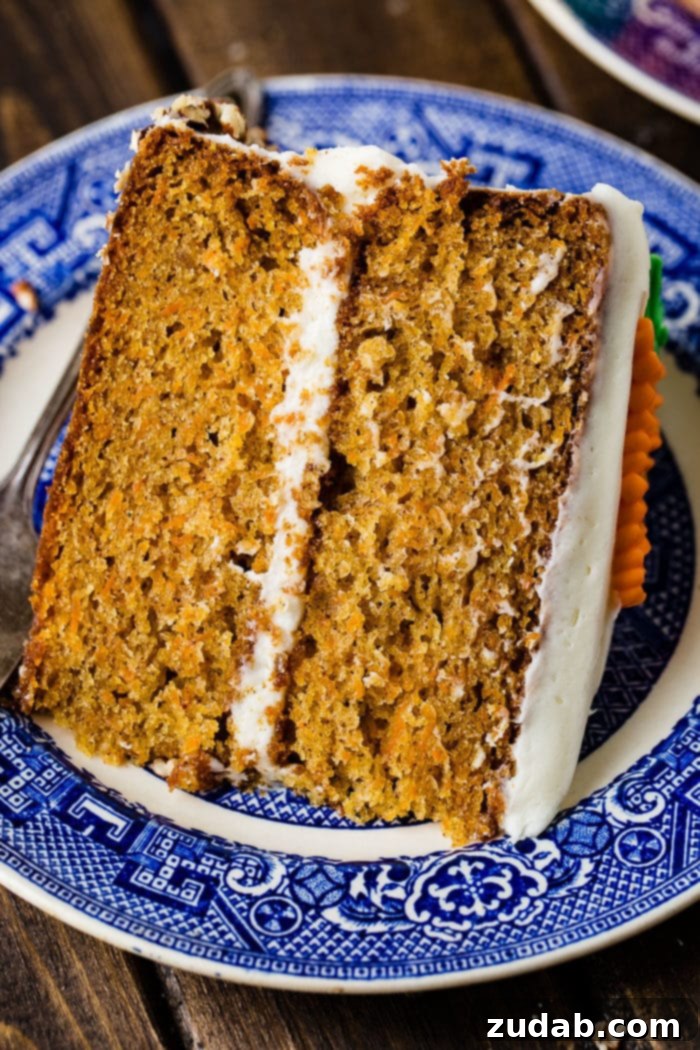
This really is the best carrot cake recipe, and its superiority comes from its elegant simplicity. It respects the integrity of a classic, allowing the core flavors and textures to truly shine without unnecessary distractions. Each bite delivers an incredibly moist crumb, perfectly infused with warm spices that are present but never overpowering. We skip the raisins and nuts (though nuts remain an optional addition for those who love them) to ensure that every forkful is a pure celebration of carrot cake goodness. The finely shredded carrots gracefully melt into the batter as it bakes, contributing to a tender texture that remains delightfully soft for days. This cake is not just delicious on the day it’s baked; it miraculously gets even better with time, making it an ideal candidate for preparing ahead.
The Secret to an Unbelievably Moist Carrot Cake
Achieving a perfectly moist carrot cake is often the baker’s holy grail, and the secret, unsurprisingly, lies primarily with the star ingredient: carrots! When finely shredded, carrots release their natural moisture as the cake bakes, infusing the batter with essential hydration and contributing to that wonderfully tender crumb. But carrots aren’t the only secret weapon. The choice of fat plays a crucial role too. Using oil instead of butter as the primary fat source is key. Oil remains liquid at room temperature, which translates to a moister cake that stays soft and fresh for significantly longer than a butter-based cake. Additionally, the subtle inclusion of applesauce adds another layer of natural moisture and tenderness, ensuring the cake is never dense or dry, but rather light and luscious.
Essential Ingredients for Your Homemade Carrot Cake Masterpiece
Creating this irresistible carrot cake from scratch requires a selection of quality ingredients, each playing a vital role in the final flavor and texture. Here’s what you’ll need, along with a few tips to ensure success:
- All-Purpose Flour: This forms the foundational structure of the cake, providing enough gluten to hold everything together while ensuring a soft and tender crumb. Measure it correctly – too much flour can lead to a dry cake.
- Baking Powder: A leavening agent that works to create air bubbles, helping the cake to rise beautifully and evenly. It contributes to the cake’s light and airy texture.
- Baking Soda: This powerful leavening agent reacts with the acidic components in the recipe (like brown sugar and carrots) to create a tender, golden-hued cake with an incredibly soft texture.
- Salt: A crucial flavor enhancer, salt perfectly balances the sweetness of the sugars and spices, preventing the cake from tasting overly sweet and bringing out the best in all the other ingredients.
- Pumpkin Pie Spice: This pre-blended spice mix, typically containing cinnamon, nutmeg, ginger, and sometimes allspice or cloves, is the heart of carrot cake’s signature warm and inviting flavor profile. It provides a harmonious blend that enhances the carrots without overpowering them.
- Granulated Sugar: Beyond sweetness, sugar contributes to the cake’s moistness and helps achieve that desirable tender crumb.
- Brown Sugar: Adds an extra layer of moisture and a delightful, subtle caramel depth that enriches the cake’s flavor and keeps it wonderfully soft. Ensure it’s lightly packed when measuring.
- Oil (Canola or Vegetable): The unsung hero of a truly moist carrot cake! Using oil, which is liquid at room temperature, ensures the cake stays incredibly soft and tender for days, unlike butter which can firm up.
- Apple Sauce: A secret ingredient for added natural moisture and tenderness without making the cake heavy. It can also subtly enhance the natural sweetness.
- Vanilla Extract: Essential for rounding out and deepening the cake’s overall flavor, adding a warm, aromatic note that complements the spices beautifully.
- Eggs: Act as binders, holding the batter together while contributing to the cake’s structure and richness. Ensure they are at room temperature for better emulsification with the other wet ingredients.
- Carrots: The star of the show! Finely shredded carrots are key here. They melt into the batter as the cake bakes, adding sweetness, moisture, and that classic, unmistakable carrot cake texture. Use fresh, whole carrots for the best flavor.
- Walnuts (optional): For those who love a bit of textural contrast and a nutty earthiness, chopped walnuts can be folded into the batter. They provide a satisfying crunch that complements the soft cake.
For the Dreamy Cream Cheese Frosting
No carrot cake is complete without its iconic companion: a luscious, tangy cream cheese frosting. Here’s what you’ll need:
- Unsalted Butter: The base of any good buttercream, butter provides richness and creaminess. Ensure it’s softened to room temperature for smooth mixing.
- Cream Cheese: The defining ingredient for this frosting, adding a delightful tanginess and incredible creaminess that perfectly cuts through and balances the sweetness of the cake. Use full-fat cream cheese, softened.
- Vanilla Extract: Enhances the overall flavor of the frosting, preventing it from tasting flat and adding a warm, inviting aroma.
- Powdered Sugar (Confectioners’ Sugar): Sweetens and thickens the frosting, creating a silky-smooth, pipeable consistency without any grittiness. Sift it for the best results.
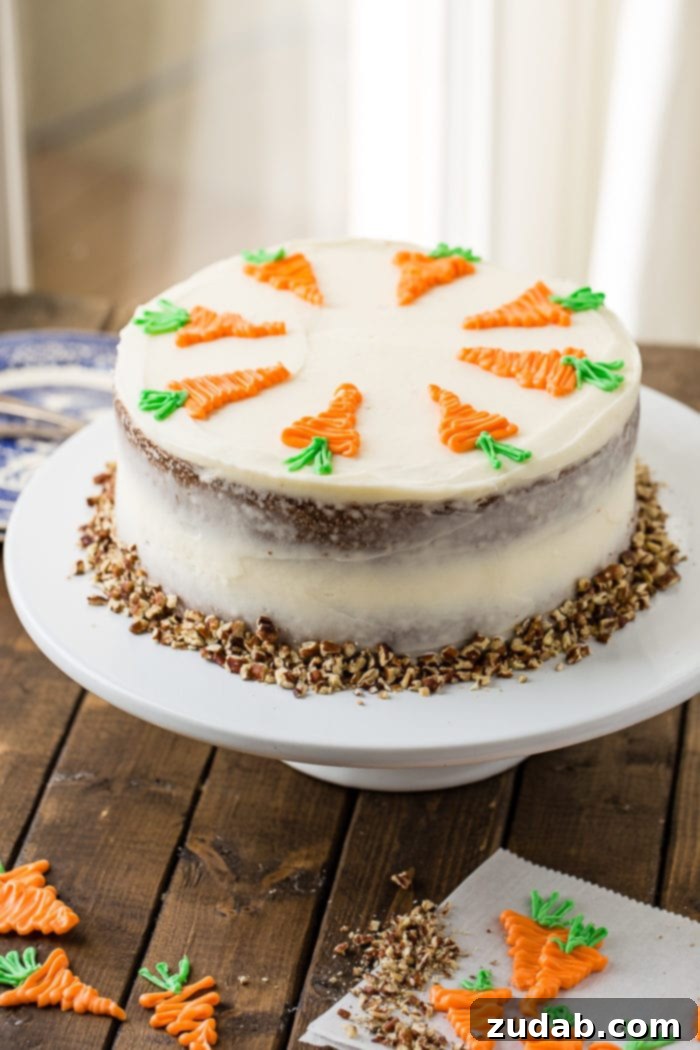
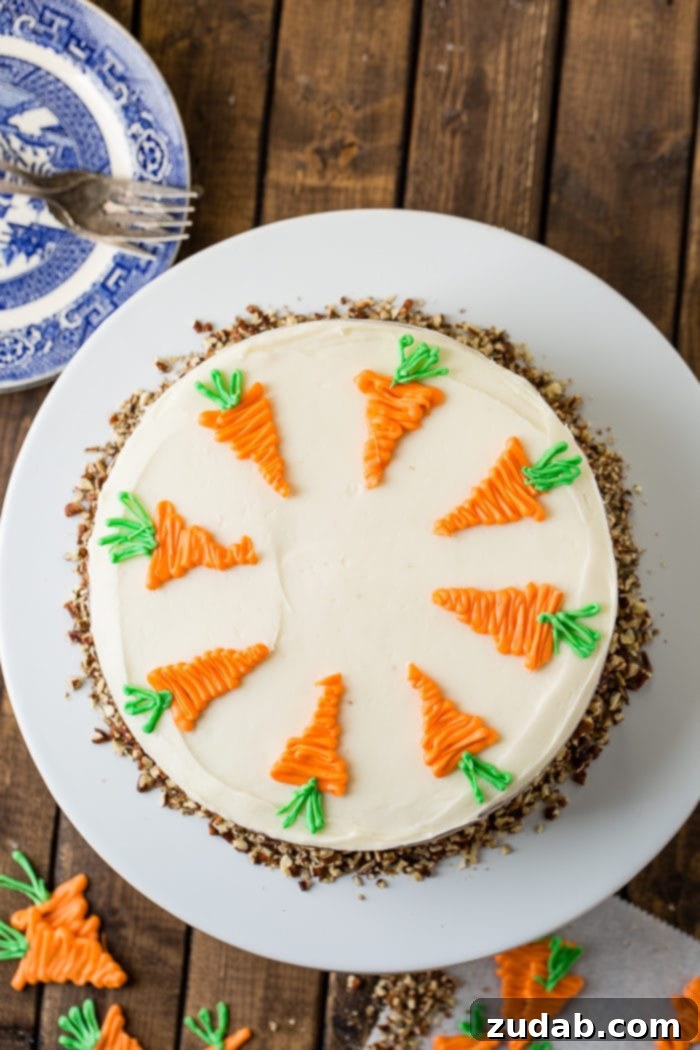
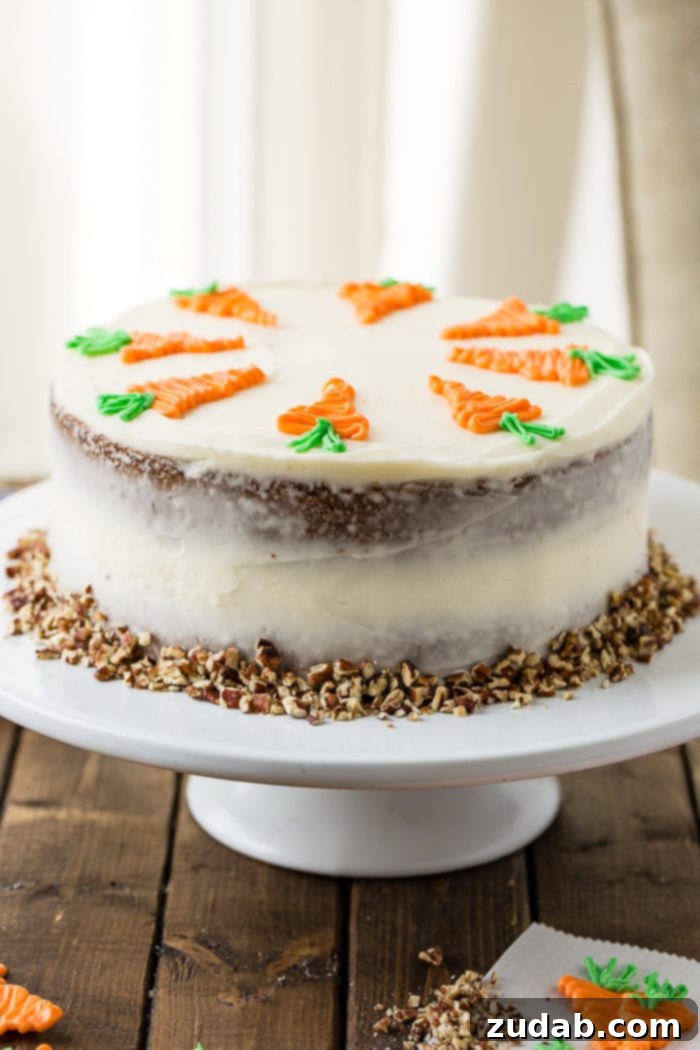
- Pecans (optional, for topping): If you enjoy nuts in your carrot cake, crushed pecans make a wonderful, classic finishing touch, adding both visual appeal and a delightful crunch to the frosting.
Crafting Your Homemade Carrot Cake: A Step-by-Step Guide
Follow these simple instructions to create a truly spectacular carrot cake:
- Prepare Your Pans: Begin by preheating your oven to 350℉ (175°C). Prepare two 8-inch round cake pans by lining the bottoms with parchment paper rounds. Lightly grease and flour the sides of the pans. This crucial step ensures your cakes won’t stick and will release easily after baking.
- Combine Dry Ingredients: In a large mixing bowl, whisk together the all-purpose flour, baking powder, baking soda, salt, and pumpkin pie spice. Whisking ensures all the dry ingredients are evenly distributed, which is essential for uniform leavening and flavor throughout the cake.
- Mix Wet Ingredients: In a separate, medium-sized bowl, whisk together the granulated sugar, brown sugar, oil, applesauce, and vanilla extract until the mixture is smooth and well combined.
- Incorporate Eggs: Add the eggs to the wet ingredients, one at a time, whisking thoroughly after each addition. This step helps to emulsify the eggs into the mixture, adding richness and structure. Ensure your eggs are at room temperature for the best results.
- Fold in Carrots (and optional walnuts): Gently fold the finely shredded carrots into the wet ingredients until they are evenly distributed. If you’re adding walnuts, fold them in at this stage as well.
- Combine Wet and Dry: Pour the wet ingredient mixture into the bowl with the dry ingredients. Mix gently until just combined. Be careful not to over-mix the batter! Over-mixing can develop the gluten in the flour too much, leading to a tough, dry cake. A few lumps are perfectly fine.
- Bake to Perfection: Divide the batter evenly between the two prepared cake pans. Bake for approximately 40 minutes, or until a wooden toothpick inserted into the center of each cake layer comes out clean, or with just a few moist crumbs attached.
- Cooling Process: Allow the cakes to cool in their pans for about 10-15 minutes on a wire rack. This initial cooling helps the cakes firm up before you attempt to remove them.
- Release and Cool Completely: After the initial cooling, run a knife carefully around the edges of each pan to loosen the cakes. Invert them onto a wire cooling rack to cool completely. This step is vital – attempting to frost warm cakes will result in melted, messy frosting.
- Prepare the Cream Cheese Frosting: While your cake layers are cooling, prepare the rich cream cheese frosting (see instructions below for the frosting).
- Frost and Serve: Once the cake layers are completely cool, assemble and frost your cake. If desired, sprinkle the top with chopped walnuts or pecans for a beautiful finish.
Cream Cheese Frosting Instructions:
- Cream Butter and Cream Cheese: In a large mixing bowl, combine the softened unsalted butter and softened cream cheese. Using a handheld electric mixer, beat the mixture until it’s wonderfully creamy and smooth, with no lumps.
- Add Vanilla: Stir in the vanilla extract until it’s fully incorporated and the frosting smells wonderfully fragrant.
- Gradually Add Powdered Sugar: With your mixer on low speed, gradually add the powdered sugar, one cup at a time, until all ingredients are completely combined and the frosting is smooth and thick. Avoid over-beating, as this can make the frosting too thin.
- Frost the Cake: Once the cake layers are completely cooled, you’re ready to frost! Follow the layer cake frosting tips below for a professional finish, and sprinkle with optional nuts.
Frequently Asked Questions About Carrot Cake
While cinnamon is a key component, pumpkin pie spice elevates carrot cake to another level. This blend typically includes not just cinnamon, but also nutmeg and ginger (and sometimes allspice and cloves). This combination creates a more complex, nuanced, and truly irresistible flavor profile that is the hallmark of a great carrot cake. It adds a depth of warmth and aroma that single spices simply can’t achieve on their own.
The consistency of your carrots is paramount for a tender carrot cake. The carrots absolutely must be finely shredded. This ensures they soften completely as the cake bakes, essentially melting into the batter. If your carrot shreds are too thick or coarsely grated, they will remain noticeably crunchy or fibrous in the finished cake, which is not the desired texture. A box grater’s small holes or a food processor with a grating attachment set to a fine shred are ideal for achieving this.
For the best flavor and texture in your carrot cake, always opt for whole, fresh carrots. Whole carrots tend to have a richer, sweeter flavor compared to baby carrots, which can sometimes taste a bit watery. Additionally, grating whole carrots is often much easier and more efficient than trying to grate a multitude of tiny baby carrots! If you only have baby carrots on hand, they will work in a pinch, but fresh, large whole carrots are definitely the preferred choice for this recipe.
Absolutely! While this recipe celebrates the classic, pure carrot cake flavor without them, both walnuts and pecans are listed as optional additions for the cake batter and as a topping for the frosting. If you enjoy the chewiness of raisins, you can also fold about 1/2 to 1 cup of plump raisins into the batter along with the carrots. Just be sure not to overdo it, to maintain the cake’s balanced texture.
For achieving the signature moistness of this carrot cake, neutral-flavored oils are your best bet. Canola oil or vegetable oil are highly recommended as they impart no distinct flavor, allowing the natural carrot and spice flavors to shine through. While olive oil can be used, its stronger flavor might subtly alter the cake’s taste, so stick to neutral oils for the most classic result.
Why Your Carrot Cake Might Sink (and How to Prevent It)
One of the most disheartening experiences for any baker is pulling a beautiful cake out of the oven only to watch its center collapse. This common issue with carrot cake can be frustrating, but understanding the culprits can help you prevent it. The primary reason a cake sinks is **underbaking**. The center simply hasn’t had enough time to fully set and solidify its structure. Always test for doneness with a toothpick that comes out clean.
However, several other factors can also contribute to a sunken cake:
- Not Enough Liquid in the Batter: A batter that is too dry can lead to an uneven rise and subsequent collapse. Ensure you measure all wet ingredients accurately.
- Over-Mixed Batter: As mentioned in the instructions, over-mixing develops gluten, making the cake tough and potentially causing it to rise too quickly and then fall in the center due to a weakened structure. Mix only until just combined.
- Oven Temperature Too Low (or Fluctuating): An oven that isn’t hot enough, or one that has inconsistent temperatures, won’t allow the cake to set properly. Invest in an oven thermometer to verify your oven’s accuracy.
- Too Much Leavening, Fat, and/or Sugar: An excessive amount of baking powder/soda, fat (oil), or sugar can weaken the cake’s structure, causing it to rise too high and then collapse under its own weight. Precision in measuring is key.
- Opening the Oven Door Too Soon: A sudden reduction in temperature, especially in the early stages of baking, can cause the delicate cake structure to fall. Resist the urge to peek until the last 10-15 minutes of baking.
To ensure a perfectly risen cake, always measure all your ingredients carefully and use room-temperature eggs. Resist the temptation to over-mix the batter. Always test the doneness of your cake layers before removing them from the oven by inserting a toothpick into the center of each layer. If it comes out clean or with only a few moist crumbs, your cake is ready!
How to Frost a Layer Cake Like a Professional Baker
Frosting a layered cake can seem daunting, but with a few simple tricks, you can achieve a smooth, professional-looking finish every time. It’s truly easier than it looks if you approach it systematically:
- Chill Your Cake Layers: This is a game-changer! Once your cake layers are completely cooled, wrap them tightly in plastic wrap and chill them in the refrigerator for at least 1-2 hours (or even overnight). Chilled cakes are much firmer, less prone to tearing, and significantly easier to handle and frost.
- Apply a Crumb Coat: Begin by spreading a very thin layer of frosting all over the cake. This is called a “crumb coat” and its purpose is to trap any loose crumbs, preventing them from mixing into your final, beautiful layer of frosting. Don’t worry about perfection here. Once applied, chill the cake again for about 15-20 minutes to set the crumb coat.
- Frost Top-Down: Instead of starting with the sides, pile a generous amount of frosting onto the top center of your cake. Use an offset spatula or a long, flat knife to spread the frosting evenly across the top, then gently push the excess frosting over the edges and down the sides. This technique helps ensure even coverage and minimizes the risk of pulling crumbs. Smooth out the sides and top to your desired finish.
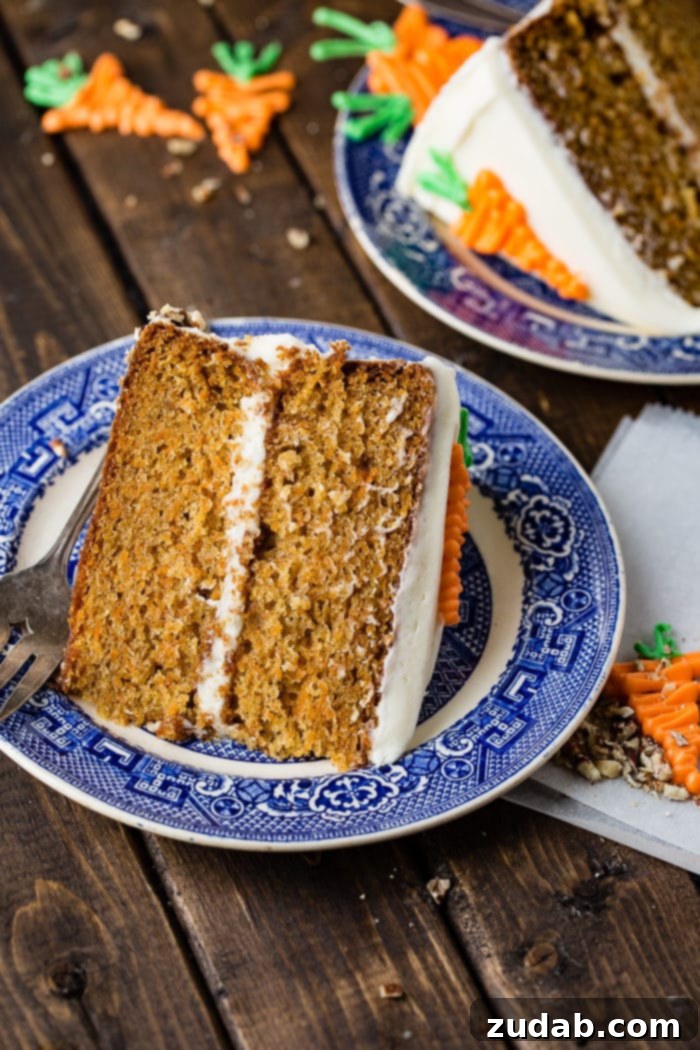
And speaking of frosting, let me share a fun tip for the adorable white chocolate carrot decorations you see on my cake! It’s surprisingly simple. I melted orange and green candy melting wafers (you could also use white chocolate dyed with food gel) and transferred each color into separate piping bags with a very small round tip. Then, I piped little carrot shapes onto a sheet of parchment paper, adding small green stems to the top of each. Pop them into the refrigerator for a few minutes until they’re firm, and voila! Easy peasy, decorative carrots ready to adorn your masterpiece!
Make Ahead, Freezing, and Storage Tips for Carrot Cake
One of the many wonderful qualities of carrot cake is that it actually improves with age! The flavors have time to meld and deepen, and the moisture continues to distribute throughout the cake, resulting in an even more delicious experience. For this reason, making your carrot cake a day or two before you plan to serve it is highly recommended.
Storage for Frosted Cake: A fully frosted carrot cake, with its cream cheese frosting, should always be stored in an airtight container in the refrigerator. It will stay wonderfully fresh for 5-7 days. To enjoy it at its best, allow the cake to come to room temperature for about 30-60 minutes before serving. This softens the frosting and enhances the cake’s moist texture.
Storage for Unfrosted Cake: If you prefer to bake ahead and frost later, unfrosted cake layers can be stored, tightly wrapped in plastic wrap, at room temperature for 2-3 days. For longer storage, they can be refrigerated for up to a week.
Freezing Carrot Cake: Carrot cake freezes exceptionally well, making it perfect for preparing far in advance or saving leftovers. You can freeze it either frosted or unfrosted. Wrap individual slices or whole layers tightly in plastic wrap, then an additional layer of aluminum foil, and place in an airtight freezer-safe container. It will keep beautifully in the freezer for up to 4 months. When you’re ready to enjoy it, thaw the cake overnight in the refrigerator, and then bring it to room temperature before serving. If unfrosted, you can then apply fresh cream cheese frosting.
Always ensure your cake is stored in an airtight container to prevent it from drying out or absorbing other odors from the refrigerator.
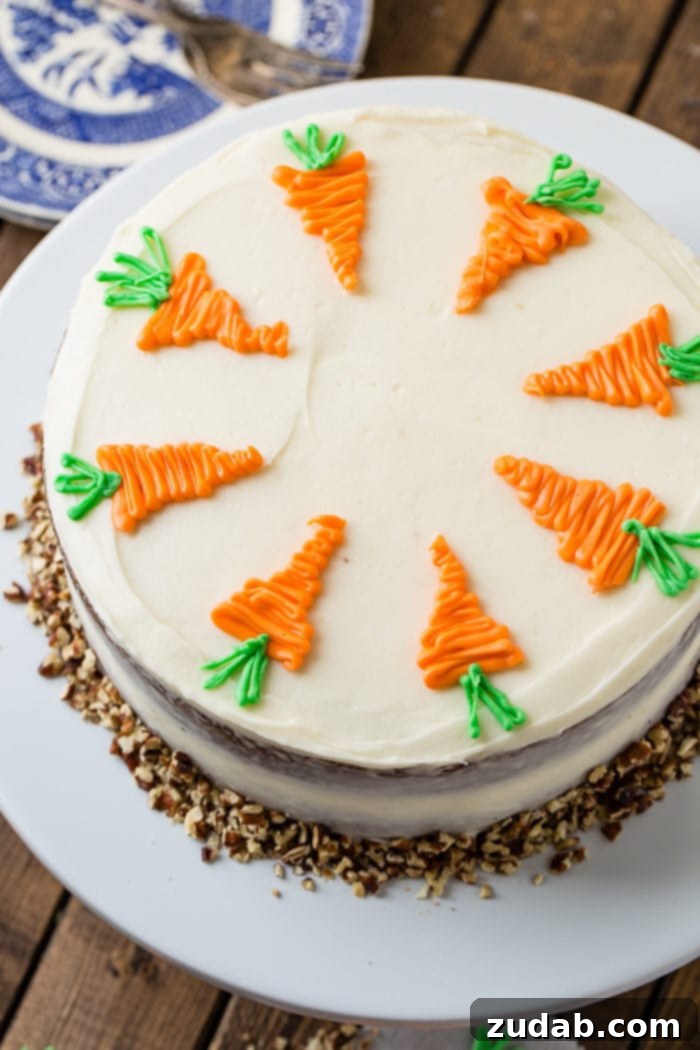
This truly is the best carrot cake recipe when you’re craving something classic, utterly dependable, and undeniably delicious. Its perfectly moist crumb, warmly spiced flavor, and rich cream cheese frosting are a testament to how exceptional simple ingredients can be when brought together with care. Whether you’re baking for a cherished holiday, celebrating a birthday, or simply because the comforting thought of carrot cake sounds like the best idea, this recipe is guaranteed to impress and satisfy everyone at your table. It’s more than just a dessert; it’s a moment of pure, sweet joy waiting to be shared.
More Irresistible Cake Recipes You Must Try:
- Lemon Cake with Lemon Cream Cheese Frosting
- Strawberries and Cream Jello Cake
- Chocolate Mayonnaise Cake
- Orange Jello Cake
- Lemon Jello Cake
- Banana Bundt Cake Recipe (From Cake Mix!)
- Discover all our delicious Cake Recipes here!
Watch the Carrot Cake Tutorial!
For a visual guide to making this incredible carrot cake, check out our step-by-step video tutorial. Seeing the techniques in action will help ensure your cake turns out perfectly moist, spiced, and frosted every time!
(Video embedding placeholder – actual video player code removed per instructions)
Carrot Cake Recipe
By Carrian Cheney
Prep Time: 15 mins
Cook Time: 40 mins
Total Time: 55 mins
Yields: 12 servings
This is the best carrot cake recipe—perfectly moist, warmly spiced, and topped with classic cream cheese frosting. Made with finely grated carrots and simple ingredients, it’s a timeless cake that tastes even better the next day.
Ingredients
Cake
- 2 ½ Cups All-Purpose Flour
- 1 teaspoon Baking Powder
- 1 ½ teaspoon Baking Soda
- 1 teaspoon Salt
- 2 teaspoons Pumpkin Pie Spice
- 1 ½ Cups Granulated Sugar
- ½ Cup Light Brown Sugar, tightly packed
- 1 ¼ Cup Oil (Canola or Vegetable)
- ¼ Cup Apple Sauce
- 1 Tablespoon Vanilla Extract
- 4 large Eggs, room temperature
- 3 Cups Carrots, peeled, about 4 large carrots, finely grated
- 3 oz Walnuts, chopped (optional)
Cream Cheese Frosting
- ½ Cup Unsalted Butter, softened
- 8 oz Cream Cheese, softened
- 1 teaspoon Vanilla Extract
- 4 Cups Powdered Sugar
- 1 Cup Pecans, crushed (optional, for topping)
Instructions
Cake
- Preheat oven to 350℉ (175°C) and prepare two 8-inch round pans by lining the bottoms with parchment paper rounds and lightly greasing and flouring the sides.
- In a large bowl, whisk together the flour, baking powder, baking soda, salt, and pumpkin pie spice until well combined.
- In another bowl, add the granulated sugar, brown sugar, oil, applesauce, and vanilla extract. Whisk until the mixture is smooth.
- Add the eggs, one at a time, stirring thoroughly after each addition until fully incorporated.
- Fold in the finely shredded carrots until they are evenly distributed throughout the wet ingredients. If using, fold in chopped walnuts at this stage.
- Add the wet ingredients mixture to the dry ingredients. Mix gently until just combined. Be careful not to over-mix the batter; a few lumps are acceptable.
- Evenly divide the carrot cake batter into the two prepared baking pans and bake for 40 minutes, or until a wooden toothpick inserted into the center of the cake comes out clean.
- Allow the carrot cake layers to cool in the pans for 10-15 minutes. Then, carefully run a knife around the edges to loosen them, and invert onto a wire cooling rack to cool completely.
- Ensure the cake layers are completely cool before attempting to frost them.
Cream Cheese Frosting
- In a large bowl, combine the softened butter and softened cream cheese. Use a handheld electric mixer to beat until the mixture is creamy and smooth.
- Add the vanilla extract and beat until it’s fully incorporated into the frosting.
- With the mixer on low speed, gradually add the powdered sugar, one cup at a time, until all ingredients are completely combined and the frosting is smooth and thick.
- Once your cake has cooled completely, use the prepared cream cheese frosting to assemble and frost the cake. Sprinkle with crushed pecans (if desired) for a beautiful finish.
Recipe Notes
- To properly flour cake pans: spray with nonstick cooking spray, then sprinkle in a few tablespoons of flour. Turn and tap the cake pan until the bottom and sides are covered, then dump out any remaining excess flour.
- Frosted carrot cake can be stored in an airtight container in the refrigerator for up to 5-7 days.
- Carrot cake (frosted or unfrosted) can be frozen for up to 4 months in an airtight container, well-wrapped. Thaw overnight in the refrigerator before serving.
Nutrition
Serving: 1 slice
Calories: 867 kcal, Carbohydrates: 101g, Protein: 8g, Fat: 50g, Saturated Fat: 12g, Polyunsaturated Fat: 13g, Monounsaturated Fat: 23g, Trans Fat: 0.4g, Cholesterol: 94mg, Sodium: 499mg, Potassium: 298mg, Fiber: 3g, Sugar: 77g, Vitamin A: 5924IU, Vitamin C: 2mg, Calcium: 81mg, Iron: 2mg
Nutrition information is automatically calculated and should be used as an approximation only.