
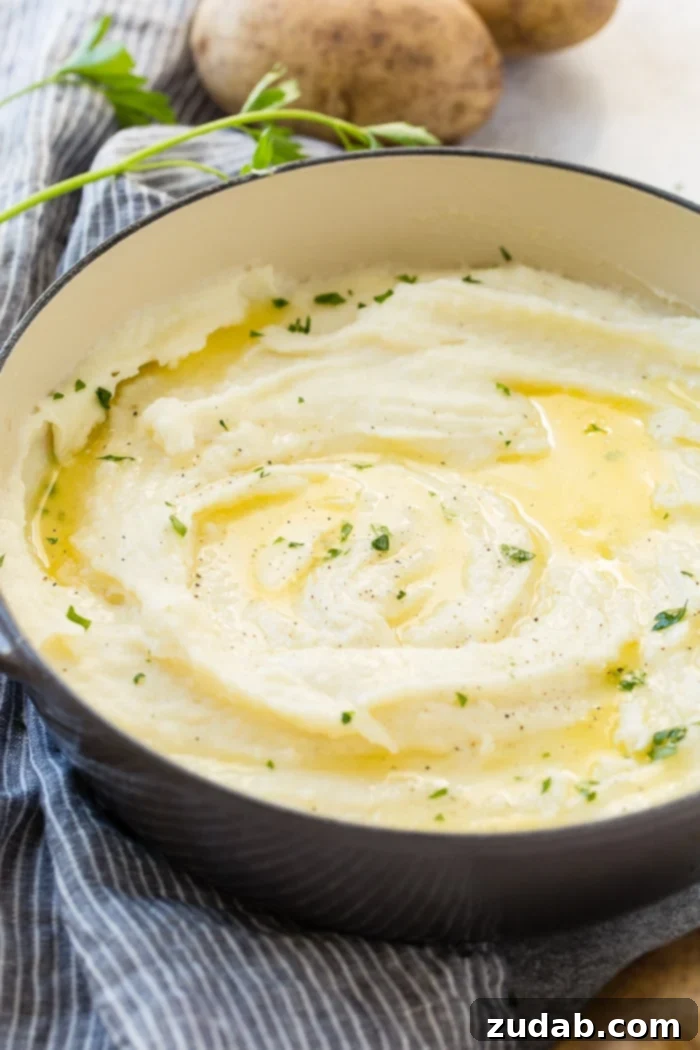
Welcome to the ultimate guide to crafting the most irresistible, **creamy mashed potatoes** you’ll ever taste! For many, myself included, mashed potatoes are more than just a side dish; they’re a spoonful of comfort, a nostalgic memory, and an absolute staple at any celebratory meal. My childhood obsession with creamy mashed potatoes and roasted chicken led me on a lifelong quest to perfect this seemingly simple dish. And after years of kitchen experiments, I’m thrilled to share two critical secrets that elevate mashed potatoes from good to absolutely extraordinary.
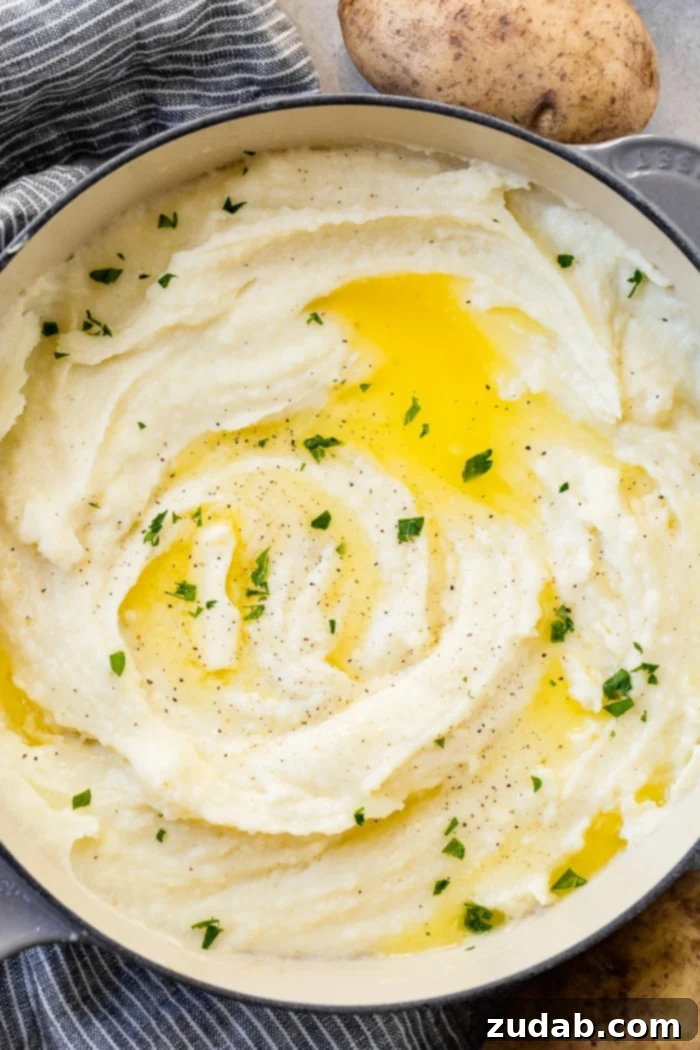
The Ultimate Guide to Making the Best Creamy Mashed Potatoes
Growing up, my Sundays revolved around the comforting aroma of roasted chicken and velvety mashed potatoes. I can still vividly recall standing beside my mother in the kitchen, meticulously peeling potatoes. Her Sunday dress, the practical apron protecting her clothes for church, and the smooth feel of the potato peeler in my young hands are memories etched in time. It was a simple yet profound routine, preparing dinner before we headed off to church. These aren’t grand moments, but the quiet, shared times, side by side, that truly enrich life. It reminds me to cherish those unplanned moments of togetherness.
My mom’s method was straightforward: peeled potatoes into a large pot of cold water, boiled until fork-tender, then beaten with milk, butter, and salt using a hand mixer. Simple, yet deeply satisfying. It’s surprising it’s taken us this long to share our family’s go-to recipe for this Thanksgiving essential! Perhaps because these creamy homemade mashed potatoes appear on our dinner table so frequently, I overlooked that others might desire the recipe too. This mashed potato recipe is an absolute must-have for your holiday menu, and we’re excited to reveal the key tips for achieving unparalleled creaminess and flavor.
Prepare to have your mind blown by these homemade mashed potatoes – they are incredibly rich, intensely creamy, and utterly delicious. Once your family and friends taste them, you’ll likely be appointed the official “potato maker” for every Thanksgiving and holiday gathering. It’s a role that’s far easier and often more budget-friendly than tackling the turkey, so consider it a win!
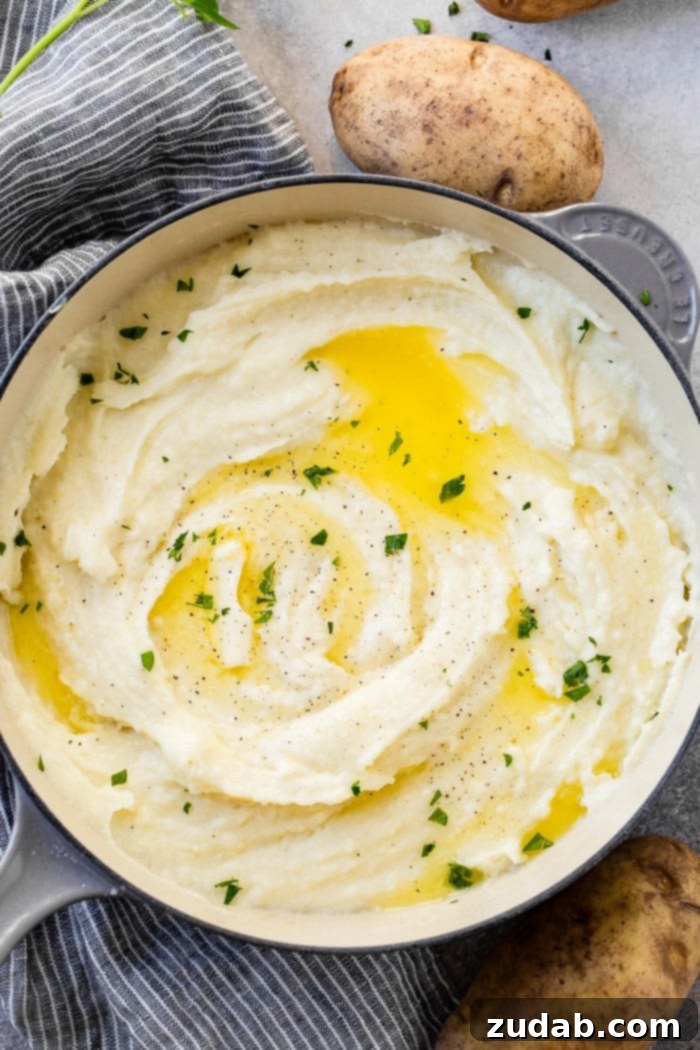
Unlocking the Secrets to Perfectly Creamy Mashed Potatoes
While my childhood memories involve peeling potatoes before boiling, years of experimentation have led me to refine my technique, resulting in the absolute best mashed potatoes. There are two simple yet transformative secrets that make all the difference, ensuring your mashed potatoes are never watery, gluey, or lacking in that rich, velvety texture everyone craves.
The First Secret: Boiling Potatoes in Their Skins
This is perhaps the most crucial tip for avoiding water-logged potatoes. When you boil Russet potatoes with their skins on, the skin acts as a natural barrier, preventing the potatoes from absorbing too much water. Potatoes, especially starchy varieties like Russets, can become incredibly absorbent when cut and exposed to boiling water. By keeping the skins intact, you ensure the potatoes cook thoroughly while retaining their natural flavor and dryness, which is essential for that light, fluffy, and creamy texture. Once the potatoes are perfectly tender, the skins will easily slide off, revealing fluffy potato flesh ready for mashing.
The Second Secret: The Right Order of Dairy
The sequence in which you add your dairy makes a significant impact on the final texture. This is a common pitfall that often leads to gluey or gummy mashed potatoes. Always incorporate the melted butter into the mashed potatoes first, allowing the butterfat to coat the starch molecules. This lubrication prevents the starches from breaking down excessively and releasing too much gelatinous starch, which is what causes that undesirable gluey consistency. After the butter is fully incorporated, gently stir in the warm heavy cream (or milk). This method ensures a smooth, luscious texture without any stickiness. Remember: butter first, then cream, and never mix them before adding them to the potatoes.
Essential Ingredients for Homemade Mashed Potatoes
Our classic mashed potato recipe embraces tradition and flavor without attempting to be a “healthier” version. This is mashed potatoes like Grandma used to make – pure comfort food at its finest. The magic lies in simple, quality ingredients:
- Potatoes: The foundation of our dish, chosen specifically for their mashing qualities.
- Butter: Rich, creamy, and essential for flavor and texture.
- Heavy Cream: The secret to achieving that luxurious, velvety mouthfeel.
- Salt: To enhance and balance all the flavors.
- Black Pepper: For a subtle, aromatic kick.
Choosing the Best Potatoes for Mashing
While many potato varieties can be mashed, for the creamiest, fluffiest, and most consistently perfect results, we highly recommend using Russet potatoes. Russets are high in starch and low in moisture, which means they break down easily when cooked and absorb dairy beautifully, creating that signature thick and creamy texture without becoming watery. Other good options include Yukon Gold potatoes, which offer a naturally buttery flavor and a slightly smoother, waxier texture. Avoid waxy potatoes like red new potatoes or fingerlings if a super fluffy mash is your goal, as their lower starch content can result in a gummier, less airy consistency, though they are excellent for roasting.
Dairy Choices: Butter and Cream
The quality of your dairy makes a noticeable difference. For this recipe, we opt for generous amounts of real butter and heavy cream. Use unsalted butter to have full control over the salt content of your dish, then add salt to taste. Melting the butter before adding it helps it disperse evenly throughout the hot potatoes. Heavy cream provides unparalleled richness, but if you prefer a slightly lighter option, half-and-half or even whole milk can be substituted. Just be aware that reducing the fat content may slightly impact the final creaminess and decadence. Always warm your cream or milk before adding it to prevent cooling the potatoes too quickly, which can hinder absorption and affect texture.
Seasoning to Perfection
Salt is paramount in mashed potatoes. Potatoes require a fair amount of seasoning to truly shine. Start with the recommended amount and adjust to your preference. Freshly ground black pepper adds a wonderful depth of flavor. For an extra layer of aroma and brightness, consider finishing with a sprinkle of chopped fresh chives or parsley, or even a hint of roasted garlic mixed in.
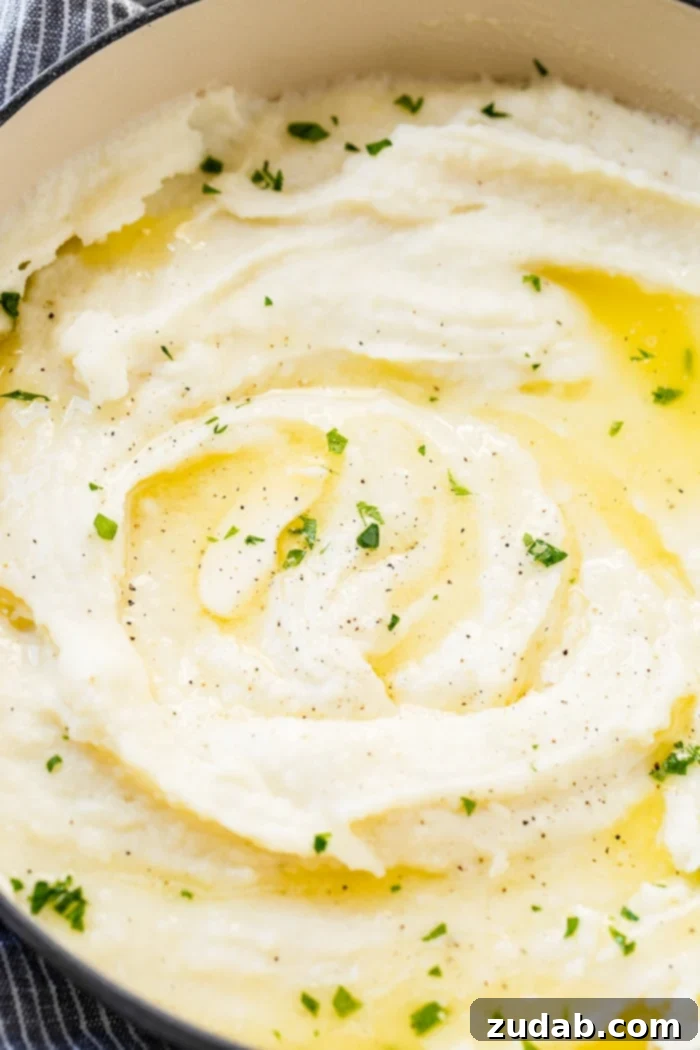
Step-by-Step Guide: How to Make Mashed Potatoes
After years of perfecting, this method consistently delivers the creamiest, most flavorful mashed potatoes. Follow these steps for success:
- Start Cold: Place the unpeeled potatoes in a large pot (5-quart or larger) and cover them completely with cold water. Starting with cold water ensures the potatoes cook evenly from the center to the outside. If you start with hot water, the outsides will cook faster, becoming mushy before the insides are tender, leading to an uneven texture.
- Boil Until Tender: Bring the water to a rolling boil over medium-high heat. Once boiling, reduce the heat to a simmer and continue cooking until the potatoes are easily pierced with a fork or knife. They should offer no resistance.
- Drain Thoroughly: Once tender, drain the potatoes thoroughly in a colander. Allow them to sit for a few minutes in the colander to steam dry. This step is crucial for preventing watery mashed potatoes, as excess moisture is the enemy of creaminess.
- Peel with Ease: Carefully peel the skins off the hot potatoes. Because they were boiled with the skins on, the skins should slide off easily. A towel can help you hold the hot potatoes comfortably. Any stubborn bits can be removed with a small paring knife.
- Mash to Desired Consistency: Transfer the peeled potatoes to a large bowl. Using your preferred mashing tool (see next section), mash the potatoes until they reach your desired consistency. Avoid over-mashing, which can lead to gluey potatoes.
- Incorporate Butter: Add the melted butter to the mashed potatoes first. Stir gently until the butter is fully absorbed.
- Stir in Warm Cream: Next, pour in the warm heavy cream. Stir until the potatoes are smooth and luscious.
- Season to Taste: Finally, season generously with salt and freshly ground black pepper. Taste and adjust as needed, ensuring the flavors are perfectly balanced.
Boiling Potatoes to Perfection
The cooking time for your potatoes will vary depending on whether they are peeled and cut, or left whole with their skins on. If you’ve chosen to peel and cut your potatoes (though not recommended for the absolute best results), they will likely cook in **15-20 minutes**. However, for whole potatoes with skins intact, expect them to take anywhere from **25-35 minutes**, depending on their size. This longer cooking time is entirely worth it for the superior flavor and texture you achieve by boiling them in their jackets.
Mastering the Mash: Techniques for Fluffy Potatoes
The tool you use to mash your potatoes plays a significant role in their final texture. Overworking potatoes can quickly turn them from fluffy to gluey. Here are several effective methods, each offering a slightly different result:
Using a Potato Ricer for the Smoothest Mash
For truly restaurant-quality, exceptionally smooth, and fluffy mashed potatoes, a **potato ricer** is your best friend. A ricer presses the cooked potato through small holes, creating light, airy strands that require minimal stirring to incorporate the dairy. This method minimizes cell damage, preventing the release of excess starch that leads to gumminess. If you’re considering a purchase, the RSVP Potato Ricer is an excellent, affordable option.
The Versatility of a Mesh Colander
Don’t have a ricer? A sturdy **mesh colander** can achieve similar results. Place the cooked potatoes in a fine-mesh colander set over a bowl. Using a firm, curved wooden spoon or a spatula, press the potatoes through the mesh. This forces the potato flesh into fine pieces, allowing air to incorporate, which contributes to a fluffy texture. The Bellemain mesh colander is robust enough for this task and even has feet to conveniently sit in a bowl.
Mashing with a Hand Mixer or Stand Mixer
If you prefer an electric appliance, a hand mixer or a stand mixer (with the paddle attachment) can be used. However, exercise caution! Over-mixing with a powerful mixer is the quickest way to develop gluey mashed potatoes. Mash on a low speed, just until smooth, and avoid the whisk attachment entirely, as it’s too aggressive and will activate too much starch.
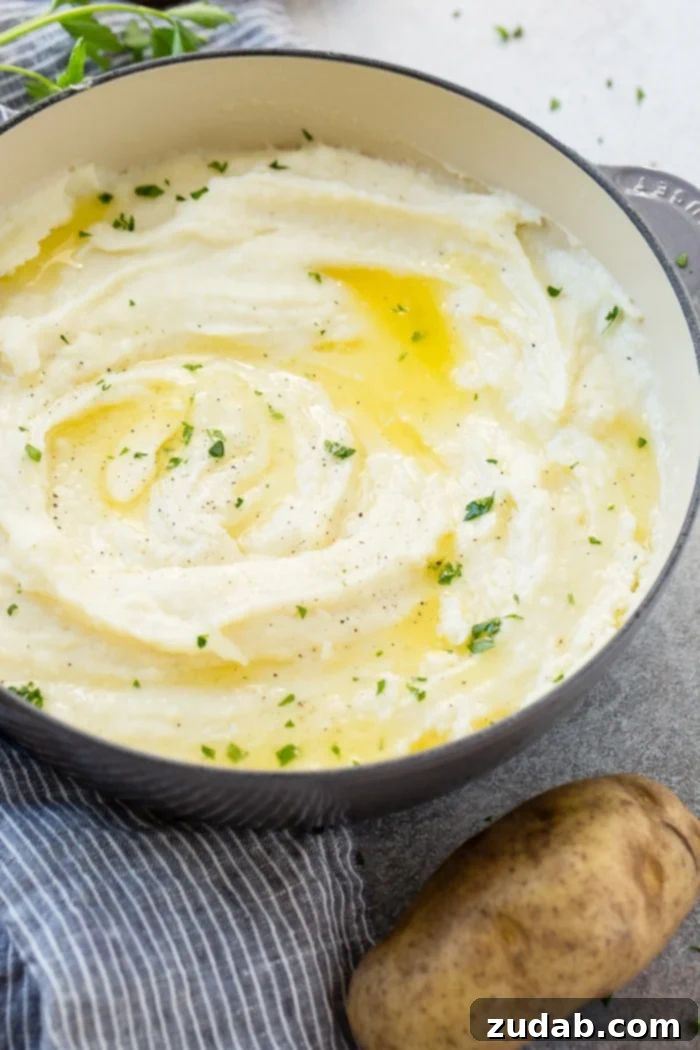
Planning Your Portions: How Many Mashed Potatoes Per Person?
Estimating the right amount of mashed potatoes, especially for a large gathering like Thanksgiving, can feel daunting. But fear not, there’s a simple rule of thumb to guide you, expanding for bigger numbers.
Mashed Potatoes for Smaller Gatherings (2-4 people)
For smaller meals, a good starting point is to think of potatoes in terms of people: generally, one medium-sized potato per person is a generous serving. So, for 2 people, you’d typically need 2 potatoes, and so on. This accounts for side servings, but if mashed potatoes are a main feature or for very hungry guests, you might add a little extra.
Estimating for Larger Crowds (25-100+ people)
When cooking for a crowd, the added ingredients like butter and cream significantly increase the volume, so precise individual potato counting becomes less critical. Instead, work with larger bags:
- For 25 to 30 people: A **15-pound bag of Russet potatoes** is usually sufficient.
- For 100 people: You’ll need approximately **60 pounds of potatoes** to comfortably feed everyone.
- From a 5-pound bag: A standard **5-pound bag of Russet potatoes** will yield about **10-12 generous servings**, perfect for a family dinner.
Troubleshooting Common Mashed Potato Problems
Even seasoned cooks can encounter issues when making mashed potatoes. Don’t let common mishaps deter you from achieving mashed potato perfection. Here’s how to diagnose and prevent the most frequent problems:
Avoiding Gluey Mashed Potatoes
Gluey mashed potatoes are often the result of two main errors:
- Overcooked Potatoes: Potatoes that are boiled for too long can become waterlogged and mushy, leading to a gluey texture when mashed. Cook until just fork-tender.
- Poor Draining: Insufficiently drained potatoes retain too much water, which turns the starches into a sticky, gummy consistency. Always allow them to steam dry in a colander for several minutes after draining.
- Incorrect Dairy Order: As mentioned in our secrets, adding cream or milk before butter can cause gluey results. Butter should always be added first to coat the starches.
Say Goodbye to Lumpy Mashed Potatoes
Lumps are usually a sign of one of these issues:
- Improper Mashing Tool: A simple potato masher or beaters might not fully break down all potato pieces. For truly smooth potatoes, a potato ricer or a fine-mesh strainer is highly recommended. These tools force the potato through small holes, ensuring an even, lump-free texture.
- Starting in Hot Water: Adding potatoes to boiling water cooks the outside too quickly while the inside remains firm, leading to hard lumps even after mashing. Always start potatoes in cold water and bring them to a boil to ensure even cooking.
Preventing Gummy Mashed Potatoes
Gummy mashed potatoes are closely related to gluey ones, sharing similar causes:
- Overworking the Potatoes: Excessive mashing or beating, especially with an electric mixer, can break down too many starch cells, releasing a sticky, gummy substance. Mash just enough to achieve the desired smoothness.
- Too Much Liquid: While cream is essential, too much liquid can lead to a gummy texture. Adhere to the recipe’s liquid ratios, adding more only if absolutely necessary and in small increments.
- Waterlogged Potatoes: As with gluey potatoes, having too much water absorbed during boiling (which is why we recommend boiling with skins on) can contribute to a gummy consistency.
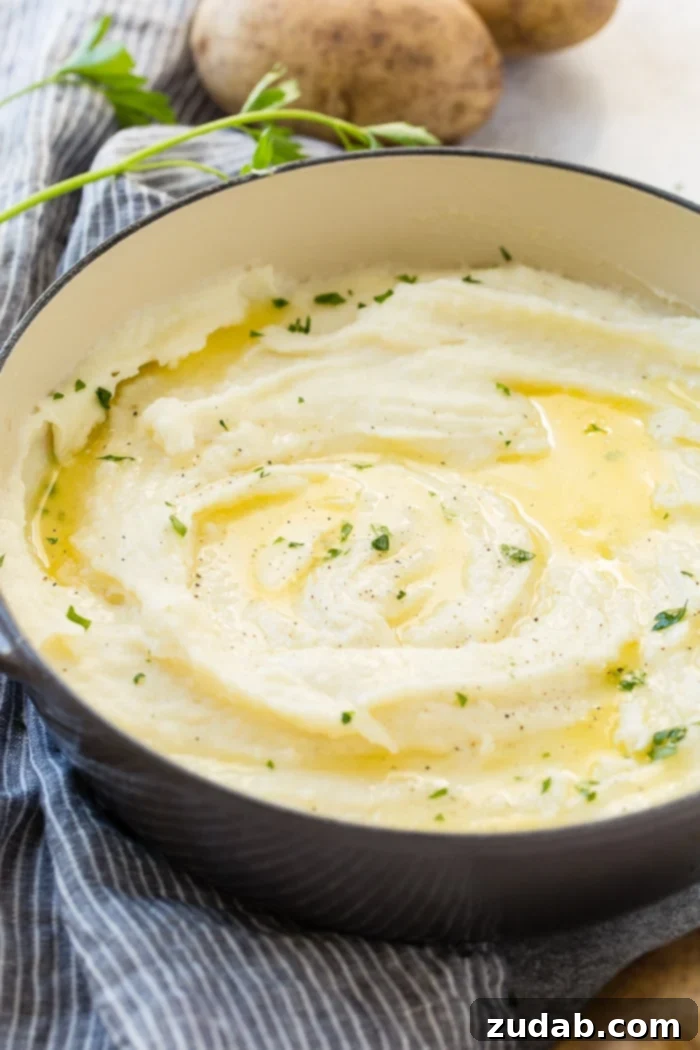
Make-Ahead, Storage, and Reheating Tips
Mashed potatoes can be a fantastic make-ahead option, simplifying your meal prep, especially during busy holidays. Proper storage and reheating are key to maintaining their delicious texture.
Can Mashed Potatoes Be Prepared in Advance?
Absolutely! Mashed potatoes are an excellent recipe to prepare ahead of time. However, to maintain optimal taste and texture, it’s best not to make them more than **one day in advance**. Beyond that, the potato starches can begin to break down, affecting the overall quality.
Keeping Mashed Potatoes Warm for Serving
Keeping mashed potatoes warm without drying them out is an art. Here are a few effective methods:
- Bain-Marie (Water Bath): The best way to keep mashed potatoes warm and moist is to create a double boiler. Heat a pot of water to a simmer. Place a tightly covered glass bowl of mashed potatoes over the simmering water, ensuring the bottom of the glass bowl does not touch the hot water. Cover the glass bowl tightly with plastic wrap to trap steam and moisture.
- Low Oven: You can also keep mashed potatoes warm in an oven set to a very low temperature (around 200°F / 95°C). Ensure the mashed potatoes are covered tightly with aluminum foil to prevent drying. The only drawback to this method is it uses valuable oven space, which might be needed for other dishes like turkey or stuffing.
- Slow Cooker: For convenience, a slow cooker is a great option. Simply transfer the mashed potatoes to your slow cooker, set it to the “Warm” setting, and put the lid on. To make cleanup easier, I recommend using a slow cooker liner.
The Best Way to Reheat Mashed Potatoes
To reheat mashed potatoes while preserving their creamy texture, the bain-marie method (glass bowl over simmering water) is ideal. Stir the potatoes after about 10 minutes, replace the plastic wrap, and repeat until they are heated through. Avoid reheating mashed potatoes in the microwave if possible, as it tends to heat unevenly, causing some areas to bubble and overcook while others remain cold, and can make them gummy.
Freezing Mashed Potatoes for Future Enjoyment
If you find yourself with leftover mashed potatoes, don’t let them go to waste! Homemade mashed potatoes freeze surprisingly well. Allow them to cool completely to room temperature, then transfer them into freezer-safe bags or airtight containers. When you’re ready to enjoy your frozen mashed potatoes, reheat them, covered, on the stovetop over low heat. Add a splash of whole milk or cream as needed to loosen them up and restore their creamy consistency.
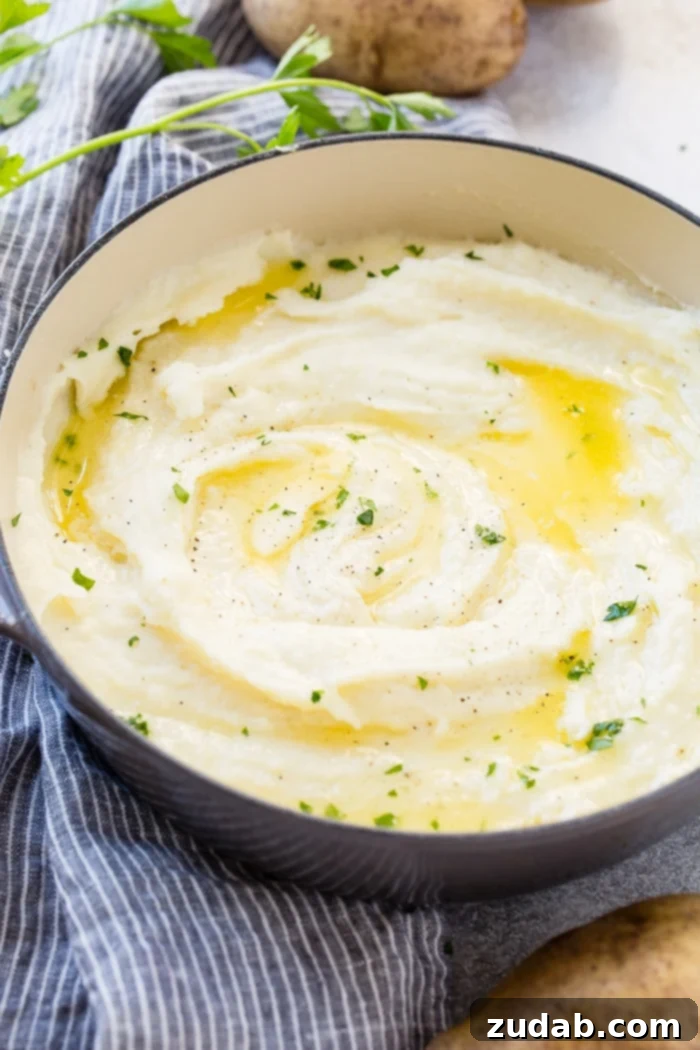
Creative Variations and Serving Suggestions
While classic creamy mashed potatoes are undeniably perfect on their own, there are endless ways to customize them to suit any meal or preference. Don’t be afraid to experiment with these delicious variations:
- Garlic Herb Mashed Potatoes: Infuse your mashed potatoes with flavor by simmering crushed garlic cloves and fresh herbs (like rosemary or thyme) in the cream before adding it to the potatoes. Strain them out for a subtle flavor or leave them in for a more robust taste.
- Cheesy Mashed Potatoes: Stir in shredded cheddar, Gruyère, or Parmesan cheese when adding the butter and cream. The melting cheese adds an incredible depth of flavor and even more creaminess.
- Roasted Garlic Mashed Potatoes: Roast whole heads of garlic until soft and caramelized, then squeeze out the sweet, mellow cloves and mash them directly into the potatoes. This offers a nuanced garlic flavor without the sharpness of raw garlic.
- Brown Butter Mashed Potatoes: For an extra layer of nutty flavor, brown your butter before adding it to the potatoes. This simple step adds a gourmet touch.
- Spicy Mashed Potatoes: Add a pinch of cayenne pepper or a dash of hot sauce for a kick, or incorporate some finely chopped jalapeños for a fresher heat.
- Buttermilk Mashed Potatoes: Swap out some of the heavy cream for buttermilk for a tangier, lighter mashed potato with a lovely smooth texture.
Mashed potatoes are the quintessential companion to so many main dishes. They are perfect alongside roasted chicken, juicy steaks, hearty meatloaf, or holiday turkeys. For an unforgettable feast, pair them with other classic sides like green bean casserole, cranberry sauce, and warm dinner rolls.
Conclusion: Your Journey to Mashed Potato Perfection
From nostalgic childhood memories to sophisticated holiday spreads, mashed potatoes hold a special place in our hearts and on our tables. With these simple yet profound secrets – boiling potatoes in their skins and adding butter before cream – you are now equipped to create the creamiest, fluffiest, and most flavorful homemade mashed potatoes every single time. This recipe is more than just a list of ingredients; it’s a testament to how small details can lead to culinary perfection. So, grab your potatoes, embrace these tried-and-true techniques, and prepare to delight your taste buds and impress your guests with a truly unforgettable side dish. Happy mashing!
More Easy Potato Side Dishes:
- Greek Lemon Roasted Potatoes
- Crash Potatoes
- Potato Rolls
- Scalloped Potatoes
- Garlic Roasted Potatoes with Tzatziki
- Twice Baked Sweet Potatoes
- Twice Baked Potato Casserole
More delicious SIDE DISHES you’re sure to love:
- Brazilian Coconut Rice
- Macaroni Salad
- Sweet Cornbread
- Instant Pot Refried Beans
- Herbed Focaccia Bread
- Cilantro Lime Cauliflower Rice
- Easy 7-Up Biscuits
- Grilled Corn
- Best Baked Beans
- The BEST Macaroni and Cheese (Southern-Style!)
- Best Potato Rolls
- All our SIDE DISH recipes!
The Best Mashed Potatoes
Sweet Basil
5 minutes
30 minutes
45 minutes
4
servings
Ingredients
-
2
Pounds
Russet Potatoes, about 6-7 potatoes -
8
Tablespoons
Butter, melted, plus 2 more for the top -
1
Cup
Heavy Cream *half and half or whole milk may be used -
1 1/2
teaspoons
Salt, or to taste - Black pepper to taste
Instructions
-
Place unpeeled potatoes in a large pot (5 Qt+) and cover potatoes with cold water. Never start with hot water or the potatoes will overcook on the outside and be undercooked in the middle.2 Pounds Russet Potatoes
-
Bring to a boil and cook until easily pierced with a knife, about 20-25 min depending on the size of your potatoes.
-
Drain potatoes well and set aside.
-
Peel the potatoes by sliding the skins off.
-
In a
potato ricer
, or
mesh bowl