
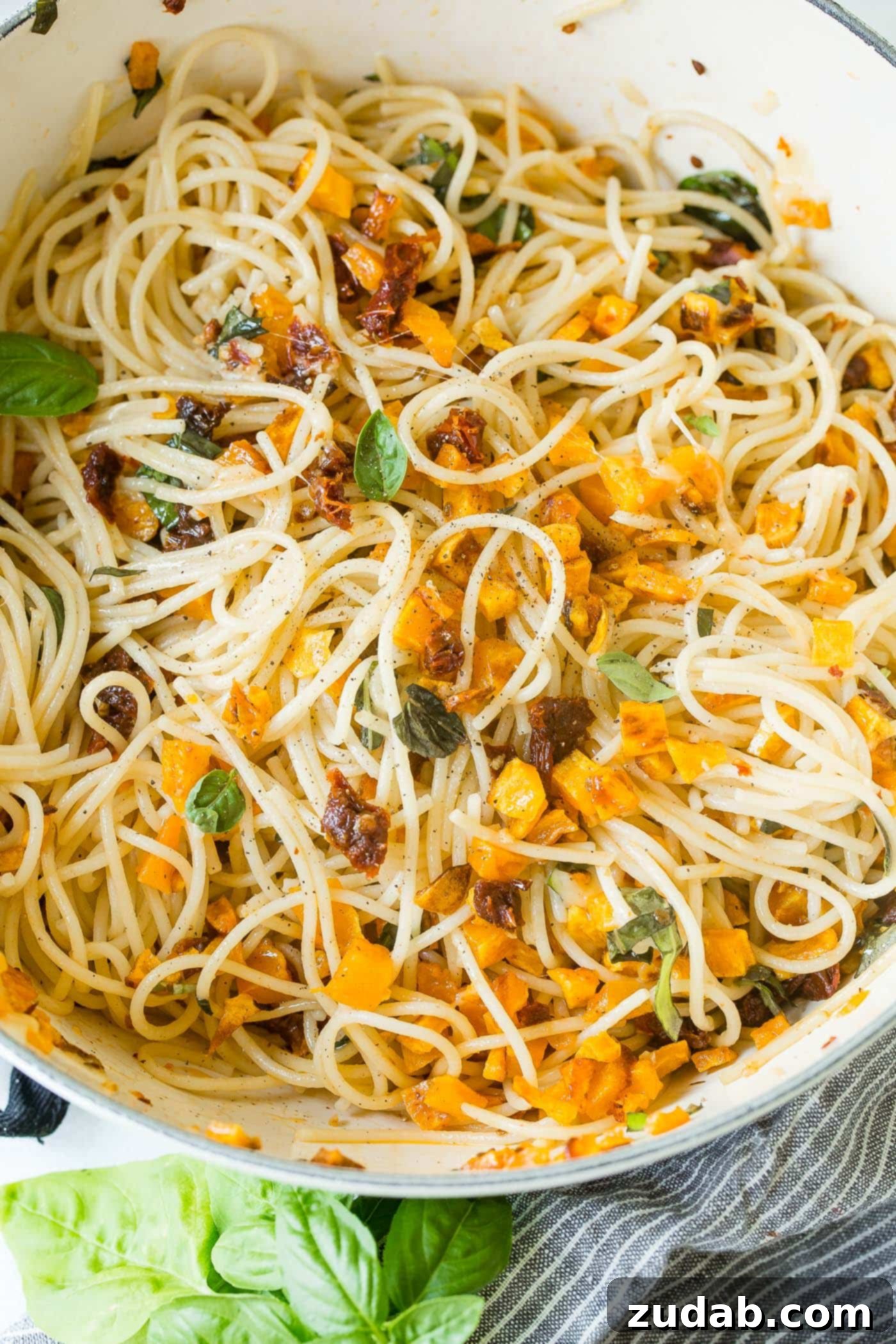
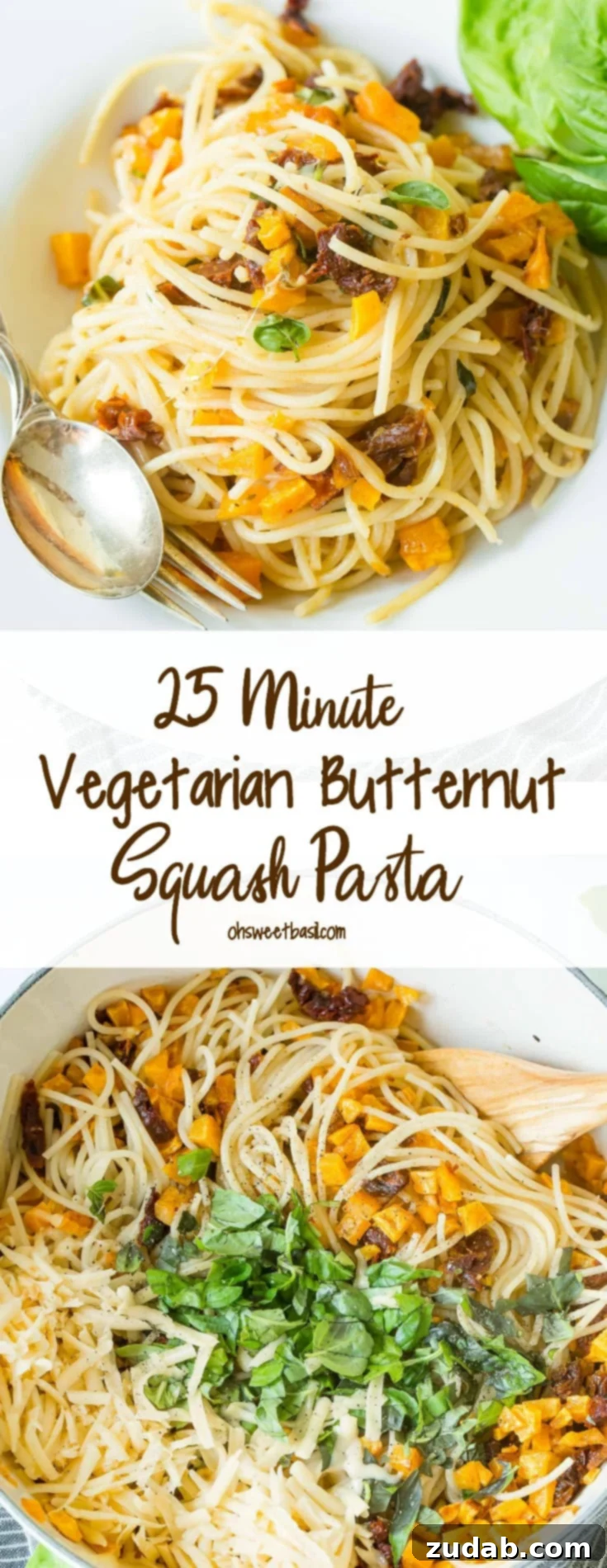
Welcome to your new favorite weeknight meal: a sensational Butternut Squash Pasta that promises rich, comforting flavors in a mere 25 minutes! This vibrant dish brings together the natural sweetness of roasted butternut squash, the tangy punch of juicy sun-dried tomatoes, and the aromatic freshness of basil, all perfectly tossed with al dente pasta and a touch of savory cheese. It’s a simple recipe that delivers gourmet taste without the fuss, making it an ideal choice for busy evenings when you crave something truly delicious and wholesome.
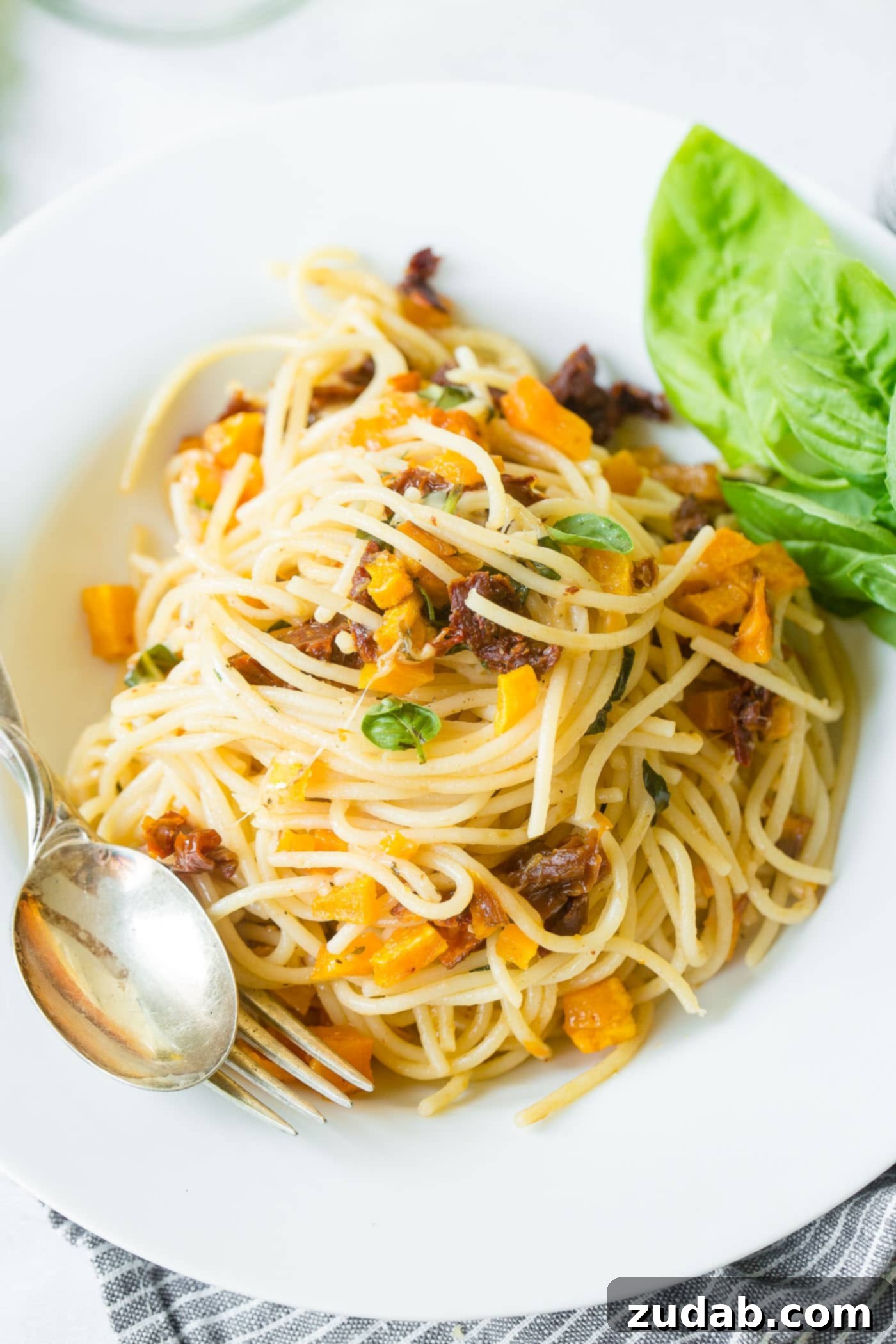
Life moves fast, and often, dinner planning feels like another chore. If you find yourself staring into the fridge, tired of cycling through the same five meals, you’re not alone. That’s precisely why this incredibly easy and flavorful 25-Minute Butternut Squash Pasta has become an absolute lifesaver in our household. It’s a perfect blend of speed, nutrition, and irresistible taste that rescues dinner dilemmas with flying colors.
We actively strive to incorporate at least one vegetarian meal into our weekly rotation. While our family certainly enjoys meat, the sheer deliciousness of this particular dish ensures that nobody misses the protein. It’s so hearty and satisfying, bursting with diverse textures and flavors, that it effortlessly stands alone as a complete meal. Even the most discerning palates, including those who might typically shy away from vegetables, find themselves reaching for seconds.
There’s a growing awareness about balanced eating, especially among children. Our daughter, for instance, learned in a health class that maintaining a balanced diet is crucial for well-being, and ever since, she’s become our diligent “vegetable police,” always asking if we need more greens on our plate. While her enthusiasm is admirable, her actual love for *most* veggies isn’t always as strong. It’s a classic parenting paradox, but dishes like this Roasted Butternut Squash Pasta are fantastic for bridging that gap, offering a way to enjoy nutritious vegetables in a truly appealing form.
How to Master Butternut Squash Pasta in 25 Minutes
Get ready to whip up a truly memorable meal in record time! This Butternut Squash Pasta recipe is incredibly straightforward yet packed with layers of flavor. Let’s dive into the simple steps that will have dinner on your table in under half an hour.
1. Roast the Butternut Squash to Perfection
The star of this vibrant dish is undoubtedly the butternut squash, and roasting is key to unlocking its rich, sweet, and slightly nutty flavor. Begin by preheating your oven to 425 degrees Fahrenheit (220 degrees Celsius). Next, prepare your butternut squash (you’ll find detailed instructions on how to peel and cut it below). Once cubed into bite-sized pieces, spread them evenly onto a sheet pan. Drizzle generously with high-quality olive oil, then season with salt and freshly ground black pepper. Toss everything together to ensure each piece is lightly coated. Roast for 10-15 minutes, flipping the squash halfway through. This crucial step allows the squash to caramelize beautifully on all sides, enhancing its natural sweetness and providing a tender-crisp texture that’s simply irresistible.
2. Cook Your Favorite Pasta & Assemble the Flavors
While your butternut squash is roasting, it’s time to get your pasta going. Fill a large pot with water and bring it to a rolling boil over high heat. Don’t forget to add a generous amount of salt—about 2-3 tablespoons—to properly season the pasta from the inside out. Once boiling, add your chosen pasta (spaghetti is a fantastic choice for this dish) and cook according to package directions until it reaches a perfect al dente texture. Drain, reserving a few tablespoons of the starchy pasta water, which will be essential for creating a luscious sauce.
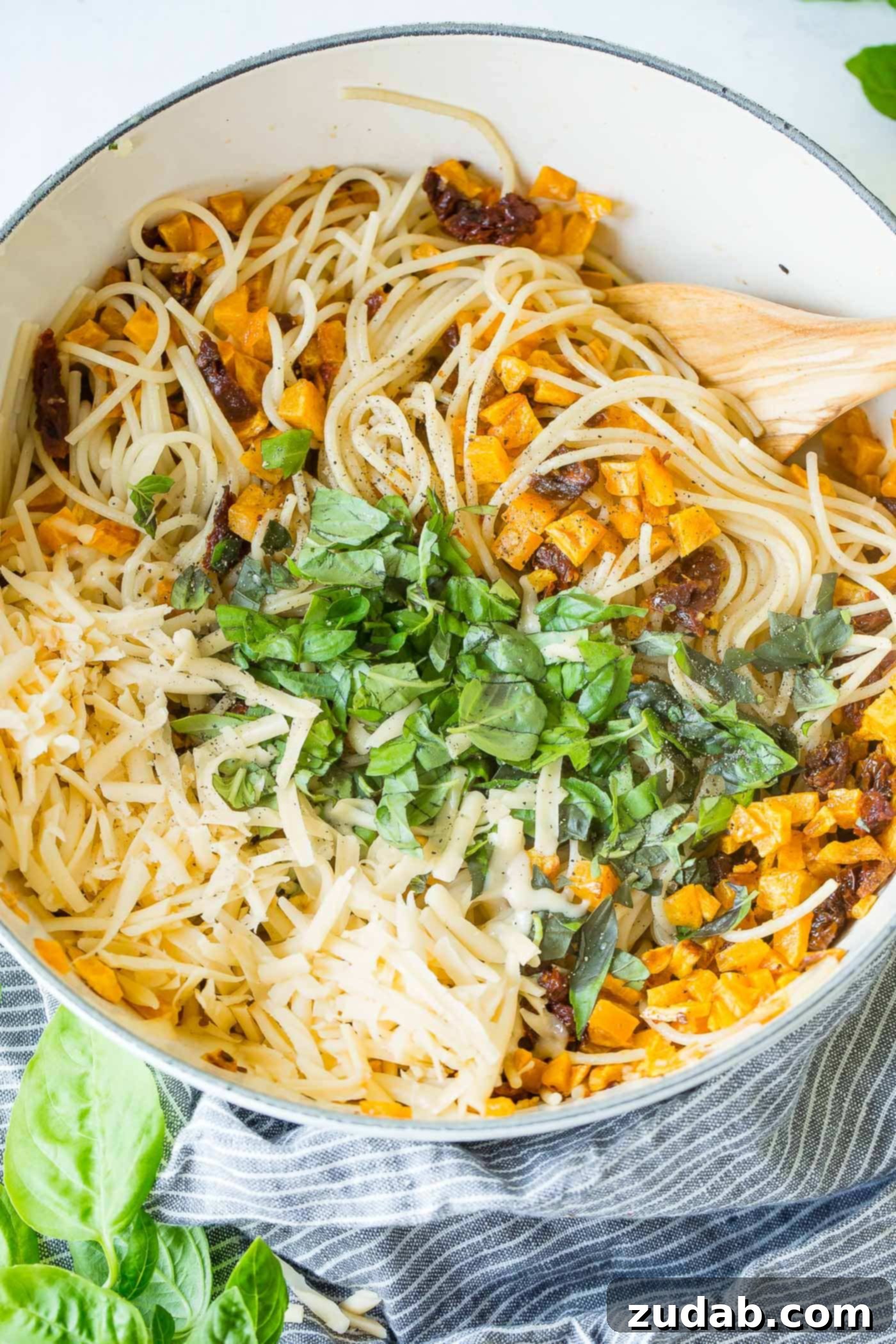
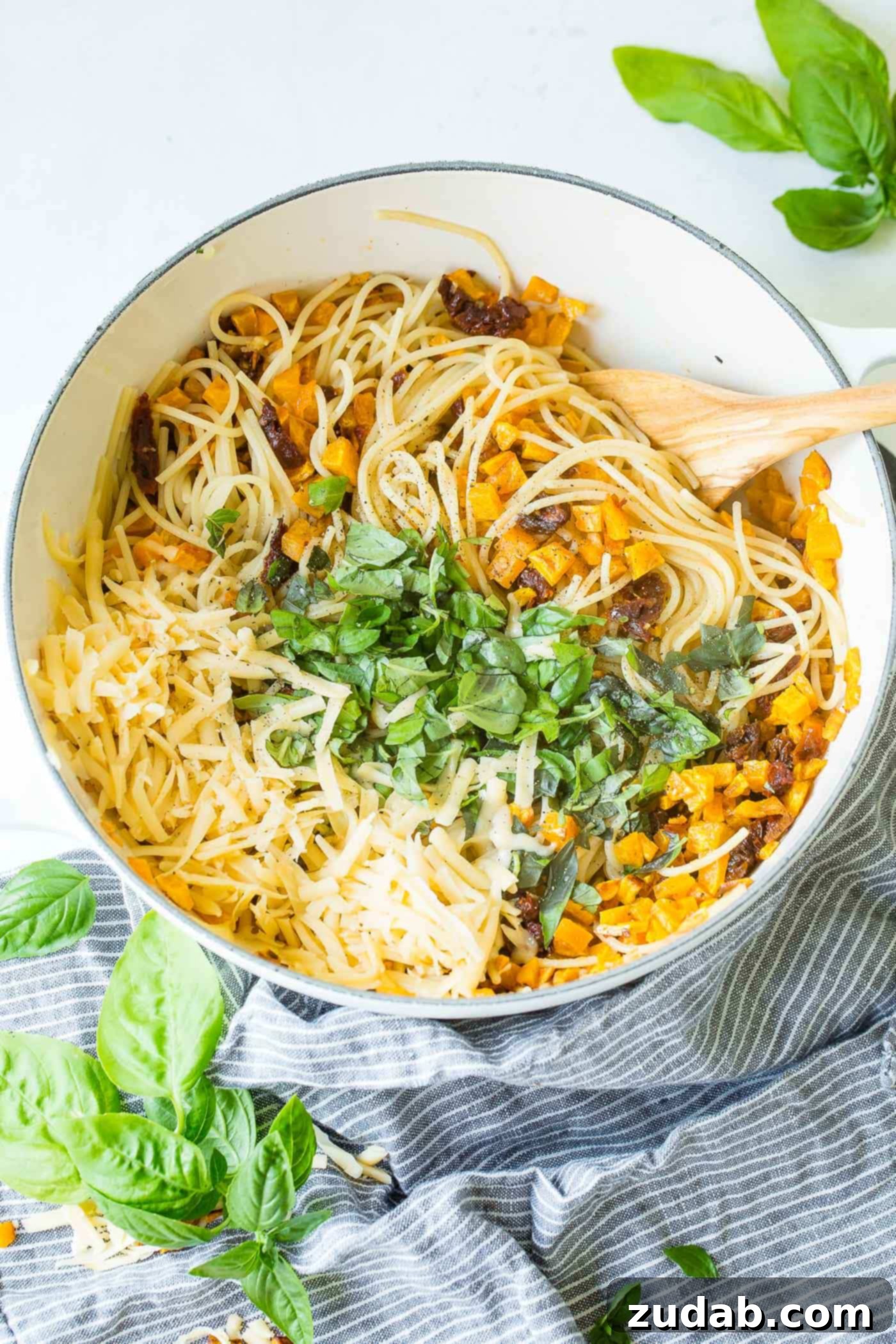
As the pasta cooks, finely chop your fresh basil and set it aside. In a large skillet or the same pasta pot (if using a pot that allows for easy tossing), heat a few tablespoons of the oil from your sun-dried tomatoes over medium heat. Add the sun-dried tomatoes and sauté for 1-2 minutes until fragrant and slightly softened. Introduce the cooked pasta to the skillet, along with the reserved starchy pasta water. This magical ingredient helps to bind the sauce and create a silky, smooth consistency. Toss to combine, then gently fold in the golden roasted butternut squash. Finally, stir in the fresh basil and your chosen cheese. We absolutely adore smoked maple gouda in this recipe for its unique depth of flavor, but any smoked gouda or even a sharp Parmesan would work wonderfully. Adjust seasoning with additional salt and pepper as needed, then toss everything together one last time until the cheese is melted and all ingredients are evenly distributed. Serve immediately for the best experience.
Butternut Squash vs. Spaghetti Squash: A Clear Distinction
While we often choose spaghetti noodles for this delicious dish, it’s important not to confuse our main ingredient, butternut squash, with spaghetti squash. These are distinctly different winter squash varieties, each with unique textures and culinary applications.
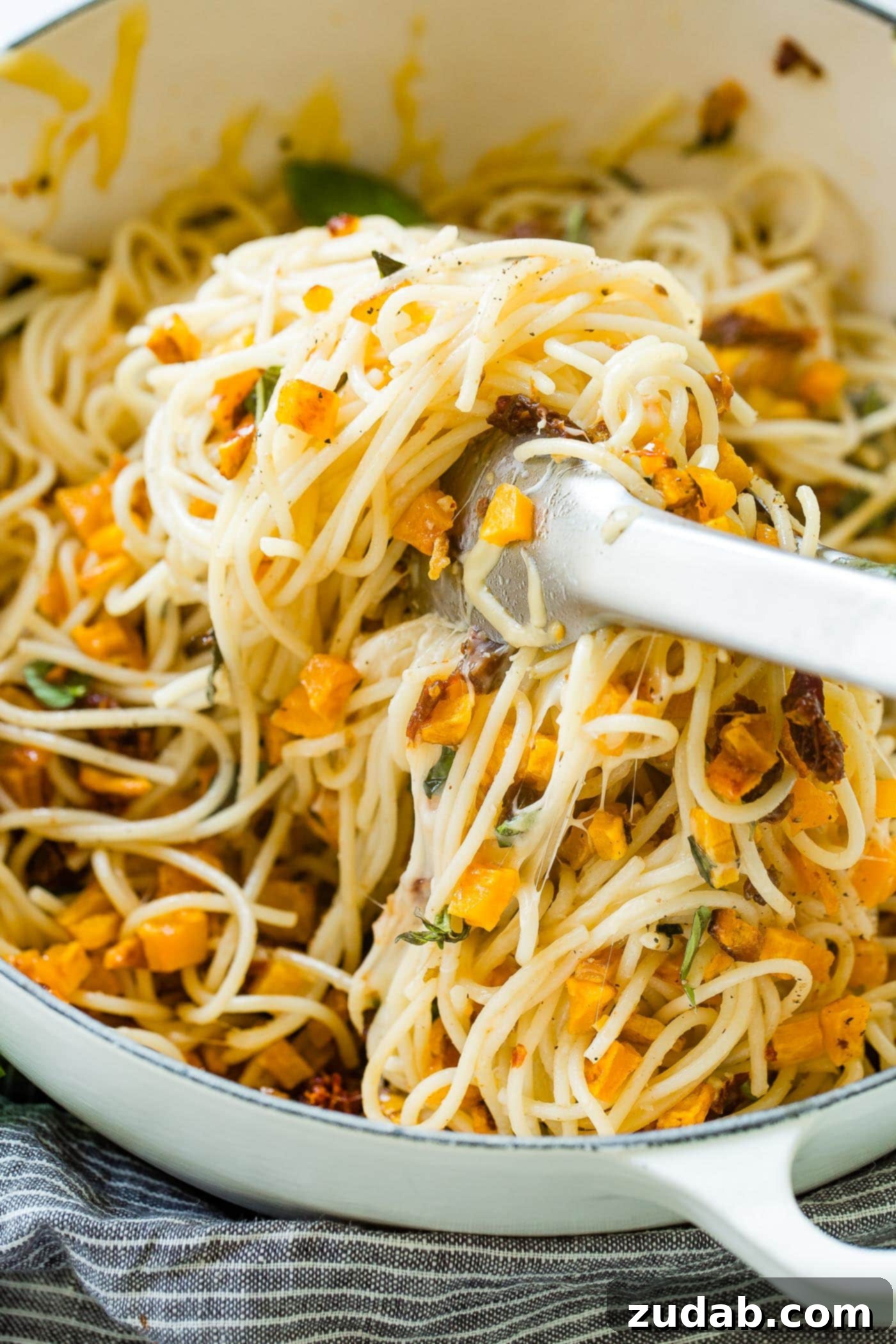
Butternut squash boasts a dense, creamy, and sweet flesh that becomes incredibly tender and flavorful when roasted. It’s ideal for purees, soups, and, of course, the hearty chunks we use in this pasta recipe, which contribute to the dish’s rich, sauce-like quality. We use actual spaghetti noodles here, allowing the robust flavor and texture of the butternut squash to shine without trying to mimic pasta strands.
In contrast, when spaghetti squash is cooked, its fibrous flesh naturally separates into delicate, spaghetti-like strands. These strands are a popular, low-carb alternative to traditional wheat pasta, often used as a base for sauces or as a side dish. While you *could* certainly use spaghetti squash or even spiralized butternut squash noodles if you’re looking to reduce carbohydrate intake, for this particular recipe, the intent is to enjoy the substantive, sweet pieces of roasted butternut squash alongside classic pasta. Both options sound incredibly delicious, offering versatility depending on your dietary preferences.
The Health Benefits: Is Butternut Squash Good for You?
Beyond its incredible taste and versatility, butternut squash is a nutritional powerhouse, making this pasta dish not just delicious but also incredibly wholesome. It’s an excellent source of essential vitamins and minerals that contribute significantly to overall health.
A single serving of butternut squash provides a substantial supply of potassium, a vital electrolyte crucial for maintaining healthy blood pressure and fluid balance. It’s also packed with dietary fiber, which is instrumental for good digestion, promoting gut health, and helping to regulate blood sugar levels. Furthermore, butternut squash is exceptionally rich in Vitamin A, primarily in the form of beta-carotene, which is converted to Vitamin A in the body. This potent antioxidant is critical for vision, immune function, and maintaining healthy skin and hair. Regular consumption can also boost immunity and provide anti-inflammatory benefits, making this Vegetarian Butternut Squash Pasta a smart and satisfying choice for a healthy lifestyle.
Choosing the Perfect Butternut Squash: Expert Tips
The key to a truly outstanding Butternut Squash Pasta begins with selecting the finest squash. Here’s how to choose a ripe and flavorful butternut squash every time:
Look for a butternut squash that has a solid, uniform beige or tan color. Avoid any squash with green patches, as this indicates it wasn’t fully ripe when harvested and may not have developed its full sweetness. The skin should have a matte appearance; if it looks shiny, it might be unripe. Also, inspect the squash for any deep cuts, bruises, soft spots, brown patches, or punctures. While minor surface scratches are normal and won’t affect the quality, significant damage could lead to spoilage. Finally, and crucially, when you lift the butternut squash, it should feel heavy for its size. This density is a strong indicator of rich, moist flesh inside, guaranteeing a more flavorful and satisfying culinary experience. Armed with these tips, you’ll pick a perfect butternut squash every time, ensuring your pasta dish is as delicious as possible!
Effortless Preparation: How to Cut a Butternut Squash
Preparing a butternut squash can seem daunting due to its thick skin and tough interior, but with a few simple steps, it’s quite manageable and safe. Here’s a detailed guide to cutting your butternut squash for this delicious pasta:
- Stabilize the Squash: Place the butternut squash on a sturdy cutting board. For stability, you might want to trim a very thin slice from one side to create a flat base, preventing it from rolling.
- Trim the Ends: Using a large, sharp chef’s knife, carefully cut off both the top (stem end) and bottom (blossom end) of the squash. Aim to remove about half an inch from each end. This makes peeling and slicing much easier.
- Halve the Squash: Stand the squash upright on one of its cut ends. Carefully slice the squash in half lengthwise. This may require some force and a rocking motion with your knife.
- Remove Seeds: Once halved, you’ll see the seeds and fibrous strands in the bulbous end. Use a sturdy spoon to scoop out all the seeds and stringy pulp, scraping the inside clean.
- Peel the Skin: Butternut squash has thick, tough skin that’s not edible. Place the two halves flesh-side down on your cutting board. Using a sharp vegetable peeler (a Y-peeler often works best for this task), carefully remove the skin, working from the top down. Ensure all the green and light-colored skin is removed, leaving only the bright orange flesh. Be patient, as it might take a few passes.
- Dice into Cubes: Once peeled, place each squash half cut-side down. Slice it lengthwise into thick planks, then cut these planks crosswise into bite-sized 1/2-inch to 3/4-inch cubes. Uniform cubes ensure even roasting.
And just like that, your butternut squash is ready to be transformed into a culinary delight!
What Exactly Are Sun-Dried Tomatoes?
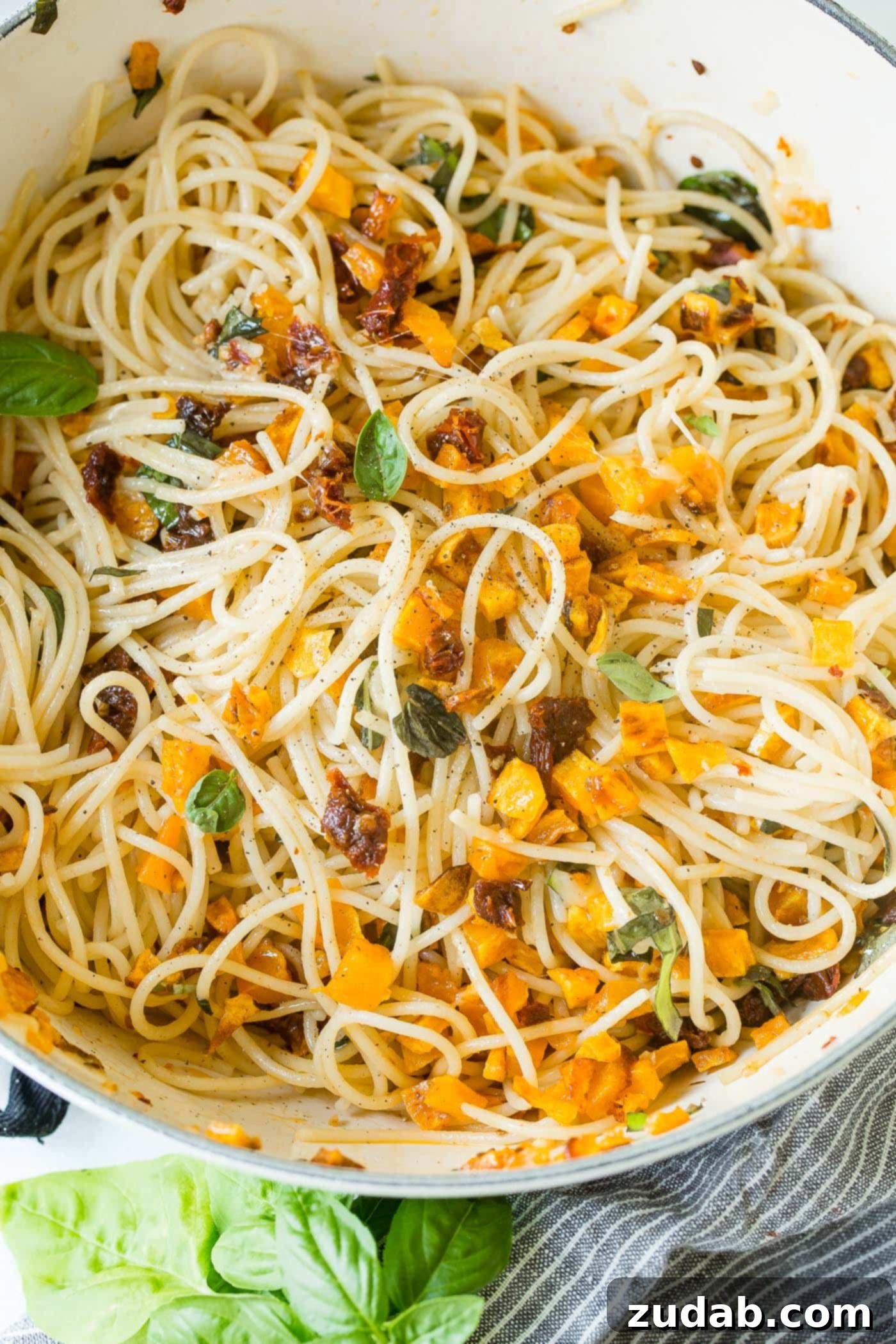
Sun-dried tomatoes are a secret weapon in the kitchen, revered for their intensely concentrated flavor. They are, quite literally, ripe tomatoes that have had most of their water content removed by being dried out in the sun. This traditional drying process amplifies their natural sweetness and introduces a delightful tanginess and umami depth that fresh tomatoes simply can’t match.
Available either dry-packed or (as preferred for this recipe) oil-packed, sun-dried tomatoes are incredibly versatile and add a burst of rich, savory-sweet flavor to countless dishes. Their vibrant color and robust taste are simply delicious! We love incorporating them into a wide array of recipes, such as our creamy herb chicken with sun-dried tomatoes and our crispy pancetta ravioli with sun-dried tomatoes and spinach. Their unique profile is perfect for elevating simple ingredients into extraordinary meals.
A Brief Look: What is a Vegetarian Diet?
At its core, a vegetarian diet involves abstaining from consuming meat, poultry, and seafood. Often, it also extends to refraining from by-products of animals processed for food, such as gelatin or rennet. This lifestyle choice can be motivated by various factors, including ethical concerns, environmental impact, religious beliefs, or health considerations. This Butternut Squash Pasta perfectly exemplifies how delicious and satisfying a vegetarian meal can be, showcasing the incredible flavors that plant-based ingredients offer.
Pasta Perfection: Can I Use Pasta Other Than Spaghetti?
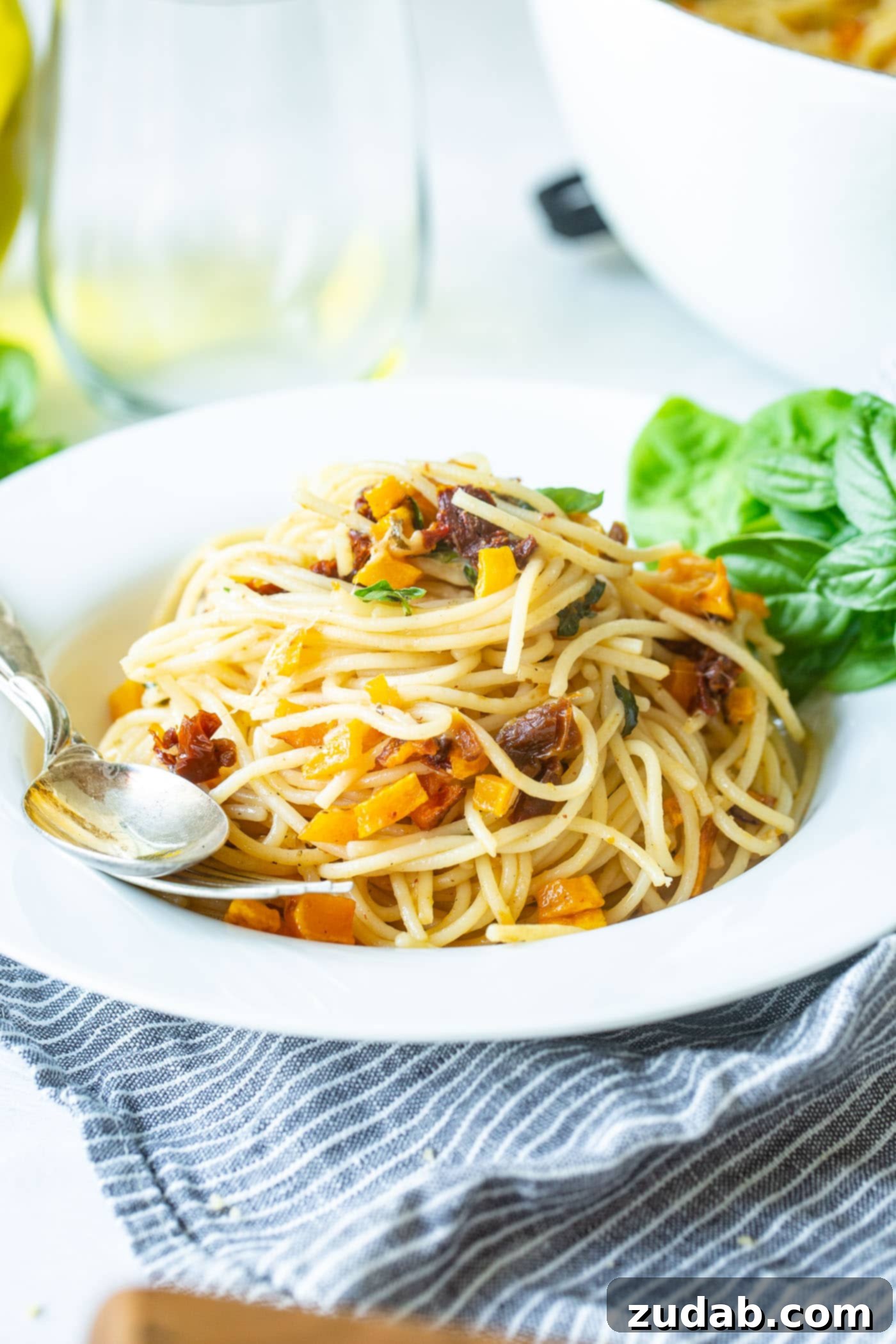
Absolutely! While spaghetti’s long, thin strands are a fantastic complement to the hearty chunks of butternut squash and sun-dried tomatoes in this dish, you are encouraged to use any type of pasta you prefer. The beauty of pasta dishes lies in their versatility. We often enjoy this butternut squash pasta with angel hair pasta for a lighter, more delicate texture, which still allows the main ingredients to shine. Other excellent choices include:
- Fettuccine or Linguine: Similar to spaghetti, these wider flat noodles provide a good surface area for the sauce and ensure you get a bit of everything in each bite.
- Penne or Rigatoni: These tubular shapes are excellent for catching and holding the sauce within their ridges, ensuring every forkful is bursting with flavor.
- Rotini or Fusilli: The spirals of these pasta shapes are perfect for scooping up the small pieces of squash and tomatoes, creating a delightful texture.
- Farfalle (Bow-tie pasta): Adds a fun, elegant touch and holds the sauce well.
Ultimately, the best pasta shape is the one you love most. Experiment and find what works best for your palate and pantry!
Storage and Reheating Tips for Leftovers
This Butternut Squash Pasta is just as delicious the next day, making it perfect for meal prep or a quick lunch. Here’s how to store and reheat your leftovers:
- Storage: Allow the pasta to cool completely before transferring it to an airtight container. It can be stored in the refrigerator for 3-5 days.
- Reheating on the Stovetop: For best results, reheat the pasta gently on the stovetop. Place the desired portion in a skillet over medium-low heat. Add a splash of water or vegetable broth (about 1-2 tablespoons per serving) to help rehydrate the sauce and prevent the pasta from drying out. Stir frequently until heated through.
- Reheating in the Microwave: If you’re short on time, the microwave works too. Place your serving in a microwave-safe dish. Add a tiny splash of water or broth, cover loosely, and microwave on medium power in 1-minute intervals, stirring in between, until heated through.
Enjoying delicious leftovers has never been easier!
Frequently Asked Questions (FAQ)
Here are some common questions about making this delightful Butternut Squash Pasta:
- Can I make this recipe vegan?
Absolutely! This recipe can be easily adapted to be vegan. Simply omit the cheese, or replace it with your favorite plant-based shredded cheese alternative. Nutritional yeast can also be added for a cheesy, umami flavor.
- What if I don’t have fresh basil?
While fresh basil adds an incredible aroma and flavor, you can substitute it with 1-2 teaspoons of dried basil, or other fresh herbs like fresh sage or parsley. Add dried herbs earlier in the cooking process to allow their flavors to develop.
- Can I use frozen butternut squash?
Yes, you can! If using pre-cut frozen butternut squash, you can roast it directly from frozen. It might take a few extra minutes to roast, so keep an eye on it until it’s tender and slightly caramelized. Ensure it’s not overly watery before adding to the pasta.
- Can I add other vegetables to this dish?
Definitely! This pasta is wonderfully adaptable. Consider adding spinach or kale (stir in at the end until wilted), mushrooms, bell peppers, or even a handful of cherry tomatoes. Roast denser vegetables alongside the butternut squash.
- What kind of cheese works best?
We highly recommend smoked maple gouda for its unique depth. Regular smoked gouda is also excellent. For a sharp, salty flavor, Parmesan or Pecorino Romano are great choices. A creamy, meltable cheese like mozzarella or fontina would also be delicious.
Butternut squash truly is a staple all fall and winter long in our house, and this butternut squash pasta is a testament to its incredible versatility. It successfully appeases our balanced-diet-conscious daughter and delightfully fills all our bellies! We love butternut squash in so many forms – in a comforting soup, beautifully roasted in a salad, or as the star of this vibrant pasta. The harmonious combination of tender roasted butternut squash, tangy sun-dried tomatoes, fragrant fresh basil, and gooey cheese is simply fabulous. We sincerely hope you love this quick, easy, and incredibly flavorful meal just as much as we do!
More VEGETARIAN RECIPES You’re Sure to Love
- Browned Butter Sage Gnocchi
- 20 Minute Cherry Tomato and Basil Angel Hair Pasta
- Mizithra Cheese and Browned Butter Spaghetti
- Southern Tomato Basil Pie
- One Pot Cauliflower Chowder
- Roasted Tomato Basil Soup
- Brown Butter Cauliflower Soup
- One Pot Creamy Winter Asiago Cheese Rice
- Creamy Tortellini Butternut Squash Soup
- 20 Minute Cheesy Pesto Pasta
- All our VEGETARIAN RECIPES here!
Vegetarian Roasted Butternut Squash Spaghetti
By Sweet Basil
Prep Time: 5 mins
Cook Time: 20 mins
Total Time: 25 mins
Servings: 6
Roasted butternut squash, sun-dried tomatoes, fresh basil, and spaghetti with a touch of gooey cheese!
Ingredients
- 1/2 Butternut Squash, peeled, seeded, and diced in 1/2″ pieces
- Olive Oil
- Salt
- Pepper
- 1 Pound Spaghetti
- 3/4 Cup Sun Dried Tomatoes, oil packed
- 1 Cup Basil, fresh leaves, chopped
- 1 Cup Gouda, smoked maple, shredded (or desired cheese)
Instructions
- Heat the oven to 425 degrees Fahrenheit (220 degrees Celsius).
- Scatter the butternut squash pieces all over a sheet pan. Drizzle with olive oil, sprinkle with salt and pepper, and toss to coat evenly. Bake for 10-15 minutes, tossing halfway through, until all sides are golden and tender.
- Remove the roasted squash from the oven and set aside.
- Meanwhile, heat a large pot of water over high heat and add 2-3 tablespoons of kosher salt.
- Once the water is boiling, add the spaghetti pasta and cook until al dente according to package directions.
- While the pasta cooks, heat a skillet over medium heat and add the sun-dried tomatoes with some of their packing oil. Sauté for 1-2 minutes until fragrant.
- Once the pasta is done, drain it, reserving a few tablespoons of the starchy pasta water. Add the cooked pasta to the skillet with the sun-dried tomatoes and a few tablespoons of the reserved pasta water. Toss well.
- Add the roasted butternut squash, fresh basil, and shredded cheese to the skillet. Stir to combine everything, seasoning with additional salt and pepper as needed.
- Serve immediately and enjoy your delicious vegetarian butternut squash pasta!
Recipe Notes
This pasta can be stored in an airtight container in the refrigerator for 3-5 days. Reheat gently on the stovetop with a splash of water or broth for best results.
Nutrition
Serving: 1 cup, Calories: 345 kcal, Carbohydrates: 72g, Protein: 13g, Fat: 2g, Saturated Fat: 1g, Sodium: 41mg, Potassium: 872mg, Fiber: 5g, Sugar: 9g, Vitamin A: 6975IU, Vitamin C: 19mg, Calcium: 68mg, Iron: 3mg
Nutrition information is automatically calculated, so should only be used as an approximation.
Like this delicious recipe? We’d love to hear from you! Please consider leaving a comment below and sharing your thoughts. Your feedback helps us grow and inspires others to try these wonderful recipes!
REMEMBER TO SUBSCRIBE TO our FREE Oh Sweet Basil NEWSLETTER AND RECEIVE EASY RECIPES DELIVERED INTO YOUR INBOX EVERY DAY!
When you try a recipe, please use the hashtag #ohsweetbasil on INSTAGRAM for a chance to be featured in our stories! FOLLOW OH, SWEET BASIL ON FACEBOOK | INSTAGRAM | PINTEREST | TWITTER FOR ALL OF OUR LATEST CONTENT, RECIPES AND STORIES.