
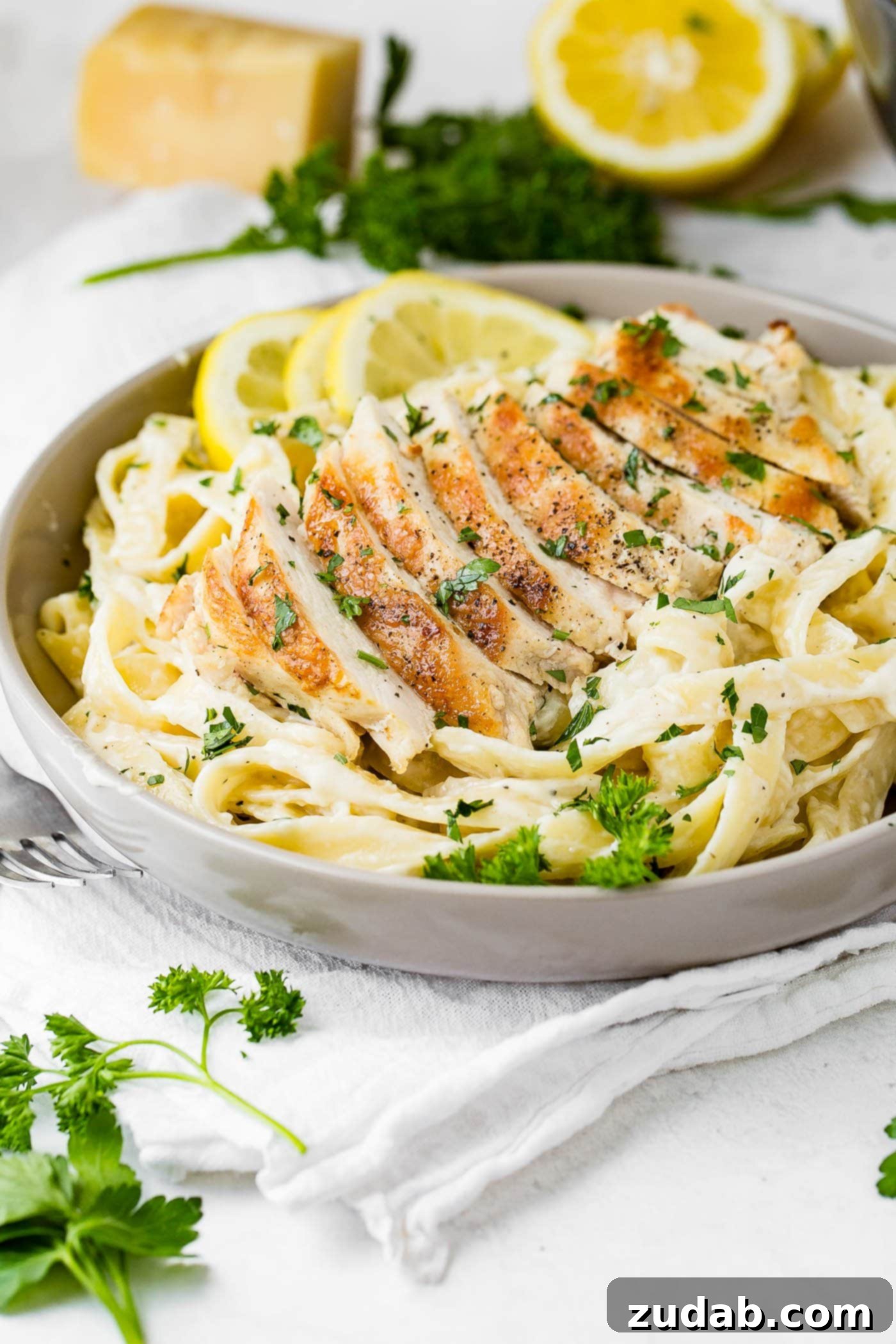
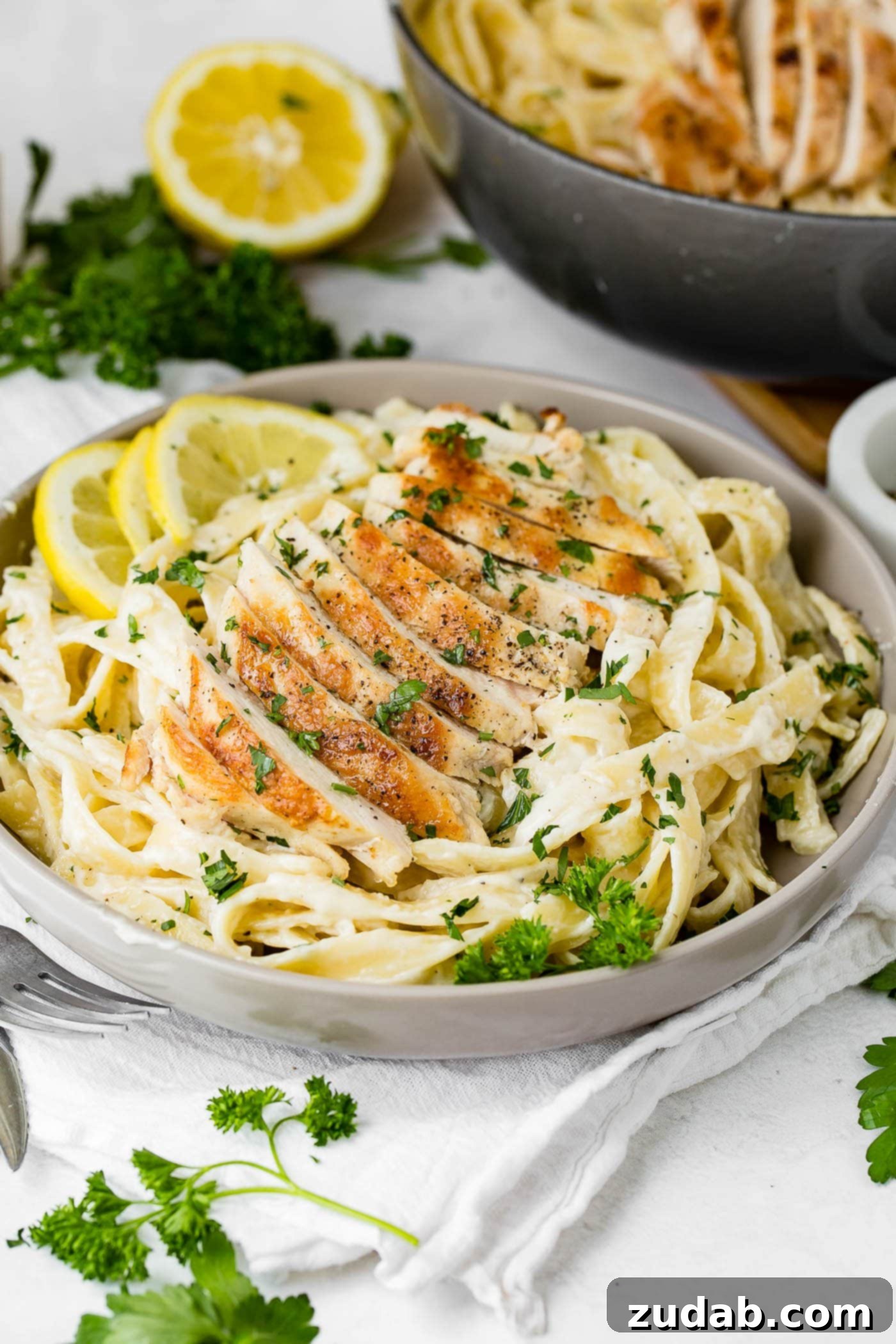
Indulge in the ultimate culinary comfort with this exquisite Chicken Fettuccine Alfredo. This classic dish, celebrated for its rich, creamy texture and hearty flavors, brings together thick fettuccine noodles, perfectly pan-seared chicken, and a decadent homemadeAlfredo sauce that will tantalize your taste buds. It’s more than just a meal; it’s an experience that evokes warmth, satisfaction, and pure joy with every forkful. Whether you’re planning a cozy family dinner or looking to impress guests, this recipe for Chicken Fettuccine Alfredo is guaranteed to become a cherished favorite.
There’s an undeniable allure to Fettuccine Alfredo. Its harmonious blend of simple yet high-quality ingredients creates a symphony of flavors that is both luxurious and incredibly comforting. When you elevate this beloved pasta dish with tender, juicy chicken, you transform it into a complete and immensely satisfying meal. It’s the kind of dish that not only fills your stomach but also nourishes your soul, leaving you feeling happy and content. Forget complicated culinary endeavors; this recipe focuses on achieving restaurant-quality taste right in your own kitchen with straightforward steps and fresh ingredients.
The Perfect Pasta: Why Fettuccine Noodles Reign Supreme
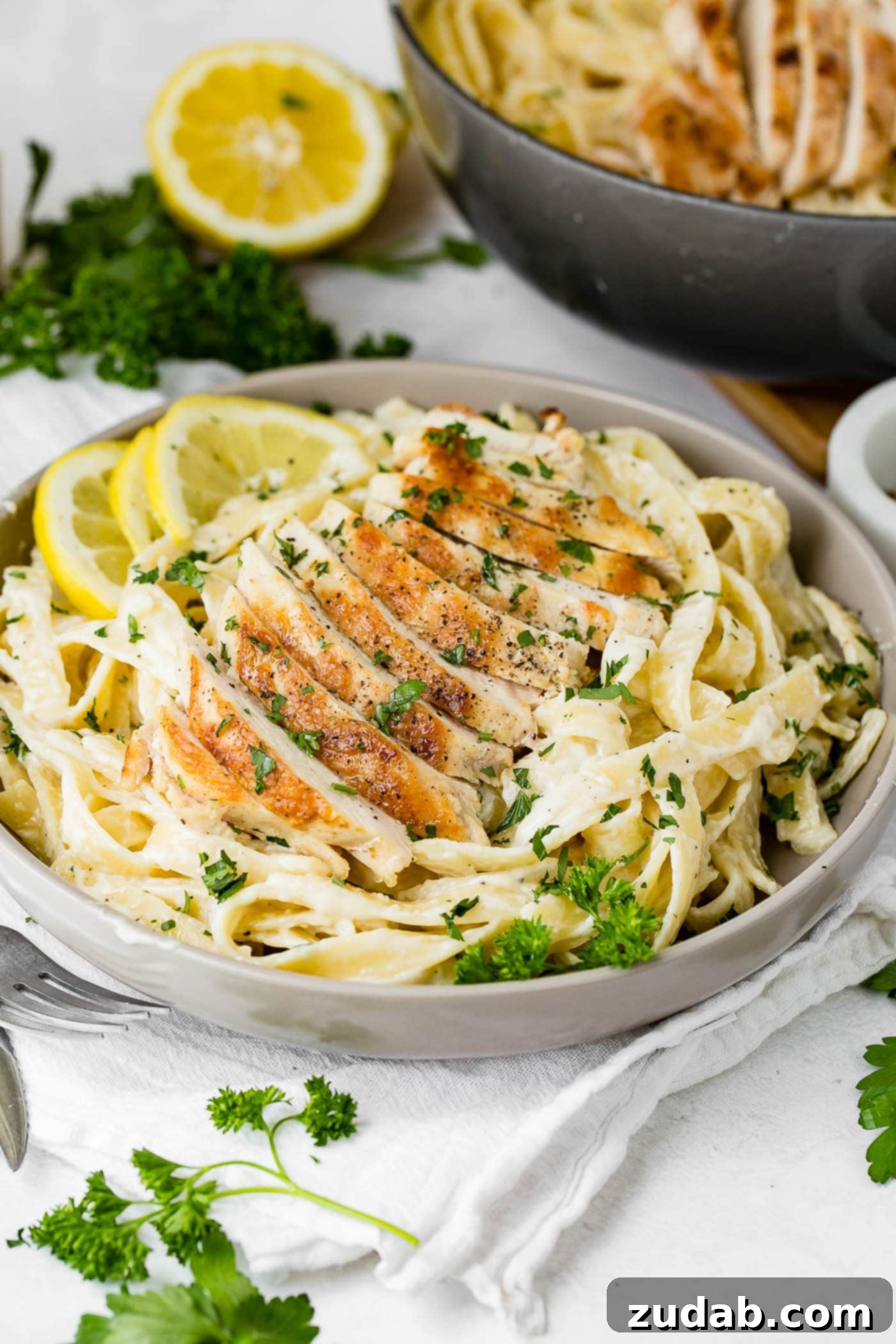
At the heart of any great pasta dish is, of course, the pasta itself. For Alfredo, fettuccine noodles are the quintessential choice, and for good reason. Their distinctive flat, wide shape offers a generous surface area, acting as the ideal canvas for capturing and holding that luxurious, creamy Alfredo sauce. While other pasta shapes like penne or shells might trap sauce in their nooks, fettuccine’s elegant strands are designed for seamless coating, ensuring every bite is saturated with flavor. This unique characteristic makes fettuccine irreplaceable in the traditional preparation of this iconic dish.
While you might be tempted to use whatever pasta you have on hand in a pinch, we highly recommend sticking to fettuccine for an authentic experience. The way the thick noodles intertwine with the rich sauce creates a delightful textural contrast and a truly satisfying mouthfeel. Imagine twirling those perfectly coated strands onto your fork, ready for that first indulgent slurp. It’s a classic pairing that has stood the test of time, and once you taste it, you’ll understand why it’s considered perfection. When cooking your fettuccine, remember to always boil it in generously salted water until al dente – firm to the bite – for the best possible texture that holds up beautifully to the heavy sauce. This simple step is crucial for elevating your homemade Chicken Fettuccine Alfredo.
Mastering Homemade Chicken Fettuccine Alfredo
Creating this iconic dish from scratch might seem daunting, but with a few simple techniques, you can achieve a truly sublime homemade Chicken Fettuccine Alfredo that rivals any restaurant. The process involves three main components: perfectly cooked pasta, tender chicken, and a luscious, velvety Alfredo sauce. Let’s break down each step to ensure your success in crafting this delightful comfort food.
Cooking the Fettuccine Noodles
The foundation of this dish begins with the pasta. Follow these steps to ensure your fettuccine is cooked to perfection:
- Bring a large pot of water to a rolling boil. A generous amount of water allows the pasta to move freely and cook evenly.
- Once boiling, add ¼ cup of kosher salt to the water. Salting the pasta water is essential for flavoring the noodles from within. It should taste like the ocean!
- Add the 8 ounces of fettuccine pasta to the boiling water, stirring occasionally to prevent sticking.
- Cook according to package directions until the pasta is al dente – tender yet still firm to the bite.
- Before draining, reserve about ½ cup of the starchy pasta water. This liquid is a secret weapon for thinning the Alfredo sauce later if needed, adding flavor and helping it cling to the noodles.
How to Prepare and Cook the Chicken
Tender, flavorful chicken is key to an outstanding Chicken Fettuccine Alfredo. Here’s how to achieve perfectly cooked chicken breasts:
- Place each chicken breast between two pieces of wax paper (or plastic wrap).
- Using a meat mallet, gently pound out each chicken breast until they are an even width, about ¾-inch thick. This ensures uniform cooking and tenderness.
- Generously sprinkle both sides of each pounded chicken breast with Montreal Chicken Seasoning. This seasoning blend adds a fantastic depth of flavor.
- Heat a large skillet over high heat. Add a tablespoon or two of oil, butter, or cooking spray. You want the pan hot enough so the chicken sizzles immediately upon contact.
- When the oil begins to shimmer and lightly smoke, add the seasoned chicken breasts to the hot skillet. You should hear a satisfying pop and sizzle.
- Immediately reduce the heat to low. Cook for 5-7 minutes without moving the chicken to allow a nice sear to form.
- Once the chicken appears white about halfway up the sides of the breast, flip it over.
- Cook for an additional 5-7 minutes on the other side, or until fully cooked through.
- Remove the cooked chicken from the skillet and transfer it to a cutting board. Let it rest for 1-3 minutes. This crucial step allows the juices to redistribute, ensuring moist and tender chicken.
- Cover the rested chicken loosely with foil to keep it warm while you finish the sauce. Slice it just before serving.
Crafting the Velvety Homemade Alfredo Sauce
The star of this dish is undoubtedly the rich and creamy Alfredo sauce. This homemade version is surprisingly simple to make and tastes infinitely better than store-bought varieties:
- In a Dutch oven or a high-sided skillet, melt 6 tablespoons of unsalted butter over medium heat.
- Once the butter is fully melted, add 2 cloves of minced garlic and ½ teaspoon of Dijon mustard. Stir constantly for 30 seconds to 1 minute, allowing the aromatics to become fragrant without browning.
- Add 2 tablespoons of cream cheese to the skillet. Whisk continuously until the cream cheese is smoothly incorporated into the butter and garlic mixture. This helps create an incredibly smooth and stable sauce.
- Quickly pour in 1 cup of heavy cream and ½ cup of milk (whole milk is recommended for richness). Bring the mixture to a gentle simmer, stirring frequently.
- Once simmering, stir in ½ cup of Parmesan cheese and ½ cup of Parmigiano Reggiano cheese. Continue stirring until the cheeses are fully melted and incorporated, creating a luxurious, thick sauce.
- Allow the sauce to cook for approximately 10 minutes, or until it has thickened to your desired consistency. Remember, it will continue to thicken slightly as it cools.
- Taste the sauce. If it seems bland, add ½ teaspoon of salt (or more to taste). Adjust seasoning as needed, but avoid over-salting, especially if using salty cheeses.
- Whisk 1 teaspoon of fresh lemon juice into the sauce. This is a crucial step! The acidity from the lemon juice beautifully balances the richness of the heavy cream and cheese, brightening the flavors and preventing the sauce from feeling too heavy.
- Once the pasta is ready, remove it directly from the water (using tongs or a pasta fork) and add it into the prepared Alfredo sauce.
- Add another ½ cup of Parmesan cheese to the sauce and pasta mixture. Use tongs to gently toss and stir everything together, ensuring every strand of fettuccine is generously coated with the creamy sauce.
- Finally, slice the rested chicken breasts into thin, even pieces. Serve the Chicken Fettuccine Alfredo immediately, topped with the sliced chicken, a generous crack of fresh black pepper, and extra grated cheese for garnish.
How to Ensure Your Chicken is Perfectly Cooked
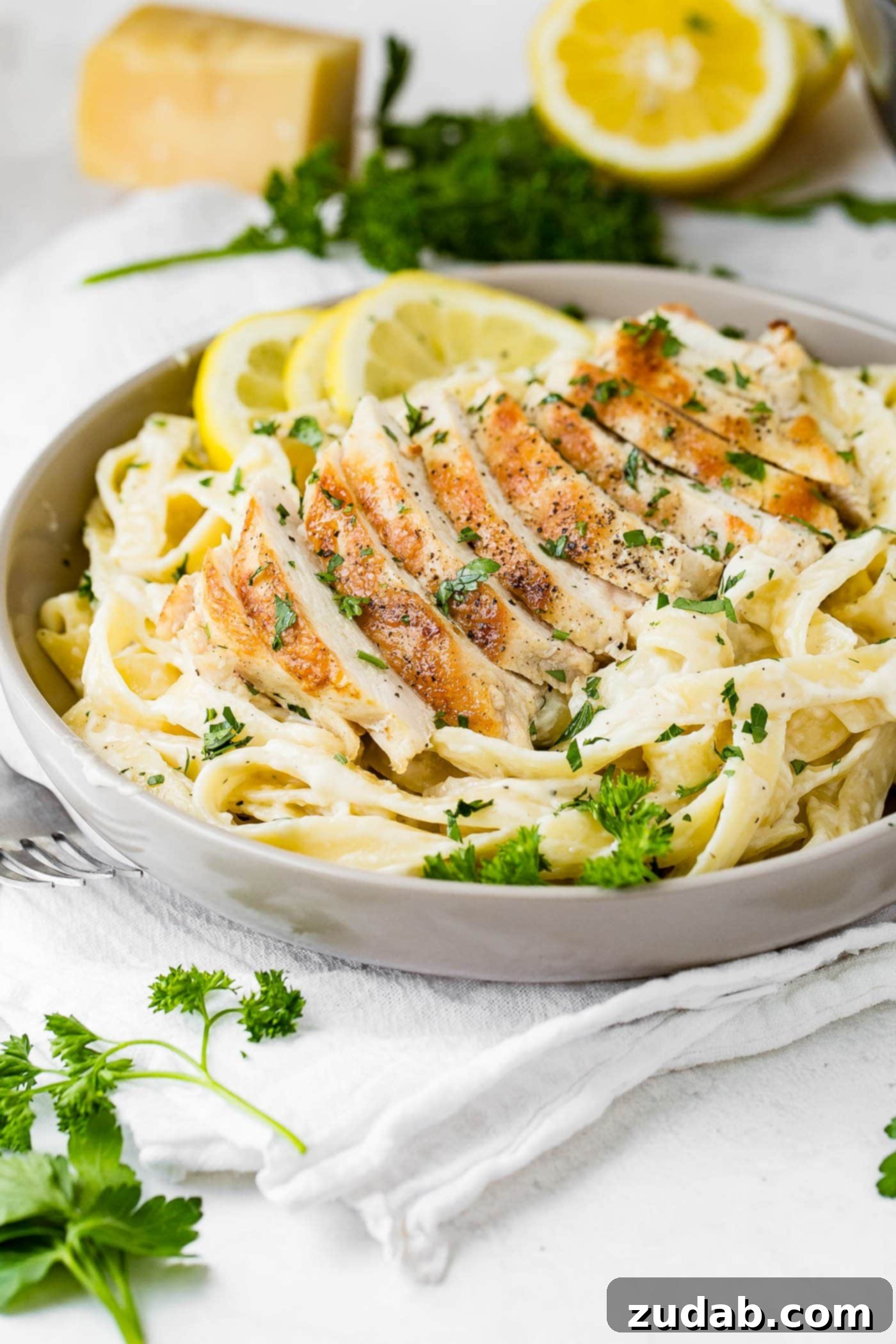
One of the most common concerns when cooking chicken is ensuring it’s cooked all the way through without becoming dry. While visual cues are helpful, the most reliable method is using a meat thermometer. For chicken breasts, the internal temperature should reach 165°F (74°C) at its thickest part. Visually, as mentioned in the cooking instructions, you’re looking for the chicken to be white and opaque halfway up the breast before flipping. Once both sides are cooked, a well-done chicken breast will show no pink rim around the edges when sliced. If you’re ever in doubt, the thermometer is your best friend for both food safety and achieving juicy results. For an even more detailed guide on pan-cooking chicken, check out dedicated resources on cooking chicken in a skillet.
Freezing and Storing Chicken Fettuccine Alfredo
Can You Freeze Chicken Fettuccine Alfredo?
Yes, you can freeze Chicken Fettuccine Alfredo, though for best results, it’s often advisable to freeze the sauce and chicken separately from the pasta if possible, as pasta can become mushy when thawed and reheated. If freezing the combined dish, spread it in flat layers in heavy-duty freezer bags or airtight containers. Ensure the dish is completely cooled before freezing to prevent ice crystal formation. When reheating, add a little extra cream or milk and stir gently over low heat to help restore its creamy texture and prevent curdling.
How Long Will Chicken Alfredo Keep?
In the refrigerator, Chicken Alfredo will typically keep for 3-5 days. However, it’s important to note that the sauce will slowly get absorbed by the pasta noodles over time. This means the texture and creaminess won’t be quite the same as when it was freshly made. To best enjoy leftovers, you might want to add a splash of milk or cream during reheating to revitalize the sauce.
Choosing the Right Cheese: Parmigiano Reggiano and Substitutes
What Can You Substitute For Parmigiano Reggiano Cheese?
Parmigiano Reggiano cheese is a hard, granular cheese with a complex, nutty, and savory flavor profile, revered as the “King of Cheeses.” While it’s the gold standard for authentic Alfredo, several other excellent cheeses can be used as substitutes, each lending a slightly different character to your sauce:
- Grana Padano: Similar to Parmigiano Reggiano but typically less expensive and slightly milder. It’s an excellent everyday substitute that still offers a rich, nutty flavor.
- Asiago: A semi-hard Italian cheese that, when aged, develops a sharp, nutty flavor akin to Parmesan, making it a good alternative.
- Pecorino Romano: This is a hard, salty sheep’s milk cheese with a sharper, tangier flavor than Parmigiano Reggiano. If using Pecorino Romano, you might want to reduce the amount of added salt in your sauce.
- Plain Parmesan Cheese: Often labeled simply as “Parmesan,” this is a broad category that can range in quality. Choose a good quality grated or block Parmesan for the best flavor, but be aware it might not offer the same depth as true Parmigiano Reggiano.
Salt Savvy: Kosher vs. Regular Salt for Pasta
Can You Use Regular Salt Instead Of Kosher Salt When Cooking Pasta?
Absolutely, you can use regular table salt or sea salt to season your pasta water. However, many chefs and home cooks, including us, prefer kosher salt for cooking pasta and most savory dishes. The primary reason is its larger, irregular granule size. This makes it easier to pinch and control the amount, and it dissolves effectively in boiling water to properly season the pasta. While all salts deliver salinity, kosher salt’s unique texture allows for a more even distribution of flavor in the pasta water without making it overly concentrated in one spot, ensuring your fettuccine is perfectly seasoned as it cooks.
Understanding Cream: Heavy Cream vs. Whipping Cream
Is Heavy Cream Whipping Cream?
Yes, for most culinary purposes, heavy cream and heavy whipping cream are essentially the same product. Both must contain at least 36% milk fat. “Whipping cream” (sometimes labeled “light whipping cream”) typically has a slightly lower fat content, around 30-35%. For rich sauces like Alfredo, heavy cream is preferred due to its higher fat content, which contributes to a thicker, more luxurious consistency and less chance of curdling. If you need to substitute, whole milk is the creamiest alternative for heavy cream, though it will result in a lighter sauce. For comparison, heavy cream contains approximately 96 grams of fat per 1 cup, while whole milk contains about 8 grams of fat per 1 cup. While whole milk can work, it will significantly alter the richness and texture of your homemade Alfredo sauce.
Preparing and Storing Alfredo Sauce
Can Alfredo Sauce be Made Ahead of Time?
Yes, Alfredo sauce can be prepared in advance, making meal prep much easier. You can make the sauce and then refrigerate it in an airtight container for up to five days. It can also be frozen for longer storage, as detailed below. The key is to prepare the sauce separately and only combine it with the freshly cooked noodles just before serving. This prevents the pasta from absorbing too much sauce and becoming soggy, ensuring optimal texture and flavor when you’re ready to eat.
Can Alfredo Sauce Be Frozen?
Yes, Alfredo sauce can be successfully frozen. Store it in an airtight container or a heavy-duty freezer bag. When freezing, try to remove as much air as possible from the container or bag to prevent freezer burn. To prevent cream-based sauces from curdling upon reheating, it is crucial to thaw it in the refrigerator overnight. Then, reheat the sauce slowly over a low heat on the stovetop, whisking frequently. Never bring it to a high boil, as rapid heating can cause the cream to separate and curdle. If the sauce is too thick after reheating, you can gently whisk in a splash of warm milk, cream, or reserved pasta water until it reaches your desired consistency.
Alfredo Sauce Consistency: Thickening and Thinning
Will Alfredo Sauce Thicken As It Cools?
Yes, Alfredo sauce thickens as it cools and cooks due to the fat content from the butter and cream, as well as the cheeses. The fats solidify slightly, and the starches from any added flour (though this recipe doesn’t use flour) or residual pasta water contribute to its viscosity. If you reheat leftover Alfredo sauce, it will likely be much thicker than when it was first made. To thin it out to a desirable consistency, simply whisk in a tablespoon or two of warm milk, heavy cream, or even some of the reserved pasta water while gently reheating it. This will help bring it back to its original creamy glory.
Ditch the ordinary and elevate your dinner routine with this incredible Chicken Fettuccine Alfredo. It’s a dish that transcends generations and taste preferences, becoming a unanimous hit at any table. Our family, including our kids and Cade, absolutely adore it, making it a perennial family favorite. It’s the perfect alternative when you’re craving something beyond traditional spaghetti and meatballs, offering a rich, satisfying, and utterly delicious experience that will have everyone asking for seconds. Get ready to create memorable meals and savor the taste of homemade perfection!
Want More Delicious Homemade Pasta Sauce and Chicken Recipes? We Got You Covered!
- The Secret to Authentic Italian Bolognese Sauce
- Favorite Homemade Spaghetti Sauce
- 20 Minute Creamy Sun-Dried Tomato Chicken Pasta
- Greek Chicken Pasta Skillet
- Avocado Pesto Chicken Pasta
- White Balsamic and Basil Chicken Pasta
3.77 from 13 votes
Chicken Fettuccine Alfredo
Ingredients
Fettuccine
- 1/4 Cup Kosher Salt
- 8 Ounces Pasta, Fettuccine
Chicken
- 2 Breast Chicken
- Montreal Chicken Seasoning
Alfredo Sauce
- 6 Tablespoons Butter, unsalted
- 2 Cloves Garlic, minced
- 1/2 teaspoon Dijon Mustard
- 2 Tablespoons Cream Cheese
- 1 Cup Heavy Cream
- 1/2 Cup Milk
- 1 1/4 Cups Parmesan Cheese, divided
- 1/2 Cup Parmigiano Reggiano Cheese
- 1/2 teaspoon Salt
- 1 teaspoon Lemon Juice
- 1/4 teaspoon Pepper
- 1 Tablespoon Parsley, minced
US Customary – Metric
Instructions
For The Pasta
-
Bring a large pot of water to a boil, adding in ¼ cup kosher salt to the water.
-
Once boiling add the fettuccine.
For The Chicken
-
Using a meat mallet, place the chicken between pieces of wax paper and pound out each chicken breast so they are an even width.
-
Sprinkle each breast with Montreal Chicken Seasoning.
-
Bring the oil (or butter or cooking spray) to heat over high heat in a skillet.
-
When the oil starts to shimmer and smoke, add the chicken. It should pop and sizzle.
-
Immediately turn the heat down to low and cook for 5-7 minutes. *See note
-
When the chicken is white halfway up the chicken breast, flip it and cook an additional 5-7 minutes. *See note
-
Remove the chicken to a cutting board for 1-3 minutes to rest.
-
Cover with foil until ready to serve.
For The Alfredo Sauce
-
In a Dutch oven or high sided skillet over medium heat, add the butter and melt.
-
Add the garlic and mustard and stir to combine for 30 seconds to 1 minute.
-
Dump in the cream cheese, whisking until smoothly incorporated.
-
Quickly add the heavy cream and milk and bring to a simmer.
-
Stir in ½ cup parmesan and parmigiano reggiano.
-
Allow to cook for 10 minutes, or until thickened.
-
Keep tasting the sauce, if you need a little more salt because it’s bland, please use it, otherwise let it sit.
-
Whisk the lemon juice into the sauce. The acid helps to balance the heavy sauce.
-
Remove the pasta from the water and add into the sauce with ½ cup parmesan, stirring with tongs to combine.
-
Slice the chicken, serve all together with a crack of fresh pepper and more cheese!
Recipe Notes
Chicken Alfredo can be kept in the refrigerator for 3-4 days.
Nutrition
Nutrition information is automatically calculated, so should only be used as an approximation.
Like this? Leave a comment below!
REMEMBER TO SUBSCRIBE TO our FREE Oh Sweet Basil NEWSLETTER AND RECEIVE EASY RECIPES DELIVERED INTO YOUR INBOX EVERY DAY!
When you try a recipe, please use the hashtag #ohsweetbasil on INSTAGRAM for a chance to be featured in our stories! FOLLOW OH, SWEET BASIL ON FACEBOOK | INSTAGRAM | PINTEREST | TWITTER FOR ALL OF OUR LATEST CONTENT, RECIPES AND STORIES.