
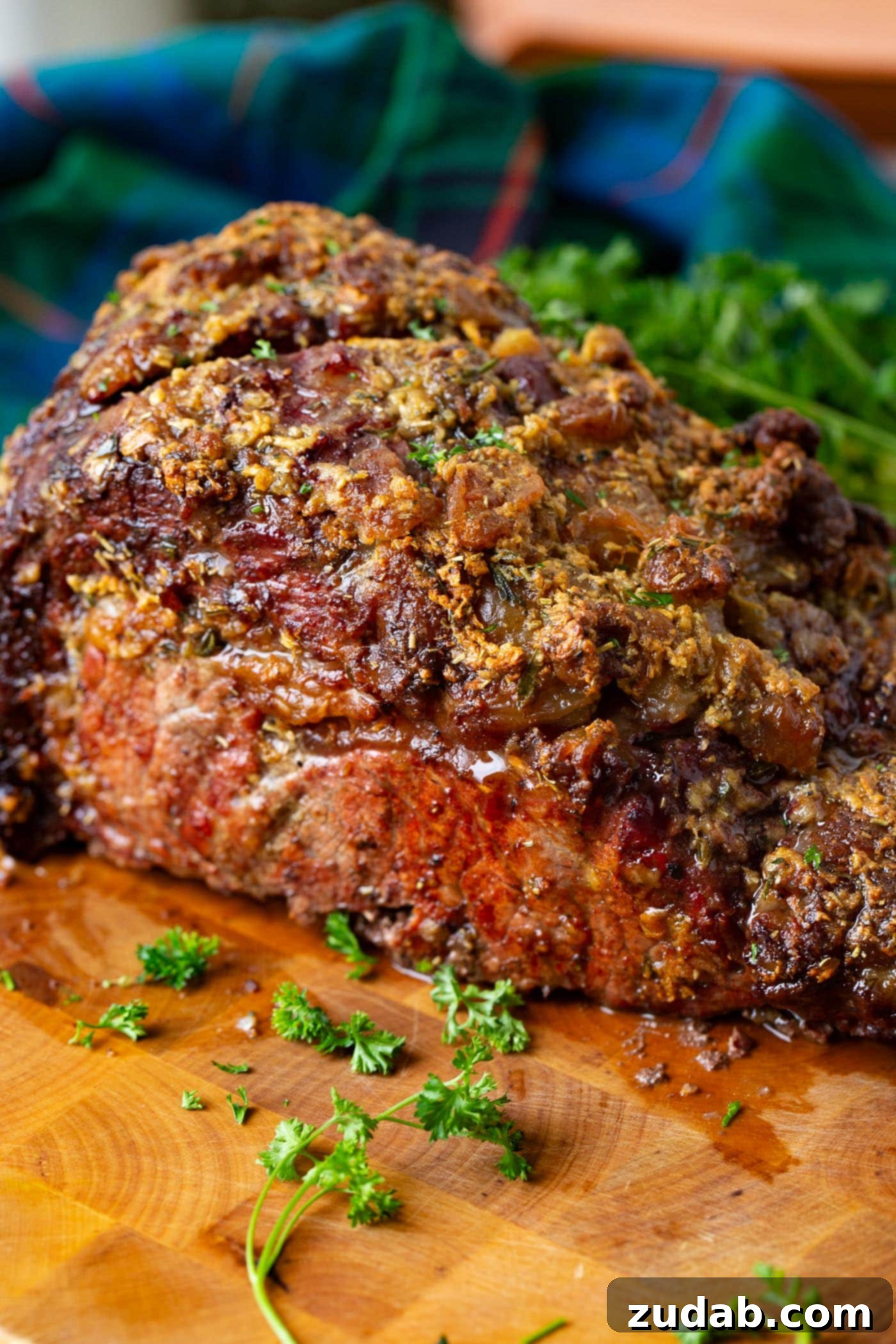
Prepare to embark on a culinary journey that will redefine your perception of prime rib. This **Traeger Smoked Prime Rib** recipe promises an unparalleled dining experience, delivering a roast that is not only incredibly juicy and perfectly cooked but also bursting with a flavor so profound, it will undoubtedly become your go-to method for preparing this regal cut of beef.
For years, our classic prime rib recipe was a blog favorite, but let me tell you, this smoked version has raised the bar exponentially. The depth of flavor achieved through the low and slow smoking process on a Traeger grill is absolutely phenomenal. It’s surprisingly simple to execute, requiring just a handful of ingredients to transform a humble roast into an unforgettable masterpiece. Get ready to impress your guests and delight your family with a prime rib that’s easy to make and impossible to resist.
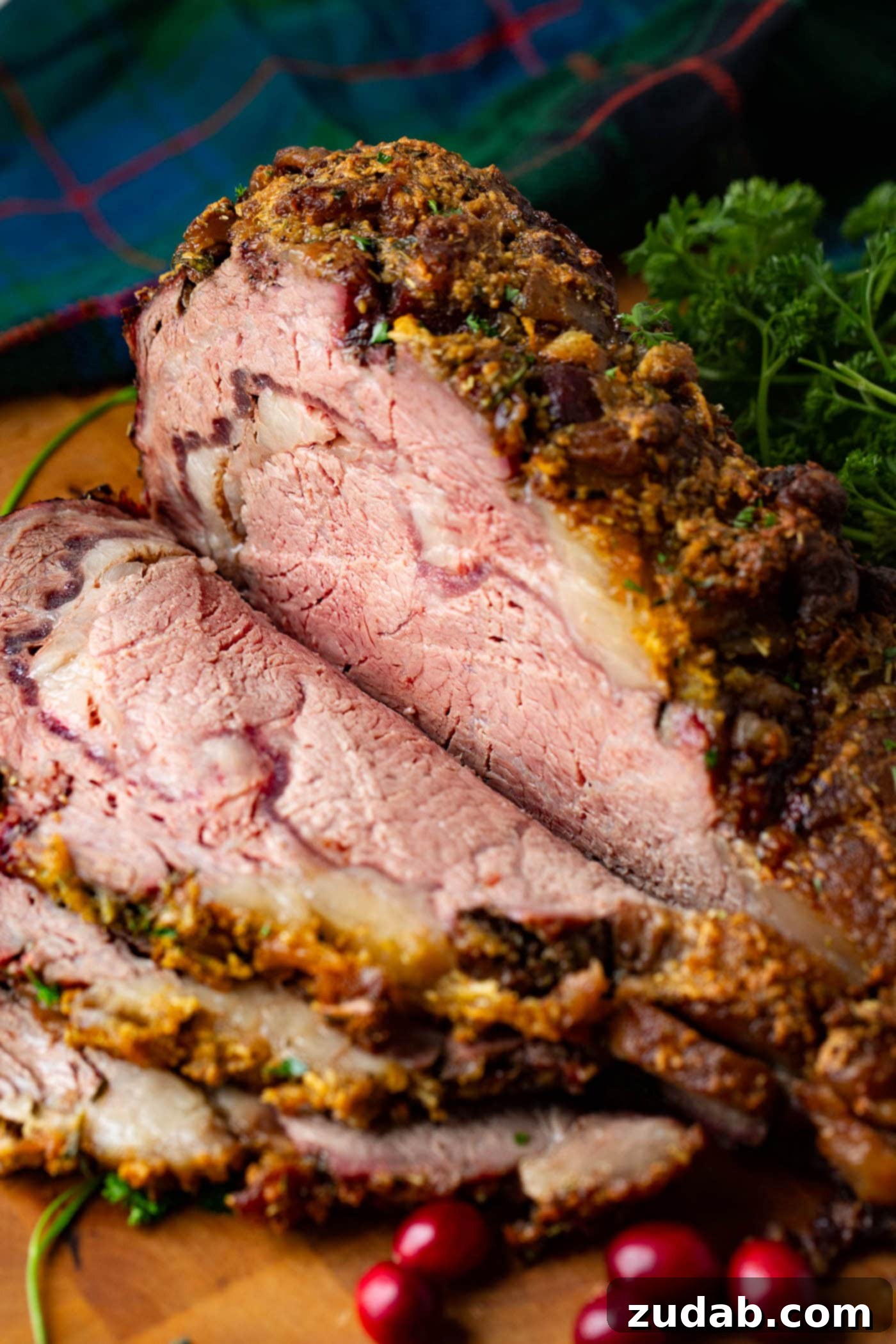
While prime rib is often associated with festive holiday feasts, particularly around Christmas, its exceptional flavor and relative ease of preparation make it a fantastic centerpiece for any special occasion, or even a weekend gathering. We’ve found ourselves making this all year long, much to the delight of both adults and children alike. When a dish consistently earns rave reviews from guests and is devoured by even the pickiest eaters, you know you’ve found a true winner!
Selecting the Perfect Prime Rib Roast
Choosing the right cut of prime rib is the first crucial step towards achieving an outstanding smoked roast. When you visit your butcher, always request a **bone-in prime rib roast**. The bones serve a dual purpose: they act as a natural roasting rack, elevating the meat slightly off the grill grates to promote even smoke circulation, and more importantly, they infuse the meat with incredible flavor as it cooks. These bones are packed with marrow and connective tissue that render during the smoking process, adding richness and depth to the entire roast.
You’ll also typically have the option between a chuck end or a loin end. For the most flavorful and tender result, opt for the **chuck end** (also known as the second cut or rib end). This section comes from closer to the shoulder and often boasts more marbling and a more robust beefy flavor. The loin end (first cut or small end) is leaner and can sometimes be less forgiving, though still delicious.
Regarding quality, beef is graded by the USDA into three primary levels: Prime, Choice, and Select. If your budget allows, always choose a **Prime grade** prime rib roast. Prime beef has the highest level of marbling (intramuscular fat), which translates to exceptional juiciness, tenderness, and flavor. Choice grade is also an excellent option, offering good marbling and quality at a slightly lower price point. While a Select grade roast will still be tasty, it has less marbling, which can result in a slightly less tender and flavorful final product. We consistently aim for Prime or Choice to ensure the best possible outcome for this special meal.
Understanding the Prime Rib Cut: Standing Rib Roast vs. Ribeye
The term “prime rib” is often used interchangeably with **standing rib roast**, and for good reason—they refer to the same magnificent cut of beef. A prime rib roast is carved from the primal rib section of the cow, which is one of the nine main primal cuts of beef. This section typically encompasses ribs six through twelve. Depending on its size and your preference, a standing rib roast can contain anywhere from two to seven ribs. A larger roast, with more ribs, will naturally feed more people and often yields more impressive presentation.
The relationship between prime rib and ribeye can sometimes be a source of confusion. Essentially, a ribeye roast is a prime rib roast that has been deboned (the bones have been removed). If you then slice a ribeye roast into individual portions, you get boneless ribeye steaks. Similarly, if you carve a bone-in prime rib roast into individual portions with the bone still attached, those are bone-in ribeye steaks. So, while they originate from the same primal cut, the preparation (bone-in vs. boneless) and the final cut (roast vs. steak) differentiate them in the butcher’s display, but the intrinsic quality and flavor profile remain closely related. For smoking, the bone-in standing rib roast is generally preferred for its superior flavor and moisture retention.
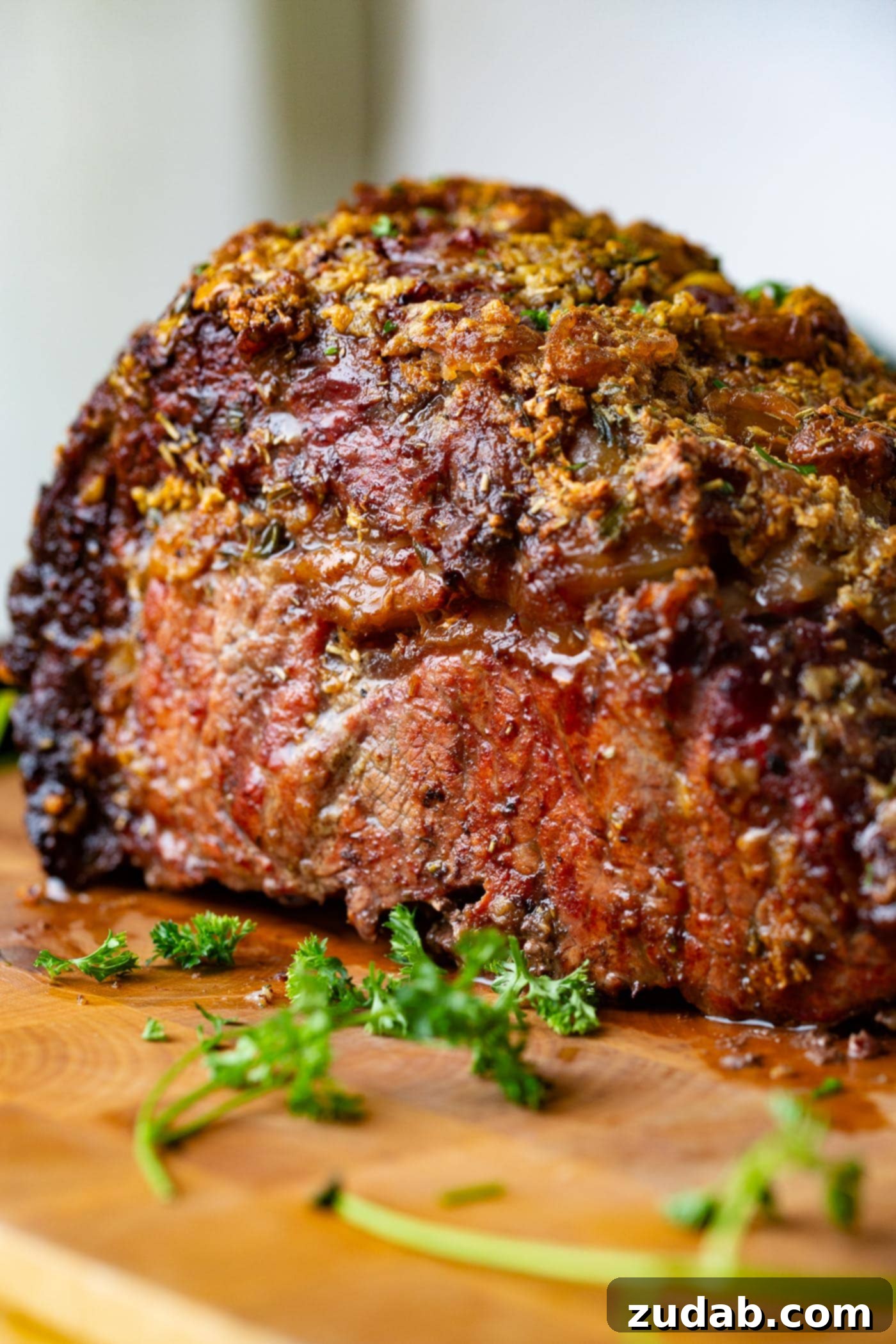
Essential Ingredients for Smoked Prime Rib
One of the beauties of this **smoked prime rib recipe** is its simplicity. The inherent richness and flavor of the prime rib itself require very little adornment. A few high-quality ingredients are all you need to elevate this magnificent cut to its full potential:
- **Prime Rib:** Start with a bone-in roast, ideally weighing between 6-8 pounds. The bone-in aspect is critical for flavor and structure.
- **Kosher Salt:** More than just a seasoning, kosher salt is vital for dry brining. Its larger crystals adhere well to the meat, drawing out moisture, creating a more concentrated flavor, and contributing to the desirable crust.
- **Black Pepper:** Freshly cracked black pepper adds a pungent, aromatic warmth that complements the rich beef. Its coarser grind also helps form a beautiful bark.
- **Dijon Mustard:** This acts as a binder for the rub, helping the seasonings adhere evenly to the meat. Its tangy, slightly spicy profile also adds a subtle layer of complexity that balances the richness of the prime rib.
- **Worcestershire Sauce:** A classic in beef preparations, Worcestershire sauce brings umami, a hint of sweetness, and a touch of tang, deepening the overall flavor profile of the rub.
- **Garlic Cloves:** Freshly minced garlic is non-negotiable for its pungent, aromatic qualities. It permeates the meat with its distinct savory flavor, a perfect partner to beef.
- **Rosemary:** Fresh, finely chopped rosemary adds a fragrant, piney, and slightly peppery note that is traditionally paired with roast beef, enhancing its natural aromas.
The precise measurements for each of these ingredients are provided in the comprehensive recipe card below, ensuring you have everything you need for a perfectly seasoned roast.
Mastering the Art of Smoking Prime Rib
Smoking a prime rib is a process that demands attention to detail, but the results are undeniably worth the effort. Let’s break down the process into three key stages: prep, smoke, and rest.
Prep: Setting the Stage for Flavor and Texture
Given that prime rib is a significant investment, proper preparation is paramount. Begin by carefully preparing your bone-in prime rib roast. Using a sharp knife, gently score the fat cap on top of the roast. Cut diagonally into the fat, then rotate the roast and cut diagonally in the opposite direction, creating a diamond pattern. Be mindful not to cut into the meat itself, only the fat layer. This scoring helps the fat render more effectively, allows the seasoning to penetrate deeper, and contributes to a beautiful, crispy bark.
Next, liberally rub the entire prime rib with kosher salt and freshly cracked black pepper, making sure to work the seasoning into the scored diamond pattern. Once seasoned, place the prime rib on a sheet pan, uncovered, and refrigerate it for 12 to 24 hours. This critical step is known as dry brining. It allows the salt to draw moisture from the meat’s surface, which then reabsorbs, seasoning the meat from within. More importantly, it dries out the exterior, creating the ideal conditions for developing that highly coveted, incredibly delicious crust during the smoking process.
When the dry brining period is complete and you’re ready to smoke the roast, prepare the flavorful mustard paste. In a small bowl, whisk together the Dijon mustard, Worcestershire sauce, minced garlic, and fresh chopped rosemary until well combined. Generously lather this aromatic paste over all sides of the prime rib roast. This paste not only adds layers of flavor but also acts as another binder, ensuring the savory seasonings form a robust crust.
Smoke: The Heart of the Flavor
With your prime rib prepped, it’s time to fire up your Traeger grill. Set the temperature to a steady **250℉**. Close the lid and allow the smoker to preheat for approximately 15 minutes, ensuring it reaches and stabilizes at the target temperature. For this recipe, we highly recommend using a blend of apple wood and hickory pellets. Apple wood imparts a sweet, fruity smoke, while hickory adds a stronger, bacon-like depth, creating a perfectly balanced and incredibly delicious smoky flavor profile that complements the rich beef.
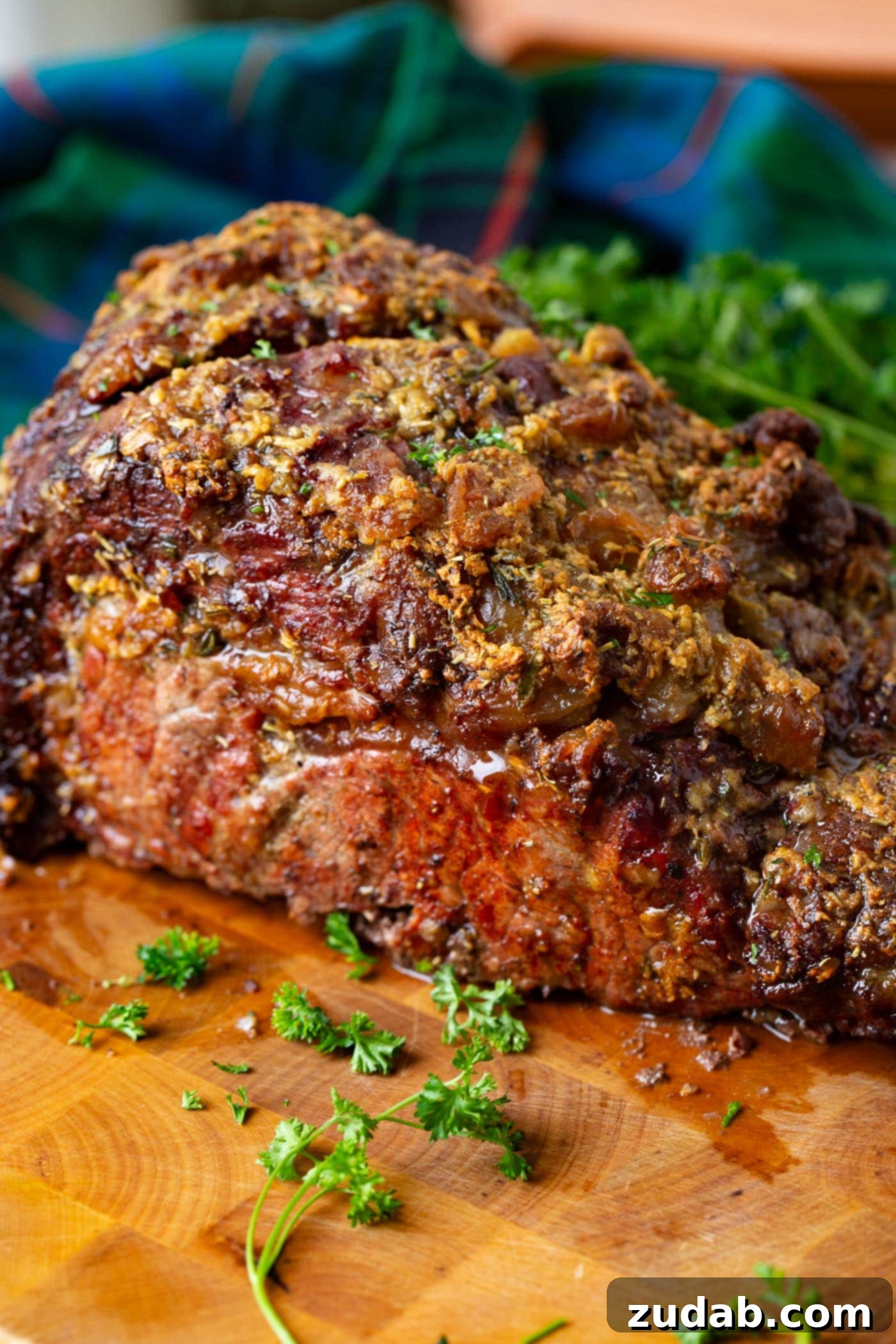
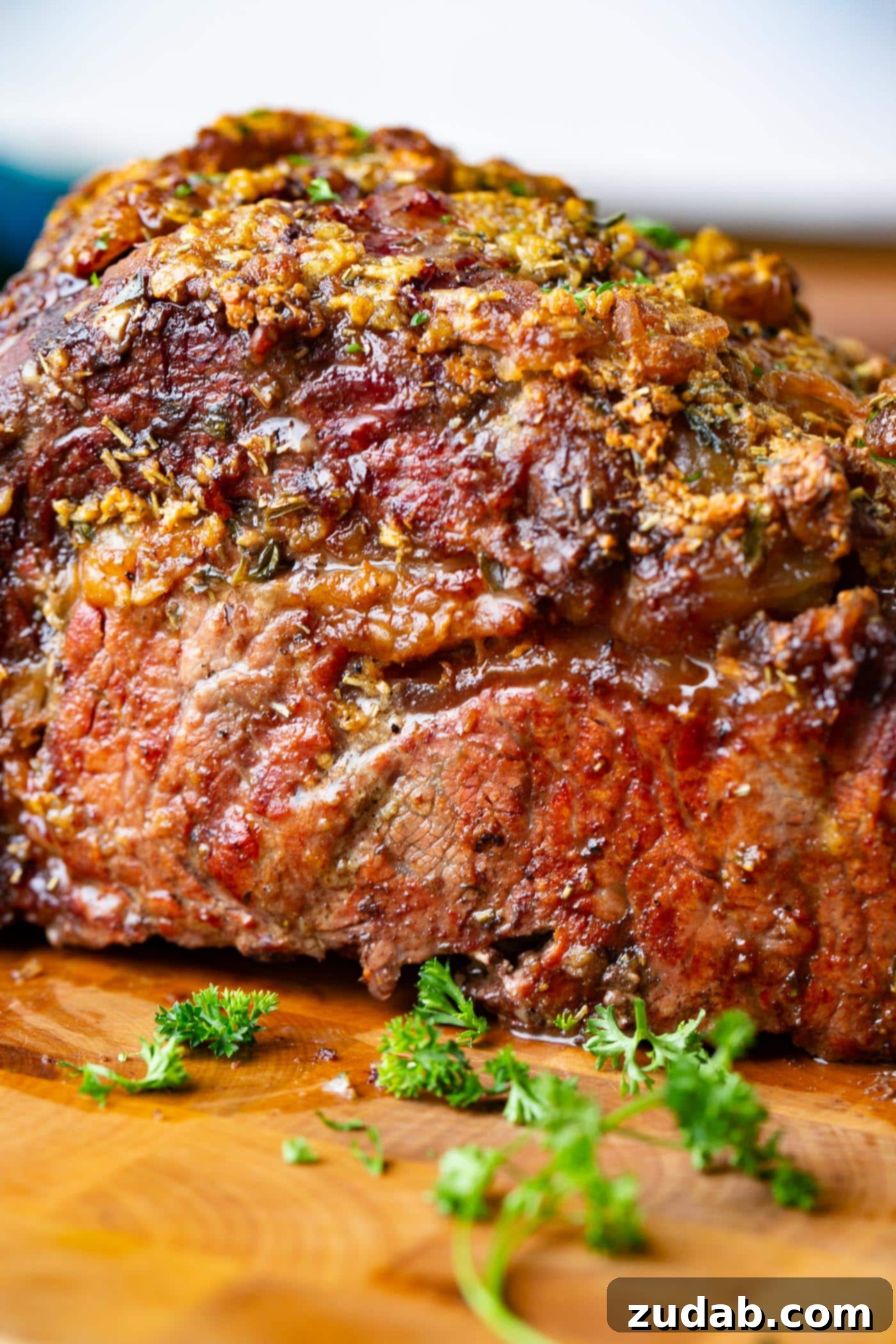
Carefully place the prime rib roast directly onto the grill grates, ensuring the fat-side is facing up. As the prime rib slowly smokes, the rendering fat will baste the roast below, infusing it with additional flavor and keeping the meat moist. Unlike traditional roasting methods, there’s no need for an initial high-temperature sear; the low and slow smoking process on the Traeger will gradually build a beautiful, flavorful bark on its own.
Smoke the prime rib for approximately **3 ½ to 4 hours**, or until a reliable meat thermometer inserted into the thickest part of the roast (avoiding the bone) registers your desired internal temperature. Remember, accuracy is key, so a high-quality probe thermometer or the integrated probe on your smoker is essential. Here are the target temperatures for various levels of doneness:
- Rare: 125-130℉
- Medium-Rare: 135℉
It is crucial to avoid overcooking prime rib. If cooked past medium-rare, the meat tends to become tough and chewy, losing its luxurious texture. We advise pulling the roast off the smoker about 5℉ below your final target temperature, as it will continue to cook during the resting period (this phenomenon is known as carry-over cooking).
Rest: The Unsung Hero of Juiciness
After meticulously prepping and smoking your prime rib, don’t skip the final, crucial step: resting. Once the meat reaches your desired internal temperature, promptly remove it from the Traeger and transfer it to a clean cutting board. Tent the roast loosely with aluminum foil and allow it to **rest** for 20-30 minutes. This resting period is non-negotiable for a truly juicy prime rib.
During cooking, the muscle fibers contract, forcing juices to the center of the roast. Resting allows these fibers to relax, redistributing the juices evenly throughout the meat. If you cut into the roast too soon, those precious juices will simply spill out, leaving you with a drier, less flavorful result. The foil tent helps to keep the roast warm while it rests and allows for that final bit of carry-over cooking. The wait is a small price to pay for a perfectly tender and succulent prime rib. Detailed carving instructions follow in the next section.
Investing in a Traeger Grill
A Traeger grill represents a significant investment, but for those who regularly enjoy grilling and smoking meats, it is absolutely worth every penny. These wood pellet grills offer exceptional versatility, combining the functions of a smoker, grill, and even an oven, all while imparting a distinctive wood-fired flavor that is simply unmatched. The precise temperature control and “set it and forget it” nature make smoking large cuts like prime rib surprisingly straightforward.
We personally use the Traeger Grills Pro 34 Electric Wood Pellet Grill and Smoker, and it consistently produces some of the most delicious foods, including this magnificent smoked prime rib. While the initial cost of around $700 might seem steep, we genuinely believe it’s a game-changer for home cooking, elevating the flavor and ease of preparation for a wide variety of dishes.
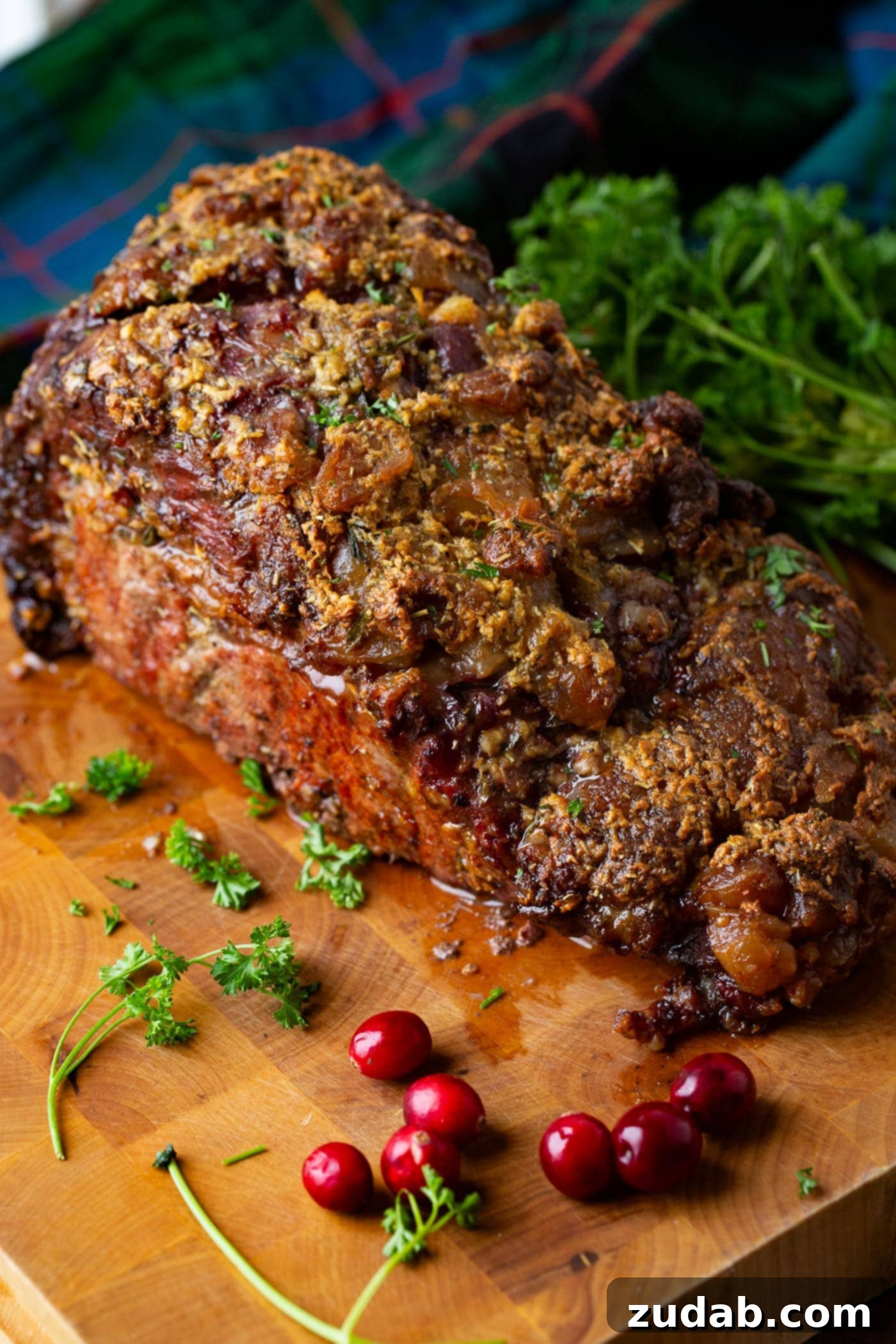
How to Carve a Smoked Prime Rib with Precision
Once your smoked prime rib has rested sufficiently and the juices have had time to redistribute, it’s time for the final act: carving. Proper carving ensures beautiful slices and optimal enjoyment of the meat.
Begin by turning the roast fat-side down onto your cutting board. This position allows for easier access to the rib bones. Using a sharp carving knife, carefully cut along the curvature of the bones to separate them from the roast in one clean piece. The cooked rib bones can be reserved for snacking (they’re incredibly flavorful!) or for making beef stock.
With the bones removed, flip the roast back over so the fat-side is up. Now, carefully slice the roast against the grain into individual portions. We typically aim for slices that are ¾ to 1 inch thick, which provides a satisfying portion that showcases the meat’s beautiful color and texture. While horseradish sauce is a popular and traditional condiment for prime rib, offering a piquant counterpoint to the rich beef, personal preference varies. If you’re a fan, serve it on the side; otherwise, the prime rib is rich and flavorful enough to stand on its own.
Complementary Side Dishes for Smoked Prime Rib
Smoked prime rib is a hearty, comforting, and deeply satisfying dish, so we believe its accompanying side dishes should share a similar spirit. Aim for sides that offer a balance of textures and flavors without overpowering the star of the meal. Here are some of our favorite pairings that promise to complete your decadent feast:
- **Steakhouse Smashed Potatoes:** Creamy on the inside, crispy on the outside, these potatoes are pure indulgence and soak up the prime rib’s juices beautifully.
- **Cheesy Gruyere Sweet Potato Stacks:** Layered sweet potato slices baked with Gruyere cheese offer a rich, slightly sweet, and savory contrast.
- **The Softest Rolls:** Homemade, fluffy dinner rolls are perfect for sopping up any remaining juices or making small, delicious prime rib sandwiches.
- **Green Beans and Potatoes:** A classic, wholesome combination that provides a fresh, earthy counterpoint to the rich beef.
- **Herb and Garlic Roasted Potatoes:** Crispy, aromatic roasted potatoes are a simple yet satisfying accompaniment.
- **Green Beans with Bacon:** The smoky, savory notes of bacon complement the prime rib while adding a lovely texture to the tender green beans.
- **Herbed Focaccia Bread:** A soft, airy bread infused with herbs makes for an excellent textural and aromatic addition to the meal.
Frequently Asked Questions About Smoked Prime Rib
What is the Best Wood for Smoking Prime Rib?
For an optimal flavor balance, we highly recommend a combination of apple wood and hickory pellets. Apple wood imparts a milder, sweeter, and fruity smoke, while hickory offers a stronger, more classic smoky flavor. However, you truly can’t go wrong with many types of hardwood. Feel free to experiment with your favorite flavored wood pellets such as oak (a strong, traditional choice), mesquite (intense, best for shorter smokes or bold flavors), pecan (nutty, milder than hickory), or cherry (sweet, delicate, and gives a beautiful color). The key is to use a wood that complements beef without overpowering its natural richness.
How Do I Know How Much Prime Rib I Need Per Person?
A good general rule of thumb is to plan on 1 pound of prime rib per person, especially if it’s the main course and you want to ensure generous servings or have some leftovers. So, a 6-8 pound roast can comfortably serve 6-8 adults. If you’re serving alongside many other substantial side dishes, or if there are smaller eaters and children, you might be able to stretch it a little further, perhaps to 1.5 to 2 pounds for every 2-3 people. Always err on the side of slightly more rather than less for such a prized meal.
How Long Do You Smoke Prime Rib?
As a general guideline, you can anticipate approximately 30 minutes of smoking time per pound of meat when cooking at 250℉ on a Traeger. Therefore, a 6-8 pound prime rib roast will typically take about 3 ½ to 4 hours to reach your desired internal temperature. However, it’s crucial to remember that this is just an estimate. The actual cooking time can vary based on factors like the roast’s starting temperature, its shape, and external ambient conditions. Always rely on an accurate meat thermometer to determine doneness, rather than strictly adhering to a timer.
Should Smoked Prime Rib Be Red When Done?
Absolutely! Prime rib is most ideally cooked to a rare or medium-rare doneness. This means the center of the roast will indeed be a beautiful pink to reddish color. Cooking prime rib beyond medium (typically above 140°F) is generally not recommended, as the fat will render out excessively, causing the meat to become tough, dry, and chewy. As long as your roast has reached the safe internal temperature for rare (125-130°F) or medium-rare (135°F) and has rested properly, it is perfectly safe and incredibly delicious to enjoy with a pink or red center.
Is Prime Rib and Rib Eye The Same?
They are intimately related, originating from the same primal cut, but often refer to slightly different preparations. The “prime rib” generally refers to the larger, **standing rib roast**, often bone-in, from the rib section of the cow. A **ribeye roast** is essentially the same cut of meat as a standing rib roast, but the bones have been removed, making it a boneless roast. When either of these roasts is cut into individual portions, you get ribeye steaks – either bone-in (if cut from a prime rib roast) or boneless (if cut from a ribeye roast). So, while the underlying meat is identical, the term “prime rib” typically implies the larger, bone-in roast, whereas “ribeye” can refer to the boneless roast or individual steaks.
Do You Eat The Fat On Prime Rib?
This comes down to personal preference, but generally, if the prime rib has been cooked properly, especially through a low-and-slow smoking process, the exterior fat cap will have rendered beautifully. This rendered fat becomes incredibly tender, packed with savory flavor, and essentially “melts in your mouth.” Many connoisseurs consider this perfectly rendered fat a delicious part of the experience. However, if the fat remains tough, gristly, or hasn’t rendered well, it’s best to trim it off and enjoy the lean, flavorful meat underneath.
Do You Smoke Prime Rib With Fat Up Or Down?
When smoking prime rib, it is recommended to place the roast with the **fat side up** and the bones down directly on the grill grates. As the prime rib smokes at a low temperature, the fat cap slowly renders and bastes the meat below, keeping it moist and enhancing its flavor. The bones provide a natural barrier and lifting mechanism, preventing the bottom of the roast from directly touching the hot grates and promoting even smoke circulation around the meat.
Storage and Reheating Recommendations
Should you be fortunate enough to have leftover smoked prime rib, proper storage and reheating are key to preserving its deliciousness.
Any leftover prime rib should be **stored** promptly in an airtight container and refrigerated. When stored correctly, it will maintain its quality for 4-5 days.
The best method for **reheating** prime rib is in the oven, which helps it retain moisture and tenderness. Preheat your oven to a low temperature, around 250°F. Arrange the sliced prime rib in a baking dish and add a few tablespoons of beef broth or water to the bottom of the dish to create a moist environment. Cover the dish tightly with aluminum foil, ensuring it is completely sealed to trap the steam. Allow the prime rib to warm gently for about 10-20 minutes, or until heated through to your desired temperature. Avoid high heat, as this will quickly dry out the meat.
Recipe: Smoked Prime Rib
A juicy, perfectly cooked, and the most crazy flavorful prime rib you will ever make!
Details
Prep Time: 1 day
Cook Time: 4 hours
Total Time: 1 day, 4 hours
Yields: 6 Servings
Ingredients
- 6-8 Pounds Prime Rib, bone-in
- 1 Tablespoon Kosher Salt
- 1 teaspoon Black Pepper, freshly cracked
- 3 Tablespoon Dijon Mustard
- 1 Tablespoon Worcestershire Sauce
- 5 Cloves Garlic, minced
- 2 teaspoons Rosemary, fresh, chopped
Instructions
- Cut just into the fat pad on top of the meat at a diagonal and then turn the opposite direction and cut again to make a diamond pattern.
- Rub the salt and pepper all over the meat and place in the fridge uncovered for 12-24 hours.
- In a small bowl, whisk together the Dijon mustard, Worcestershire sauce, garlic, and rosemary.
- Rub the outside of the roast with the mustard paste.
- Set the Traeger to 250℉ and preheat, lid closed for 15 minutes using apple wood and hickory pellets.
- Put the prime rib directly on the grill grate, fat-side up. Roast for 3-1/2 to 4 hours, or until the internal temperature of the meat reaches 125-130℉ for rare, or for medium-rare, 135℉. Do not overcook.
- Remove to a cutting board and tent with foil for 20-30 minutes, slice and serve.
Recipe Notes
You can reheat prime rib in the oven. Cover with foil and reheat in a 300 degree oven for 20-30 minutes.
Nutrition
Serving: 1 slice, Calories: 1365kcal, Carbohydrates: 2g, Protein: 62g, Fat: 121g, Saturated Fat: 50g, Cholesterol: 274mg, Sodium: 1478mg, Potassium: 1045mg, Fiber: 1g, Sugar: 1g, Vitamin C: 1mg, Calcium: 46mg, Iron: 7mg
Nutrition information is automatically calculated, so should only be used as an approximation.
I will be eating my prime rib smoked for the rest of my days. While I appreciate prime rib cooked in all its glorious forms, this **smoked prime rib** has undeniably become my new, absolute favorite! Its smoky aroma, succulent texture, and rich beefy flavor are simply unparalleled.
More Decadent MAIN DISHES You Must Try:
- Absolute Best Prime Rib
- Oven Braised Short Ribs
- Instant Pot Turkey Breast
- Carolina Pulled Pork
- Korean Oven Braised Short Ribs
- Oven Braised Beef Roast
- Creamy Herb Chicken with Sun-Dried Tomatoes
- Herb Roasted Turkey Breast
- Smoked Tri Tip
- Easy Garlic Butter Steak
- Authentic Italian Bolognese Sauce
- Beef Ribs with Charred Pepper Cream Gnocchi
- All our MAIN DISH recipes!
REMEMBER TO SUBSCRIBE TO our FREE Oh Sweet Basil NEWSLETTER AND RECEIVE EASY RECIPES DELIVERED INTO YOUR INBOX EVERY DAY!
When you try a recipe, please use the hashtag #ohsweetbasil on INSTAGRAM for a chance to be featured in our stories! FOLLOW OH, SWEET BASIL ON FACEBOOK | INSTAGRAM | PINTEREST | TWITTER FOR ALL OF OUR LATEST CONTENT, RECIPES AND STORIES.