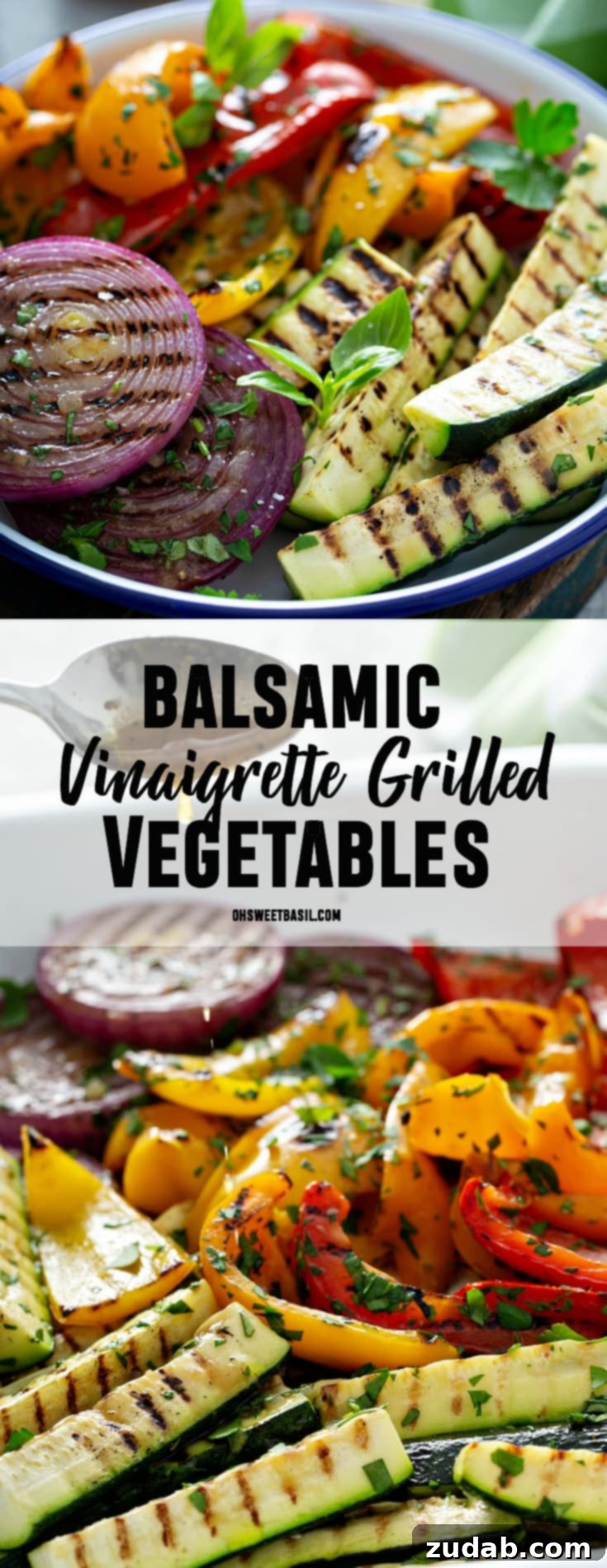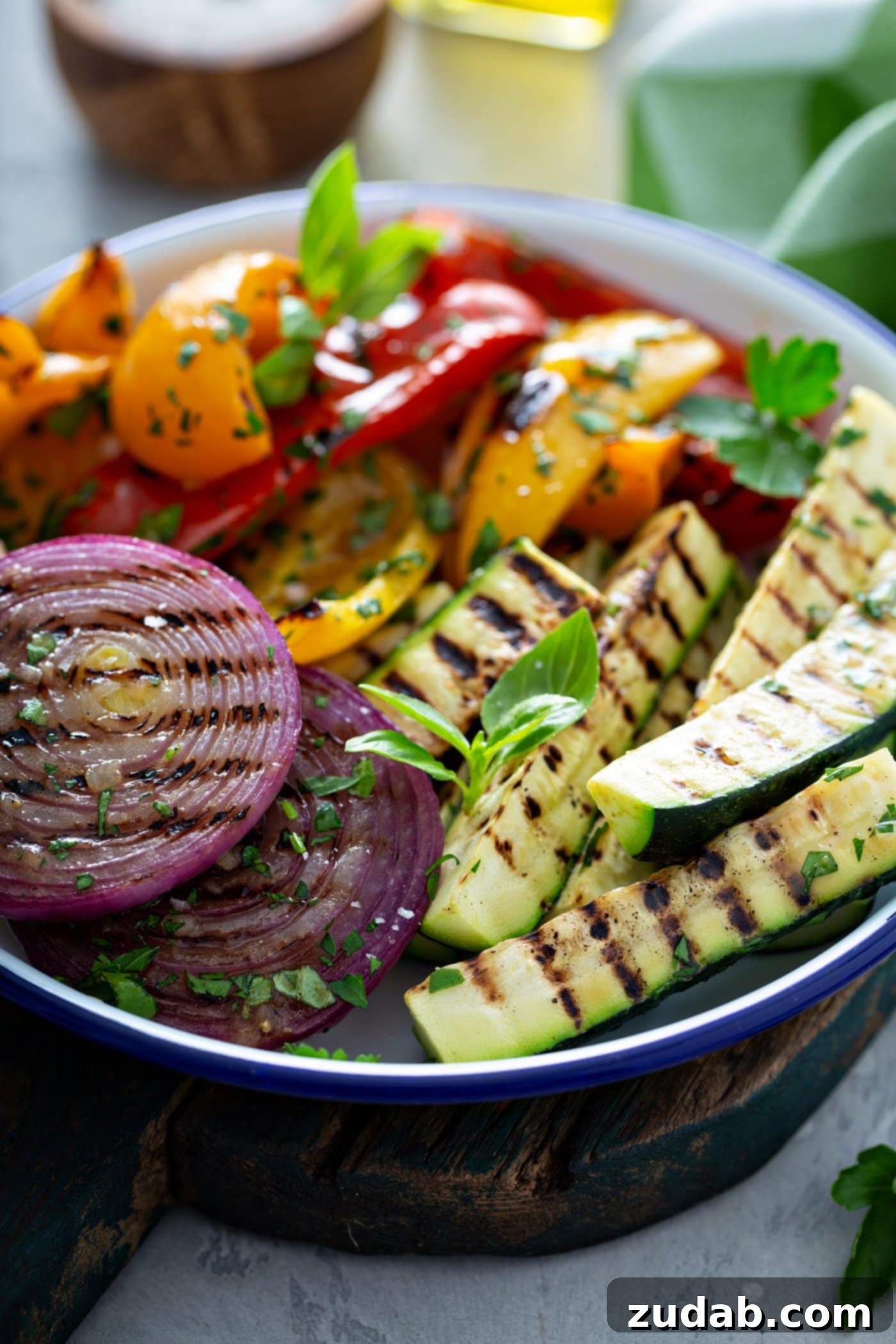
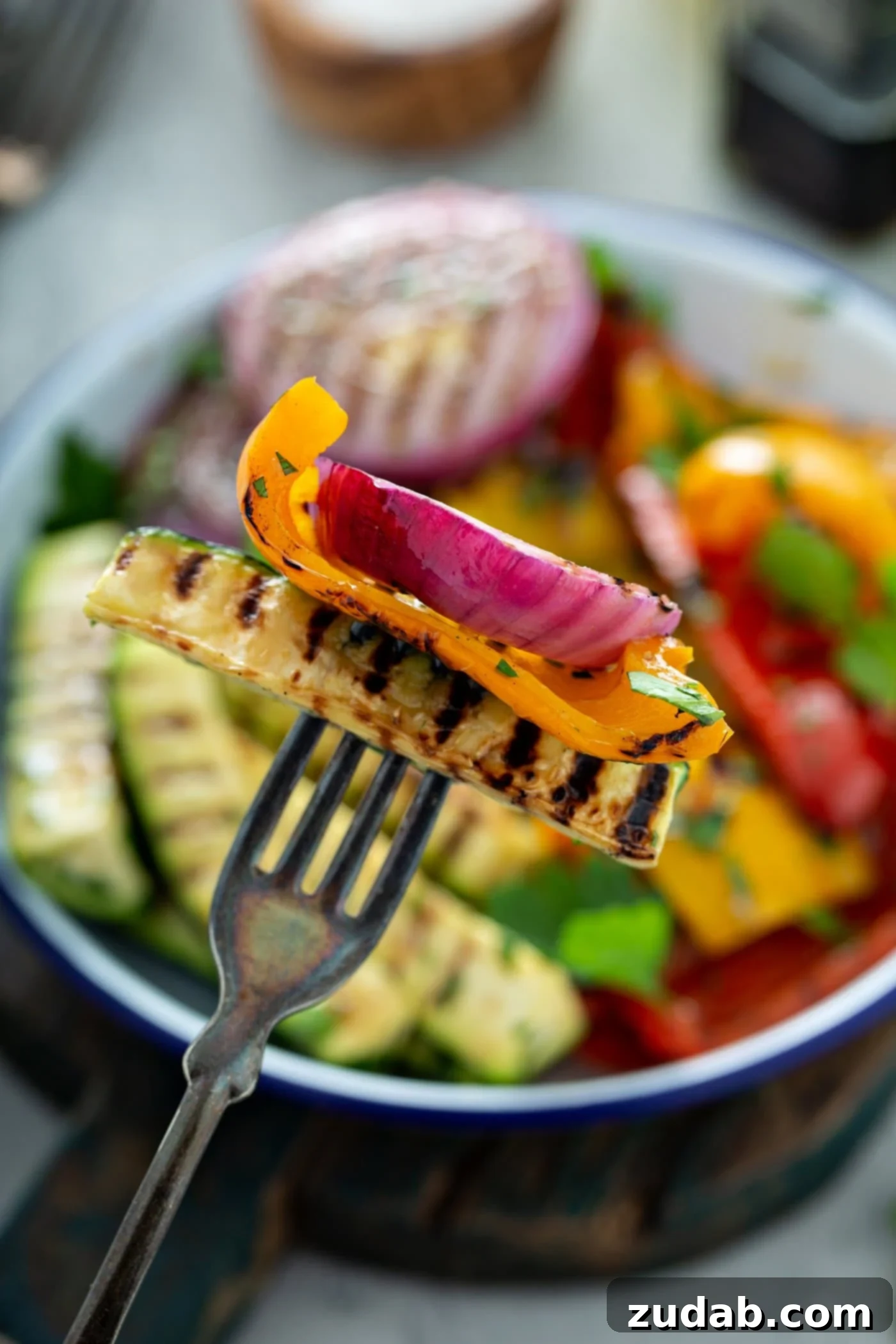
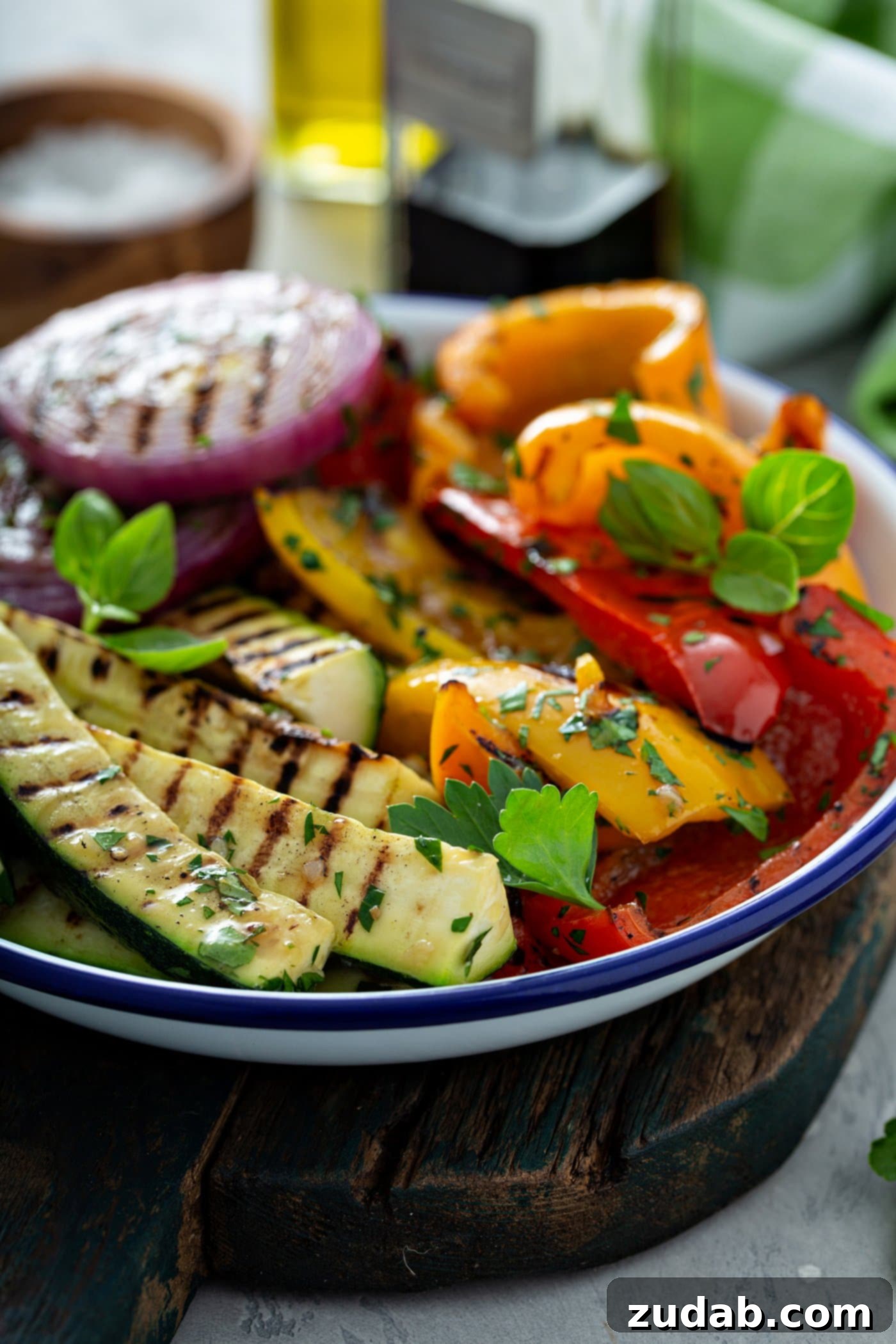
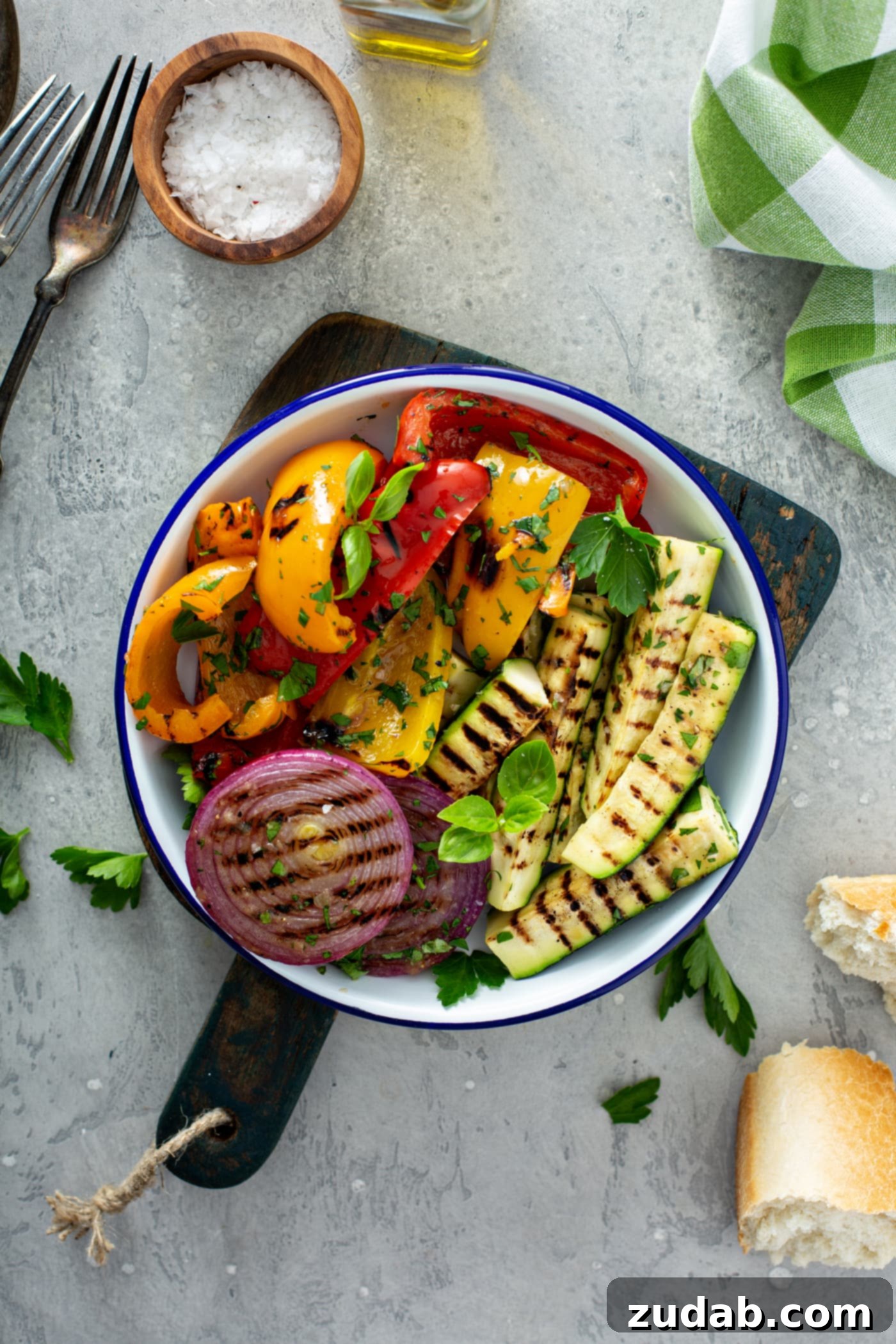
Balsamic Vinaigrette Grilled Vegetables are a perfect fusion of fresh, simple veggies and a flavorful, tangy dressing. This recipe demands minimal time and ingredients, making it an incredibly easy and healthy side dish that will quickly become a household favorite.
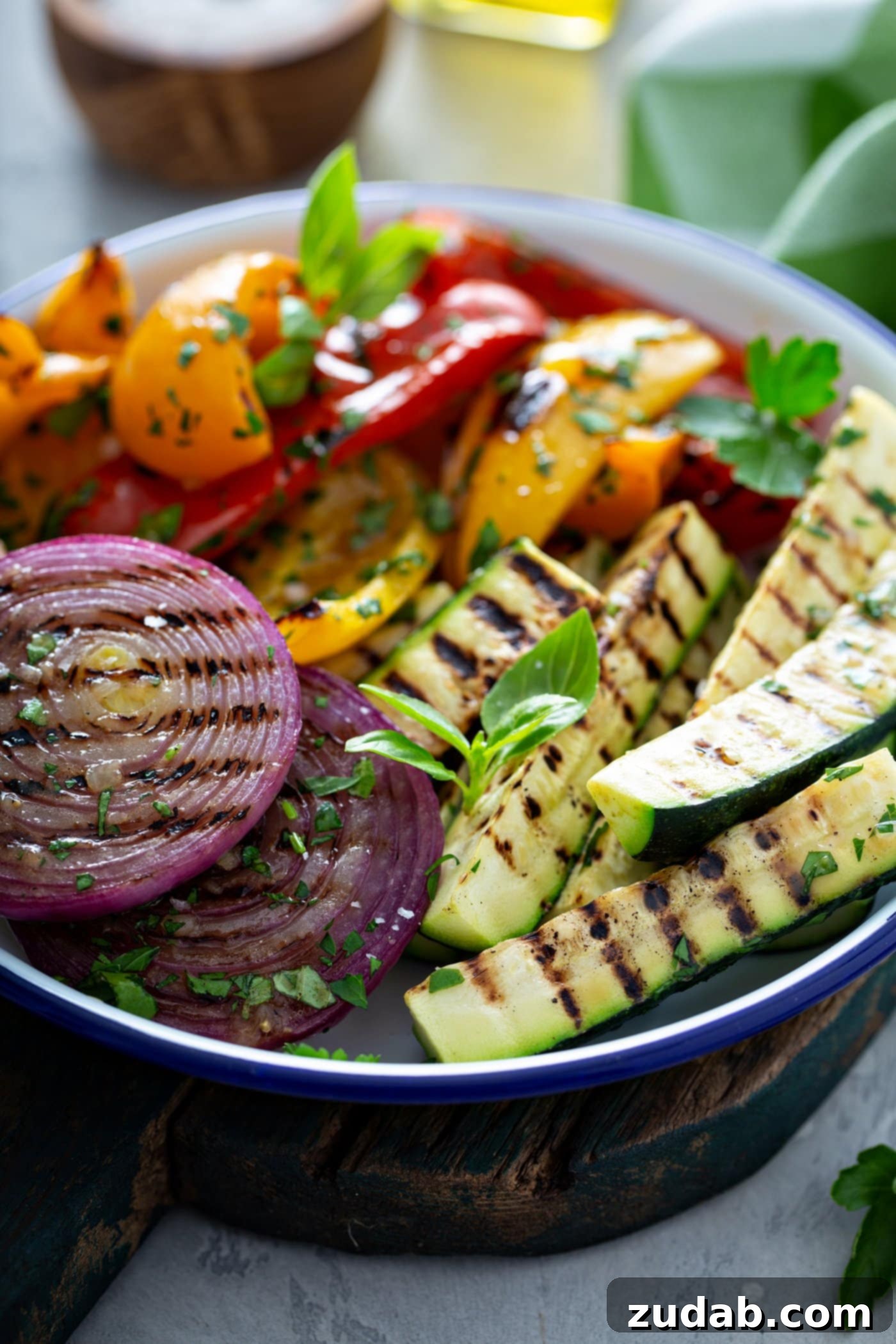
Unlock the Secret to Exquisite Flavor: Choosing the Right Balsamic Vinegar
Before diving into the delightful world of grilled vegetables, allow us to share a crucial tip that will elevate your dish from good to absolutely extraordinary. The secret lies in the quality of your balsamic vinegar. Seriously, it’s that important!
Imagine the difference in taste between a prime cut of steak and a basic bologna sandwich. That’s how much impact your choice of balsamic vinegar can have on your culinary creations. A bitter or low-quality vinegar can overshadow the natural sweetness of your vegetables, leading to a disappointing experience. On the other hand, a carefully selected balsamic will introduce a symphony of complex, rich notes, enhancing every single bite.
Later in this post, we’ll guide you through exactly which brands we recommend and which to avoid. Understanding the nuances of balsamic vinegar and investing a little time in selecting a quality product will pay huge dividends in your kitchen, serving as the cornerstone for this recipe and countless other delicious dishes.
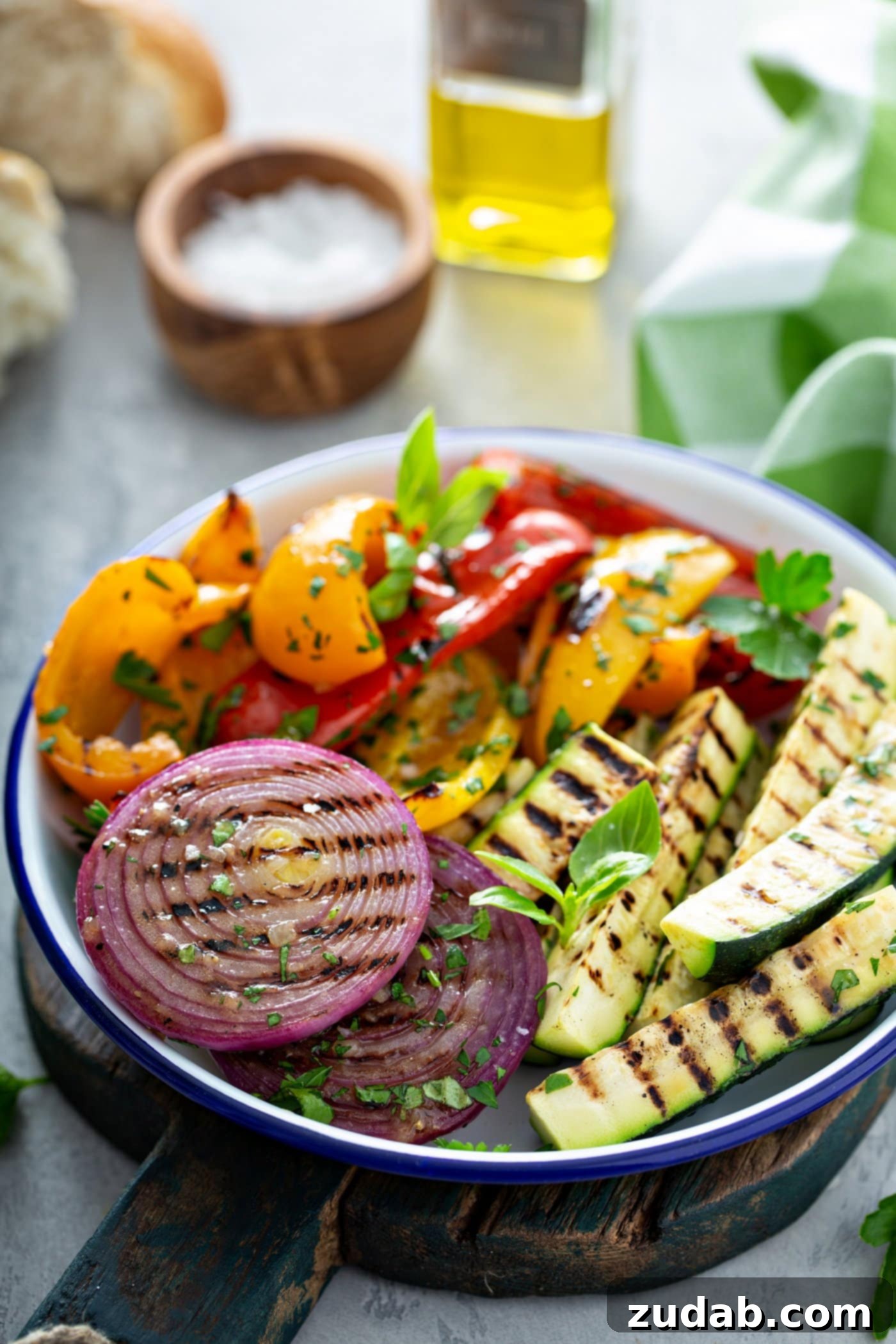
Why Balsamic Vinaigrette Grilled Vegetables Are Your New Favorite Side Dish
I am constantly on the lookout for clean, simple, and healthy side dish recipes that don’t compromise on flavor. While I adore a fresh salad, sometimes you just need something different. That’s where Balsamic Vinaigrette Grilled Vegetables truly shine!
Especially during the warmer months, grilled vegetables become my absolute go-to. They are incredibly simple to prepare, yet surprisingly filling and packed with essential nutrients. The grilling process itself caramelizes the natural sugars present in the vegetables, intensifying their sweetness and creating those irresistible smoky notes. When paired with a tangy, slightly sweet balsamic vinaigrette, these vegetables are transformed into a truly unforgettable dish that stands out on any table.
This recipe is not just about convenience; it’s about maximizing flavor with minimal effort. It’s perfect for busy weeknights, casual summer barbecues, or as an elegant addition to a more formal meal. Furthermore, it’s an excellent way to enjoy a wide variety of seasonal produce, making healthy eating both delicious and exciting. The versatility of this dish means it pairs wonderfully with almost any main course, from grilled chicken to fish or even plant-based proteins.
The Best Vegetables for Grilling with Balsamic Vinaigrette
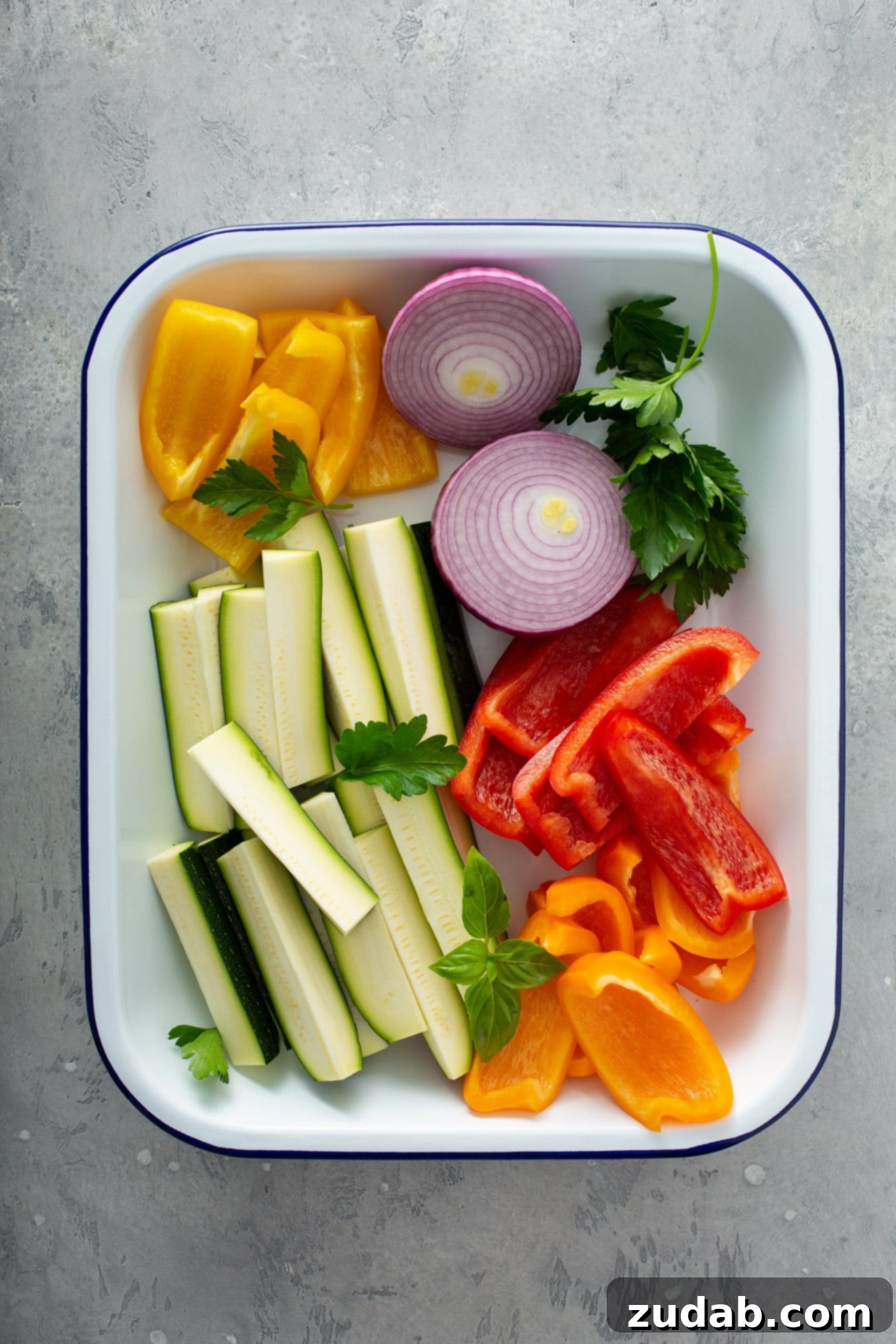
While almost any vegetable can be grilled, certain varieties truly excel on the BBQ, especially when coated in a luscious balsamic vinaigrette. The key is to choose vegetables that can withstand the direct heat of the grill without becoming mushy, developing a beautiful char and retaining a pleasant texture. Here are some of our top recommendations for creating the most delicious Balsamic Grilled Vegetables:
- Zucchini: A quintessential summer vegetable, zucchini softens beautifully on the grill and absorbs the rich flavors of the vinaigrette wonderfully. Slice them into spears or thick planks.
- Bell Peppers (Red, Yellow, Orange): These vibrant, sweet peppers caramelize nicely, adding bright color, natural sweetness, and a juicy bite to your medley.
- Red Onion: Grilling dramatically sweetens onions, mellowing their pungent edge and creating tender, intensely flavorful rings with a delightful char.
- Asparagus: Simple yet elegant, grilled asparagus spears are tender-crisp and earthy, making them a fantastic addition.
- Eggplant: Similar to zucchini, eggplant achieves a wonderfully tender and smoky texture. Ensure to slice it into thick rounds or planks to prevent it from drying out.
- Mushrooms (Cremini, Portobello): Earthy and meaty, mushrooms develop a fantastic texture and depth of flavor when grilled, especially larger varieties like Portobellos.
- Corn on the Cob: Sweet corn, brushed with balsamic vinaigrette, is a quintessential summer grilling treat. The kernels become plump and juicy with a hint of smoky sweetness.
- Sweet Potatoes: Slice them into thick planks or wedges and pre-cook slightly (boil or microwave) before grilling for a tender, naturally sweet, and caramelized side.
- Green Beans: For a delightful twist, blanch them briefly, then quickly grill for a smoky crunch that’s unexpected and delicious.
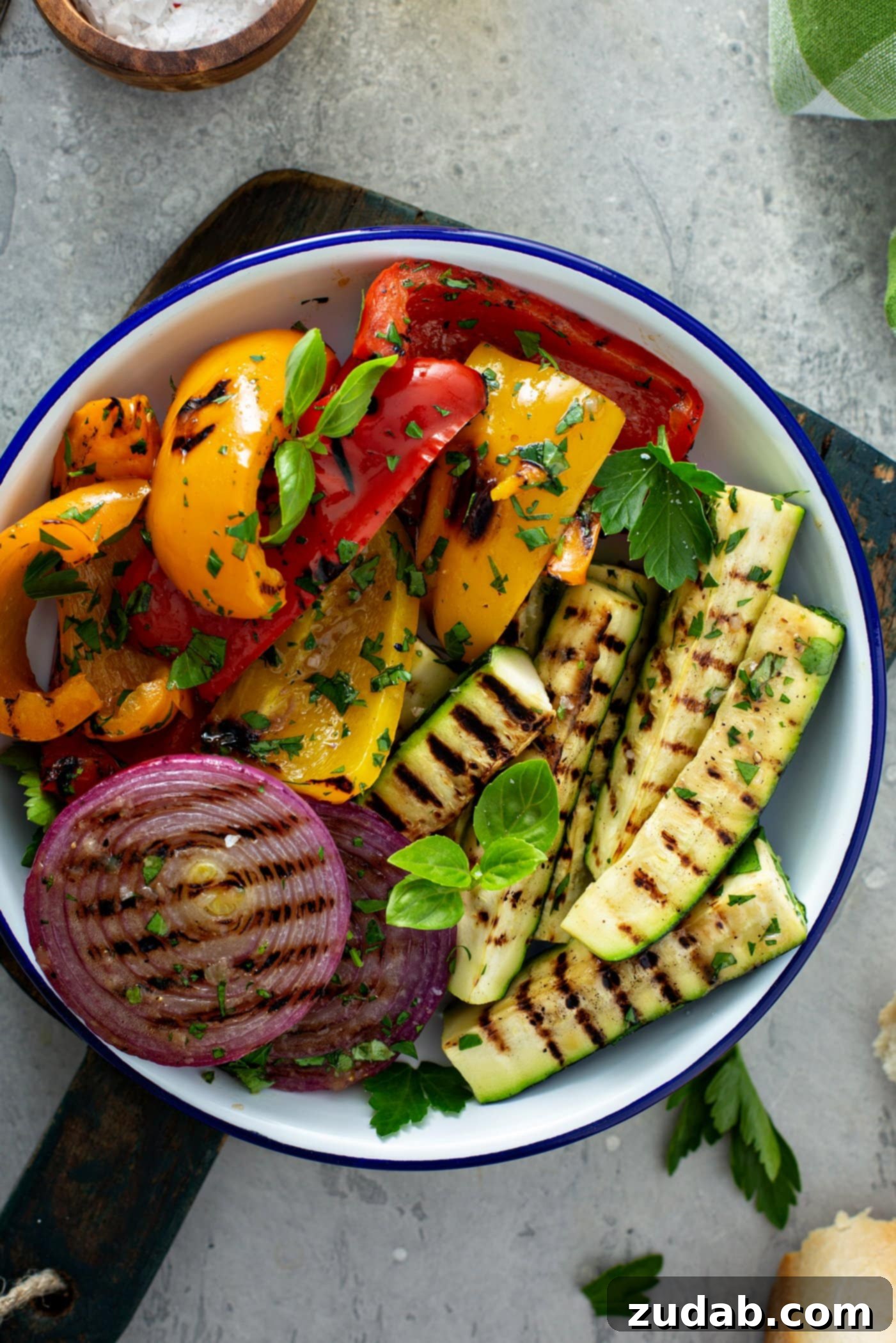
For this particular Balsamic Grilled Vegetables recipe, I was initially tempted to include juicy tomatoes, as grilled zucchini is such a popular summer ingredient. However, I decided to focus on the satisfying peppery bite of bell peppers, perfectly complemented by the tender zucchini and the sweet char of red onions. This combination offers a delightful balance of flavors and textures that truly showcases the versatility and appeal of grilled produce.
How to Achieve Perfectly Grilled Vegetables Every Time
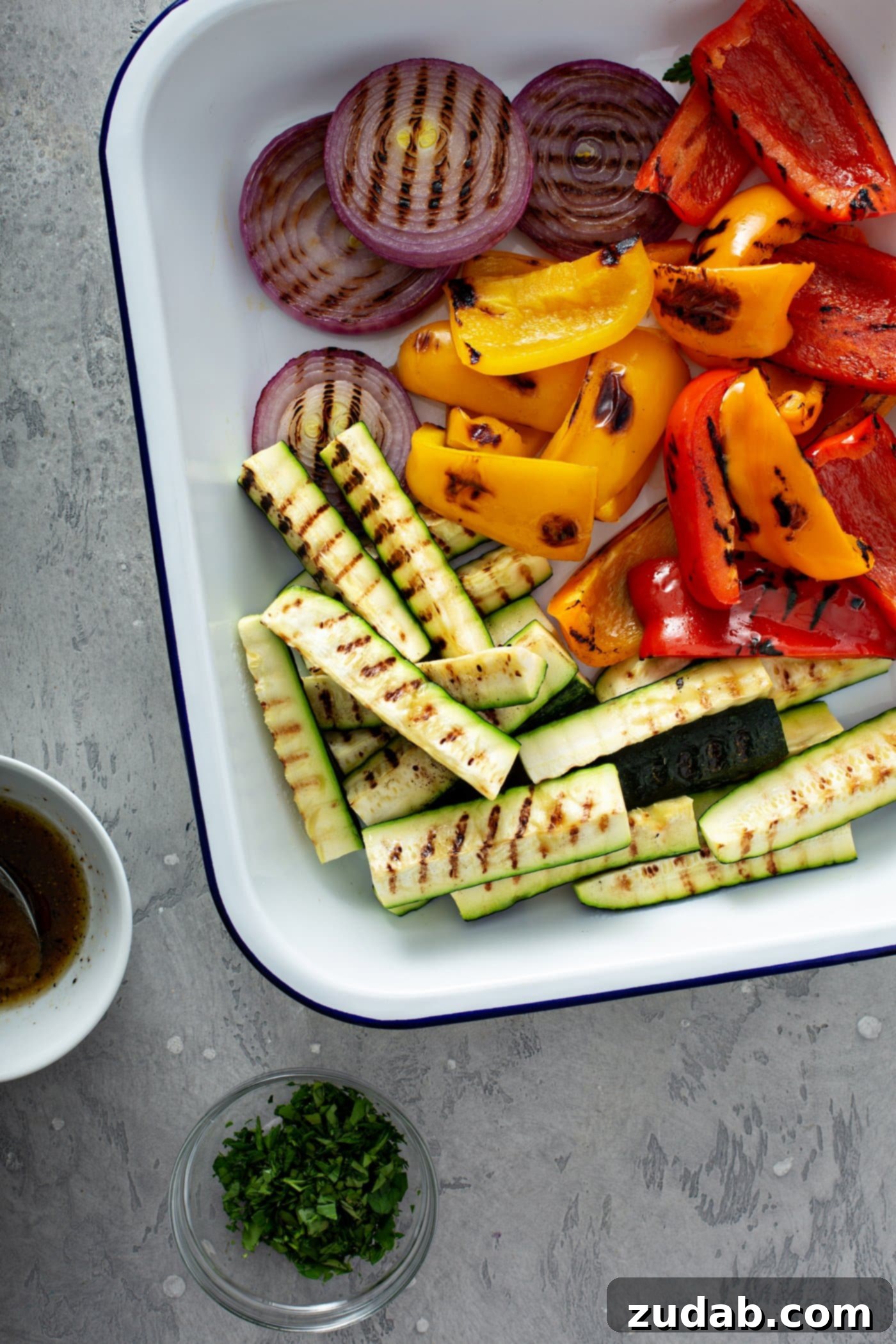
Grilling vegetables might seem straightforward, but a few simple, expert techniques can make all the difference, ensuring they are tender, flavorful, and boast those coveted grill marks without burning. Here’s your comprehensive guide to mastering the art of grilling vegetables:
- Preheat Your Grill Thoroughly: Always begin with a meticulously clean and properly preheated grill. This crucial step ensures even cooking and significantly prevents your delicate vegetables from sticking to the grates. Allow your grill to preheat on a consistent medium-low heat for at least 10-15 minutes. A stable, even temperature is vital for achieving those professional-looking grill marks.
- Oil the Grates, Not Just the Veggies: While you will lightly coat your vegetables in oil, a truly expert tip is to oil the grill grates themselves just before cooking. Dip a folded paper towel in a high-smoke-point oil (such as avocado, grapeseed, or canola oil) and, using long tongs for safety, carefully rub it over the hot grates several times. This creates an effective non-stick barrier and helps in developing crisp, beautifully defined grill marks on your vegetables.
- Arrange and Don’t Disturb: Place your prepared vegetables in a single layer on the hot grates, ensuring they are not overcrowded. Overcrowding can lower the grill temperature and lead to steaming instead of grilling. Once placed, resist the urge to move them! Allow them to cook undisturbed for several minutes; this is key to developing that beautiful char and distinct grill marks. Flipping only once or twice throughout the cooking process will yield the best textural and visual results.
- Monitor Temperature and Adjust: Different vegetables require slightly different cooking times and heat levels. If your grill has hot spots, rotate vegetables periodically. For thicker vegetables, you might start them on a slightly hotter part of the grill for char, then move them to a cooler section to cook through without burning.
- Know When They’re Done: Perfectly grilled vegetables should be tender-crisp – cooked through sufficiently but still retaining a slight bite, rather than being completely soft or mushy. They will also display attractive browned grill marks. Cooking times will naturally vary depending on the specific vegetable and its thickness, so keep a close eye on them and use a fork to test for tenderness.
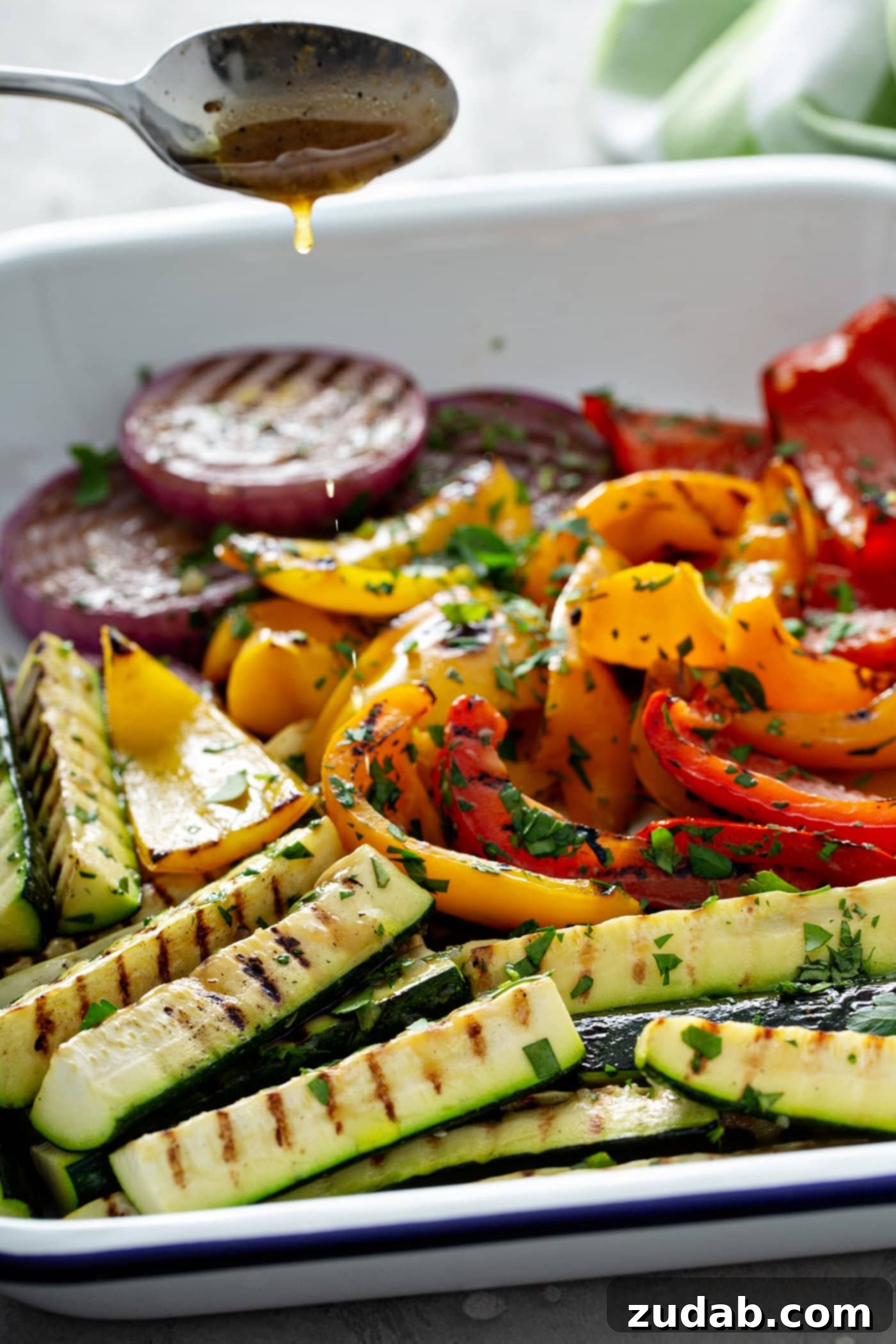
- Dress After Grilling for Optimal Flavor: Remove the perfectly grilled vegetables from the heat and immediately transfer them to a large bowl. This is the ideal moment to toss them with your freshly prepared balsamic vinaigrette. Dressing them after grilling allows the vibrant and nuanced flavors of the vinaigrette to truly shine, as they won’t be exposed to the high heat that can burn off or diminish their delicate aromas.
Expert Tips for Grilling Specific Vegetables
Grilling different vegetables requires slight variations in technique to ensure optimal results, bringing out their unique characteristics. Here are some detailed tips for the stars of our Balsamic Vinaigrette Grilled Vegetables, along with other popular choices:
Tips for Grilling Zucchini
Zucchini is a forgiving and beloved vegetable for grilling, as you can easily observe it softening and browning. However, a few pointers will ensure it’s never soggy or undesirably burnt:
- Slice Uniformly and Thickly: Always slice zucchini at least 1/4 inch (about 0.6 cm) thick. Thinner slices will cook too quickly, becoming overly soft and potentially falling apart or slipping through the grill grates. For easier handling and better grill marks, slice them into uniform spears, sturdy strips, or elegant diagonal rounds. Consistency in thickness is crucial for even cooking.
- Season Generously Prior to Grilling: Zucchini possesses a mild flavor on its own. To maximize its taste, even when a flavorful balsamic dressing is involved, it greatly benefits from a generous sprinkle of salt and freshly ground black pepper before hitting the grill. This initial seasoning helps to draw out excess moisture, preventing sogginess, and enhances the vegetable’s natural flavors, allowing them to meld perfectly with the vinaigrette.
- Avoid Overcooking: Zucchini cooks relatively quickly compared to denser vegetables. Keep a watchful eye on it to ensure it remains tender-crisp with a slight resistance when bitten, rather than becoming soft and mushy.
Tips for Grilling Onions
Grilled onions are incredibly sweet and tender, developing a beautiful caramelization that enhances their flavor. However, they can be prone to sticking and separating. Follow these tips for perfect, intact grilled onion rounds:
- Diligent Grate Preparation is Essential: Onions release less natural liquid than vegetables like zucchini, making them more susceptible to sticking to the grill grates. Therefore, it is paramount to ensure your grill grates are meticulously cleaned and thoroughly oiled before you place any onion slices on them. This creates a crucial non-stick surface.
- Slice into Thick, Uniform Rounds: For optimal stability, even cooking, and ease of handling, always slice onions into thick rounds (approximately 1/2 inch or 1.25 cm). Avoid cutting them into wedges, as the individual layers in wedges tend to separate easily and can fall through the grates during grilling. Thick rounds hold their structure much better, simplifying the flipping process.
- Utilize Skewers for Enhanced Stability: If you are concerned about the onion layers separating as they soften on the grill, a simple trick is to thread one or two wooden skewers horizontally through the center of two or three onion rounds before grilling. This ingenious method keeps the layers firmly intact, making them significantly easier to handle and flip, ensuring you get beautifully grilled onion rings every time.
Tips for Grilling Bell Peppers
Bell peppers add vibrant color, a wonderful crunch, and a sweet, smoky flavor to any grilled vegetable medley.
- Cut into Sturdy Pieces: After removing the seeds and membranes, cut bell peppers into wide, sturdy strips or large chunks. Avoid small pieces that might fall through the grill grates.
- Grill Until Tender-Crisp with Char: Cook until the skins are slightly charred and blistered, and the flesh is tender but still retains some firmness. Different colors of bell peppers (red, yellow, orange) offer varying levels of sweetness and visual appeal, so don’t hesitate to mix them.
Tips for Grilling Asparagus
Asparagus is a quick and elegant grilled vegetable that’s packed with flavor.
- Trim Woody Ends: Snap off the tough, woody ends. Toss spears lightly with olive oil and salt and pepper before grilling.
- Grill Quickly: Place perpendicular to the grates or use a grill basket. Grill for 3-5 minutes, flipping once, until tender-crisp and slightly charred.
Crafting the Perfect Balsamic Vinaigrette Dressing
The beauty of this recipe lies in its elegant simplicity, allowing the natural, caramelized flavors of the grilled vegetables to truly shine. The balsamic vinaigrette acts as a magnificent enhancer, bringing everything together with a tangy-sweet counterpoint without ever overpowering the fresh produce. This dressing is not only incredibly delicious but also helps maintain the healthful integrity of the vegetables.
Step-by-Step Vinaigrette Preparation:
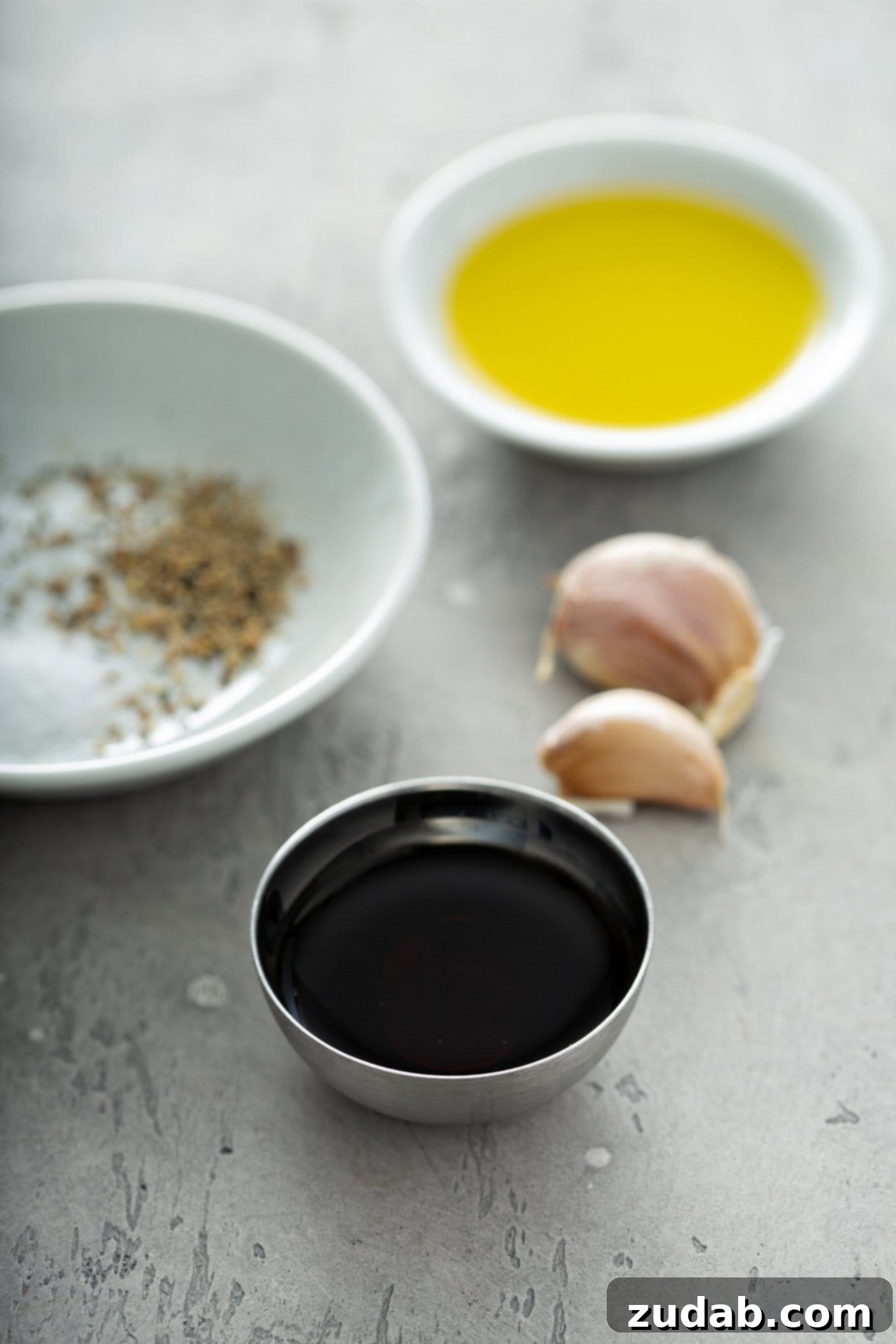
- Combine Ingredients: In a small mixing bowl, embark on the creation of your vinaigrette by thoroughly whisking together the high-quality balsamic vinegar, robust extra virgin olive oil, finely grated fresh garlic (or a convenient garlic powder substitute), a pinch of salt to draw out flavors, and freshly ground black pepper to taste. (For an optimal flavor foundation, please refer to our detailed notes on choosing the best balsamic vinegar located at the bottom of this post!)
- Achieve Partial Emulsification: Continue to whisk the mixture vigorously and persistently until all the ingredients are beautifully combined and a temporary, yet desirable, emulsification begins to form. It’s important to note that oil and vinegar will not achieve a permanent, full emulsification without the addition of an external emulsifier (such as Dijon mustard, which you could certainly add for an extra layer of zesty tang, if desired). However, a thorough whisking will create a creamy consistency that adheres wonderfully to your vegetables.
- Store or Use Immediately: If you are preparing your balsamic vinaigrette in advance, transfer it into a jar with a tight-fitting lid and store it safely in the refrigerator. When it’s time to dress your glorious grilled vegetables, remember that the heavier spices and oil may have separated. Therefore, always give the vinaigrette a quick, brisk whisk or a vigorous shake to thoroughly recombine all the elements. This ensures that every drop of dressing delivers a perfectly balanced burst of flavor to your dish.
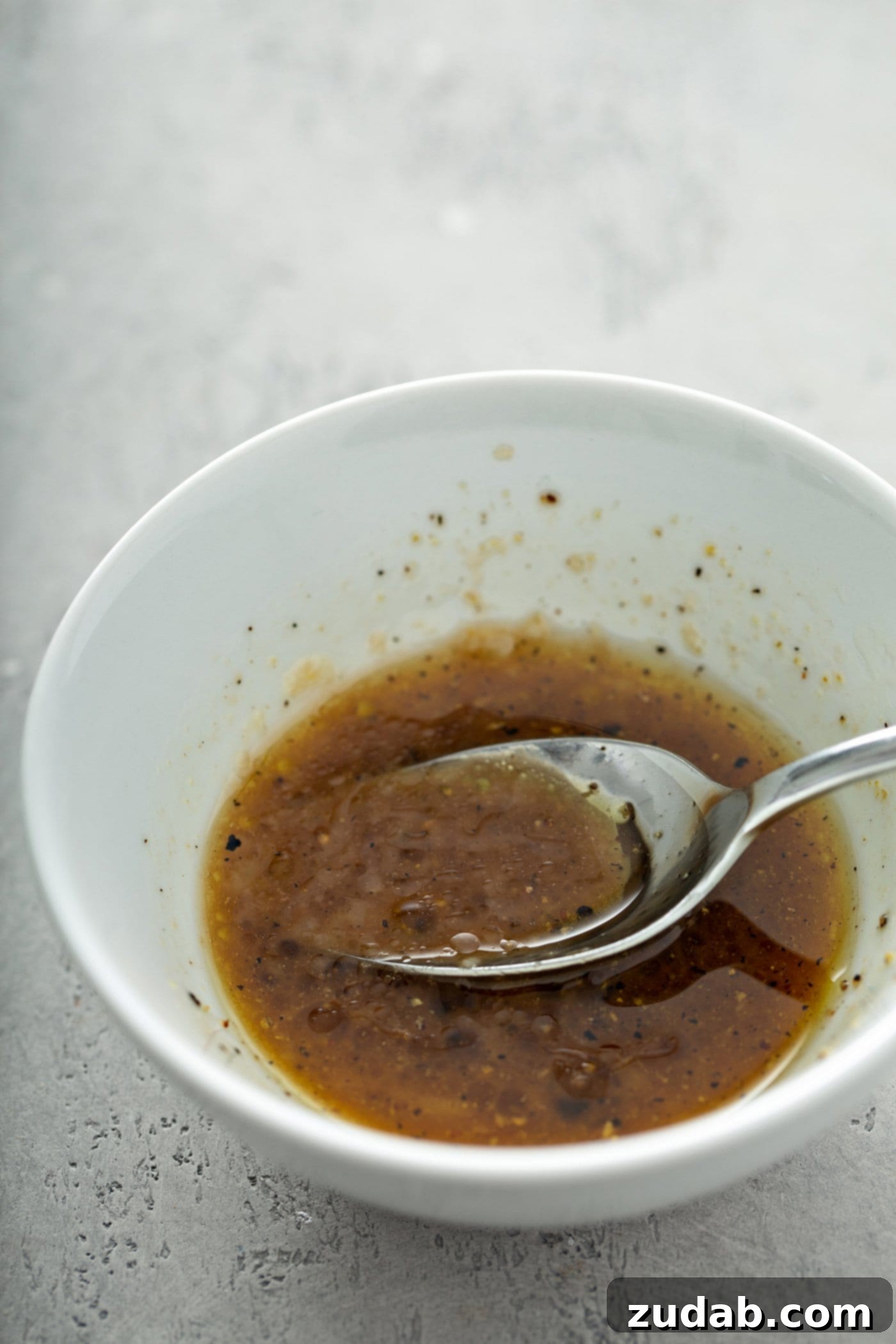
This simple yet potent dressing truly highlights the caramelized sweetness and smoky char of the grilled vegetables, transforming them into an irresistible culinary experience. It’s the perfect finishing touch that makes this healthy side dish an absolute delight for any meal.
Balsamic Vinegar vs. Apple Cider Vinegar: Understanding the Differences
Both balsamic vinegar and apple cider vinegar are acidic staples in many kitchens, prized for their ability to brighten and add tang to dishes. However, they possess distinct characteristics that make them suitable for different culinary applications. Understanding these differences can empower you to make informed choices for your recipes, ensuring optimal flavor profiles and textures.
Balsamic vinegar, originating from Italy, is renowned for its rich, complex flavor that is notably sweeter and generally less tart than apple cider vinegar. It typically boasts a slightly molasses-like undertone, a thicker consistency (especially aged varieties), and a darker, often opaque hue. This unique combination of sweetness, acidity, and depth of flavor makes balsamic vinegar an incredibly versatile ingredient. It is widely used for creating exquisite salad dressings, tenderizing marinades, flavorful glazes, and even as a luxurious drizzle over fresh fruits, aged cheeses, or decadent desserts, demonstrating its wide culinary appeal.
Apple cider vinegar, on the other hand, is produced through the fermentation of apple juice. It is significantly lighter in color, more overtly tart, and possesses a distinct fruity tang. While it typically lacks the inherent sweetness and robust body of balsamic vinegar, its crisp, sharp acidity is excellent for bright vinaigrettes, pickling vegetables, and as a tenderizer in various marinades. Beyond its culinary uses, apple cider vinegar is also associated with numerous health benefits, often attributed to its probiotic content and acetic acid.
For our Balsamic Vinaigrette Grilled Vegetables, the unique sweetness, robust flavor, and subtle complexity of balsamic vinegar are truly indispensable. They complement the smoky char and natural sweetness of the grilled produce perfectly, creating a harmonious and addictive taste experience that the sharper, fruitier notes of apple cider vinegar simply cannot replicate. The balsamic provides a depth that truly elevates the grilled flavors.
Maximizing Freshness: Storage and Reheating Grilled Vegetables
How Long Will Grilled Vegetables Keep?
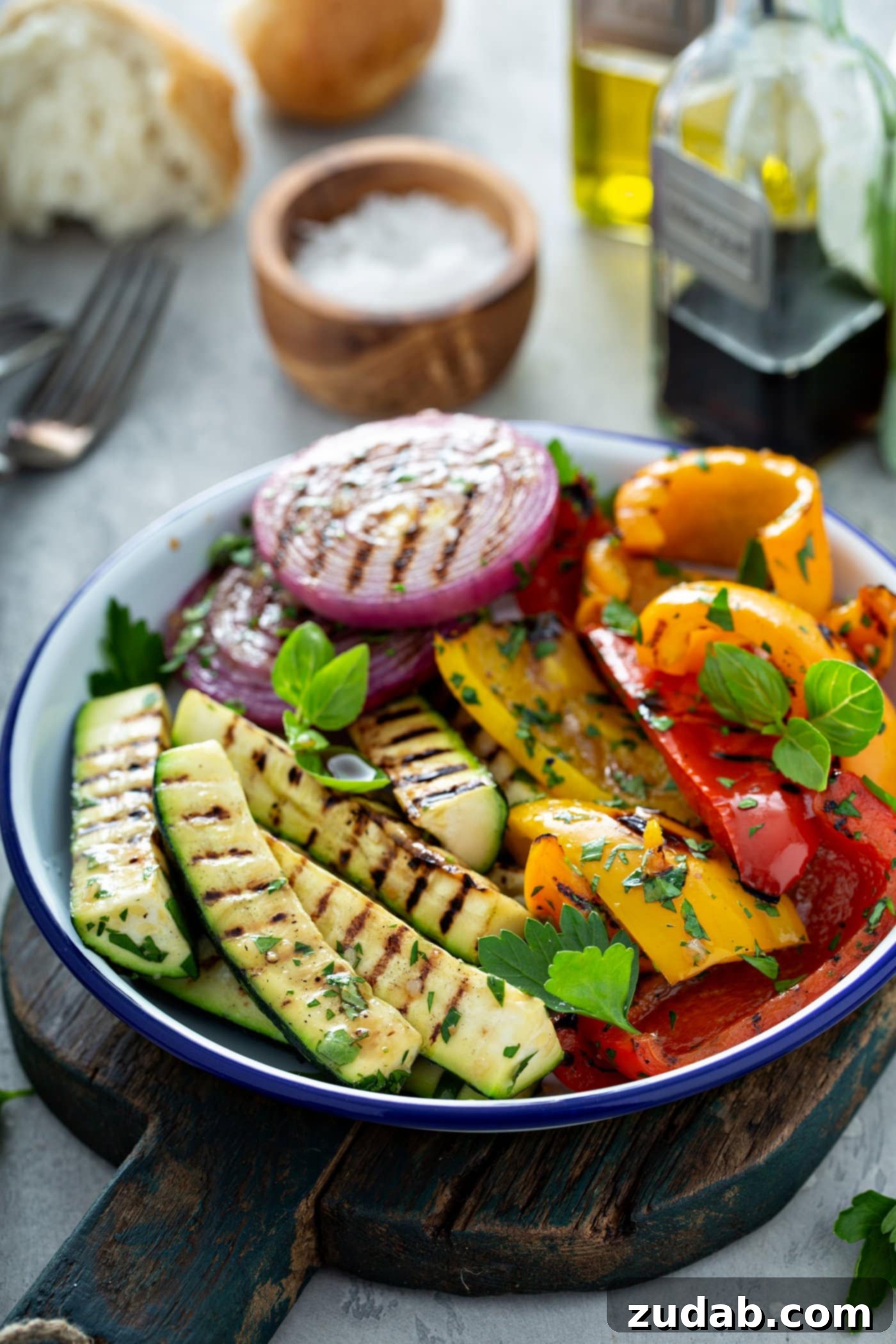
While Balsamic Vinaigrette Grilled Vegetables are undoubtedly at their peak when enjoyed fresh off the grill, any leftovers can certainly be stored for future enjoyment. When properly refrigerated in an airtight container, they will maintain their quality for up to 2 days. It’s important to be aware that as they sit, the vegetables will naturally release more moisture, potentially becoming softer in texture. Although still delicious, they won’t possess the same crispness as their freshly grilled counterparts.
Can You Reheat Grilled Vegetables?
Absolutely! Reheating grilled vegetables effectively is key to preserving their desirable texture and preventing them from becoming steamed and soggy. The best methods involve dry heat. Avoid covering them with foil during reheating, as this will trap steam and diminish their crispness. Instead, consider these approaches:
- Oven Method: This is arguably the best way to revive your grilled vegetables. Spread the leftover grilled vegetables in a single layer on a baking sheet. Place them into a preheated oven at 350°F (175°C) and reheat for approximately 10-15 minutes, or until they are heated through and have regained a slight crispness.
- Air Fryer Method: For a quicker and often crispier result, an air fryer works wonders. Place the vegetables in a single layer in your air fryer basket, ensuring not to overcrowd it. Air fry at 375°F (190°C) for about 5-7 minutes, making sure to shake the basket halfway through to promote even heating and crisping, until they are hot and lightly crispy.
- Stovetop Method: For a very quick reheat, you can also toss the vegetables in a dry skillet (without oil) over medium-high heat for a few minutes. Stir them frequently to prevent burning and allow any excess moisture to evaporate, until they are warmed through and slightly re-crisped. This method is great for smaller batches.
The Ultimate Guide to Shopping for the Best Balsamic Vinegar
As emphasized earlier, not all balsamic vinegar is created equal. The quality of your balsamic can profoundly impact the flavor of your entire dish. To truly master Balsamic Vinaigrette Grilled Vegetables and elevate countless other recipes, it’s essential to understand how to shop for the best balsamic vinegar. Here’s a comprehensive guide to help you navigate the options:
- Geographical Origin Matters Immensely: True traditional balsamic vinegar originates exclusively from the esteemed provinces of Reggio Emilia or Modena in Italy. When selecting, diligently look for labels that explicitly state “Aceto Balsamico di Modena” or “Aceto Balsamico di Reggio Emilia.” This geographical indication is the first clue to authenticity.
- Understanding Key Certifications (D.O.P., I.G.P., and Condimento): These certifications are crucial for discerning quality:
- D.O.P. (Denominazione di Origine Protetta – Protected Designation of Origin): This represents the pinnacle of balsamic vinegar quality. A D.O.P. label guarantees that the entire product, from the specific grape harvesting to the precise bottling process, strictly adheres to rigorous traditional methods within Modena or Reggio Emilia. These exquisite vinegars are aged for a minimum of 12 years, and often much longer, resulting in a thick, intensely complex, and incredibly flavorful elixir. D.O.P. balsamic vinegars are typically expensive and should be reserved for drizzling sparingly over finished dishes, fine cheeses, or fresh fruits – they are often considered a luxurious dessert component. Look for “Aceto Balsamico Tradizionale di Modena” or “Aceto Balsamico Tradizionale di Reggio Emilia” explicitly bearing the D.O.P. seal.
- I.G.P. (Indicazione Geografica Protetta – Protected Geographical Indication): This is the most common and often best-value type of balsamic vinegar found in mainstream grocery stores, making it an excellent choice for everyday cooking, including our balsamic vinaigrette. I.G.P. certification assures that at least one significant stage of the production process (such as grape pressing, cooking of the must, or aging) took place within the designated regions of Modena or Reggio Emilia. While the regulations are not as stringent as D.O.P., I.G.P. still indicates a good level of quality and authenticity. These vinegars are usually aged for a minimum of 60 days (and often up to 3 years) and are considerably more affordable. They are perfect for crafting dressings, marinades, and reductions, offering a balanced flavor for versatile use.
- Condimento (Balsamic Condiment): This term refers to balsamic vinegars that, for various reasons, do not meet the strict D.O.P. or I.G.P. regulatory requirements. They might be produced outside the specific Italian regions, or their aging and production methods do not qualify for official certification. The quality of “Condimento” balsamic can vary wildly, ranging from excellent artisanal products crafted by smaller producers to much cheaper, less flavorful blends. While some high-quality “Condimento” vinegars are very good (often aged 3-7 years), purchasing them requires more discernment, as there’s no official guarantee of the production process.
- Aging and Desired Thickness: Generally, the longer a balsamic vinegar is aged, the thicker, sweeter, and more complex its flavor profile becomes due to concentration and fermentation. Cheaper, unaged balsamic vinegars will typically be thinner in consistency and more sharply acidic. It’s wise to use the more affordable, simpler ones for marinades or cooking where a significant quantity is needed, and save the richer, more concentrated, aged ones for finishing dishes where their nuanced flavor can truly shine.
- Scrutinize the Ingredient List: For genuine I.G.P. or traditional balsamic, the primary ingredient should be “cooked grape must” (mosto cotto). Be cautious of vinegars that list “wine vinegar” as the very first ingredient, or contain undesirable additives such as added sugars (beyond natural grape sugars), artificial caramel coloring, or thickeners. These ingredients are often indicators of lower quality and an attempt to mimic the characteristics of true aged balsamic.
Our Top Recommendations: Which Balsamic Vinegar is Best?
Navigating the extensive world of balsamic vinegar can be quite daunting with so many options available, but we’ve taken the guesswork out by performing extensive taste-testing for you! Here are our curated picks for various culinary uses, ensuring you get the best flavor for your investment:
- Villa Manodori – This is an exceptional, high-end choice ideal for drizzling over delicate items such as fresh fruits, creamy vanilla ice cream, or rich, aged cheeses. Its notable thicker consistency and pronounced natural sweetness make it a luxurious finishing balsamic that adds a touch of gourmet elegance to any dish.
- Roland Diamond – A highly versatile and consistently excellent quality balsamic. It performs beautifully for both general drizzling applications and, more specifically, for roasting or grilling vegetables. Its well-balanced flavor profile makes it a reliable workhorse in any kitchen, capable of enhancing your Balsamic Vinaigrette Grilled Vegetables with superb depth and complexity.
- Oliviers & Co – This particular balsamic is specifically crafted and optimized for preparing salad dressings. It delivers a vibrant tang and profound depth of flavor that complements a wide array of salads and vinaigrettes exceptionally well. If you’re serious about elevating your dressing game, this is a fantastic and dedicated option.
Best Overall Balsamic Vinegar for Every Purpose:
- Acetaia Malpighi Balsamico – If you are seeking one singular balsamic vinegar that can truly do it all – excelling across dressings, marinades, grilling, and even as a sophisticated finishing drizzle – then this is our unequivocal top recommendation. It boasts a superb, harmonious balance of natural sweetness and bright acidity, coupled with an incredible depth of flavor, making it suitable for virtually any culinary application you can imagine.
Best Everyday Grocery Store Balsamic Vinegar
For those instances when you require a dependable, readily available balsamic that performs consistently well without demanding a premium price, certain grocery store brands truly stand out. Our top pick, offering excellent value and reliable quality, is:
Bertolli Balsamic Vinegar of Modena
Other Reliable and Good Choices Include:
- Lucini
- Colavita
Balsamic Vinegars to Avoid: Our Least Favorite Brands
Just as there are truly excellent balsamic vinegars that elevate your cooking, there are also those that consistently underperform and can detract from your dishes. From our extensive testing and culinary experience, brands like Star or Cento have frequently exhibited notably bitter notes or were notably flavorless, failing to contribute positively to the overall taste profile of a recipe. Avoiding these particular brands will save you from a potentially disappointing culinary experience and ensure your Balsamic Vinaigrette Grilled Vegetables turn out as delicious as they should be.
Can you Use Garlic Powder in the Vinaigrette?
While fresh garlic offers the most vibrant and pungent flavor profile, we completely understand that sometimes convenience is paramount or fresh garlic might simply not be available. If for any reason you are unable to use real, fresh garlic in your vinaigrette, you can absolutely substitute it with garlic powder. For the specific vinaigrette recipe outlined here, use approximately 1/4 teaspoon of garlic powder to achieve a similar aromatic base and ensure your dressing remains flavorful and balanced.
More Delicious Grilling Recipes to Enjoy
If you’ve fallen in love with the effortless ease and incredible flavor of these Balsamic Vinaigrette Grilled Vegetables, you’ll be thrilled to explore more of our favorite grilling recipes. The grill isn’t just for cooking meat; it’s an incredibly versatile culinary tool capable of creating a wide array of fantastic dishes, from savory main courses to surprisingly delightful desserts. Expand your grilling repertoire and discover new favorites with these inspiring ideas:
- Honey Lemon Grilled Chicken
- Grilled Peach Caprese Salad
- Balsamic Caprese Grilled Chicken
- Easy Grilled Chicken
- How to Grill Corn on the Cob Perfectly
- Grilled Dessert Croissants with Chocolate & Strawberries
- Grilled Brats with Honey Mustard & Bacon
- Stuffed Cheesy Grilled Peppers
- Brown Sugar Grilled Pineapple
Balsamic Vinaigrette Grilled Veggies
Balsamic Vinaigrette Grilled Vegetables are a simple yet incredibly flavorful mixture of fresh, seasonal vegetables tossed with a delicious homemade balsamic dressing. This healthy side dish is easy to prepare and requires minimal time and ingredients, making it perfect for any meal.
Ingredients
- Cooking Spray or a high-smoke-point oil for grates
- 1 Pound Zucchini, Sliced length-wise into shorter sticks (about 1/4-inch thick)
- 1 Pound Bell Peppers, Sliced into wide strips (red, yellow, or orange recommended)
- 1 Large Red Onion, cut into 1/2-inch thick rounds
- 1/2 Cup Fresh Parsley and Italian Basil, finely chopped (for garnish)
Balsamic Dressing:
- 2 Tablespoons Extra Virgin Olive Oil
- 2 Tablespoons Balsamic Vinegar (high-quality, see notes below for selection)
- 2 Cloves Garlic, freshly grated (or 1/4 teaspoon garlic powder as a substitute)
- 1 teaspoon Salt (or adjust to your preference)
- Black Pepper, freshly ground to taste
Instructions
Balsamic Dressing Preparation:
- In a small bowl, thoroughly whisk together the extra virgin olive oil, balsamic vinegar, grated garlic (or garlic powder), salt, and freshly ground black pepper until all ingredients are well combined and a slight emulsification is achieved. Set this flavorful dressing aside.
For Grilling the Vegetables:
- Preheat your grill to a consistent medium-low heat. Once the grill is hot, use tongs to rub the grates with an oiled paper towel. This crucial step creates a non-stick surface, ensuring your vegetables don’t adhere and develop beautiful grill marks.
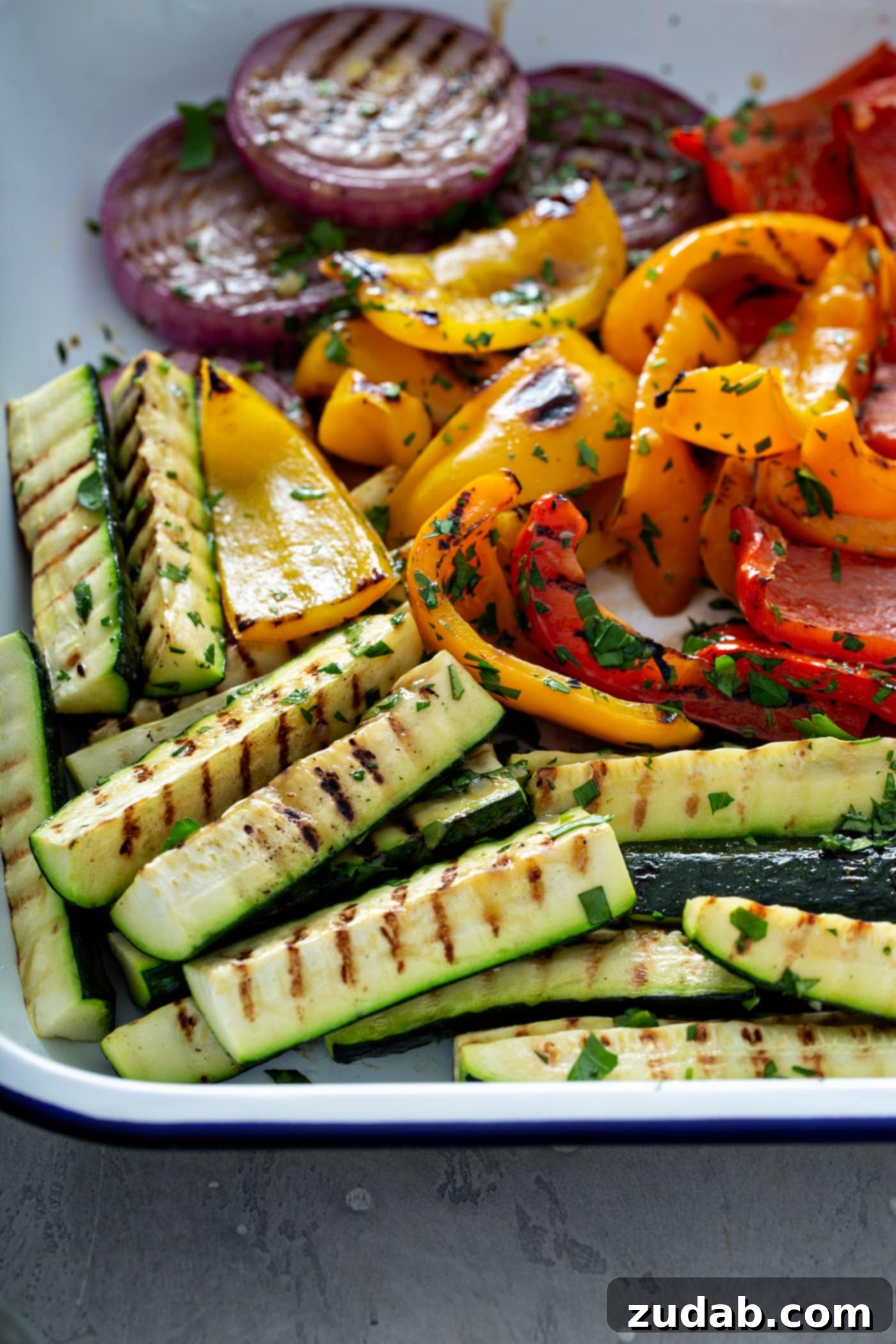
- Arrange the prepared vegetables in a single layer on the hot grill grates, making sure not to overcrowd them. Close the lid and allow them to cook for approximately 10-12 minutes. During this time, flip the vegetables only once to ensure they develop precise and attractive grill marks on both sides. The vegetables should be tender-crisp to the touch, with a desirable char.
- Once perfectly grilled, transfer the hot vegetables to a large serving bowl. Pour the prepared balsamic dressing over them, then generously sprinkle with the finely chopped fresh parsley and basil. Gently mix everything to ensure the vegetables are evenly coated with the vibrant dressing. Serve immediately for the best flavor and texture.
Recipe Notes
Onion Tip: To keep onion layers together and prevent them from separating during grilling, thread a wooden skewer horizontally through the centers of two or three onion rounds before placing them on the grill. This makes them much easier to handle.
Reheating Leftovers: Leftover grilled vegetables can be effectively reheated in the oven or an air fryer to help them regain some of their original crispness. Avoid reheating in the microwave or covering them with foil in the oven, as both methods will steam the vegetables and make them soggy.
Nutrition Information
Calories: 134kcal
Carbohydrates: 14g
Protein: 3g
Fat: 8g
Saturated Fat: 1g
Sodium: 601mg
Potassium: 617mg
Fiber: 4g
Sugar: 9g
Vitamin A: 4409IU
Vitamin C: 178mg
Calcium: 45mg
Iron: 1mg
Nutrition information is automatically calculated and should be used as an approximation. It can vary based on specific ingredient brands and preparation methods.
Enjoyed this recipe? Leave a comment below!
Your feedback helps us create more delicious and healthy recipes for you to enjoy.