
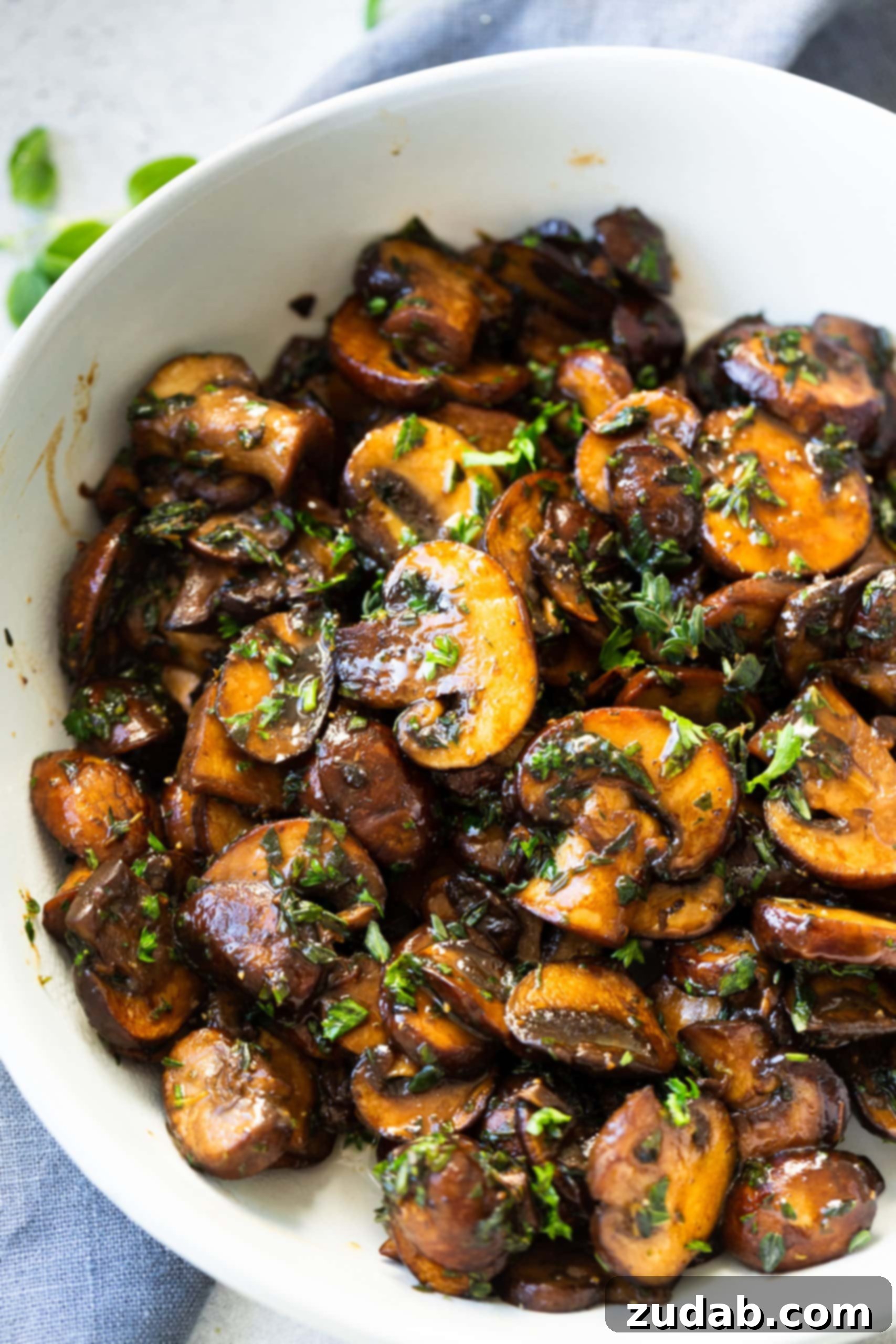
Mushrooms… they are a culinary enigma. Some adore their earthy, meaty texture and profound flavor, while others find them less appealing. But get ready to transform any skeptic into a mushroom lover with this incredibly easy recipe for **mouth-watering sauteed mushrooms**. These golden, tender gems boast a rich, savory depth that can elevate any meal from ordinary to extraordinary.
For years, my mother would passionately describe her love for mushrooms – be it stuffed, caramelized, or perfectly sauteed. As a child, much like many picky eaters, I instinctively shied away from them. The very thought of their unique texture and earthy taste was enough to deter me. Yet, as time passed and my palate matured, a remarkable shift occurred. Mushrooms slowly, but surely, began to enter my culinary world, transforming from a childhood aversion into a cherished ingredient.
Now, with a bit more wisdom and a keen appreciation for diverse flavors, I wholeheartedly embrace the versatility of mushrooms. These juicy **sauteed mushrooms** aren’t just a fantastic **side dish**; they’re a versatile ingredient waiting to enhance your favorite meals. Imagine them piled high on a succulent steak, tucked into a gourmet burger with sweet caramelized onions and melty cheese, or even stirred into a creamy pasta. The possibilities are endless, and the result is always a delightful burst of umami flavor.
Unlocking the Ultimate Flavor: Keys to the Best Sauteed Mushrooms
Achieving truly exceptional **sauteed mushrooms** isn’t complicated, but it does hinge on a few key ingredients that work in harmony to amplify their natural savory **umami** flavor and create that irresistible golden-brown crust. These are the secrets to transforming humble mushrooms into a gourmet delight:
- White Wine: This ingredient is a game-changer. It not only provides a subtle acidity that brightens the overall flavor but also helps to deglaze the pan, picking up all those delicious caramelized bits. While some culinary purists insist on drinking-quality wine, a good cooking white wine works perfectly fine for this application, adding depth without the need for an expensive bottle.
- Worcestershire Sauce: Often overlooked, Worcestershire sauce is a powerhouse of umami. Its fermented, savory profile significantly enhances the earthy richness of the mushrooms, adding a layer of complexity that will have everyone asking for your secret.
- Butter: The ultimate ingredient for achieving that coveted caramelization. When butter hits the heat, its milk solids brown beautifully, creating a nutty flavor and a gorgeous golden crust on your mushrooms. The fat also helps distribute flavors evenly and ensures a tender interior. A combination of butter and olive oil is ideal for both flavor and high-heat searing.
Essential Ingredients for Your Perfect Sauteed Mushrooms
Crafting these delectable mushrooms requires a concise list of fresh, high-quality ingredients. Each component plays a vital role in building the layers of flavor that make this dish so irresistible. Here’s a detailed look at what you’ll need for your grocery run:
- Baby Bella Mushrooms (Cremini): These are our top choice for sauteing. Baby Bellas offer a firmer texture and a richer, earthier flavor compared to white button mushrooms. Their robust nature stands up beautifully to the cooking process, caramelizing wonderfully. However, feel free to use your favorite variety; portobello (sliced), shiitake, or oyster mushrooms also yield fantastic results.
- Olive Oil and Butter: This dynamic duo is the dream team for sauteing. Olive oil provides a higher smoke point for initial searing, while butter contributes its incomparable flavor and aids in achieving that perfect golden-brown caramelization. The blend prevents the butter from burning too quickly while infusing the mushrooms with rich, buttery goodness.
- Fresh Thyme: A staple aromatic in French and Mediterranean cuisine, fresh thyme imparts a delicate, earthy, and slightly floral note that complements mushrooms beautifully. Its tiny leaves hold their flavor well through cooking.
- Fresh Oregano: With its robust, pungent, and slightly peppery flavor, fresh oregano adds a wonderful Mediterranean warmth to the dish. Using fresh herbs makes a significant difference in the vibrancy and aroma of the final product.
- White Wine: As discussed, white wine adds essential acidity, complexity, and helps deglaze the pan, capturing all the flavorful browned bits. Its subtle sweetness and tang enhance the overall profile of the mushrooms.
- Soy Sauce: A surprising but crucial addition, soy sauce brings an extra punch of umami and saltiness. Its amino acids also contribute to the browning process, helping the mushrooms achieve a deeper, more appetizing color and richer flavor.
- Worcestershire Sauce: This fermented condiment is a secret weapon for boosting savory depth. Its unique blend of flavors, including anchovy, tamarind, and vinegar, magnifies the natural umami of the mushrooms, creating an incredibly satisfying taste.
- Fresh Lemon Juice: A squeeze of fresh lemon juice at the end is like a magic wand for your sauteed mushrooms. It cuts through the richness, brightens all the flavors, and adds a zesty, fresh pop that awakens the palate.
- Kosher Salt: Essential for seasoning, kosher salt enhances the natural flavors of the mushrooms and other ingredients without adding any harsh metallic taste.
- Fresh Ground Pepper: A touch of freshly ground black pepper adds a subtle warmth and aromatic spice, rounding out the flavor profile.
Exact measurements for each ingredient are typically detailed in a comprehensive recipe card, ensuring you have everything you need to create these culinary masterpieces.
Mastering the Art: How to Saute Mushrooms
This **easy side dish** is incredibly quick to prepare, taking only minutes from start to finish. The key to perfectly sauteed mushrooms lies in understanding the cooking process to maximize flavor and texture. Follow these simple steps for a flawless result:
- Prepare the Mushrooms: Begin by properly cleaning your mushrooms. Avoid washing them under running water, as they are like sponges and will absorb excess moisture, preventing them from browning. Instead, gently wipe them clean with a dry paper towel or a soft brush to remove any dirt. Once clean, slice them into even pieces, about ¼ to ½ inch thick, to ensure uniform cooking.
- Chop the Fresh Herbs: Finely chop your fresh thyme and oregano leaves. Set them aside, as they will be added later in the cooking process to preserve their vibrant flavor and aroma.
- Heat the Fats in a Skillet: Place a large, heavy-bottomed skillet (stainless steel or cast iron works best for even heat distribution and browning) over medium-high heat. Add the olive oil and butter. Allow the fats to heat until the butter is melted and slightly shimmering, indicating it’s ready for the mushrooms. This ensures a hot surface for proper searing.
- Sear the Mushrooms (Don’t Overcrowd!): Add the sliced mushrooms to the hot skillet. This is a crucial step!
- PRO TIP: Do not overcrowd the pan. If you add too many mushrooms at once, the temperature of the pan will drop significantly, causing the mushrooms to steam rather than sear and caramelize. Cook them in batches if necessary, ensuring a single layer in the pan. Stir occasionally for about 2 minutes, allowing the liquid to cook out and the mushrooms to begin browning.
- Add Aromatics and Flavor Boosters: Once the mushrooms have started to release their moisture and develop some color, add the chopped fresh herbs, white wine, soy sauce, Worcestershire sauce, and kosher salt and fresh ground pepper. Continue to cook, stirring only occasionally.
- PRO TIP: Resist the urge to stir constantly. Allowing the mushrooms to sit undisturbed for a minute or two on the hot surface will encourage the formation of that beautiful, flavorful crust. Cook until most of the liquid has evaporated and the mushrooms are tender, deeply browned, and beautifully caramelized. This typically takes an additional 4-5 minutes.
- Finish with Lemon Juice and Season: Remove the skillet from the heat. Stir in the fresh lemon juice. This brightens the flavors and adds a zesty finish. Taste the mushrooms and adjust the seasoning with additional pinches of salt and pepper if needed.
For precise measurements and detailed timings, always refer to the full recipe guide. These steps will guide you to a dish that’s rich in flavor and perfectly cooked.
Creative Substitutions for White Wine in Sauteed Mushrooms
While white wine adds a unique depth and acidity to these sauteed mushrooms, you might need an alternative due to dietary preferences or simply not having any on hand. The good news is that finding a suitable **white wine substitute** is easier than you think, without compromising on flavor. Most substitutes can be used in a 1:1 ratio for the wine.
- Chicken Broth or Vegetable Broth: This is perhaps the most common and versatile substitute. Broth provides a savory liquid base that helps deglaze the pan and adds umami. Opt for a low-sodium version if you want more control over the salt content of your dish.
- White Grape Juice (diluted): For a touch of sweetness and acidity reminiscent of white wine, diluted white grape juice works well. Dilute it with an equal part of water or broth to prevent the dish from becoming too sweet.
- Apple Juice (diluted): Similar to white grape juice, diluted apple juice offers a fruity acidity. Again, dilute it to balance the sweetness.
- Apple Cider Vinegar or White Wine Vinegar (diluted): If you’re primarily looking for acidity and a sharp tang, a small amount of apple cider vinegar or white wine vinegar diluted with water or broth can work. Start with a small amount and taste as you go, as vinegars can be more potent.
A Note on Cooking White Wine vs. Regular White Wine: Be mindful of the type of wine you use. Cooking white wine typically has a higher sodium content and may contain other additives. If your recipe calls for cooking wine and you’re using regular table wine, you might need to add a touch more salt to achieve the desired flavor balance. Conversely, if a recipe calls for regular wine and you’re using cooking wine, reduce the added salt slightly. This isn’t about precise measurements like a teaspoon or tablespoon, but rather a subtle adjustment to taste – just a “hair more” or “hair less” to get it just right.
Selecting the Best Mushrooms for Sauteing
The type of mushroom you choose can significantly impact the flavor and texture of your sauteed dish. While many varieties work beautifully, some are particularly well-suited for the caramelization process:
- Baby Bella Mushrooms (Cremini): As highlighted in our ingredients list, these are our preferred choice. Baby Bellas are mature versions of white button mushrooms, boasting a deeper, richer flavor and a firmer texture that holds up well to high heat. They brown beautifully and are readily available and affordably priced in most grocery stores.
- White Button Mushrooms: These are the most common and mildest mushrooms. While they can be sauteed, they tend to have a higher water content and a less intense flavor than Baby Bellas. If using white button mushrooms, ensure you cook out as much moisture as possible to achieve browning.
- Portobello Mushrooms: These large, meaty mushrooms are essentially fully-grown cremini mushrooms. When chopped into bite-sized pieces, they provide a very substantial, robust flavor and satisfying texture. They are excellent for a more “meaty” mushroom experience.
- Shiitake Mushrooms: Known for their distinct earthy, smoky flavor and firm, chewy texture, shiitake mushrooms are a fantastic choice for sauteing. They add an exotic touch and a powerful umami punch. Remove the woody stems before cooking.
- Oyster Mushrooms: With their delicate texture and subtle, slightly sweet flavor, oyster mushrooms become wonderfully tender and savory when sauteed. They absorb flavors beautifully and add an elegant touch to the dish.
Don’t hesitate to experiment with a combination of several types of mushrooms for a more complex and interesting flavor profile. Each variety brings its unique characteristics to the pan, making every bite an adventure.
Fresh vs. Dried Herbs: The Flavor Debate
When it comes to herbs in cooking, especially in a dish where their aroma and flavor are prominent, there’s a clear winner between fresh and dried. For these **sauteed mushrooms**, we wholeheartedly advocate for using **fresh herbs**.
- The Power of Fresh: Fresh thyme and oregano offer a vibrant, aromatic, and complex flavor that dried herbs simply cannot replicate. They contribute essential oils that release a fragrant bouquet and infuse the mushrooms with bright, herbaceous notes that elevate the entire dish. The difference in taste is truly like night and day, making fresh herbs a worthwhile investment for this recipe.
- When Dried Herbs Can Be Used: We understand that fresh herbs aren’t always available or convenient. If you absolutely must use dried herbs, remember the golden rule for substitution: 1 tablespoon of fresh herbs is equivalent to 1 teaspoon of dried herbs. Keep in mind that dried herbs have a more concentrated flavor, so less is more. Also, dried herbs should generally be added earlier in the cooking process (often with the mushrooms or other liquids) to allow their flavors to rehydrate and meld with the dish. While the result won’t be as bright as with fresh, it will still provide a pleasant herbaceous note.
The Right Way to Clean Mushrooms for Optimal Searing
Properly cleaning mushrooms is a critical step that many overlook, and it directly impacts the success of your sauteed dish. Contrary to popular belief, you should generally avoid washing mushrooms in water. Here’s why and how to clean them effectively:
- Mushrooms are Sponges: Mushrooms are incredibly porous and absorb water like tiny sponges. If you wash them under running water, they will soak up excess moisture. This moisture will then be released during cooking, causing your mushrooms to steam rather than sear and caramelize. The result is often soggy, less flavorful mushrooms without that beautiful golden-brown crust we’re aiming for.
- The Dry Wipe Method: The best way to clean mushrooms is to simply wipe them with a dry paper towel or a soft mushroom brush. Gently brush or wipe away any visible dirt or debris from the caps and stems. This method removes impurities without introducing unwanted moisture, ensuring your mushrooms are perfectly primed for browning.
- If They’re Very Dirty: In rare cases, if your mushrooms are exceptionally dirty, a quick rinse might be necessary. However, do this immediately before cooking, rinse them very quickly, and then spread them out on a clean towel to dry thoroughly. Pat them vigorously to remove as much surface moisture as possible before slicing and adding them to the hot pan. The goal is always to minimize moisture for maximum caramelization.
Delicious Ways to Serve Your Sauteed Mushrooms
These golden, tender, and juicy **sauteed mushrooms** are incredibly versatile, making them a fantastic addition to almost any meal. Their bold, scrumptious umami flavor pairs wonderfully with a wide array of dishes, transforming them from a simple side into a culinary highlight. Here are some of our favorite ways to enjoy them:
- As a Standalone Side Dish: They are perfect on their own! Serve a generous portion alongside any main course for an instant flavor boost.
- Main Course Enhancements:
- With Roasted Meats: They are an exquisite complement to classic roasted dishes like roasted chicken, tender smoked brisket, juicy pork chops, or a perfectly seared steak.
- Burgers and Sandwiches: Pile them onto your favorite burger with caramelized onions and melty cheese for a gourmet twist. They also elevate hot sandwiches and wraps.
- Mixed Into Dishes:
- Pasta Dishes: Stir them into a creamy pasta sauce, a rich mushroom risotto, or a simple aglio e olio for an earthy texture and flavor.
- Soups and Stews: Add them to hearty soups, stews, or casseroles for an extra layer of savory depth and a more substantial feel.
- Breakfast & Brunch: Incorporate them into fluffy omelets, scrambled eggs, or savory crepes for a delightful morning meal.
- Pizza and Quesadillas: Sprinkle them over homemade pizza or fold them into cheesy quesadillas for an umami-packed filling.
- Toppings and Bases:
- Potatoes and Grains: They make a fantastic topping for creamy mashed potatoes, baked potatoes, or a bed of fluffy rice.
- Bruschetta and Appetizers: Serve them on toasted baguette slices for a simple yet elegant bruschetta, or as part of a savory appetizer platter.
These golden **sauteed mushrooms** are tender and juicy with a bold, scrumptious umami flavor, and they can be ready in less than 15 minutes. It’s a simple side dish that truly has the power to elevate any meal!
Storing and Reheating Sauteed Mushrooms
Making a bigger batch of these flavorful sauteed mushrooms is always a good idea, as they are fantastic for meal prepping or enjoying as leftovers. Proper storage and reheating will help maintain their delicious taste and texture:
- Storage: Allow the sauteed mushrooms to cool completely to room temperature before storing. Transfer them to an airtight container and refrigerate for up to 3-4 days. While they can be frozen, their texture may become slightly softer upon thawing, so it’s best to enjoy them fresh or within a few days from the refrigerator.
- Reheating: To reheat, spread the mushrooms in a single layer in a skillet over medium heat. You may add a tiny bit of butter or olive oil if the pan seems too dry. Cook, stirring occasionally, until they are heated through and any excess moisture has evaporated, about 3-5 minutes. Avoid overheating, which can make them rubbery. You can also reheat them quickly in the microwave, but for the best texture, the stovetop is preferred.
Frequently Asked Questions About Sauteed Mushrooms
Here are answers to some common questions about making and enjoying sauteed mushrooms:
- Can I use frozen mushrooms? While fresh mushrooms are highly recommended for the best texture and browning, you can use frozen mushrooms in a pinch. However, they will release a lot more water during cooking, so you’ll need to cook them longer to evaporate the moisture and achieve any browning. Drain them well before adding them to the pan.
- How can I make them spicier? To add a kick, sprinkle in some red pepper flakes with the herbs, or a dash of hot sauce with the lemon juice at the end.
- Are these mushrooms good for a vegan diet? This recipe can easily be made vegan by substituting the butter with more olive oil or a plant-based butter alternative, and ensuring your Worcestershire sauce is vegan (some brands contain anchovies).
- Why are my mushrooms soggy? Soggy mushrooms are usually a result of overcrowding the pan, insufficient heat, or not cleaning them properly (washing them with water). Ensure your pan is hot, cook in batches if necessary, and wipe them dry.
More Mushroom Recipes You’ll Love:
- Italian Sauteed Mushrooms
- Porterhouse Steak with Mushrooms
- Creamy Chicken Stroganoff
- Hearty Ground Beef and Rice Casserole
- Classic Ground Beef Stroganoff
- Easy Pork Chops and Rice
Sauteed Mushrooms for Mom
Sweet Basil
5 mins
8 mins
10 mins
6
Ingredients
- 16 Ounces Baby Bella Mushrooms, sliced
- 1 1/2 Tablespoons Butter
- 1 1/2 Tablespoons Olive Oil
- 2 Tablespoons White Wine
- 1 Tablespoon Soy Sauce
- 1 teaspoon Worcestershire Sauce
- 3 Tablespoons Thyme leaves, chopped (see note)
- 3 Tablespoons Oregano, chopped
- 1/2 teaspoons Kosher Salt
- Fresh Ground Pepper
- 1 Tablespoon Lemon Juice, fresh
Instructions
-
Wipe mushrooms with a dry paper towel to clean them.16 Ounces Baby Bella Mushrooms
-
Chop the fresh thyme and oregano and set aside.
-
In a stainless steel or cast iron skillet, heat the butter and olive oil over medium high heat. Add the mushrooms once shimmering and cook for 2 minutes, stirring often to help the liquids cook out.1 1/2 Tablespoons Olive Oil,
1 1/2 Tablespoons Butter -
Add in the white wine, soy sauce, Worcestershire sauce, herbs, kosher salt and pepper and cook another 4 to 5 minutes, stirring occasionally, until most of the liquid is cooked out and the mushrooms are tender and beginning to brown and caramelize slightly.3 Tablespoons Thyme leaves,
3 Tablespoons Oregano,
2 Tablespoons White Wine,
1 Tablespoon Soy Sauce,
1 teaspoon Worcestershire Sauce,
1/2 teaspoons Kosher Salt,
Fresh Ground Pepper -
Turn off the heat and add lemon juice and stir to combine. Season with pinches of salt as necessary.1 Tablespoon Lemon Juice
Recipe Notes
Nutrition
Calories: 90kcal,
Carbohydrates: 6g,
Protein: 3g,
Fat: 7g,
Saturated Fat: 2g,
Polyunsaturated Fat: 1g,
Monounsaturated Fat: 3g,
Trans Fat: 1g,
Cholesterol: 8mg,
Sodium: 402mg,
Potassium: 413mg,
Fiber: 2g,
Sugar: 2g,
Vitamin A: 297IU,
Vitamin C: 7mg,
Calcium: 71mg,
Iron: 2mg
Nutrition information is automatically calculated, so should only be used as an approximation.
REMEMBER TO SUBSCRIBE TO our FREE Oh Sweet Basil NEWSLETTER AND RECEIVE EASY RECIPES DELIVERED INTO YOUR INBOX EVERY DAY!
When you try a recipe, please use the hashtag #ohsweetbasil on INSTAGRAM for a chance to be featured in our stories! FOLLOW OH, SWEET BASIL ON FACEBOOK | INSTAGRAM | PINTEREST | TWITTER FOR ALL OF OUR LATEST CONTENT, RECIPES AND STORIES.