
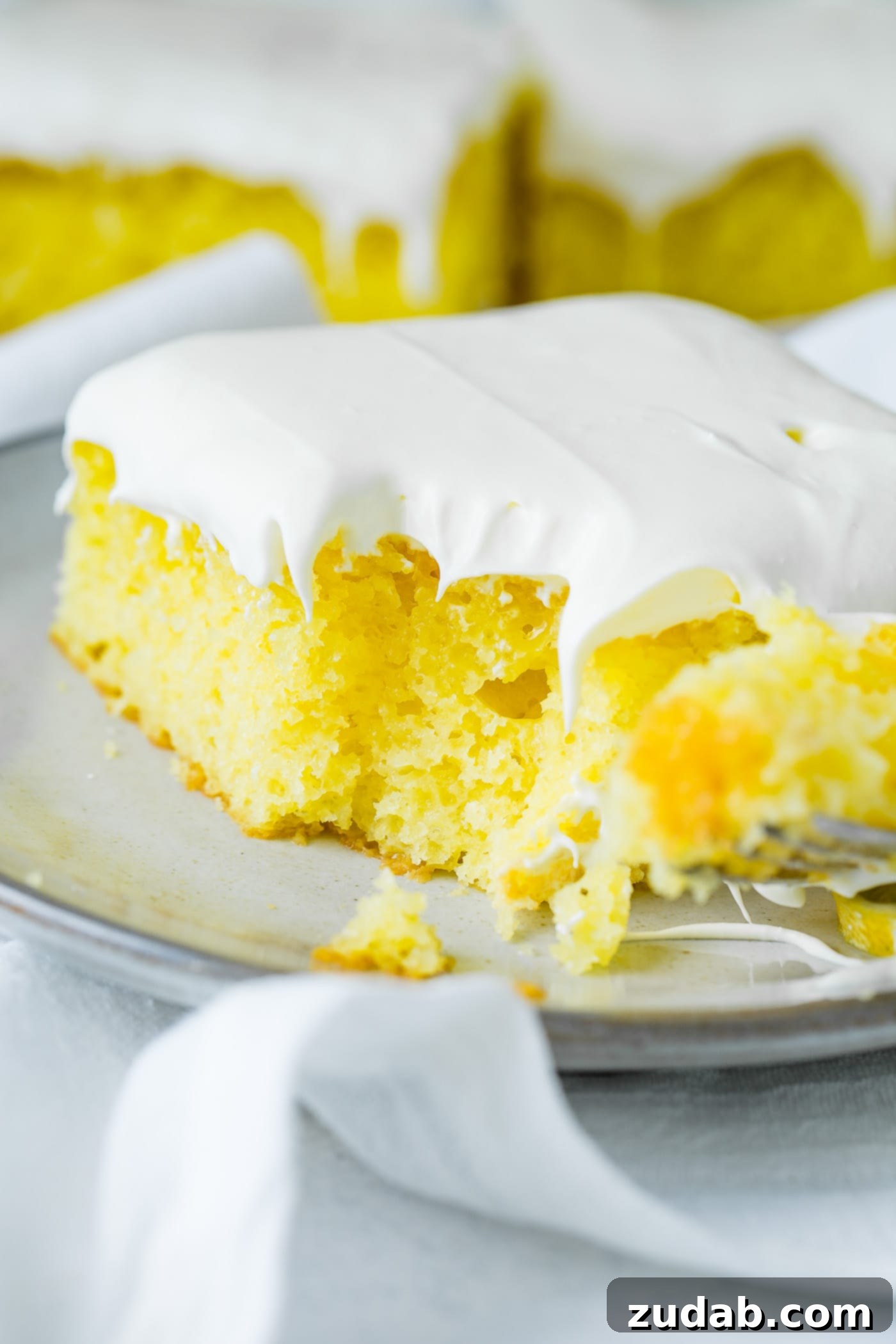
Welcome to the world of vibrant flavors and effortless baking! This delightful Lemon Jello Cake recipe is a cherished adaptation of our popular Lemon Jello Cake, elevated to new heights with an exquisitely light and fluffy lemon frosting. Prepare to embark on a culinary journey that promises a burst of sunshine in every bite, perfect for any occasion and guaranteed to impress with its unique moistness and tangy zest.
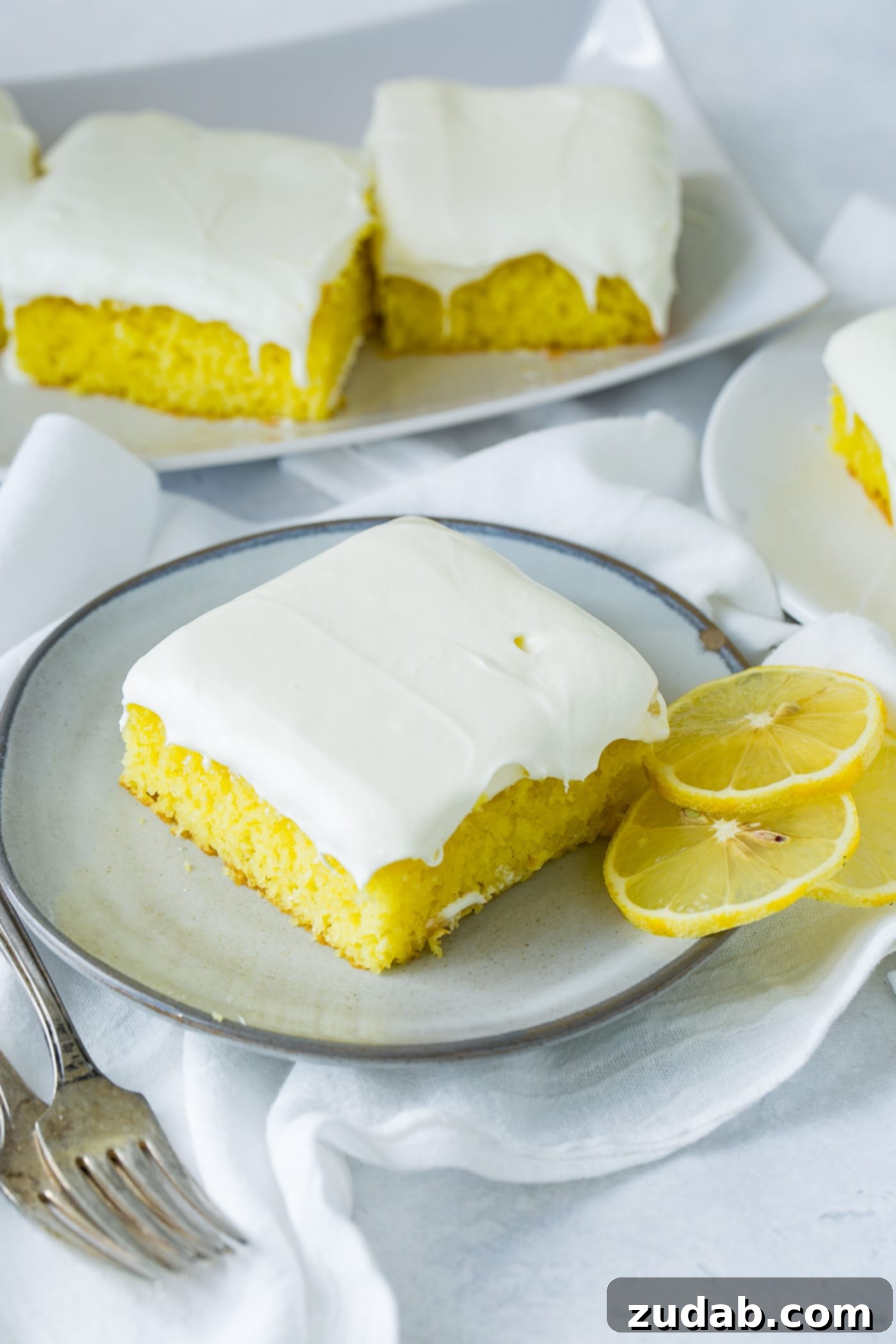
The Enduring Appeal of Jello Cakes
Jello cakes hold a special place in the hearts of many, offering a unique combination of moist texture and playful flavor. They’re a fantastic choice for both novice bakers and seasoned pros looking for a quick and impressive dessert. Beyond their nostalgic charm, these cakes offer practical benefits that make them a standout in any recipe repertoire. Here’s why we continue to adore a good jello cake recipe:
- Effortlessly Quick and Easy: Forget complicated techniques, lengthy prep times, and daunting ingredient lists. Jello cakes simplify the baking process, allowing you to whip up a delicious treat in minimal time. This makes them perfect for unexpected guests, last-minute potlucks, busy weeknights, or simply when a sweet craving strikes without the commitment of an elaborate baking project. The convenience factor is truly unmatched, delivering impressive results with little fuss.
- Kid-Friendly and Fun to Make: The vibrant colors and playfully moist texture of jello cakes naturally appeal to children. This particular recipe is so straightforward that kids can actively participate in the baking process, from mixing ingredients to helping with the glaze. This fosters a love for cooking, builds confidence in the kitchen, and creates lasting family memories around a shared culinary experience. It’s a dessert that’s as fun to make as it is to eat!
- Infinitely Customizable Flavors: While our lemon version is a superstar, offering a bright and tangy profile, the true beauty of a jello cake lies in its incredible versatility. You can easily swap out the jello flavor to create endless variations. Imagine a strawberry jello cake for a summer picnic, a lime jello cake for a refreshing twist, or even a cherry jello cake for a festive holiday. This adaptability ensures that a jello cake can cater to any preference, season, or special occasion, making it a truly flexible dessert.
- Moisture-Infused Perfection: A common complaint with homemade cakes is dryness. Jello cakes inherently tackle this issue with remarkable success. The jello glaze, when poured over the warm cake, actively seeps into every crevice and crumb, infusing it with a unique moistness and a subtle, refreshing tang. This internal hydration ensures that every slice remains tender and flavorful, often tasting even better the next day, setting it apart from many traditional cake recipes.
- Optional Frosting for Extra Indulgence: While a jello cake is wonderfully delicious on its own, especially with its signature glaze, adding a layer of frosting elevates it to an entirely new level of decadence. Our fluffy lemon frosting, with its creamy and airy texture, transforms this simple cake into a truly luxurious dessert. It perfectly balances the bright lemon notes of the cake and glaze, creating a harmonious symphony of flavors and textures that is both refreshing and deeply satisfying.
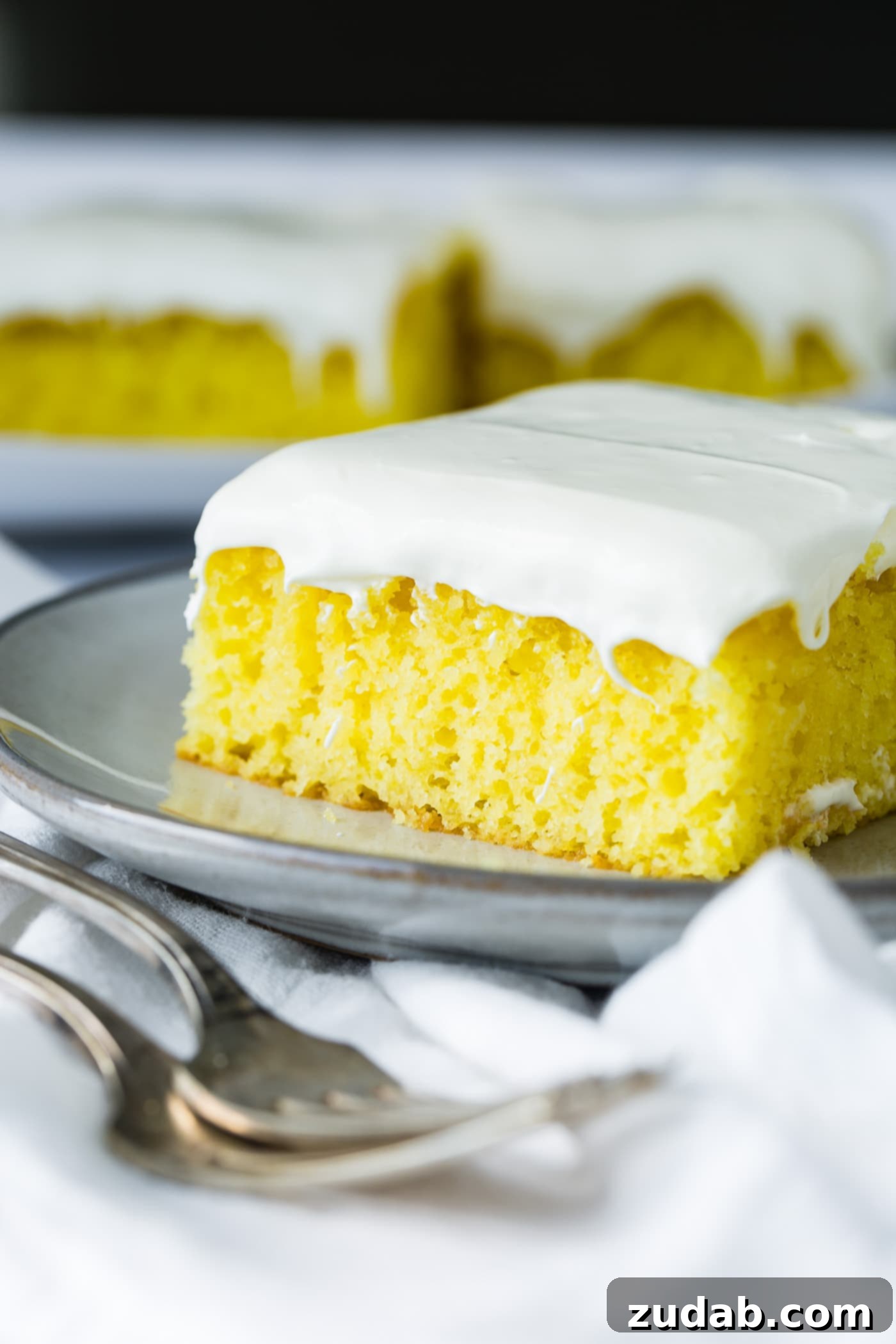
Crafting Your Perfect Lemon Jello Cake: A Step-by-Step Guide
Creating this delightful Frosted Lemon Jello Cake is a straightforward and incredibly rewarding process. With its unique jello infusion and luscious lemon frosting, this recipe promises a moist, flavorful, and visually appealing result every time. Follow these simple steps for a truly memorable dessert experience.
- Prepare Your Baking Environment: Begin by preheating your oven to 350°F (175°C). An accurately preheated oven is crucial for even baking and a consistent cake texture. Next, prepare your 9×13 inch baking pan by generously greasing it with butter or nonstick cooking spray, then dusting it with flour. This critical step prevents the cake from sticking and ensures a clean, effortless release after baking. To coat thoroughly, tip the pan and gently tap the edges, allowing the flour to adhere to all greased surfaces, then discard any excess.
- Combine Dry and Wet Ingredients: In a large mixing bowl, the magic begins. Combine your chosen lemon cake mix (a standard box mix works perfectly) with the dry lemon jello powder. This unique combination is the secret to the cake’s incredible moistness and intense lemon flavor. Once these dry ingredients are thoroughly blended, add the remaining wet cake ingredients: four large eggs, the specified amount of water, and oil.
- Mix to Perfection: Using an electric mixer set to a medium speed, beat the ingredients until they are just combined and the batter appears smooth. It’s essential to be careful not to overmix the batter, as excessive mixing can develop the gluten in the flour, leading to a tough, dense cake. Mix only until no streaks of dry ingredients remain and the batter is homogeneous, ensuring a light and airy texture in your final cake.
- Bake to Golden Perfection: Pour the beautifully mixed cake batter evenly into your prepared 9×13 inch baking pan. Place it gently into the preheated oven. Bake for approximately 27-30 minutes. Baking times can vary slightly depending on your oven, so rely on visual cues and the toothpick test. The cake should be golden brown around the edges, and a wooden skewer or toothpick inserted into the center should come out clean, indicating it’s fully cooked through.
- Prepare the Zesty Glaze: While your cake is in the oven, take this opportunity to whisk together the luscious lemon glaze. In a small, separate bowl, combine the fresh lemon juice, finely grated lemon zest, and powdered sugar. Whisk these ingredients together until the mixture is completely smooth and free of any lumps. This vibrant, tangy glaze will be immediately poured over the warm cake, infusing it with an additional layer of intense lemon flavor and ensuring unparalleled moisture.
- Infuse with Glaze: As soon as you remove the hot cake from the oven, while it is still warm and in the pan, use a fork or a wooden skewer to prick numerous holes evenly all over the top surface. These strategically placed holes will act as perfect channels, allowing the prepared lemon glaze to seep deep into the cake, saturating every crumb with zesty goodness. Immediately pour the entire lemon glaze evenly over the top of the pricked cake. Let the cake cool completely in the pan on a wire rack. This slow cooling process allows the glaze to fully absorb and the cake’s structure to set beautifully.
- Create the Fluffy Frosting: Once the cake has cooled completely to room temperature – this step is crucial for the frosting to adhere properly – it’s time to prepare the star of the show: the fluffy lemon frosting. In a separate bowl, gently fold together your preferred lemon frosting (a good quality store-bought option or a homemade one) and a container of Cool Whip. Use a rubber spatula to combine these ingredients until the mixture is light, airy, and evenly blended. The Cool Whip lightens the frosting, creating an unbelievably fluffy and delightful topping that perfectly complements the cake’s texture and flavor.
- Frost and Serve: Finally, spread the prepared fluffy lemon frosting generously and evenly over the cooled, glazed cake. For an extra touch of elegance and a visual pop, you can garnish the cake with thinly sliced fresh lemon rounds or a sprinkle of additional lemon zest. Now, your wonderfully moist and tangy Lemon Jello Cake is ready to be sliced, served, and savored!
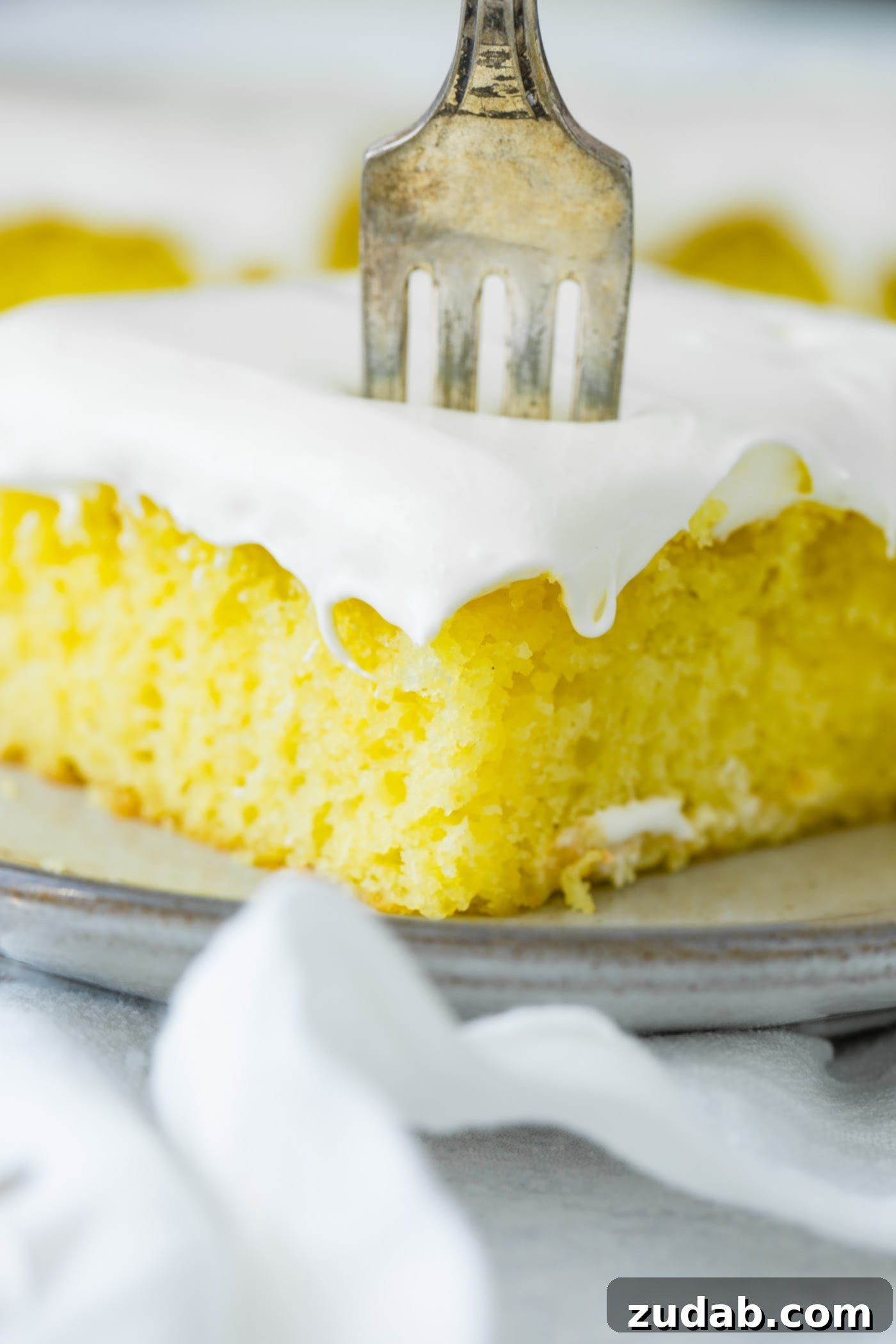
Avoiding a Dry Cake: Secrets to Moist Perfection
Few things are as disappointing as biting into a dry, crumbly cake after all your baking efforts. Achieving a consistently moist cake is a hallmark of good baking and often comes down to understanding a few key factors. The primary culprits behind a dry cake are typically an imbalance in the fat-to-flour ratio or, most commonly, simply over-baking.
A properly balanced fat-to-flour ratio ensures that enough moisture is retained within the cake’s cellular structure. If there’s too much flour or insufficient fat, the cake batter lacks the necessary components to hold moisture, resulting in a thirsty, often tough crumb. Furthermore, baking for too long, even by a few minutes, or at too high a temperature can evaporate essential liquids from the batter, leaving your cake parched and unappetizing.
If you’re continually battling dry cakes or are simply looking for a quick and easy solution to consistently moist results, consider embracing jello cake recipes. The inherent nature of a jello cake, especially when infused with a generous glaze that seeps directly into the warm cake, acts as a built-in moisturizing system. This unique technique ensures that every slice remains tender, flavorful, and wonderfully moist, even days after baking. The jello glaze not only adds an extra layer of flavor but also significantly enhances the cake’s moisture content, making it a fantastic, foolproof choice for those seeking moist perfection without the fuss.
Why Cakes Sink: Troubleshooting for a Flawless Bake
There’s nothing quite as disheartening for a baker as pulling a beautifully risen cake from the oven, only for it to dramatically collapse in the middle as it cools. This common baking woe, often accompanied by a sigh of “Ugh!”, is usually attributable to one of three main issues, all of which compromise the cake’s structural integrity:
- Undercooking: A cake that hasn’t had enough time in the oven may appear perfectly baked and golden on the outside, but its internal structure is still liquid or too weak to support itself. When removed from the heat, the unset batter in the center gives way, causing the entire middle section to sink. Always use the toothpick test – inserting a wooden skewer into the center until it comes out clean – to ensure the cake is fully cooked through before removing it from the oven.
- Over-beating the Batter: While aeration is important for a light cake, incorporating too much air into your cake batter, particularly after adding flour, can be detrimental. Excessive air creates a light, fluffy batter that initially rises beautifully in the oven. However, during baking, these numerous, often large, air bubbles can expand too rapidly and then collapse, unable to sustain their structure, leading to a sunken center. It’s best to mix ingredients only until they are just combined and smooth, avoiding over-aeration.
- Incorrect Oven Temperature or Frequent Oven Opening: An oven that’s too hot can cause the cake to rise too rapidly and aggressively on the outside, forming a crust before the inside has had a chance to cook properly and set. This rapid rise followed by uneven cooking results in the dreaded collapse. Ensure your oven temperature is accurate by using an oven thermometer, as many ovens can be off by several degrees. Additionally, resist the urge to open the oven door during the crucial early stages of baking (the first two-thirds of the baking time), as sudden temperature drops can also cause the delicate cake structure to fall.
Maximizing Freshness: How Long Your Jello Cake Will Keep
Understanding how to properly store your homemade cake is essential for enjoying its deliciousness for as long as possible. Generally, most cakes will maintain their freshness and optimal taste for about a week when stored correctly. However, certain factors can significantly influence this shelf life, including the type of cake and its frosting.
Oil-based cakes, such as many jello cakes, tend to retain moisture better and often keep a day or two longer than their butter-based counterparts. This is due to the inherent properties of oil in the batter, which contributes to a more tender, less prone-to-drying crumb. The oil helps create a protective barrier around the flour particles, preventing them from staling quickly.
If you wish to extend the life of your cake even further, refrigeration can be a useful tool, especially in warmer climates or for cakes with perishable ingredients. Placing a cake in the refrigerator can grant you an additional 2-3 days of freshness, preserving both its texture and flavor. However, remember that some cakes can dry out in the fridge if not properly sealed, so mindful storage is always key.
Optimal Cake Storage: Frosted vs. Unfrosted
The best way to store a cake can vary significantly depending on whether it’s frosted or unfrosted, and what type of frosting is used. Proper storage is paramount to preserving both the texture and the delectable flavor of your freshly baked treat.
Storing Unfrosted Cake
For an unfrosted cake, or a cake with just a simple glaze (like our Lemon Jello Cake before the whipped cream topping), the primary goal of storage is to prevent it from drying out. The most effective method is to wrap the cake (or the entire cake pan, if you’re leaving it in there) tightly in several layers of plastic wrap. Ensure there are no air gaps where moisture can escape or where stale air can penetrate the cake. Store the tightly wrapped cake on your kitchen counter at room temperature. A cake dome or an airtight container can also work wonders in maintaining its freshness by creating a stable microenvironment.
Storing Frosted Cake
When your cake is adorned with our delightful fluffy lemon frosting, which contains whipped cream, the storage rules change due to the perishable nature of the frosting. This type of frosting is delicate and prone to “weeping” (losing its structure and moisture content) if left at room temperature for too long. Therefore, a frosted jello cake with whipped cream should always be stored in the refrigerator. To protect the frosting and prevent it from absorbing any odors from other foods in the fridge, cover the cake loosely but completely with plastic wrap or place it under a sturdy cake dome. This will help maintain its creamy texture and fresh taste.
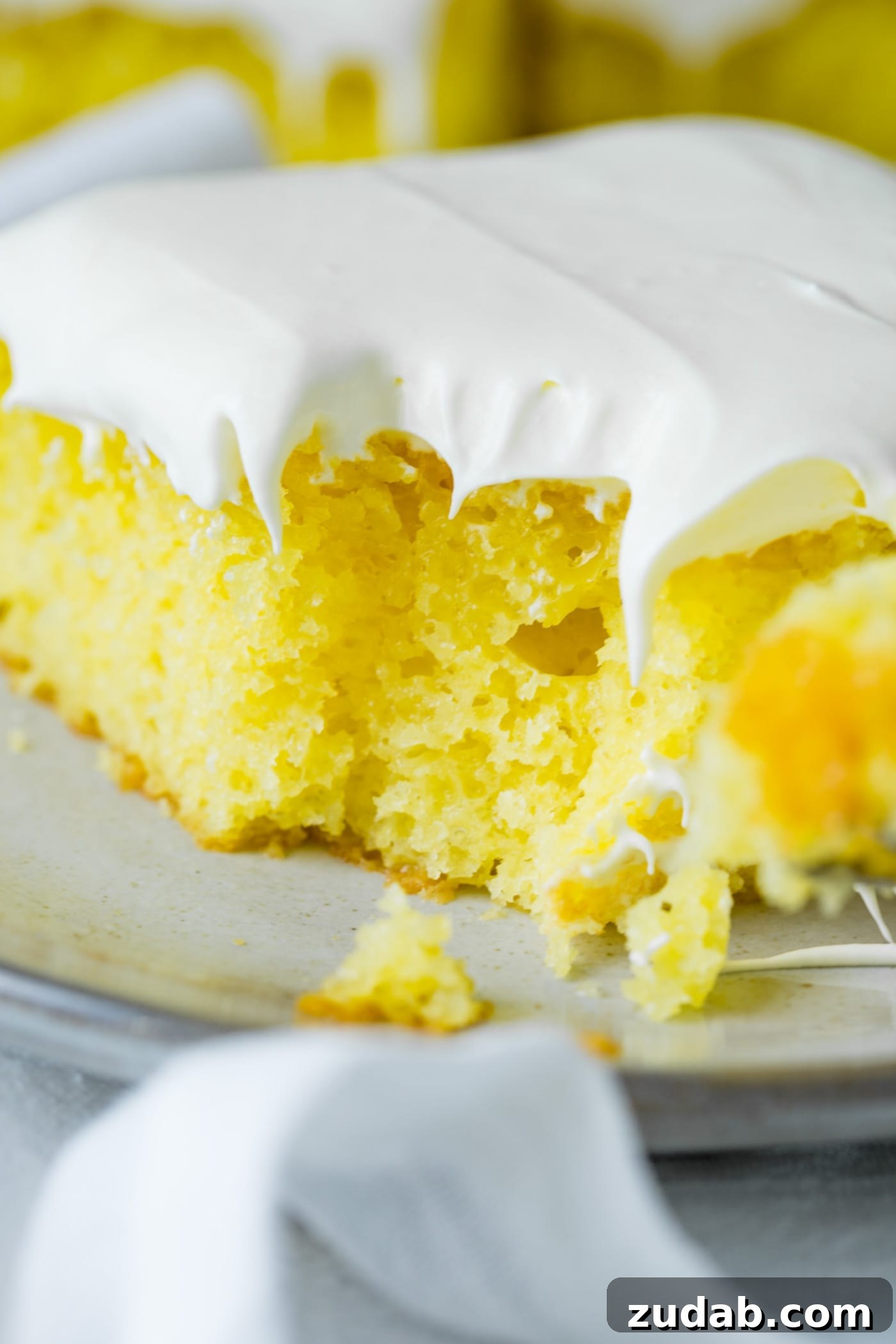
Freezing Your Jello Cake: Extend the Delight
Freezing is an excellent and convenient way to preserve cake for future enjoyment, allowing you to prepare ahead for events or simply save leftovers. Most cakes respond remarkably well to this method, but proper preparation is key to ensuring your cake emerges from the freezer tasting just as fresh and delicious as the day it was baked.
To freeze cake effectively, first ensure it is completely cooled to room temperature. Freezing a warm cake will create condensation, leading to ice crystals and a soggy texture. For individual slices, wrap each piece tightly in plastic wrap, removing as much air as possible, then place them in an airtight freezer bag or a rigid freezer-safe container. For a whole cake, wrap it securely in several layers of plastic wrap, followed by a layer of heavy-duty aluminum foil. This double-layer protection is crucial for preventing freezer burn, which can dry out the cake and alter its flavor, and for protecting it from absorbing any unwanted freezer odors.
You can typically freeze most cakes for a duration of 4-5 months without significant loss of quality. However, for the absolute best flavor and texture, we generally recommend enjoying your frozen cake within 3 months. Beyond this period, while still safe to eat, the quality of the cake’s crumb and flavor may start to diminish slightly.
Jello cakes, with their inherent high moisture content from the special glaze, require a slightly nuanced approach to freezing. While they do freeze well, their unique moistness can lead to more ice crystal formation over extended periods compared to drier cakes. To avoid any potential compromise to their delicate texture and to prevent excessive ice crystallization, it’s best to freeze jello cakes for a shorter duration – ideally, no more than one to two weeks. This ensures that the moist and tender crumb remains perfectly intact after thawing. Always thaw frozen cake slowly in the refrigerator overnight for optimal results, as rapid thawing can affect texture.
Mastering Lemon Prep: Zesting and Juicing Tips
Fresh lemon zest and juice are indispensable ingredients for this Lemon Jello Cake recipe, offering unparalleled brightness, intense flavor, and aromatic depth. Mastering these simple yet impactful techniques will significantly enhance your baking and elevate the overall taste of your dessert.
How to Zest a Lemon
To efficiently zest a lemon and unlock its potent aromatic oils, investing in a high-quality Microplane is highly recommended. This inexpensive yet incredibly effective kitchen tool will quickly become one of your most cherished gadgets for citrus and beyond.
To zest, hold the lemon firmly in one hand and the Microplane in the other. Gently glide the lemon across the sharp blades of the Microplane, applying only light pressure. The Microplane is expertly designed to create shallow, fine cuts, taking only the outermost, brightly colored yellow zest and leaving behind the bitter white pith underneath. Continuously rotate the lemon as you zest, working your way around its entire surface until all the vibrant yellow zest is removed. It is crucial to avoid zesting into the white pith, as this part contains bitter compounds that can impart an unpleasant flavor to your delicate cake and glaze. The finely grated zest releases its aromatic oils beautifully, infusing your recipe with pure lemon essence.
What Is The Easiest Way To Juice a Lemon?
Getting the maximum amount of juice out of your lemons doesn’t have to be a struggle or require expensive equipment. Here’s a simple yet highly effective trick to maximize your yield and make juicing effortless: Before cutting the lemon, place the whole fruit on your kitchen counter and roll it back and forth firmly with the palm of your hand, applying a good amount of pressure. This action expertly breaks down the internal membranes of the lemon, making it significantly easier to squeeze out every last drop of juice.
Once adequately rolled, cut the lemon in half lengthwise with a sharp knife. To prevent pesky seeds from falling into your precious lemon juice and saving you the hassle of fishing them out later, place a small mesh strainer over the bowl or glass you’re using. Squeeze each lemon half directly over the strainer. This simple, two-step process ensures a smooth, pure, and seed-free lemon juice every single time. Many professional bakers swear by this method for its efficiency, minimal waste, and mess-free results, allowing the pure, clean flavor of fresh lemon to shine.
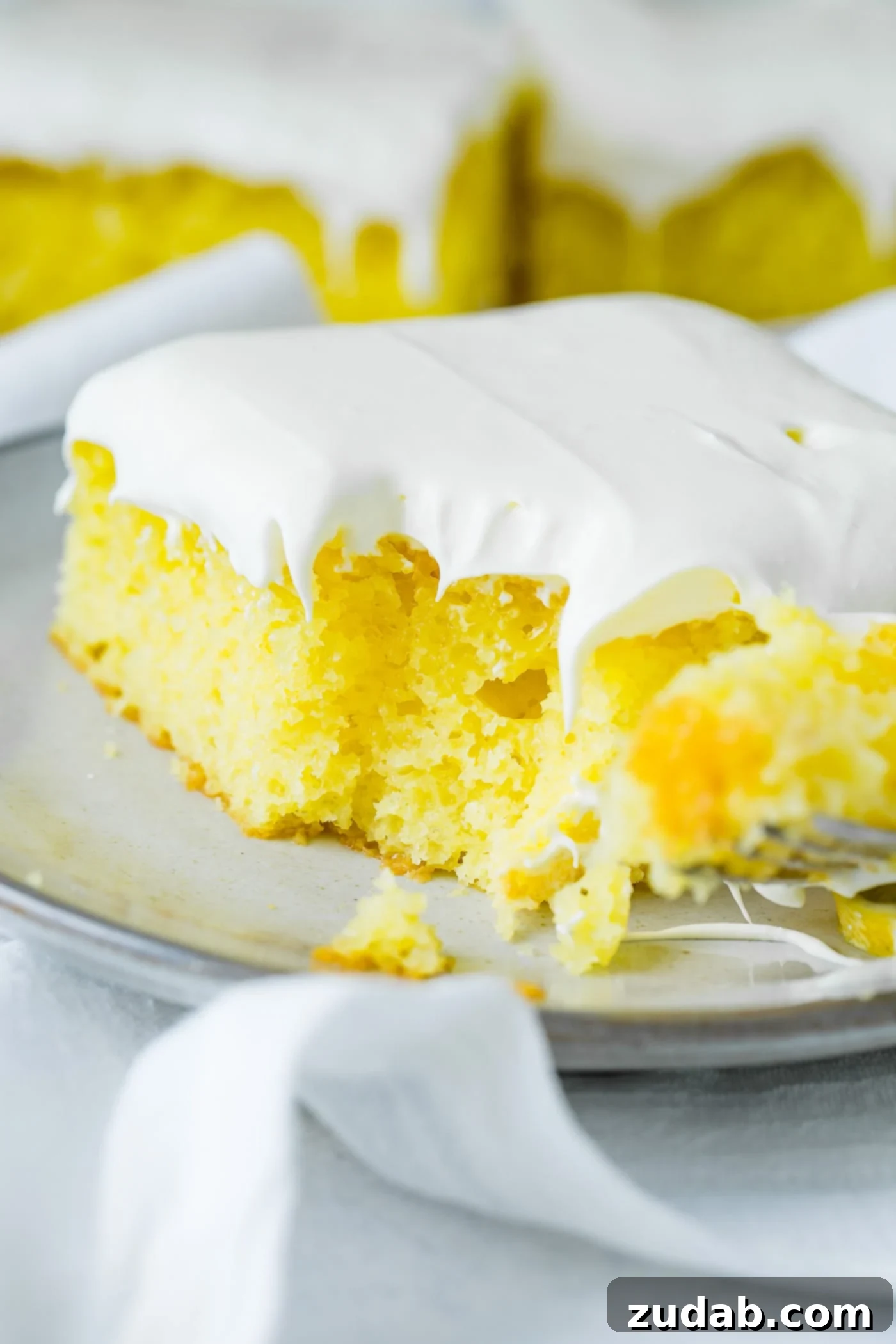
Fresh vs. Bottled Lemon Juice: The Flavor Debate
When it comes to baking, particularly with a star ingredient like lemon that defines the dish, the quality of your ingredients can significantly impact the final flavor profile. This is especially true for lemon juice, where there’s a notable difference between fresh and bottled options.
While bottled lemon juice undeniably offers convenience and a longer shelf life, it often falls short in terms of fresh, vibrant, and complex flavor when compared to juice squeezed directly from ripe lemons. Bottled juice, due to processing and the addition of preservatives, can sometimes have a slightly duller, more concentrated, or even a subtle bitter aftertaste. Its acidity can also be more potent and less nuanced than its fresh counterpart, which can unexpectedly alter the balance of flavors in a delicate recipe.
For this Lemon Jello Cake, where lemon is undoubtedly the hero ingredient contributing both tang and aroma, we strongly recommend using fresh-squeezed lemon juice for the best possible taste experience. The bright, zesty, and naturally aromatic notes from fresh juice are simply incomparable and will truly make your cake sing. However, we understand that sometimes you might find yourself in a genuine pinch and bottled lemon juice is your only option. In such cases, we suggest using slightly less than the recipe calls for, and critically, tasting as you go. This cautious approach helps to prevent an overpowering or slightly off-putting flavor profile in your delicate cake and glaze. Remember, when lemon is at the forefront of your dessert, fresh is almost always best for that authentic, exhilarating citrus burst!
More Delightful Jello Creations
Jello recipes, once a staple of family gatherings, potlucks, and holiday tables, are experiencing a delightful resurgence in popularity! Far from being a simple relic of the past, these versatile and fun desserts offer a refreshing simplicity and a burst of vibrant flavor that’s perfectly suited for modern tastes. Whether you’re rediscovering the joyous wobble of jello from your childhood or exploring its culinary potential for the very first time, there’s a world of vibrant, wonderfully flavorful, and easy-to-make treats waiting to be discovered. Beyond cakes, jello can transform into refreshing salads, creamy parfaits, delightful desserts, and so much more, offering a playful twist to everyday meals and special occasions.
If you’ve enjoyed the bright, zesty flavors and moist texture of this Frosted Lemon Jello Cake, you might love exploring these other fantastic jello-inspired recipes from our cherished collection. Each offers a unique spin on this classic ingredient, promising delicious results:
- Classic Lemon Jello Cake
- Tropical Pineapple Jello Cake
- Refreshing Raspberry Jello Salad
- Zesty Lemon Orange Jello Salad
- Sweet Strawberry Lemonade Jello Cake
- Creamy Strawberries and Cream Jello Cake
- Light and Airy Raspberry Fluff
- Delightful Jello Peach Pie
Lemon Jello Cake Recipe
By Sweet Basil
Prep: 10 mins | Cook: 30 mins | Total: 40 mins
Servings: 18

This lemon jello cake is quick and easy, featuring a light refreshing flavor. The fluffy lemon frosting on top takes this cake to a whole new level of deliciousness.
Ingredients
Cake
- 1 Lemon Cake Mix (standard box mix)
- Zest of 1 Lemon (freshly zested)
- 4 Large Eggs
- 1 1/3 Cup Water
- 2/3 Cup Vegetable Oil
- 1 (3 oz.) box Lemon Jello (dry powder)
Glaze
- Juice of 2 Lemons (freshly squeezed)
- Zest of 1 Lemon (freshly zested)
- 1 1/2 Cups Powdered Sugar
Frosting
- 1 (8 ounce) Container Cool Whip (thawed)
- 1 Container Lemon Frosting (store-bought or homemade lemon buttercream)
Instructions
For The Cake
- Preheat your oven to 350°F (175°C). Prepare a 9×13 inch baking pan by generously spraying it with nonstick cooking spray and then dusting it with flour. Tap the pan to ensure an even coating and discard any excess flour.
- In a large mixing bowl, combine the lemon cake mix, the dry lemon jello powder, lemon zest, large eggs, water, and oil. Beat with an electric mixer on medium speed until all ingredients are just combined and the batter is smooth. Do not overmix.
- Pour the prepared cake batter evenly into the greased and floured 9×13 inch pan.
- Bake for 27-30 minutes, or until a wooden skewer or toothpick inserted into the center of the cake comes out clean. While the cake bakes, prepare the lemon glaze.
- Once the cake is removed from the oven and is still warm, use a two-tined fork or a wooden skewer to prick holes evenly all over the top surface of the cake.
- Immediately pour the prepared lemon glaze evenly over the top of the warm, pricked cake. Allow the cake to cool completely in the pan on a wire rack before proceeding.
- Once the cake has cooled completely to room temperature, top it generously with the fluffy lemon frosting.
For The Glaze
- In a small bowl, whisk together the freshly squeezed lemon juice, fresh lemon zest, and powdered sugar until the mixture is completely smooth and free of any lumps. Set aside until the cake is ready.
For The Frosting
- In a separate bowl, gently fold together the lemon frosting and the thawed Cool Whip using a rubber spatula. Mix until the frosting is light, airy, and evenly combined. Be careful not to overmix, to maintain its fluffy texture.
Recipe Notes
This delightful Lemon Jello Cake will keep for up to 4 days when stored properly. If the cake is unfrosted or only glazed, cover it tightly with plastic wrap and store it at room temperature to prevent it from drying out. If the cake is topped with the fluffy whipped cream frosting, it must be stored in the refrigerator, covered loosely to protect the frosting and maintain its freshness.
Nutrition
Serving: 1 piece, Calories: 251kcal, Carbohydrates: 37g, Protein: 3g, Fat: 11g, Saturated Fat: 2g, Cholesterol: 38mg, Sodium: 233mg, Potassium: 41mg, Fiber: 1g, Sugar: 24g, Vitamin A: 75IU, Calcium: 80mg, Iron: 1mg
Nutrition information is automatically calculated and is intended to be used as an approximation only. Actual nutritional values may vary based on specific ingredients and preparation methods.
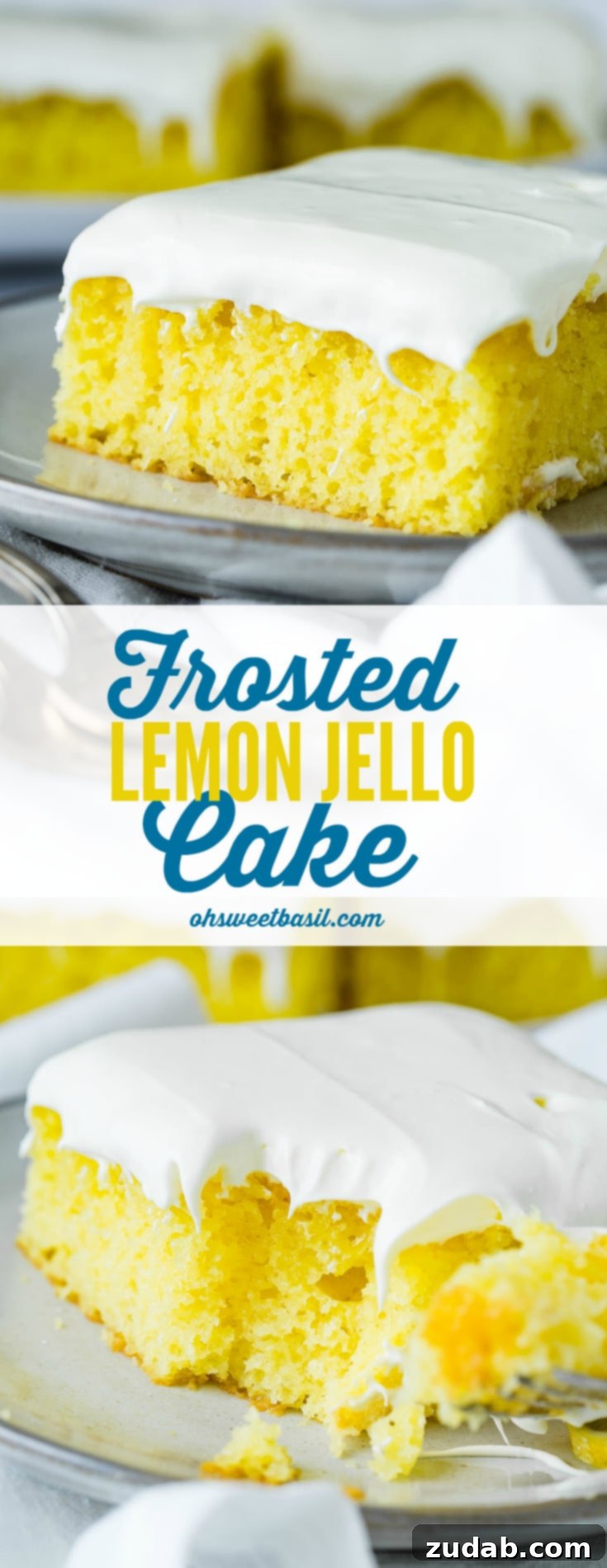
We sincerely hope you enjoy baking and savoring this incredible Frosted Lemon Jello Cake! Its vibrant flavor, exceptionally moist texture, and delightful fluffy frosting make it a truly perfect dessert for any occasion, from casual family dinners to festive celebrations. This cake is sure to bring a burst of sunshine and a smile to everyone’s face. Don’t hesitate to share your thoughts, tips, and wonderful creations in the comments below – we absolutely love hearing from our community of passionate bakers! Happy baking, and may your kitchen always be filled with delicious aromas and joyful moments!