
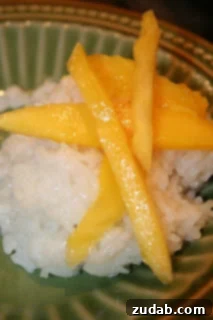
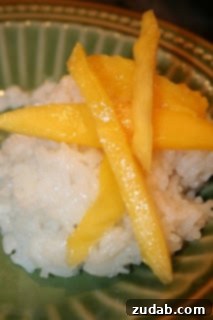
Mango Sticky Rice: An Authentic and Irresistible Thai Dessert
Mango sticky rice, affectionately known as “Khao Niao Mamuang” in Thailand, is a dessert that has captivated taste buds worldwide. While the idea of sweet rice for dessert might initially seem unconventional to some, this particular delicacy possesses a magical quality that wins over even the most discerning palates. My personal experience with sweet rice wasn’t always enthusiastic, but after trying this exquisite mango sticky rice, I was genuinely impressed. Its unique blend of flavors and textures is truly remarkable, and the overwhelming positive reactions from everyone else who tasted it suggest you’ll find it equally delightful.
This dessert offers a refreshing and elegant alternative to the often heavy, chocolate-laden treats that typically conclude a meal. In the realm of Asian cuisine, where dishes often feature a delicate balance of spices and fresh ingredients, a rich chocolate dessert can sometimes overpower the beautiful, nuanced flavors. Mango sticky rice, however, provides a perfect, light, and harmoniously balanced finish to any great meal, leaving a sweet and satisfying impression without being overly indulgent. Despite its sophisticated taste, this dessert recipe is surprisingly straightforward to prepare, making it accessible for home cooks looking to explore authentic Thai flavors.
Why Mango Sticky Rice is a Must-Try Dessert
Mango sticky rice stands out as a unique culinary creation due to its brilliant combination of simple yet potent ingredients. The star of the show is the perfectly ripe mango, offering a burst of tropical sweetness and a juicy, tender texture. This is complemented by the warm, tender, and slightly chewy sticky rice, which is infused with a rich, creamy, and subtly savory coconut milk sauce. Often, a sprinkle of toasted sesame seeds or crispy mung beans adds an extra layer of texture and a nutty, aromatic finish, elevating this dessert to a truly exceptional sensory experience.
Its widespread appeal lies in its refreshing nature, particularly during warm weather, and its impeccable balance. The sweetness from the mango and sugar in the coconut milk is perfectly offset by the slight saltiness, creating a complex flavor profile that is both comforting and exotic. This dessert isn’t just a treat; it’s a testament to the artistry of Thai cuisine, demonstrating how a few quality ingredients can come together to create something truly unforgettable.
Selecting the Perfect Mango: A Guide to Ripeness
The secret to an exceptional mango sticky rice lies in the mango itself. Choosing a perfectly ripe mango is crucial for achieving the desired sweetness, juiciness, and creamy texture that beautifully complements the sticky rice. An unripe mango will be tart and fibrous, while an overripe one might be mushy and fermented. Here’s how to pick the best mangoes for your dessert:
The most reliable indicator of ripeness is touch. Gently squeeze the mango; it should give slightly under pressure, similar to a ripe avocado or peach. Avoid mangoes that feel hard and firm, as they are not yet ready to eat. Conversely, steer clear of those that are excessively soft or bruised, as they are likely overripe. While the color of a mango can offer a hint, it’s not always the best guide. Some varieties remain green even when perfectly ripe, while others develop vibrant shades of red, orange, or yellow. A fragrant, fruity aroma at the stem end of the mango is another excellent sign of ripeness. For this recipe, aim for mangoes that are sweet-smelling, vibrant in color (appropriate for their variety), and have that slight give when pressed, ensuring your dessert has the best possible flavor.
The Health Benefits of Mangoes: More Than Just a Sweet Treat
Mangoes are not only delicious but also incredibly nutritious, packing a significant punch of vitamins, minerals, and antioxidants. They are particularly renowned for their high content of Vitamin C, a powerful antioxidant that plays a vital role in boosting the immune system, promoting healthy skin, and aiding in collagen production. A single mango can provide a substantial portion of your daily recommended Vitamin C intake.
Furthermore, mangoes are an excellent source of dietary fiber and pectin. Fiber is essential for maintaining a healthy digestive system, facilitating regular bowel movements, and supporting a diverse gut microbiome. Pectin, a type of soluble fiber, is especially beneficial for its ability to help regulate cholesterol levels, potentially reducing the risk of heart disease. Mangoes also contain Vitamin A, crucial for good vision, and various polyphenols that act as antioxidants, combating oxidative stress in the body. So, indulging in mango sticky rice isn’t just a delightful culinary experience; it’s also a way to incorporate a nutrient-rich fruit into your diet, benefiting your overall health and well-being.
Understanding Sticky Rice: The Foundation of Thai Sweet Rice
Sticky rice, also widely known as glutinous rice or sweet rice, is a unique grain that sets itself apart from common rice varieties like jasmine or basmati. Its name, “glutinous,” refers to its sticky, glue-like texture when cooked, not to the presence of gluten (it is naturally gluten-free). This distinct characteristic is attributed to its high amylopectin content and low amylose content, which gives it its signature chewy and translucent quality.
Unlike other rice types that are typically boiled, sticky rice must be steamed. Boiling glutinous rice will result in a soggy, undesirable consistency. The steaming process allows the rice grains to absorb moisture gradually and evenly, preserving their integrity and ensuring they achieve that perfect, firm-yet-tender stickiness. When you’re at the grocery store, look for long-grain Thai sticky rice, often labeled as “glutinous rice” or “sweet rice,” usually found in Asian specialty stores or the international food aisle of larger supermarkets. Properly soaking and steaming this specific type of rice is the cornerstone of an authentic and delicious mango sticky rice, guaranteeing the ideal texture that makes this dessert so beloved.
Authentic Mango Sticky Rice Recipe
This recipe brings the vibrant flavors of Thailand directly to your kitchen, offering a delightful and relatively simple method to create an authentic mango sticky rice experience. It’s a dessert that perfectly balances sweet, creamy, and tropical notes.
Mango Sticky Rice
3 hours 50 minutes
50 minutes
4 hours 40 minutes
6
Print Recipe
This mango sticky rice recipe is truly perfect and delivers an authentic taste of Thailand. It’s a delightful and satisfying way to conclude any fantastic meal.
Ingredients
For the Sticky Rice:
- 1 1/2 Cups Long-grain Thai Sticky Rice
For the Sweet Coconut Milk Sauce:
- 2 Cups Unsweetened Coconut Milk
- 1 Cup Granulated Sugar
- 2 teaspoons Kosher Salt
For Serving:
- 6 Ripe Mangoes, peeled and sliced
- Optional: Toasted sesame seeds or crispy mung beans for garnish
Instructions
-
Prepare the Rice: Begin by soaking the long-grain Thai sticky rice in cold water for a minimum of 3 hours. For best results and the perfect sticky texture, soaking it overnight (up to 8 hours) is highly recommended. This step is crucial for the rice to cook evenly and absorb moisture properly.1 1/2 Cups Sticky Rice
-
Drain the Rice: After soaking, thoroughly drain the rice, ensuring all excess water is removed. Transfer the drained rice to a steamer basket or the perforated insert of a rice cooker.
-
Set Up the Steamer: Place the steamer basket over a saucepan containing several inches of water. If you’re using a dedicated multi-tier steamer, fill its base with the appropriate amount of water as per the manufacturer’s instructions.
-
Steam the Rice: Bring the water in the saucepan to a vigorous boil over medium-high heat. Once boiling, cover the steamer and reduce the heat slightly to maintain a steady, consistent flow of steam. Steam the rice for 30-45 minutes, or until the grains have swollen, appear translucent and glossy, and are perfectly sticky when gently pressed. Be sure to check the water level periodically to prevent the pan from boiling dry.
-
Prepare the Coconut Sauce: While the rice is steaming, combine the unsweetened coconut milk, granulated sugar, and kosher salt in a medium saucepan. Place the saucepan over medium heat.2 Cups Coconut Milk, 1 Cup Granulated Sugar, 2 teaspoons Kosher Salt
-
Dissolve Ingredients: Gently cook and stir the coconut milk mixture for 3-4 minutes, or until both the sugar and salt are completely dissolved. It’s important not to bring this mixture to a rolling boil. Remove the saucepan from the heat as soon as the solids are dissolved.
-
Combine Rice and Sauce: As soon as the sticky rice is cooked and removed from the steamer, immediately transfer it to a large mixing bowl. Pour the warm sweetened coconut milk mixture over the hot rice. Stir very gently and thoroughly to ensure every grain of rice is coated with the fragrant sauce.
-
Allow to Absorb: Cover the bowl tightly with a lid or plastic wrap and let it rest undisturbed for at least 30 minutes, and up to 3 hours. This critical resting period allows the rice to fully absorb the coconut milk, developing its characteristic rich flavor and tender-sticky texture.
-
Prepare Mangoes: While the rice is absorbing the sauce, peel your ripe mangoes and carefully cut them into attractive slices or chunks, preparing them for serving.6 Ripe Mangoes
-
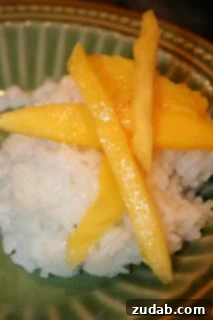
Serve: To serve, scoop generous portions of the warm, fragrant sticky rice onto individual plates. Arrange the fresh, vibrant mango slices alongside the rice. For an extra touch, you can drizzle any remaining coconut sauce from the rice bowl over the mangoes and rice, or prepare a separate, thicker coconut cream topping. Garnish with a sprinkle of toasted sesame seeds or crispy mung beans for an authentic finish and added textural contrast. Serve the mango sticky rice at room temperature for optimal enjoyment.
Recipe Notes and Storage
For best flavor and texture, mango sticky rice is ideally consumed fresh. However, any leftovers can be stored in an airtight container in the refrigerator for up to 2-3 days. To reheat, gently warm in a microwave or steamer, adding a small splash of fresh coconut milk if the rice appears a bit dry, or simply enjoy it chilled for a different experience.
Nutrition Information (Approximate per serving)
Serving Size: 0.5 cup
- Calories: 570 kcal
- Carbohydrates: 103 g
- Protein: 7 g
- Fat: 17 g
- Saturated Fat: 15 g
- Sodium: 790 mg
- Potassium: 567 mg
- Fiber: 4 g
- Sugar: 62 g
- Vitamin A: 2240 IU
- Vitamin C: 76 mg
- Calcium: 49 mg
- Iron: 3 mg
Please note: Nutrition information is automatically calculated and should be considered an approximation. Actual values may vary based on specific brands of ingredients used and preparation methods.
Enhancing Your Experience: Serving Suggestions and Variations
While the classic mango sticky rice is undeniably perfect in its simplicity, there are wonderful ways to customize and elevate your dessert. For those who enjoy an even richer flavor, a final drizzle of a slightly thicker, unsweetened coconut cream over the assembled dish can be truly indulgent. This cream can be prepared by gently simmering a small amount of coconut milk with a pinch of salt until slightly reduced, or by whisking in a tiny bit of cornstarch to thicken it.
Garnishes not only add visual appeal but also contribute to the overall sensory experience. A sprinkle of lightly toasted sesame seeds provides a subtle nutty flavor and a satisfying crunch. For a more authentic Thai touch, crispy fried mung beans (known as “thua thong” in Thai) are a traditional accompaniment, offering a unique savory contrast that perfectly balances the sweetness of the mango and rice. For a truly luxurious treat, consider serving a small scoop of coconut ice cream alongside your mango sticky rice. Don’t be afraid to experiment with different varieties of mangoes; each offers a unique sweetness and subtle flavor profile that can bring a new dimension to this beloved dessert.
Expert Tips for Achieving Perfect Sticky Rice
The foundation of an outstanding mango sticky rice is, of course, the sticky rice itself. Achieving the ideal texture—tender, chewy, and perfectly glutinous—requires a bit of attention to detail. Here are some expert tips to ensure your sticky rice is flawless every time:
- The Importance of Soaking: Never skip the soaking step. This is perhaps the most critical part of preparing sticky rice. Soaking allows the individual grains to absorb water, which is essential for them to cook evenly and achieve their characteristic stickiness. Ideally, soak your rice for 6-8 hours, or even overnight. A minimum of 3 hours is acceptable if you’re short on time, but longer is better.
- Steaming is Key: Unlike other rice varieties, sticky rice should always be steamed, not boiled. Boiling will lead to a soggy, undesirable consistency. Use a traditional bamboo steamer or a metal steamer basket. Ensure there’s sufficient water in the pot below the steamer to generate continuous steam throughout the cooking process.
- Avoid Overcooking: Keep a close eye on your sticky rice during steaming. While it needs to be tender, overcooking can turn it mushy. Begin checking for doneness after about 30 minutes. The grains should be soft but still retain a pleasant chewiness.
- Mix While Hot: As soon as the rice is steamed, transfer it immediately to your mixing bowl and pour the warm coconut milk mixture over it. The heat from the freshly cooked rice helps it to efficiently absorb the sweet, creamy liquid, ensuring maximum flavor infusion.
- The Essential Resting Period: After mixing, cover the rice tightly and let it rest. This period, lasting anywhere from 30 minutes to 3 hours, is crucial. It allows the rice to fully absorb the coconut milk, swell, and develop its signature rich flavor and perfectly cohesive, sticky texture. Patience here will be rewarded!
The Cultural Significance and Tradition of Khao Niao Mamuang
Mango sticky rice is far more than just a dessert in Thailand; it is a seasonal icon deeply woven into the country’s culinary fabric and cultural traditions. It typically graces tables and street food stalls during the peak mango season, usually from April to May, when mangoes are at their sweetest and most abundant. This dessert beautifully embodies the essence of Thai cuisine, showcasing its clever use of fresh, local ingredients – the vibrant tropical fruit, the rich creaminess of coconut, and the unique texture of glutinous rice. Its ubiquity, from humble street vendors to elegant restaurants, speaks volumes about its widespread love and enduring appeal.
Serving mango sticky rice is often an act of hospitality and a celebration of the bountiful harvest. It represents a simple yet profound joy in Thai culture, a perfect blend of sweet and savory that has been perfected over generations. Sharing this dessert is not just about enjoying a delicious treat; it’s about experiencing a piece of Thai heritage and the warmth of its culinary traditions.
Final Thoughts: A Dessert That Truly Delights the Senses
Whether you are a newcomer to the diverse world of Asian desserts or a seasoned connoisseur, this mango sticky rice recipe promises to be a delightful culinary adventure. Its apparent simplicity conceals a profound depth of flavor that is both comforting and exotically appealing. It serves as an impeccable conclusion to any meal, providing a refreshing, perfectly sweet, and profoundly satisfying experience that will undoubtedly leave you yearning for more. I encourage you to embark on this culinary journey, try this recipe, and discover for yourself why mango sticky rice continues to be a timeless and universally adored favorite.