
The Ultimate Guide to Cookie Fats: Butter vs. Substitutes for Perfect Chocolate Chip Cookies
For many home bakers, the chocolate chip cookie is the epitome of comfort and a true baking staple. Yet, one of the most frequently asked questions we encounter revolves around ingredient substitutions, particularly when it comes to fats. What happens when you swap out butter for margarine, shortening, or even coconut oil in your favorite cookie recipe? The type of fat you choose can dramatically alter the final outcome, impacting everything from texture and spread to flavor and appearance. To demystify these changes, we’ve conducted an in-depth comparison, providing a comprehensive guide to help you achieve your ideal cookie.
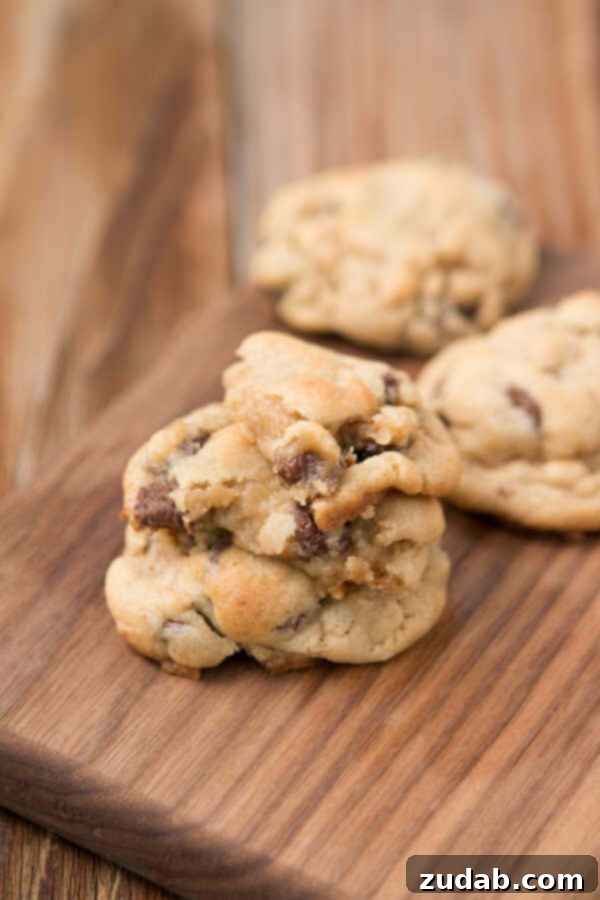
Our goal is to equip you with the knowledge to make informed decisions in your kitchen, ensuring your cookies turn out exactly as you envision. While the image above showcases cookies made with classic butter, our detailed explanations below will illuminate the subtle and sometimes surprising differences that various fats introduce. Understanding these nuances is key to mastering the art of the perfect chocolate chip cookie, or any baked good, for that matter.
Why Fat is Crucial in Your Cookie Recipe
Fat isn’t just an ingredient; it’s a foundational component that dictates much of a cookie’s character. Its role is multifaceted, contributing to moisture, tenderness, spread, chewiness, and, perhaps most importantly, flavor. Different fats possess distinct properties – varying melting points, water content, and molecular structures – all of which influence the cookie dough’s behavior during baking and the texture of the finished product. A fat with a lower melting point, for instance, will spread more quickly, resulting in a flatter, crispier cookie, while one with a higher melting point tends to yield a thicker, chewier result. The presence or absence of water and milk solids also plays a significant role in how the cookie browns and develops flavor.
When you cream fat with sugar, you’re not just mixing; you’re incorporating air, which is vital for leavening and creating a tender crumb. The fat coats the flour proteins, inhibiting gluten development, which prevents cookies from becoming tough. Moreover, fat carries flavor compounds, enhancing the richness and depth of your cookies. It also facilitates browning, contributing to the appealing golden-brown edges that are so characteristic of a well-baked cookie. Our experiment was designed to isolate the impact of different fats, using the exact same base recipe for all batches, to highlight these critical distinctions.
Our Comparative Cookie Fat Experiment: A Visual and Textural Analysis
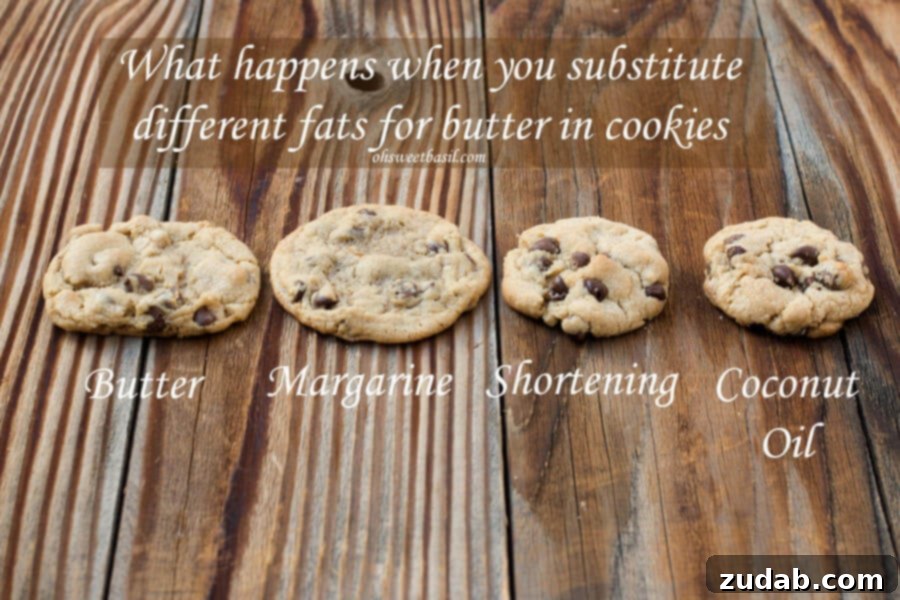
The visual evidence from our side-by-side baking experiment is striking. All the cookies pictured above were made using the exact same chocolate chip cookie recipe, with the only variable being the type of fat. From left to right, we tested softened butter, margarine, shortening, and good quality coconut oil. The differences in their appearance — their height, spread, and browning — are immediately apparent. However, the true impact of fat substitution extends beyond what meets the eye; it profoundly affects the internal texture, crumb structure, and overall eating experience. Let’s delve into the specific characteristics each fat imparted to our test cookies.
Butter: The Gold Standard for Classic Cookies
In our tests, butter consistently produced what we consider the ideal chocolate chip cookie. The butter cookies were delightfully soft and chewy in the middle, with a rich, melt-in-your-mouth quality, and wonderfully crisp, golden-brown edges. Crucially, they were not greasy, a common pitfall with some fat alternatives. Butter’s unique composition, consisting of about 80% butterfat and 20% water and milk solids, is responsible for these desirable characteristics. The milk solids contribute to the coveted browning and complex flavor development through the Maillard reaction, while the water content helps create steam during baking, contributing to a slightly lighter texture than pure fat alternatives.
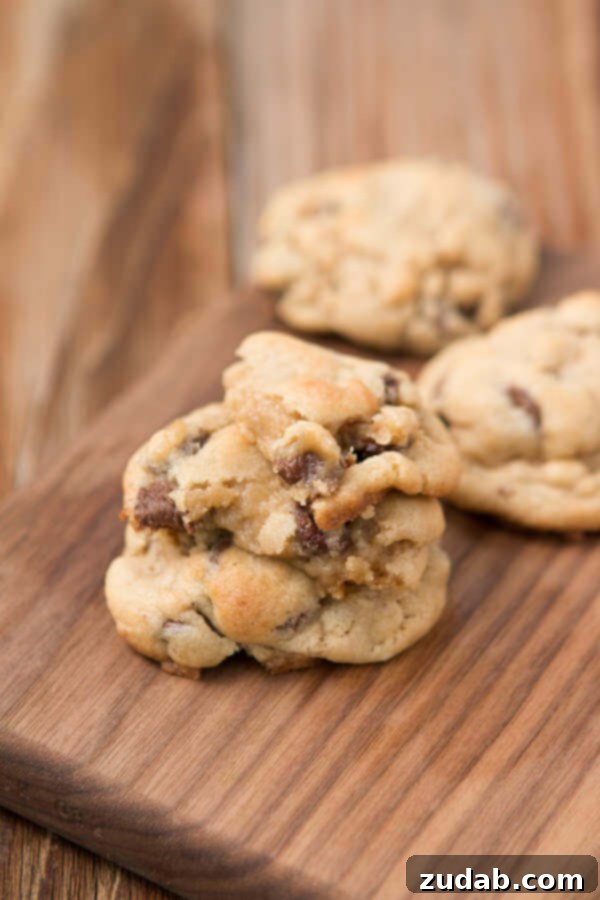
An interesting observation from our experiment highlighted the impact of dough temperature and preparation. You might notice a flatter butter cookie in the horizontal photo compared to the puffy cookie in the very first shot. This variation wasn’t due to different fats, but rather a technique: the puffy cookie was made from dough that had been frozen and then baked. Chilling or freezing cookie dough allows the butter to re-solidify, which slows down the spread of the cookie during baking, resulting in a thicker, chewier cookie with a more pronounced dome. It also gives the flavors more time to meld. For us, freezing the dough with butter is the preferred method for achieving superior flavor, texture, and a consistently beautiful appearance, solidifying butter’s place as our top choice for the classic chocolate chip cookie.
Margarine: The Compromise Candidate
When we substituted butter with margarine, the results were distinct. The flavor of the margarine cookie wasn’t inherently bad, but it lacked the rich, nuanced depth that butter provides. Texturally, the cookies were notably flatter and quickly developed a crispier, almost brittle texture. This outcome is largely attributable to margarine’s composition. Many margarines, especially those designed as spreadable alternatives, have a higher water content and lower fat percentage (sometimes as low as 60-70% fat) compared to butter. This increased water content evaporates more rapidly during baking, causing the cookie to spread more quickly and broadly before it sets. The absence of milk solids also means less browning and a different flavor profile.
While some margarines are formulated to mimic butter’s baking properties (often labeled “baking sticks”), they rarely achieve the same level of performance. If using margarine, opting for a stick variety with an 80% fat content will yield better results than a softer tub margarine. However, bakers should still anticipate a noticeable difference in both texture and flavor, leaning towards a crisper cookie with a less complex taste profile than its butter-based counterpart. Margarine can be a viable option for those avoiding dairy or looking for a more economical alternative, but be prepared for a departure from the traditional chewy-in-the-middle butter cookie.
Shortening: The Dry, Tall Imposter
The cookies made with shortening presented a deceptive appearance. They achieved a nice height, appearing thick and substantial. However, this visual appeal was quickly overshadowed by a profoundly disappointing eating experience. In our assessment, this was “definitely not one we would ever eat.” The cookie was remarkably dry, lacking any desirable moisture or tenderness. Shortening, which is typically 100% hydrogenated vegetable oil, contains no water or milk solids. This pure fat composition has a significantly higher melting point than butter, meaning it melts much slower in the oven. This slow melting process helps the cookie maintain its structure, preventing excessive spread and resulting in a taller, more cake-like texture.
While shortening excels in applications where flakiness (like pie crusts) or a lack of spread (like some frostings) is desired, it falls short in the cookie arena, particularly for a chocolate chip cookie. Its neutral flavor also means it contributes nothing to the cookie’s taste, often leaving it bland. To make a shortening-based cookie palatable, one would undoubtedly need to introduce additional moisture to the recipe, perhaps through extra eggs, milk, or a different balance of ingredients, to counteract its inherent dryness. For a classic, moist, and chewy chocolate chip cookie, shortening is a clear miss.
Coconut Oil: The Aromatic Tenderizer
Our experiment with coconut oil yielded interesting, if not exactly classic, results. These cookies were actually quite tender, boasting a pleasant crumb. However, the most significant characteristic was the unmistakable presence of coconut flavor. While some might enjoy this tropical twist, in our opinion, it prevented the cookie from being a “classic chocolate chip cookie.” The distinct coconut aroma and taste tend to dominate, altering the expected flavor profile. Like shortening, coconut oil is solid at room temperature but has a relatively low melting point, similar to butter. This can contribute to a good spread and a tender texture.
Another drawback we observed was that the coconut oil cookies tended to dry out faster than the butter cookies. This might be attributed to differences in how coconut oil interacts with other ingredients over time compared to butter. When using coconut oil, consider whether you’re opting for virgin (unrefined) coconut oil, which has a strong coconut flavor, or refined coconut oil, which is more neutral. For a chocolate chip cookie, if you’re aiming for a vegan option without the prominent coconut taste, refined coconut oil might be a better choice, or a blend with other neutral-flavored vegan fats. Ultimately, while it offers a unique texture, the strong flavor makes it a niche choice for those who specifically seek a coconut-infused cookie rather than a traditional one.
Choosing the Right Fat for Your Cookie: A Baker’s Guide
The journey through different fats highlights that there’s no single “best” fat; rather, there’s the best fat for your desired outcome. If your heart is set on the quintessential chocolate chip cookie – one that is soft and chewy in the center, with crispy, golden edges, and a rich, buttery flavor – then butter remains the undisputed champion. Its unique composition delivers a depth of flavor and a textural complexity that other fats struggle to replicate. The ability to chill or freeze butter-based dough further enhances its superiority, allowing for precise control over spread and a more developed flavor profile.
However, understanding the properties of other fats empowers you to adapt recipes or experiment with different cookie styles. Margarine can be a suitable substitute if you prioritize a crisper cookie or have dietary restrictions, but be mindful of its higher water content and potential impact on flavor. Shortening is best reserved for cookies where minimal spread and a cakier, often drier, texture are desired, or for specific applications like flaky pastries where its properties truly shine. Coconut oil offers a tender crumb and is an excellent vegan alternative, but its strong flavor necessitates a willingness to embrace a tropical twist. For bakers looking to achieve specific textures, such as an extra-chewy cookie or a perfectly crisp ginger snap, tailoring your fat choice can be a game-changer.
Beyond Fat: Essential Tips for Perfect Cookies Every Time
While fat plays a starring role, achieving cookie perfection involves a symphony of factors. Here are a few additional tips to elevate your baking:
- Temperature of Ingredients: Always use softened butter (not melted!) and room-temperature eggs. This allows for proper creaming with sugar, incorporating essential air for a lighter, more tender cookie.
- Chill Your Dough: As our experiment showed, chilling cookie dough for at least 30 minutes (or even overnight) significantly improves texture and flavor. It allows the fat to re-solidify, reducing spread and concentrating flavors.
- Don’t Overmix: Once you add the flour, mix only until just combined. Overmixing develops gluten, leading to tough, dense cookies.
- Baking Temperature and Time: An oven thermometer is your best friend for ensuring accurate temperatures. Bake until the edges are golden brown but the centers still look slightly soft; they will continue to set as they cool.
- Quality Ingredients: High-quality butter, fresh eggs, and good chocolate chips will always make a noticeable difference in the final taste of your cookies.
Embrace the Science of Baking
Ultimately, the world of baking is a fascinating blend of art and science. By understanding how different fats interact within a cookie recipe, you gain invaluable insight into controlling the final product. While our hearts (and taste buds) lean heavily towards butter for the quintessential chocolate chip cookie, knowing the characteristics of margarine, shortening, and coconut oil empowers you to experiment thoughtfully. Whether you’re aiming for that perfectly chewy center, a crisp edge, or a specific flavor profile, your choice of fat is a powerful tool in your baking arsenal. So go forth, bake with confidence, and enjoy the delicious journey of cookie creation!