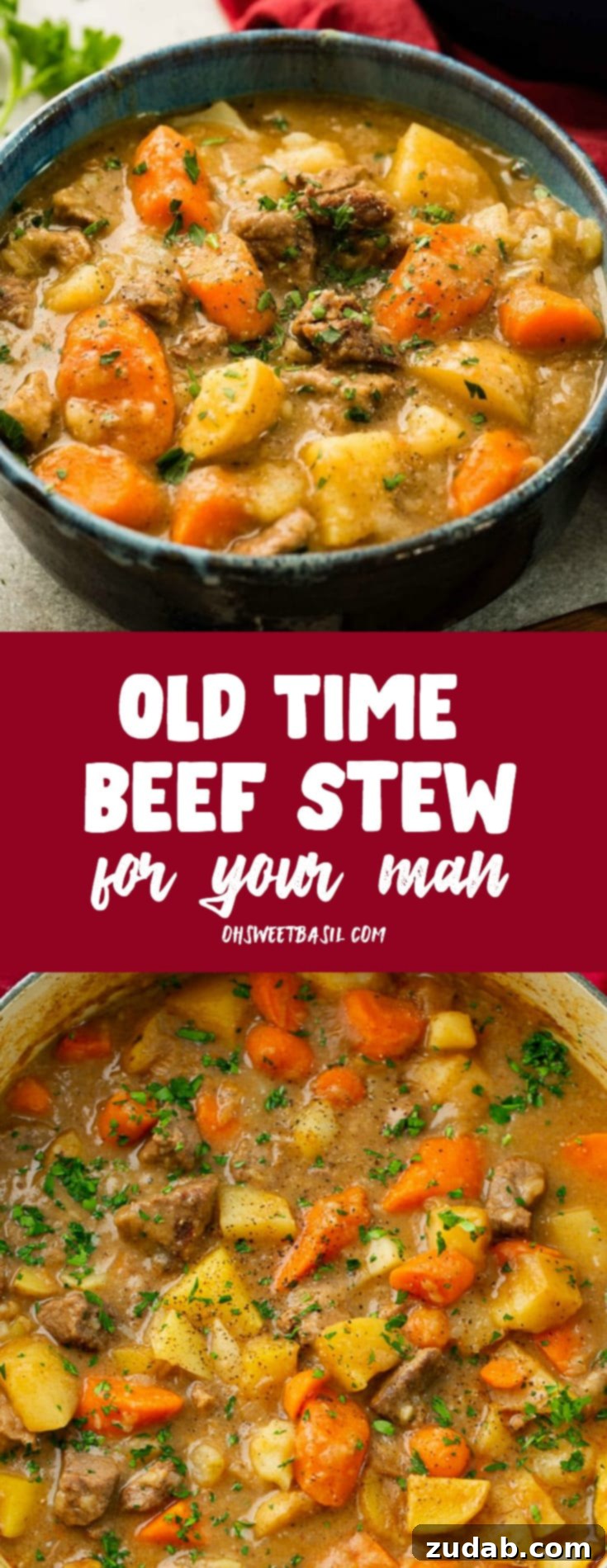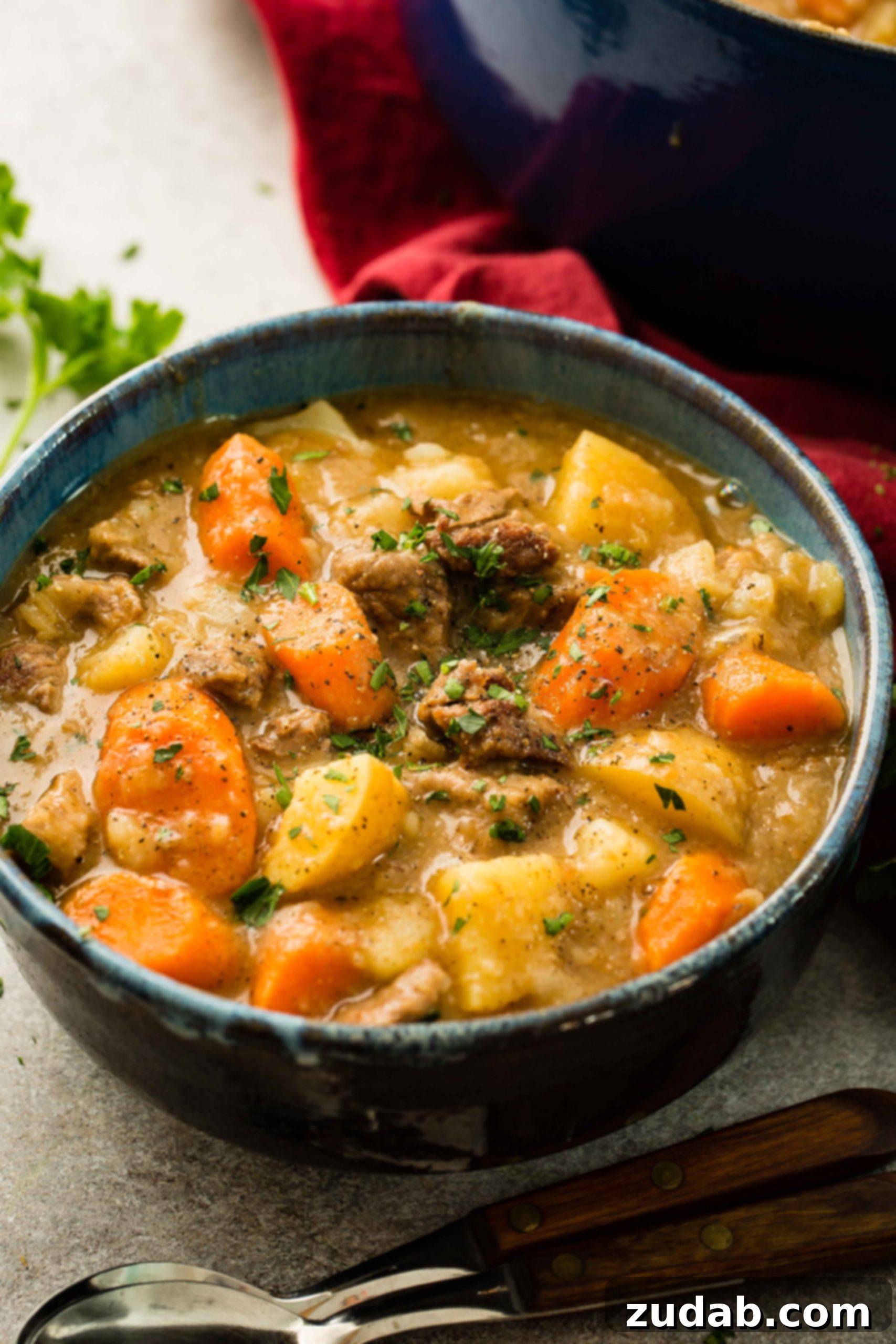
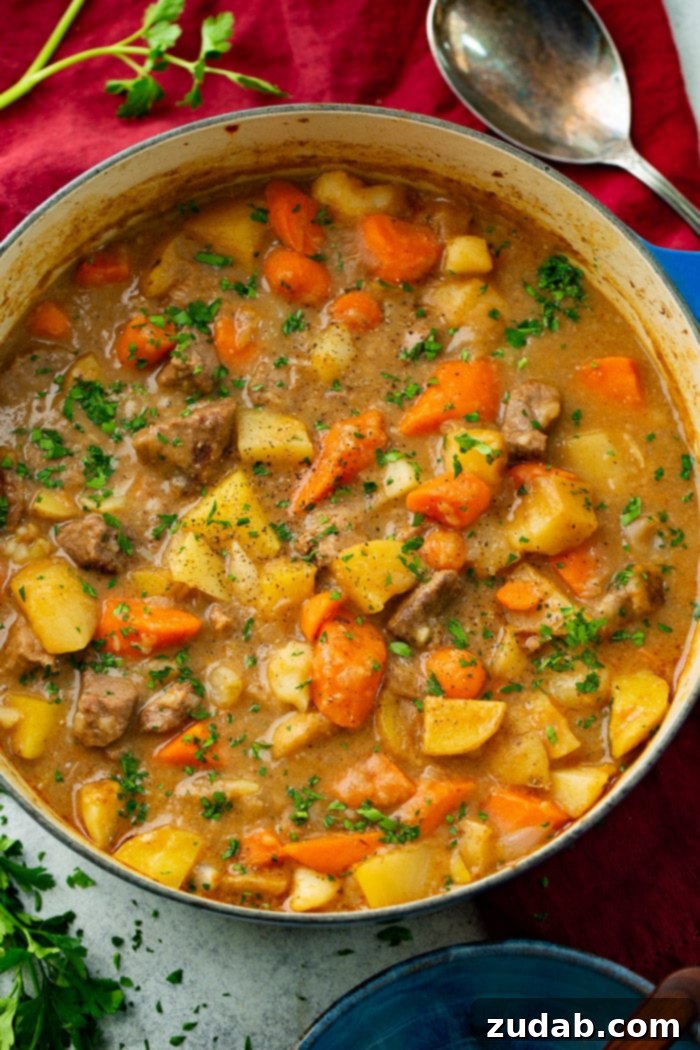
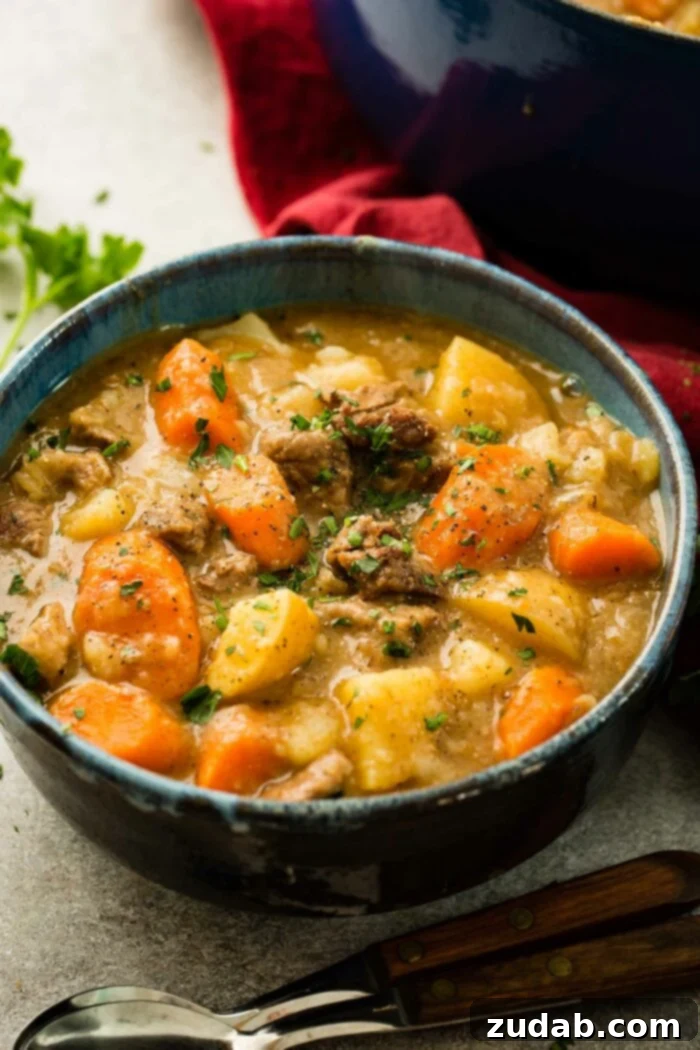
There’s something inherently soul-satisfying about a classic beef stew, a dish that transcends seasons and brings warmth to any table. This isn’t just any beef stew; it’s a timeless recipe that has been perfected over years, offering a rich, comforting experience that I find myself craving throughout the cold winter months, for laid-back Sunday dinners in the summer, and frankly, on pretty much any other day of the year. When beef stew is prepared correctly, it doesn’t just fill your stomach; it truly makes people happy, and this particular recipe consistently hits all the right notes for that perfect, heartwarming stew experience.
I often chuckle when I see the original title for this recipe: “Old Time Beef Stew for Your Man.” While it might have been an essential descriptor in its era, let me assure you, you absolutely do not need to be a man to fall head over heels for this incredible dish. It stands out as one of the finest stew recipes I’ve ever had the pleasure of tasting, a true culinary gem passed down through generations. Its origins trace back to a dear friend, Kerri, who not only introduced us to this specific rendition but also shared a delightfully old-fashioned cookbook from a bygone era, aptly titled “Meals Men Like.” Yes, that’s a real cookbook, folks, a testament to the enduring appeal of hearty, wholesome meals.
This recipe has truly stood the test of time, proving its worth with every tender, succulent bite. The beef in this stew reaches a state of absolute perfection, quite literally falling apart as you savor each mouthful. Achieving this melt-in-your-mouth tenderness is, for me, the single most critical element of an outstanding beef stew. I cannot emphasize enough how much I dislike when stew meat turns out chewy and tough, requiring excessive effort to bite through. That experience is simply not appetizing and detracts entirely from the enjoyment of a good stew. This recipe guarantees a consistently tender outcome, making every spoonful a pure delight.
While the process of crafting a truly magnificent beef stew isn’t overly labor-intensive, it certainly requires a generous dose of patience and what we affectionately call “TLC” – tender loving care. This isn’t a meal you can whip up in 30 minutes. Instead, it demands ample time to gently simmer on the stove, allowing the beef to slowly tenderize and all the individual flavors to meld together into a harmonious, rich broth. If your schedule is tight and you’re seeking a quick-fix dinner, this recipe might be best saved for a day when you have a bit more time to spare. For those busier moments, you might consider whipping up our Instant Pot Taco Soup for a speedy option, or perhaps a hearty dish you can prepare in the morning and let cook throughout the day, like our comforting Slow Cooker Potato Broccoli Corn Chowder with Bacon.
Mastering the Beef: The Key to a Flawless Stew
The journey to achieving truly tender, fall-apart beef in your stew begins long before you even start cooking: it’s all about selecting the correct cut of meat. For this particular recipe, beef chuck—more specifically, a chuck roast—is absolutely essential. This cut, taken from the shoulder of the cow, is known for its rich marbling and abundant connective tissue. While initially tough, these characteristics make chuck roast ideal for slow cooking methods. As it simmers gently over an extended period, the tough collagen in the connective tissues slowly breaks down and transforms into gelatin, infusing the stew with incredible richness and body, and rendering the meat unbelievably tender.
Once you’ve secured the perfect chuck roast, the next crucial step is browning the meat. This isn’t merely about cooking the beef; it’s about unlocking a deep, complex flavor profile through the Maillard reaction. This chemical process, which occurs when amino acids and reducing sugars react at high temperatures, creates hundreds of new flavor compounds and gives the beef its signature rich, dark color and savory aroma. As the old cookbook wisely notes, “it’s the browning that gives the stew the rich color and flavor men like” – and everyone else too! To ensure each piece of beef develops a beautiful, even sear, it’s vital to brown the chuck chunks in batches. Avoid overcrowding your pot, as this will lower the temperature and steam the meat instead of browning it. After browning, remove the meat to a plate, but don’t clean the pan! Those wonderful little brown bits that cling to the bottom of your pot – often called “fond” – are pure flavor gold. They will be deglazed later, becoming an integral part of your stew’s incredibly savory foundation.
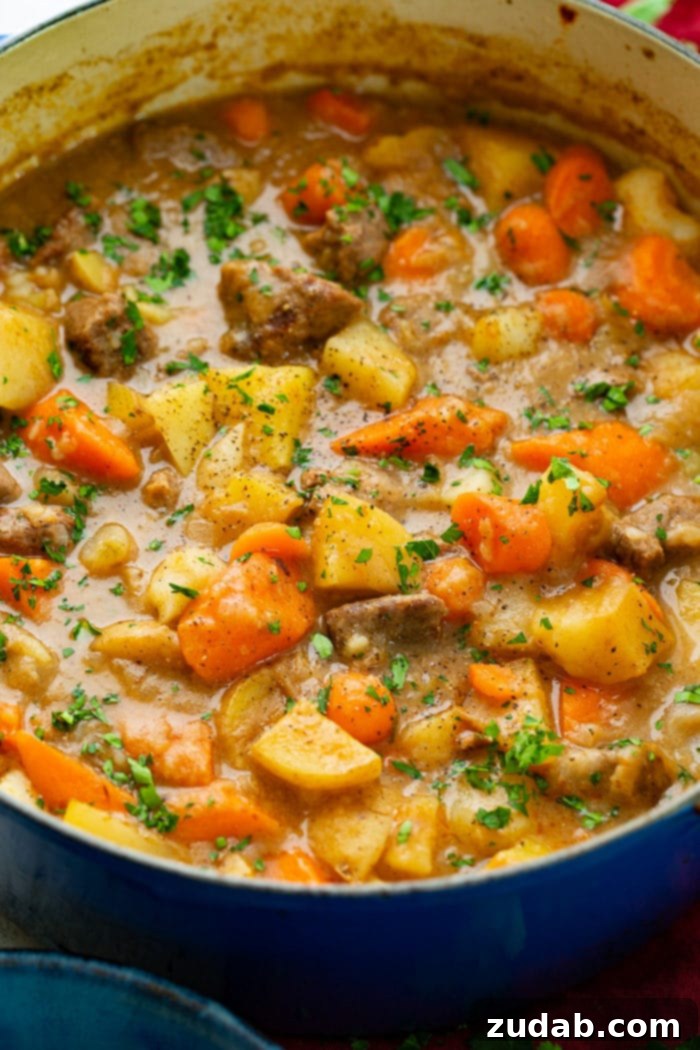
The Subtle Art of Onions: Why Size Truly Matters
While it might strike you as a peculiar detail, our approach to preparing onions for this stew is intentionally layered, utilizing three distinct cuts: some are thinly sliced, others are finely chopped, and a portion is minced. Rest assured, this isn’t an attempt to be overly particular or complicated! This technique is a secret weapon for building unparalleled depth of flavor and texture within the stew. The minced onions, with their tiny surface area, virtually melt away into the liquid during the long simmer. They dissolve, enriching the broth with their sweet, pungent essence without leaving behind noticeable chunks. These tiny flavor contributors become an invisible yet powerful force, enhancing the overall savory profile of the stew.
The chopped onions, on the other hand, are cut slightly larger, allowing them to retain a bit more of their structural integrity. As they cook, they become incredibly soft and wonderfully delicious, adding a tender bite and a diffused onion flavor that complements the beef and other vegetables. Finally, the sliced onions, cut into larger, more substantial pieces, are designed to hold their shape even after extended simmering. These slices contribute to the stew’s delightful chunkiness, offering a satisfying textural contrast and a pronounced, sweet onion flavor that stands out in every spoonful. This trifecta of onion preparation ensures a complex, multi-dimensional experience, from a velvety smooth broth base to tender, flavorful pieces throughout the stew, proving that when it comes to onions, size truly matters.
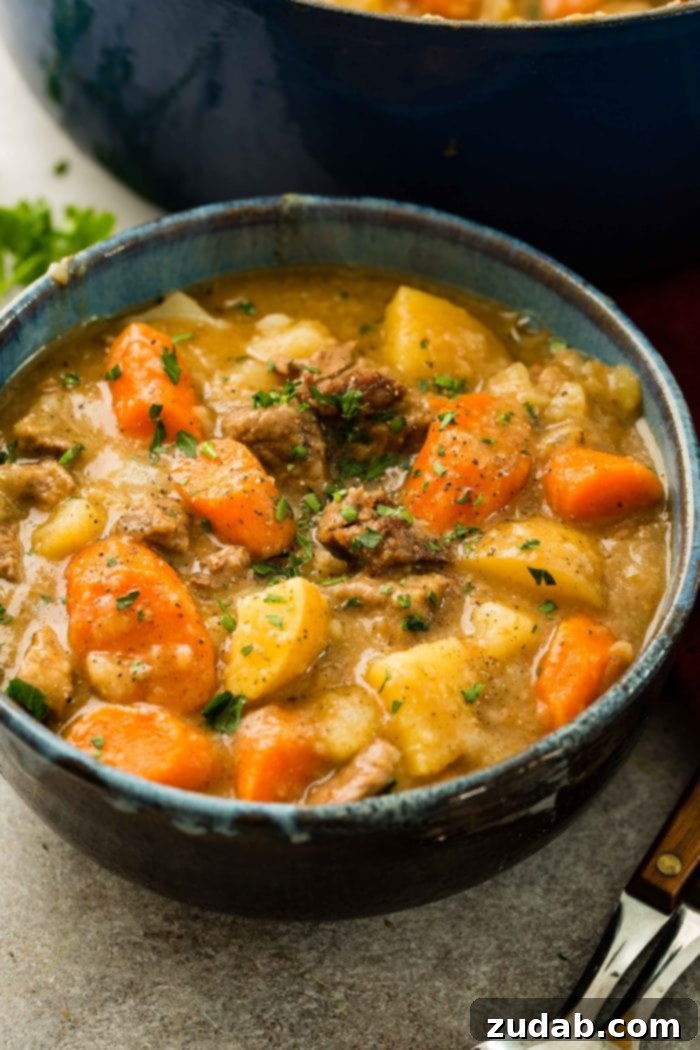
Clever Hacks for Enhanced Flavor: Garlic and Lemon
Who hasn’t experienced the unfortunate surprise of biting into an unexpectedly large, rogue clove of garlic in a otherwise delicious soup or stew? For garlic lovers like myself, a little garlic is wonderful, but a whole, un-mushed clove can be an overwhelming and unpleasant shock! To ensure you get all the fantastic flavor of garlic without the potential for an unwelcome bite, we employ a simple yet brilliant hack: stick a toothpick through the whole clove. As the stew simmers, the garlic will infuse the liquid with its aromatic goodness, and when it’s time to serve, that toothpick makes it a cinch to locate and remove the spent clove. This ensures pure, consistent garlic flavor throughout without any surprising textural interruptions.
And speaking of secret weapons for flavor, did you catch that this recipe calls for a touch of lemon juice? Yes, it might seem counterintuitive for a hearty beef stew, but much like the subtle yet powerful role lemon juice plays in our authentic Bolognese, a small amount of this citrusy elixir is a game-changer. It’s not there to add a noticeable lemon flavor; rather, it acts as a masterful balancing agent, subtly rounding out and brightening the complex flavors of the stew. The acidity from the lemon juice cuts through the richness of the beef and deepens the overall umami, creating a more harmonious and vibrant taste profile. You won’t consciously taste the lemon, but its presence is undeniably doing its delectable, yet undetectable, job of elevating every spoonful.
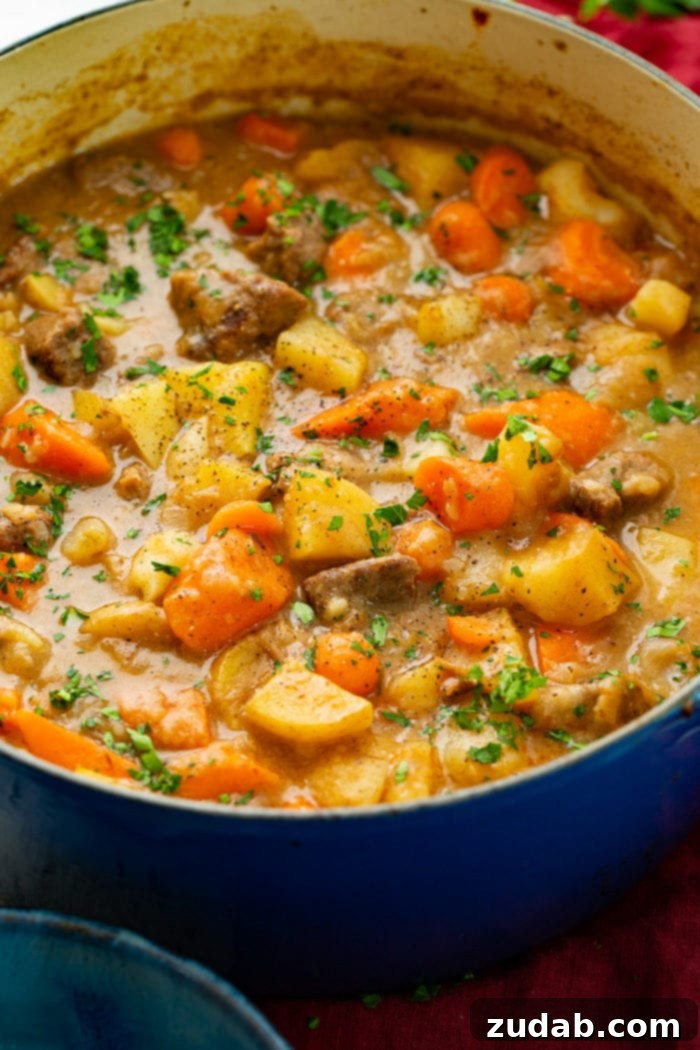
Timing is Everything: Perfecting Your Vegetables and Avoiding Overcooking
One of the most common mistakes in stew preparation, and one that can easily sabotage an otherwise perfect dish, is the urge to throw all the beef and vegetables into the pot at the very beginning. If your goal is a stew filled with mushy, flavorless, and almost nonexistent vegetables, then by all means, proceed with that method. However, if you desire a stew that offers beautifully tender yet intact vegetables, adding delightful texture and fresh flavor—the kind of stew that truly makes everyone happy (and yes, I couldn’t resist adding that in!)—then you must resist the temptation. The secret lies in staggered cooking.
Allow the beef to simmer and tenderize on its own for a good two hours. This extended initial cooking period focuses solely on achieving that melt-in-your-mouth beef. Only after the beef has had its dedicated time should you introduce the carrots and potatoes. Let them simmer with the beef for an additional 30 to 45 minutes, or until they reach your desired level of tenderness. This timing ensures that your vegetables are perfectly cooked: soft and yielding, yet still holding their shape and contributing their distinct sweetness to the stew, rather than dissolving into the broth.
It’s also tempting to think that letting the stew simmer all day will result in even more tender meat. While slow cooking is key, there’s a delicate balance. Overcooking beef stew beyond a certain point can actually have the exact opposite effect. Instead of becoming more tender, the meat can seize up, turning tough, dry, and stringy. This happens because while initial slow cooking breaks down collagen, excessive heat over too long a period can cause the muscle fibers themselves to dry out and toughen. There’s a ‘sweet spot’ for beef stew, typically between 2 to 3 hours of simmering, where the beef reaches its peak tenderness and succulence without compromising its texture.
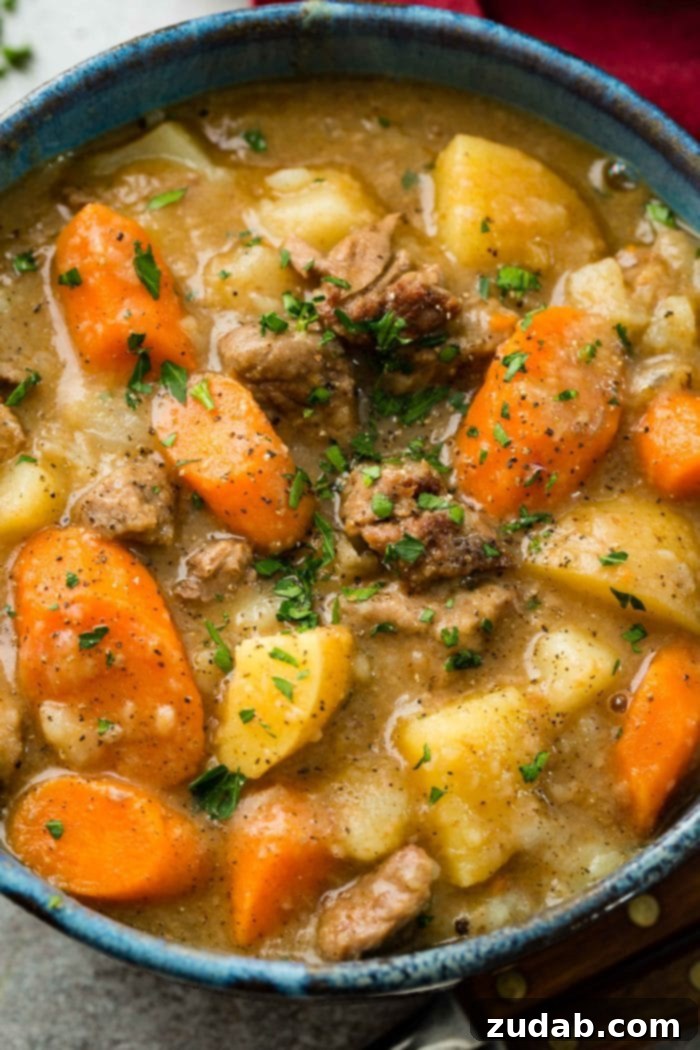
Crafting the Perfect Gravy
Once your vegetables are wonderfully tender and the beef is falling apart, it’s time for the final, transformative step: creating the rich, luscious gravy that truly binds this stew together. A perfectly thickened gravy elevates the entire dish, enveloping every ingredient in its savory embrace. The secret to a smooth, lump-free gravy lies in a simple slurry: a combination of flour whisked vigorously into cold water. This cold-water technique is crucial because it prevents the flour from clumping when it hits the hot liquid, ensuring a silky-smooth consistency.
To incorporate the slurry, I like to gently push the meat, potatoes, and carrots to one side of the pot, creating a small pool of hot liquid. Pour the water-flour mixture into this liquid, and immediately whisk it vigorously until it is fully combined and begins to thicken. Once the liquid achieves a slightly thicker consistency, allow the stew to simmer for another 5 to 15 minutes. This simmering time is essential for the flour to cook out its raw taste and for the gravy to reach its optimal richness and texture. Finally, stir everything together gently, ensuring every chunk of beef and vegetable is coated in that glorious, savory gravy. Now, it’s truly time to eat and enjoy the fruits of your labor!
Freezing and Reheating Beef Stew
One of the many virtues of this classic beef stew is how remarkably well it freezes, making it an excellent candidate for meal prepping or having a comforting dinner ready on standby. To ensure the best freezing results, allow the stew to cool completely to room temperature before storing. Transfer it into an airtight container, or even better, use a Food Saver for vacuum-sealing, which helps preserve its freshness and prevents freezer burn. Stored properly, this beef stew will maintain its quality in the freezer for up to 3 months.
When you’re ready to enjoy it again, simply let the frozen stew thaw on the counter for several hours or overnight in the refrigerator. Once thawed, gently reheat it on the stovetop in a pot over medium-low heat, stirring occasionally until it’s warmed through. You might notice that some of the vegetables, particularly the potatoes, may break down a little more during the freezing and thawing process, becoming slightly softer than when freshly made. However, rest assured, this minor textural change will not compromise the incredible flavor of the stew. It will still taste wonderfully hearty and delicious, providing that same comforting warmth you crave.
The Indispensable Companion: Crusty Bread
While this beef stew is undeniably a complete and satisfying meal on its own, no truly authentic and comforting stew experience is complete without the perfect accompaniment: a generous supply of crusty bread. There’s an undeniable joy in tearing off a piece of warm, crusty bread and using it to sop up every last drop of that rich, savory gravy clinging to the bottom of your bowl. It’s an essential ritual that ensures no morsel of deliciousness goes to waste. For our family, our go-to choice is often our Easy No Knead Artisan Bread, which delivers a fantastic crunchy crust and a soft, airy interior with minimal effort. Alternatively, our Best Potato Rolls are also nothing short of spectacular, offering a tender, slightly sweet counterpoint to the robust flavors of the stew. Whichever you choose, these breads are precisely what you need to transform this already wonderful stew into a truly memorable meal, one that is guaranteed to bring a smile to anyone’s face – whether it’s your man, your woman, your kids, grandma, or your cherished friends.
Explore More Comforting Soup and Stew Recipes
- Meatball Soup
- One Pot Cauliflower Chowder
- Chicken or Turkey Pot Pie Soup
- Roasted Tomato Basil Soup
- Taco Stew
- Ham and Potato Corn Chowder
- Award Winning Instant Pot Chili
Old Time Beef Stew for Your Man
By Sweet Basil
Prep Time: 15 mins
Cook Time: 2 hrs 30 mins
Total Time: 2 hrs 45 mins
Servings: 6
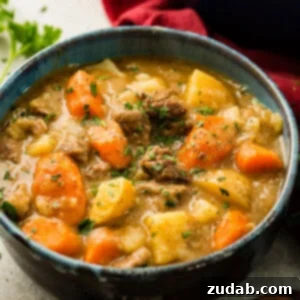
This Old Time Beef Stew is pure comfort, perfect for any season. When done right, it makes everyone happy, and this recipe delivers just that!
Ingredients
- 2 Tablespoons Butter
- 2 Pounds Beef Chuck, Cubed
- 1 Large Yellow Onion, Sliced
- 6 Ounces Pearl Onions, or 1 Additional Onion – 1/2 Minced and 1/2 Chopped in bigger pieces
- 1 Large Clove Garlic, peeled and on a toothpick (for easy removal)
- 4 Cups Boiling Water
- 1 Tablespoon Salt
- 1 Tablespoon Lemon Juice
- 1 teaspoon Sugar (recommendation)
- 1 teaspoon Worcestershire Sauce (recommendation)
- 1/2 teaspoon Pepper
- 1/2 teaspoon Paprika (we use Smoked Paprika)
- 2 Bay Leaves
- 1 Dash Allspice (or cloves)
- 6 Large Carrots, chopped at a diagonal
- 6 Medium Russet Potatoes, Peeled and Chopped
- 1/2 Cup Cold Water
- 1/4 Cup Flour (recommendation)
- Fresh parsley for garnishing, optional
Instructions
- Heat a dutch oven to medium heat and add the butter.
- Turn the heat to medium-high and start to add the beef chuck in batches, browning on each side until deeply colored. Remove the browned meat to a plate.
- Return all of the browned meat to the pot and turn the heat back to medium. If the pot appears dry, add a drizzle of oil.
- Add all of the onions (sliced, minced, and chopped) into the pot along with the garlic clove on a toothpick (for easy retrieval later).
- Continue by adding the boiling water, salt, lemon juice, sugar, Worcestershire sauce, pepper, paprika, bay leaves, and allspice.
- Gently bring the mixture to a simmer. Once simmering, cover the pot with a lid and reduce the heat to medium-low (or low, depending on your stove’s heat retention). Maintain a low simmer for 2 hours.
- After 2 hours, the meat should be tender. Add the carrots and potatoes. Remove the lid and continue to simmer for an additional 30-45 minutes, or until all vegetables are soft and tender.
- Carefully discard the bay leaves and the garlic clove (using the toothpick).
- In a glass measuring cup, add the cold water and quickly whisk in the flour until completely smooth to create a slurry.
- Stir the flour slurry into the simmering stew. Cook gently for another 5-15 minutes, stirring occasionally, allowing the stew to thicken to a rich, gravy-like consistency.
- Garnish with some chopped fresh parsley, if desired, and serve hot with plenty of crusty bread or your favorite rolls!
Recipe Notes
This stew will keep well for 3-4 days when stored in an airtight container in the refrigerator.
Nutrition
Serving: 1g, Calories: 375kcal, Carbohydrates: 16g, Protein: 31g, Fat: 21g, Saturated Fat: 10g, Polyunsaturated Fat: 2g, Monounsaturated Fat: 10g, Trans Fat: 1g, Cholesterol: 114mg, Sodium: 1382mg, Potassium: 795mg, Fiber: 3g, Sugar: 6g, Vitamin A: 10416IU, Vitamin C: 8mg, Calcium: 70mg, Iron: 4mg
Nutrition information is automatically calculated and should only be used as an approximation.
We absolutely love hearing from you! If you try this recipe, please consider leaving a comment below to share your experience.
REMEMBER TO SUBSCRIBE TO our FREE Oh Sweet Basil NEWSLETTER AND RECEIVE EASY RECIPES DELIVERED INTO YOUR INBOX EVERY DAY!
When you try a recipe, please use the hashtag #ohsweetbasil on INSTAGRAM for a chance to be featured in our stories! FOLLOW OH, SWEET BASIL ON FACEBOOK | INSTAGRAM | PINTEREST | TWITTER FOR ALL OF OUR LATEST CONTENT, RECIPES AND STORIES.