
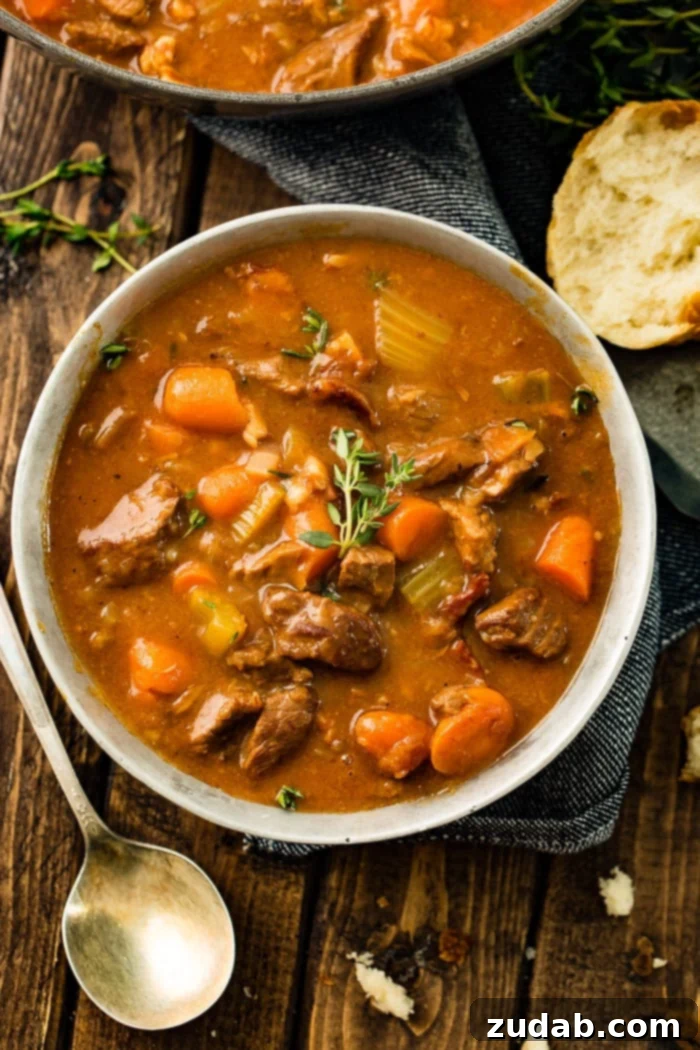
Welcome to a culinary journey that brings the heart of Ireland right to your kitchen table: an incredibly comforting and satisfying Irish Beef Stew. This delightful dish has proven to be an unexpected triumph in the realm of fuss-free weeknight dinners, pleasing everyone from discerning adults to hungry little ones. And for all the busy parents out there, mastering this recipe means you’ve effortlessly added a classic St. Patrick’s Day celebration to your family’s traditions, creating cherished memories without the usual holiday stress.
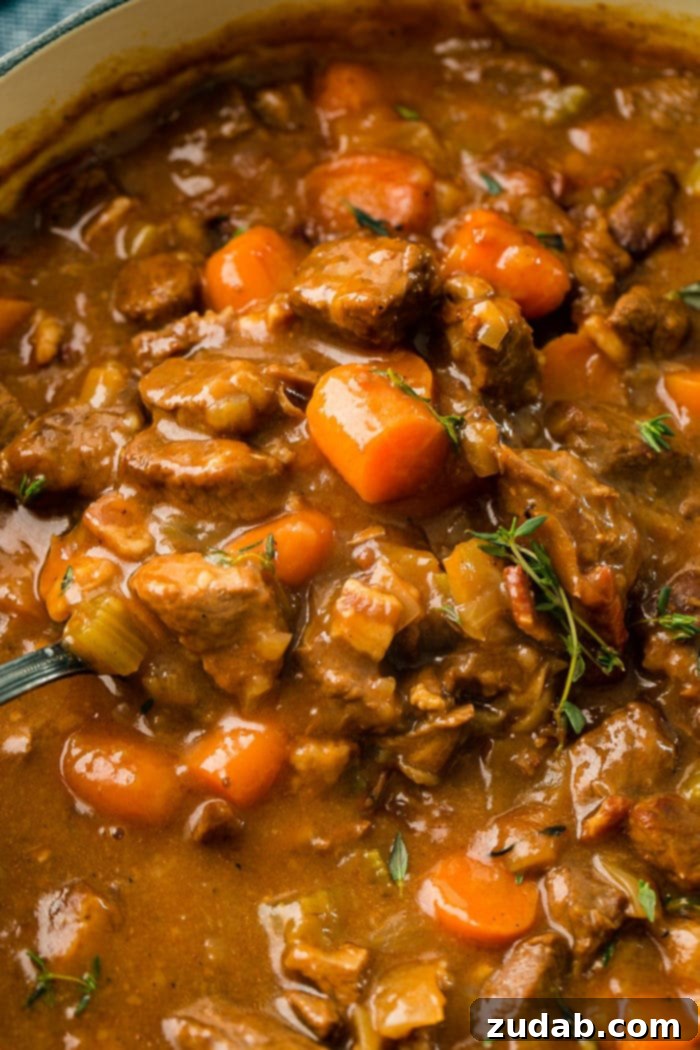
I know, I know. Me, posting something for St. Patrick’s Day? It’s a rare occasion! While I may not be the type of mom who goes all out for every single holiday with elaborate Pinterest-worthy crafts, this particular Irish Beef Stew recipe is designed for the vast majority of us who prioritize delicious, heartwarming food and quality family time over intricate holiday theatrics. It’s about bringing joy and flavor to your table in a way that truly matters.
Now, let’s address the elephant in the room: this Irish Beef Stew recipe deviates from the traditional by not including Guinness beer, which is often considered a hallmark of authentic Irish stew. For our family, alcohol is not consumed due to personal religious beliefs. While we understand that alcohol typically cooks out during the stewing process, we simply prefer to avoid it altogether. This isn’t about discovering a ‘secret’ superior method, but rather finding what works best for our family’s lifestyle and values.
Using Beer in Your Irish Beef Stew
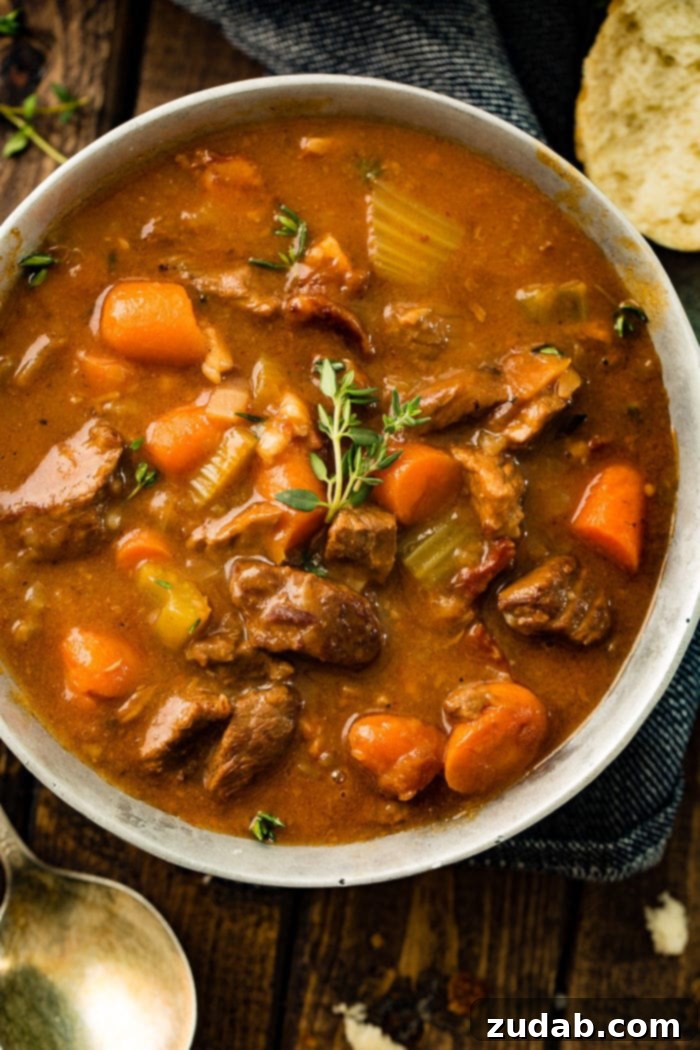
For those who prefer a more traditional approach or simply enjoy the unique depth of flavor that beer imparts, incorporating it into this recipe is incredibly simple. If you wish to use beer instead of the non-alcoholic soda (do you say ‘pop’ or ‘soda’ where you’re from?), just substitute an equal amount. That’s all there is to it! The method remains otherwise identical, ensuring your stew is rich and flavorful regardless of your liquid base choice.
What Kind of Beer is Best for Irish Stew?
When selecting a beer for Irish stew, generally, the darker the beer, the better. A dark stout, such as Guinness Beer, is a classic choice. Its rich, malty, and slightly bitter notes contribute significantly to the stew’s characteristic deep color and complex flavor profile. I’ve done my research on this, and even though I don’t personally drink it, I can confidently say that dark stouts are widely recommended for achieving that authentic Irish stew taste. Don’t worry, my lack of personal consumption doesn’t stop me from knowing how to cook a fantastic meal, and this Irish Beef Stew recipe, whether made with beer or our chosen alternative, is absolutely outstanding.
The Quintessential Irish Beef Stew: A Hearty Classic
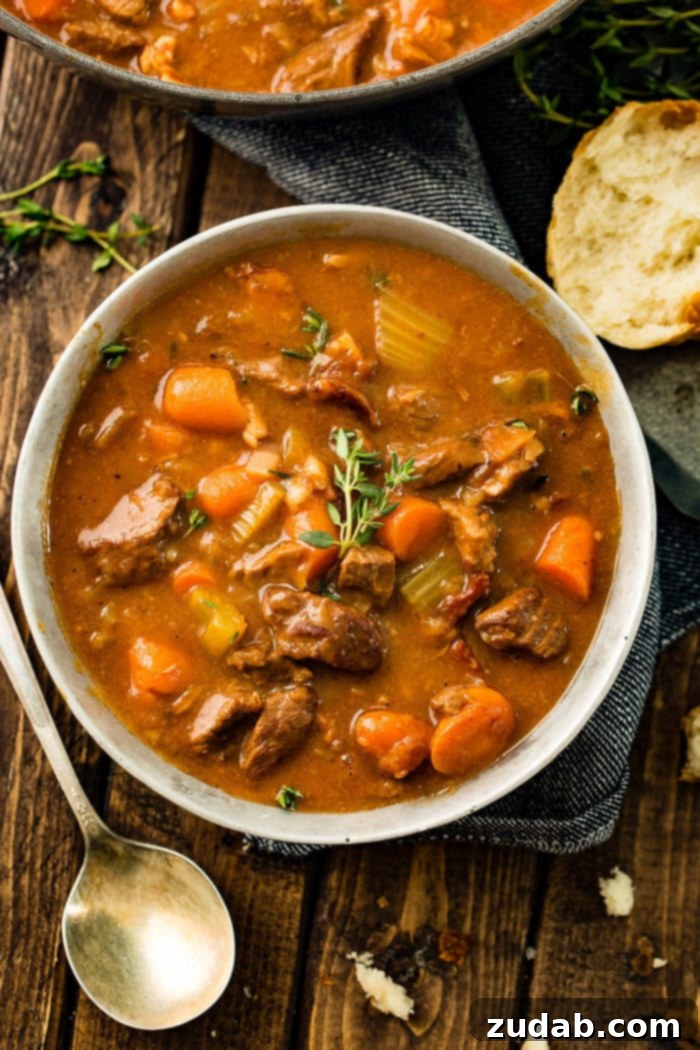
Some time ago, we conducted a grand comparison of various stew recipes, and as someone who typically leans towards purist traditions, I fully expected to champion the most conventional stew. However, this particular Irish Beef Stew utterly captivated my palate and won me over completely. It is, without a doubt, spectacularly good!
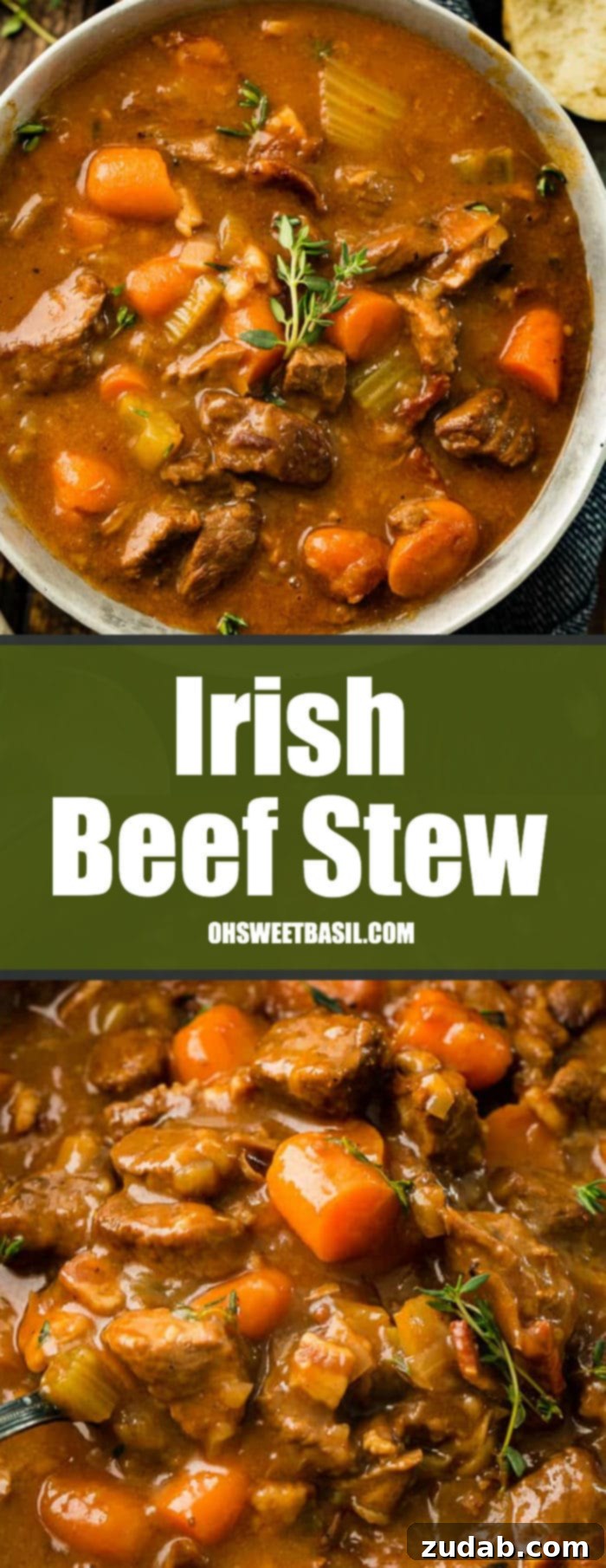
At its core, Irish Beef Stew is a beautifully simple amalgamation of humble ingredients. Yet, through the magic of slow cooking, these components undergo a remarkable transformation, evolving into a hearty, deeply tender, melt-in-your-mouth experience. The beef becomes incredibly succulent, and the vegetables soften to perfection, all swimming in a luscious, savory gravy that coats every spoonful.
What truly sets an Irish Stew apart from a more generic beef stew? Historically, the inclusion of alcohol, particularly stout beer, is what lends it its distinct “Irish” character. While our recipe thoughtfully omits alcohol, we achieve a similar depth and darkness of flavor by utilizing a dark soda, specifically Coca-Cola, alongside other savory enhancers. This ingenious substitution ensures that you don’t miss out on any of the rich, complex flavors traditionally associated with this beloved Irish dish.
Non-Alcoholic Substitutes for Beer in Stew
If you share our preference for cooking without alcohol, you’ll be delighted to know that achieving that signature depth of flavor in your stew is entirely possible. Our secret? A simple yet powerful combination of Coca-Cola and Worcestershire sauce. This duo works wonders to introduce a complex, savory umami note that beautifully mimics the richness typically provided by dark beer. Umami, often described as the “fifth taste,” is crucial for adding a profound, satisfying meatiness to dishes, and these ingredients deliver it flawlessly.
So, whether you opt for beer or our non-alcoholic alternative, the primary goal remains the same: a delicious stew with incredibly tender, fall-apart meat and a wonderfully balanced gravy. Don’t overthink the liquid choice; both options will lead to a truly satisfying and flavorful meal that your family will adore. The beauty of this recipe lies in its adaptability, ensuring everyone can enjoy a fantastic Irish Beef Stew tailored to their dietary preferences.
How to Serve Your Delicious Irish Stew
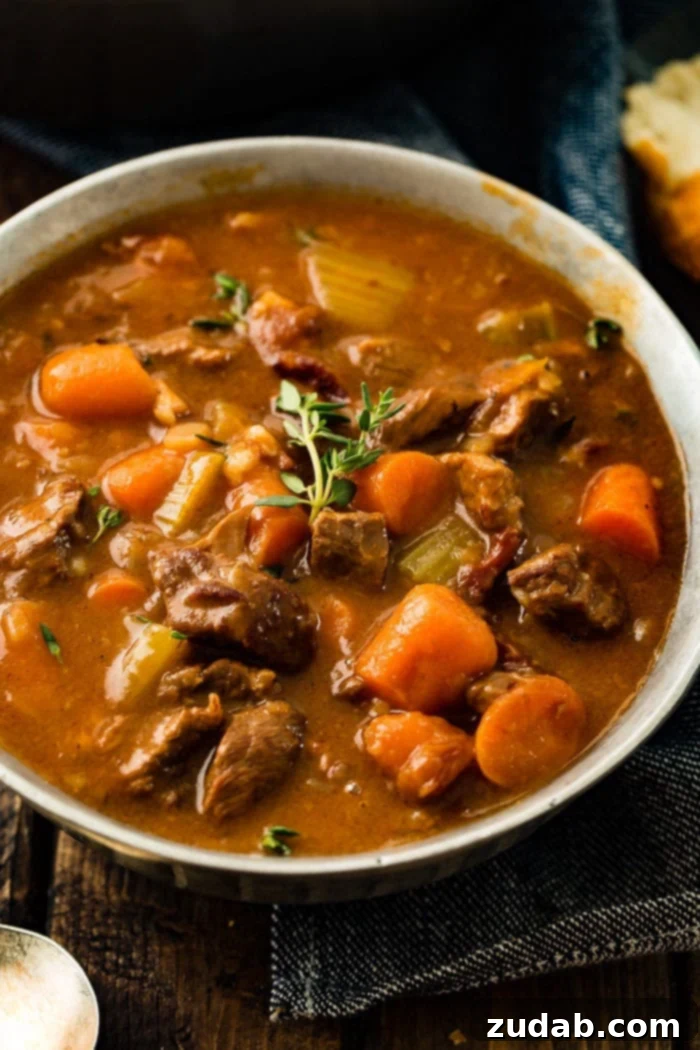
You’ll find many variations in Irish Stew recipes, and how they are served can vary just as much. So, what’s the best way to enjoy this hearty meal? The serving method often depends on the ingredients within the stew itself. For instance, if your stew already contains potatoes, serving it over an additional bed of potatoes might be overkill. However, if your recipe is potato-free, you have several wonderful options.
You can serve the Irish Beef Stew simply on its own, allowing its rich flavors to shine through, perhaps accompanied by a generous slice of crusty bread or traditional Irish Soda Bread, perfect for soaking up every last drop of the delectable gravy. Alternatively, for an extra layer of comfort and indulgence, spoon the stew over a mound of creamy, buttery mashed potatoes. The velvety texture of the mashed potatoes provides a delightful contrast to the tender chunks of beef and vegetables, creating a truly satisfying and complete meal.
Mastering the Art of Thickening Irish Stew
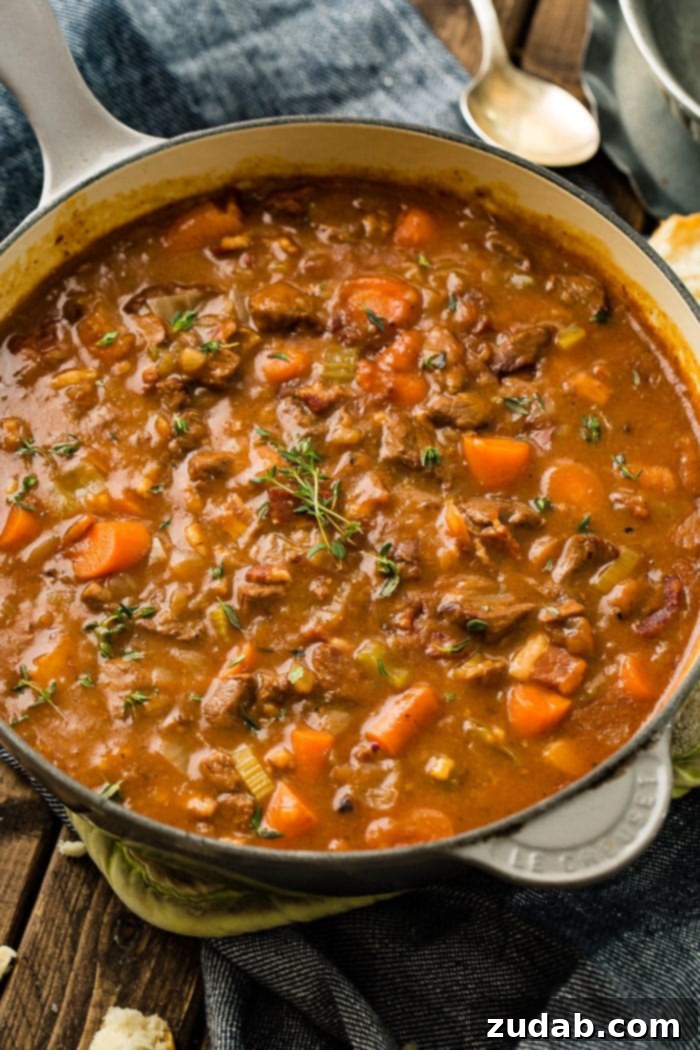
In my humble opinion, a truly great stew should always boast a luxurious, thick consistency. There’s a distinct difference between a rich, hearty stew and a thin, soupy broth; broth is merely the starting point, not the culmination. To achieve that perfect, velvety texture – thick and creamy, yet never gloppy – the secret lies in employing a simple slurry.
A slurry is effortlessly prepared by whisking together cold water and all-purpose flour. It’s crucial to use all-purpose flour for this specific application, as other types of flour may not yield the desired effect or consistency. Ensure you whisk the mixture until it is perfectly smooth, with no lumps remaining. Then, while your stew is gently simmering, slowly incorporate the flour slurry, stirring continuously. Continue to simmer the stew until it has thickened to your desired consistency, transforming from a liquid base into a rich, luscious gravy that beautifully coats the meat and vegetables.
Substituting Cornstarch for Flour to Thicken Stew
If you prefer to use cornstarch instead of flour for thickening your Irish stew, that’s perfectly acceptable, especially if you’re looking to make the recipe gluten-free. The key to a successful cornstarch slurry is to adjust the ratios. You’ll need to use half the amount of water and half the amount of cornstarch compared to what you would use for a flour slurry. For instance, if the recipe calls for 1/4 cup of flour and 1/2 cup of cold water, you would use 1/8 cup of cornstarch mixed with 1/4 cup of cold water.
While I often lean towards making a roux (cooking flour in fat) or using cornstarch for many sauces, when it comes to the specific texture and mouthfeel of a hearty stew, a simple slurry of cold water and all-purpose flour truly excels. It provides a more robust and comforting thickness that I personally prefer for this kind of dish. However, cornstarch remains a fantastic, quick-acting alternative that delivers excellent results, especially for those with gluten sensitivities.
Can You Freeze Irish Stew? Absolutely!
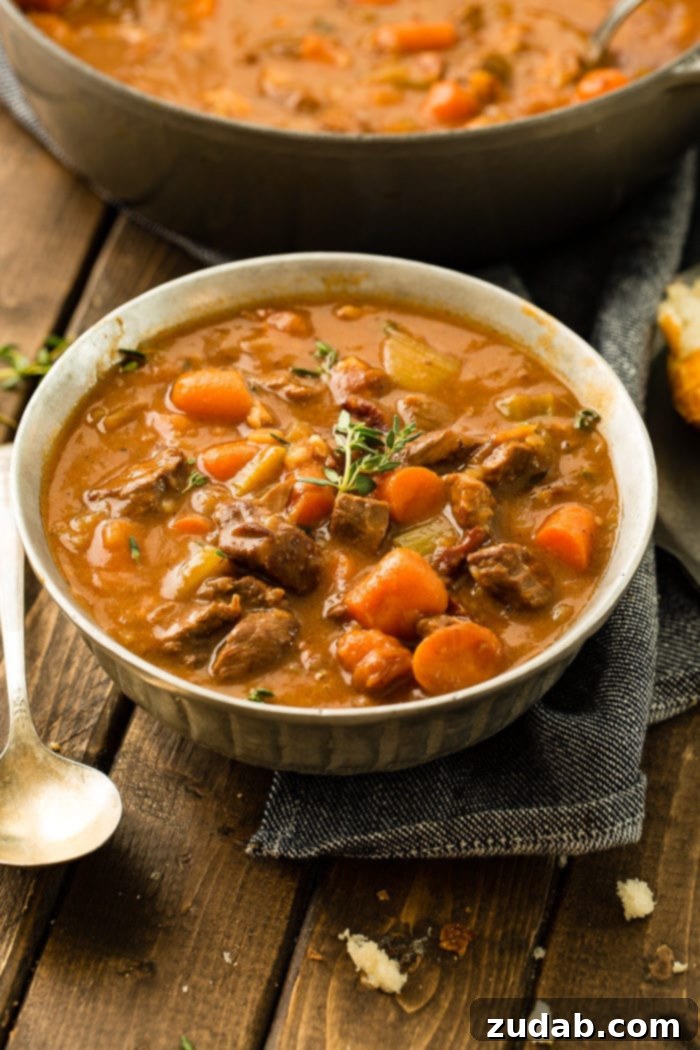
One of the many wonderful qualities of Irish stew is its excellent suitability as a freezer meal, making it an ideal choice for meal prep or for having a comforting dinner ready on busy nights. To freeze your stew, simply prepare the recipe completely, then allow it to cool down to room temperature. This is a crucial step to prevent bacterial growth and to ensure the quality of the frozen product. Once cooled, transfer the stew into airtight, freezer-safe containers. For maximum freshness and to save space, consider using a vacuum sealer (like a FoodSaver) and laying the sealed portions flat in the freezer. Properly stored, Irish stew can maintain its quality for up to three months.
When you’re ready to enjoy your frozen stew, the defrosting process is key to preserving its texture and flavor. It’s truly tempting to simply dump a frozen block of stew into a pot and crank up the heat, but this is a recipe for potential disappointment, leading to uneven heating and a compromised texture. Instead, always plan ahead and place the frozen stew in the refrigerator to defrost slowly overnight. Once defrosted, gently reheat it on the stovetop over low to medium heat, stirring occasionally, until it reaches a safe eating temperature. Slow and steady wins the race when it comes to reheating hearty stews and soups, ensuring a delicious experience every time.
Is Irish Stew Gluten-Free? Making it Accessible for Everyone
For those navigating dietary restrictions, specifically gluten intolerance or celiac disease, you’ll be pleased to know that Irish Stew can very easily be made gluten-free with just one simple modification. The stew is only considered gluten-free if you opt to use the cornstarch mixture for thickening, as opposed to the traditional flour slurry. All-purpose flour contains gluten, which means a flour-thickened stew would not be suitable for a gluten-free diet.
However, aside from the flour, all other ingredients in this robust Irish stew recipe are naturally gluten-free. This makes it an incredibly versatile and fantastic meal idea for families with diverse food allergies or specific dietary requirements. By simply swapping the thickening agent, you can ensure everyone at the table can enjoy a hearty, flavorful, and safe meal without compromising on taste or tradition. It’s a testament to the adaptability and inclusive nature of this classic comfort food.
Irish Beef Stew
Ingredients
- 2.25 lb Beef Chuck, or stew meat, cubed
- 3/4 teaspoons Salt
- Black pepper
- 2 Tablespoons Olive Oil
- 3 Cloves Garlic, minced
- 2 Onions, red, one minced and one chopped in bigger chunks
- 4 Slices Bacon, diced
- 15 Ounces Coke, Coca Cola pop (or dark stout beer)
- 4 Tablespoons Tomato Paste
- 2 teaspoons Beef Bouillon (or 2 cups beef broth)
- 1 teaspoon Chicken Bouillon (or 1 cup chicken broth) *see note
- 3 Carrots, large, peeled and cut into chunks on a diagonal
- 2 Stalks Celery, large, chopped
- 2 Bay Leaves
- 1 Sprig Thyme, fresh, or 1/2 teaspoon dried thyme
- 1/4 Cup All-Purpose Flour
- 1/2 Cup Cold Water
Instructions
- Prepare the beef: Pat dry with paper towels, then sprinkle with salt and pepper, tossing to coat. Allow to sit for 5-8 minutes before cooking.
- Brown the beef: Heat olive oil in a heavy-based pot over high heat. Add beef in batches and brown on each side, removing the meat to a plate as it finishes. Repeat with remaining beef.
- Sauté aromatics: Remove pot from heat and add a drizzle of oil if needed. Return the pot to medium heat, add minced garlic and onions. Cook for 3 minutes until softening.
- Add bacon: Stir in diced bacon and cook until browned, stirring occasionally.
- Combine ingredients: Dump the browned beef and all accumulated juices back into the pot. Mix well then add the Coke (or beer), tomato paste, beef bouillon (or broth), chicken bouillon (or broth), carrots, celery, bay leaves, and thyme.
- Simmer: Bring the stew to a simmer, then lower the heat so it is bubbling gently.
- Slow cook: Place a lid on the pot and cook for 2 hours. The meat should be practically falling apart by this point.
- Prepare slurry: In a glass measuring cup, combine the flour and cold water, whisking vigorously until perfectly smooth.
- Thicken stew: With the stew simmering, slowly stir the flour mixture into the pot.
- Continue simmering: Remove the lid and simmer for another 30-45 minutes, or until the beef falls apart at a touch and the stew has thickened to your desired consistency.
- Finish: Remove bay leaves and thyme sprig before serving.
- Serve with your favorite bread or mashed potatoes.
Recipe Notes
We recommend using Better Than Bouillon for beef and chicken because the flavor is significantly richer and more robust than canned broth. It truly makes a difference in the final taste of the stew.
When stored in an airtight container, leftover beef stew can be frozen for up to 3 months. Ensure it is completely cooled before freezing, and defrost slowly in the refrigerator before reheating gently on the stovetop.
Nutrition
Serving: 1g, Calories: 373kcal, Carbohydrates: 15g, Protein: 27g, Fat: 23g, Saturated Fat: 8g, Cholesterol: 95mg, Sodium: 454mg, Potassium: 670mg, Fiber: 2g, Sugar: 8g, Vitamin A: 4005IU, Vitamin C: 6mg, Calcium: 44mg, Iron: 3mg
Nutrition information is automatically calculated, so should only be used as an approximation.
More Hearty Soup and Stew Recipes to Explore
If you’ve enjoyed this comforting Irish Beef Stew and are eager to discover more delicious and warming dishes, you’re in luck! Our collection of soup and stew recipes is brimming with family favorites that are perfect for any season. Don’t miss out on these other delightful options: Mom’s Fabulous Slow Cooker Stew, a classic that brings everyone together; our flavorful Taco Stew, a unique twist on a beloved meal; the indulgent Cheeseburger Soup, a creamy, savory sensation; the hearty Slow Cooker Potato Bacon Corn Chowder, perfect for cozy evenings; or our zesty Honey Lime Chicken Enchilada Soup! Each recipe is crafted to bring joy and comfort to your dinner table.
For even more effortless and mouth-watering recipes delivered directly to your inbox every day, remember to subscribe to our FREE Oh Sweet Basil Newsletter! When you try any of our recipes, please share your creations on Instagram using the hashtag #ohsweetbasil for a chance to be featured in our stories. Follow Oh, Sweet Basil on FACEBOOK | INSTAGRAM | PINTEREST | TWITTER for all our latest content, recipes, and heartwarming stories!