
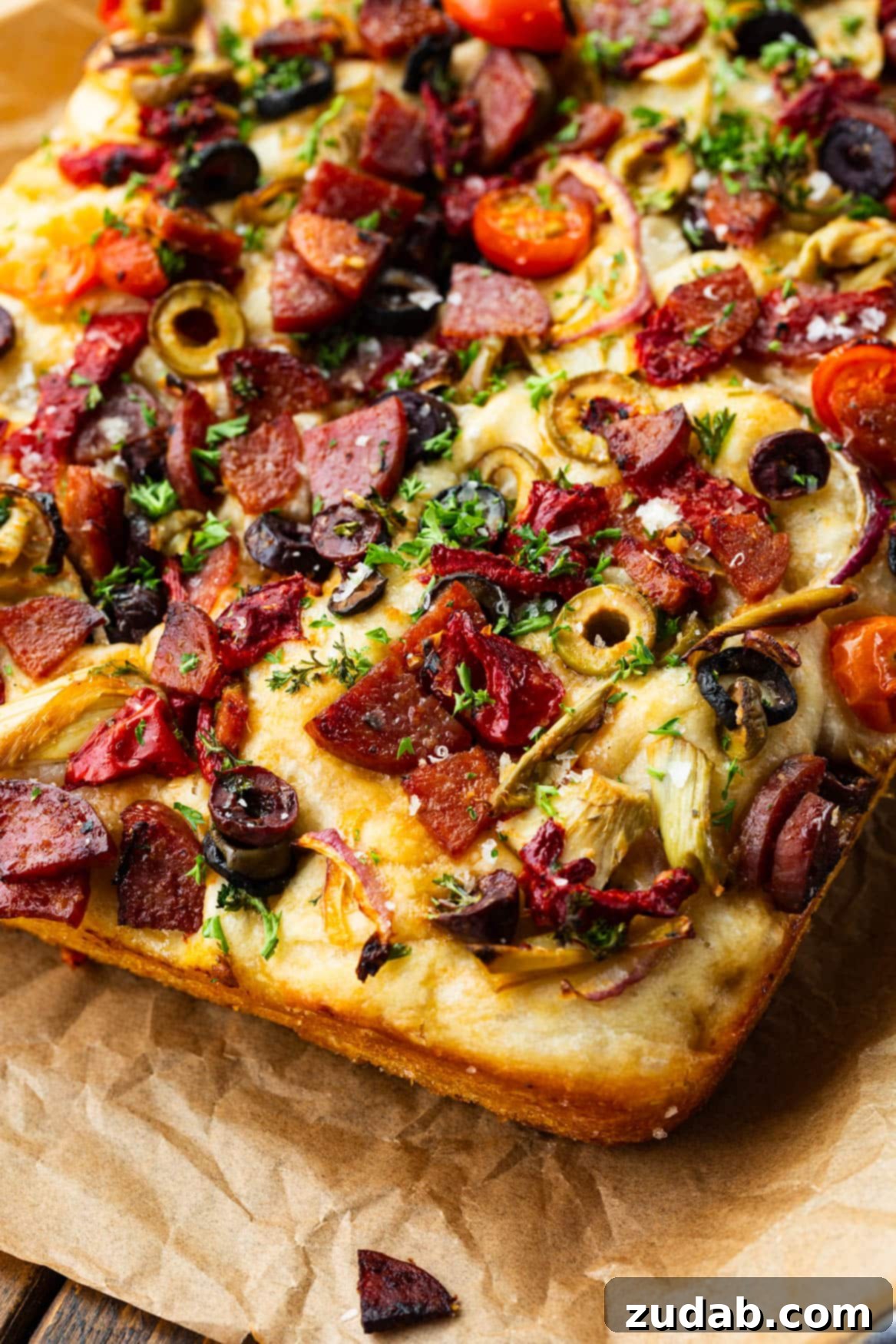
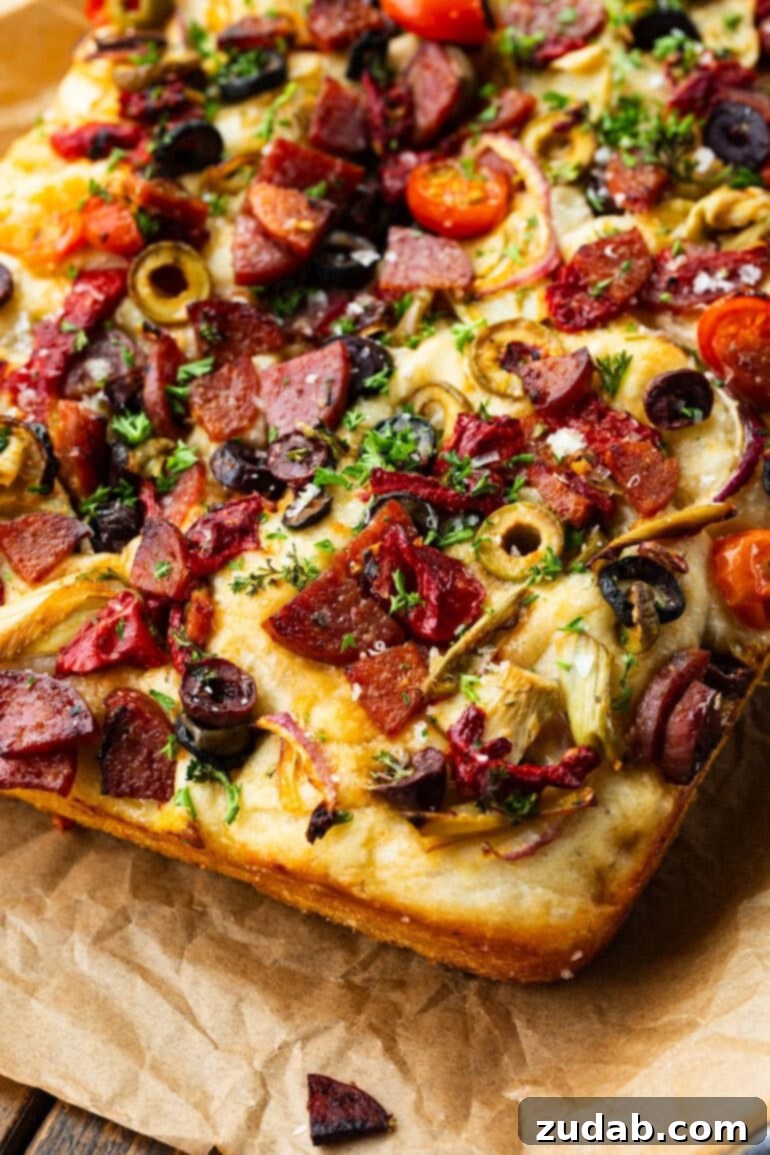
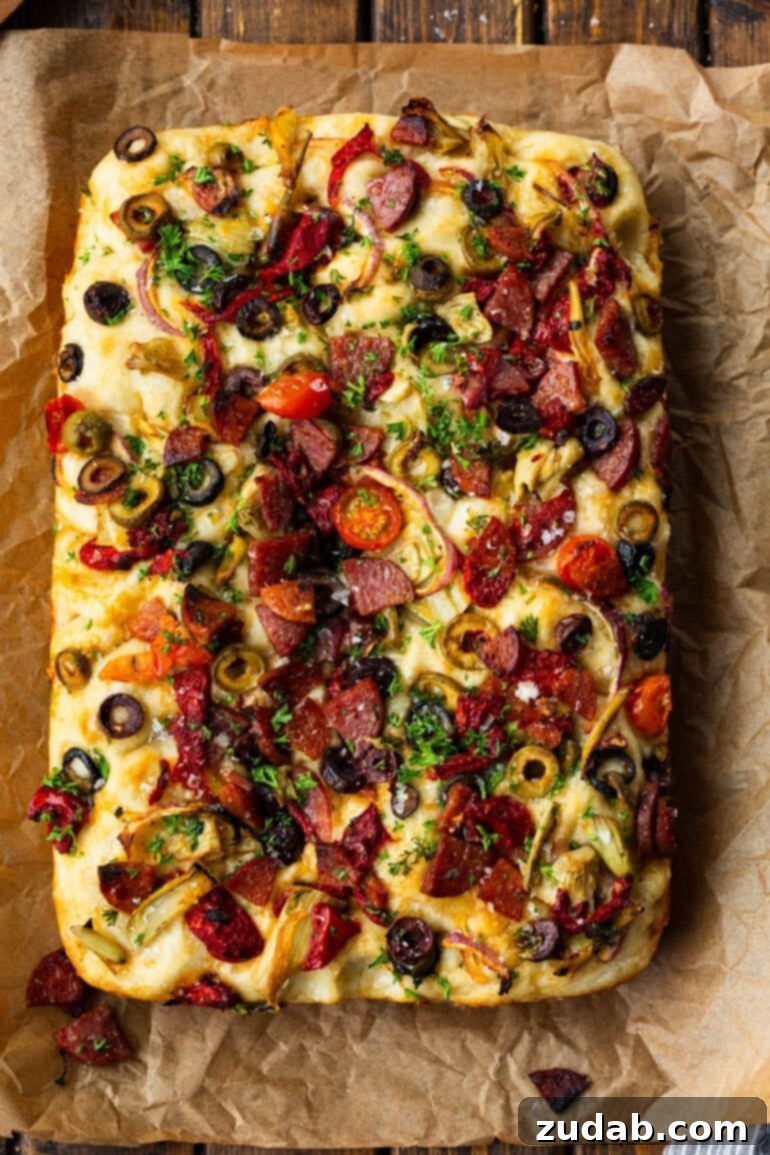
Our Antipasto Italian Focaccia Recipe is the ultimate way to use up leftover charcuterie ingredients for the most delicious and easy bread recipe! You’re going to love the salty, chewy crust, tender crumb, and those flavorful meaty toppings!
I was recently on a phone call with a business colleague, and the topic of leftover charcuterie came up. I casually mentioned that we were developing a focaccia bread recipe, designed to utilize the remnants from a charcuterie board or antipasto board. He immediately expressed his enthusiasm for charcuterie and confessed to often facing the same dilemma: what to do with all the leftover ingredients!
Why This Antipasto Focaccia Bread Is a Must-Try
I pride myself on being resourceful, especially in the kitchen. I dislike recipes that call for obscure ingredients or require buying large quantities of items when only a small amount is needed. That’s why I love this focaccia bread – it’s a delicious and satisfying way to use up leftovers!
This hearty bread, loaded with meats and olives, is substantial enough to be served as a main dish. It’s essentially pizza in bread form!
Recipe Tip
Dipping bread is one of life’s simple pleasures. This focaccia bread is fantastic served with a small bowl of olive oil and a drizzle of balsamic vinegar!
For an extra treat, try dipping it in warmed pizza or spaghetti sauce. It’s incredibly delicious!
Essential Ingredients for Antipasto Focaccia Bread
- Flour: Forms the foundation of our bread, providing structure and texture. Use bread flour for a chewier crumb, or all-purpose flour for a softer result.
- Water: Hydrates the flour and activates the yeast, essential for a properly risen bread. Use warm water to encourage yeast activity.
- Salt: Enhances the flavor and controls the yeast’s activity. While some Italian breads omit salt, it’s a crucial ingredient for this recipe.
- Sugar: Feeds the yeast and adds a touch of sweetness, balancing the salt and acidity of the dish.
- Yeast: The leavening agent, responsible for creating a light and airy texture. Instant yeast is recommended for its convenience and reliability.
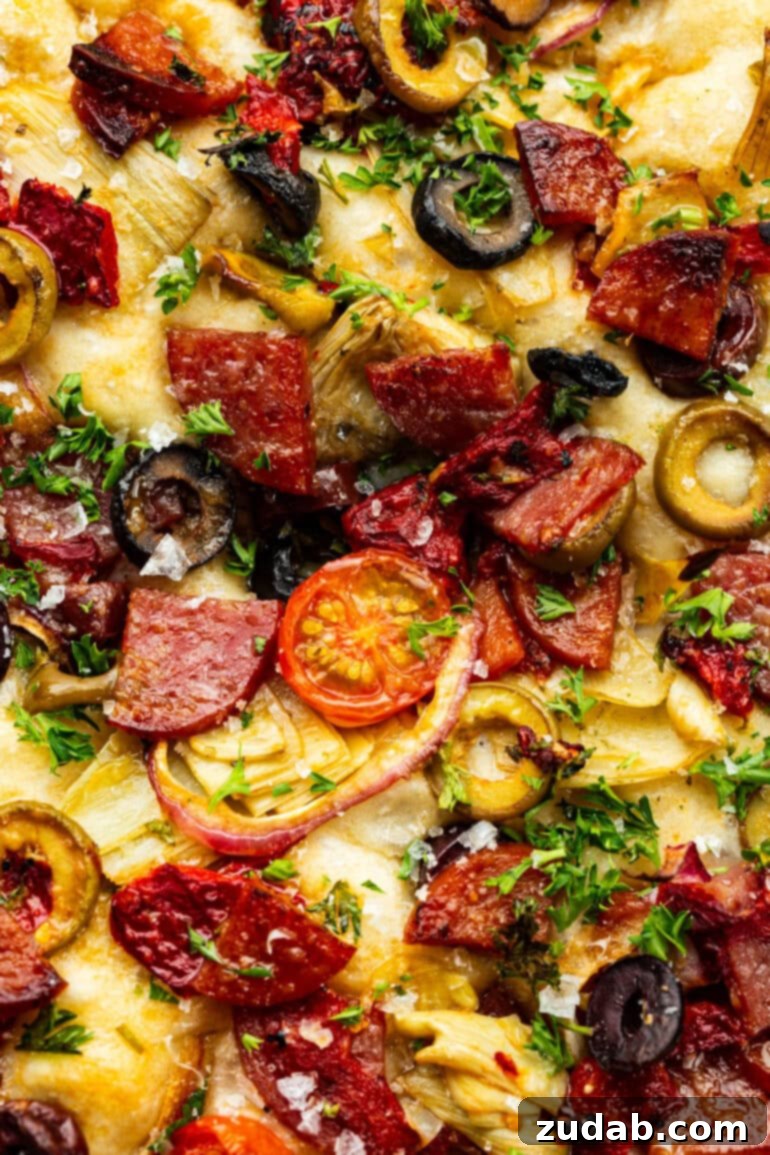
- Assorted Meats: Use your favorite meats from a traditional antipasto platter, such as salami, pepperoni, prosciutto, or coppa.
- Variety of Olives: A mix of olives, like Kalamata, green, and black, adds a salty and briny flavor.
- Tomatoes: Incorporate both fresh and sun-dried tomatoes for a burst of flavor and varied texture. Cherry tomatoes, grape tomatoes, or Roma tomatoes all work well.
- Roasted Red Peppers: Provide a smoky sweetness and vibrant color. You can roast your own peppers or use jarred roasted red peppers.
- Artichoke Hearts: Marinated artichoke hearts add a tangy and slightly acidic element.
- Red Onion: Thinly sliced red onion gives a sharp, pungent bite that complements the other flavors.
- Fresh Herbs: Sprinkle fresh herbs like basil, oregano, or rosemary over the focaccia before baking for an aromatic touch.
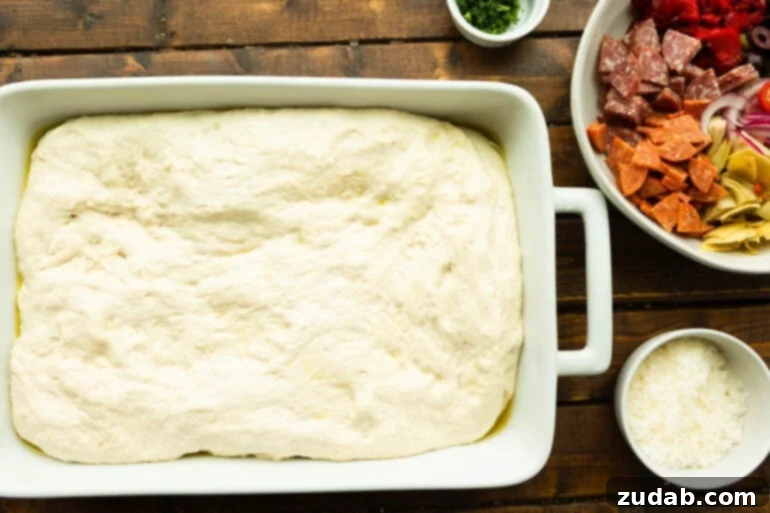
Step-by-Step Guide to Making Antipasto Focaccia Bread
- Combine Ingredients: In a large bowl, whisk together the flour, salt, and sugar. In a separate bowl, combine the warm water and yeast. Let it stand for a few minutes until foamy, then add it to the dry ingredients. Stir until a shaggy dough forms.
- Refrigerate Dough: Cover the bowl tightly with plastic wrap and refrigerate the dough overnight (at least 8 hours) for enhanced flavor and texture. This slow fermentation process develops a more complex taste.
- Prepare Toppings: While the dough rests, chop all your chosen antipasto ingredients into bite-sized pieces. This ensures even cooking and distribution of flavors.
- Shape the Dough: Lightly oil a 9×13 inch baking pan. Gently transfer the dough to the prepared pan and stretch it to fill the pan. Be careful not to tear the dough.
- Dimple the Dough: Drizzle olive oil generously over the dough and use your fingers to create deep indentations (or “docking”) all over the surface. These dimples will help prevent the dough from puffing up too much and create little pools of flavorful oil.
- Add Toppings: Sprinkle the chopped antipasto ingredients evenly over the dimpled dough. Press them gently into the dough to secure them.
- Bake: Preheat oven to 425°F (220°C). Bake for 20-25 minutes, or until the focaccia is golden brown and the toppings are cooked through.
- Cool and Serve: Let the focaccia cool in the pan for a few minutes before slicing and serving. Enjoy it warm or at room temperature.

Creative Variations for Your Focaccia
If you’re looking to customize your focaccia bread, here are some delicious variations:
- Crispy Bacon & Gruyere: Top with crispy bacon crumbles and grated Gruyere cheese for a savory and smoky flavor.
- Caramelized Onion & Balsamic: Spread caramelized onions over the dough and drizzle with balsamic glaze after baking for a sweet and tangy combination.
- Chopped Ham & Swiss: Combine chopped ham and shredded Swiss cheese for a classic and comforting flavor.
- Sautéed Mushrooms & Parmesan: Sautéed mushrooms with garlic and herbs, topped with grated Parmesan cheese, create an earthy and umami-rich focaccia.
- Prosciutto & Peach: Thinly sliced prosciutto and fresh peach slices, drizzled with honey after baking, offer a sweet and salty delight.
- Grapes & Brie: Sliced grapes and Brie cheese, baked until the Brie is melty, create a sophisticated and elegant appetizer.
- Pesto & Cherry Tomatoes: Spread pesto over the dough and top with halved cherry tomatoes for a vibrant and flavorful focaccia.
- Rosemary & Sea Salt: Simple yet elegant, fresh rosemary sprigs and coarse sea salt create an aromatic and flavorful focaccia.
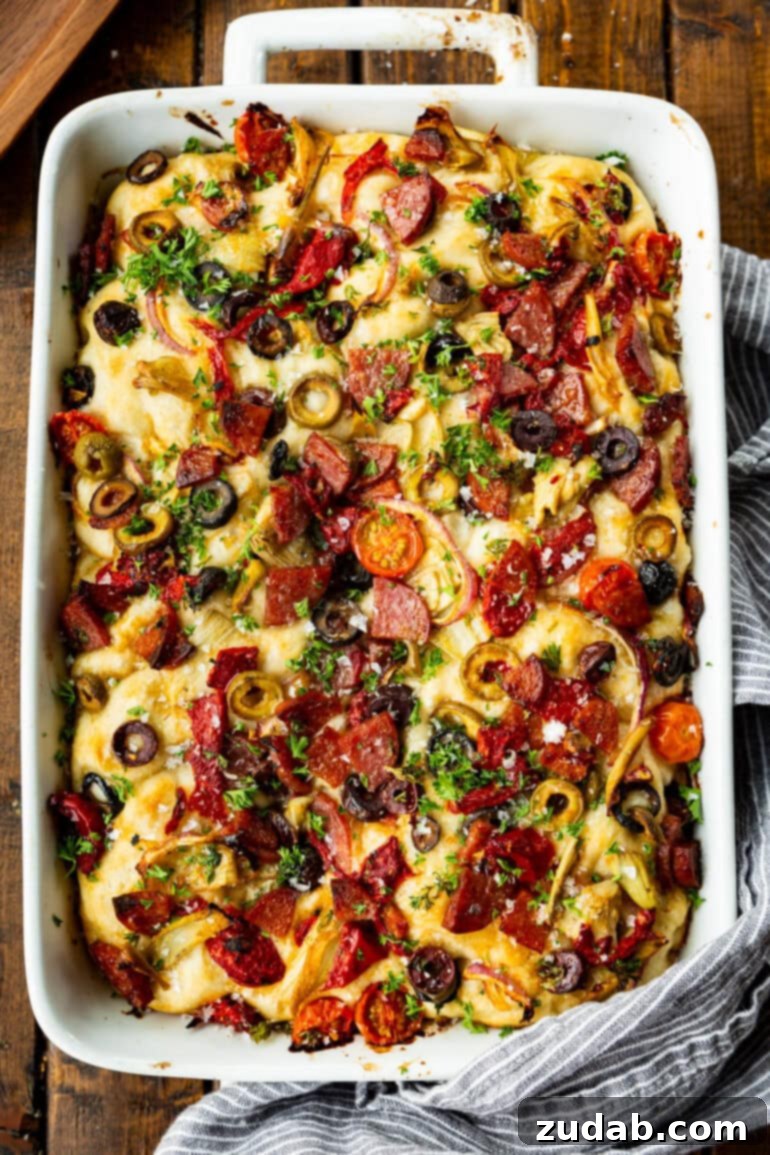
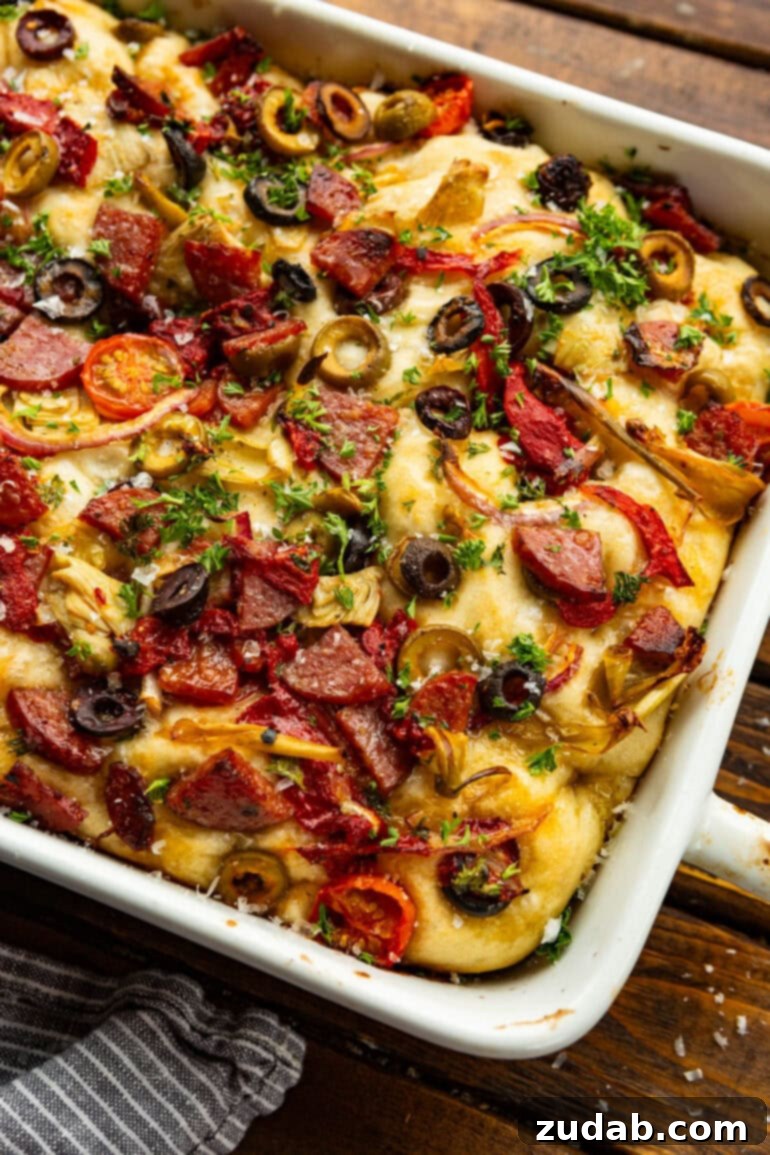
Whether you serve it as an appetizer, a main course, or a side dish alongside tomato basil soup, this Antipasto Italian Focaccia recipe will impress your friends and family. This savory bread, bursting with meats, cheeses, and vegetables, is suitable for any occasion. Enjoy!
Tips for Perfect Focaccia
- Use quality olive oil: Good quality olive oil is key to a delicious focaccia. It adds flavor and helps to create a crispy crust.
- Don’t overwork the dough: Overworking the dough will result in a tough focaccia. Mix the ingredients just until they come together, and then let the dough rest.
- Proof the yeast: To ensure your yeast is active, proof it by mixing it with warm water and sugar. If it doesn’t foam up after a few minutes, the yeast may be old and need to be replaced.
- Let the dough rise properly: A long, slow rise in the refrigerator develops the flavor of the dough. Make sure to let the dough rise until it is doubled in size before baking.
- Preheat the oven: A hot oven is essential for a crispy focaccia. Make sure to preheat the oven to the correct temperature before baking.
- Don’t be afraid to experiment with toppings: Get creative and use your favorite toppings to customize your focaccia.
- Store properly: Store leftover focaccia in an airtight container at room temperature. It’s best enjoyed within a day or two.
Serving Suggestions
Antipasto focaccia is versatile and can be enjoyed in many ways:
- Appetizer: Serve it as a flavorful appetizer at your next party or gathering.
- Main Course: Pair it with a salad for a light and satisfying meal.
- Side Dish: Serve it alongside soups, stews, or pasta dishes.
- Sandwich Bread: Use it to make delicious and unique sandwiches.
- Snack: Enjoy it as a hearty and flavorful snack.
Frequently Asked Questions (FAQ)
- Can I use all-purpose flour instead of bread flour?
- Yes, you can, but bread flour will result in a chewier focaccia. All-purpose flour will yield a softer crumb.
- Can I freeze focaccia bread?
- Yes, you can freeze baked focaccia. Wrap it tightly in plastic wrap and then in foil, and freeze for up to 2 months. Thaw at room temperature before serving.
- How do I prevent the toppings from burning?
- If the toppings start to brown too quickly, tent the focaccia with aluminum foil during the last few minutes of baking.
- Can I make this recipe ahead of time?
- Yes, you can make the dough ahead of time and store it in the refrigerator for up to 2 days. You can also bake the focaccia ahead of time and reheat it before serving.
- What if I don’t have time for a long rise?
- While a long, slow rise is ideal for flavor development, you can shorten the rising time to about 2-3 hours at room temperature.