
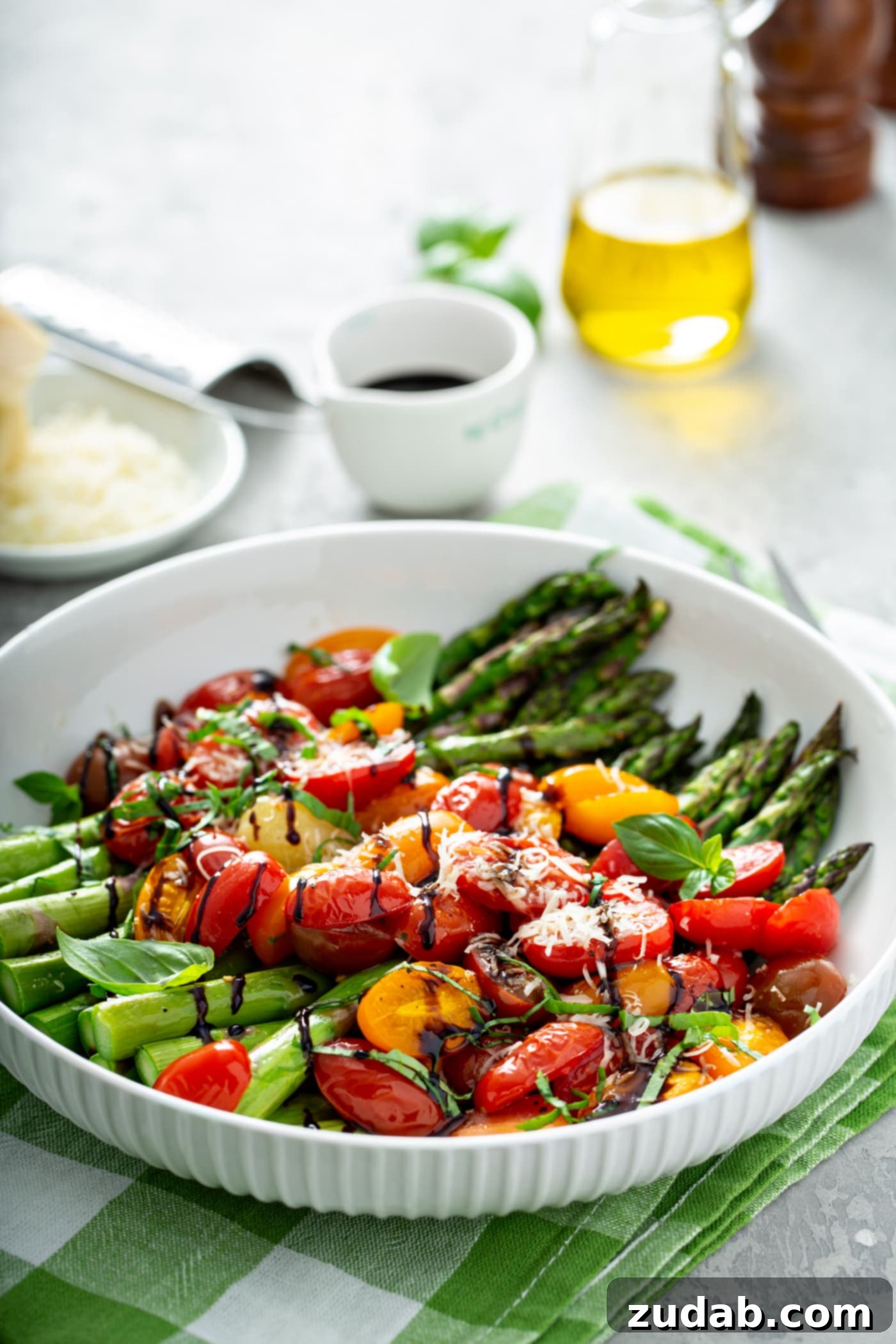
Balsamic Glazed Roasted Tomato and Asparagus: A Gourmet Side in Minutes
Transform your mealtime with a side dish that exudes gourmet elegance yet demands minimal effort: Balsamic Glazed Roasted Tomato and Asparagus. This vibrant medley of tender-crisp asparagus and sweet, caramelized tomatoes, beautifully enhanced with a rich balsamic glaze, is a testament to how simple ingredients can create extraordinary flavors. It’s the perfect addition to any dinner, promising a burst of freshness and a touch of sophistication that your guests—and your taste buds—will adore.
Before diving into the roasting magic, we highly recommend mastering the art of preparing asparagus. A properly trimmed spear is the foundation for a perfectly cooked one, ensuring even roasting and optimal texture.
Once your asparagus is ready for its close-up, let’s embark on crafting this delicious roasted vegetable side. It has quickly become a household favorite, standing proudly alongside comforting classics like our Instant Pot Green Beans and Potatoes with Bacon, and even complementing heartier main courses such as our savory Instant Pot Short Ribs. This dish proves that an impressive side doesn’t have to be complicated.
The Irresistible Charm of Roasted Tomato and Asparagus
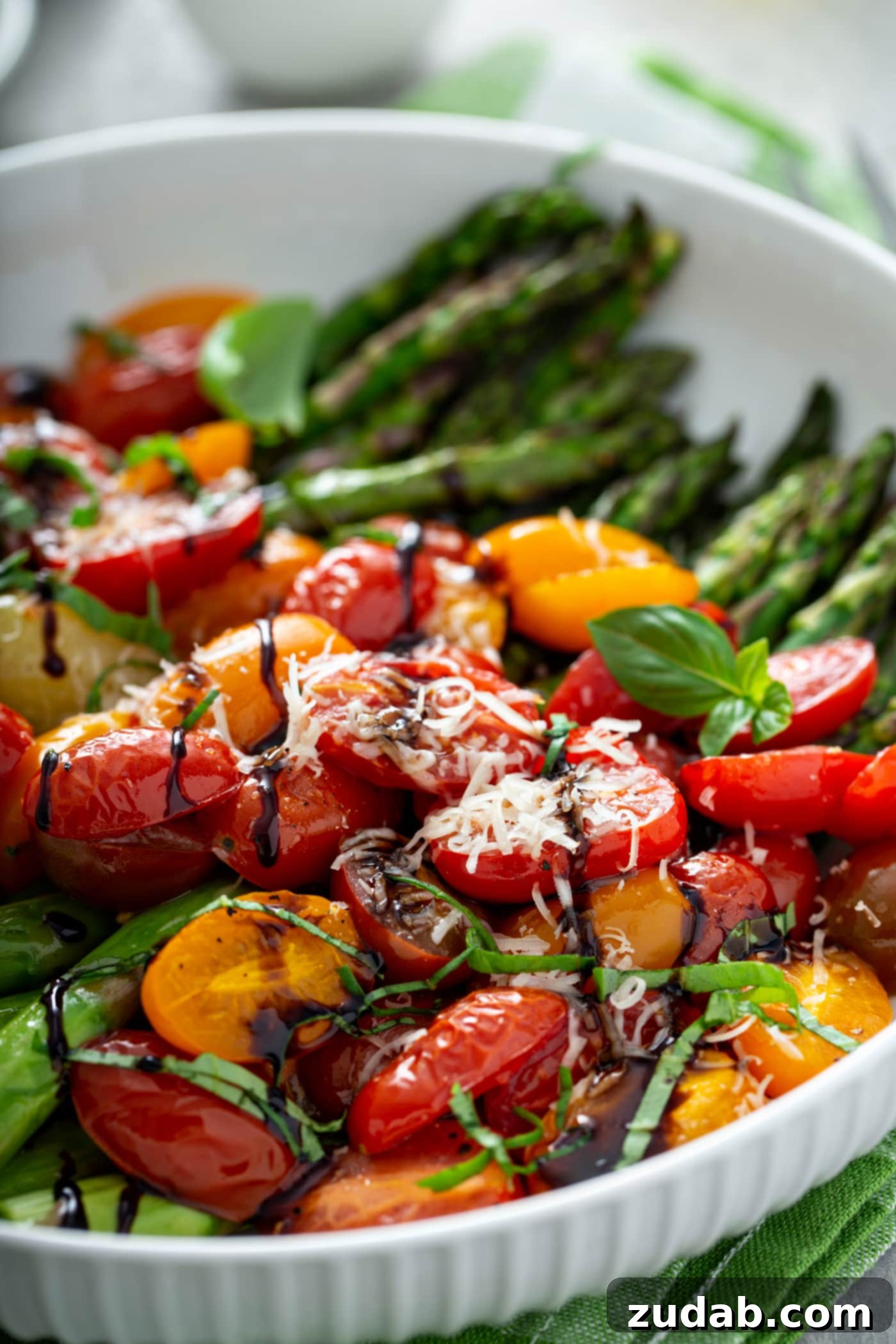
There’s something inherently appealing about roasted vegetables. The high heat of the oven coaxes out their natural sweetness, creating a depth of flavor that steaming or boiling simply cannot achieve. In this recipe, the combination of juicy tomatoes and earthy asparagus creates a delightful contrast in both taste and texture. The balsamic glaze then acts as the perfect finishing touch, adding a tangy, slightly sweet dimension that ties all the elements together beautifully. It’s a simple dish, yet so versatile that you can easily adapt it to suit your palate or occasion.
We particularly love incorporating heirloom grape tomatoes into this recipe. Their diverse, vibrant colors—from deep reds to sunny yellows—not only make the dish visually stunning but also bring a nuanced, extra burst of flavor that elevates the entire experience. While any grape or cherry tomato will work beautifully, heirlooms add that special touch.
Why You’ll Adore This Balsamic Roasted Vegetable Medley
This roasted tomato and asparagus recipe is more than just a side; it’s a celebration of seasonal produce, effortlessly brought to life. Here’s why it will quickly become a fixture in your culinary repertoire:
- Effortless Elegance: Despite its sophisticated presentation, this dish requires minimal prep and cook time, making it ideal for both busy weeknights and special gatherings.
- Flavor Harmony: The natural sweetness of roasted tomatoes and asparagus is perfectly balanced by the tangy-sweet balsamic glaze and the salty, umami notes of Parmesan cheese.
- Nutrient-Rich: Packed with vitamins, minerals, and fiber, this dish is not only delicious but also incredibly healthy.
- Year-Round Appeal: While fresh-from-the-garden produce is always a treat, the ingredients for this recipe are readily available in grocery stores throughout the year, ensuring you can enjoy it anytime.
- Customizable: Easily adapt it with your favorite herbs, cheeses, or even a sprinkle of toasted nuts for added crunch.
Essential Ingredients for Your Balsamic Glazed Roasted Tomato Asparagus
One of the beauties of this recipe is its reliance on fresh, accessible ingredients that are easy to find at any time of the year. This makes it a quick, simple, and always-pretty addition to your table. Here’s what you’ll need to create this delightful dish:
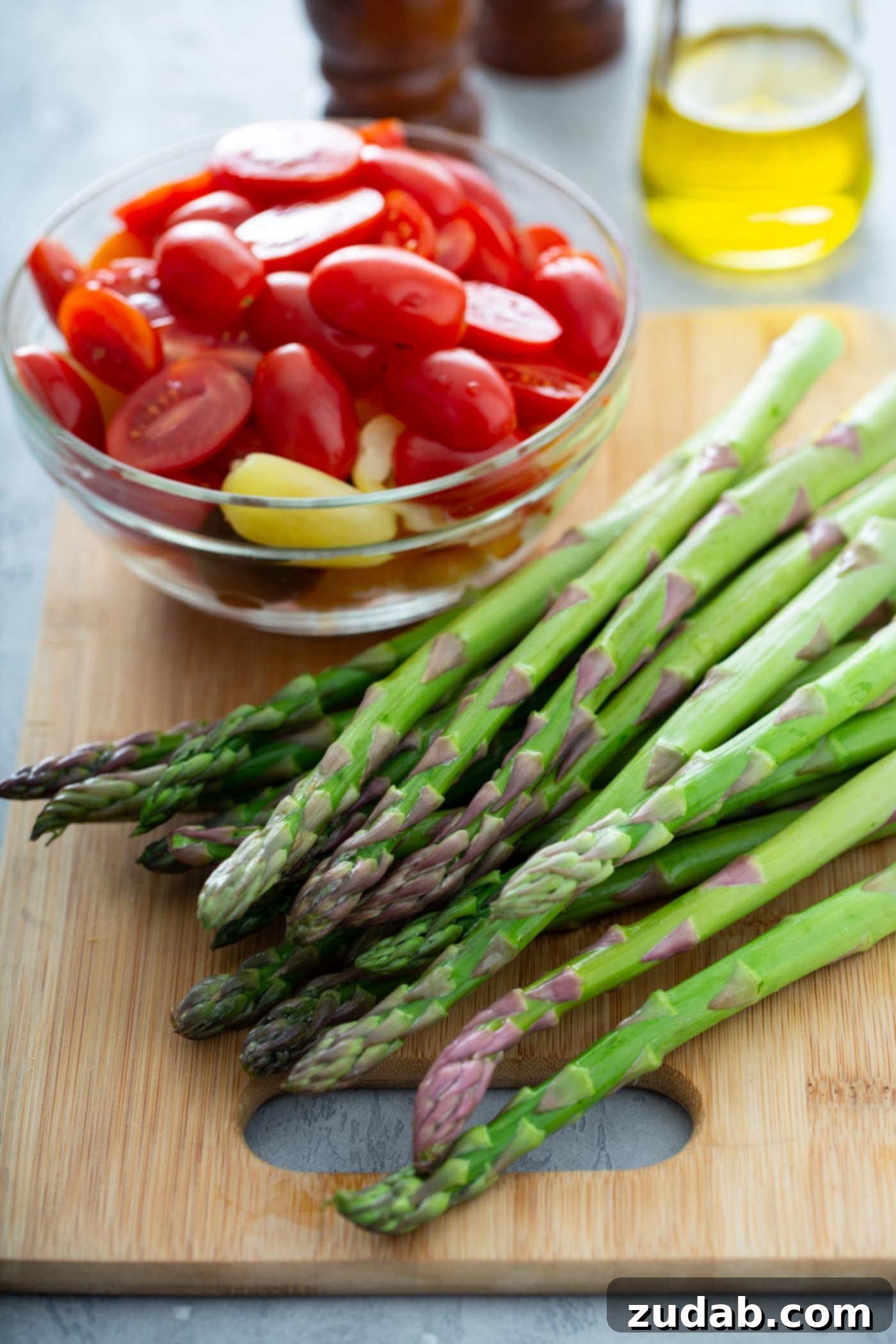
- Tomatoes: We recommend heirloom grape tomatoes for their stunning colors and intense flavor, but any small variety like cherry tomatoes will work wonderfully. Halving them allows for better caramelization.
- Asparagus: Fresh, vibrant green spears are key. Ensure they are trimmed properly for the best texture.
- Fresh Basil: For garnish, adding a fragrant, peppery note that brightens the dish.
- Balsamic Vinegar: The star of the glaze, providing a rich, tangy, and slightly sweet base.
- Sugar: A small amount helps to balance the acidity of the balsamic vinegar and achieve that perfect reduction.
- Parmesan Cheese, Shredded: Adds a salty, nutty, and savory finish that complements the roasted vegetables.
- Olive Oil: Essential for coating the vegetables, promoting even cooking and delicious caramelization.
- Salt and Pepper: To taste, enhancing the natural flavors of the produce.
The Art of Roasting Asparagus: Achieving Perfection
Roasting asparagus is incredibly straightforward, and the secret to its success often lies in “leaving it alone” once it’s on the baking sheet. This allows the stalks to caramelize beautifully, developing a tender interior and slightly crispy exterior that is simply irresistible.
- Preheat Your Oven: Start by preheating your oven to a consistent 400 degrees Fahrenheit (200 degrees Celsius). This high heat is crucial for achieving that desirable caramelization.
- Prepare and Season: Begin by trimming the woody ends off your asparagus spears. Toss the trimmed asparagus generously with a good quality olive oil, then season with salt and freshly ground black pepper to taste. Ensure each spear is lightly coated.
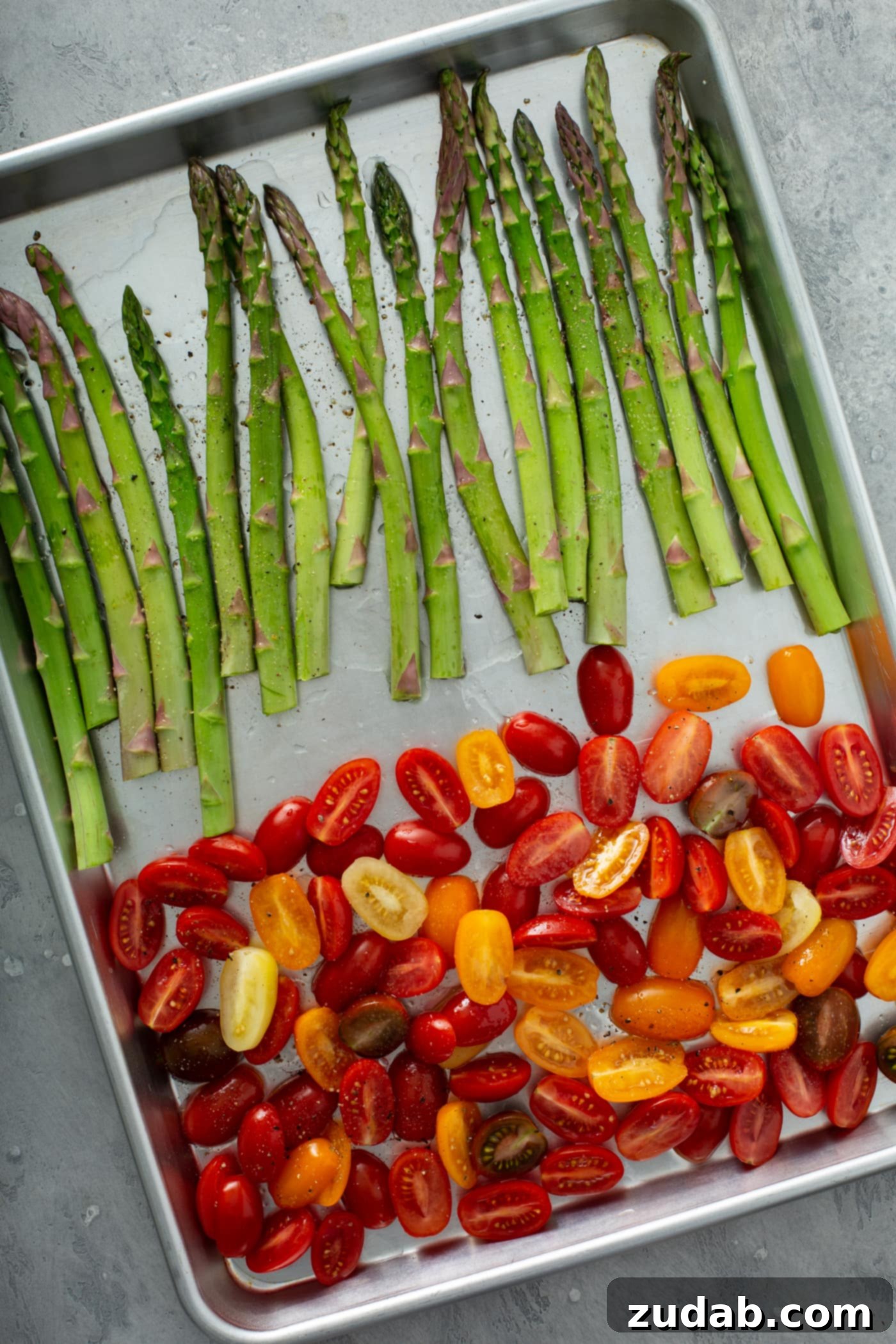
- Evenly Arrange: Spread the seasoned asparagus in a single layer on a baking sheet. Overcrowding the pan can lead to steaming rather than roasting, so use two sheets if necessary.
- Roast to Perfection: Bake for 10-15 minutes. The exact time will depend on the thickness of your asparagus and your preferred level of tenderness. Thinner spears will cook faster, while thicker ones may require a few extra minutes.
How Do You Know When Asparagus Is Perfectly Cooked?
For most chefs, perfectly cooked asparagus should be tender yet retain a slight crispness. A classic test is to bend a spear: if it snaps cleanly, it’s done. If it bends completely without snapping, it’s likely overcooked. However, personal preference plays a significant role here. While many prefer the “tender-crisp” bite, some, including myself, enjoy it cooked just a little past that, offering a softer texture. Experiment to find your perfect doneness!
Mastering Roasted Tomatoes: Enhancing Natural Sweetness
Some might hesitate to roast delicate tomatoes, fearing they’ll turn mushy, but roasting is one of the best ways to intensify their flavor. The oven’s heat draws out their natural sugars, creating a deeper, richer, and sweeter taste profile that is utterly delicious. When roasting tomatoes alongside asparagus, a simple trick ensures both vegetables cook perfectly without affecting each other’s texture.
- Strategic Placement: Arrange your halved grape or cherry tomatoes on the opposite end of the same baking sheet from the asparagus. This separation is key to prevent the juicy tomatoes from “boiling” the asparagus, which can happen if their liquids are too close.
- Season and Roast: Just like the asparagus, toss your tomatoes with a touch of olive oil, salt, and pepper. Roast them for the same amount of time as the asparagus (10-15 minutes).
- Visual Cues for Doneness: Tomatoes are done when they begin to wilt, soften, and you see dark, caramelized spots forming on their skin. This indicates their sugars have concentrated, resulting in maximum flavor.
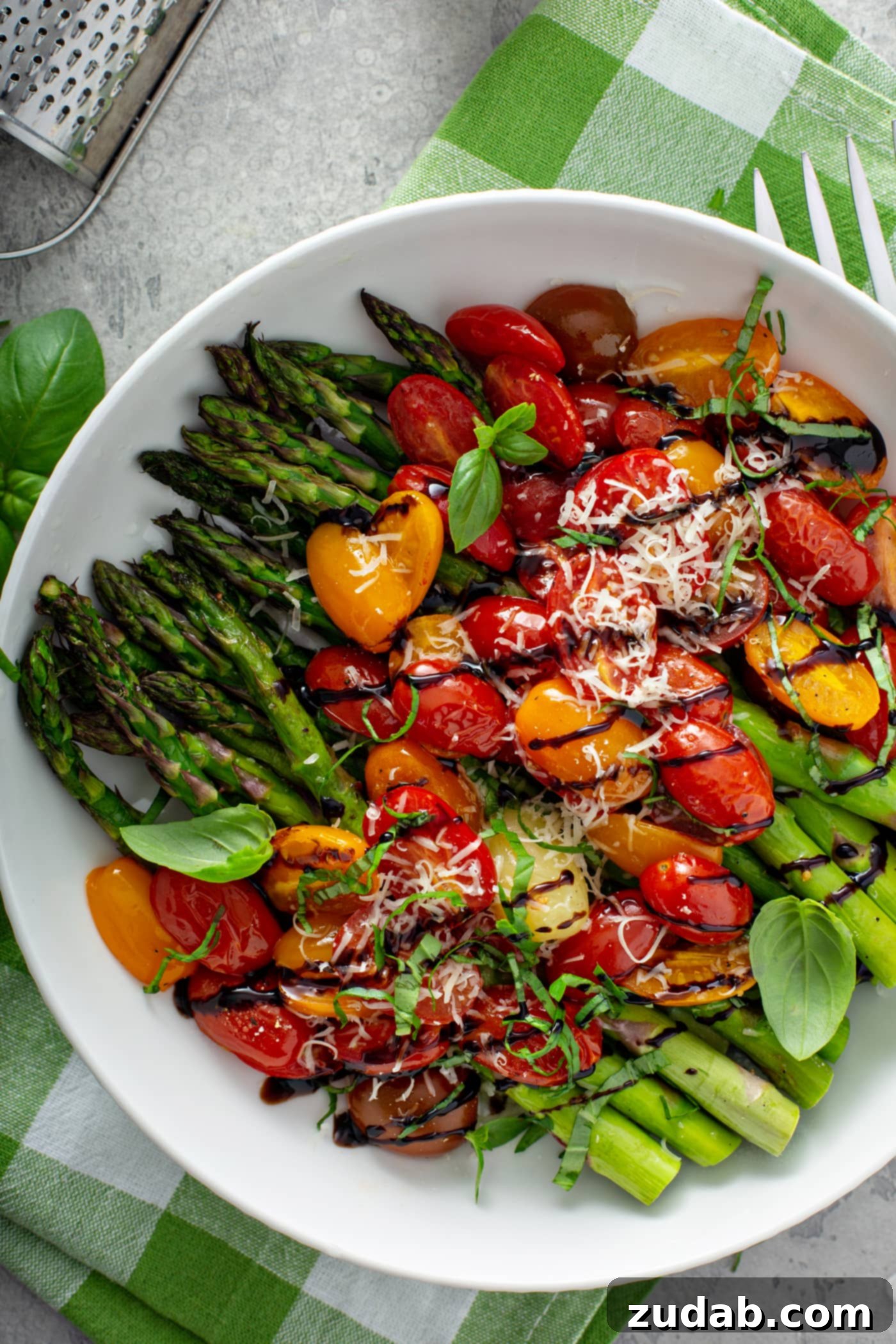
Crafting the Perfect Balsamic Glaze
The balsamic glaze is what truly elevates this dish, adding a sweet and tangy sheen that enhances every bite. Making your own glaze from scratch is simple and yields a far superior flavor compared to store-bought versions.
- Combine Ingredients: In a small saucepan, combine 1/2 cup of balsamic vinegar with 1/2 teaspoon of sugar. The sugar helps to mellow the vinegar’s acidity and promotes a thicker consistency.
- Simmer and Reduce: Place the saucepan over medium heat and whisk gently until the sugar dissolves. Bring the mixture to a gentle simmer. Do not boil vigorously, as this can cause it to reduce too quickly and become overly thick or burnt.
- Monitor for Thickness: Continue to simmer, stirring occasionally, until the liquid has reduced by about one-third and coats the back of a spoon. It should have a syrupy consistency, similar to maple syrup. This typically takes 5-10 minutes.
- Cool and Serve: Once reduced, remove the pan from the heat and set the glaze aside to cool. It will thicken further as it cools. Drizzle generously over your roasted vegetables just before serving.
Expert Tips for Storing Fresh Asparagus
To ensure your asparagus stays fresh and crisp until you’re ready to roast it, proper storage is crucial. I rarely buy asparagus on the day I plan to cook it, which made learning optimal storage methods a necessity.
- Refrigerator Method: The best way to store fresh asparagus is to treat it like a bouquet of flowers. Trim the very ends of the stalks (about half an inch), then stand the asparagus upright in a glass jar or container with about 1-2 inches of water at the bottom. Cover the top loosely with a plastic bag to create a humid environment, and place it in the refrigerator. This method can keep asparagus fresh for up to a week.
Oh Sweet Basil Pro Tip: Mimic the Store!
Here’s a golden rule for storing almost all produce, a favorite tip from Oh, Sweet Basil: always try to store your produce in a way that mimics how you found it in the grocery store.
Think about it: grocery stores are experts at keeping food looking and tasting its best for as long as possible to minimize waste. They invest time and research into ideal storage conditions.
- If an item is chilled in the store (like asparagus, herbs, leafy greens), keep it in the fridge at home.
- If it’s displayed in open bins at room temperature (like onions, potatoes, squash, bananas), store it in a dark, cool, dry place away from direct sunlight.
Following their lead can significantly extend the shelf life and quality of your fresh produce.
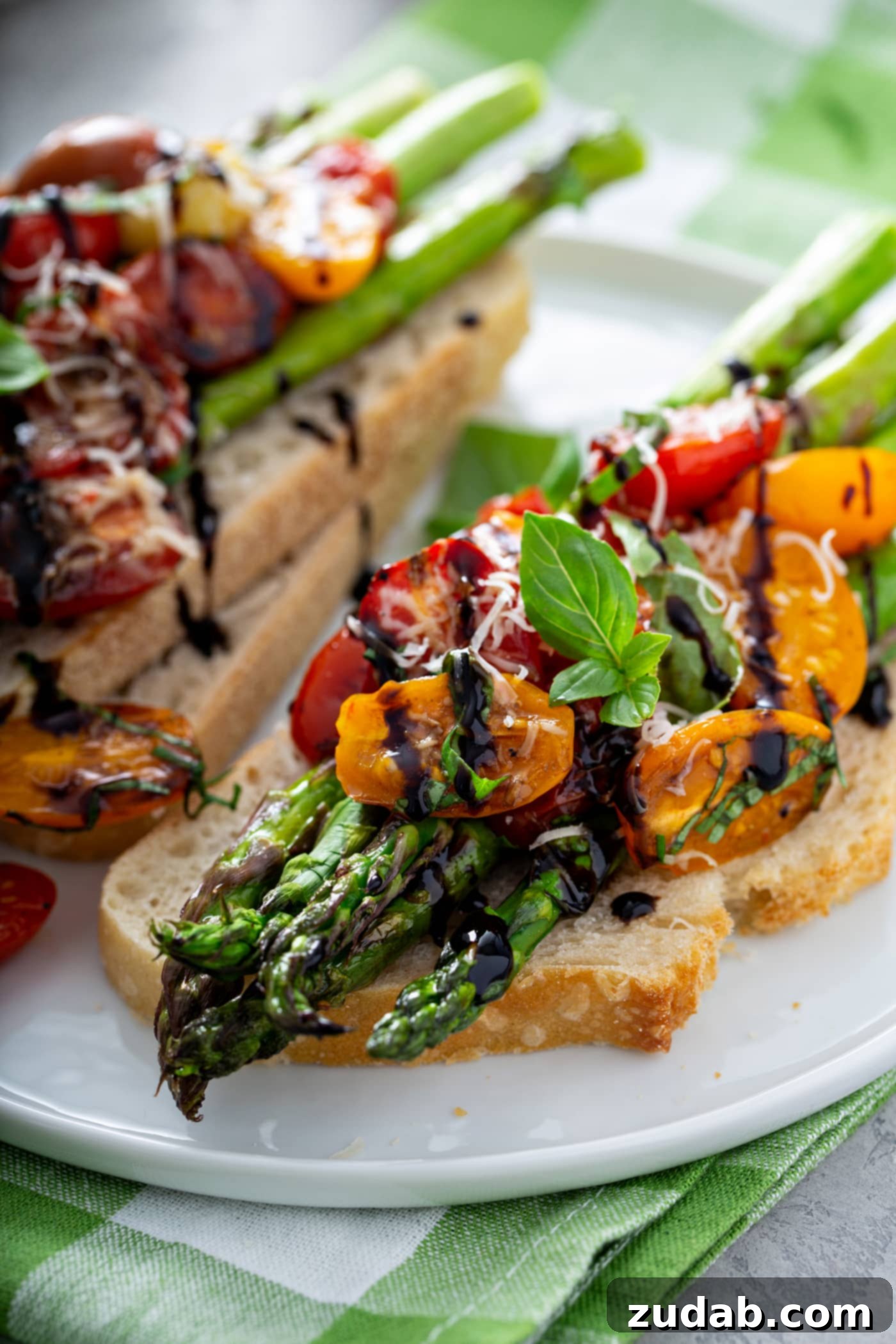
Creative Ways to Serve Roasted Asparagus and Tomatoes
This balsamic glazed roasted tomato and asparagus dish is wonderfully versatile. While we often enjoy it as a standalone side (which accounts for 99% of its servings in our home!), there are numerous ways to elevate and incorporate it into other meals.
- As a Classic Side: Serve it directly from the platter, garnished with fresh basil and a final sprinkle of Parmesan, alongside your favorite protein.
- On Toasted Bread or Crostini: For a delightful appetizer or a light lunch, spoon the roasted vegetables over slices of crusty toasted bread or crispy crostini. The bread soaks up all the delicious juices and glaze, creating a flavorful bite.
- Pasta Enhancer: Toss the warm roasted vegetables with your favorite pasta, a drizzle of olive oil, and extra Parmesan for a quick and satisfying vegetarian meal. Add some grilled chicken or shrimp for a heartier option.
- Salad Booster: Let the roasted vegetables cool slightly, then add them to a bed of fresh greens for a warm, flavorful salad. A light vinaigrette would complement the balsamic glaze beautifully.
- Pizza Topping: Spread a thin layer of ricotta or pesto on a pizza crust, then top with the roasted vegetables, fresh mozzarella, and a sprinkle of Parmesan before baking for a gourmet pizza.
- Grain Bowl Addition: Combine with quinoa, farro, or brown rice, along with a protein of your choice, for a wholesome and flavorful grain bowl.
Storing and Reheating Leftover Asparagus and Tomatoes
Storing and reheating any leftovers from this delicious dish is simple, ensuring you can enjoy its flavors for another day.
- Storage: Allow the roasted vegetables to cool completely to room temperature. Transfer them to an airtight container with a lid and store in the refrigerator for up to 1-2 days.
- Reheating: You can gently warm the leftovers in the microwave, though this might slightly alter the texture. For best results, reheat in the oven at 400 degrees Fahrenheit (200 degrees Celsius) for about 5-7 minutes, until warmed through. Keep in mind that asparagus won’t regain its original crispness once reheated, but it will still be delicious.
- Creative Uses for Leftovers: If the texture isn’t quite as firm as you’d like, leftover roasted asparagus and tomatoes are fantastic when chopped and added to an omelet, frittata, pasta dish, or a simple green salad. This way, the slight change in texture is less noticeable, and the rich flavors still shine through.
Frequently Asked Questions About This Dish
Is Asparagus Good For You?
Absolutely! Asparagus is a nutritional powerhouse. It’s very low in calories and an excellent source of essential nutrients, including dietary fiber, folate, and vitamins A, C, and K. It also contains powerful antioxidants and can support digestive health.
What Are Heirloom Grape Tomatoes?
Heirloom tomatoes are varieties of tomatoes whose seeds have been passed down for generations, much like family heirlooms. Unlike hybrid tomatoes bred for uniform appearance or disease resistance, heirlooms are prized for their intense, complex, and distinct flavors, as well as their diverse shapes and vibrant colors. Heirloom grape tomatoes, specifically, offer a sweet and slightly tangy burst that truly sets them apart. If you can’t find heirloom varieties, regular grape or cherry tomatoes will still yield a delicious result.
Can I add other vegetables to this dish?
Certainly! This recipe is very adaptable. Bell peppers, zucchini, yellow squash, or even red onion slices would roast well alongside the asparagus and tomatoes. Just ensure they are cut into similar sizes for even cooking and tossed in olive oil and seasonings.
What if I don’t have balsamic vinegar?
While balsamic vinegar provides a unique depth of flavor, you could try a simple lemon-herb dressing for a lighter, brighter alternative. A mix of olive oil, fresh lemon juice, garlic, and dried oregano or thyme would be delicious. However, the glaze is a signature component of this particular recipe.
Can I prepare the balsamic glaze ahead of time?
Yes, absolutely! The balsamic glaze can be made several days in advance and stored in an airtight container in the refrigerator. It will thicken considerably when cold, so you might need to gently warm it on the stovetop or in the microwave for a few seconds to achieve a pourable consistency before drizzling.
Beyond the Side: Main Dish Pairings & Related Recipes
While this roasted vegetable medley shines as a side, it also pairs wonderfully with a variety of main courses. Consider serving it with our flavorful Garlic Parmesan Chicken recipe for a complete and satisfying meal.
Looking for more ways to enjoy roasted tomatoes or asparagus? Explore these delicious recipes:
Other Roasted Tomato Recipes:
- Roasted Tomato Basil Soup
- Vegetarian Calzones with Roasted Tomatoes
- Caprese Savory Crepes
- Four Cheese Stuffed Tomatoes
More Asparagus Recipes:
- Easy Grilled Lemon Pepper Asparagus
- Cilantro Pesto Asparagus
- Asparagus and Avocado Salad
- Spring Ham and Asparagus Lemon Cream Pasta
- Pesto Asparagus Quinoa
Discover over 200 more delightful side dish recipes to complement any meal!
Balsamic Glazed Roasted Tomato and Asparagus
Ingredients
- 1/2 Cup Vinegar, balsamic
- 1/2 teaspoon Sugar
- 1 Bunch Asparagus, trimmed
- 2 Cups Tomatoes, heirloom, grape, cut in half
- 2 Tablespoons Olive Oil, divided
- Salt and Pepper, to taste
- 1/3 Cup Parmesan, Shredded
- Basil, fresh, chopped, for garnish
Instructions
-
In a saucepan over medium heat, whisk together the balsamic vinegar and sugar. Allow to come to a simmer and cook until reduced by 1/3. Set aside to cool.1/2 Cup Vinegar, 1/2 teaspoon Sugar
-
Heat the oven to 400 degrees Fahrenheit (200 degrees Celsius).
-
Toss the asparagus and tomatoes in 2 tablespoons of olive oil, salt and pepper. Place asparagus on one side of a baking sheet and tomatoes on the other to keep the tomato juices from affecting the asparagus.1 Bunch Asparagus, 2 Cups Tomatoes, 2 Tablespoons Olive Oil, Salt and Pepper
-
Roast for 10-15 minutes, or until vegetables are tender-crisp and lightly caramelized. Remove from oven and arrange on a platter. Sprinkle with shredded Parmesan. Drizzle with the prepared balsamic glaze and garnish with fresh basil before serving!1/3 Cup Parmesan, Basil
Recipe Notes
Leftovers can be kept in an airtight container in the refrigerator for 1-2 days.
Nutrition
Nutrition information is automatically calculated, so should only be used as an approximation.
Like this? Leave a comment below!