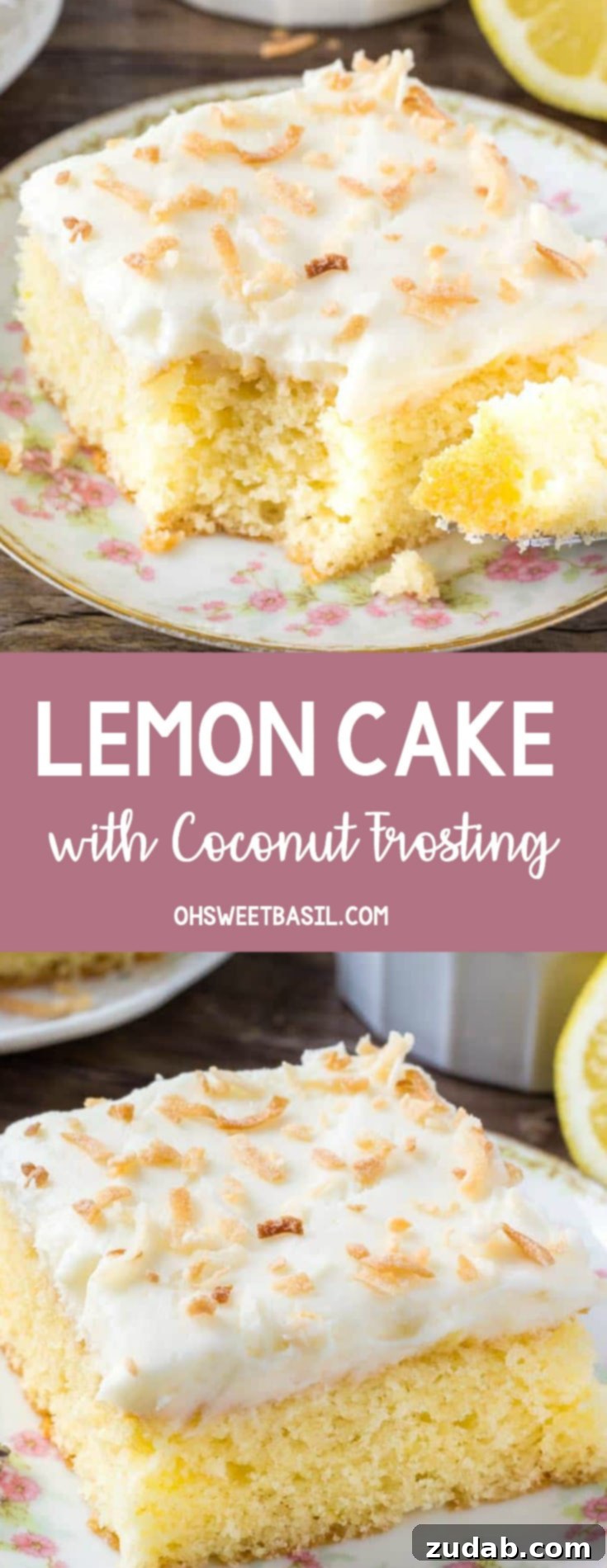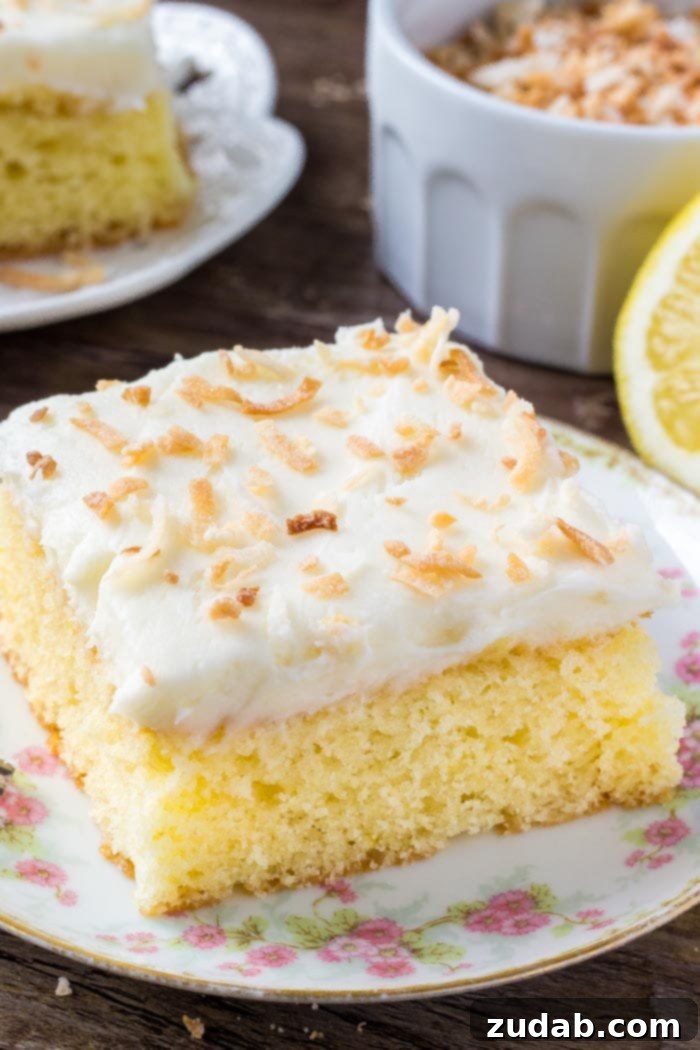
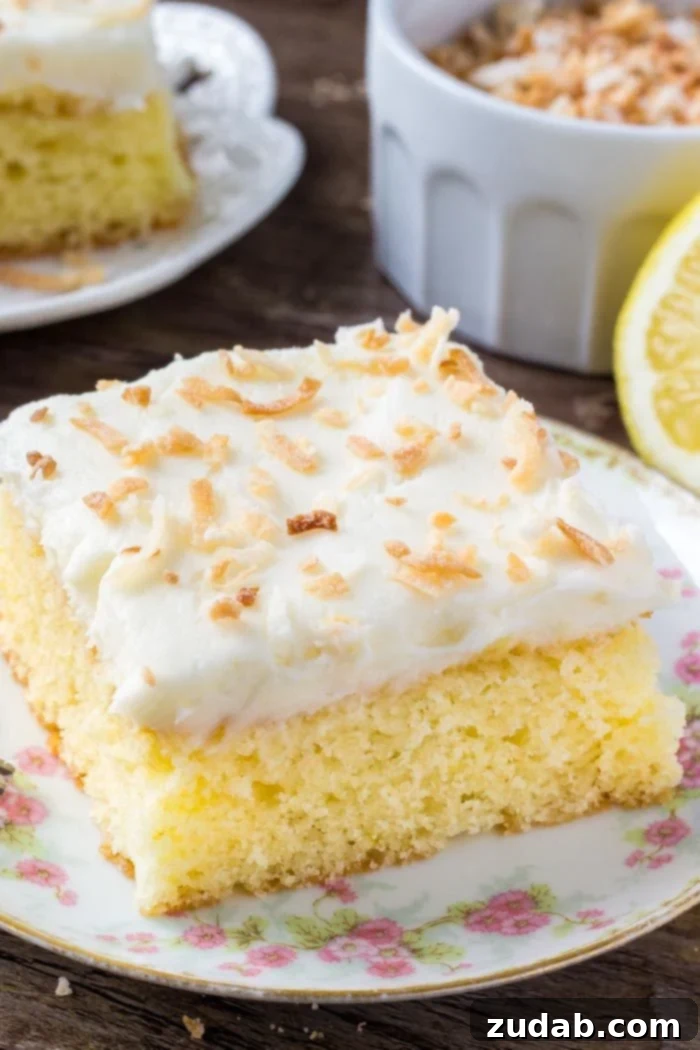
Indulge in the pure delight of this **Lemon Coconut Cake**, a truly irresistible dessert that beautifully marries the vibrant tang of fresh lemon with the sweet, tropical essence of coconut. Each moist, tender crumb of this cake is infused with bright citrus notes, perfectly complemented by a generous topping of extra fluffy coconut frosting. This easy-to-follow recipe offers a harmonious flavor combination that’s perfect for any occasion, from a festive spring gathering to a casual summer treat, or simply whenever you crave a taste of sunshine.
Baking the Perfect Lemon Coconut Cake From Scratch
There’s an undeniable charm to homemade desserts, and this Lemon Coconut Cake is no exception. My love for lemon-infused treats is well-known, and I’ve shared many favorites, from refreshing lemon poppy seed cakes to delightful lemon cheesecake squares. However, I felt inspired to create something new, a lemon cake recipe that stood out, offering a slightly different, yet equally captivating, flavor profile. This led to the creation of this exquisite lemon cake, perfectly paired with a luscious coconut frosting.
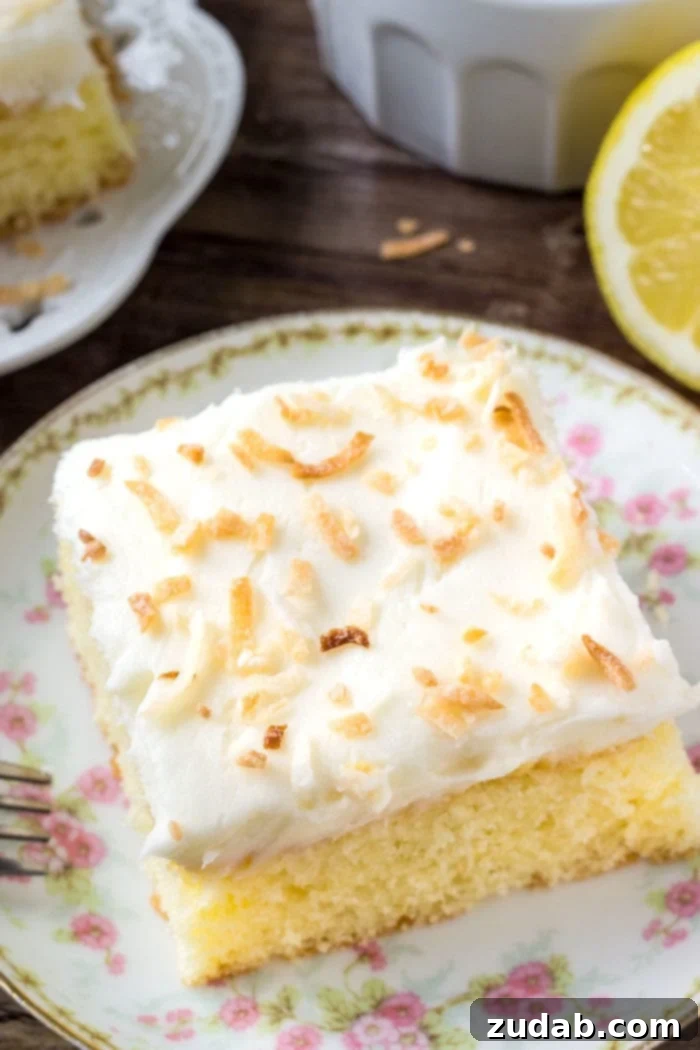
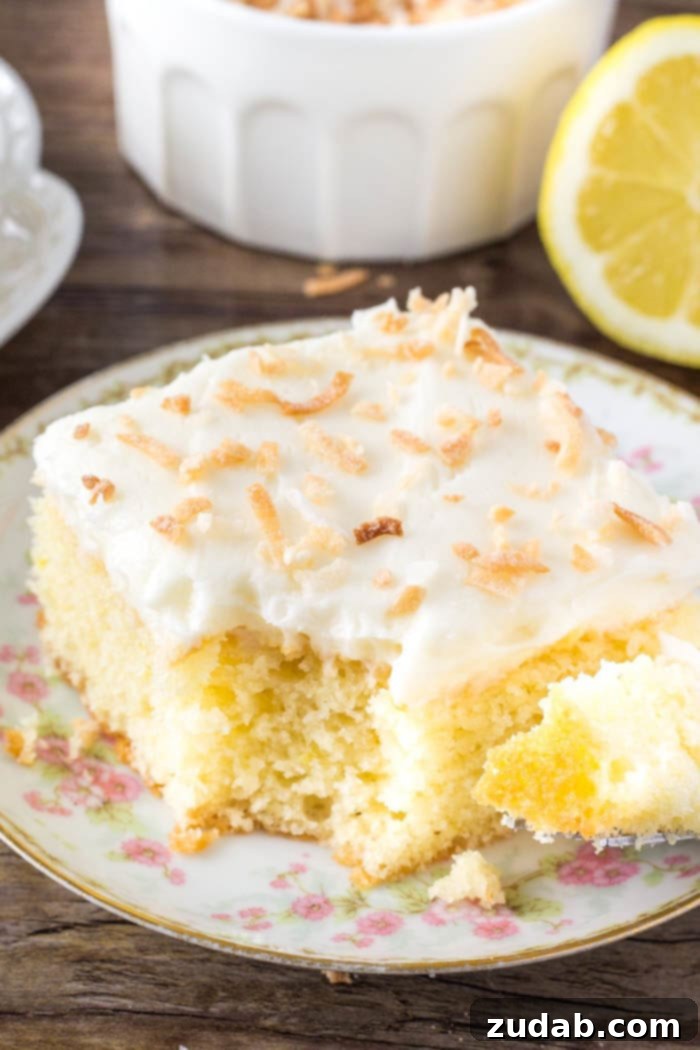
This cake isn’t just a dessert; it’s an experience. The base is a marvel of moist, buttery texture, brimming with the bright and invigorating flavor of fresh lemons. This delightful foundation is then crowned with a sweet, airy, and utterly addictive coconut buttercream frosting. The vibrant acidity of the lemon cuts through the richness of the sweet coconut, creating a balanced and refreshing taste that makes it an ideal dessert for the warmer months of spring and summer. Its sunny disposition can, of course, brighten any day, regardless of the season!
Essential Ingredients for Your Lemon Coconut Masterpiece
Creating this spectacular Lemon Coconut Cake from scratch, complete with its indulgent coconut buttercream frosting, requires a selection of readily available ingredients. Most of these staples are likely already in your pantry, making this a convenient recipe to whip up whenever a craving strikes. The quality of each component contributes significantly to the final taste and texture of your cake.
For the exceptionally moist lemon cake, you’ll need unsalted butter, granulated sugar, vanilla extract, large eggs, all-purpose flour, baking powder, baking soda, a pinch of salt, buttermilk, and, of course, fresh lemon zest and juice. The buttermilk is key for its tenderizing effect, while fresh lemon zest and juice deliver that unmistakable bright, tangy flavor that defines this dessert. The combination of baking powder and baking soda ensures a perfect rise and a delicate crumb.
The star of the show, the fluffy coconut frosting, is crafted using unsalted butter, canned coconut milk (which provides an incredible richness and authentic coconut flavor), optional coconut extract for an extra boost of tropical taste, and powdered sugar for that smooth, sweet finish. To complete the presentation and add a delightful textural contrast, don’t forget toasted coconut flakes for garnishing.
- Unsalted butter (at room temperature for optimal creaming)
- Granulated sugar
- Vanilla extract (pure vanilla extract offers the best flavor)
- Large eggs (also at room temperature)
- All-purpose flour (sifted for a lighter texture)
- Baking powder and baking soda (for leavening)
- Salt (to balance sweetness)
- Buttermilk (for ultimate moisture and tenderness)
- Fresh lemon zest and juice (critical for bright lemon flavor)
- Canned coconut milk (full-fat for rich frosting)
- Coconut extract (optional, for enhanced coconut flavor)
- Powdered sugar (for the frosting)
- Toasted coconut flakes (for garnish and texture)
Step-by-Step Guide: How to Make Lemon Coconut Cake
One of the beauties of this Lemon Coconut Cake recipe is its simplicity. By baking it in a 9×13-inch pan, we avoid the complexities of a traditional layer cake, making it perfect for bakers of all skill levels. The result is a stunning sheet cake that’s easy to serve and guaranteed to impress.
- Prepare Your Pan and Oven: Begin by preheating your oven to 350°F (175°C). Thoroughly grease and flour a 9×13-inch baking pan. This ensures your beautiful cake releases easily after baking.
- Cream Butter and Sugar: In a large mixing bowl, beat the softened unsalted butter and granulated sugar together. Cream them vigorously until the mixture is light, fluffy, and pale in color. This creaming process incorporates air, which is essential for a tender cake.
- Add Vanilla and Eggs: Stir in the vanilla extract, ensuring it’s well combined. Then, add the large eggs one at a time, beating well after each addition. This allows the eggs to fully emulsify into the batter, preventing curdling and contributing to the cake’s structure.
- Alternate Dry and Wet Ingredients: In a separate medium bowl, whisk together the sifted all-purpose flour, baking powder, baking soda, and salt. Gradually add about half of this dry mixture to the butter mixture, mixing on low speed until just combined. Follow this with half of the buttermilk, mixing until smooth. Repeat with the remaining dry ingredients and buttermilk, being careful not to overmix the batter, as this can lead to a dry cake. Scrape down the sides of the bowl as needed to ensure everything is evenly incorporated.
- Fold in Lemon Zest and Juice: Gently fold in the fresh lemon zest and lemon juice. The “folding” technique helps retain air in the batter, leading to a lighter cake, and ensures the delicate lemon flavors are evenly distributed without overworking the gluten.
- Bake the Cake: Pour the prepared batter into your greased and floured baking pan. Spread it evenly. Bake for 27-33 minutes, or until a wooden toothpick inserted into the center comes out clean. The exact baking time may vary depending on your oven, so keep an eye on it!
- Cool Completely: Once baked, remove the cake from the oven and let it cool completely in the pan on a wire rack. Cooling is crucial before frosting to prevent the frosting from melting. You can speed up this process by placing the cake in the fridge for a short period once it’s slightly cooled.
Crafting the Dreamy Coconut Frosting
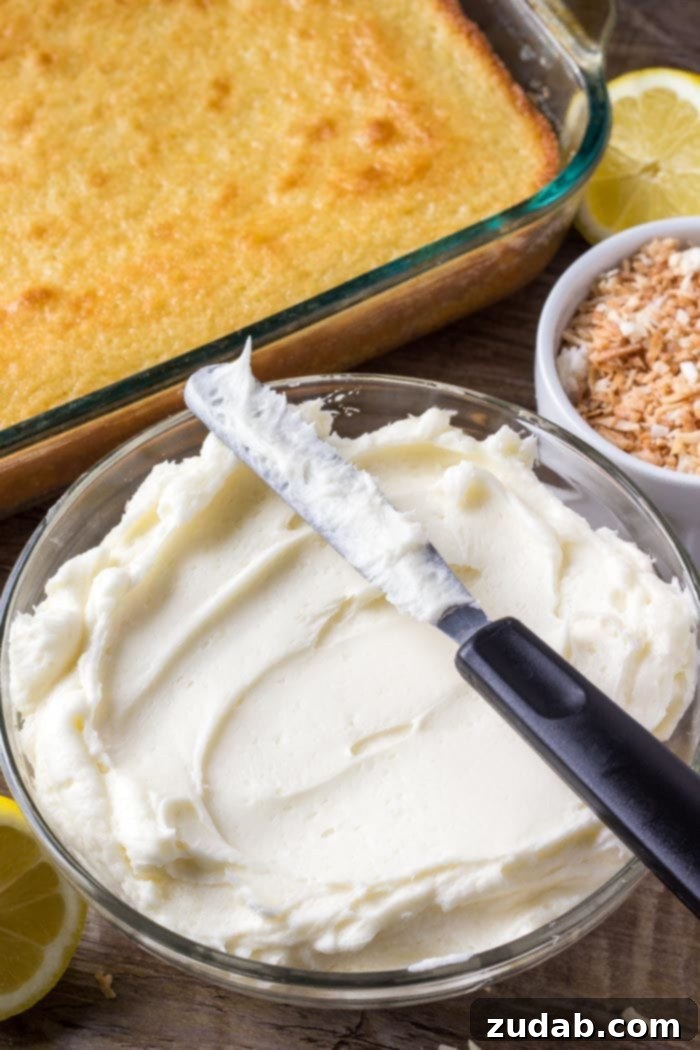
The coconut frosting is truly a star in its own right – super fluffy, wonderfully sweet, and bursting with tropical coconut flavor. It’s the perfect creamy counterpart to the tangy lemon cake.
- Beat the Butter: In a clean mixing bowl, beat the softened unsalted butter until it’s perfectly smooth and no lumps remain. This forms the creamy base of your buttercream.
- Incorporate Coconut Milk and Extract: Gradually mix in 4-5 tablespoons of canned coconut milk. Remember to shake the can well before opening to ensure the cream and water are fully combined. If you desire an intensified coconut flavor, now is the time to add the optional coconut extract. Beat until smooth and well blended.
- Gradually Add Powdered Sugar: Add the powdered sugar, about 1 cup at a time, beating thoroughly after each addition until you achieve your desired sweetness and consistency. If the frosting seems too thick, you can add a little more coconut milk, one teaspoon at a time, until it reaches a spreadable, fluffy texture. If it’s too thin, add a bit more powdered sugar.
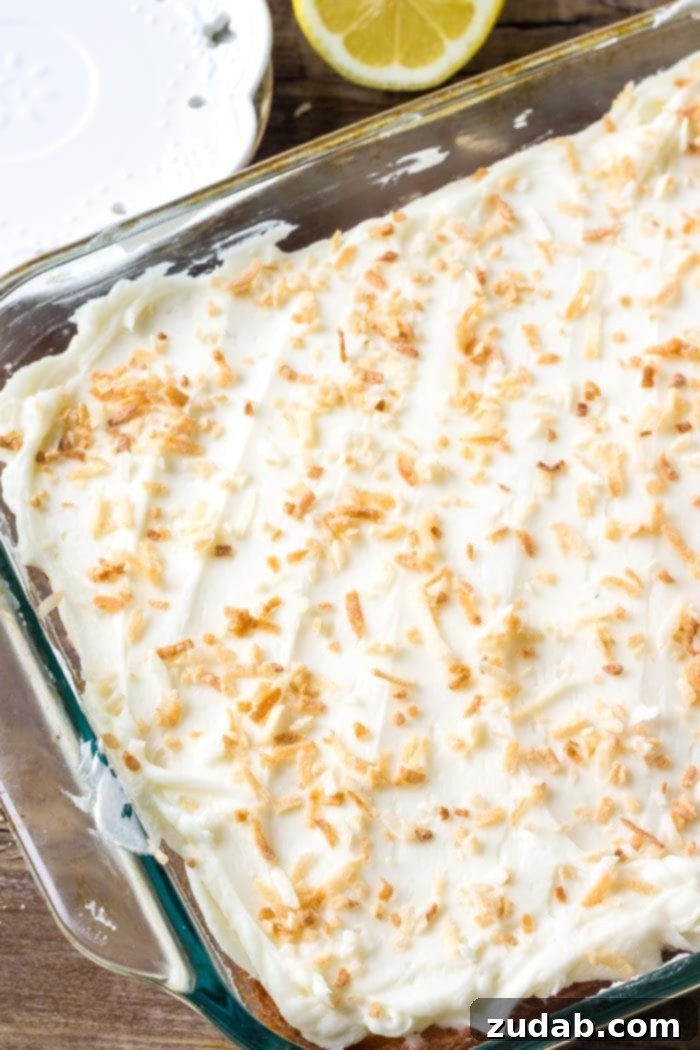
- Frost and Garnish: Once the cake is completely cooled, generously spread the delicious coconut frosting over the top. Finish by sprinkling with toasted coconut flakes for an added crunch and beautiful presentation.
Buttermilk Magic: Understanding and Substituting
Buttermilk plays a vital role in achieving the incredibly soft and tender texture of this homemade lemon cake. Its acidity reacts with the baking soda, creating air pockets that contribute to a light and airy crumb. If you don’t have buttermilk readily available, don’t worry, a simple substitute can be made at home:
To create a buttermilk substitute, add 2 teaspoons of fresh lemon juice (in addition to the lemon juice required for the cake batter) to a liquid measuring cup. Then, fill the cup with regular milk (1% fat or higher works best) up to the 3/4 cup line. Give it a gentle stir and let it sit undisturbed for about 5 minutes. During this time, the lemon juice will curdle the milk, mimicking the acidity and thickening properties of traditional buttermilk. This simple trick ensures your cake still achieves that desirable moist and tender texture.
Freezing Your Lemon Coconut Cake for Future Enjoyment
Yes, this Lemon Coconut Cake is wonderfully freezer-friendly, allowing you to prepare it in advance or save leftovers for another day. Proper freezing techniques ensure that your cake retains its delicious flavor and moist texture.
You can freeze the unfrosted lemon cake once it has cooled completely. Wrap the cooled cake tightly in several layers of plastic wrap, followed by a layer of aluminum foil, to prevent freezer burn. It can be stored in the freezer for up to 3 months. When you’re ready to enjoy it, thaw the cake overnight in the refrigerator, then bring it to room temperature before frosting. You can also freeze the coconut buttercream frosting separately in an airtight container for the same duration. Alternatively, you can wait to prepare a fresh batch of frosting once the frozen cake has thawed, ensuring the freshest possible taste and fluffiness.
Expert Tips for Making Your Lemon Coconut Cake Irresistible
While this homemade lemon cake and coconut frosting recipe is straightforward, a few key tips can elevate your baking and ensure a truly spectacular result every time. Paying attention to these details will make all the difference in achieving that perfect moist crumb and luscious frosting.
- Embrace Real Butter: Always use real unsalted butter, softened to room temperature. Butter is paramount for imparting rich flavor to your cake and ensuring it doesn’t have an oily texture. Softened butter creams beautifully with sugar, incorporating air for a light cake.
- Fresh Lemon is Non-Negotiable: For the most vibrant and authentic lemon flavor, it’s crucial to use fresh lemon zest and juice. You’ll typically need about 2 medium to large lemons in total. A pro tip: always zest your lemons *before* squeezing them for juice. Zesting a soft, squeezed lemon is much more challenging!
- Shake Your Coconut Milk: Before measuring, give your can of coconut milk a good shake. This ensures that the thick, creamy part and the more watery liquid are thoroughly combined. Using unshaken coconut milk can lead to an inconsistent frosting texture. Be sure to use canned coconut milk, not coconut water. If you opt for coconut cream, your frosting will be extra rich and decadent, which is also a fantastic choice.
- Room Temperature Ingredients are Key: This is a golden rule in baking! Ensure all cold ingredients like butter and eggs are at room temperature. This allows them to emulsify properly with the other ingredients, creating a smooth, cohesive batter or frosting. Room temperature ingredients blend evenly without requiring excessive mixing, which can overdevelop gluten in the flour and result in a dry, tough cake.
- Don’t Overmix: After adding the flour mixture, mix the batter only until the ingredients are just combined. Overmixing develops the gluten in the flour, leading to a dense and tough cake instead of the desired tender, moist crumb.
- Test for Doneness Accurately: While the baking time is a good guideline, ovens can vary. Always test your cake for doneness by inserting a wooden toothpick into the center. If it comes out clean or with a few moist crumbs attached, your cake is ready. If it’s still wet, continue baking for a few more minutes and test again.
- Cool Completely Before Frosting: Patience is key! Ensure your cake is completely cooled before you even think about applying the frosting. If the cake is even slightly warm, the buttercream will melt and slide right off, ruining your beautiful creation.
More Zesty Lemon Dessert Recipes You’ll Love:
- Lemon Cake with Lemon Cream Cheese Frosting
- Sweet Glazed Lemon Cookies
- The Best Lemon Jello Cake
- Classic Lemon Bars
- Lemon Poppy Seed Cake with Cream Cheese Frosting
- Lemon Blueberry Cupcakes
- Lemon Cheesecake Mousse Cups
More Tropical Coconut Dessert Recipes to Explore:
- White Chocolate Coconut Cream Pie
- Banana Coconut Cream Bites
- Samoa Cupcakes
- White Chocolate Mousse Nests
Lemon Cake with Coconut Frosting Recipe
Lemon Coconut Cake
This moist Lemon Coconut Cake has a tangy hint of lemon and is topped with extra fluffy coconut frosting. The perfect easy cake recipe with a fun flavor combo!
Prep Time: 30 mins
Cook Time: 30 mins
Total Time: 1 hr 30 mins
Servings: 18 pieces

Ingredients
Lemon Cake:
- 3/4 Cup Unsalted Butter, room temperature
- 1 1/3 Cups Granulated Sugar
- 2 teaspoons Vanilla Extract
- 3 Large Eggs
- 2 1/4 Cups All-Purpose Flour, sifted
- 2 teaspoons Baking Powder
- 1/2 teaspoon Baking Soda
- 1/4 teaspoon Salt
- 3/4 Cup Buttermilk
- 3 Tablespoons Lemon Zest
- 1/3 Cup Lemon Juice, (use 1/4 cup for a lighter lemon flavor)
Coconut Frosting:
- 3/4 Cup Unsalted Butter
- 4-5 Tablespoons Canned Coconut Milk, (mix well before measuring)
- 1/2 teaspoon Coconut Extract, (optional)
- 3 – 3.5 Cups Powdered Sugar
- 1/4 Cup Toasted Coconut, *
Instructions
For the Lemon Cake:
- Preheat the oven to 350ºF (175°C). Grease and flour a 9×13-inch baking pan.
- In a large bowl, beat together the butter and sugar until light and fluffy.
- Mix in the vanilla, then add the eggs one at a time, beating well after each addition.
- In a medium bowl, whisk together the flour, baking powder, baking soda, and salt.
- Mix about 1/2 of the flour mixture into the butter mixture, followed by about 1/2 of the buttermilk. Repeat with the rest of the flour mixture and buttermilk, mixing until just combined and scraping down the sides of the bowl as necessary.
- Gently fold in the lemon zest and lemon juice until evenly distributed.
- Pour the batter into the prepared pan and bake for 27-33 minutes or until a toothpick inserted into the center comes out clean.
- Cool the cake fully on a wire rack. (You can speed up this process by placing the cake in the fridge once it’s slightly cooled).
For the Coconut Frosting:
- Beat the butter until fluffy and smooth. Then beat in 4 tablespoons of well-shaken canned coconut milk, and the optional coconut extract.
- Mix in the powdered sugar about 1 cup at a time until the desired sweetness and consistency are reached. Add a little more coconut milk, a teaspoon at a time, as necessary to achieve a fluffy, spreadable frosting.
- Frost the completely cooled cake with the coconut buttercream and decorate generously with toasted coconut.
Recipe Notes
*To toast coconut: Preheat your oven to 325ºF (160°C). Spread flaked coconut (sweetened or unsweetened) onto a baking sheet in a single layer. Bake for 5-10 minutes, watching it very closely. Coconut can go from perfectly toasted to burnt quickly, so stir occasionally for even browning. Remove from oven when golden brown.
Cake may be frozen, frosted or unfrosted, for up to 3 months. Ensure it’s tightly wrapped to prevent freezer burn.
Nutrition
Serving: 1 piece, Calories: 445kcal, Carbohydrates: 71g, Protein: 3g, Fat: 17g, Saturated Fat: 11g, Cholesterol: 69mg, Sodium: 88mg, Potassium: 102mg, Fiber: 1g, Sugar: 58g, Vitamin A: 529IU, Vitamin C: 3mg, Calcium: 44mg, Iron: 1mg
Nutrition information is automatically calculated, so should only be used as an approximation.