
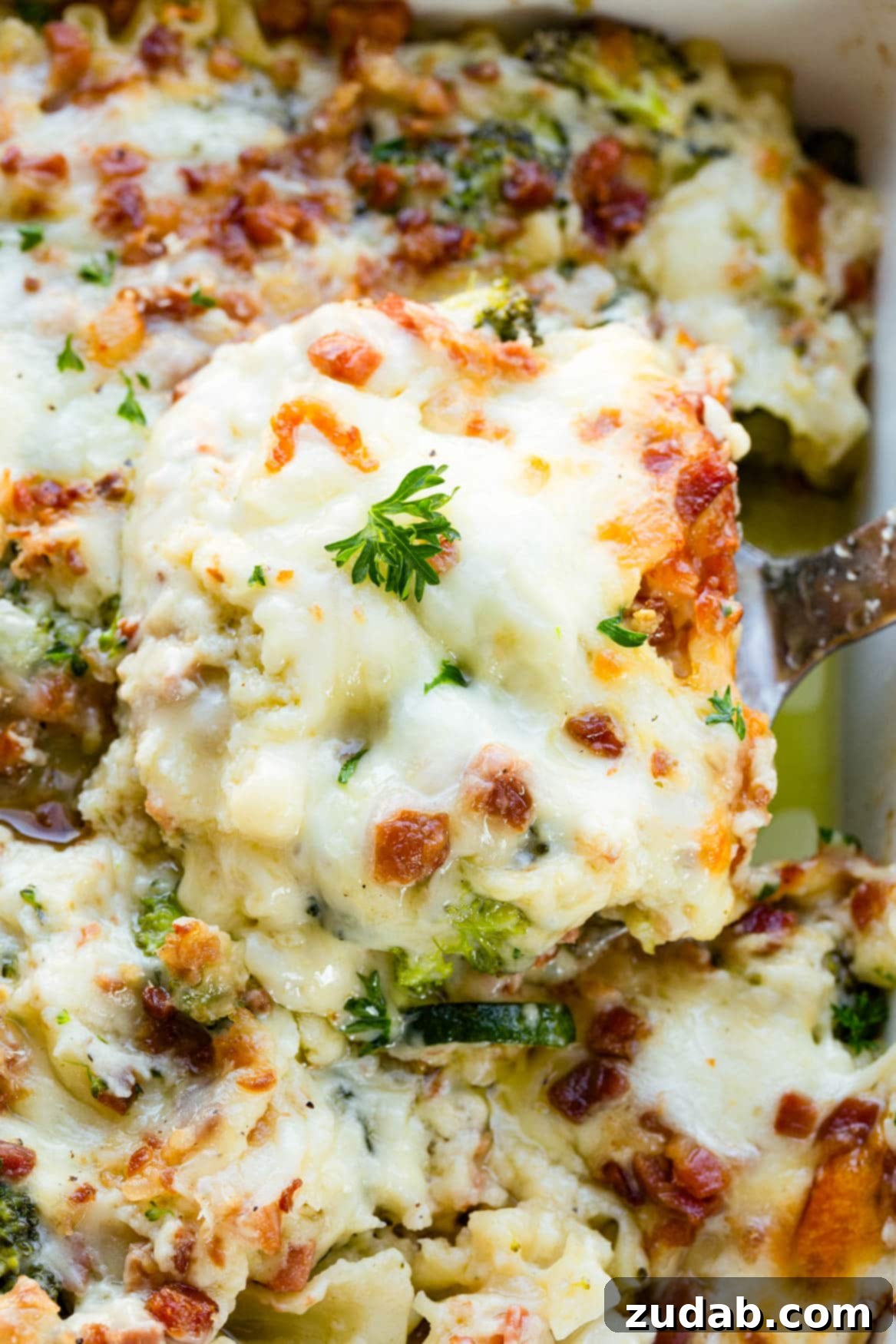
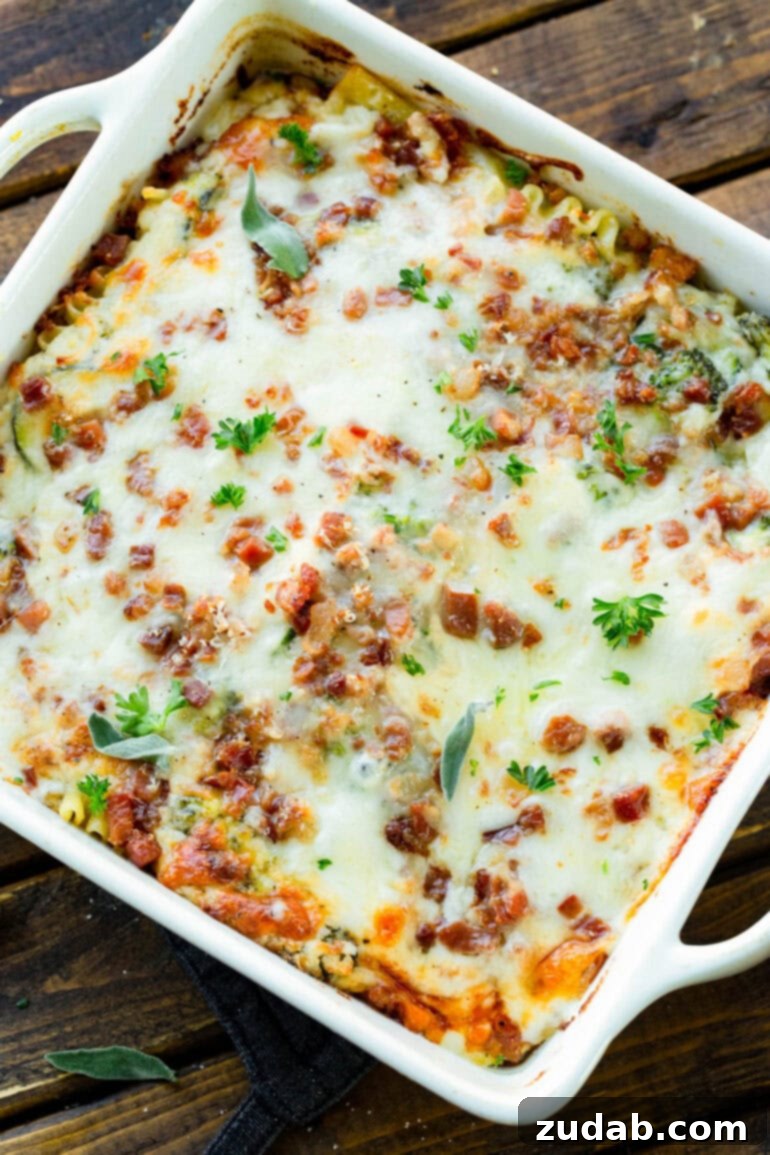
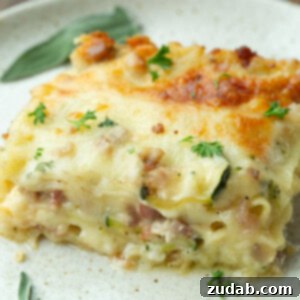
Indulge in the ultimate comfort food with this exquisite vegetable white lasagna recipe with pancetta. This hearty dish masterfully combines the rich, savory notes of crispy pancetta with the garden-fresh vibrancy of sautéed zucchini and broccoli, all embraced by layers of delicate pasta. Each forkful delivers a perfect harmony of flavors, elevated by a luscious, creamy white béchamel sauce that truly sets this lasagna apart. It’s a delightful twist on a classic, promising a deeply satisfying and utterly delicious culinary experience.
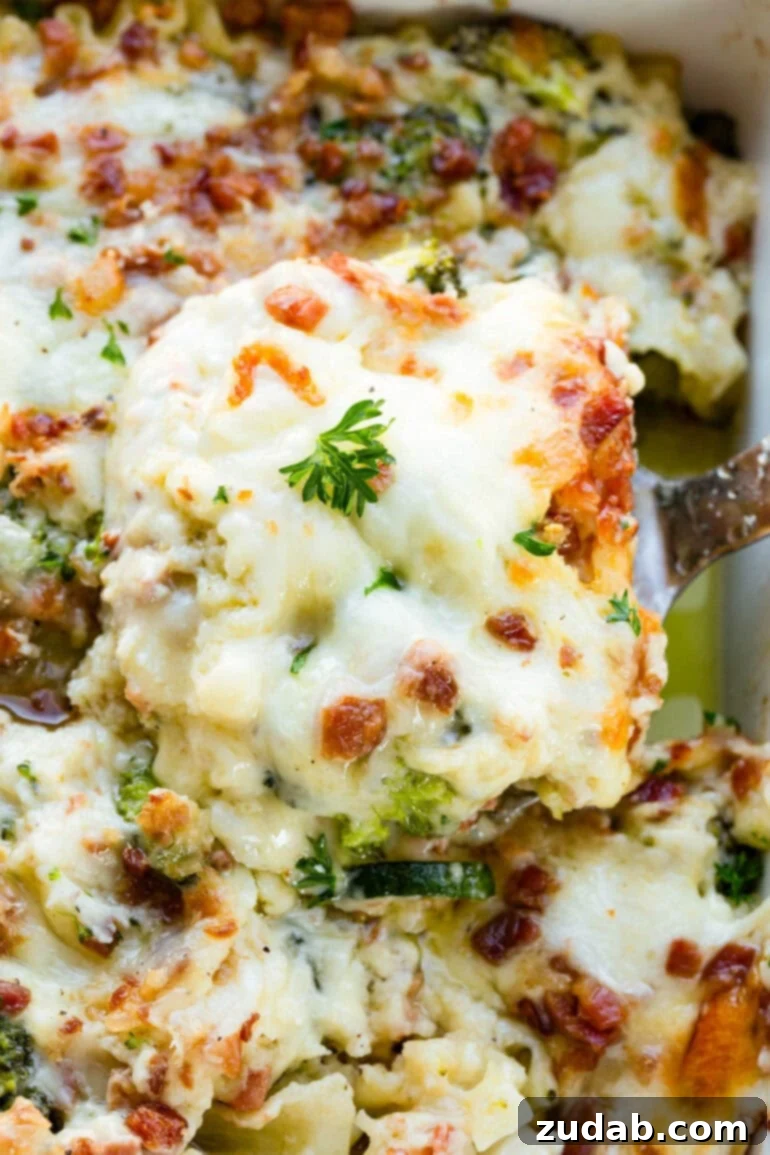
The distinctive smoky, salty essence of the pancetta infuses the entire dish, creating a depth of flavor that is truly irresistible. Our velvety béchamel sauce is no ordinary white sauce; it’s crafted with luxurious heavy cream, delicately infused with fresh sage to impart an aromatic, earthy note that complements the other ingredients beautifully. Baked to a golden, bubbling perfection, this homemade white lasagna offers a rich, satisfying, and utterly comforting flavor profile. Whether you’re planning a cozy dinner for your family or aiming to impress guests with a sophisticated yet approachable meal, this pancetta vegetable lasagna with white sauce is an exceptional choice that promises to be a new favorite.
Sometimes, the best recipes emerge from a simple desire to use up ingredients already on hand. This delightful creamy béchamel lasagna was born from exactly that – a spontaneous culinary experiment to utilize leftover vegetables from the fridge and some exquisite raclette cheese from a holiday charcuterie board. With a box of no-boil lasagna noodles in the pantry, the idea of a white sauce lasagna quickly took shape. The result? Absolutely phenomenal! The combination of textures and flavors exceeded all expectations, and it immediately became a beloved family favorite. Thankfully, I meticulously jotted down every step and ingredient, ensuring this incredible creation could be replicated and shared.
Essential Ingredients for Your Perfect White Lasagna
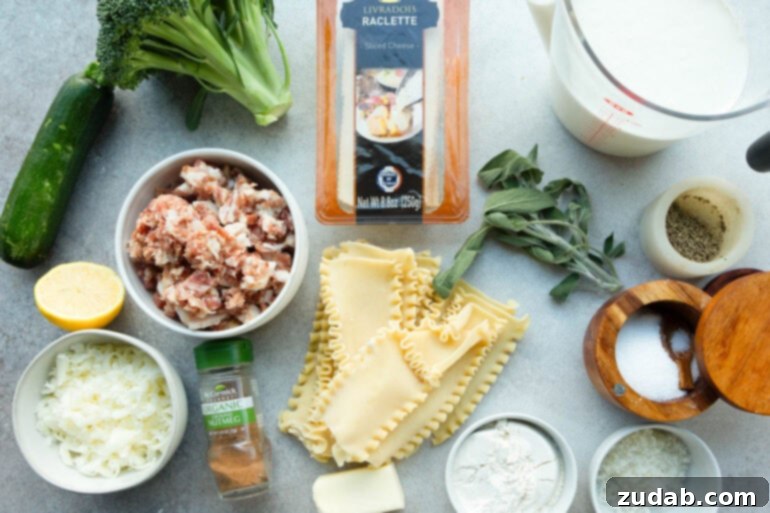
This remarkable vegetable lasagna recipe is a symphony of delectable layers: tender pasta sheets generously coated in a luxurious, creamy white sauce, bursting with the freshness of broccoli and zucchini, complemented by savory pancetta, and bound together by a glorious mix of cheeses. You’ll be pleased to know that this particular recipe foregoes cottage cheese and ricotta, a detail that many discerning lasagna lovers appreciate. If you happen to have some exquisite raclette cheese lingering after the holidays, this white lasagna recipe is the perfect opportunity to feature it! Here is a comprehensive list of all the high-quality ingredients you’ll need to craft this unforgettable dish:
- Heavy Cream: The foundation of our rich and indulgent white béchamel sauce, providing unparalleled creaminess and body. Whole milk can be a lighter alternative.
- Fresh Sage: Essential for infusing the heavy cream with its distinctive earthy, aromatic flavor, elevating the béchamel to gourmet status. Approximately six fresh leaves should suffice.
- Pancetta: This cured Italian pork belly adds a crucial layer of savory, slightly salty, and deliciously crispy texture, contributing significant depth to the lasagna. Chopped, about 10 oz.
- Zucchini: Sliced thinly, zucchini adds a mild sweetness and tender bite, balancing the richness of the sauce and pancetta.
- Broccoli: Cut into bite-sized florets, broccoli introduces a vibrant green color and a pleasant, slightly bitter contrast that enhances the vegetable medley.
- Salt and Black Pepper: Fundamental seasonings to enhance and balance the flavors of all components, adjusted to your personal taste.
- Butter: A key component for creating the roux in the béchamel sauce, butter contributes a rich, nutty flavor and a smooth texture. Approximately 6 tablespoons.
- All-Purpose Flour: Combined with butter and cream, this forms the classic roux that thickens the béchamel into a beautifully creamy and stable sauce. About 1/3 cup.
- Lemon Juice: A squeeze of fresh lemon juice adds a crucial brightness and a subtle tang that cuts through the richness, enlivening the entire dish. Roughly half a lemon.
- Nutmeg: Just a hint of freshly grated nutmeg (about 1/4 teaspoon) provides a warm, subtle spice that beautifully complements dairy-based sauces and elevates the overall flavor profile in a way you never knew you were missing.
- No-Boil or Fresh Lasagna Noodles: For convenience, no-boil noodles work wonderfully. Alternatively, prepare fresh lasagna noodles according to package instructions before layering. A 9oz box is typical.
- Raclette Cheese: This semi-hard Swiss cheese melts incredibly smoothly, offering a delicate, slightly nutty, and fruity flavor that is truly exquisite in this white lasagna. Approximately 8 ounces or 10 slices. If unavailable, Gruyère is an excellent substitute.
- Mozzarella Cheese: The quintessential cheese for that signature melted gooiness and stretchy texture, essential for any satisfying lasagna. Shredded, about 1 ¼ cups.
- Parmesan Cheese: Adds a sharp, nutty, and salty flavor, and contributes to that beautiful golden-brown, crispy crust on top of your baked lasagna. Shredded, about 2 tablespoons.
- Fresh Parsley: A generous sprinkle of chopped fresh parsley as a garnish provides a final pop of color and a refreshing herbaceous note, perfectly cutting through the richness of the dish.
Crafting Your Vegetable White Lasagna: Step-by-Step Guide
If you’ve ever embarked on making any type of lasagna recipe, then you’ll find this white lasagna creation surprisingly straightforward. The secret to any great lasagna lies in its carefully constructed layers! Once you’ve prepared each individual component with care and attention, the final assembly is a rewarding process, culminating in a dish topped with generous amounts of cheese, ready for its golden transformation in the oven. Here are the detailed steps to guide you through making this incredibly flavorful homemade white lasagna:
- Preparation is Key: Begin by preheating your oven to a precise 375 degrees F (190 degrees C). This ensures the oven is at the optimal temperature for even baking from the moment your lasagna enters.
- Infuse the Cream: In a medium pot, combine the heavy cream and fresh sage leaves. Bring the mixture to a gentle boil over medium heat, then immediately remove it from the heat. Pour the infused cream into a heat-proof bowl and allow the sage to steep for approximately 15 minutes. This steeping process is crucial for extracting the sage’s fragrant essence, which will permeate our luxurious béchamel.
- Crisp the Pancetta: While the sage steeps, heat a large skillet over medium heat. Add the chopped pancetta and cook until it’s beautifully rendered and crispy. Remove the cooked pancetta from the skillet with a slotted spoon and transfer it to a plate lined with paper towels to drain excess fat. Crucially, reserve about 2 tablespoons of this crispy pancetta on a separate small plate; this will be used for the final topping to add an extra layer of texture and flavor.
- Sauté the Vegetables: In the same skillet, with the rendered pancetta fat (if desired, you can drain some if there’s too much), add the sliced zucchini. Sprinkle with a pinch of salt and black pepper. Sauté for a few minutes until the zucchini begins to soften and lightly brown on one side. Next, add the broccoli florets to the skillet, along with a little more salt and pepper. Continue to sauté until the broccoli turns a vibrant green and is tender-crisp. Remove the sautéed vegetables from the skillet and set them aside on a separate plate.
- Master the Béchamel Sauce: Carefully wipe out the skillet to remove any remaining pancetta bits or vegetable residue. Melt the butter over medium heat until it’s fully liquefied and gently bubbling. Gradually whisk in the all-purpose flour, stirring constantly to form a smooth roux. Cook the roux for about 2 minutes, continuing to whisk occasionally, until it forms a thick, pale paste. This step is vital for cooking out the raw flour taste. Immediately stir in the lemon juice and the hint of nutmeg, whisking thoroughly to combine.
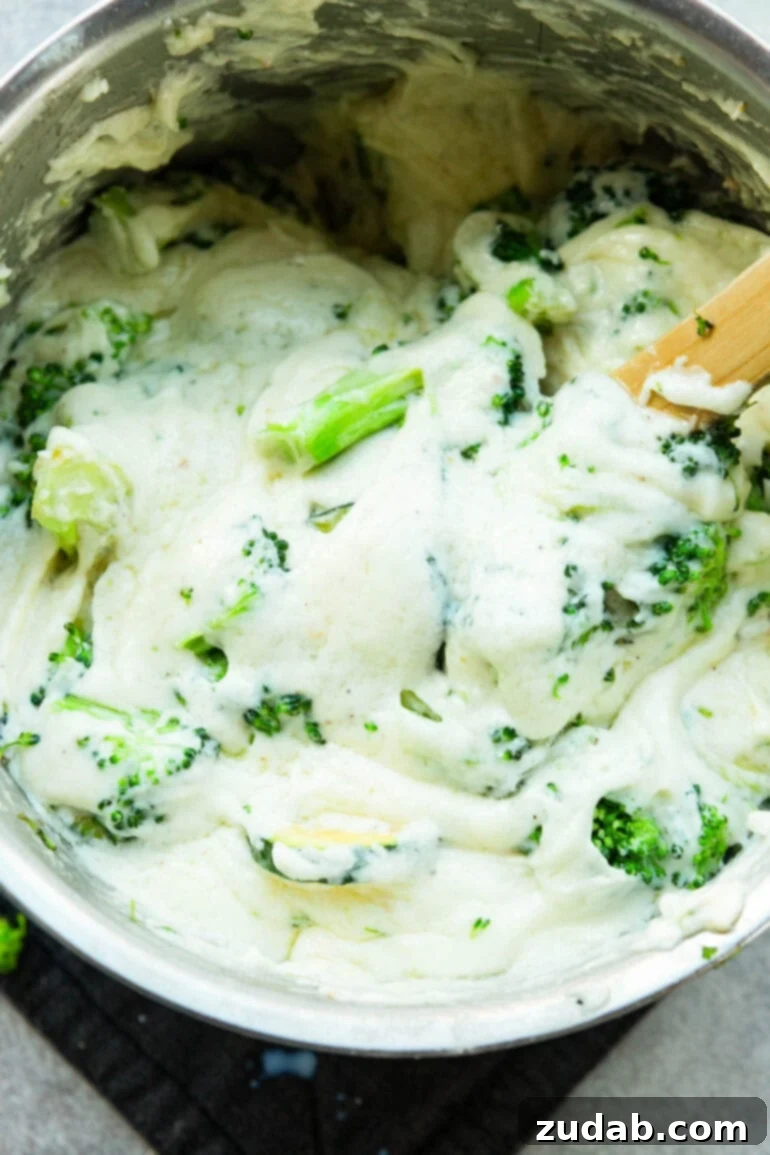
- Achieve Velvety Perfection: Remove the sage leaves from the steeped cream (you can rewarm the cream slightly in the microwave if it has cooled too much). Slowly, in a steady stream, drizzle the sage-infused cream into the roux mixture while continuously whisking. This gradual addition and constant whisking prevent lumps and ensure a perfectly smooth béchamel. Once all the cream is incorporated, reduce the heat to low and simmer for about 5 minutes, stirring frequently, until the sauce thickens to a rich, velvety consistency that coats the back of a spoon. Season with salt and pepper to taste.
Assembling Your Layers of Lasagna Perfection
With all your components prepared – the rich béchamel, crispy pancetta, and tender vegetables – it’s time for the exciting part: assembling your magnificent vegetable white lasagna. This process is all about creating harmonious layers that will bake into a cohesive, flavorful masterpiece. Precision and care in each layer will ensure every bite is a delightful combination of textures and tastes. Here’s how to bring it all together:
- First Layer of Flavor: To begin, spread a thin, even layer of the prepared béchamel sauce onto the bottom of an 8×8 inch casserole dish. This acts as a base, preventing the pasta from sticking and adding moisture. Next, combine the sautéed broccoli and zucchini with the *remaining* béchamel sauce, stirring gently until the vegetables are well coated. This ensures every piece of vegetable is enveloped in creamy goodness.
- Prepare the Noodles: If you are using traditional lasagna noodles (not no-boil), now is the time to cook them. Boil the noodles in heavily salted water according to the package instructions until al dente. Drain them thoroughly and, if desired, briefly rinse with cold water to prevent sticking, then lay them flat on parchment paper or a clean kitchen towel. If using no-boil noodles, proceed directly to the next step as they will cook in the oven.
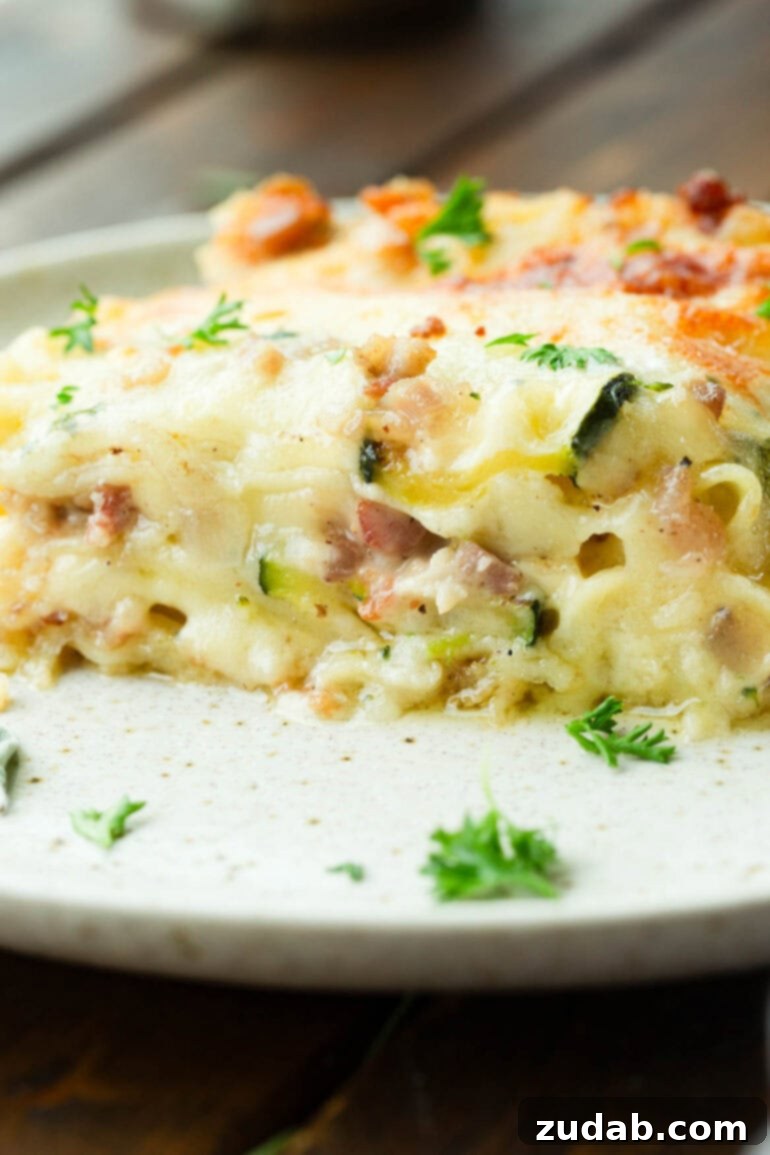
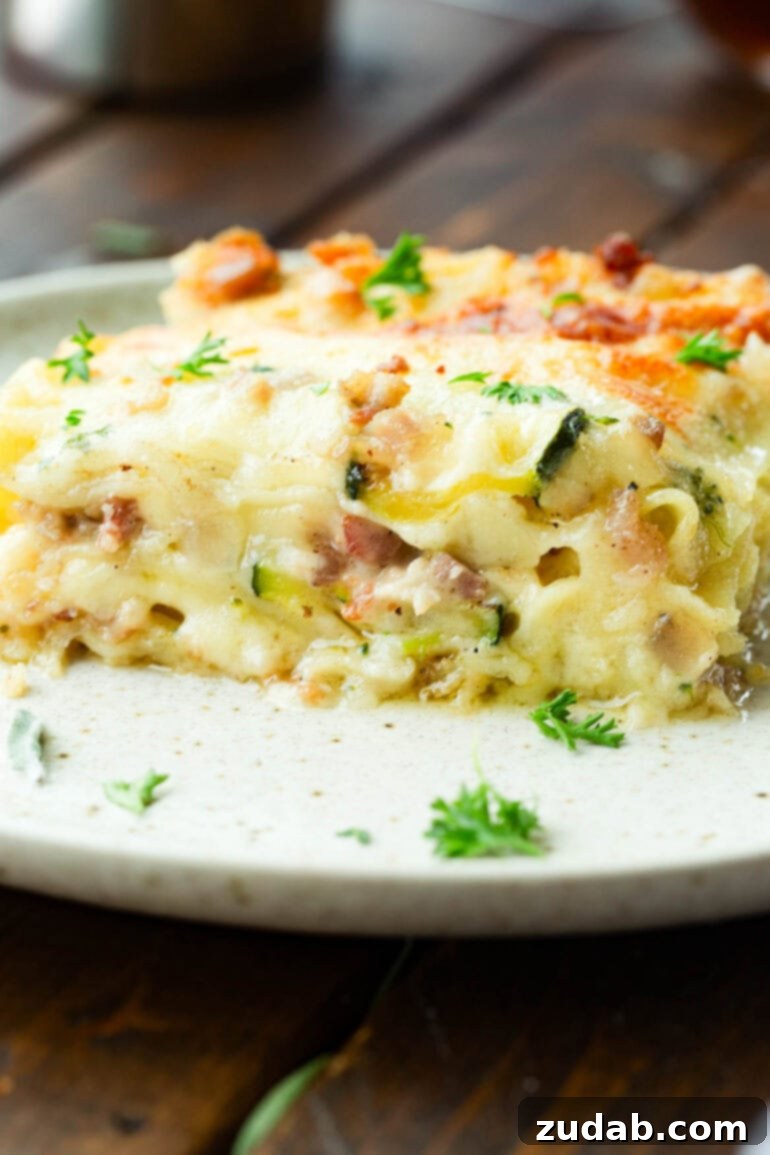
- Building the Lasagna Layers (Repeat Twice): Carefully lay three cooked (or no-boil) lasagna noodles in a single, even layer across the bottom of the baking dish, overlapping slightly if necessary. This creates a sturdy foundation. On top of the noodles, spread a generous portion of the white sauce and veggie mixture, ensuring even distribution. Sprinkle a portion of the crispy pancetta over the sauce, followed by four slices of raclette cheese, evenly spaced. Repeat these exact layers (noodles, sauce/veggies, pancetta, raclette) two more times. For the third and final main layer, use only two slices of raclette cheese to allow room for the top cheese crust.
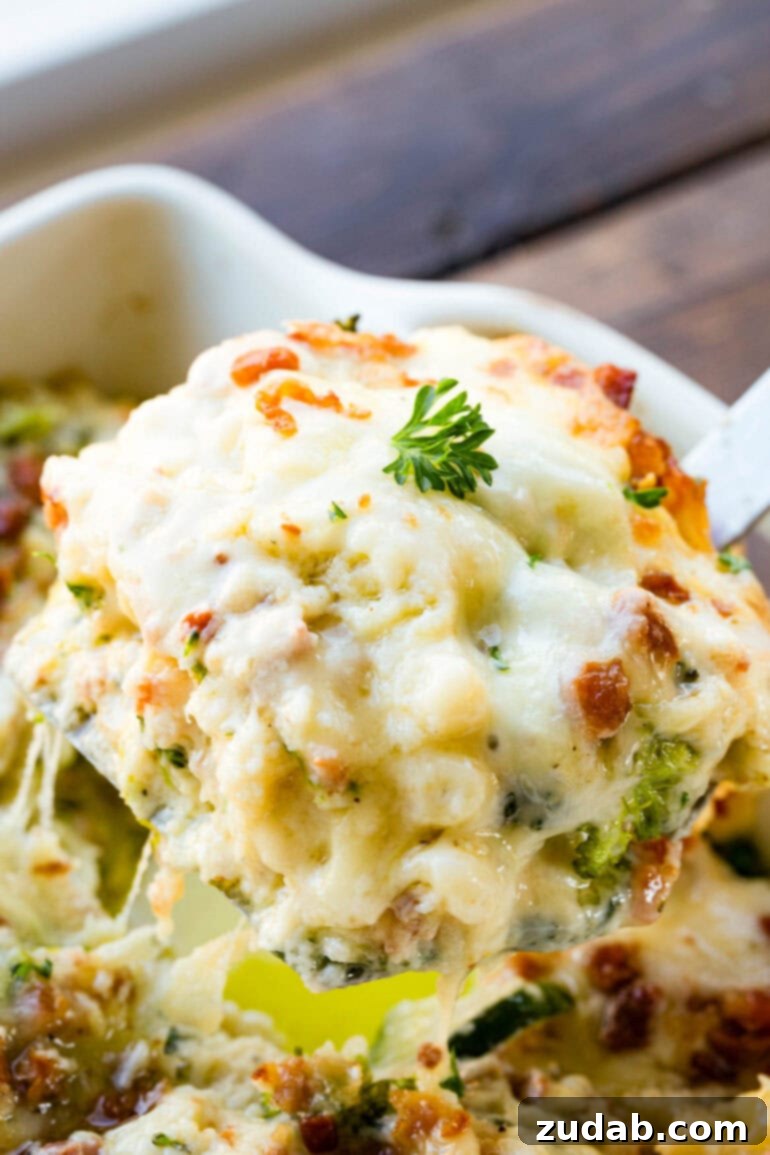
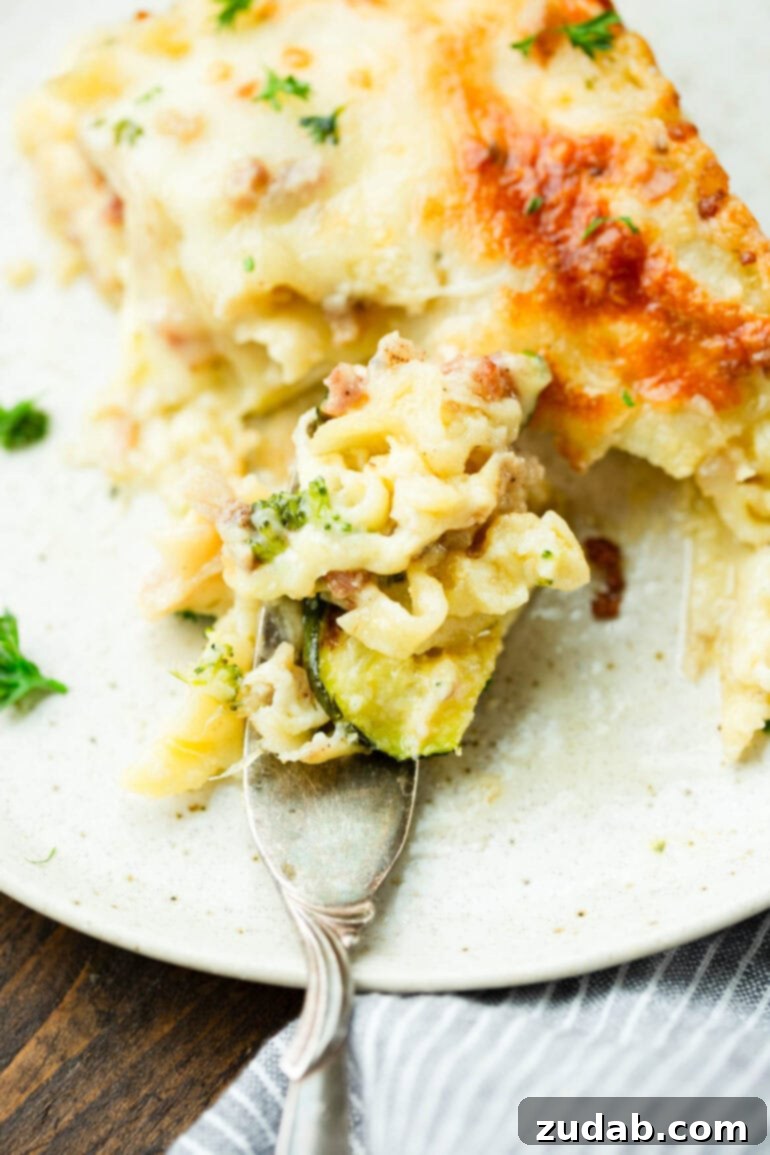
- The Golden Topping: Once you have completed all three main layers, it’s time for the grand finale. Evenly spread the remaining mozzarella cheese over the top, creating a blanket of soon-to-be-melted deliciousness. Sprinkle the remaining reserved pancetta and the parmesan cheese over the mozzarella. The parmesan will help create that beautiful golden-brown crust.
- Bake to Perfection: Lightly spray one side of a piece of aluminum foil with cooking spray to prevent the cheese from sticking. Tightly cover the casserole dish with the foil, ensuring it’s sealed. Bake in the preheated oven for 40 minutes. This initial covered baking allows the lasagna to cook through evenly and the flavors to meld without the top browning too quickly. After 40 minutes, carefully remove the foil and continue baking for an additional 10 minutes, or until the top is golden brown, bubbly, and irresistible. The total baking time will be approximately 50 minutes.
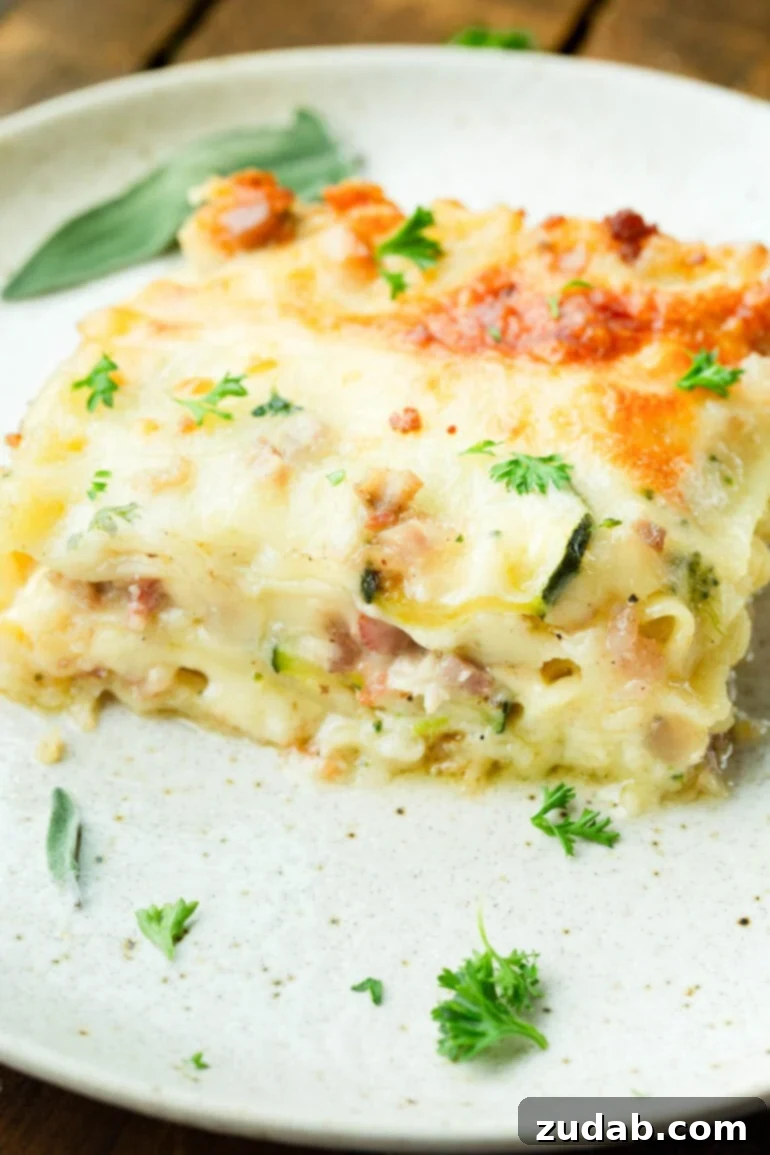
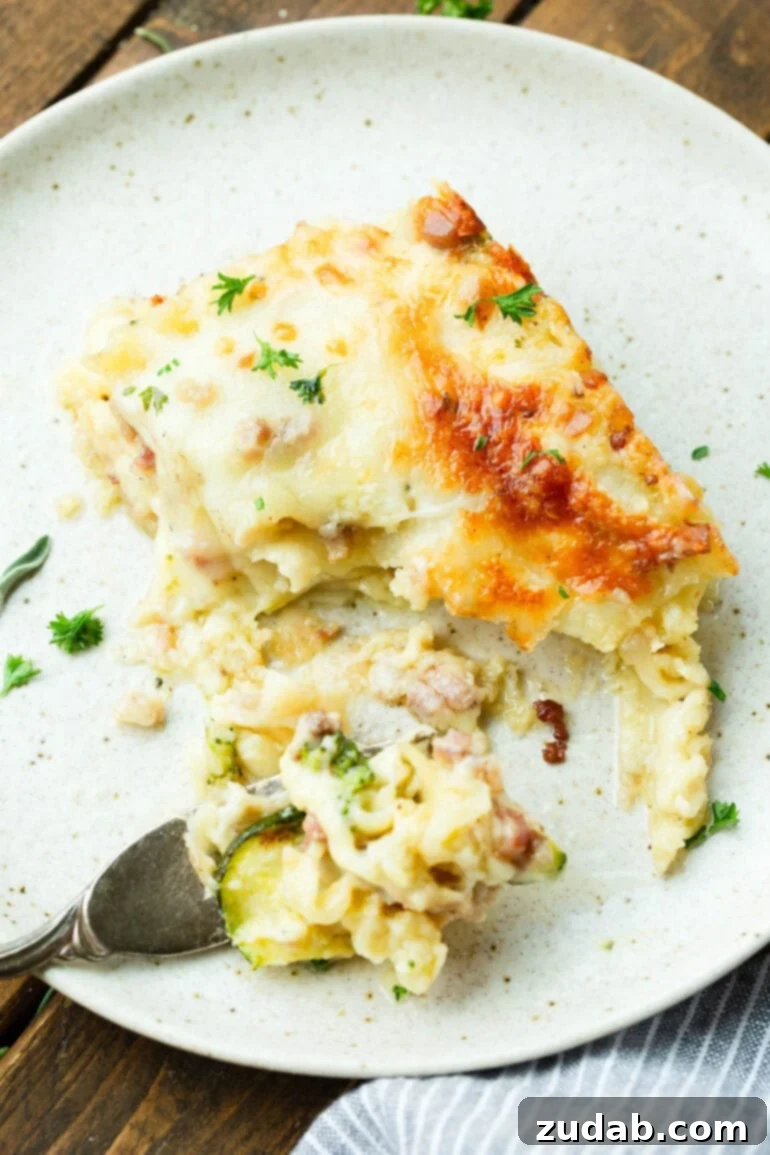
- Garnish and Serve: Once out of the oven, let the lasagna rest for 5-10 minutes before slicing. This allows the layers to set, making it easier to serve clean portions. Finally, sprinkle generously with freshly chopped parsley to add a burst of vibrant color and fresh herbaceousness that brightens the entire dish. Serve warm and enjoy your homemade masterpiece!
Creative Substitutions and Delicious Variations
One of the beautiful aspects of a homemade white lasagna is its versatility. While zucchini and broccoli shine in this recipe, feel free to get creative with the vegetables based on what you have on hand or what’s in season. The initial inspiration for this dish was to use up fridge leftovers, and you can certainly do the same! Experiment with finely diced carrots, sweet peas, crisp green beans, thinly sliced celery, roasted Brussels sprouts, caramelized onions, or fresh spinach (wilt and squeeze out excess moisture before adding). Mushrooms, particularly cremini or button mushrooms sautéed until golden, would add a fantastic umami depth and are definitely on my list for the next time I prepare this creamy béchamel lasagna. Don’t be afraid to make this recipe your own!
If pancetta isn’t readily available, fear not! Crispy bacon is a fantastic and widely accessible substitute that will impart a similar savory, smoky flavor. For those who prefer a different meat profile, cooked ground sausage (mild or spicy, depending on your preference) would also be a delicious addition. Alternatively, for a truly vegetarian experience, simply omit the meat altogether. The rich béchamel and flavorful vegetables ensure a satisfying meal even without the pancetta, creating a delightful true veggie lasagna.
No raclette cheese? No problem! While raclette offers a unique delicate, fruity flavor and exceptional melt, Gruyère cheese is an outstanding substitute. Its nutty, earthy notes and excellent melting properties make it the perfect stand-in, ensuring your lasagna still boasts a rich and luxurious cheese layer. Other semi-hard, good-melting cheeses like Fontina or even a blend of white cheddar and Monterey Jack could also work in a pinch, though Gruyère is highly recommended for a similar gourmet touch.
Recipe Tip
Brilliant Use for Leftover Raclette
The holidays often leave us with intriguing culinary remnants, such as a wedge of raclette cheese. Don’t let this exquisite cheese go to waste! This white lasagna recipe is its ideal destination. Raclette melts beautifully, infusing the lasagna with its distinct delicate, fruity flavor and adding an irresistible creaminess that transforms the dish. It’s truly comfort food at its finest, made even better with this thoughtful addition!
Perfect Pairings: What to Serve with Pancetta Vegetable Lasagna
When it comes to a hearty and satisfying dish like lasagna, I am a firm believer in embracing the carbs! A delicious piece of garlic bread is an absolute must-have. Its crisp crust and pungent flavor are perfect for soaking up every last drop of that creamy white sauce, adding another layer of pure joy to your meal. The interplay of soft lasagna and crusty bread creates a truly fulfilling dining experience. Beyond classic garlic bread, there are several other fantastic bread options that would complement this pancetta vegetable lasagna beautifully:
- Herbed Focaccia Bread: Its soft, airy texture and aromatic herbs make it an elegant and flavorful accompaniment.
- No-Knead Artisan Bread: Offering a rustic charm with its chewy interior and crispy crust, perfect for a comforting meal.
- Soft Potato Rolls: Delightfully tender and slightly sweet, these rolls provide a wonderful contrast to the savory lasagna.
- Easy Herbed Peasant Bread: A wholesome and flavorful bread that’s sturdy enough to sop up all the delicious sauce.
Can I Double This Recipe for a Larger 9×13 Pan?
Yes, absolutely! This vegetable white lasagna recipe scales beautifully to accommodate a larger crowd or for meal prepping. To prepare this delicious dish in a standard 9×13 inch pan, you will simply need to double each and every ingredient listed in the recipe. Follow the instructions precisely as written for preparation and assembly, ensuring you create enough sauce and vegetable mixture to generously fill the larger pan. Keep in mind that a larger, denser lasagna will likely require a little extra baking time to ensure it cooks all the way through to bubbly perfection. Start checking for doneness after the original baking time, adding more time in 10-15 minute increments until heated through and golden on top.
Can I Prepare Lasagna Ahead of Time?
One of the many reasons to adore lasagna recipes is their incredible flexibility as make-ahead meals. They are wonderfully forgiving and reheat beautifully, making them perfect for busy weeknights or entertaining. You can fully bake the lasagna several hours in advance, or even the day before. Once baked, allow it to cool completely before covering it tightly and storing it in the refrigerator. When you’re ready to serve, simply reheat the lasagna, covered with aluminum foil, in an oven preheated to 375 degrees F (190 degrees C) for about 30 minutes, or until thoroughly heated through. Keeping it covered is key to retaining its moisture and preventing it from drying out. This make-ahead capability ensures a stress-free meal when time is of the essence.
Can I Freeze Lasagna for Later Enjoyment?
Yes, absolutely! Lasagna is an excellent candidate for freezing, whether it’s baked or unbaked, offering a convenient solution for future meals. To freeze an uncooked lasagna, assemble it completely in a freezer-safe dish. Wrap it tightly first in plastic wrap, ensuring no air can get in, and then with a layer of heavy-duty aluminum foil. Label it with the date. It will maintain its quality in the freezer for up to 3 months. You have two options for baking: either bake it directly from frozen (this will significantly increase baking time, potentially requiring at least an hour or more at 375 degrees F, still covered with foil initially), or thaw it completely in the refrigerator overnight before baking as directed in the recipe instructions. This flexibility makes it a fantastic meal prep option.
You can also successfully freeze a baked lasagna, either as a whole dish or in individual portions. Allow the baked lasagna to cool down completely to room temperature. For a whole lasagna, wrap it tightly in plastic wrap and then foil, just like the uncooked version. For individual portions, slice the lasagna and wrap each portion separately before placing them in a freezer-safe container. Frozen baked lasagna will keep well for up to 3 months. To reheat, simply follow the instructions for reheating a make-ahead lasagna: thaw first if possible, then reheat covered with foil at 375 degrees F until hot and bubbly. This method ensures you always have a delicious, comforting meal ready to go.
Storing Leftovers for Extended Enjoyment
Any leftover pancetta vegetable lasagna should be stored promptly in an airtight container and refrigerated. When properly stored, it will remain fresh and delicious for up to 5 days. This makes it a fantastic option for meal prep or enjoying flavorful lunches throughout the week. To reheat, you have a couple of convenient options: for smaller, individual portions, the microwave works well. For larger quantities or to ensure a more even heat distribution, reheating in the oven is recommended. Regardless of the method, always ensure the lasagna is covered during reheating to prevent it from drying out and to maintain its creamy texture. This ensures that every leftover bite is just as delightful as the first.
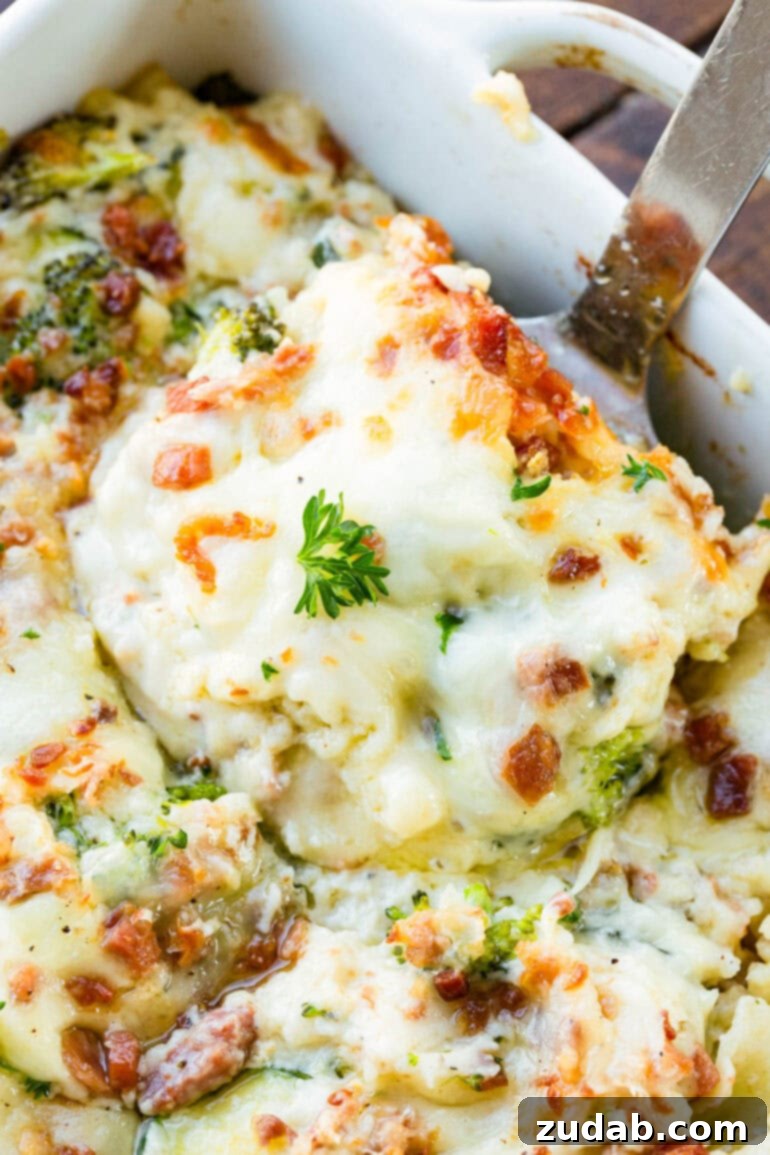
Embrace the warmth and incredible flavor of this pancetta vegetable lasagna with white sauce. It’s a truly satisfying and memorable meal, perfect for creating a cozy atmosphere at home or effortlessly impressing your guests with a dish that tastes both familiar and excitingly new. Enjoy crafting and savoring every layer of this exquisite comfort food!
More Comfort Food Recipes You Must Try:
- Instant Pot Chili
- Chicken Enchiladas
- Macaroni and Cheese
- Sloppy Joes
- Beef Stew
- Broccoli Cheddar Soup
- Chicken Noodle Soup
Watch How to Make a Simple White Sauce Lasagna
Vegetable White Lasagna
Ingredients
- 2 ¾ Cups Heavy Cream, or whole milk
- 1 Spray Fresh Sage, about 6 leaves
- 10 oz Pancetta, chopped
- 1 small Zucchini, sliced
- 1 Head Broccoli, chopped
- Salt and Black Pepper, to taste
- 6 Tablespoons Butter
- 1/3 Cup Flour
- 1 Squeeze Lemon Juice, almost 1/2 a lemon
- 1/4 teaspoon Nutmeg
- 1 Box No-Boil or Fresh Lasagna Noodles, 9oz
- 8 Ounces Raclette, about 10 slices
- 1 ¼ Cups Mozzarella Cheese, shredded
- 2 Tablespoons Parmesan Cheese, shredded
- Fresh Parsley
Instructions
-
Preheat the oven to 375 degrees F.
-
In a pot, add the cream and sage and bring to a boil. Turn off and pour into a bowl to allow to steep for 15 minutes.2 ¾ Cups Heavy Cream, 1 Spray Sage
-
Cook the pancetta in a skillet over medium heat until crisped. Reserve 2 tablespoons of pancetta for the very top in a separate dish. Remove to a plate.10 oz Pancetta
-
Add the zucchini to the skillet with salt and pepper and cook for a few minutes, until one side is beginning to turn golden and throw in the broccoli with a little more salt and pepper. Cook until vibrant green. Remove to another plate.1 Zucchini, 1 Head Broccoli, Salt and Black Pepper
-
Meanwhile, wipe out the saucepan and melt the butter over medium heat.6 Tablespoons Butter
-
Whisk in the flour and allow to cook for about 2 minutes, whisking occasionally until thickened. Then add the lemon juice and nutmeg and whisk in.1/3 Cup Flour, 1/4 teaspoon Nutmeg, 1 Squeeze Lemon Juice
-
Remove the sage from the milk, (rewarm in microwave if it cooled) and slowly, while whisking, drizzle the milk into the flour and butter. Simmer on low for five minutes.
-
Take 2 tablespoons of the sauce and spread into the bottom of a 8×8 casserole dish. Mix the broccoli and zucchini into the sauce.
-
Boil noodles if necessary otherwise lay three in the dish, top with bechamel mixture, a sprinkle of pancetta, and 4 slices of raclette.1 Box No Boil or Fresh Lasagna Noodles, 8 Ounces Raclette
-
Repeat another 2 layers with the 3rd layer using only 2 slices of raclette.
-
On the last layer, layer like normal but end with mozzarella, the tiny bit of pancetta and parmesan.1 ¼ Cups Mozzarella Cheese, 2 Tablespoons Parmesan Cheese
-
Spray foil with nonstick spray and cover the dish. Bake for 40 minutes, remove the foil and cook for 10 min more, resulting in 50 min total.
-
Sprinkle with fresh parsley and serve.Fresh Parsley
Nutrition
Nutrition information is automatically calculated, so should only be used as an approximation.