
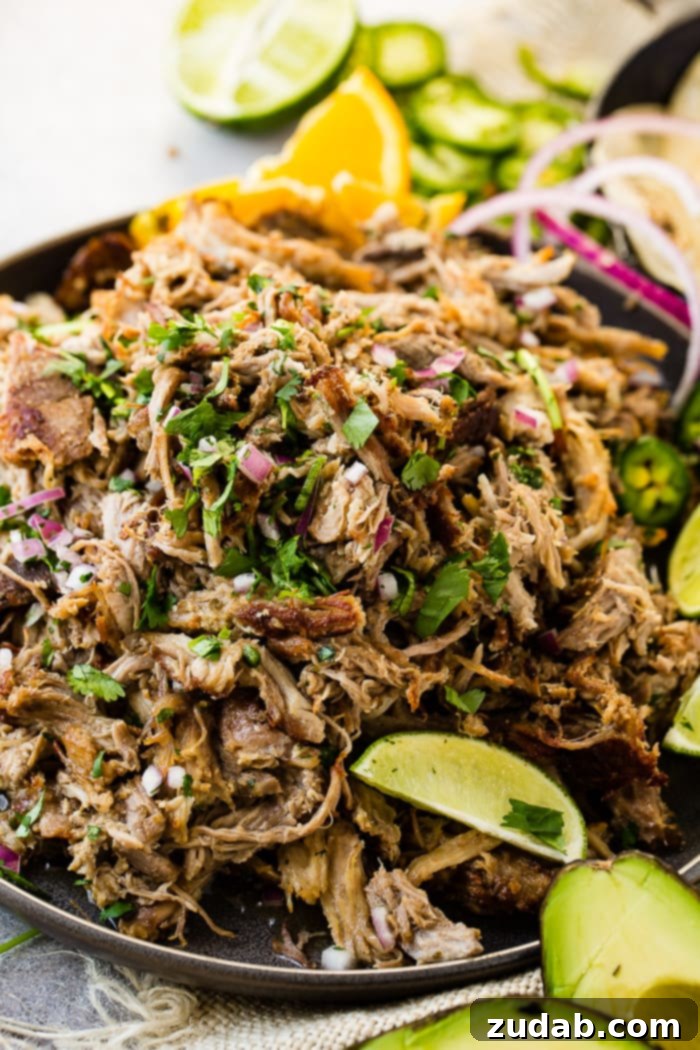
It was truly time to perfect and share the **BEST Pork Carnitas Recipe**, and here it is! This guide unveils the secrets to achieving succulent, melt-in-your-mouth pork with those irresistible, crispy edges, all infused with a delicate hint of citrus. Forget everything you thought you knew about pulled pork; authentic carnitas offer a culinary experience that stands in a league of its own, transforming a simple cut of meat into a masterpiece of flavor and texture. Get ready to impress your family and friends with this incredible dish that’s perfect for tacos, burritos, or simply savoring on its own.
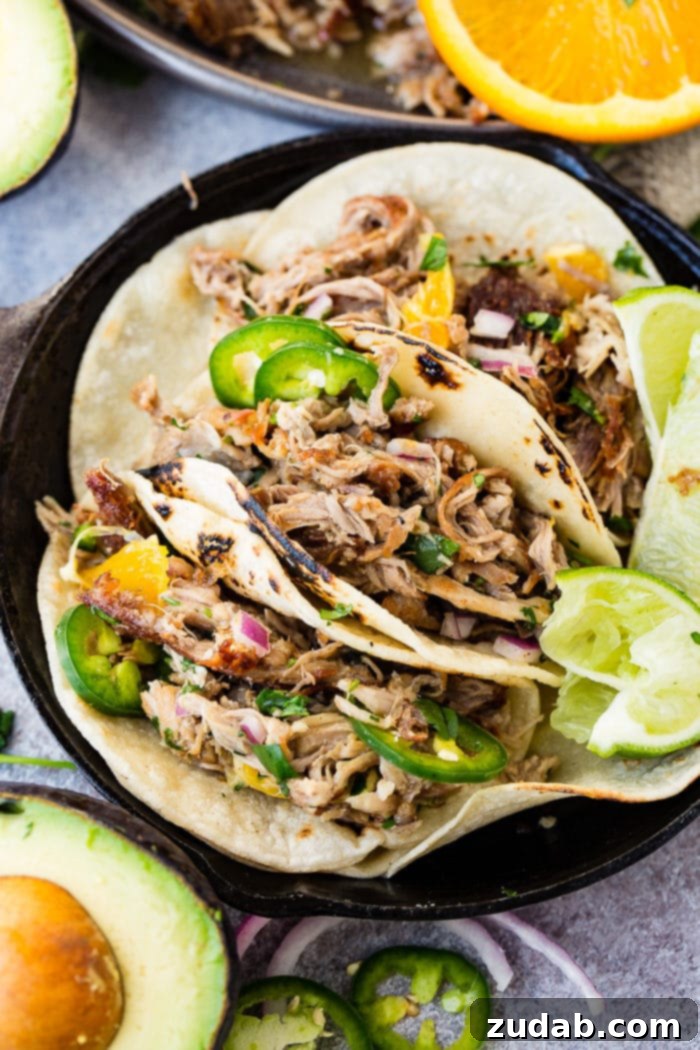
What Exactly Are Carnitas? Understanding This Beloved Mexican Dish
Carnitas, which literally translates to “little meats” in Spanish, is a celebrated Mexican culinary tradition, originating from the state of Michoacán. It’s often described as the Mexican equivalent of pulled pork, but with a unique cooking method that sets it apart. While pulled pork is typically cooked in a sauce or broth until tender, traditional carnitas involve slow-cooking pork in its own fat (or sometimes lard) until it reaches an extraordinary level of tenderness. This extended braising process allows the meat to become incredibly juicy, succulent, and infused with deep, rich flavors.
The magic of carnitas doesn’t stop at tenderness. After the slow braising, the pork is often shredded and then lightly fried or roasted until parts of it develop wonderfully crispy, caramelized edges. This contrast between the tender interior and the crisp exterior is what makes authentic carnitas so incredibly addictive. The subtle sweetness and tang of citrus, often from oranges or limes, are frequently incorporated into the cooking liquid, providing a bright counterpoint to the rich pork.
Once prepared, carnitas are incredibly versatile. They are most famously used as a filling for tacos, but they also shine in burritos, nachos, enchiladas, quesadillas, tostadas, or simply enjoyed as a main dish alongside your favorite Mexican rice and beans. The depth of flavor achieved through this slow-cooking technique makes carnitas a standout dish that’s both comforting and profoundly satisfying.
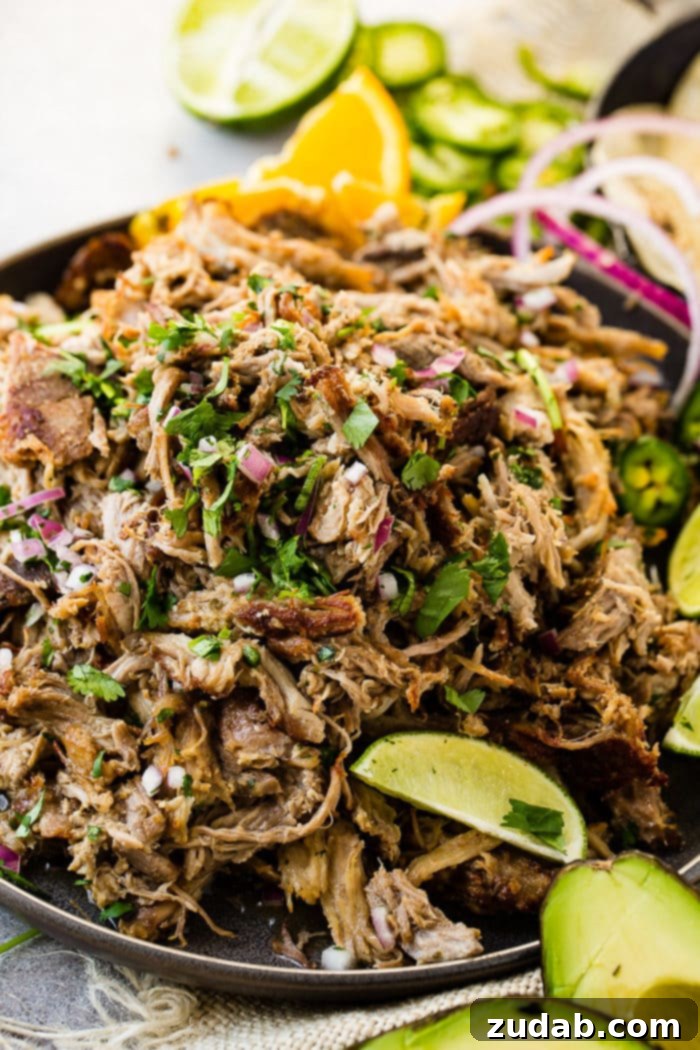
Essential Ingredients for Perfect Pork Carnitas
Crafting the best pork carnitas requires a thoughtfully selected blend of ingredients, working in harmony to deliver an unparalleled flavor profile. This recipe is divided into three crucial stages: the brine, the pork rub, and the cooking liquids, each contributing distinct layers of taste and moisture. We’ve meticulously tested and perfected this combination to ensure an authentic and utterly delicious outcome.
- For the Brine: A blend of orange juice, apple cider vinegar, brown sugar, and kosher salt, along with an array of aromatic spices. This step is non-negotiable for tender, flavor-packed meat.
- For the Pork Rub: A robust mix of pantry-staple spices, including cumin, oregano, dried orange peel, garlic powder, onion powder, and ground coriander, specifically designed to create that irresistible crust.
- For the Cooking Liquids: Additional orange juice, fresh lime juice, and chicken broth, which simmer alongside the pork to keep it incredibly moist and imbue it with bright, zesty notes.
- The Star Ingredient: A bone-in pork butt (also known as Boston butt) is essential for its rich marbling and flavor.
- For Crisping: A high smoke point oil like canola oil for the final, crucial step of achieving those signature crispy bits.
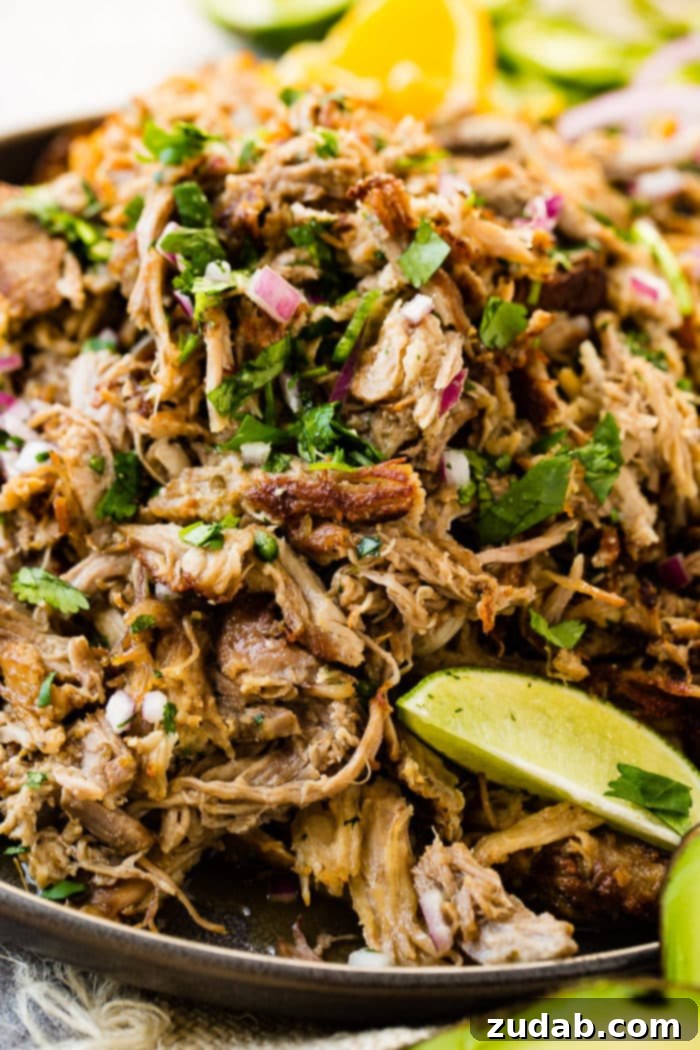
Choosing the Ideal Pork Cut for Carnitas
When it comes to making truly outstanding carnitas, the choice of meat is paramount. The undisputed champion for this dish is **pork butt**. Despite its name, pork butt actually comes from the upper part of the pig’s shoulder, not the hindquarters. This cut is rich in intramuscular fat and connective tissue, which are key to achieving the signature juicy and tender texture of carnitas. As the pork slowly cooks, these elements break down, rendering into flavorful liquids and creating meat that practically melts in your mouth.
Pork Shoulder vs. Pork Butt: Unpacking the Names
The naming convention for these cuts can often be a source of confusion. Interestingly, **pork shoulder and pork butt are, in essence, the same part of the animal**, but refer to different sections of the shoulder. The “butt” or “Boston butt” is the upper part of the shoulder, while the “picnic shoulder” is the lower part. The historical reason for the “butt” designation dates back to Colonial America. Boston butchers would pack the less desirable cuts of pork, including the shoulder, into barrels known as “butts” for storage and transport. This practice led to the cut being known as the “Boston butt,” a name that has stuck through the centuries.
When shopping, you might encounter pork butt under various names:
- Pork butt
- Boston butt
- Boston butt roast
- Fresh pork butt
- Shoulder roast
- Picnic shoulder (though typically refers to a slightly different, leaner part of the shoulder, pork butt is generally preferred for carnitas due to its higher fat content)
Regardless of the name on the label, look for a cut with good marbling – streaks of fat throughout the meat – as this indicates the potential for superior flavor and tenderness. A bone-in cut is often preferred, as the bone can add an extra layer of flavor to the cooking liquid.
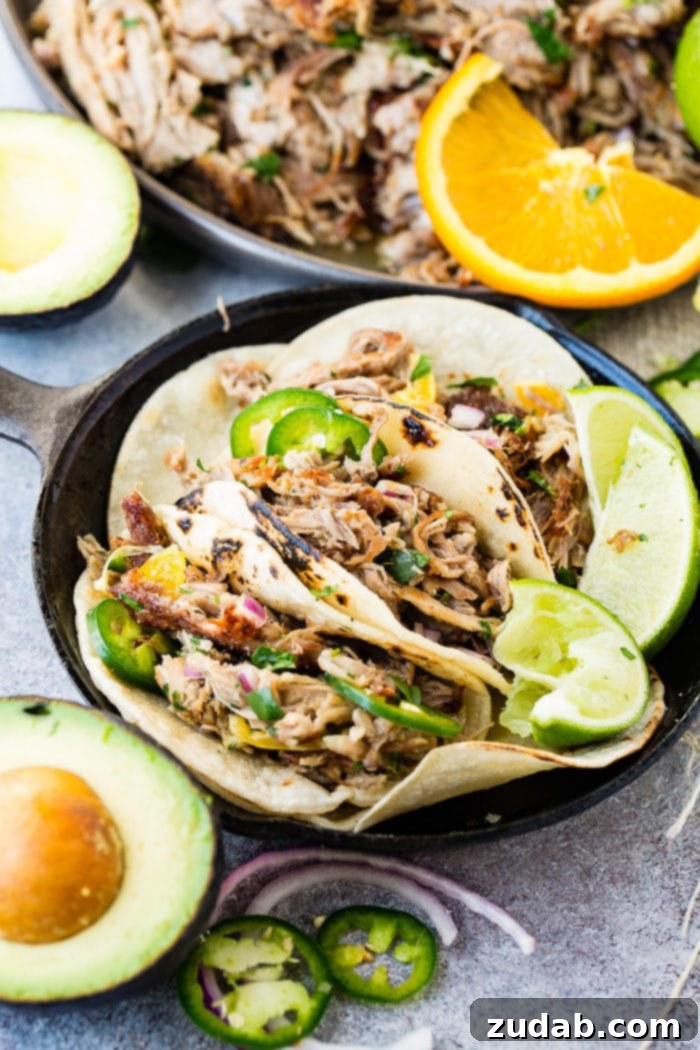
Step-by-Step Guide: How to Make Authentic Carnitas at Home
Making incredible pork carnitas at home is a rewarding process that transforms simple ingredients into a dish bursting with flavor. While it requires a bit of patience due to the low-and-slow cooking method, each step is straightforward and contributes significantly to the final, mouth-watering result. Here’s how to achieve the perfect balance of juicy tenderness and crispy texture:
1. Brine the Pork for Maximum Flavor and Moisture
The first and arguably most crucial step for the BEST pork carnitas is brining the meat. This process enhances both the flavor and moisture retention of the pork, ensuring it remains incredibly juicy throughout the long cooking period. To create our vibrant brine, combine orange juice, pineapple or lemon juice, whole garlic cloves, apple cider vinegar, brown sugar, kosher salt, and a robust blend of spices including cumin, oregano, dried orange peel, smoked paprika, and chili powder. Blend these ingredients until smooth. Heat a small amount of oil in a pan, then carefully stir in the blended brine mixture. Allow it to cool slightly before pouring it over your pork butt in a large roasting pan or container. Cover the pork and refrigerate it to brine for a minimum of 8 hours, or ideally, overnight. This extended soak is essential for deeply infusing the pork with flavor and moisture.
2. Apply a Flavorful Dry Rub
Once the brining period is complete, remove the pork from the liquid, reserving the brine for later. Pat the pork thoroughly dry with paper towels. A dry surface is critical for developing a beautiful crust during cooking. Next, prepare the dry rub by combining more cumin, oregano, dried orange peel, garlic powder, and ground coriander. Generously rub this aromatic mixture all over the entire surface of the pork butt, ensuring every inch is coated. This dry rub not only adds another layer of intense flavor but also helps create that sought-after crusty exterior.
3. Cook Low and Slow to Perfection
Preheat your oven to a low temperature of 225 degrees F (107 degrees C). This incredibly low heat is the secret to breaking down the tough connective tissues in the pork butt, rendering it fall-apart tender. In the bottom of your roasting pan, pour a mixture of additional orange juice, fresh lime juice, and chicken broth. This liquid will create a moist environment and contribute to the overall flavor. Place the dry-rubbed pork butt into the roasting pan, then pour the reserved brine liquid over the top of the pork. Cover the roasting pan tightly with a lid or aluminum foil. Cook the pork for an extended period, typically 12-14 hours, or until its internal temperature reaches 200 degrees F (93 degrees C). This is the magic temperature where pork shoulder becomes effortlessly shreddable. Begin checking the internal temperature around the 12-hour mark.
4. Achieve Those Irresistible Crispy Bits
After the pork has cooked to perfection, remove it from the oven and let it rest, covered, for at least 30 minutes, and ideally up to 2 hours. Resting allows the juices to redistribute throughout the meat, resulting in an even more tender and moist product. Once rested, shred the pork using two forks, discarding any large pieces of fat or bone. Collect all the cooking liquids from the roasting pan and separate the fat using a fat separator. Heat a generous amount of canola oil in a large, heavy-bottomed skillet (cast iron works wonderfully) over medium-high heat. Add the shredded pork in small batches, tossing frequently, until the edges become beautifully crispy and caramelized. Transfer the crispy pork to a serving dish and repeat with the remaining batches. Just before serving, toss the crispy carnitas with a little of the defatted cooking juices to keep them moist and flavorful. Serve immediately!
Read more: If you love this pork carnitas recipe, you’ll also adore our Carolina Pulled Pork for another incredible slow-cooked pork experience!
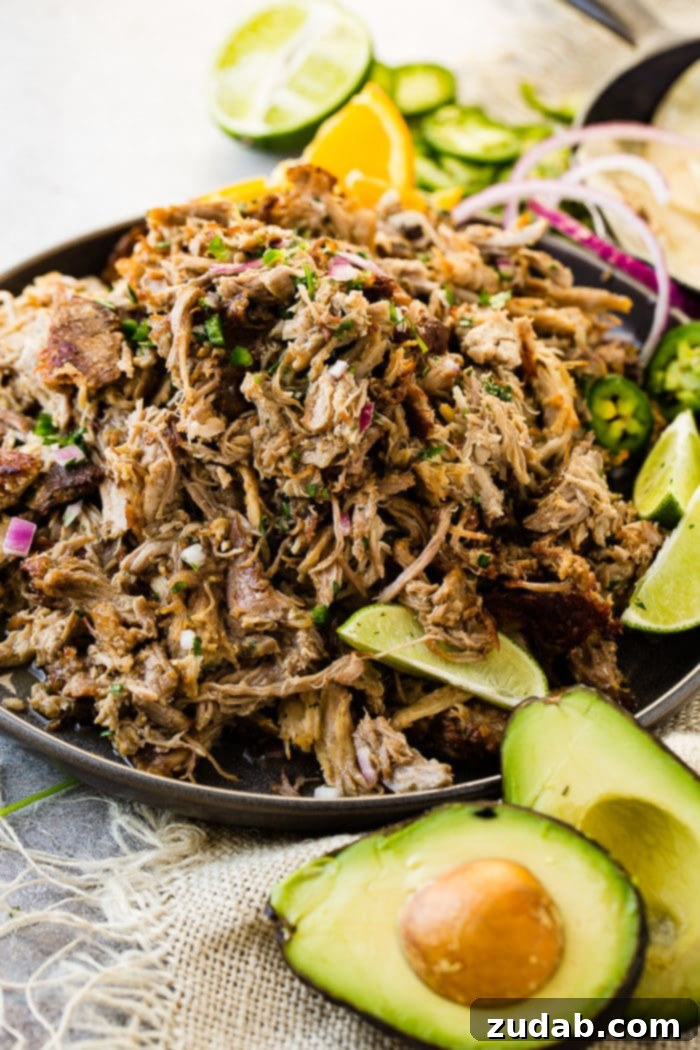
Frequently Asked Questions About Pork Carnitas
Do I Have to Brine Pork for Carnitas?
In short, yes! Brining is an absolute must for our BEST pork carnitas recipe. Brining involves submerging meat in a solution, typically of water, salt, and various aromatics. The salt helps to dissolve some of the muscle proteins, allowing the muscle fibers to retain more moisture during cooking. This process ensures that your pork remains incredibly juicy and tender, even after hours of slow cooking. Furthermore, the brine acts as a flavor carrier, deeply infusing the pork with all the wonderful citrus and spice notes. For optimal results, we recommend brining the pork for a minimum of 8 hours or, ideally, overnight in the refrigerator.
Can I Make Pork Carnitas in a Crock-Pot (Slow Cooker)?
Absolutely! This pork carnitas recipe is perfectly adaptable for the slow cooker, making it an excellent option for busy days. To prepare the carnitas in a slow cooker, follow all the brining and dry rub instructions as written in the main recipe. Once the pork is prepared and placed in the slow cooker with the cooking liquids, cook on the LOW setting for 8 to 10 hours, or until the pork reaches an internal temperature of 200 degrees F and is easily shreddable. After the meat has rested and been shredded, you will still want to perform the final crisping step in a pan on the stovetop to achieve those desirable crunchy edges, as slow cooking alone won’t provide that texture.
Can I Make Pork Carnitas in an Instant Pot?
Yes, you can certainly make delicious pork carnitas in an Instant Pot for a faster cooking time! However, for optimal results and specific Instant Pot instructions tailored to the pressure cooking method, we recommend referring to our dedicated Instant Pot Carnitas recipe available on our blog. This will guide you through the precise steps to achieve tender carnitas quickly using a pressure cooker.
Can Pork Carnitas Be Frozen?
Pork carnitas make a fantastic freezer meal, allowing you to enjoy this flavorful dish even on short notice. To freeze, ensure the cooked and shredded meat has cooled completely to room temperature. Transfer the carnitas to airtight freezer bags or containers, leaving a little extra room for expansion during freezing. For the best quality, consume frozen carnitas within 2-3 months. When reheating, it’s best to thaw the meat first, then proceed with the crisping step in a skillet to revive those essential crispy bits. Freezing already crisped carnitas can sometimes result in a less desirable texture upon reheating, so crisping just before serving is key.
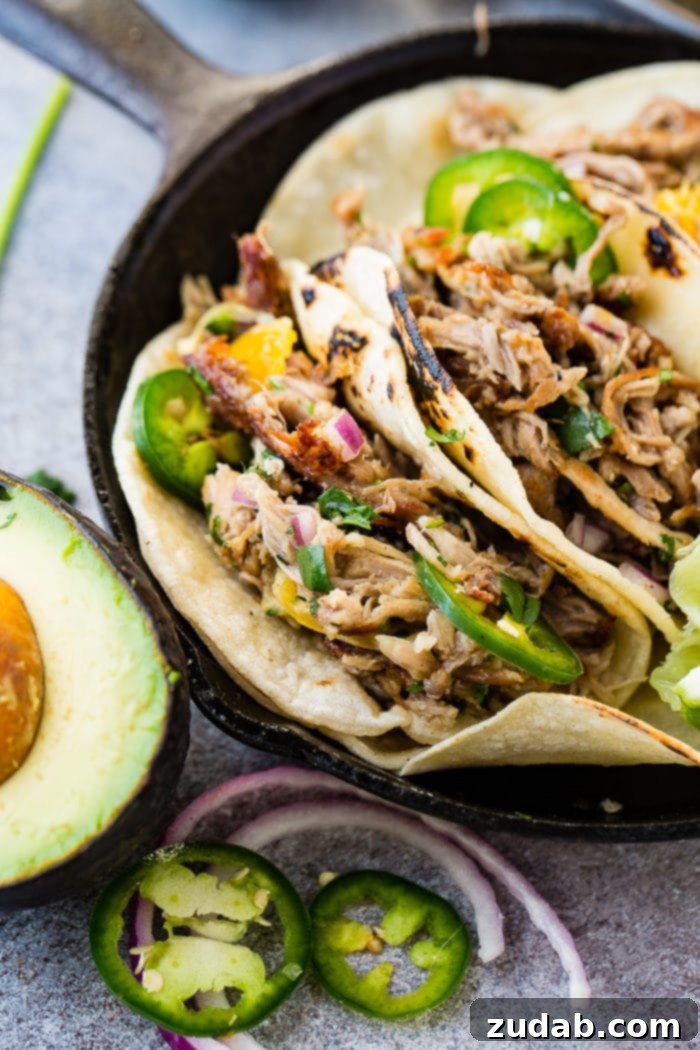
Versatile Ways to Serve Pork Carnitas
One of the many delights of this pork carnitas recipe is its incredible versatility. While carnitas tacos are an absolute classic and a favorite in our home, the tender, flavorful meat can be repurposed in countless delicious ways, ensuring you never get tired of it. Here are just a few ideas to inspire your next meal:
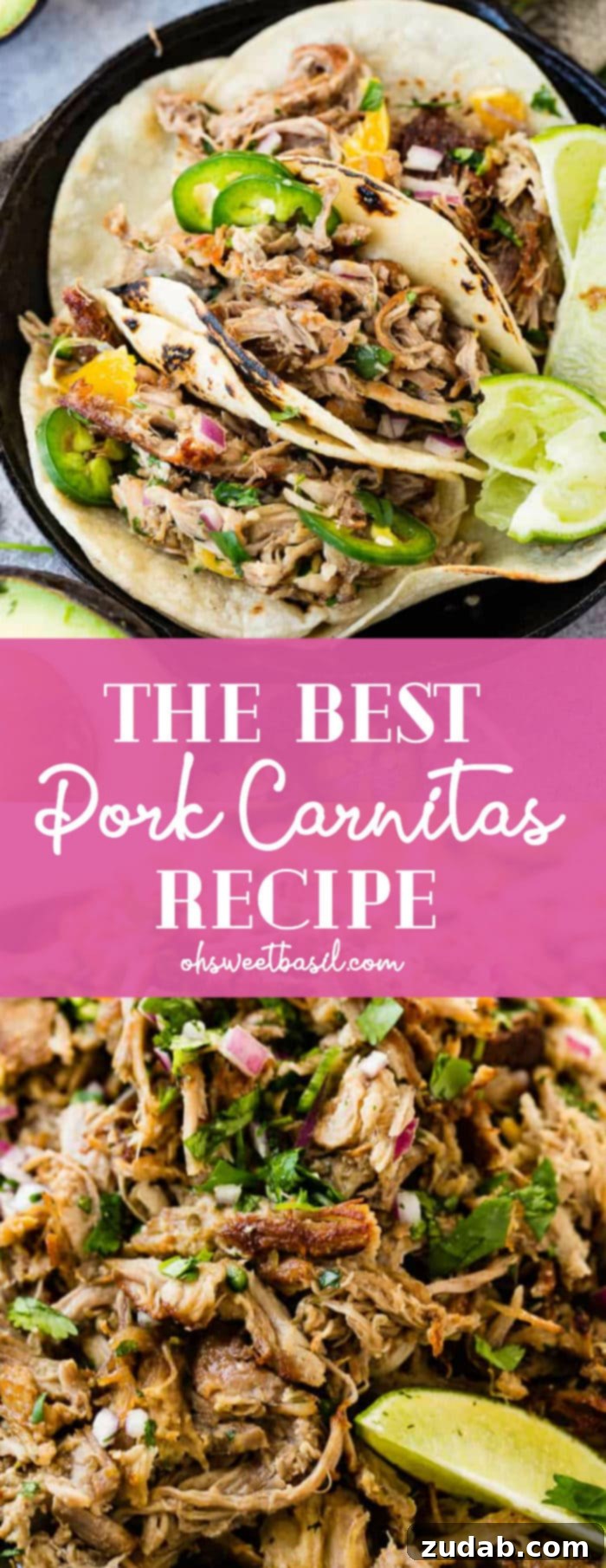
- Tacos: The quintessential way to enjoy carnitas. Serve in warm corn or flour tortillas with your favorite toppings.
- Burrito Bowls: A healthier, deconstructed burrito. Combine carnitas with rice, beans, corn, salsa, and avocado.
- Soups and Chilis: Add shredded carnitas to Mexican-inspired soups or chilis for a hearty, flavorful boost.
- Taco Salads: Top a crisp bed of lettuce with carnitas, cheese, salsa, sour cream, and tortilla strips.
- Burritos: Wrap carnitas tightly in large flour tortillas with rice, beans, cheese, and salsa for a satisfying handheld meal.
- Quesadillas: Layer carnitas and cheese between two tortillas and grill until golden and gooey.
- Sandwiches or Tortas: Pile carnitas onto crusty bread with pickled vegetables and a smear of refried beans for a Mexican-style sandwich.
Our Favorite Taco Toppings for Carnitas
With pork carnitas that are so incredibly flavorful on their own, we often prefer to keep the taco toppings simple, allowing the rich taste of the meat to shine through. However, feel free to customize your carnitas tacos with as many or as few toppings as you desire. A few carefully chosen additions can enhance the experience without overshadowing the star of the show:
- Fresh Pico de Gallo: A classic for a reason, offering a burst of fresh tomato, onion, and cilantro.
- Shredded Cheese: A sprinkle of cotija or a mild cheddar for creamy texture and savory notes.
- Fresh Cilantro: Chopped cilantro adds a bright, herbaceous aroma that complements pork perfectly.
- Pickled Red Onions: Their tangy crunch cuts through the richness of the pork, adding a delightful contrast.
- Fresh Orange Segments: Small bits of fresh orange, a nod to the citrus used in cooking, add a surprising and refreshing sweetness.
- Homemade Salsa: Whether mild or spicy, a good salsa is always a welcome addition.
- Shredded Lettuce: For a refreshing crispness and a touch of coolness.
- Hot Sauce: A dash of your favorite hot sauce for those who crave an extra kick.
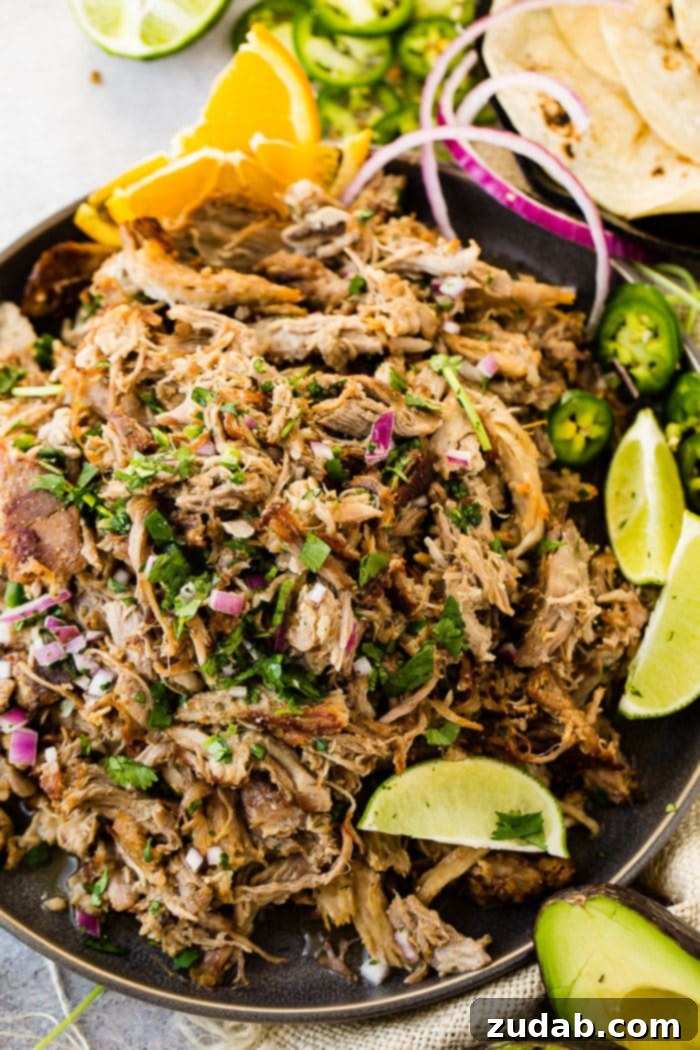
Expert Tips for Crafting the BEST Pork Carnitas
Achieving truly outstanding pork carnitas is a combination of quality ingredients and precise techniques. Here are some invaluable tips to ensure your homemade carnitas are nothing short of spectacular:
- Opt for Bone-In Pork Butt: While boneless pork butt can work, we highly recommend a bone-in cut. The bone contributes a deeper, richer flavor to the cooking liquids, enhancing the overall savory profile of the carnitas. If you use boneless or pre-cubed pork shoulder, be mindful that it will likely cook faster. Start checking for doneness around 9-10 hours.
- The Importance of Resting Meat: After removing the pork from the oven, resist the urge to shred it immediately. Allowing the meat to rest, covered, for up to two hours is a critical step. During this time, the internal temperature stabilizes, and the juices, which have migrated to the center during cooking, redistribute throughout the entire cut. This reabsorption results in significantly more tender, moist, and flavorful pork.
- Crisping is Key for Authenticity: The contrast between tender, juicy meat and crispy, caramelized edges is the hallmark of great carnitas. Do not skip the final crisping step. Doing it in small batches in a hot skillet with a bit of oil ensures that each piece gets that coveted crunchy texture.
- Freezing for Future Enjoyment: If you plan to freeze some of your carnitas for later, we recommend waiting to perform the crisping step until after you’ve thawed and reheated the meat. This way, you can achieve freshly crisped carnitas, even from a frozen batch, ensuring the best possible texture and flavor.
- Don’t Waste the Cooking Liquid: The leftover cooking liquid in the roasting pan is pure gold! After separating the fat, this flavorful juice can be used to moisten the shredded pork before serving, ensuring maximum juiciness. It can also be saved and used as a base for soups or other Mexican dishes.
- Control the Crisping: When crisping the meat, don’t overcrowd the pan. Cook in batches if necessary to ensure even browning and crispness. Overcrowding will steam the meat instead of frying it, preventing those delicious crunchy edges from forming.
More Easy and Delicious Mexican Recipes:
If you’re craving more outrageously good Mexican-inspired dishes, look no further! We have a collection of favorites that are sure to become staples in your kitchen:
- Restaurant Style Salsa
- Instant Pot or Slow Cooker Pineapple Mexican Shredded Chicken
- Smothered Honey Lime Chicken Burritos
- Instant Pot or Slow Cooker Smothered BBQ Beef Burritos
- Crock Pot Cafe Rio Chicken Copycat
- Our Favorite Steak Fajitas Marinade
- Authentic Carne Asada Tacos
- Crisp Black Bean Vegetarian Tacos
- One-Skillet Enchilada Ground Beef Casserole
- Instant Pot Ground Beef Burrito Bowls
- ALL OF OUR MEXICAN RECIPES!
The BEST Pork Carnitas
By Sweet Basil
Prep Time: 8 hours | Cook Time: 12 hours | Total Time: 20 hours
Servings: 16
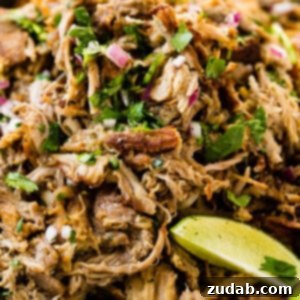
It was high time we made the BEST Pork Carnitas Recipe and this is it. A hint of citrus, juicy meat with those classic crispy bits!
Ingredients
Brine
- 1 1/2 Cups Orange Juice
- 1/2 Cup Pineapple Juice, or lemon juice
- 20 Cloves Garlic
- 2 Cups Apple Cider Vinegar
- 1/2 Cup Brown Sugar
- 1/2 Cup Kosher Salt
- 1 Tablespoon Cumin
- 1 Tablespoon Oregano
- 1 Tablespoon Dried Orange Peel
- 1 Tablespoon Smoked Paprika
- 1 Tablespoon Chili Powder
- 1/2 Cup Oil (canola or vegetable)
Pork Rub
- 3-4 lb Bone-in Pork Butt or shoulder (see notes for using boneless or cubed pork shoulder)
- 2 Tablespoons Cumin
- 1 Tablespoon Oregano
- 1 1/2 teaspoons Dried Orange Peel
- 2 teaspoons Garlic Powder
- 1 teaspoon Ground Coriander
Cooking Liquids
- 1/2 Cup Orange Juice
- 1/4 Cup Lime Juice
- 1/4 Cup Chicken Broth
- Canola Oil, for final crisping
Instructions
For the Brine
- Combine all brine ingredients in a blender and blend until smooth. Heat 1/2 cup oil in a pan over medium heat. Remove from heat and then carefully add the blender sauce, stirring gently to prevent splattering.
- Spread the brine mixture over the pork butt. Place the pork in a large container with a lid and refrigerate for 8 hours or overnight to brine.
For the Pork
- Preheat your oven to 225 degrees F (107 degrees C).
- Remove the pork from the brine and pat it thoroughly dry with paper towels, reserving the brine liquid.
- In a small bowl, mix the ingredients for the dry rub (2 Tbsp Cumin, 1 Tbsp Oregano, 1 1/2 tsp Dried Orange Peel, 2 tsp Garlic Powder, 1 tsp Ground Coriander) and rub it generously all over the pork.
- In a roasting pan, mix together the liquids from the “Cooking Liquids” section (1/2 Cup Orange Juice, 1/4 Cup Lime Juice, 1/4 Cup Chicken Broth) and pour into the bottom of the pan.
- Place the seasoned pork butt in the roasting pan, then pour the reserved brine liquid over the top of the pork.
- Cover the roasting pan tightly and cook for 12-14 hours, or until the internal temperature of the pork reaches 200 degrees F (93 degrees C).
- Remove the cooked meat from the oven and let it rest, covered, for up to 2 hours.
- Once rested, shred the meat using two forks. Collect all the cooking liquids from the roasting pan and separate the fat using a fat separator.
- Heat some canola oil in a large skillet over medium-high heat.
- Add the shredded pork to the hot skillet in small amounts and toss as it begins to crisp and caramelize. Remove the crisped pork to a pan and repeat until all batches are done.
- Toss the crispy carnitas with a little of the defatted cooking juices and serve immediately!
Recipe Notes
- If using a boneless or cubed pork shoulder, it will likely cook faster. Begin checking for doneness around 9-10 hours.
- To make this dish in a slow cooker, follow the same brining and seasoning instructions, then cook the pork on low for 8–10 hours. Remember to crisp the meat in a pan on the stovetop after it has rested.
- Pork carnitas can be frozen for up to 3 months. For best results, crisp the thawed meat just before serving.
Nutrition
Nutrition information is an approximation. Per serving (1 cup): Calories: 174kcal, Carbohydrates: 13g, Protein: 17g, Fat: 5g, Saturated Fat: 2g, Trans Fat: 1g, Cholesterol: 51mg, Sodium: 4058mg, Potassium: 441mg, Fiber: 1g, Sugar: 10g, Vitamin A: 471IU, Vitamin C: 22mg, Calcium: 55mg, Iron: 2mg.
REMEMBER TO SUBSCRIBE TO our FREE Oh Sweet Basil NEWSLETTER AND RECEIVE EASY RECIPES DELIVERED INTO YOUR INBOX EVERY DAY!
When you try a recipe, please use the hashtag #ohsweetbasil on INSTAGRAM for a chance to be featured in our stories! FOLLOW OH, SWEET BASIL ON FACEBOOK | INSTAGRAM | PINTEREST | TWITTER FOR ALL OF OUR LATEST CONTENT, RECIPES AND STORIES.