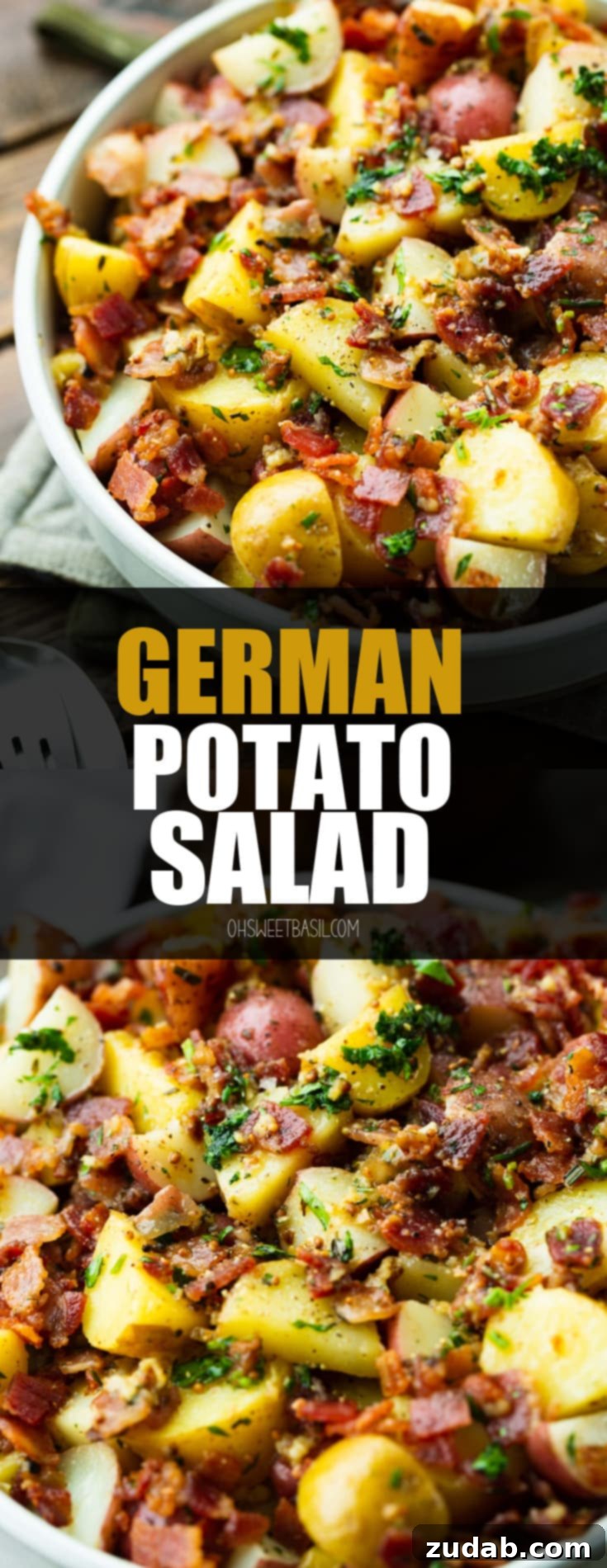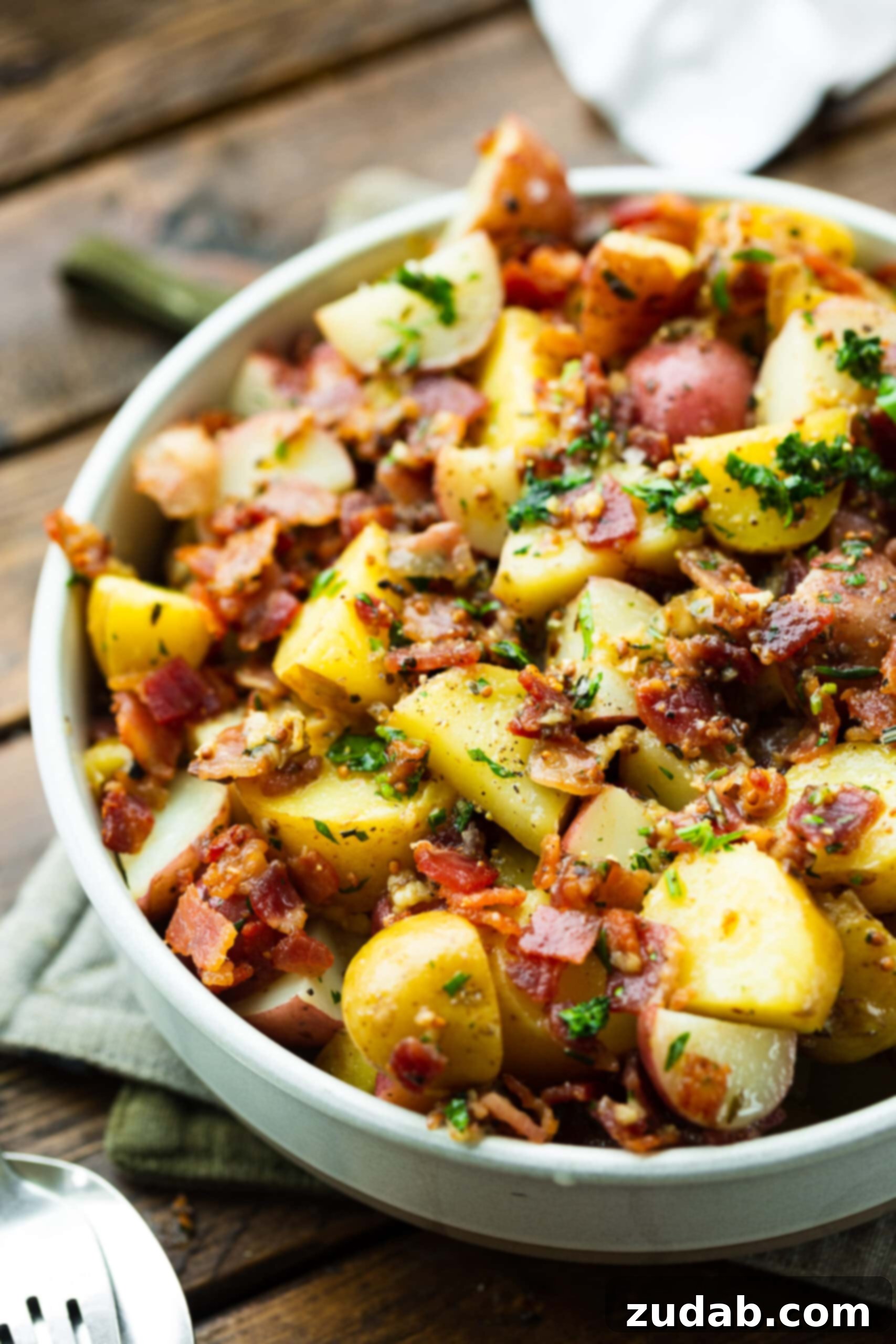
German potato salad stands out as a culinary delight, a warm and inviting side dish that redefines what potato salad can be. Unlike its creamy, mayonnaise-laden counterparts, this classic features tender, perfectly cooked potatoes, delightfully crunchy bacon, and an unforgettable tangy mustard-vinegar dressing. It’s a symphony of flavors and textures that promises to be a refreshing change for any meal.
While we cherish our traditional potato salad for its nostalgic charm and picnic table appeal, sometimes you crave something different. If you’re looking to ditch the eggs and mayonnaise for a lighter, yet incredibly flavorful, alternative, then this warm German potato salad is precisely what you need. It’s a dish that brings comfort and a burst of zesty taste to your plate, proving that simple ingredients can create extraordinary results.
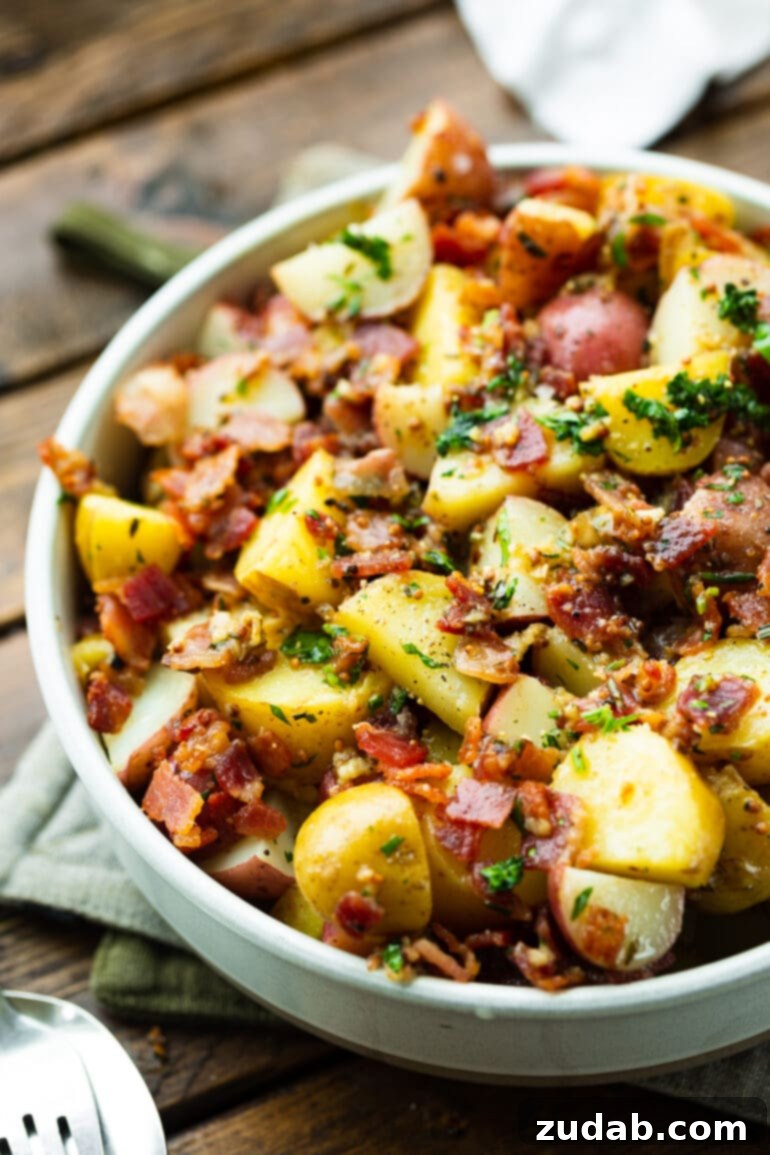
Crafting this warm potato salad begins with selecting the right potatoes, often a mix of Yukon Gold and red varieties, boiled until just fork-tender. The magic truly starts when crispy bacon is rendered to perfection in a Dutch oven, leaving behind a flavorful golden fat. This precious bacon fat becomes the foundational element for the dressing, infused with aromatic garlic before being whisked with a dynamic duo of mustards and tangy apple cider vinegar. This harmonious blend creates a dressing that perfectly coats every potato, delivering a “flavor town” experience that will have you coming back for more. A generous sprinkle of fresh parsley not only adds a pop of color but also brightens the entire dish, making it undeniably fresh and inviting. Trust us, this recipe is a must-try.
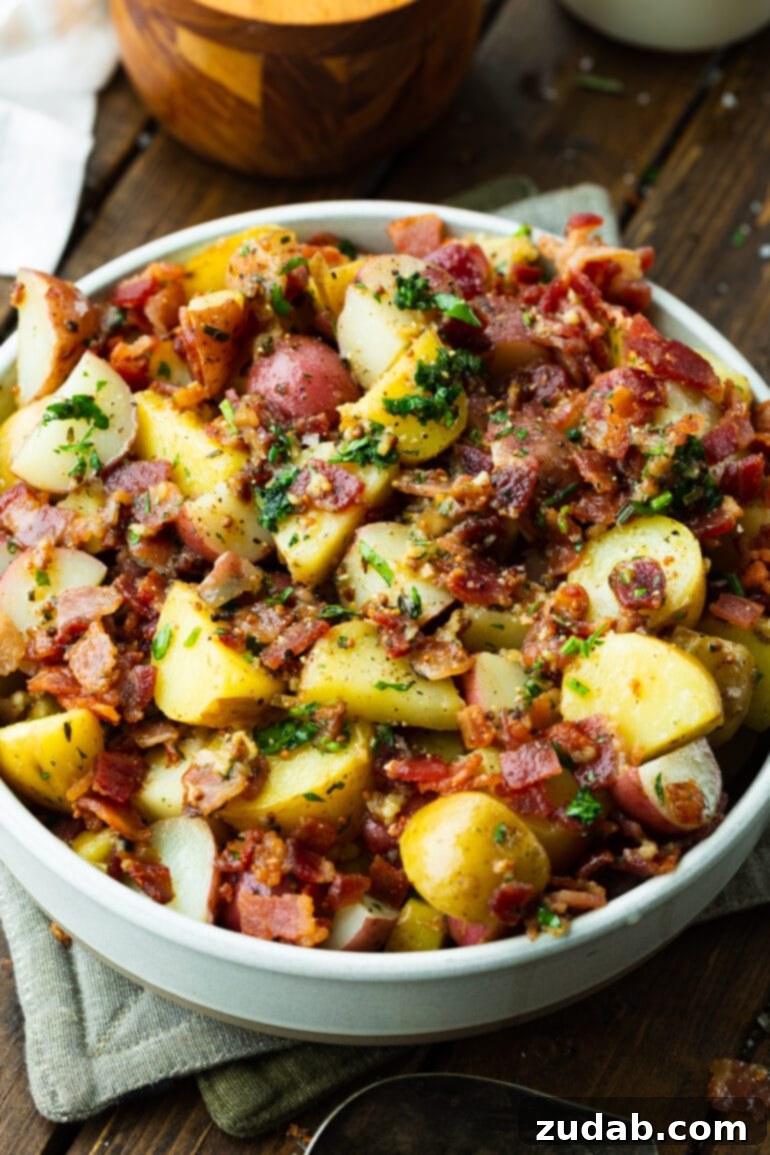
The Essential Ingredients for Perfect German Potato Salad
The beauty of this German potato salad lies in its straightforward, yet impactful, ingredient list. Each component plays a crucial role in building the robust flavor profile that makes this dish so beloved. Here’s a closer look at what you’ll need and why each ingredient matters:
- Potatoes: The foundation of any great potato salad. We highly recommend a combination of Yukon Gold potatoes for their buttery texture and subtle sweetness, alongside vibrant red potatoes which hold their shape beautifully after boiling. Avoid starchy varieties like russets, as they tend to fall apart and create a mealy texture unsuitable for salad.
- Salt: Essential for seasoning the potatoes as they boil. This allows the flavor to penetrate deeply, ensuring every bite is perfectly seasoned.
- Bacon: Not just for crunch and savory flavor, but also for its rendered fat. This liquid gold is the secret to an incredibly rich and flavorful dressing. Remember to reserve some of the bacon grease after cooking.
- Butter: Used in conjunction with bacon fat, unsalted butter allows you to control the overall saltiness of the dish, adding a delicate richness without overpowering the other flavors.
- Olive Oil: Extra virgin olive oil is preferred for its fruity notes and helps to create a smooth, well-rounded dressing.
- Apple Cider Vinegar: The star of the tangy dressing! Apple cider vinegar provides the essential acidity that balances the richness of the bacon and potatoes, giving German potato salad its signature bright and zesty character.
- Garlic: Freshly minced garlic is non-negotiable here. It infuses the bacon fat and dressing with an irresistible aromatic depth that elevates the entire dish.
- Sugar: A touch of sugar is crucial for mellowing out the sharp acidity of the vinegar, creating a perfectly balanced sweet and sour profile that is characteristic of authentic German potato salad.
- Mustards: For maximum flavor complexity, we employ a combination of two mustards: robust stone-ground mustard for texture and a spicy kick, and smooth Dijon mustard for its classic, pungent flavor.
- Salt and Pepper: Essential for seasoning the final dish. Always taste and adjust to your preference to ensure perfect harmony of flavors.
- Parsley: Fresh parsley is used in two ways – some is mixed into the warm potatoes and dressing, while a generous portion is added fresh at the end. This dual application ensures a vibrant, herbaceous note that cuts through the richness and adds an appealing visual element.
Specific measurements for each ingredient, along with detailed step-by-step instructions, are provided in the comprehensive recipe section below.
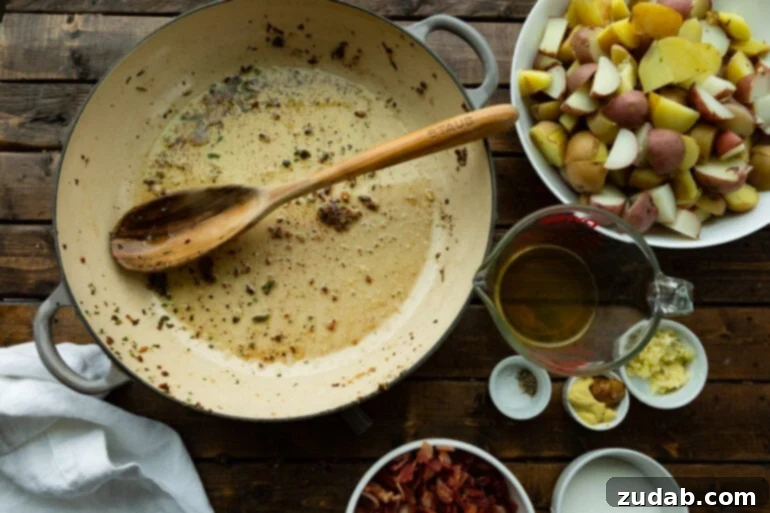
Choosing the Best Potatoes for German Potato Salad
The type of potato you select is paramount to the success of your German potato salad. The goal is a potato that holds its shape well after cooking, yet becomes tender enough to absorb the flavorful dressing without turning mushy. Here’s what you need to know:
For potato salad, it is crucial to steer clear of high-starch, thick-skinned potatoes like Russets. These varieties are ideal for mashing or baking, as their high starch content causes them to break down easily, resulting in a crumbly, unappealing texture when tossed in a salad. They will absorb too much liquid and lose their structural integrity.
Instead, opt for waxy or medium-starch varieties. Red potatoes and Yukon Gold potatoes are consistently the top choices for potato salads, including the German variety. Their lower starch content means they maintain a firm, yet tender, texture even after boiling. Yukon Golds offer a rich, slightly buttery flavor and a smooth texture, while red potatoes provide a beautiful color contrast and a slightly firmer bite. Using a combination of both gives you the best of both worlds – visual appeal and textural diversity.
Exciting Variations for Your German Potato Salad
While the classic German potato salad recipe is a masterpiece in itself, there are many ways to customize it to suit your preferences or what you have on hand. Don’t hesitate to experiment with these variations:
- Potato Combinations: As mentioned, our favorite combination is Yukon Gold and red potatoes for their complementary textures and flavors. However, feel free to use all of one or the other if that’s what you prefer or have access to. New potatoes or fingerling potatoes also make excellent choices, offering a delicate texture and earthy flavor.
- Lighter Options: If you’re looking to reduce the fat content, consider using turkey bacon instead of regular pork bacon. Be aware that this will significantly alter the flavor profile, as turkey bacon is much leaner and won’t render as much flavorful grease. You might need to adjust the amount of olive oil and butter in the dressing to compensate for the lost fat and maintain a rich mouthfeel. You could also explore reduced-fat bacon options, but always prioritize flavor!
- Mustard Melodies: The mustard is a key component of the dressing. We love the depth that stone-ground and Dijon mustards provide, but your mustard choice is highly personal. For a little heat, try incorporating a spoonful of spicy brown mustard or even a touch of horseradish mustard. If you prefer a milder flavor, a sweet German mustard can add a unique twist. Experiment with different ratios to find your perfect balance.
- Herbaceous Twists: Parsley is the traditional herb for German potato salad, adding a fresh, bright finish. However, if you’re not a fan of parsley or simply want to try something new, fresh dill is a fantastic alternative. Its distinct anise-like flavor pairs wonderfully with potatoes and vinegar, offering a fresh herbaceous kick that’s equally delicious. Chives or finely chopped green onions could also be interesting additions for a milder oniony note.
- Add Some Onion: While not in the original recipe, finely diced red onion or shallots can be sautéed with the garlic for an extra layer of savory depth, or added raw for a sharper bite.
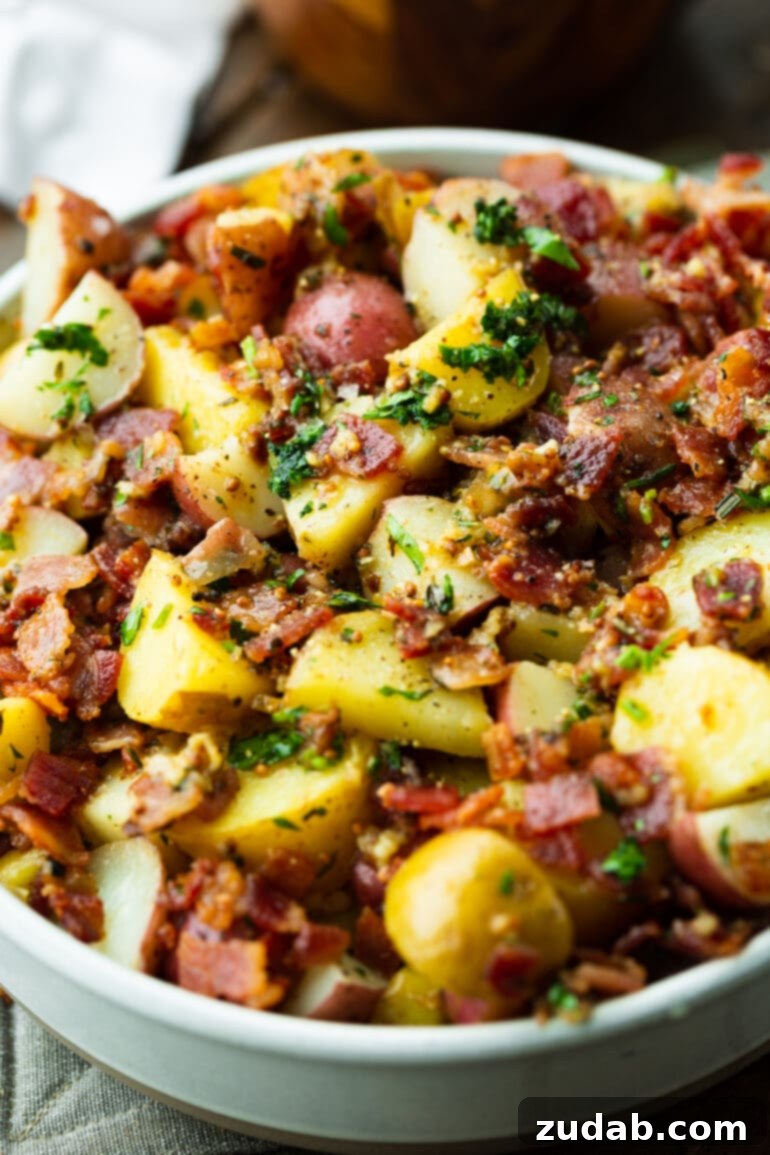
Why This German Potato Salad Will Become Your New Favorite
This German potato salad recipe isn’t just another side dish; it’s a culinary experience waiting to happen. Here’s why it consistently wins hearts and earns a permanent spot on dinner tables:
- Effortlessly Easy: Despite its sophisticated flavor, this recipe is remarkably simple to prepare. The ingredients are few, common, and largely pantry staples. The instructions are straightforward and intuitive, making it a perfect dish for cooks of all skill levels. In fact, it’s so easy, our 12-year-old often takes the lead on preparing most of it, requiring only a little assistance with the bacon.
- Explosive Flavor Profile: Anything that involves savory bacon is bound to be a flavor sensation. But when you combine the rich, smoky notes of bacon and its rendered fat with the pungent kick of two types of mustard, the bright acidity of apple cider vinegar, and the aromatic depth of fresh garlic, you get a dish that’s truly through the roof in terms of taste. It’s a bold, tangy, and utterly satisfying flavor experience that will excite your palate.
- Delightful Texture Contrast: One of the hallmarks of a truly great dish is a compelling contrast in textures. This German potato salad delivers precisely that: the potatoes are cooked to a tender, yielding perfection, while the generous crispy bacon bits provide a satisfying crunch. This interplay of soft and crispy textures makes every forkful an engaging experience.
- Naturally Allergy-Friendly: For those with dietary restrictions, this recipe is a godsend. All the core ingredients are naturally gluten-free, dairy-free, and egg-free. This means it’s a wonderful option for picnics, potlucks, and family meals where various dietary needs might be present. Always remember to double-check that your chosen mustards are certified gluten-free if strict adherence is necessary, but typically, they are.
Historical Roots of German Potato Salad
Understanding the origins of German potato salad adds another layer of appreciation for this delightful dish. While often simply called “German potato salad,” the style we typically refer to – warm, vinegar-based, and often featuring bacon – is most characteristic of Southern Germany, particularly Bavaria, as well as Austria. In these regions, potatoes are a staple crop and have been incorporated into local cuisine for centuries.
This warm version contrasts sharply with potato salads found in Northern Germany, which often include mayonnaise, much like American potato salad. The vinegar-based dressing of the Southern German variety likely evolved from practical reasons, as vinegar and oil dressings were more shelf-stable and common before refrigeration became widespread. The addition of bacon (or speck, a smoked cured ham) provides not only flavor and texture but also the crucial fat needed to create the rich, emulsified dressing. It’s a testament to simple, hearty ingredients coming together to create a profoundly satisfying meal.
Perfect Pairings: What to Eat with German Potato Salad
This hearty and flavorful German potato salad is an incredibly versatile side dish that complements a wide array of main courses. Its tangy and savory profile makes it an excellent accompaniment to various proteins, cutting through richness and adding a vibrant dimension to your meal. Here are some of our favorite main dishes to serve alongside this irresistible potato salad:
- Classic Meatloaf: The rich, comforting flavors of meatloaf find a perfect balance with the zesty kick of German potato salad.
- Roasted Chicken: Whether a whole roasted chicken or individual pieces, the savory chicken pairs beautifully with the warm, tangy potatoes and crispy bacon.
- Garlic Herb Salmon: The light, flaky texture of salmon and its delicate flavors are wonderfully enhanced by the robust dressing of the potato salad.
- Roasted Pork Tenderloin: Pork and apples are a classic combination, and the apple cider vinegar in the dressing echoes this pairing, making it an ideal partner for roasted pork.
- Garlic Butter Steak: The bold flavors of a perfectly cooked steak are perfectly complemented by the tangy, savory notes of the potato salad, creating a satisfying and balanced meal.
- Grilled Sausages or Bratwurst: For an authentic German experience, pair it with grilled sausages. The flavors are a match made in heaven.
- Crispy Pork Schnitzel: Another traditional German pairing, the light, crispy breaded pork is balanced beautifully by the warm, tangy potato salad.
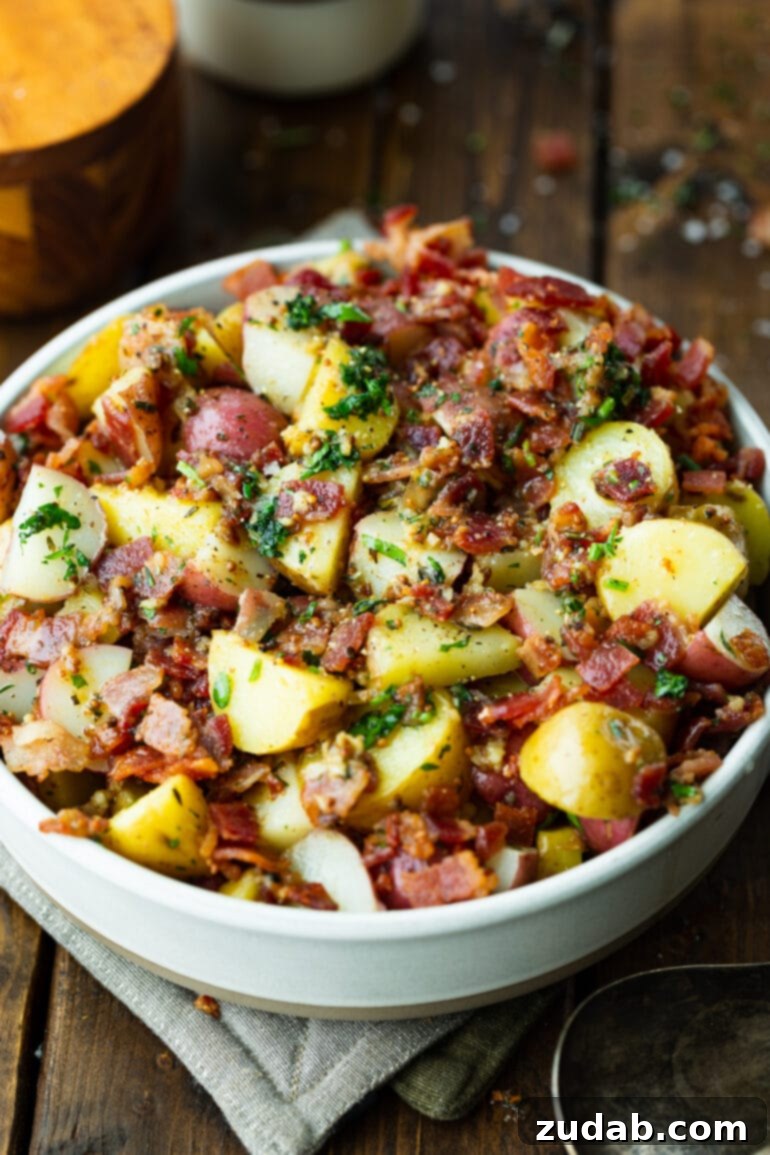
Storing and Reheating Your German Potato Salad
One of the many benefits of this vinegar-based German potato salad is its excellent keeping quality, especially compared to mayonnaise-based salads. Proper storage and reheating will ensure you can enjoy leftovers without compromising on taste or texture.
Storing Leftovers: Any leftover German potato salad should be stored in an airtight container in the refrigerator. When properly stored, it will maintain its delicious flavor and texture for 3-4 days. The flavors often meld and deepen slightly overnight, making it even more enjoyable the next day.
Freezing (Not Recommended): Unfortunately, this potato salad does not freeze well. The freezing and thawing process significantly alters the texture of the potatoes, causing them to become mealy and mushy. It’s best to enjoy this dish fresh or within a few days of preparation.
Reheating: To reheat this delightful dish, we recommend using a Dutch oven or a large pot on the stovetop. Warm it gently over medium-low heat, stirring occasionally, until the potatoes are heated through to your desired temperature. Avoid high heat, which can cause the potatoes to stick or burn. If the salad seems a little dry upon reheating, you can add a splash of apple cider vinegar or a tiny bit of olive oil to refresh the dressing and restore its tanginess.
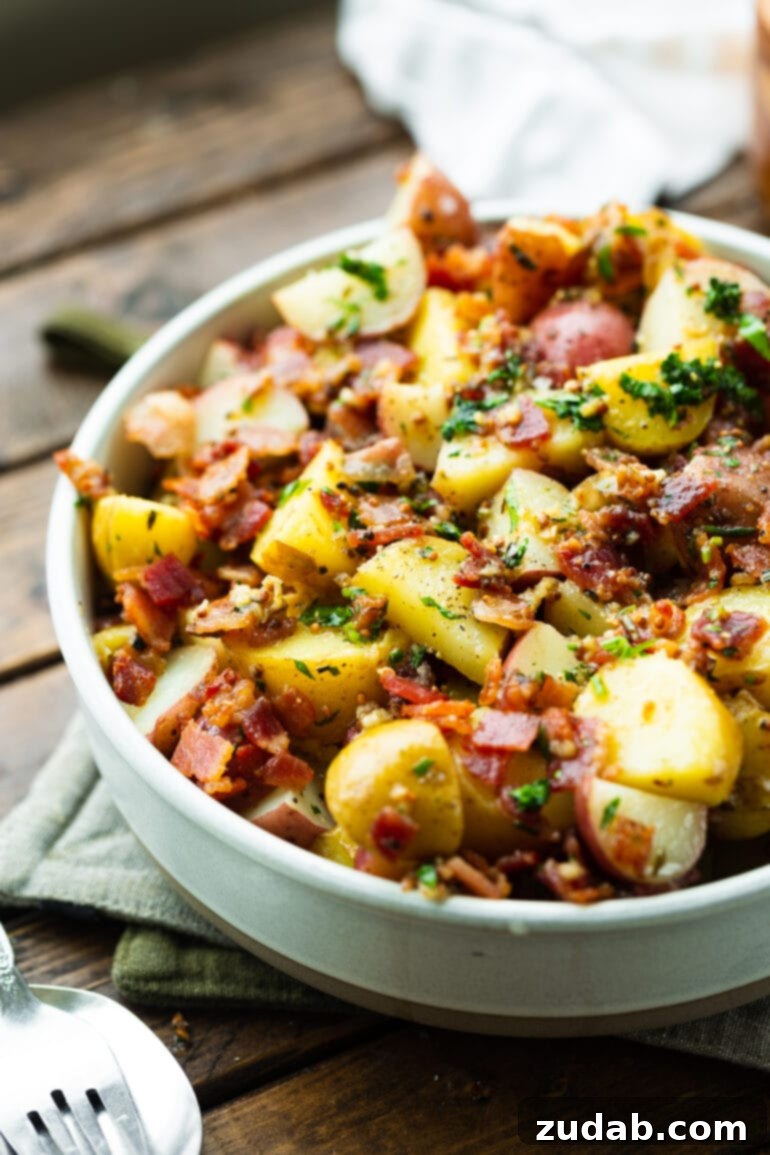
German Potato Salad vs. Traditional American Potato Salad
The question of choosing between German potato salad and traditional American potato salad often arises, and for many, it’s an impossible decision! These two dishes, while both categorized as “potato salad,” are fundamentally distinct in their flavor profiles, textures, and serving temperatures. Traditional American potato salad, with its creamy mayonnaise base, often includes hard-boiled eggs, celery, and a touch of sweetness. It’s typically served chilled, offering a cool, comforting counterpoint to summer barbecues.
German potato salad, on the other hand, presents a warm, tangy, and savory experience. Its vinegar-based dressing, coupled with crispy bacon and tender potatoes, offers a zesty zing that’s invigorating and deeply satisfying. It’s a dish that evokes a sense of hearty, old-world charm, perfect for cooler weather or whenever you crave a side dish with a bold, bright flavor. Each style holds a special place, catering to different cravings and occasions. So, while we can’t choose a favorite, we can confidently say that if you’re looking for a warm, flavorful, and uniquely zesty potato side dish, then a German potato salad is an absolutely fantastic and irresistible option!
FAQs About German Potato Salad
Here are answers to some commonly asked questions about making and enjoying German potato salad:
- Can I make German potato salad ahead of time? Yes, you can prepare it a few hours in advance and keep it warm in a slow cooker on a “warm” setting, or reheat it gently on the stovetop before serving. The flavors tend to meld beautifully overnight, so it’s also delicious as a next-day cold or reheated dish.
- What is the difference between German and American potato salad? The main difference lies in the dressing and serving temperature. German potato salad uses a vinegar-based dressing and is typically served warm, while American potato salad uses a mayonnaise-based dressing and is served chilled. German versions also commonly feature bacon, while American versions often include hard-boiled eggs.
- Do I have to use two types of mustard? No, you can use just one type if that’s all you have or prefer. However, the combination of stone-ground and Dijon adds a fantastic depth and complexity to the dressing that is highly recommended.
- Can I add onions to my German potato salad? Absolutely! Finely diced red onion or green onions can be a delicious addition. You can sauté them briefly with the garlic for a milder flavor, or add them raw for a sharper, more pungent taste.
- Is German potato salad healthy? While it contains bacon, which is high in fat, the dressing itself is lighter than mayonnaise-based dressings as it is vinegar-based. Portion control and using leaner bacon options can help manage the calorie and fat content.
More Delicious Potato Side Dishes to Explore:
- Cheesy Potato Casserole
- The Creamiest Mashed Potatoes
- Gruyere Potato Stacks
- Crispy Oven Baked Potatoes
- Garlic Dill Fingerling Potatoes
Authentic German Potato Salad Recipe
Yields: 6 servings
Prep time: 5 minutes
Cook time: 40 minutes
Total time: 45 minutes
Ingredients
- 1 Pound Yukon Gold Potatoes
- 1 Pound Baby Red Potatoes
- 1 teaspoon Salt (for boiling potatoes)
- 12 Ounces Bacon
- 1/4 Cup Reserved Bacon Fat
- 2 Tablespoons Unsalted Butter
- 2 Tablespoons Extra Virgin Olive Oil
- 1/4 Cup Apple Cider Vinegar, plus 1 tablespoon
- 2 Cloves Fresh Garlic, minced
- 3 Tablespoons Granulated Sugar, plus 1 teaspoon
- 1 teaspoon Stone Ground Mustard
- 2 teaspoons Dijon Mustard
- 1/2 teaspoon Salt, or to taste
- 1/4 teaspoon Black Pepper
- 3 Tablespoons Fresh Parsley, chopped, divided
Instructions
- Heat a large pot of water over high heat until rapidly boiling. Meanwhile, thoroughly wash the potatoes and cut them in half (or into 1-inch cubes for even cooking). Add the prepared potatoes to the rapidly boiling water and season with 1 teaspoon of salt.
- Allow the potatoes to cook until they are fork-tender, which typically takes about 10-15 minutes, depending on their size. Be careful not to overcook them, as they should still hold their shape. Once cooked, drain the potatoes thoroughly and set aside.
- While the potatoes are cooking, place a large Dutch oven or heavy-bottomed pot over medium heat. Cut the bacon strips into approximately 1-inch pieces and add them to the pot. Cook the bacon, stirring occasionally, until it is deliciously crispy and all the fat has rendered.
- Using a slotted spoon, carefully remove the crispy bacon pieces from the pot and transfer them to a plate lined with a paper towel to drain excess grease. This will ensure they remain crunchy.
- Measure out 1/4 cup of the rendered bacon grease from the pot and return it to the Dutch oven. If you don’t have enough bacon fat, supplement with a little extra olive oil and butter until you reach the 1/4 cup measurement.
- Add the butter and olive oil to the reserved bacon fat in the pot. Once the butter has melted, stir in the minced garlic and 1 tablespoon of the chopped fresh parsley. Sauté until the garlic is fragrant and just beginning to turn golden, about 1-2 minutes.
- Quickly whisk in the 1/4 cup of apple cider vinegar, the 3 tablespoons of sugar, the stone-ground mustard, and the Dijon mustard into the garlic-bacon fat mixture.
- Bring the dressing to a gentle simmer, stirring constantly, and allow it to thicken slightly, which should take approximately 1 minute.
- Add the drained, cooked potatoes to the Dutch oven with the warm dressing. Gently stir to ensure all the potatoes are evenly coated in the flavorful dressing.
- Stir in the crispy bacon pieces and the remaining 2 tablespoons of fresh chopped parsley.
- Serve the German potato salad immediately while it’s warm. Taste and adjust seasoning with additional salt and pepper if needed to achieve your perfect flavor balance.
Recipe Notes
Leftover German potato salad will keep well for 3-4 days when stored in an airtight container in the refrigerator.
Nutrition (Approximate per serving)
Serving: 1g, Calories: 540kcal, Carbohydrates: 33g, Protein: 10g, Fat: 41g, Saturated Fat: 14g, Polyunsaturated Fat: 5g, Monounsaturated Fat: 19g, Trans Fat: 0.2g, Cholesterol: 57mg, Sodium: 1049mg, Potassium: 803mg, Fiber: 3g, Sugar: 8g, Vitamin A: 315IU, Vitamin C: 24mg, Calcium: 28mg, Iron: 2mg
Nutrition information is automatically calculated and should only be used as an approximation.