
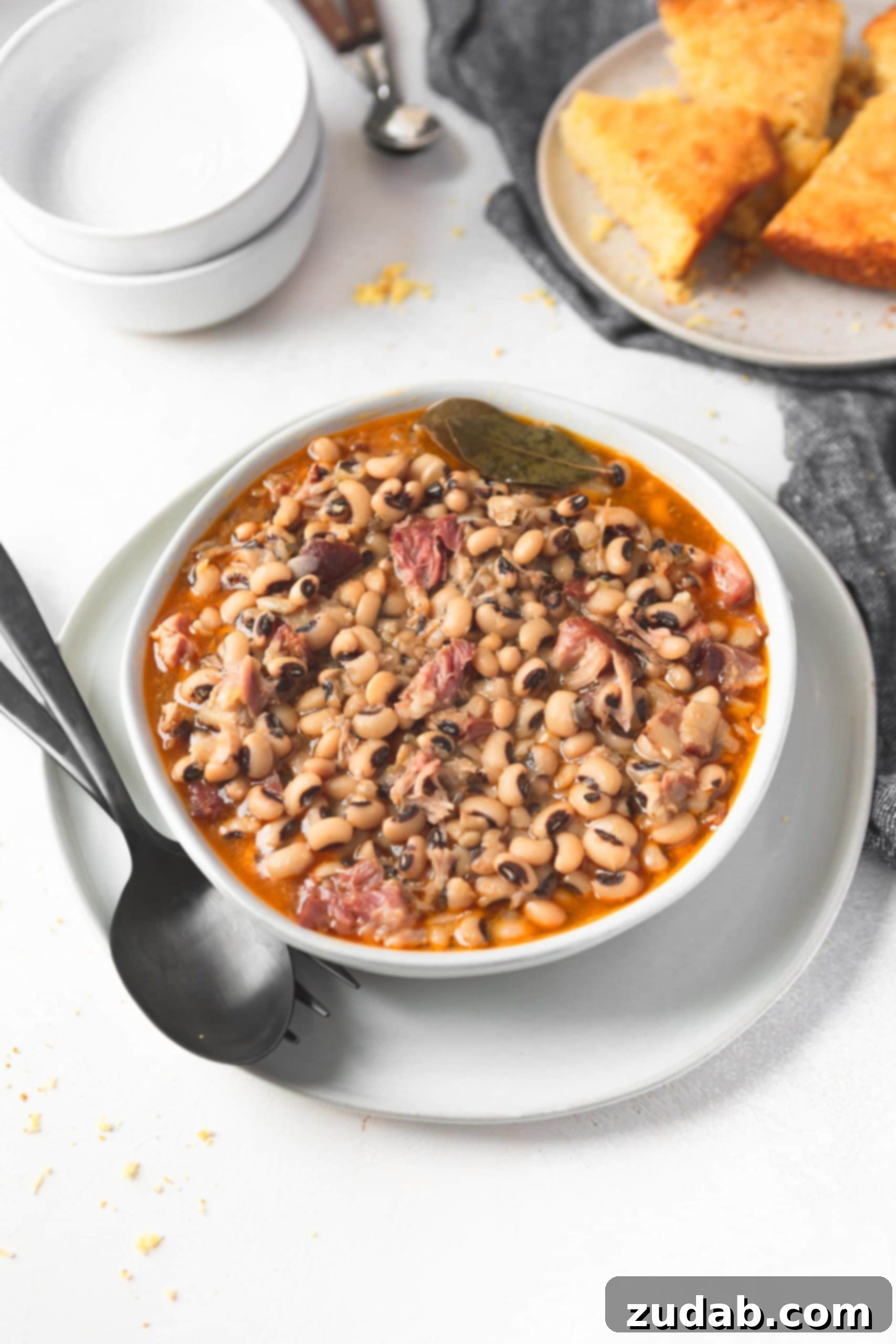
Welcome to the ultimate guide for a truly traditional and deeply flavorful Southern Black Eyed Peas recipe! As the New Year approaches, many of us look for ways to usher in good fortune and prosperity, and in the American South, there’s no better culinary tradition than a hearty bowl of black eyed peas. This dish isn’t just incredibly delicious, offering the very best of Southern comfort food; it’s also steeped in a rich history and believed to bring good luck for the year ahead. A little extra prosperity never hurts, right?
My journey with black eyed peas began somewhat unexpectedly. The first time I visited South Carolina, these humble legumes were featured on almost every menu, a culinary staple I had never encountered growing up. It was a revelation! When the idea of traditional New Year’s Day meals came up, my husband, Cade, immediately suggested black eyed peas. From that moment, I was determined to create a recipe that truly captured the soulful essence of this beloved dish, and what you’re about to discover is the result of that quest. It’s an authentic, rich, and utterly satisfying recipe that will quickly become a cherished part of your holiday traditions.
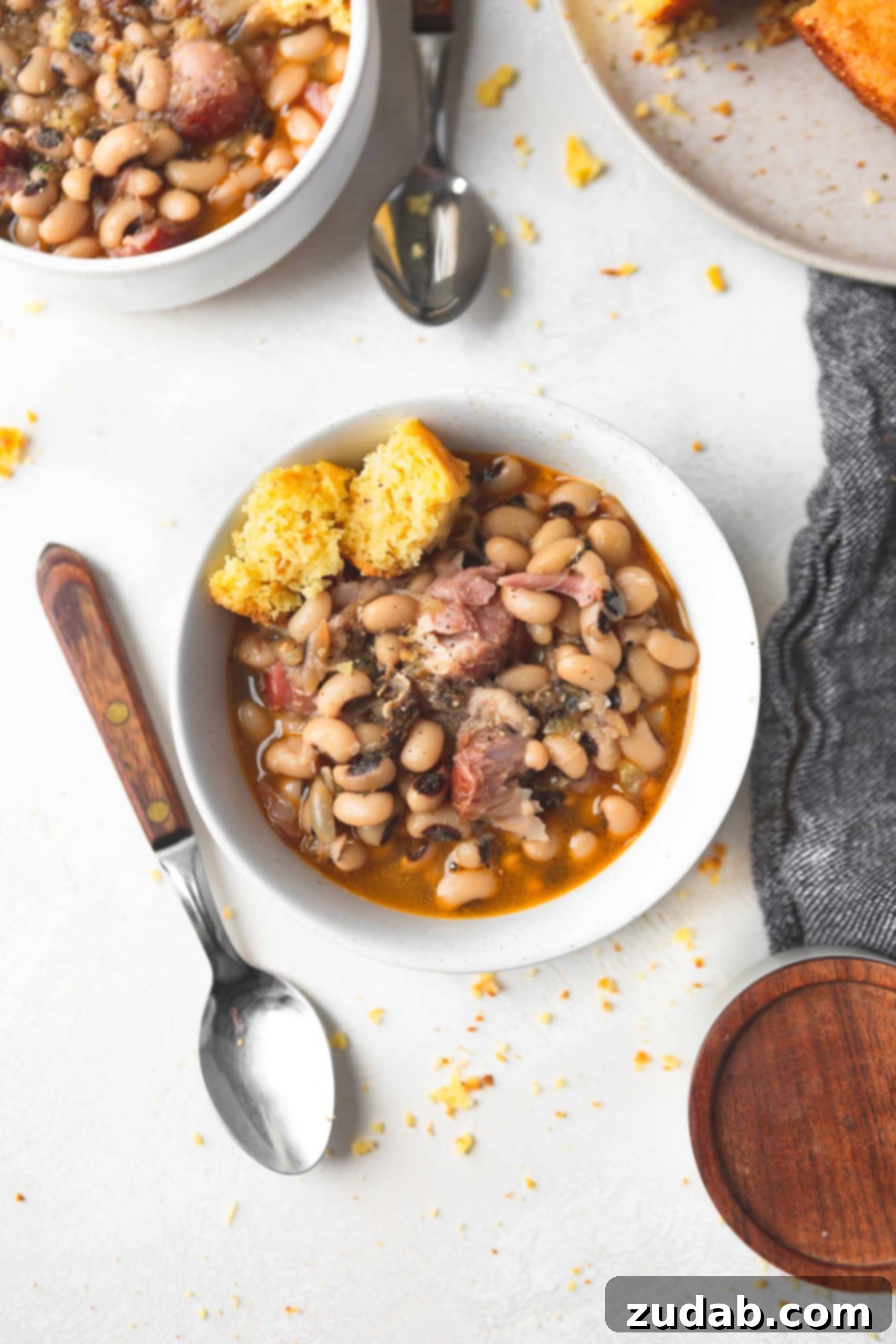
For the complete Southern experience, I highly recommend pairing this flavorful stew with a side of warm, crumbly Southern skillet cornbread. The sweet and savory notes of the cornbread perfectly complement the smoky, savory depth of the peas, making for a truly unforgettable meal. Imagine dipping a piece of golden cornbread into the rich broth – pure culinary bliss!
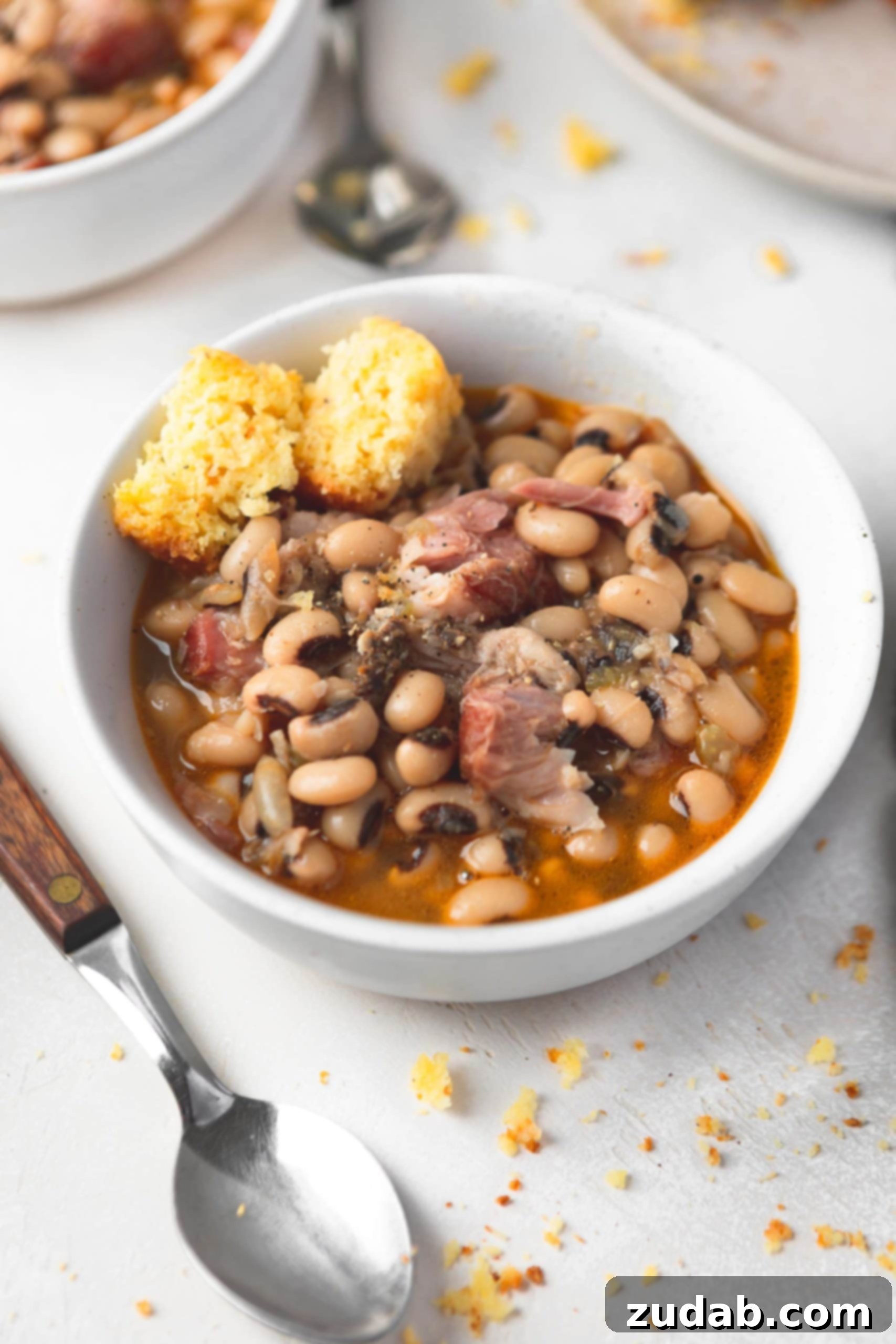
To be entirely honest, I wasn’t initially convinced I would fall in love with black eyed peas. The concept immediately brought back memories of the ham hock soup my mom made during my childhood. While I appreciate it now, it wasn’t my favorite as a kid. However, one bite of this black eyed peas recipe changed everything! The savory depth imparted by the pork transforms the dish into something truly extraordinary and utterly scrumptious. The rich, smoky flavor of the pork is the secret ingredient that elevates these peas from good to absolutely phenomenal, turning even a skeptic like me into a lifelong fan.
Essential Ingredients for the Perfect Southern Black Eyed Peas
Creating a truly authentic and lucky bowl of black eyed peas requires a thoughtful selection of ingredients. We’re just a few pantry staples away from a delicious meal that promises good fortune in the New Year. Here’s your comprehensive shopping list, designed to build layers of incredible flavor:
- Black Eyed Peas (dry or canned): The star of our show! While both work, dry peas offer superior texture and flavor when prepared properly.
- Butter: Adds richness and helps create a beautiful golden brown on your aromatics.
- Oil: Used for browning the pork and other ingredients, ensuring a consistent sear.
- Pork Shoulder (or Ham Hock): This is crucial for that deep, smoky, umami flavor that defines Southern black eyed peas. A ham hock provides bone-in flavor, while diced pork shoulder offers tender meat throughout.
- Bacon: Another layer of irresistible smoky, salty flavor. Thick-cut bacon rendered slowly creates crispy bits and flavorful fat.
- Onion: A foundational aromatic, providing sweetness and depth to the stew. Yellow onions are ideal for their balanced flavor.
- Celery: Adds a subtle herbaceous note and essential texture, contributing to the classic “holy trinity” of Southern cooking.
- Garlic: Pungent and aromatic, garlic is indispensable for boosting the overall savory profile.
- Salt: Essential for seasoning, bringing out the best in all the other ingredients.
- Pepper: A touch of black pepper adds a gentle warmth and aromatic kick.
- Garlic Powder: Provides a sustained, mellow garlic flavor that complements the fresh garlic.
- Smoked Paprika: Enhances the smoky notes from the pork and bacon, adding a beautiful color and a hint of sweet pepper.
- Balsamic Vinegar: A surprising but brilliant addition, a splash of balsamic vinegar brightens the dish, adding a subtle tang and complexity that cuts through the richness.
- Chicken Stock: The liquid base that infuses the peas with savory goodness. High-quality stock makes a big difference.
- Water: Used in conjunction with stock to achieve the perfect consistency and volume.
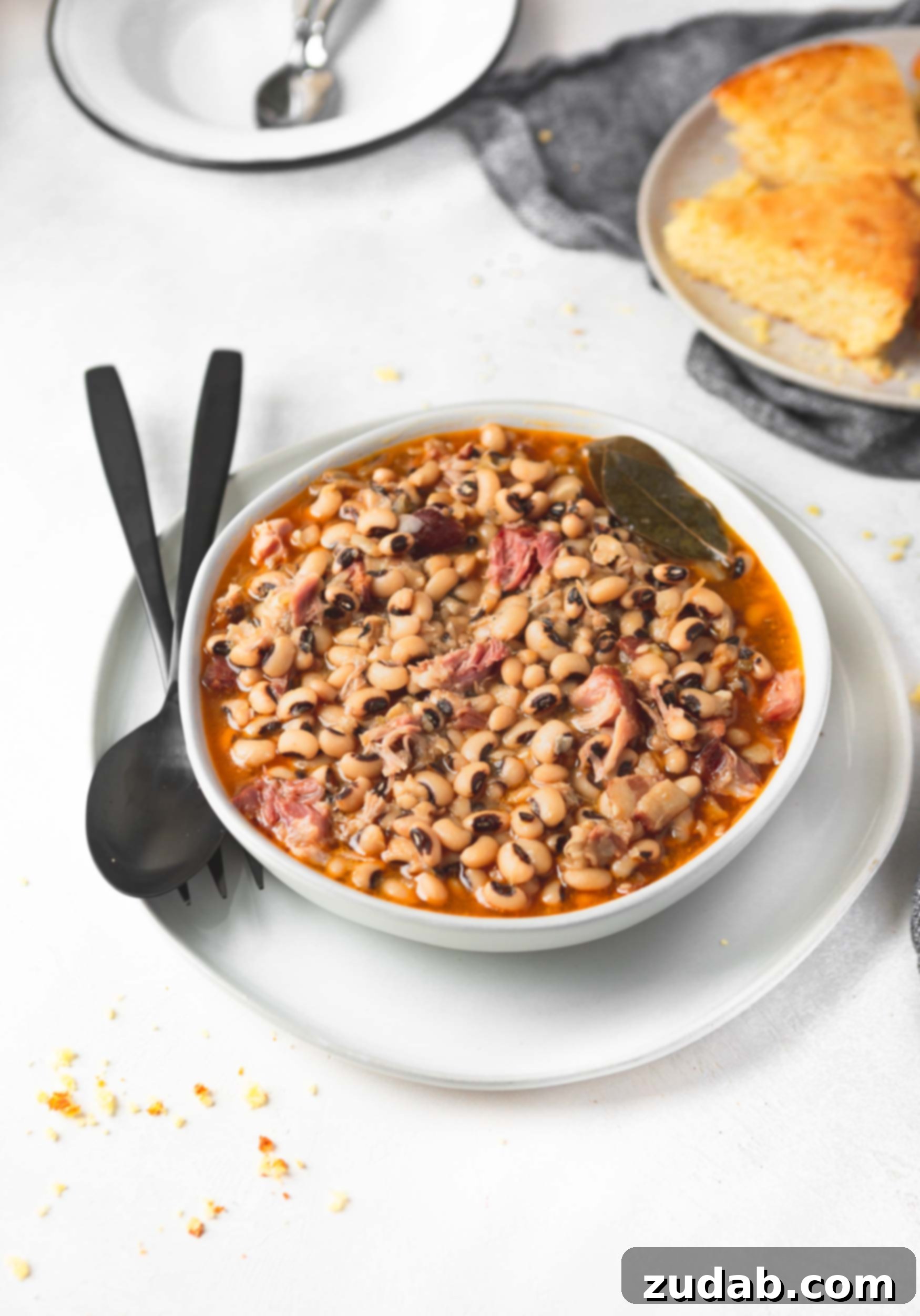
- Bay Leaves: Infuse the simmering liquid with a gentle, aromatic, and slightly woodsy flavor.
- Collard Greens (optional): A traditional addition, offering an earthy bitterness and vibrant color that perfectly balances the rich, savory peas. Highly recommended for authenticity!
You’ll find the precise measurements for each of these ingredients detailed in the comprehensive recipe card below. Each component plays a vital role in building the layers of comforting flavor that make this Southern black eyed peas recipe truly special.
Crafting Your Lucky Bowl: How to Prepare Southern Black Eyed Peas
Preparing this soulful dish is a journey of flavor development, starting with the beans themselves. Whether you opt for dried or canned black eyed peas, a little preparation goes a long way in achieving the best possible texture and taste. Let’s walk through the steps to ensure your New Year’s Day meal is a resounding success.
Prepping Your Black Eyed Peas: Dry vs. Canned
The first decision point is whether to use dry or canned black eyed peas. Both can yield fantastic results in this recipe, but they require different initial steps:
- If using dry beans: You’ll need to start your preparation the day before. Place the dry black eyed peas in a large pot, ensuring they are covered by at least 4 inches of cold water. Let them soak overnight, allowing them to fully rehydrate. This crucial step reduces cooking time and helps achieve a tender, creamy texture. After soaking, drain the water and rinse the beans thoroughly under cold running water before proceeding with the recipe.
- If using canned beans: This is a quicker option, perfect if you’re short on time. Simply drain the liquid from the cans and rinse the black eyed peas well. Rinsing helps remove excess sodium and any starchy liquid, resulting in a cleaner flavor. While we often prefer the depth achieved with dry beans, canned peas still taste phenomenal in this hearty stew.
Step-by-Step Cooking Instructions
Once your beans are prepped, the magic truly begins. The cooking process involves building layers of savory flavor, culminating in a rich, comforting stew. Here are the basic steps to guide you:
- Brown the Pork: Begin by heating a little oil in a large, heavy-bottomed pot or Dutch oven over medium-high heat. Once shimmering, add the diced pork shoulder (or ham hock). Cook until it’s beautifully browned on all sides, about 4-5 minutes. This browning isn’t just for color; it creates a rich, caramelized crust through the Maillard reaction, developing deep, savory flavors that will infuse the entire dish.
- Sauté Aromatics and Bacon: Reduce the heat to medium. Add the butter to the pot, allowing it to melt. Then, add the diced bacon, minced onion, sliced celery, and minced garlic. Cook, stirring occasionally, until the vegetables have softened and become translucent, and the bacon has rendered its fat and turned crispy. This step creates a flavorful base for the peas.
- Bloom the Spices: Sprinkle in the salt, pepper, garlic powder, smoked paprika, and add the balsamic vinegar. Cook for another couple of minutes, stirring constantly. This brief cooking period, known as “blooming” the spices, intensifies their flavors and aromas by lightly toasting them in the hot fat, unlocking a richer, more complex taste profile for your stew. The balsamic vinegar adds a delightful acidic counterpoint that brightens the overall flavor.
- Simmer the Broth: Pour in the chicken stock and water, then add the bay leaves. Bring the mixture to a gentle boil, then reduce the heat to a low simmer. Allow it to cook for 30-40 minutes, or until the pork begins to become tender and easily pulled apart. This allows the pork to soften and its flavors to meld beautifully with the stock and spices.
- Add Peas and Greens, Continue Simmering: Once the pork is tender, add your prepped black eyed peas (dry or canned) and the optional collard greens. Continue to simmer the stew, stirring occasionally, for approximately 1 1/2 hours, or until the black eyed peas are wonderfully soft and creamy, absorbing all the delicious flavors from the broth. The collard greens will also cook down and become tender, adding their distinct earthy notes.
- Serve and Enjoy: Before serving, remove and discard the bay leaves. For an extra kick, a dash of hot sauce is highly recommended, adding a welcome layer of spice that complements the richness of the dish. Serve hot and savor every comforting spoonful!
For even more precise details regarding cooking times and ingredient quantities, please refer to the comprehensive recipe card located further down this page. Enjoy the process of creating this fantastic Southern staple!
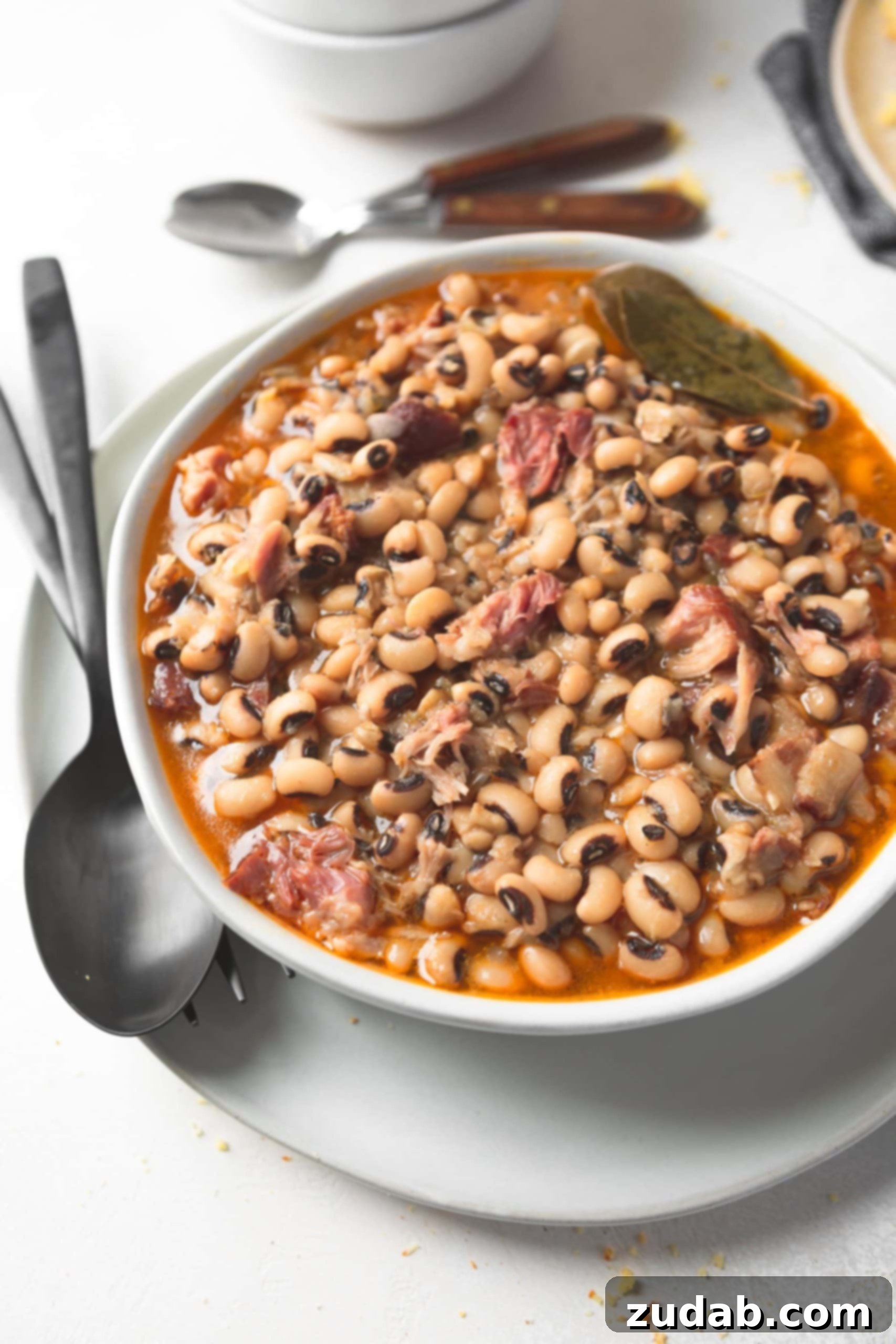
The Roots of Tradition: Why Black Eyed Peas on New Year’s Day?
In the Southern United States, the tradition of eating black eyed peas on New Year’s Day is more than just a meal; it’s a cherished ritual deeply rooted in history and folklore, believed to usher in good luck and prosperity for the coming year. This culinary custom has roots stretching back to the Civil War era, when Union troops often left behind black eyed peas and pork (considered animal fodder) when raiding Confederate food supplies. For Southerners, these overlooked staples became a source of sustenance and survival during difficult times, symbolizing resourcefulness and good fortune in the face of adversity.
The dish is often referred to as “Hoppin’ John” and is traditionally served alongside a medley of other symbolic foods. Each component of this special New Year’s meal holds a distinct meaning:
- Black Eyed Peas: Symbolize prosperity. Their small, coin-like shape is said to represent money, and eating them is believed to bring financial abundance.
- Greens (Collard, Mustard, or Turnip Greens): Represent paper money. The vibrant green color of cooked greens, often stewed with pork, is a direct visual metaphor for folding money, promising wealth.
- Ham (or Pork): Signifies positive motion and progress. Pigs, known for rooting forward with their snouts, symbolize moving ahead in life. Eating pork is therefore associated with advancement and looking towards the future.
- Cornbread: Embodies gold. Its rich, golden hue is said to represent gold, further cementing the meal’s association with wealth and success.
You can certainly count me in for all those blessings! This tradition is a beautiful way to reflect on the past year, embrace hope for the future, and enjoy a truly comforting meal with loved ones. It’s a culinary narrative that binds generations, offering a taste of history and a spoonful of hope for what’s to come.
Storing Your Leftovers: How Long Do Black Eyed Peas Last?
One of the many wonderful things about Southern black eyed peas is how well they store, often tasting even better the next day as the flavors continue to meld and deepen. If you find yourself with leftovers, you can keep them safely in the refrigerator for 4-5 days. Ensure they are stored in an airtight container to maintain freshness and prevent them from absorbing other odors from your fridge. This makes them a fantastic make-ahead meal or a delightful option for packed lunches throughout the week. For longer storage, black eyed peas also freeze exceptionally well. Simply portion cooled peas into freezer-safe containers or bags, and they can be stored for up to 3 months. Thaw overnight in the refrigerator and reheat gently on the stovetop or in the microwave, adding a splash of broth or water if needed to restore consistency.
Beyond the Name: What Exactly are Black Eyed Peas?
Despite their popular name, black eyed peas are actually not peas at all, but rather a type of bean. Botanically speaking, they belong to the legume family, specifically the species *Vigna unguiculata*, commonly known as cowpeas. The term “pea” likely stems from their small, roundish shape, which resembles garden peas. These versatile legumes are thought to have originated in North Africa and were cultivated in China and India before making their way to the Southern United States via the transatlantic slave trade. They thrive in warm climates and have been a staple crop in many cultures for centuries, prized for their nutritional value and adaptability. Their distinctive creamy texture and earthy flavor make them a favorite in stews, salads, and side dishes across the globe, not just in Southern cuisine.
A Nutritional Powerhouse: Are Black Eyed Peas Good For You?
Absolutely! Black eyed peas are not only delicious but also incredibly beneficial for your health, making them a fantastic staple food. They are packed with essential nutrients that contribute to overall well-being. Black eyed peas are particularly rich in fiber, which is crucial for digestive health, helps regulate blood sugar levels, and contributes to a feeling of fullness, aiding in weight management. They are also an excellent source of plant-based protein, making them a valuable component of vegetarian and vegan diets, supporting muscle growth and repair. Furthermore, black eyed peas are low in fat and cholesterol-free, making them a heart-healthy choice. They provide a sustained energy release due to their complex carbohydrates and fiber content, making them an excellent energy food. Additionally, they are a good source of several vitamins and minerals, including folate (important for cell growth), iron (essential for oxygen transport), potassium (for blood pressure regulation), and various B vitamins. Incorporating black eyed peas into your diet is a flavorful way to boost your nutritional intake and support a healthy lifestyle.
If your New Year’s Eve often mirrors ours, it likely involves an abundance of delightful snacks, appetizers, and decadent desserts. While the feasting is certainly fun, I always find myself craving a solid, hearty, and truly satisfying meal on New Year’s Day after all the grazing and indulgence from the night before. This easy and incredibly flavorful black eyed peas recipe is the perfect solution. It offers warmth, comfort, and a nutritious start to the year, all while promising a prosperous future. There’s no better way to kick off the new year than with a bowl of this traditional Southern goodness, bringing both deliciousness and good fortune to your table!
More Hearty Bean Recipes You’ll Love:
- Cheesy Black Beans and Rice
- Instant Pot Taco Chili
- Black Bean Burger
- Mexican Black Beans
- Instant Pot Refried Beans
Black Eyed Peas for New Years Recipe
Ingredients
- 1 Pound Black Eyed Peas, dry, (or canned is fine)
- 1 Tablespoon Oil
- 6 oz. Pork Shoulder, diced in 1/2 “ pieces or 1 ham hock
- 2 Tablespoons Butter
- 4 Strips Bacon, thick cut back cut into 1/2” pieces
- 1 Onion, yellow, minced
- 1 Stalk Celery, sliced
- 4 Cloves Garlic, minced
- 1 1/2 teaspoons Salt
- 1/2 teaspoon Pepper
- 1 teaspoon Garlic powder
- 1 teaspoon Smoked Paprika
- 2 teaspoons Balsamic Vinegar
- 4 Cups Chicken Stock
- 2 Cups Water
- 3 Bay Leaves
- 1 Cup Collard Greens, chopped in 2” pieces *optional*
Prevent your screen from going dark
Instructions
-
If using dried beans, place in a large pot with 4 inches of water and allow to soak overnight, then drain and rinse. This is essential!1 Pound Black Eyed Peas
-
Heat the oil in a pot over medium-high heat, once shimmering add the pork and cook until browned on each side, 4-5 minutes.1 Tablespoon Oil, 6 oz. Pork Shoulder
-
Add butter and once it has melted, add the bacon, onion, celery and garlic and cook, stirring until softened and browned, about 7-8 minutes.2 Tablespoons Butter, 4 Strips Bacon, 1 Onion, 1 Stalk Celery, 4 Cloves Garlic
-
Sprinkle the salt, pepper, garlic powder, smoked paprika and balsamic vinegar in and cook another 2 minutes to bloom the spices, this brings out more flavor.1 1/2 teaspoons Salt, 1/2 teaspoon Pepper, 1 teaspoon Garlic powder, 1 teaspoon Smoked Paprika, 2 teaspoons Balsamic Vinegar
-
Pour in the liquids and bay leaves then reduce to a simmer for 30-40 minutes.4 Cups Chicken Stock, 2 Cups Water, 3 Bay Leaves
-
As the pork begins to fall apart, add the beans and greens and continue to simmer until the beans are soft, 1 1/2 hours.1 Cup Collard Greens
-
Add a dash of hot sauce if desired, discard bay leaves and serve!
Recipe Notes
Nutrition
Calories: 160kcal,
Carbohydrates: 13g,
Protein: 9g,
Fat: 8g,
Saturated Fat: 3g,
Cholesterol: 22mg,
Sodium: 489mg,
Potassium: 291mg,
Fiber: 3g,
Sugar: 3g,
Vitamin A: 312 IU,
Vitamin C: 3mg,
Calcium: 27mg,
Iron: 1mg
Nutrition information is automatically calculated, so should only be used as an approximation.
Don’t forget to SUBSCRIBE to our FREE Oh Sweet Basil NEWSLETTER and receive delicious, easy-to-make recipes delivered directly to your inbox every single day!
When you try this or any of our recipes, we’d absolutely love to see your creations! Please use the hashtag #ohsweetbasil on INSTAGRAM for a chance to be featured in our stories! Be sure to FOLLOW OH, SWEET BASIL on FACEBOOK | INSTAGRAM | PINTEREST | TWITTER for all of our latest content, tempting recipes, and inspiring culinary stories.