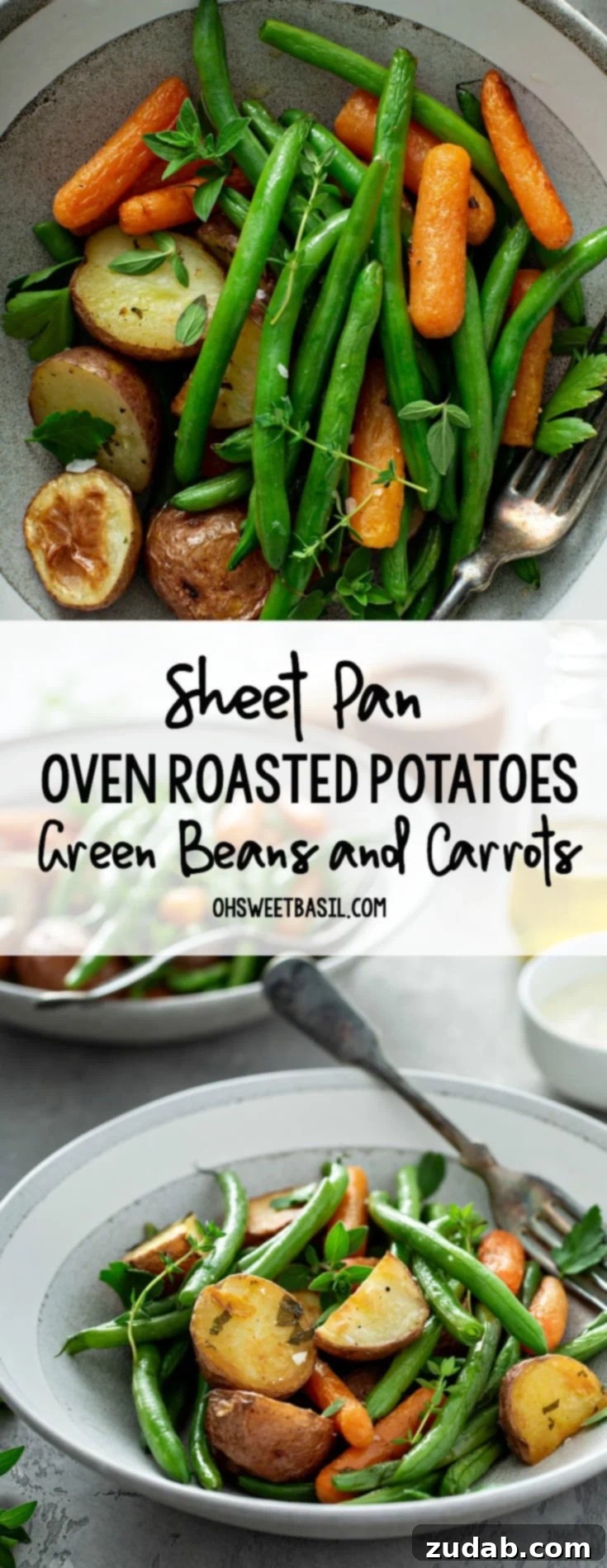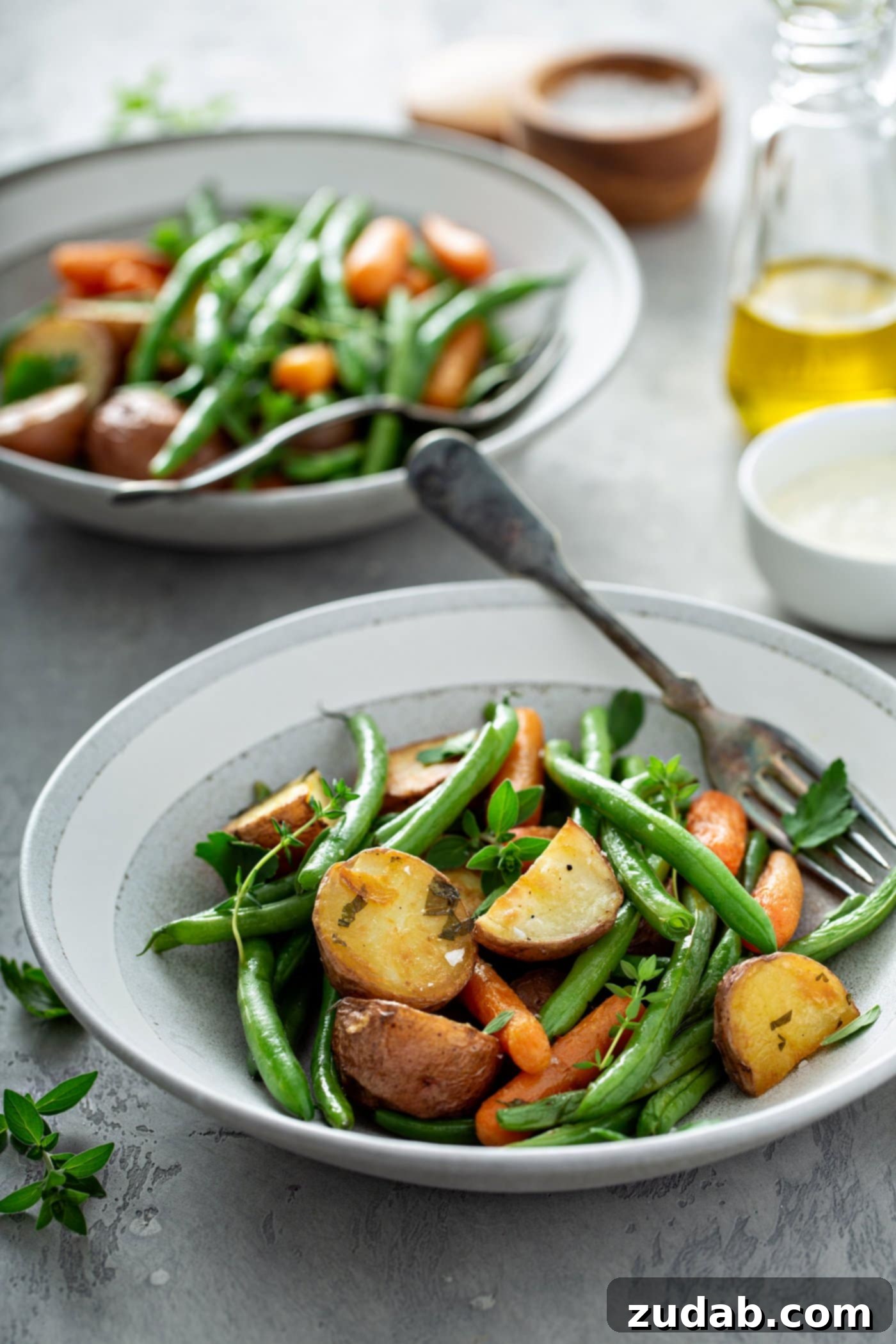
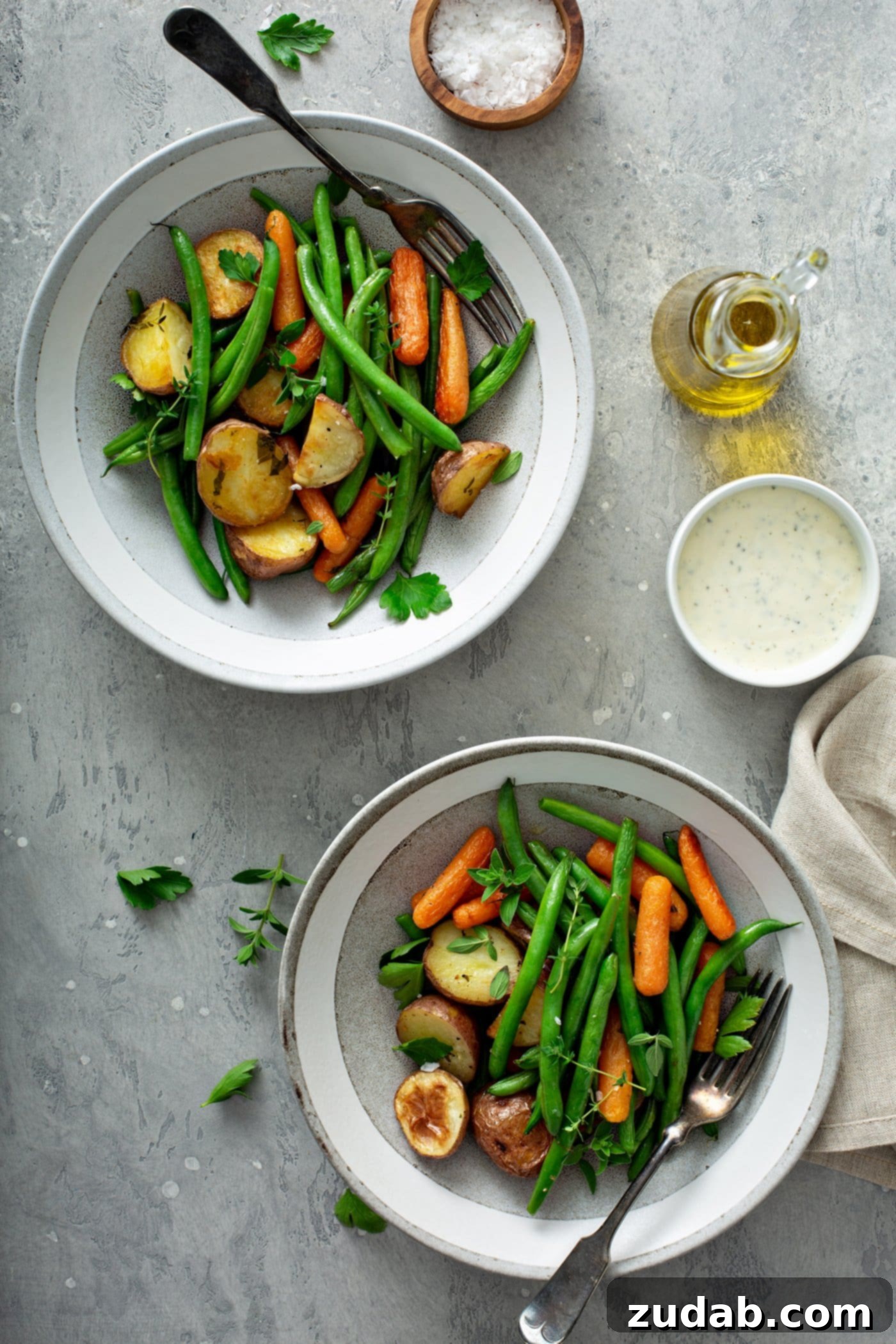
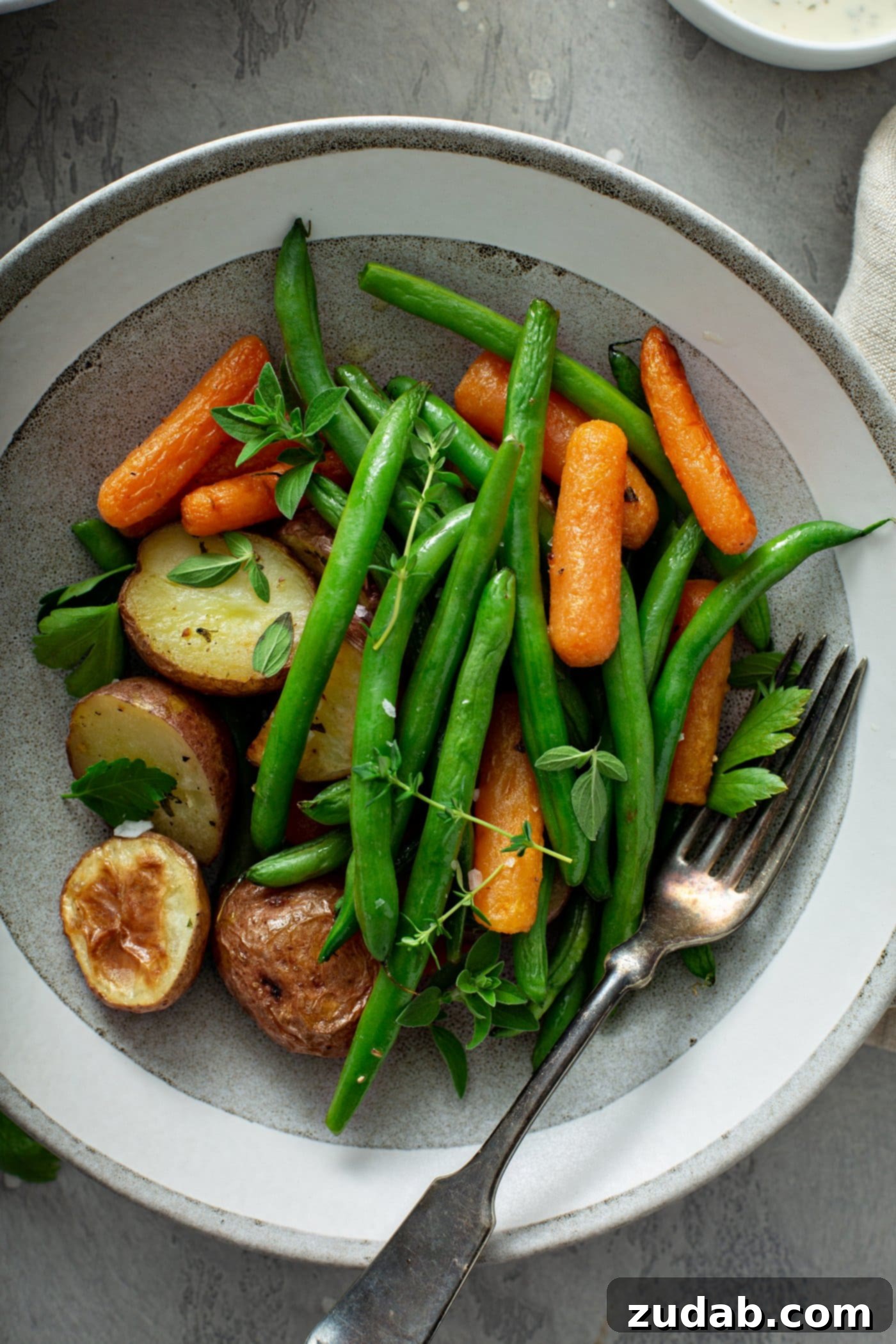
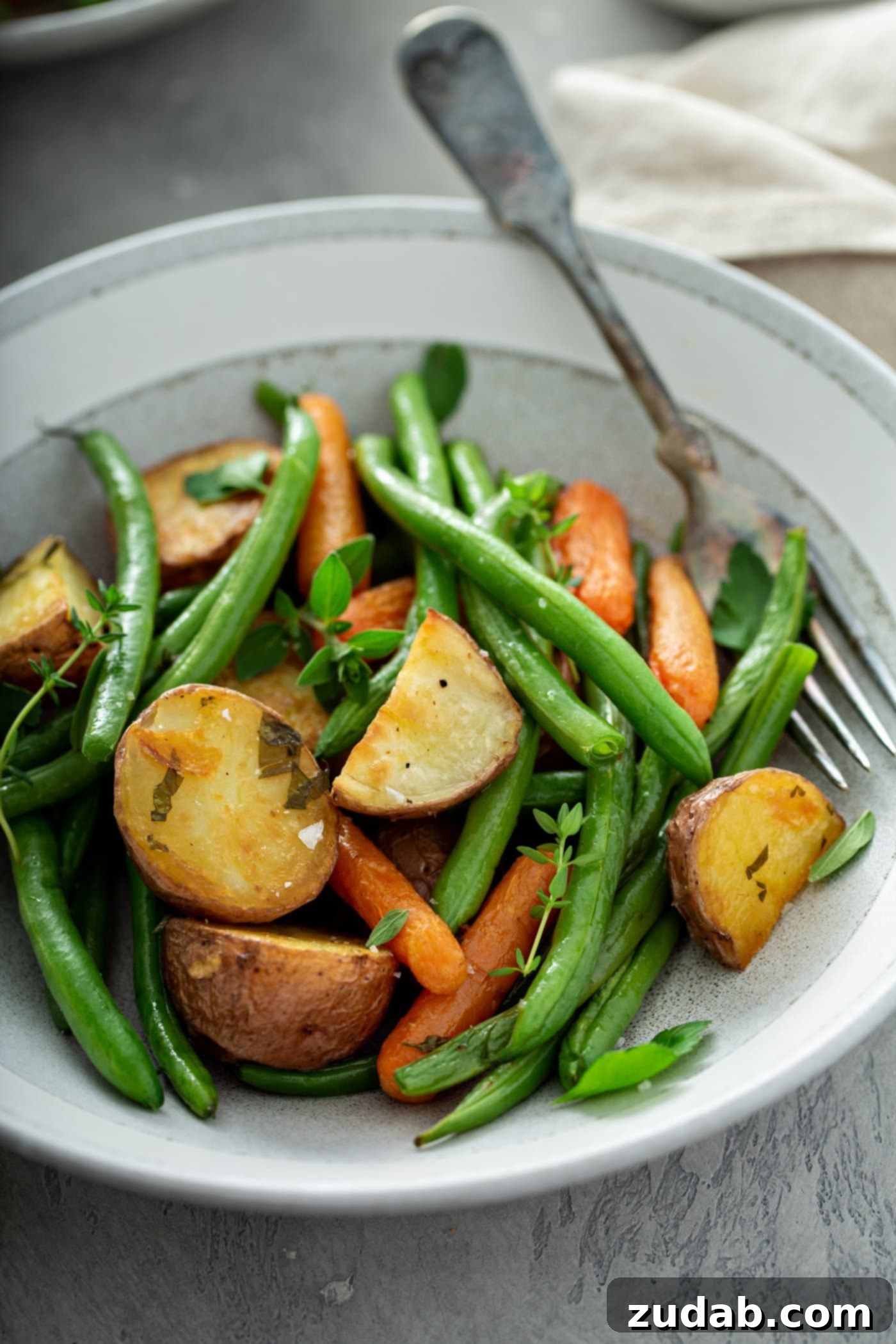
Sheet pan oven-roasted potatoes, green beans, and carrots are not just a meal; they’re a celebration of simple, wholesome flavors, all coming together effortlessly on a single baking sheet. This beloved roasted vegetable recipe is a testament to the magic of minimal effort yielding maximum taste, requiring just one pan and approximately 40 minutes of your time. It’s the perfect solution for busy weeknights, healthy meal prep, or simply when you crave a burst of garden-fresh goodness.
Growing up in the lush Pacific Northwest, I was spoiled with an abundance of fresh produce throughout the summer months. The fertile soil meant gardens overflowed with vibrant vegetables, a true bounty that shaped my appreciation for simple, home-cooked food. Even now, living in Idaho, my parents continue to cultivate a magnificent garden. Every summer, my family and I indulge in the incredible flavors of their harvest, bringing home as much as our car can possibly hold. This recipe brings back those cherished memories, showcasing how humble ingredients can create extraordinary dishes.
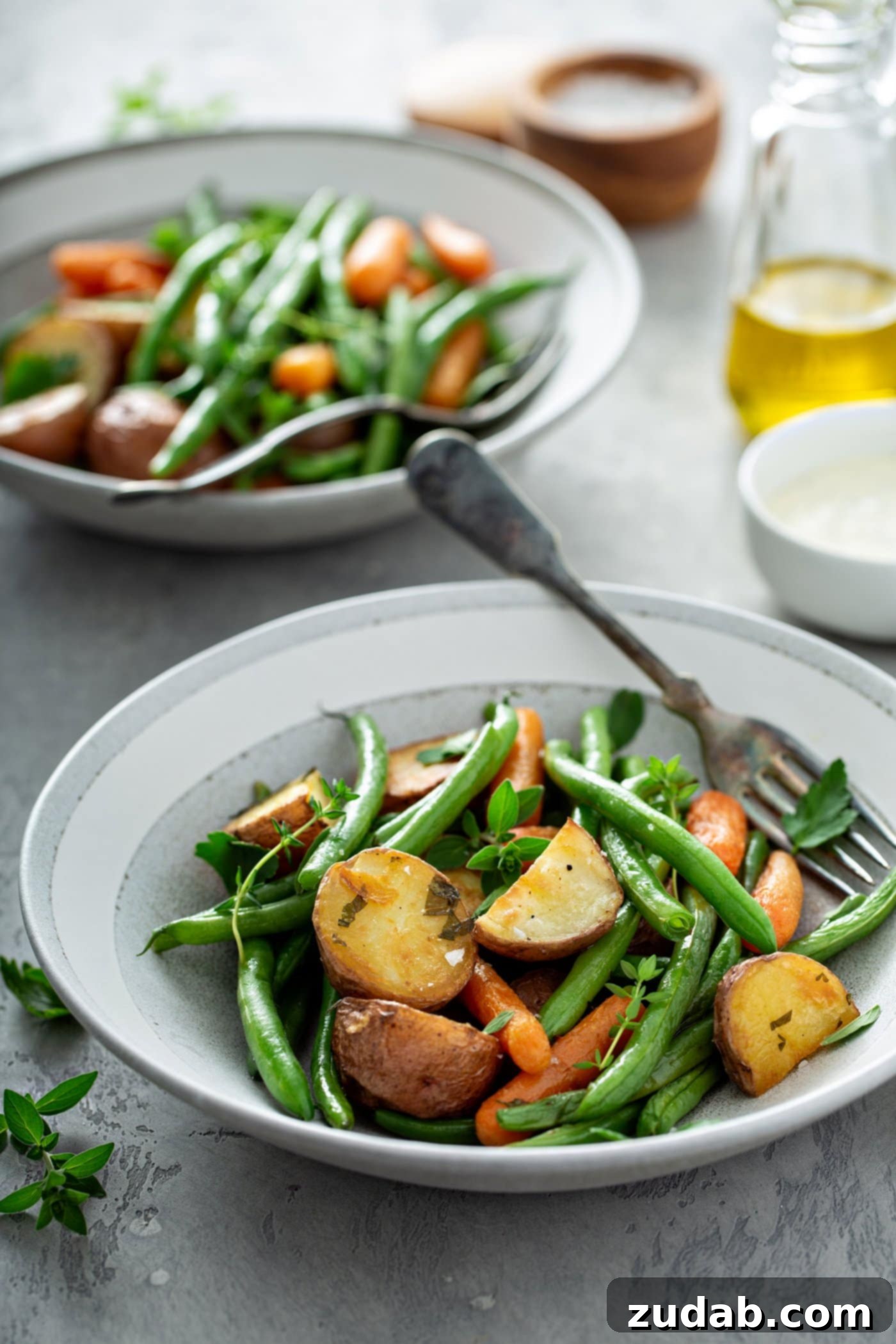
Effortless & Flavorful: Sheet Pan Roasted Potatoes, Green Beans, and Carrots
Are you tired of the same old side dish? While I truly love a good salad, eating it every single night just to get my daily vegetable intake can become monotonous. That’s why I’ve been frequently turning to these oven-roasted potatoes and green beans, along with their carrot companions, as my go-to healthy and utterly delicious alternative. It’s a fantastic way to enjoy your veggies without any fuss, packed with satisfying textures and flavors that will make you forget about salad boredom entirely.
What makes this dish truly special is the simple yet incredibly aromatic garlic herb mixture. Anyone, regardless of their cooking skill level, can easily whisk this together. This blend of herbs and garlic coats the vegetables, infusing them with a deep, savory flavor that caramelizes beautifully in the oven. It’s a versatile seasoning that complements the natural sweetness of carrots, the earthy notes of potatoes, and the crisp freshness of green beans.
A quick tip for seasoning: remember that dried herbs are more concentrated than fresh herbs. As a general rule, use about one-third the amount of dried herbs compared to fresh herbs. For instance, if a recipe calls for one tablespoon of fresh parsley, you would use one teaspoon of dried parsley. This ensures your dish is perfectly seasoned without being overpowering.
What You Need to Buy for Your Perfect Roast
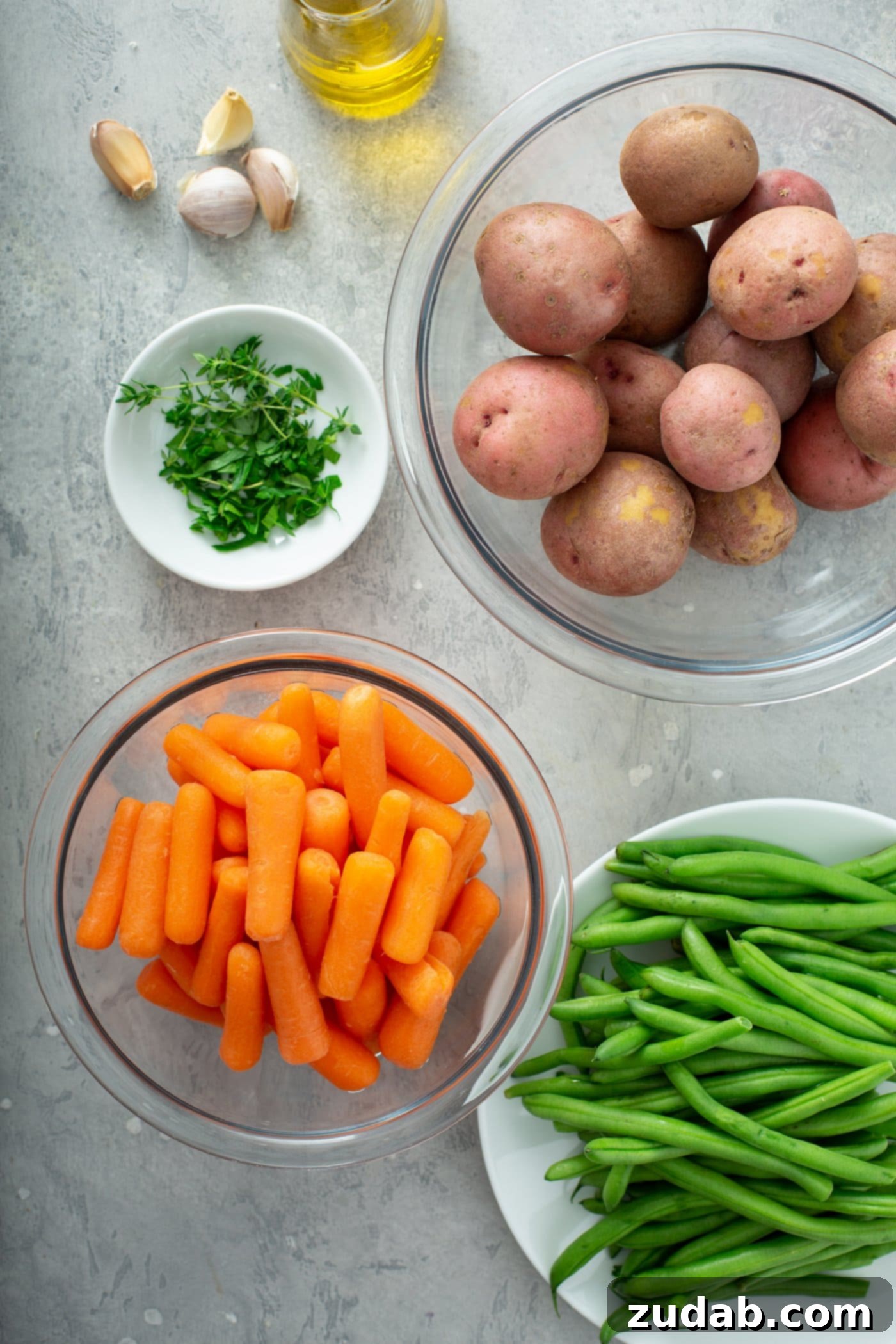
This recipe shines with minimal, high-quality ingredients that are easy to find at any grocery store. Here’s your shopping list:
- Potatoes: Red baby potatoes are ideal for their creamy texture and thin skin, which means no peeling is required.
- Green Beans: Look for fresh, crisp green beans that snap easily.
- Carrots: Baby carrots or medium carrots, chopped into consistent pieces, work wonderfully.
- Butter: Unsalted butter, melted, adds richness and helps with browning.
- Olive Oil: A good quality extra virgin olive oil binds the seasonings and ensures even roasting.
- Parsley: Fresh or dried, for a bright, herbaceous note.
- Basil: Fresh or dried, adding a sweet, aromatic depth.
- Thyme: Fresh or dried, for its earthy, slightly minty flavor.
- Garlic: Freshly minced garlic is paramount for that irresistible savory aroma.
- Salt and Pepper: Essential pantry staples to enhance all the flavors.
When selecting your vegetables, aim for firm potatoes without sprouts or soft spots, vibrant green beans that are plump and snap easily, and carrots that are bright in color and firm to the touch. These simple choices will ensure the best possible flavor and texture in your roasted dish.
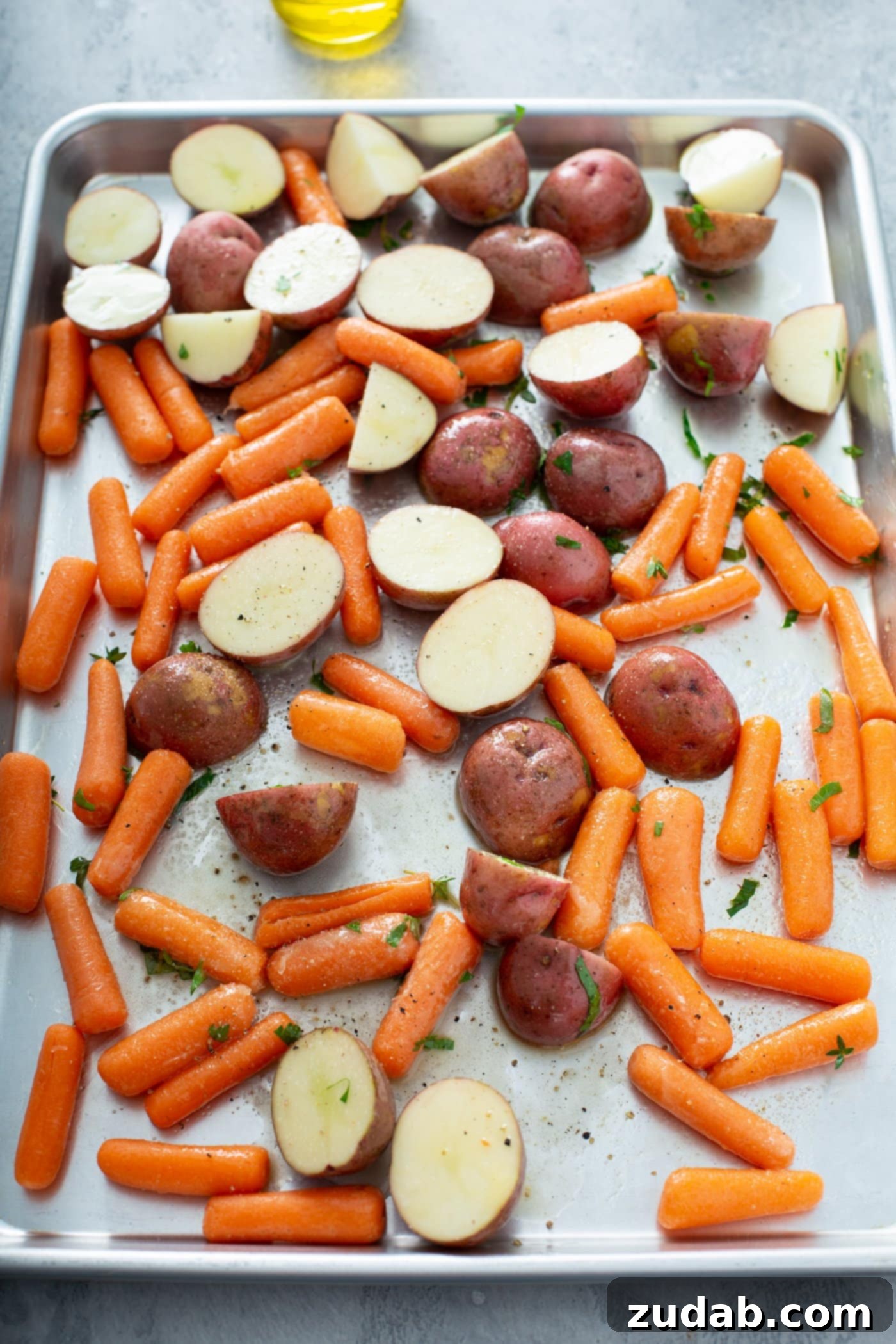
How to Create Your Sheet Pan Oven Roasted Potatoes and Vegetables
This recipe is designed for simplicity, making it perfect for novice cooks and seasoned chefs alike. Follow these straightforward steps for a delicious and healthy side dish or light meal:
- Preheat Your Oven: Always start by preheating your oven to 400°F (200°C) *before* you begin preparing your vegetables. A hot oven is crucial for achieving that desired crispy, caramelized exterior without the vegetables becoming mushy. This high temperature helps to quickly sear the outside, locking in moisture and flavor.
- Prepare the Flavorful Coating: In a large mixing bowl, combine the melted butter, olive oil, dried or fresh herbs (parsley, basil, thyme), minced garlic, salt, and freshly ground black pepper. Whisk these ingredients together until they are well combined. This mixture will be the backbone of your roasted vegetables’ incredible taste.
- First Roast – Potatoes and Carrots: Add the chopped potatoes and carrots to the bowl with your herb mixture. Toss them thoroughly, ensuring every piece is evenly coated. Spread these seasoned vegetables in a single layer on a large, rimmed baking sheet. Avoid overcrowding the pan; if necessary, use two sheets to ensure proper roasting and prevent steaming. Roast in the preheated oven for 20 minutes.
- Second Roast – Adding Green Beans: After the initial 20 minutes, carefully remove the baking sheet from the oven. Add the trimmed green beans to the pan. Drizzle them with a little extra olive oil and season lightly with salt. Gently toss all the vegetables on the pan together, redistributing them into an even layer. Return the pan to the oven and continue roasting for an additional 20 minutes, or until all the vegetables are tender, slightly browned, and caramelized to perfection.
The beauty of sheet pan cooking lies in its efficiency and minimal cleanup. Once your vegetables are perfectly roasted, they can be served directly from the pan, saving you precious time on dishwashing. Enjoy these savory, tender-crisp vegetables as a standalone dish or as a fantastic accompaniment to your favorite main course.
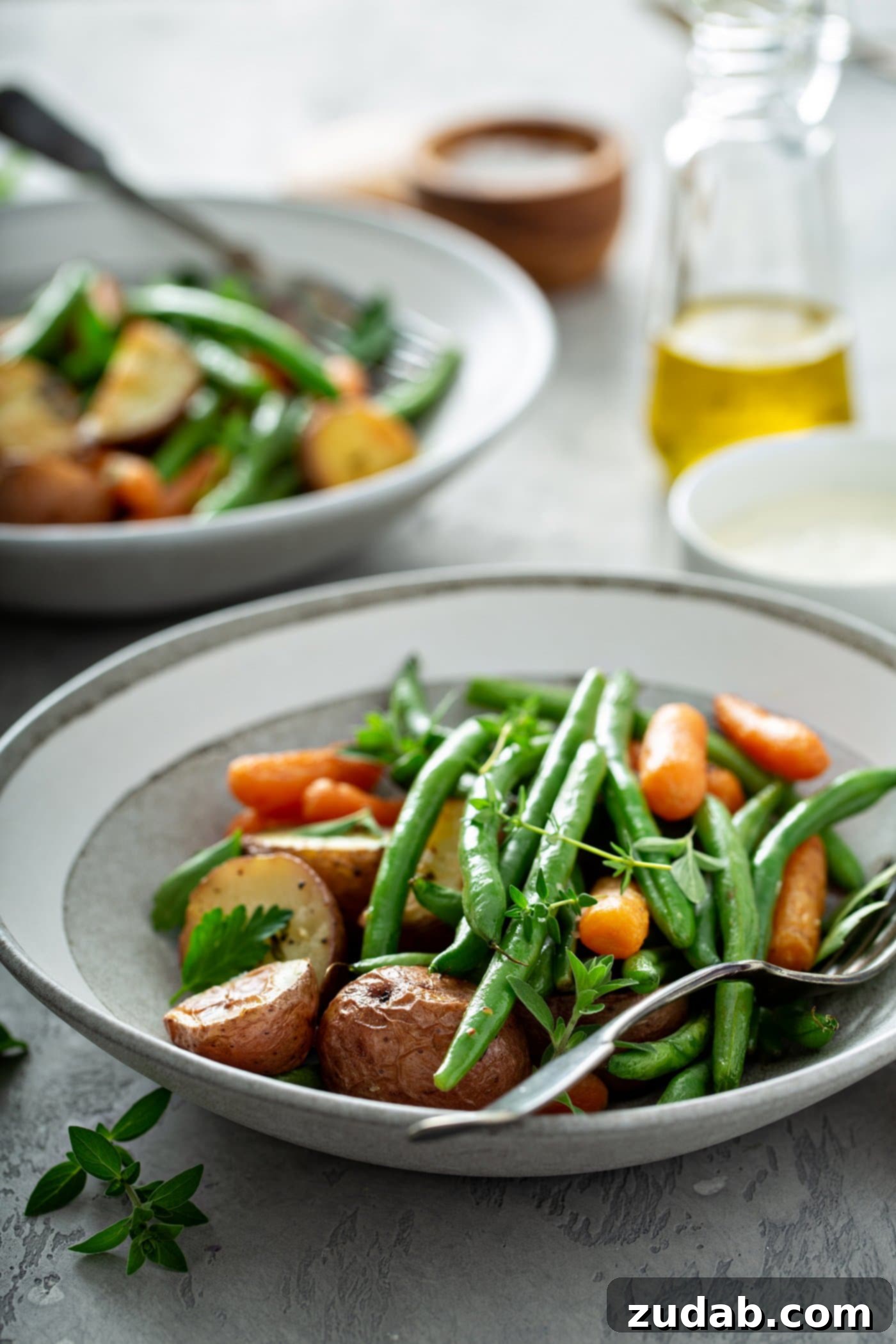
Proper storage is key to maximizing the freshness and longevity of your vegetables, both before and after roasting. Each vegetable has its own ideal storage conditions that can make a big difference. Let’s quickly review how to properly store these delicious ingredients.
How to Store Potatoes for Maximum Freshness
Potatoes boast an impressive shelf life compared to many other vegetables, potentially lasting up to two months when stored correctly. Following these guidelines will help you keep them fresh and firm:
- Inspect Thoroughly: Before storing, carefully examine each potato for any soft spots, sprouts, green areas, or other blemishes. These imperfections can accelerate spoilage, not only for the affected potato but potentially for others stored nearby. Remove any compromised potatoes.
- Avoid Plastic Bags: Never store potatoes in plastic bags, as these trap moisture and ethylene gas, leading to premature sprouting and spoilage. Instead, opt for a breathable container such as a mesh bag, paper bag, or a cardboard box. These options allow for proper air circulation while keeping the potatoes in the dark.
- Choose a Cool, Dark, Humid Place: The ideal environment for potato storage is cool, humid, and dark. Think of a pantry, a storage room, or an unfinished basement. Temperatures between 45-50°F (7-10°C) are best. Crucially, avoid storing potatoes in the refrigerator, as the cold temperatures convert their starch to sugar, affecting their flavor and texture and making them undesirably sweet or gritty.
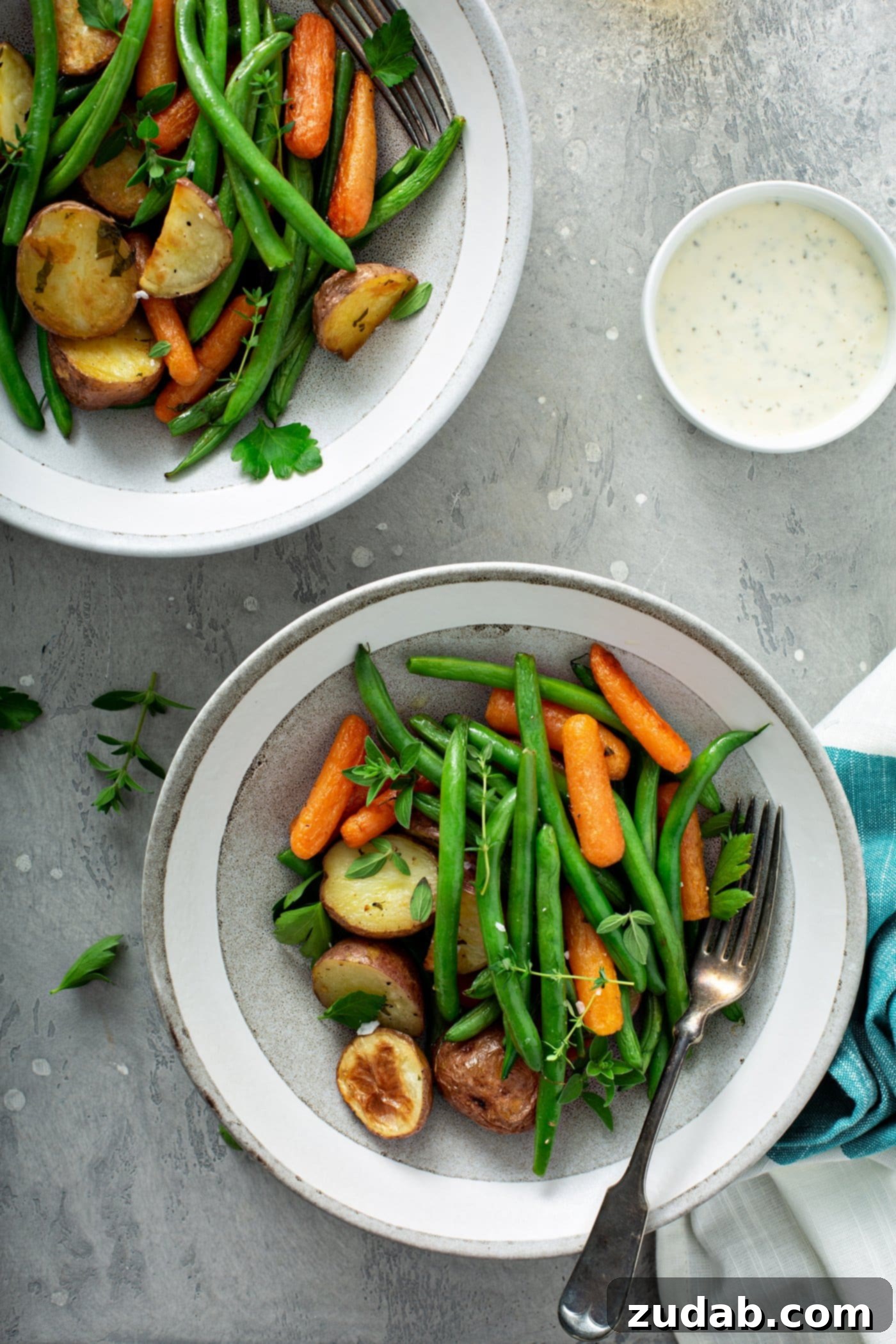
How to Store Green Beans for Optimal Crispness
Green beans are more delicate and will typically last for about 5-7 days when stored correctly in the refrigerator. Here’s how to keep them at their best:
- Do Not Wash Prematurely: Resist the urge to wash green beans until you are ready to use them. Excess moisture can encourage mold and spoilage.
- Refrigerate in a Plastic Bag: Place unwashed green beans in a plastic bag (a resealable one or even a grocery produce bag) and store them in the crisper drawer of your refrigerator. The crisper drawer helps maintain a consistent, slightly humid environment, which is ideal for green beans.
How to Store Carrots for Extended Freshness
Carrots are quite robust and can last impressively long – up to two months in the refrigerator – if stored with care.
- Wrap in Paper Towels: The key to fresh carrots is managing moisture. Wrap your carrots loosely in paper towels before placing them in a bag. The paper towels will absorb any excess moisture, preventing rot.
- Place in a Plastic or Perforated Bag: After wrapping, place the paper towel-wrapped carrots into a plastic bag or a perforated bag. This provides a barrier while still allowing some air circulation.
- Keep Them Dry: Always remember that moisture is the enemy of fresh carrots. Ensure they are dry before wrapping and storing them, and replace the paper towels if they become damp. Store them in the crisper drawer of your refrigerator.
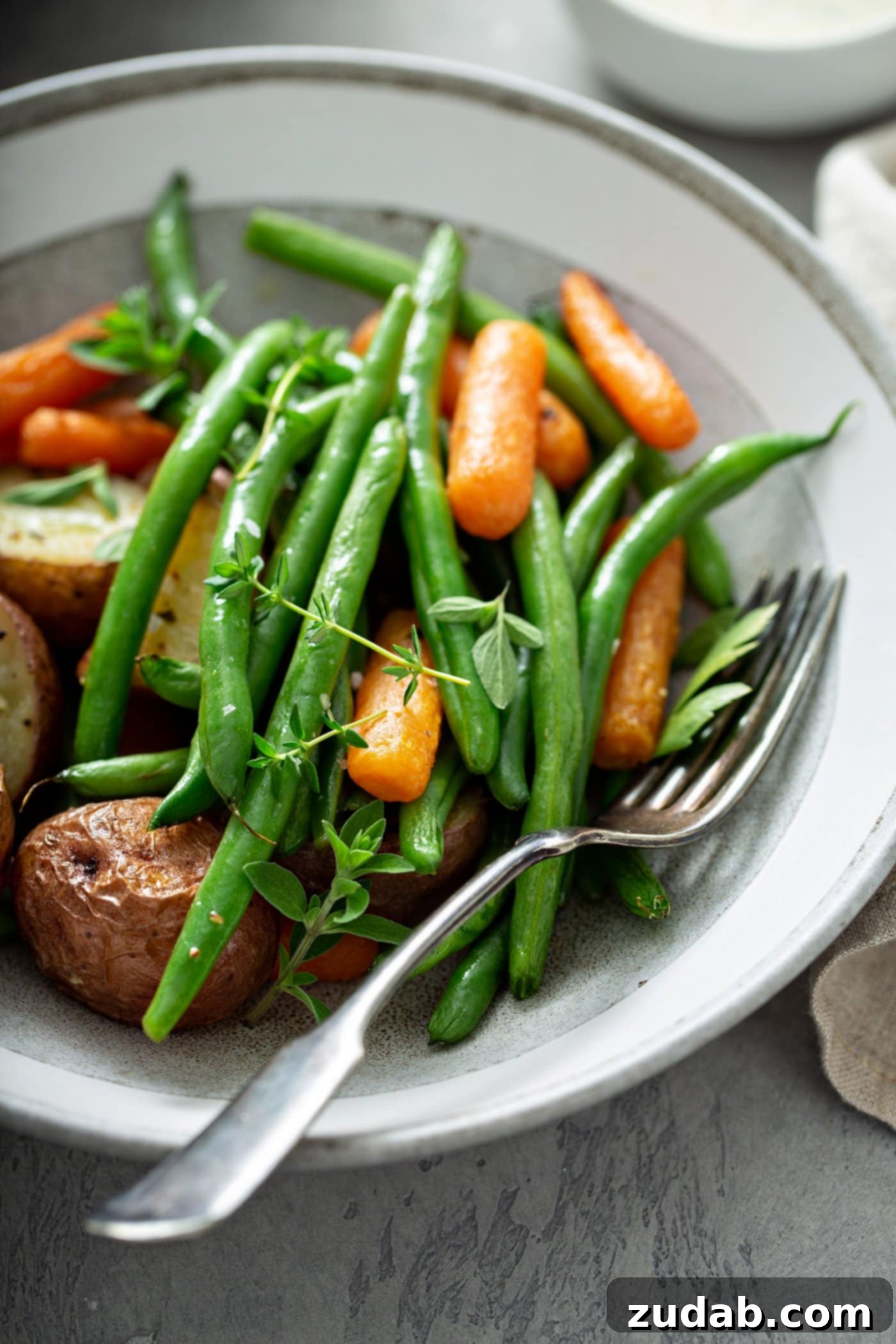
Versatile Oven Roasted Vegetable Alternatives
Sometimes, the produce section might be lacking in good green beans, or perhaps you’re simply out of carrots or potatoes. Don’t let that stop you from enjoying a delicious pan of roasted vegetables! The beauty of this cooking method is its incredible versatility. Many other vegetables roast beautifully and can be substituted or added to your sheet pan. Here’s a quick list of some excellent alternatives that pair wonderfully with the garlic-herb treatment:
- Asparagus: Roast for a shorter time, usually 10-15 minutes, until tender-crisp.
- Sweet Potatoes: Cut into similar-sized chunks as regular potatoes; they’ll caramelize beautifully.
- Yams: Similar to sweet potatoes, offering a slightly different sweetness and texture.
- Onions: Quartered or thickly sliced, they become sweet and tender when roasted.
- Zucchini: Slice into rounds or half-moons; add towards the end of roasting to avoid sogginess.
- Bell Peppers: Cut into strips or large chunks; they sweeten and soften with roasting.
- Broccoli: Florets become slightly crispy and deeply flavorful.
- Cauliflower: Florets roast similarly to broccoli, developing a nutty flavor.
- Brussels Sprouts: Halve them for maximum caramelization; they become tender and sweet, losing their bitterness.
When mixing and matching vegetables, consider their density and adjust the roasting time accordingly. Denser vegetables like root vegetables (potatoes, carrots, sweet potatoes) will need a longer roasting time, while softer vegetables (zucchini, asparagus, bell peppers) cook more quickly. You can add the faster-cooking vegetables to the sheet pan partway through the roasting process to ensure everything is perfectly cooked at the same time, just like we do with the green beans in this recipe.
Frequently Asked Questions About Roasted Vegetables
What Can You Substitute For Red Potatoes?
If red potatoes aren’t available or you prefer a different variety, Yukon Gold potatoes make an excellent substitute. They are both small to medium in size and share a similar creamy, waxy texture that holds up well to roasting. Russet potatoes, on the other hand, are much starchier and tend to become fluffier and drier when roasted, which can still be delicious but will result in a different texture. For a similar dish, stick with Yukon Golds or other waxy potato varieties.
Can You Reheat Roasted Vegetables?
Absolutely! Roasted vegetables reheat beautifully, especially when done in the oven to maintain their texture. To reheat, spread the leftover roasted vegetables on a baking sheet and place them in a preheated oven at 425˚F (220°C) for 15-20 minutes, or until they are heated through and slightly crisp again. Avoid reheating in the microwave if you want to preserve their crispiness, as microwaves can make them soggy.
How Long Will Roasted Vegetables Keep?
Cooked roasted vegetables will maintain their quality for 3-4 days when stored properly in an airtight container in the refrigerator. Beyond this timeframe, their texture and flavor may begin to degrade. For best results, allow them to cool completely before transferring to a container and refrigerating.
Do Vegetables Lose Nutrients When They Are Roasted?
The impact of cooking on vegetable nutrients is nuanced. While it’s true that roasting, or any form of cooking, can reduce levels of some heat-sensitive nutrients like Vitamin C and folate, it can also *increase* the bioavailability of other nutrients. For example, cooking can help break down tough cell walls, making nutrients like lycopene (in tomatoes) and beta-carotene (in carrots) more accessible for the body to absorb. Overall, roasted vegetables remain a highly nutritious addition to your diet, and the benefits of eating them often outweigh any minor nutrient losses from cooking.
Do I Need to Peel Potatoes or Carrots Before Roasting?
For red baby potatoes and baby carrots, peeling is completely optional! Their skins are thin and tender when roasted, adding extra fiber and nutrients. Plus, it saves you valuable prep time. If you’re using larger carrots or potatoes with thicker skins, you might choose to peel them for a smoother texture, but it’s not strictly necessary. Just be sure to give all vegetables a good scrub under running water to remove any dirt.
More Delicious Vegetable Recipes to Explore
If you loved this sheet pan recipe, you’ll surely enjoy these other fantastic ways to prepare vegetables. From vibrant sides to hearty main dishes, there’s always a new way to savor fresh produce.
- Roasted Garlic Vegetables
- Orange Glazed Carrots
- Grilled Vegetables
- Roasted Root Veggies
- Pesto Veggie Foil Packets
- One Pan Roasted Lemon Chicken and Veggies
- Sheet Pan Kielbasa
- Roasted Veggies
Looking for the perfect partner for your roasted vegetables? These main dishes are ideal pairings, offering a complete and satisfying meal.
Main Dishes that Pair Well with Roasted Vegetables
- Meatloaf
- Instant Pot Prime Rib
- BBQ Instant Pot Short Ribs
- Smoked Chicken Breast
Sheet Pan Oven Roasted Potatoes Green Beans and Carrots
20 mins
40 mins
1 hr
4
Ingredients
- 1 1/4 Pounds Potatoes, red, baby
- 1 Pound Carrots, medium, chopped in 2″ pieces
- 1 1/2 Tablespoons Olive Oil
- 2 Tablespoons Butter, melted
- 1 Tablespoon Thyme
- 1 Tablespoon Parsley, fresh, minced
- 1 Tablespoon Basil, fresh, chopped
- Salt
- Pepper, black, freshly ground
- 12 oz. Green Beans, ends trimmed, cut in half
- 4 Cloves Garlic, minced
Instructions
-
Preheat oven to 400°F (200°C).
-
In a large bowl, toss together potatoes and carrots with 1 tablespoon olive oil, melted butter, thyme, parsley, and basil. Season with salt and pepper to taste.
-
Spread the mixture onto a rimmed 18×13-inch baking sheet in a single layer. Roast in the preheated oven for 20 minutes.
-
Remove the pan from the oven. In the same bowl, toss the green beans with the remaining 1/2 tablespoon olive oil and season lightly with salt. Add the seasoned green beans and minced garlic to the baking sheet with the other veggies. Toss everything together and spread into an even layer. Return to the oven and roast until all vegetables are tender and slightly browned, about an additional 20 minutes. Serve warm.
Recipe Notes
Nutrition
Calories: 176kcal,
Carbohydrates: 18g,
Protein: 3g,
Fat: 11g,
Saturated Fat: 4g,
Polyunsaturated Fat: 1g,
Monounsaturated Fat: 5g,
Trans Fat: 1g,
Cholesterol: 15mg,
Sodium: 135mg,
Potassium: 574mg,
Fiber: 6g,
Sugar: 8g,
Vitamin A: 19900IU,
Vitamin C: 22mg,
Calcium: 85mg,
Iron: 2mg
Nutrition information is automatically calculated, so should only be used as an approximation.
Like this? Leave a comment below!