
The Unspoken Struggle: Navigating the Emotional Labyrinth of Post-Hospital Recovery
The sensation of leaving the sterile, stark environment of a hospital, a place synonymous with both despair and salvation, has always left me feeling profoundly unsettled, almost legitimately crazy. It’s a paradox of relief and dread that clings to you long after the automated doors slide shut behind you. I’ve attempted to pen this very post three times already, each attempt thwarted by a heart that pounds relentlessly against my ribs, a visceral reaction to reliving moments I’ve spent years trying to process.
Despite three years having passed since those harrowing days, the act of putting words to paper, of meticulously cataloging the pain and fear, thrusts me back into that moment with an intensity that is almost unbearable. It’s as if time collapses, and I am once again the person lying in that hospital bed, staring at a ceiling that holds too many unanswered questions.
Yet, revisiting these painful memories is a necessary step, a crucial part of healing. You have to talk, you have to embrace vulnerability, even when it feels like a heavy cloak threatening to suffocate you. There’s a misconception that sharing one’s deepest struggles leads only to isolation. Yes, it’s true that exposing your raw truth can come at a cost; you might lose followers, your ‘likes’ might dwindle. My gosh, we’ve witnessed hundreds vanish just since I began to tentatively re-share snippets of our story.
But that’s okay. More than okay, it’s a filter. We never embarked on this journey for the fleeting allure of fame or widespread adoration. Our deepest motivation has always been far more profound: it’s about sharing – sharing nourishing food, sharing boundless love, and most importantly, sharing light in the darkest corners of human experience. It’s about connection, not metrics.
The Paradox of Vulnerability: Sharing Our Authentic Story
To truly connect, one must be authentic, and authenticity often demands vulnerability. It means laying bare the parts of yourself that are bruised and broken, trusting that in doing so, you might offer solace or understanding to someone else navigating their own silent battles. This isn’t a performance; it’s an invitation into our lives, an honest depiction of the messy, beautiful, and sometimes agonizing reality of our journey.
In a world obsessed with curated perfection, choosing to share struggle can feel counter-intuitive. There’s an undeniable fear that showing weakness might repel rather than attract. Yet, I’ve found the opposite to be true. The connections forged through shared vulnerability are often the most profound and enduring. They are built on empathy, on mutual recognition of the human condition, with all its inherent fragility and resilience. So, while the numbers on a screen might fluctuate, the genuine human connection fostered by these truths is invaluable, a currency far richer than any fleeting online popularity.
Still, despite my conviction, I find myself easily distracted. Or perhaps it’s not distraction but a profound nervousness that grips me. It’s likely both.
The Hospital’s Embrace: A Lonely Sanctuary
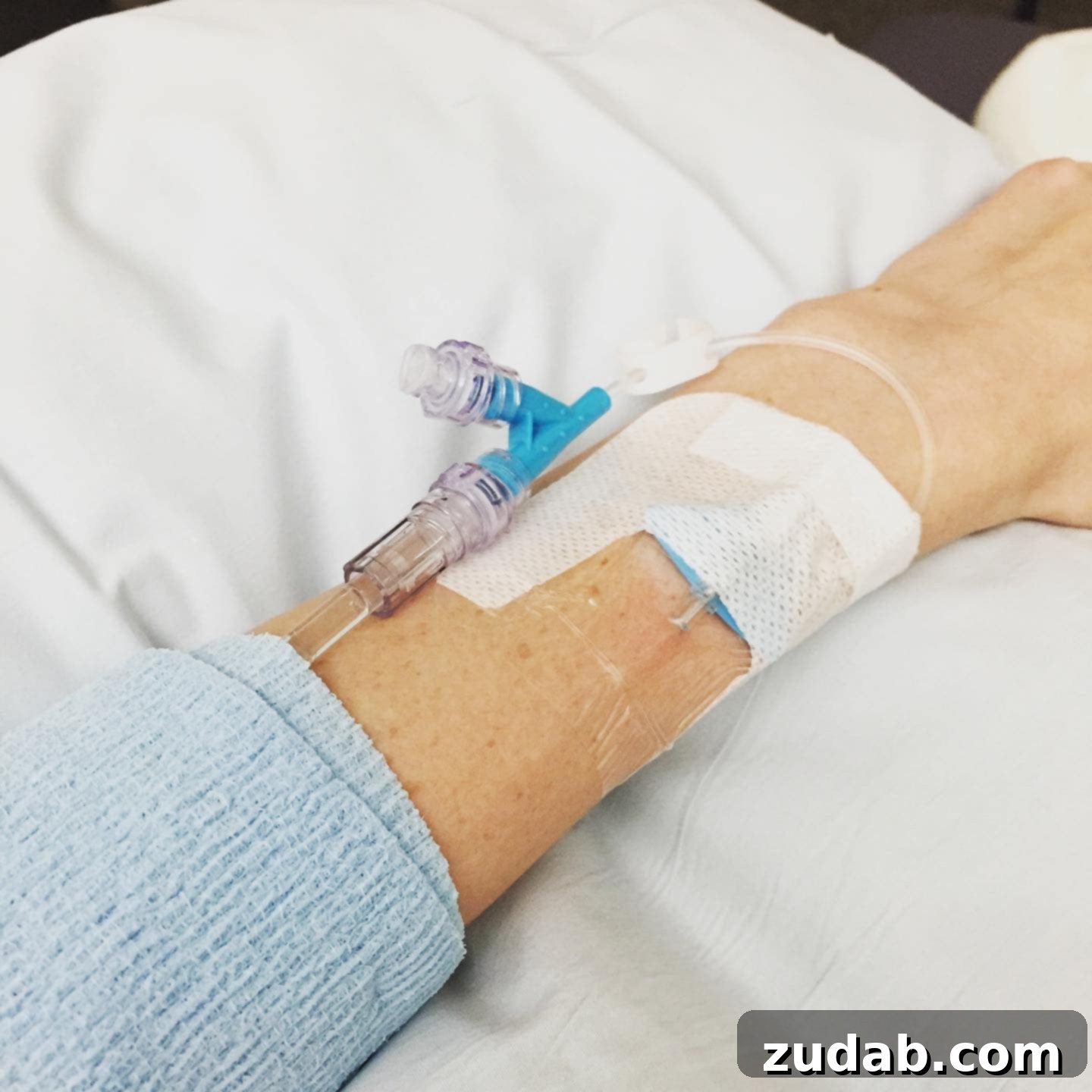
You see, when I was confined within those hospital walls, my singular thought was escape. I yearned to break free, to run from the relentless solitude and the overwhelming sensation of feeling more broken, more diminished, as a mother. To describe the emotional toll as an understatement feels inadequate. The nights stretched endlessly, punctuated by the relentless tyranny of insomnia, my mind a ceaseless churn of worry and fear. Nurses, bless their dedicated souls, were constantly in and out, their presence a necessary intrusion. Every few hours, they’d meticulously check vitals, and every single day, my arms became pin cushions for the blood draws, searching for a usable vein. Even trips to the bathroom offered no reprieve, as they would follow to meticulously inspect the dreaded pee cap in the toilet. This constant surveillance, while clinically necessary, strips you of all dignity, leaving you feeling lower than low, utterly devoid of privacy and self-worth.
My appreciation for nurses runs deep; I acknowledge the tireless, often thankless, work they do. But the reality of being a patient, particularly one experiencing repeated hospitalizations, is incredibly taxing. My arms ached perpetually from the IVs, a canvas of black and blue where veins had collapsed and new sites had to be desperately sought. Each prick was a reminder of my failing body, each failed attempt a sting of helplessness. The physical discomfort, though significant, paled in comparison to the mental and emotional erosion. The constant state of alertness, the inability to ever truly rest, the feeling of being a medical specimen rather than a person – it all contributed to an overwhelming sense of exhaustion and despair.
Home’s Threshold: Where the Real Battle Begins
Oh, but the longing to go home! It was a beacon, a dream, the singular force that propelled me through each difficult day. The promise of my own bed, familiar surroundings, the comforting embrace of family – it was all I could think about. Yet, in a cruel twist of fate, home was where the true nightmare often began. It wasn’t the sanctuary I envisioned; it was a precipice.
In the hospital, despite all its discomforts, there’s a certain safety net. You’re hooked up to survival, monitored, an intricate network of machines and medical professionals ensuring your physiological functions continue. Home, however, offers no such direct lifeline. It’s where the noise of life, the comforting yet overwhelming smells of food, the boundless energy of busy children, and the well-intentioned but often exhausting visits from friends and family, all rush in. This sudden reintroduction to the vibrant, chaotic symphony of daily life, after the muted, sterile hum of the hospital, can be profoundly disorienting. It’s in this transition, this jarring shift from controlled illness to expected normalcy, that you often take a nose dive, getting sicker than sick. The fear becomes a dual-edged sword: scared to stay in the clinical confinement, yet terrified to return to the demands and vulnerabilities of home.
Unmasking Anxiety: A Physical Weight and Relentless Companion
Before these experiences, I had a theoretical understanding of anxiety, perceiving it as a mental state of worry or unease. I had no idea, truly no concept, that anxiety could manifest as a literal, physical feeling – a tightening in the chest, a churning in the gut, a tremor in the hands, a constant shortness of breath. It was through repeated admissions to the hospital, followed by the daunting journey home, over and over again, that anxiety revealed its true, corporeal nature. It became a constant companion, a heavy weight pressing down on my chest, a relentless buzz beneath my skin.
Each time I was discharged, the initial surge of relief quickly gave way to a wave of panic. The transition was a tightrope walk without a safety net. My body, accustomed to the constant vigilance of medical professionals, would go into overdrive, interpreting every new sensation, every ordinary ache, as a sign of imminent collapse. My mind would race, replaying worst-case scenarios, conjuring images of returning to the emergency room. This wasn’t merely ‘worry’; it was a full-body experience of terror, a tangible sensation of impending doom that made it impossible to relax, to heal, or to truly be present. The very act of walking through my front door, which should have brought comfort, instead often triggered a profound sense of isolation and dread, a silent scream within a bustling home.
The Anchor: Finding Solace in Family (Cade)
But home, despite its challenges and the anxieties it amplified, was also where Cade was. Oh, if only you could know Cade. His presence was, and remains, an unwavering beacon, a quiet strength that grounds me even when the world feels like it’s spinning out of control. In the midst of the chaos, the fear, and the profound physical and emotional toll, Cade represented a vital anchor. His love, his understanding, his very being, provided a powerful counterpoint to the darkness. He was the reason to push through, the gentle reminder of the love and life waiting beyond the hospital walls, beyond the anxiety’s grip.
Cade’s unwavering support transformed a potentially unbearable situation into one that, while agonizing, was not entirely devoid of hope. His calm demeanor, his patient listening, and his simple, loving presence were often the only things that pulled me back from the brink. He understood, without me having to articulate, the silent battles I was fighting, the invisible wounds I carried. In a time when I felt most broken and vulnerable, he saw me, truly saw me, and loved me nonetheless. His quiet strength was the invisible thread that kept me tethered to reality, reminding me of the profound beauty that still existed amidst the pain.
An Unfinished Narrative: My Heart’s Promise
And I want to tell you more about Cade, I truly will tell you his story, and ours, in full detail. But tonight, the sheer weight of emotion, the vividness of these memories, keeps me from completing that narrative. My heart is too full, too raw, too overcome with the lingering echoes of those days. The story feels too immense to capture, too personal to articulate without doing it justice.
Tonight my heart keeps me from my story. But I promise, the story will be told. The vulnerability will continue, the light will be shared, and the full journey, with all its painful truths and enduring love, will unfold. For now, know that the path to healing is rarely linear, and sometimes, the bravest thing you can do is acknowledge the overwhelming power of your own heart.