
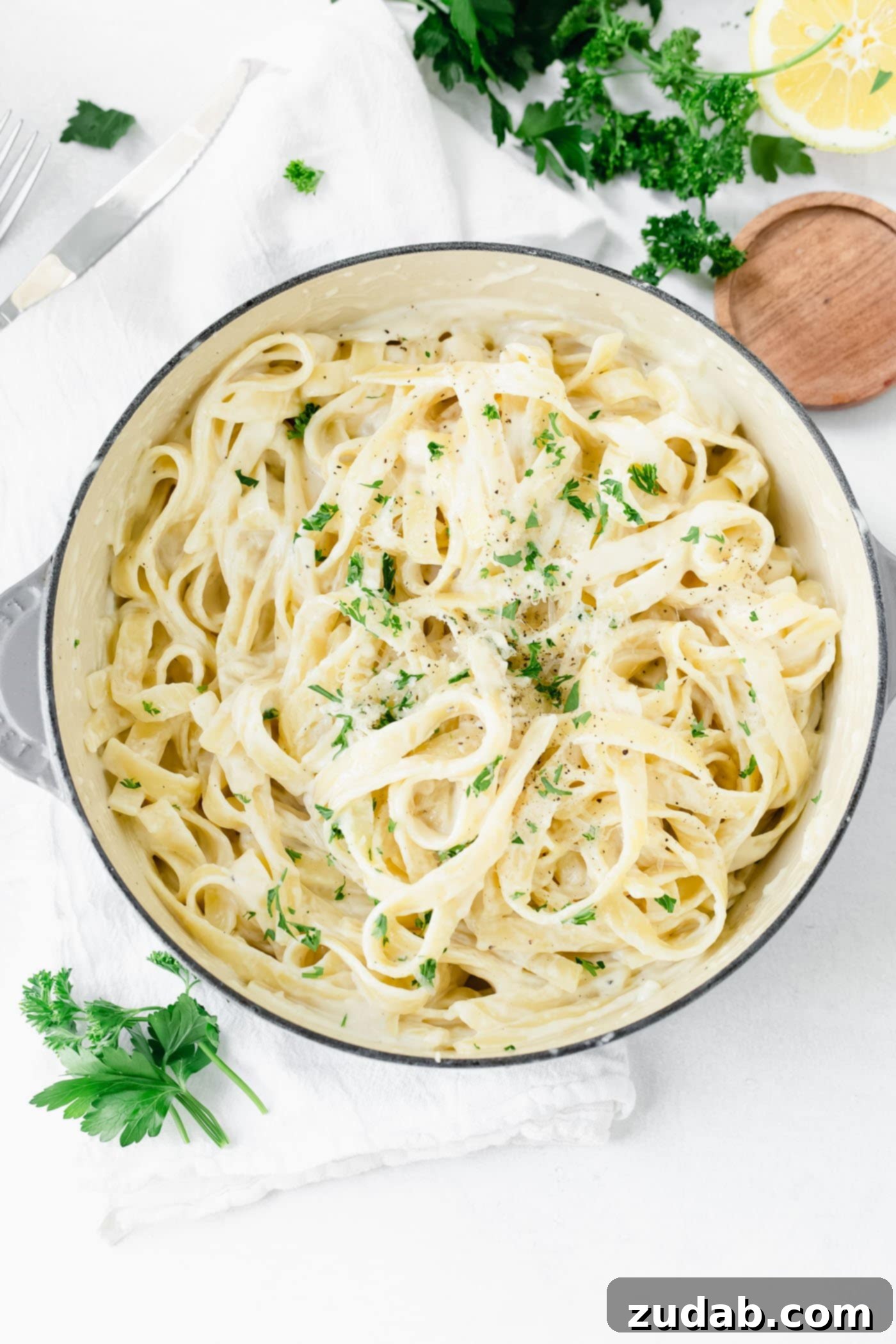
The Ultimate Homemade Fettuccine Alfredo Sauce Recipe
Prepare to elevate your pasta nights with the most exquisite, thick, and luscious Fettuccine Alfredo sauce you’ve ever tasted. Forget the jarred varieties; once you experience the rich, creamy perfection of this homemade recipe, there’s no turning back. It’s an undeniable family favorite, promising to transform simple fettuccine pasta into a culinary masterpiece that will have everyone reaching for seconds!
For all my fellow carb enthusiasts out there, this recipe is a dream come true. Imagine tender fettuccine, generously coated in a velvety sauce so divine, it melts in your mouth with every bite. This isn’t just a meal; it’s an experience, a celebration of simple yet luxurious ingredients coming together to create something truly magical. Get ready to indulge!
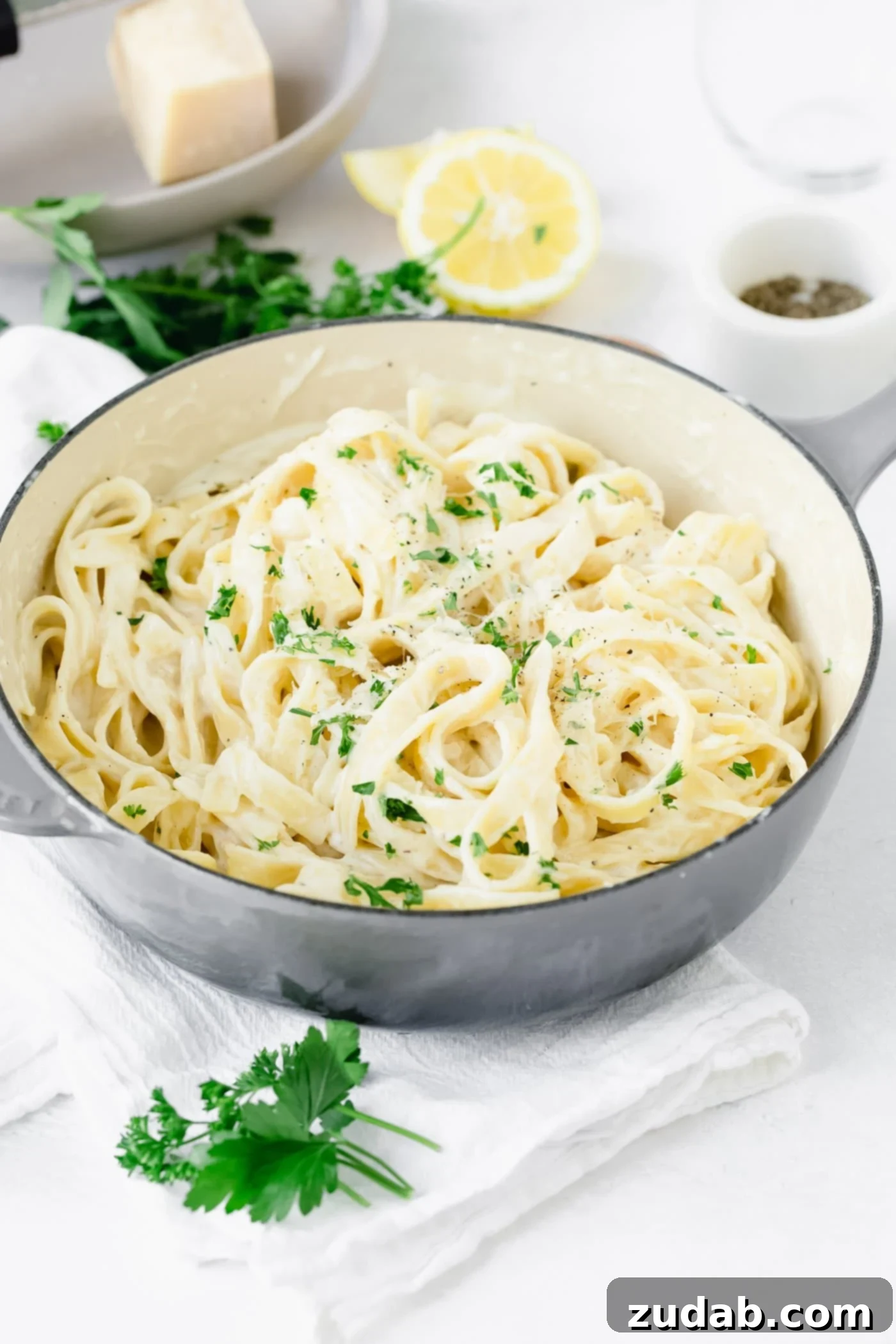
Why This Homemade Alfredo Sauce Stands Out
What sets this Fettuccine Alfredo recipe apart is its unparalleled richness and depth of flavor, achieved with surprisingly simple ingredients and techniques. We’re talking about a sauce that’s not only incredibly creamy but also boasts a profound cheesy essence that is often missing from quick, less authentic versions. The secret lies in the quality of ingredients and the method of combining them to create a silky, emulsified sauce that clings perfectly to every strand of pasta. This recipe isn’t just about making Alfredo; it’s about crafting an unforgettable dining experience.
Many classic Alfredo recipes rely on just butter and Parmesan cheese, emulsified with hot pasta water. While delicious, our version adds a few strategic elements to ensure an even more stable, consistently thick, and utterly luxurious sauce every single time. The addition of heavy cream and a touch of cream cheese creates a foundation that’s both indulgent and forgiving, making it easier for home cooks to achieve restaurant-quality results. This balance of traditional and slightly enhanced techniques is what truly makes this my go-to Fettuccine Alfredo.
Essential Ingredients for the Perfect Alfredo Sauce
Creating an exceptional Alfredo sauce begins with selecting high-quality ingredients. Each component plays a vital role in achieving that signature creamy texture and rich flavor profile. Here’s what you’ll need, along with why each ingredient is key:
- Parmesan Cheese: A blend of good quality Parmesan and Parmigiano Reggiano is ideal for complexity. Freshly grated is non-negotiable; pre-shredded cheese often contains anti-caking agents that can make your sauce gritty and prevent proper melting. We’ll use a generous amount, divided for layering flavor and garnish.
- Kosher Salt: Essential for seasoning both the pasta water and the sauce itself. It brings out the flavors of all the other ingredients.
- Fettuccine Pasta: The traditional choice for Alfredo, its broad, flat shape is perfect for holding the rich sauce. Quality pasta makes a difference in texture.
- Unsalted Butter: The backbone of any rich sauce. Using unsalted butter allows you to control the overall saltiness of your dish.
- Fresh Garlic: Minced garlic adds a fragrant, aromatic depth that is fundamental to the savory profile of the sauce.
- Dijon Mustard: This might seem unexpected, but a small amount of Dijon mustard adds a subtle tang and helps to emulsify the sauce, preventing it from separating and enhancing its savory notes without making it taste like mustard.
- Cream Cheese: A secret weapon for extra creaminess and stability. It contributes to a wonderfully smooth and thick sauce that won’t easily break.
- Heavy Cream: Provides the ultimate richness and velvety texture that is characteristic of a truly decadent Alfredo.
- Milk: A splash of milk helps to achieve the desired consistency, balancing the richness of the heavy cream without sacrificing creaminess. Whole milk is recommended for the best results.
- Freshly Ground Black Pepper (S&P): Adds a touch of warmth and contrasts beautifully with the richness of the cheese and cream.
- Lemon Juice: A finishing touch that brightens the sauce, cuts through its richness, and balances the flavors. Freshly squeezed is always best.
- Fresh Parsley: For garnish, adding a pop of color and a fresh, herbaceous note.
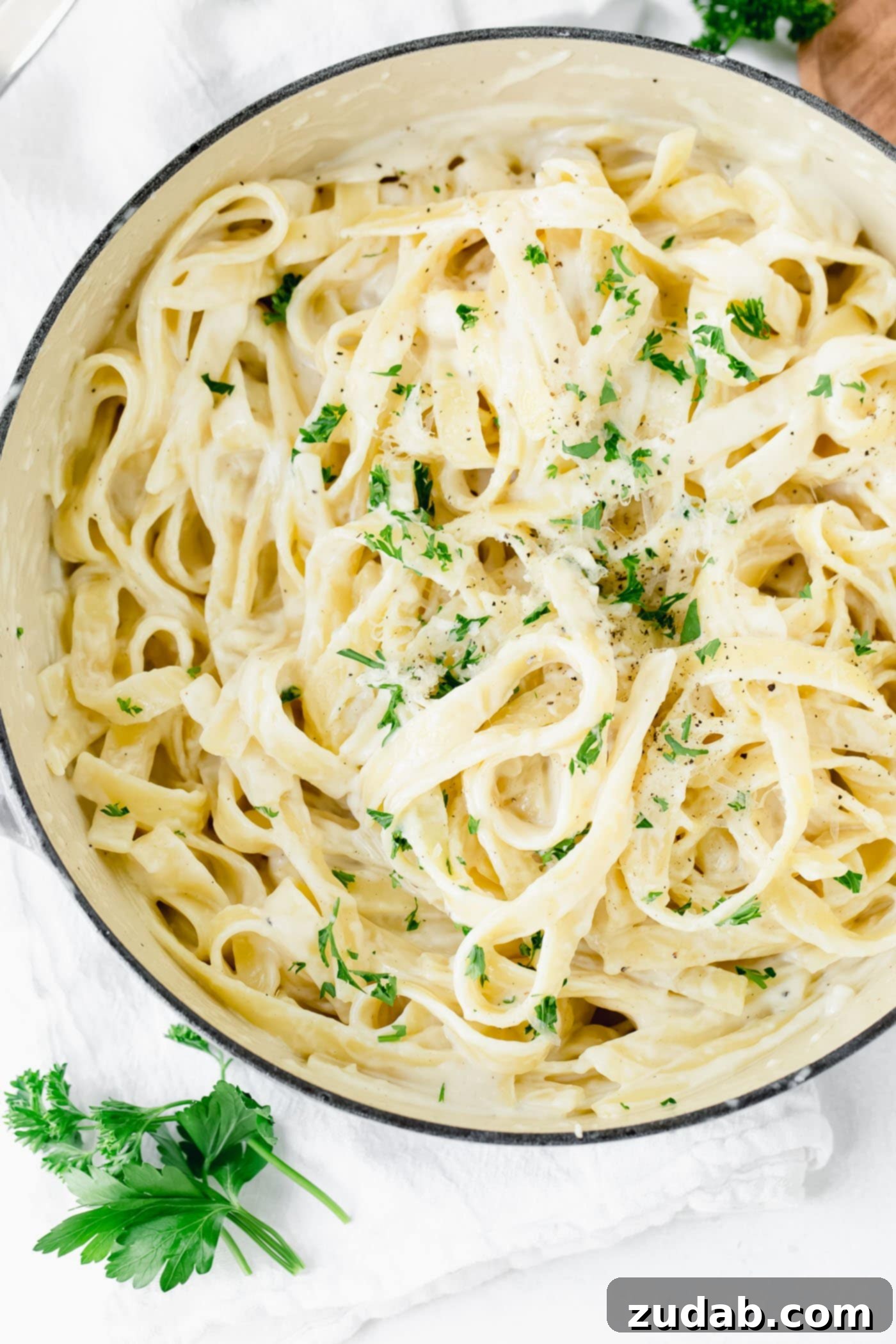
Step-by-Step Guide: Crafting Your Creamy Fettuccine Alfredo Sauce
Follow these detailed steps to create a show-stopping homemade Fettuccine Alfredo that will impress everyone at your table. Precision and attention to detail ensure a perfect sauce every time.
- Prepare Your Cheese: Before you begin, set aside ¼ cup of grated Parmesan cheese for garnish. You’ll also set aside ½ cup of Parmesan cheese to be added later when combining the pasta and sauce.
- Boil the Pasta Water: In a large pot, bring a generous amount of water to a rolling boil. Add ¼ cup of kosher salt to the water. This is crucial for seasoning the pasta from within and enhancing its flavor.
- Cook the Fettuccine: Once the water is vigorously boiling, add the fettuccine pasta. Cook according to package directions until al dente – tender but still firm to the bite. Do not drain the pasta water immediately; you might need a small amount for the sauce later.
- Melt the Butter: While the pasta cooks, in a large Dutch oven or a high-sided skillet over medium heat, add the 6 tablespoons of unsalted butter and allow it to melt completely.
- Sauté Aromatics: Add the minced garlic and Dijon mustard to the melted butter. Stir constantly for 30 seconds to 1 minute, just until the garlic becomes fragrant. Be careful not to burn the garlic, as this can impart a bitter taste. The mustard will lightly toast and release its subtle emulsifying properties.
- Incorporate Cream Cheese: Add the 2 tablespoons of cream cheese to the skillet. Whisk continuously until the cream cheese is fully melted and smoothly incorporated into the butter-garlic mixture, forming a uniform base.
- Add Liquids and Simmer: Quickly pour in the 1 cup of heavy cream and ½ cup of milk. Bring the mixture to a gentle simmer, stirring occasionally. Avoid a rolling boil, as this can cause the sauce to separate.
- Introduce the Cheeses and Seasoning: Once simmering, stir in the reserved ½ cup of Parmesan cheese and the ½ cup of Parmigiano Reggiano. Add ½ teaspoon of salt and ¼ teaspoon of freshly ground black pepper. Continue to stir until the cheeses are fully melted and integrated into the sauce.
- Thicken the Sauce: Allow the sauce to cook for about 10 minutes over low to medium heat, stirring periodically. The sauce should naturally thicken as it simmers and reduces. It should be thick enough to coat the back of a spoon. Taste and adjust seasoning as needed. If the sauce still seems bland, add a pinch more salt.
- Brighten with Lemon: Whisk 1 teaspoon of fresh lemon juice into the sauce. The acidity from the lemon juice is vital for balancing the richness of the heavy cream and cheese, preventing the sauce from tasting too heavy and adding a bright, fresh note.
- Combine Pasta and Sauce: Using tongs, remove the cooked fettuccine directly from the boiling water and add it to the simmering Alfredo sauce in the skillet. Add the remaining ½ cup of Parmesan cheese. Toss the pasta vigorously with the sauce using tongs, ensuring every strand is thoroughly coated. The starch from the pasta and the residual pasta water clinging to it will help the sauce emulsify and adhere beautifully.
- Garnish and Serve: Transfer the Fettuccine Alfredo to serving bowls. Garnish generously with the remaining ¼ cup of reserved Parmesan cheese and 1 tablespoon of freshly minced parsley. Serve immediately and enjoy!
Fettuccine Alfredo Recipe
This perfect creamy recipe is my favorite fettuccine alfredo sauce. Thick and luscious and the perfect topping for fettuccine and pasta. You will love it!
Fettuccine Alfredo
By Sweet Basil
Prep Time: 5 mins
Cook Time: 25 mins
Total Time: 30 mins
Servings: 4

Ingredients
- 1 1/4 Cups Parmesan cheese, divided
- 1/4 Cup Kosher Salt
- 8 oz Fettuccine
- 6 Tablespoons Butter, unsalted
- 2 Cloves Garlic, minced
- 1/2 teaspoon Dijon Mustard
- 2 Tablespoons Cream Cheese
- 1 Cup Heavy Cream
- 1/2 Cup Milk
- 1/2 Cup Parmigiano Reggiano
- 1/2 teaspoon Salt
- 1/4 teaspoon Pepper
- 1 teaspoon Lemon Juice
- 1 Tablespoon Parsley, minced
Instructions
- Set aside ¼ cup parmesan cheese for the garnish, and ½ cup parmesan for once the noodles are added.
- Bring a large pot of water to a boil, adding in ¼ cup kosher salt to the water.
- Once boiling add the fettuccine.
- In a Dutch oven or high sided skillet over medium heat, add the butter and melt.
- Add the garlic and mustard and stir to combine for 30 seconds to 1 minute.
- Dump in the cream cheese, whisking until smoothly incorporated.
- Quickly add the heavy cream and milk and bring to a simmer.
- Stir in ½ cup parmesan and ½ cup parmigiano reggiano. Add the salt and pepper.
- Allow to cook for 10 minutes, or until thickened.
- Keep tasting the sauce; if you need a little more salt because it’s bland, please use it, otherwise let it sit.
- Whisk the lemon juice into the sauce. The acid helps to balance the heavy sauce.
- Remove the pasta from the water and add into the sauce with ½ cup parmesan, stirring with tongs to combine.
Recipe Notes
Alfredo sauce can be frozen in an airtight container, or in a heavy-duty freezer bag.
Nutrition
Serving: 1g, Calories: 792kcal, Carbohydrates: 46g, Protein: 27g, Fat: 56g, Saturated Fat: 34g, Cholesterol: 215mg, Sodium: 1220mg, Potassium: 273mg, Fiber: 2g, Sugar: 3g, Vitamin A: 2007IU, Vitamin C: 3mg, Calcium: 626mg, Iron: 1mg
Nutrition information is automatically calculated, so should only be used as an approximation.
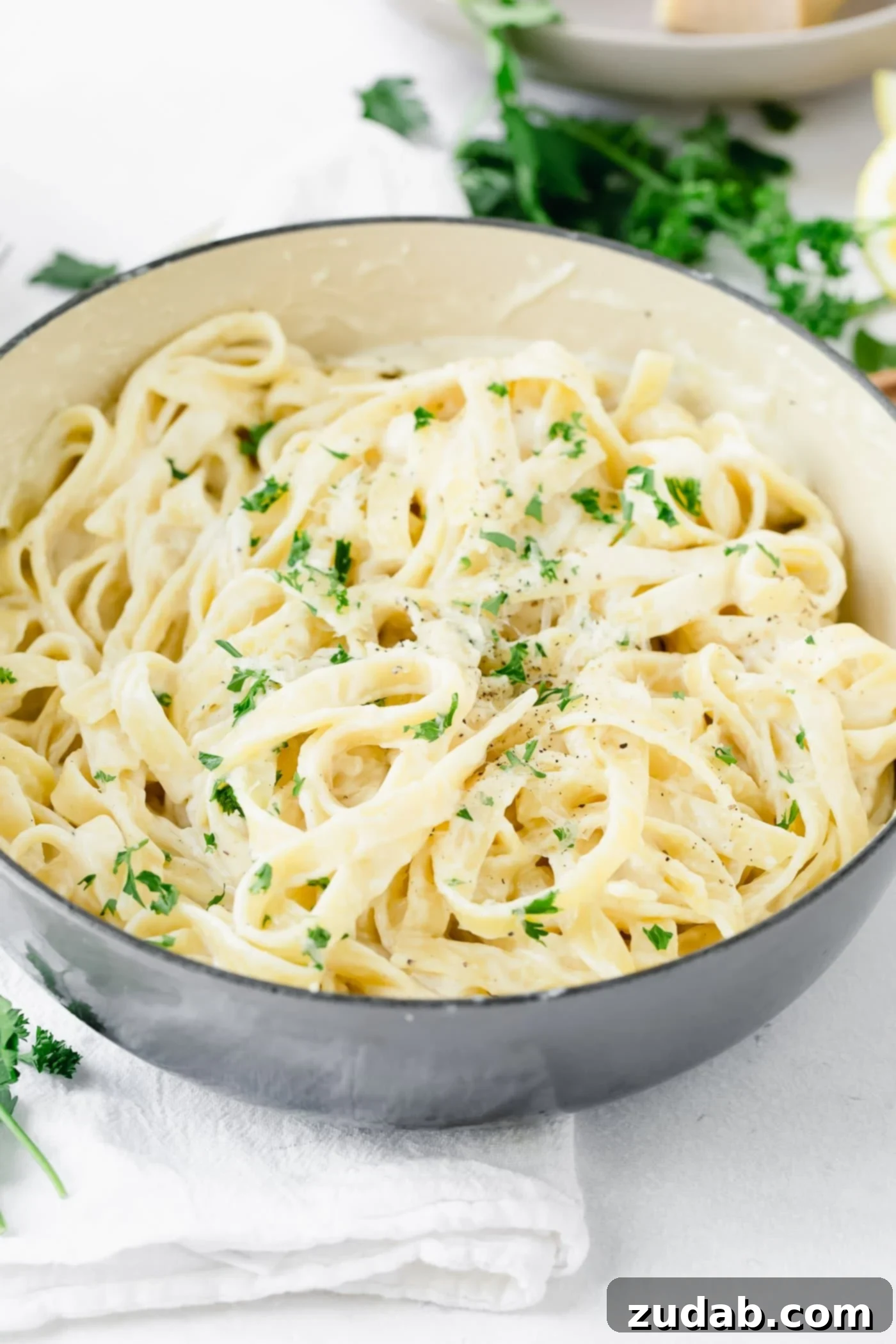
Ingredient Deep Dive: Substitutions and Their Impact
What Can You Substitute For Parmigiano Reggiano Cheese?
While Parmigiano Reggiano offers an unparalleled nutty, salty flavor and ideal melting properties, you do have options if it’s unavailable or you prefer an alternative. High-quality Parmesan cheese (often labeled simply “Parmesan” in the US) can be used as a direct substitute, though it might lack some of the nuanced depth. Other excellent hard Italian cheeses that work well include Grana Padano, which is slightly milder and fruitier than Parmigiano Reggiano, or Asiago, which has a sharper, more pungent flavor. For a bolder, saltier kick, Pecorino Romano is another option, but use it sparingly as its strong sheep’s milk flavor can dominate the sauce. Remember, fresh grating is key for any cheese you choose!
What Can I Use Instead Of Heavy Cream in Fettuccine Alfredo Sauce?
Heavy cream is the cornerstone of a rich Alfredo, but if you’re looking for lighter alternatives or simply don’t have any on hand, there are several substitutions. For a lighter sauce, you can mix low-fat or non-fat versions of sour cream, plain yogurt, or Greek yogurt with either chicken broth or milk. This combination will provide some creaminess but will likely be thinner and may have a slightly tangier flavor. Evaporated milk is another viable option that offers a good balance of richness and creaminess without the high fat content of heavy cream. For the creamiest possible substitute that still reduces fat, whole milk can be used, though you might need to simmer the sauce longer or use a thickening agent to achieve the desired consistency. Keep in mind that any substitution will alter the texture and flavor profile to some degree, so adjust to your preference.
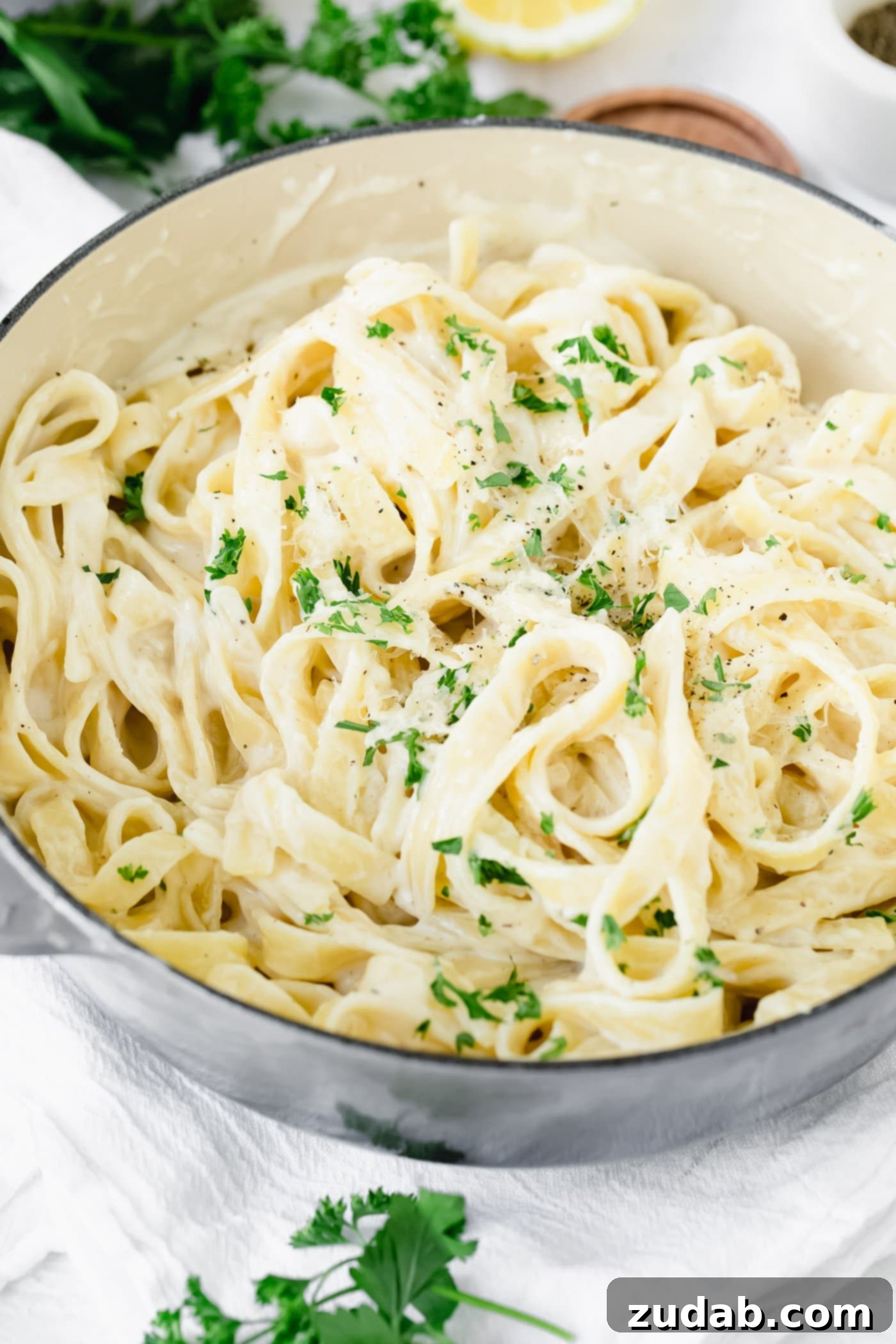
Mastering Consistency: How Do You Thicken Fettuccine Alfredo Sauce?
A perfectly thickened Alfredo sauce is creamy and coats the pasta beautifully without being overly gloopy or watery. Typically, the sauce will thicken naturally as it cooks and reduces, especially with the heavy cream and cheese melting in. The starch from the pasta water, when added, also helps to create a luscious emulsion. However, if your sauce isn’t as thick as you desire, here are a few methods:
- Simmer Longer: The simplest method is to continue simmering the sauce gently over low heat. As the liquid evaporates, the sauce will naturally concentrate and thicken. Be patient and stir frequently to prevent scorching, especially with cream-based sauces.
- Add More Cheese: Gradually stir in an extra tablespoon or two of finely grated Parmesan or Parmigiano Reggiano. The cheese’s fat and solids will help to thicken the sauce further while boosting flavor.
- Flour or Cornstarch Slurry (as a last resort): If your sauce remains too thin, you can create a slurry. Dilute 1-2 tablespoons of all-purpose flour or cornstarch in an equal amount of cold water or milk until smooth. Slowly whisk this mixture into the simmering sauce, stirring constantly. Continue to cook for a few minutes until the sauce has achieved your desired creaminess. Be careful not to add too much, as it can make the sauce pasty.
Understanding Cream Types: Is Heavy Cream Whipping Cream?
Yes, heavy cream and whipping cream are essentially the same product, though there can be subtle differences in fat content. Both are dairy products with a high-fat content, typically around 36% or more for heavy cream and sometimes slightly lower (30-35%) for whipping cream. For practical cooking purposes, especially in a rich sauce like Alfredo, they can be used interchangeably. The high fat content is what gives Alfredo sauce its signature richness, velvety texture, and stability.
If you’re looking for a substitute with a lower fat content, whole milk is the next best option. While heavy cream contains significantly more fat (around 96 grams per cup) compared to whole milk (approximately 8 grams of fat per cup), whole milk can still provide some creaminess. However, be aware that using milk instead of heavy cream will result in a much thinner, less rich sauce, and you may need to rely more heavily on cheese and potentially a thickening agent to achieve a desirable consistency.
Storage and Freezing Guidelines for Alfredo Sauce
How Long Will Fettuccine Alfredo Sauce Keep?
Properly stored, homemade Alfredo sauce can be a convenient make-ahead option. Once cooled, transfer the sauce to an airtight container and refrigerate promptly. It will typically keep for up to one week in the refrigerator. When reheating, do so gently over low heat on the stovetop, stirring frequently, and consider adding a splash of milk or cream to restore its original consistency and prevent separation.
Can Alfredo Sauce Be Frozen?
Yes, Alfredo sauce can be frozen, which is excellent for meal prep! For best results, allow the sauce to cool completely before transferring it to an airtight container or a heavy-duty freezer bag. Lay freezer bags flat to save space. Frozen Alfredo sauce can be stored for up to 2-3 months. However, it’s generally best to avoid freezing fettuccine Alfredo with the pasta already mixed in. Pasta tends to become mushy and absorb too much sauce after freezing and thawing. Always make and cook the pasta fresh when you’re ready to serve the sauce.
When you’re ready to enjoy your frozen sauce, thaw it overnight in the refrigerator. Reheat gently on the stovetop over low heat, stirring continuously to prevent the cream and cheese from separating. A whisk can be helpful for re-emulsifying the sauce. If needed, a little extra milk or cream can be stirred in to bring it back to its perfect consistency.
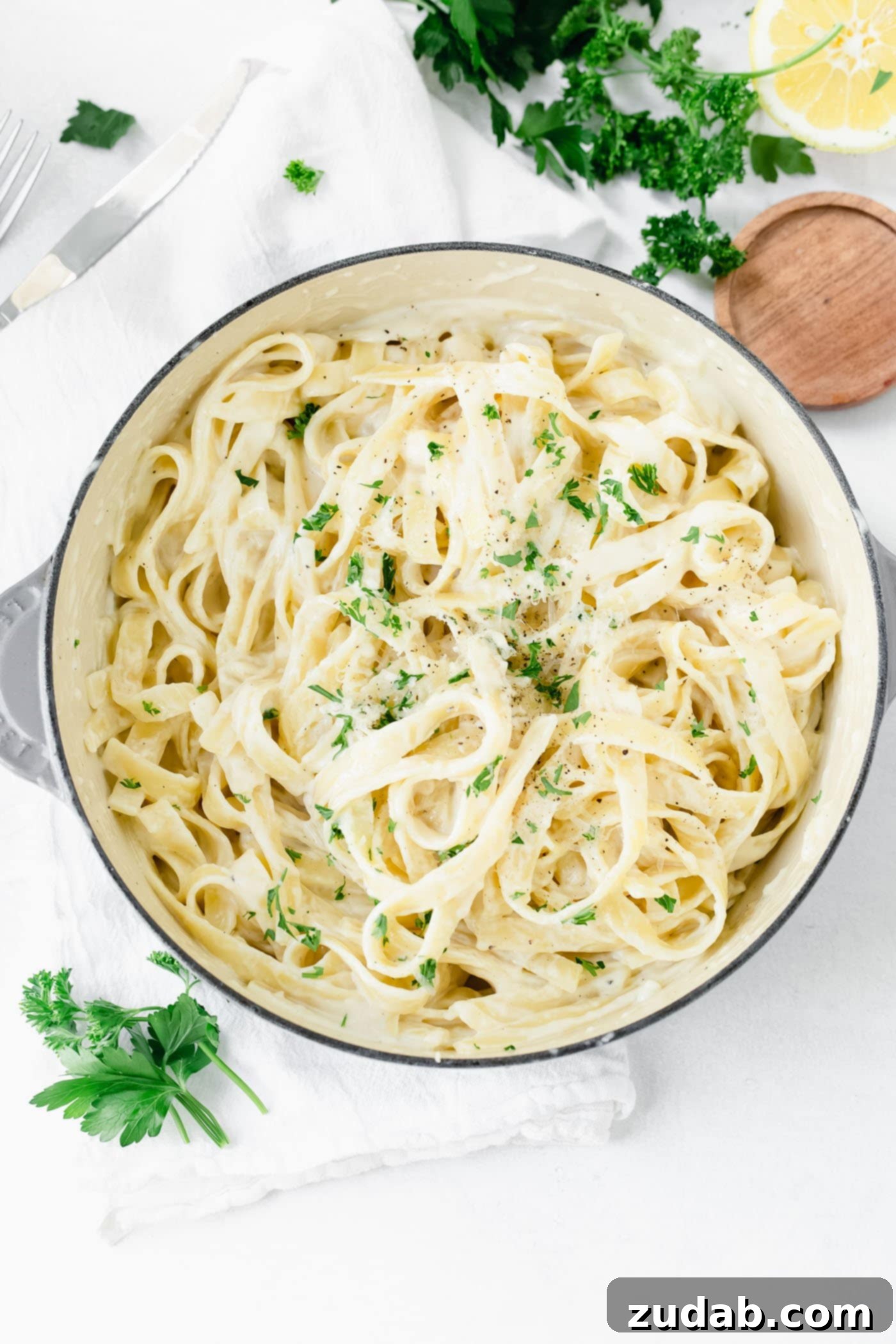
Serving Suggestions and Delicious Variations
Fettuccine Alfredo is a versatile dish that can be enjoyed in many ways. While it’s perfect on its own, here are some ideas to make your meal even more complete and exciting:
- Add Protein: Classic additions include grilled chicken breast, sautéed shrimp, or pan-seared scallops. For a heartier meal, consider adding sliced steak or crispy bacon bits.
- Vegetable Enhancements: Incorporate steamed broccoli florets, sautéed mushrooms, roasted asparagus, or sun-dried tomatoes for added nutrients and flavor.
- Bread Service: Serve with warm garlic bread or crusty artisan bread to soak up every last drop of that incredible sauce.
- Fresh Herbs: Beyond parsley, a sprinkle of fresh basil, chives, or a touch of red pepper flakes can introduce new dimensions of flavor.
- Spice It Up: For those who enjoy a little heat, a pinch of red pepper flakes stirred into the sauce or sprinkled over the top can add a delightful kick.
Common Mistakes to Avoid for Alfredo Perfection
Even though this recipe is straightforward, a few common pitfalls can affect the outcome of your homemade Fettuccine Alfredo. Avoiding these will ensure a consistently delicious dish:
- Using Pre-Grated Cheese: This is perhaps the biggest mistake. Pre-shredded Parmesan often contains cellulose or other anti-caking agents that prevent it from melting smoothly, resulting in a grainy sauce. Always grate your cheese fresh!
- Overheating the Sauce: Dairy can curdle or separate if heated too rapidly or brought to a rolling boil. Keep the sauce at a gentle simmer and stir frequently.
- Not Salting Pasta Water: Unsalted pasta will result in a bland dish overall. The pasta absorbs salt during cooking, flavoring it from the inside out.
- Overcooking the Pasta: Al dente pasta provides the best texture and holds up well to the rich sauce. Mushy pasta can ruin the entire dish.
- Adding Cold Ingredients: When incorporating cheese or cream, ensure they are at least at room temperature. Adding cold ingredients to a hot sauce can cause curdling.
- Insufficient Seasoning: Taste your sauce and pasta as you go. Alfredo needs proper seasoning to shine, and a final taste test before serving allows for any last-minute adjustments.
Making fettuccine alfredo sauce from scratch is truly the only way to go! This recipe guarantees a sauce that is so creamy and luscious, you’ll never consider a jar of store-bought sauce again. It’s time to create your own pasta perfection!
We Got You Covered On More Saucy Pasta Recipes!
- Spicy Queso Pasta Primavera
- Easy Beef Ragu and Pasta
- Chicken Fettuccine Alfredo
- One-Pot Lasagna Pasta
- 20 Minute Creamy Sun-Dried Tomato Chicken Pasta
- Creamy Garlic Lemon Butter Pasta
- Bolognese Recipe
Like this? Leave a comment below!
REMEMBER TO SUBSCRIBE TO our FREE Oh Sweet Basil NEWSLETTER AND RECEIVE EASY RECIPES DELIVERED INTO YOUR INBOX EVERY DAY!
When you try a recipe, please use the hashtag #ohsweetbasil on INSTAGRAM for a chance to be featured in our stories! FOLLOW OH, SWEET BASIL ON FACEBOOK | INSTAGRAM | PINTEREST | TWITTER FOR ALL OF OUR LATEST CONTENT, RECIPES AND STORIES.