
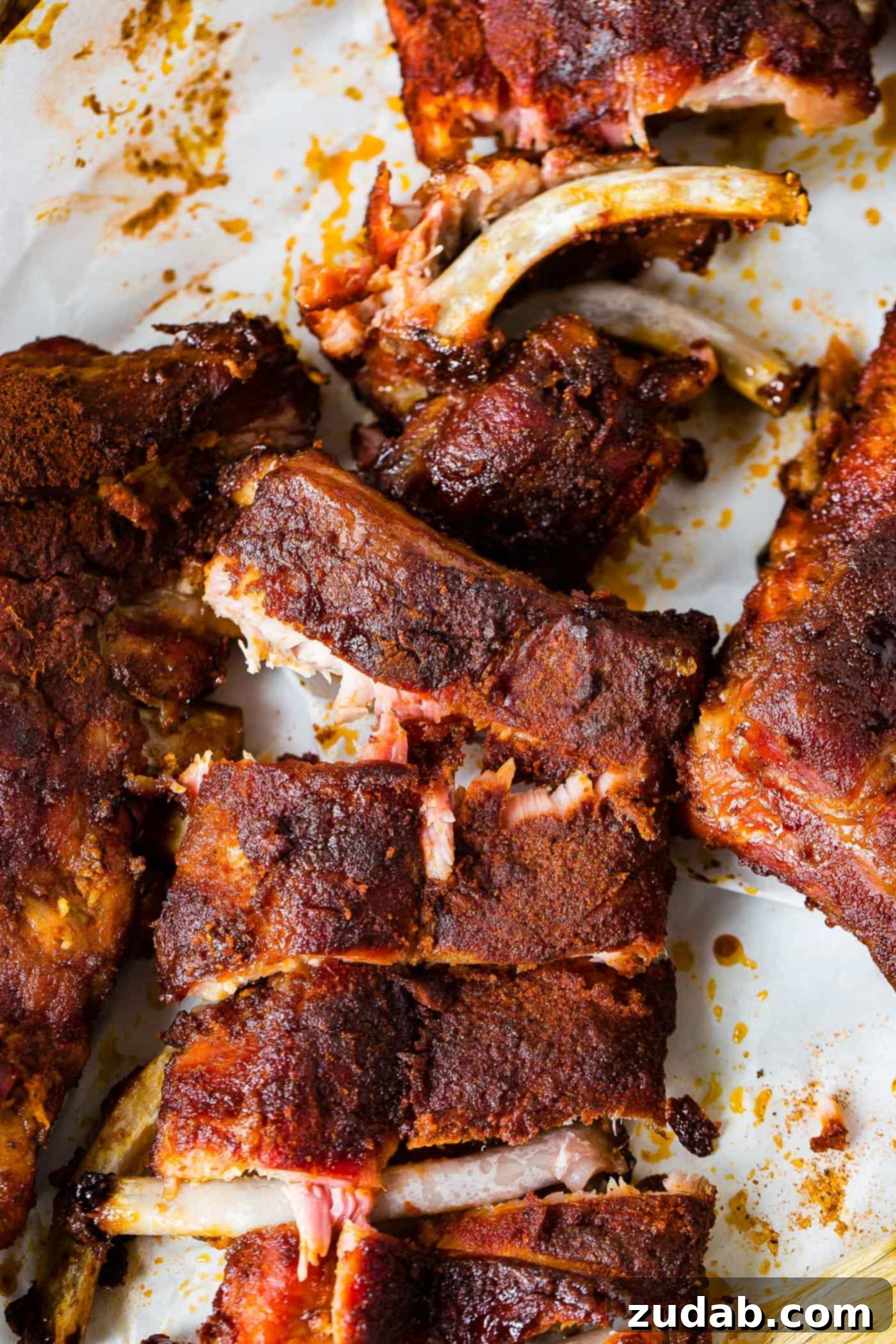
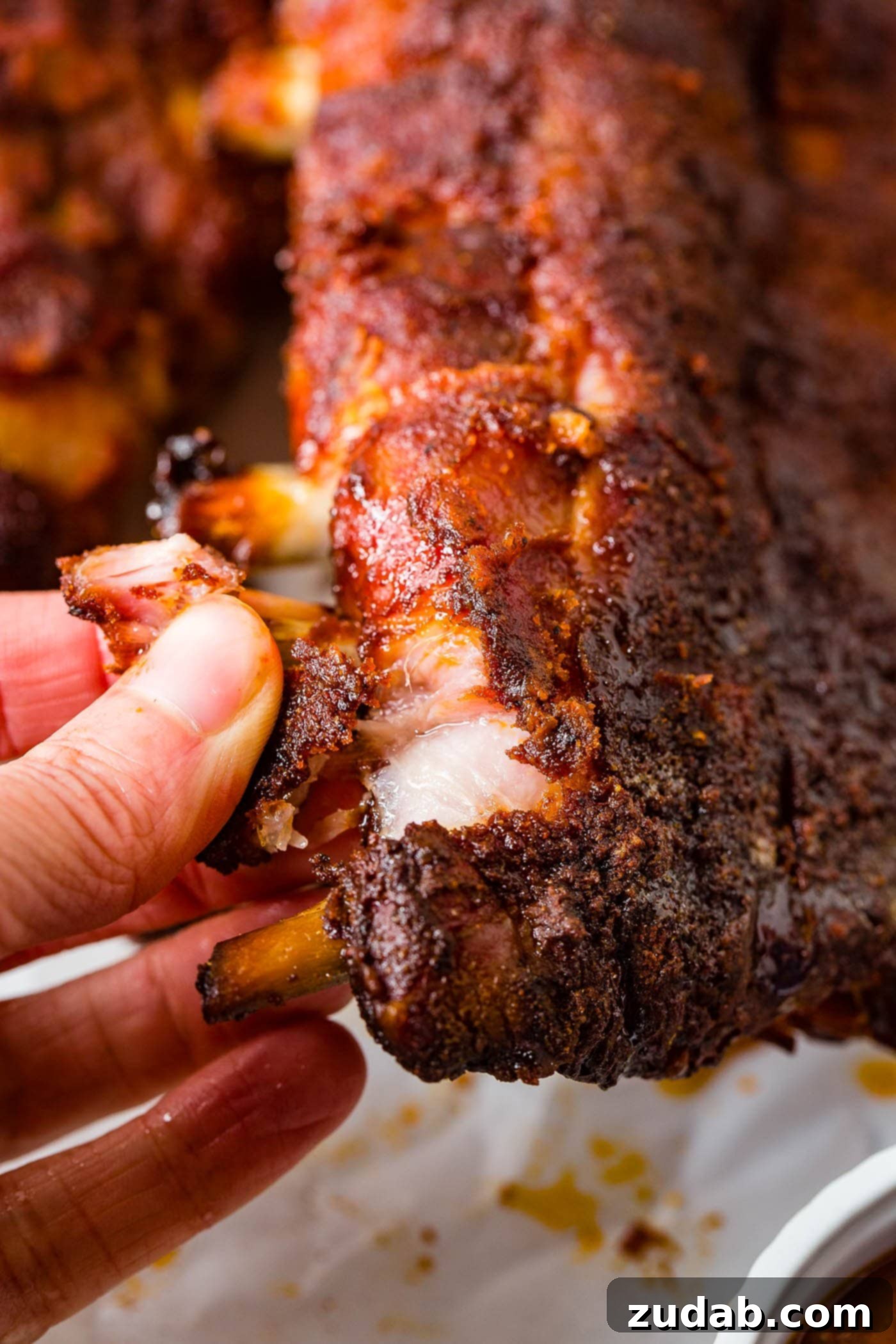
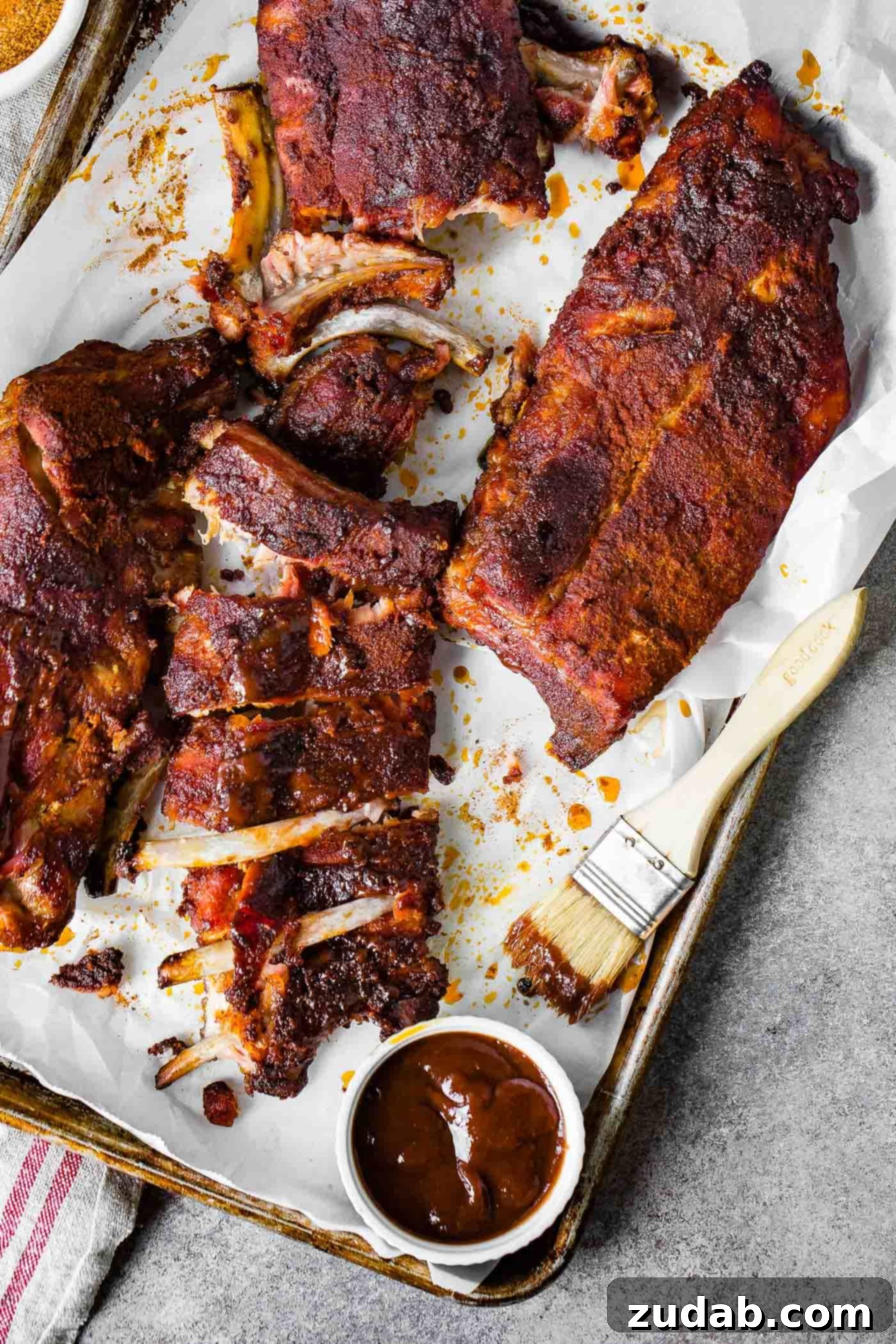
Unlock the secrets to crafting the most exquisite **Traeger ribs**, a dish that promises to transform your backyard barbecue into a culinary haven. These aren’t just any ribs; they are a masterpiece of flavor and texture, meticulously coated in a bold, aromatic dry rub and smoked to an unparalleled state of perfection on a Traeger grill. Imagine ribs so tender they effortlessly slide off the bone, bursting with smoky goodness – ideal for any outdoor gathering, from casual family picnics to lively BBQ parties.
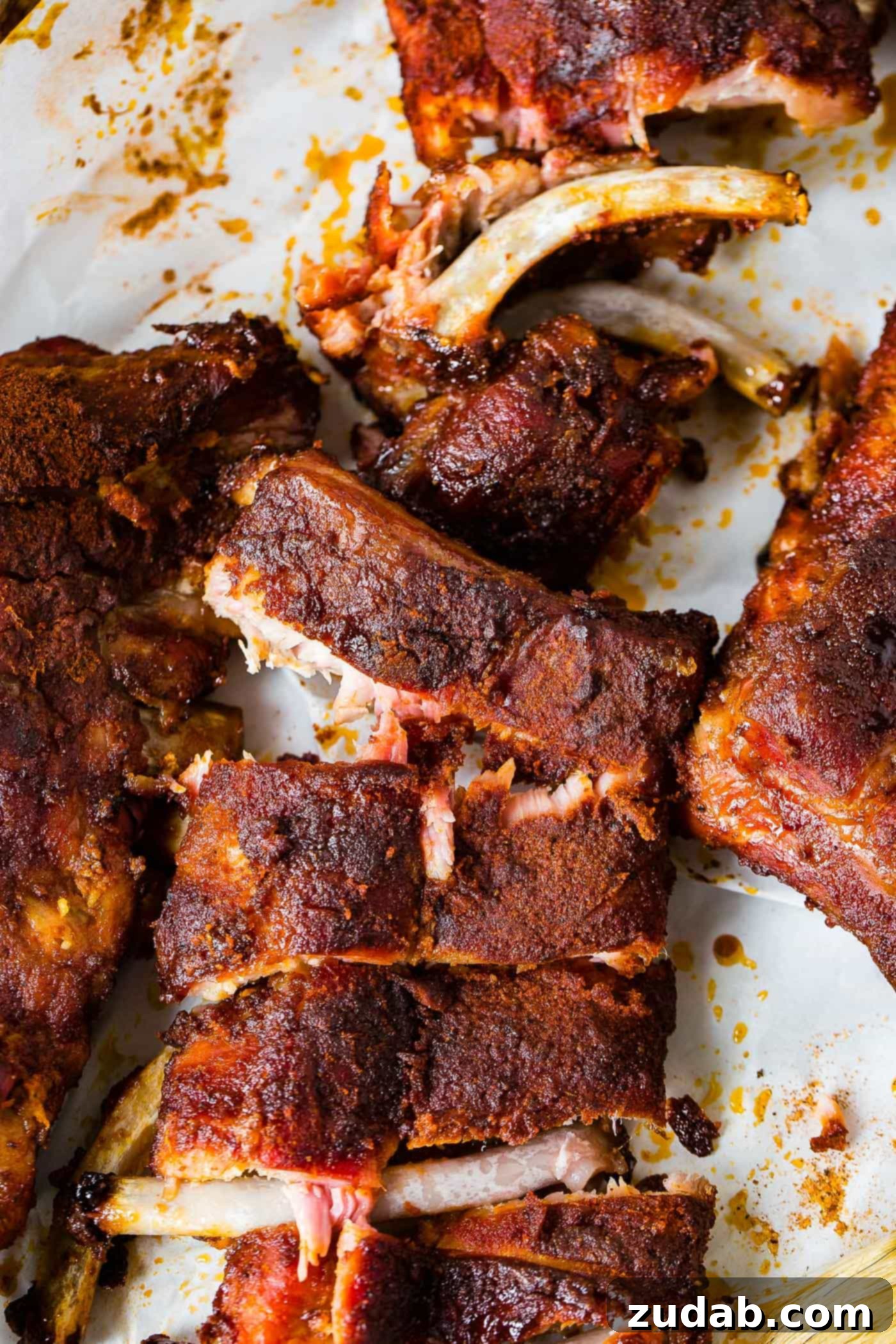
Mastering the Art of Traeger Smoked Ribs
My journey to perfecting the ultimate **smoked ribs recipe** began during a memorable trip to South Carolina, where I first experienced authentic Southern barbecue. It was a revelation. Until then, my experience with ribs had been limited to those heavily slathered in sauce. The traditional Southern method, however, relied on a simple yet powerful dry rub, demonstrating that true flavor could stand on its own. What truly captivated me was the incredible tenderness – ribs that simply melted in your mouth, effortlessly falling from the bone. That initial taste ignited a passion, leading to countless experiments in our kitchen, meticulously testing and refining various **rib recipes** to recreate that unforgettable experience. This particular recipe for **Traeger smoked ribs** stands out as one of the very best we’ve ever developed.
While our blog features a variety of beloved rib dishes, such as our slow cooker Asian sticky ribs and our smoky BBQ Instant Pot ribs, each offering unique cooking techniques and flavor profiles, this marks our debut into the world of truly smoked ribs. We are confident you’ll find this Traeger ribs recipe utterly irresistible. Prepare to have your taste buds tantalized, your fingers delightfully messy, and these incredible **Traeger pork ribs** become a staple on your culinary repertoire. They are, without exaggeration, the finest ribs I have ever had the pleasure of tasting.
Essential Ingredients for Traeger Smoked Pork Ribs
The magic of these **Traeger pork ribs** lies in a carefully crafted two-part flavoring process: an initial bold dry rub, followed by additional flavorings introduced halfway through the smoking period. A **dry rub** is a foundational element in barbecue, a blend of dry spices and seasonings that are generously massaged onto the meat before it undergoes the low-and-slow transformation of smoking or grilling. This method allows the spices to penetrate the meat, creating a deep, complex flavor crust.
To prepare these spectacular smoked ribs, you will need the following high-quality ingredients:
For the Dry Rub:
- Pork Ribs (preferably St. Louis style or baby back)
- Smoked Paprika: Adds a beautiful color and a distinct smoky depth.
- Dark Brown Sugar: Contributes sweetness, aids in caramelization, and helps create a desirable bark.
- Black Pepper: Essential for a classic savory kick.
- Garlic Powder: Provides an aromatic, umami base.
- Cumin: Lends earthy, warm undertones that complement pork beautifully.
- Kosher Salt: Crucial for seasoning and drawing out moisture, enhancing flavor.
- Cayenne: Offers a subtle hint of heat, balancing the sweetness and smokiness.
For the Cooking Liquid & Glaze:
- Honey: For a touch of natural sweetness and to create a sticky glaze.
- Dijon Mustard: Acts as an emulsifier and adds a tangy, sharp note that enhances the rub.
- Apple Cider: Provides moisture, tenderness, and a fruity, acidic balance to the rich pork.
Exact measurements for each ingredient can be found in the detailed recipe section below. Using fresh, high-quality spices will significantly elevate the flavor profile of your final dish, ensuring that every bite of these **Traeger ribs** is an unforgettable experience.
Selecting the Perfect Ribs for Smoking
Choosing the right cut of ribs is paramount to achieving that coveted fall-off-the-bone tenderness and rich flavor that defines exceptional smoked ribs. While several types of pork ribs can be smoked, each offers a unique experience:
- St. Louis Style Ribs: These are our top preference for smoking on a Traeger. St. Louis style ribs are cut from the belly of the pig, close to the spare ribs. They are flatter and more uniform in shape, making them easier to cook evenly. They boast a good balance of meat and fat, which renders beautifully during the smoking process, contributing to their incredible flavor and tenderness. Their relatively quicker cooking time compared to larger cuts also makes them a favorite among pitmasters.
- Baby Back Ribs: Also an excellent choice for smoking, baby back ribs are cut from the loin area of the pig, closer to the backbone. They are shorter, meatier, and leaner than St. Louis style ribs. While they offer a delightful tenderness, their lower fat content means they can dry out more easily if not managed carefully. They may also require a slightly longer cooking time to reach optimal doneness compared to St. Louis style.
- Spare Ribs: These are a larger, meatier cut from the belly section, but they typically have more cartilage and bone compared to St. Louis style (which are essentially trimmed spare ribs). While spare ribs work well for smoking, they often require more trimming and can have less uniform meat distribution. They may also take less time to smoke than St. Louis style if they are less meaty, so constant monitoring is essential to prevent overcooking.
Regardless of the type you choose, look for ribs with good marbling and a consistent thickness across the rack. This ensures even cooking and prevents some parts from drying out while others are still cooking.
Step-by-Step Guide: How to Smoke Ribs on a Traeger
Achieving perfectly tender, flavorful **smoked pork ribs** on your Traeger is a rewarding process. The goal is melt-in-your-mouth tenderness infused with deep smoky notes. Here’s a detailed breakdown of the steps to master this incredible **Traeger ribs recipe**:
Preparation is Key:
- Prepare the Dry Rub: In a small bowl, thoroughly combine all ingredients listed for the dry rub. This includes smoked paprika, dark brown sugar, black pepper, garlic powder, cumin, kosher salt, and cayenne. Set this aromatic mixture aside.
- Rib Preparation – Remove the Silver Skin: This crucial step ensures maximum tenderness. Inspect the bone-side of your pork ribs for a thin, silverskin membrane. To remove it, gently work the tip of a butter knife or a small spoon underneath the membrane, ideally over a middle bone to get a good lift. Once you have a corner lifted, use a paper towel to get a firm grip on the membrane (it can be slippery!) and slowly tear it off the entire rack. This prevents the ribs from being chewy and allows the rub to better penetrate the meat.
- Apply the Binder and Dry Rub: In a separate small bowl, whisk together the Dijon mustard and 1/4 cup of apple cider (reserve the remaining cider for later steps). Brush this mixture thinly and evenly over both sides of the prepared ribs. This acts as a “binder,” helping the dry rub adhere better to the meat. Immediately and generously apply the prepared dry rub over both sides of the ribs, ensuring full coverage. Don’t be shy – this is where much of your flavor comes from!
Smoking the Ribs on Your Traeger:
- Preheat the Smoker: Set your Traeger smoker to 180°F (82°C) and allow it to preheat with the lid closed for at least 15 minutes. This ensures the smoker reaches the target temperature and begins producing clean, consistent smoke.
- Initial Smoke Phase (3 Hours): Once preheated, carefully place the seasoned ribs directly onto the smoker grates, meat side up. Close the lid and smoke for 3 hours. This low temperature and prolonged exposure to smoke are essential for infusing the ribs with that deep, characteristic smoky flavor and developing a beautiful “smoke ring.”
- Increase Smoker Temperature & Prepare for Wrapping: After the initial 3 hours, gently transfer the ribs to a large, rimmed baking sheet. Increase the Traeger’s temperature to 225°F (107°C).
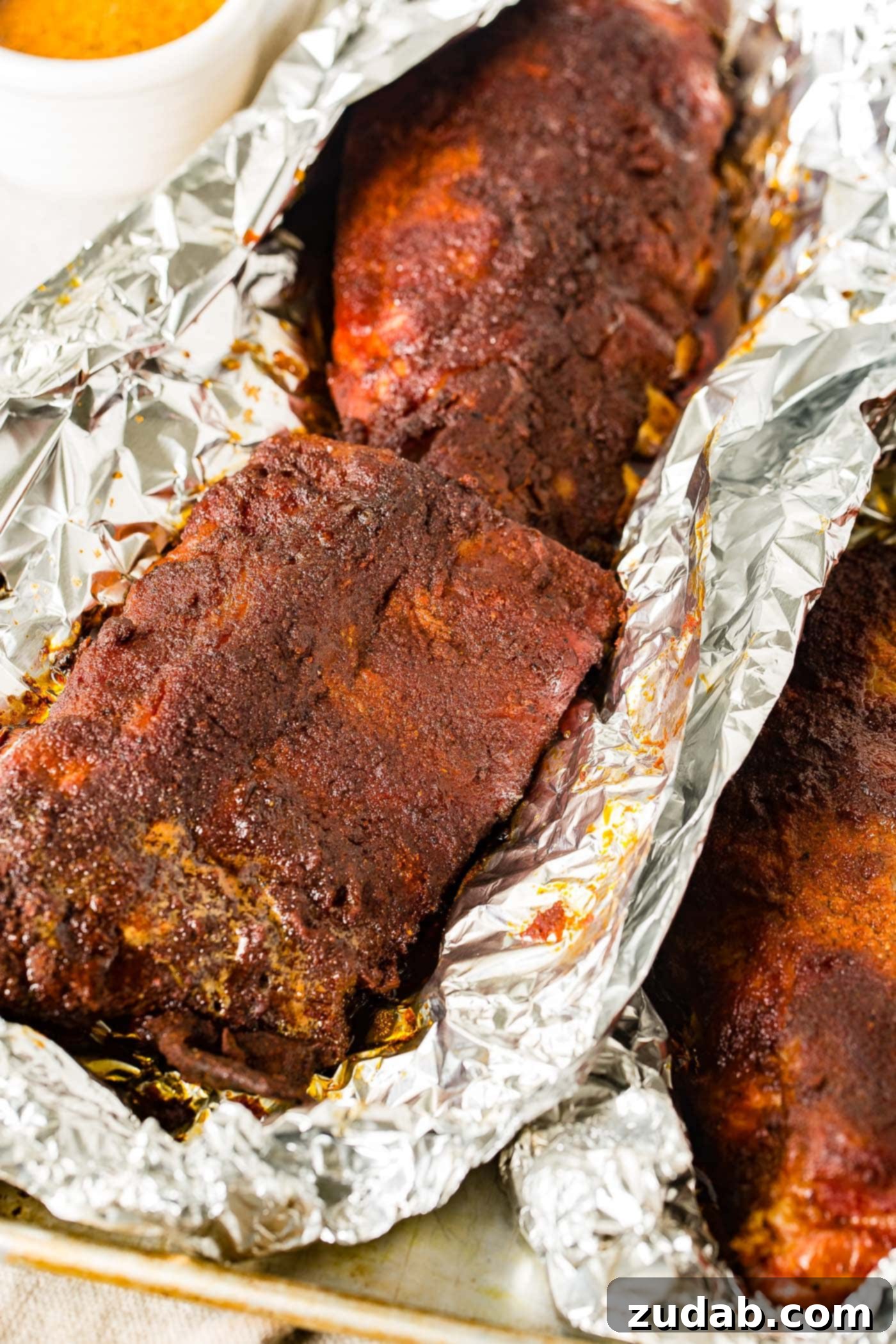
- Wrap the Ribs with Liquid: Tear off four large pieces of peach butcher paper (or heavy-duty aluminum foil if butcher paper is unavailable). Lay one piece of paper down and place a rack of ribs on top. Pull up the sides of the paper to create a shallow boat.
- Add Sweetness and Moisture: Evenly sprinkle half of the reserved dark brown sugar over the top of the ribs. Drizzle with half of the honey and half of the remaining apple cider. Place another piece of butcher paper on top and tightly crimp all the edges, creating a sealed pouch to prevent any liquid from leaking out. This creates a steamy environment that tenderizes the ribs and melts the sugars into a rich glaze.
- Repeat for All Racks: Repeat step 8 for any additional racks of ribs you are smoking.
- Wrapped Smoke Phase (2-4 Hours): Return the wrapped ribs to the smoker for an additional 2 to 4 hours. The exact time will depend on the thickness of your ribs and your desired level of tenderness. The goal during this phase is to tenderize the meat significantly.
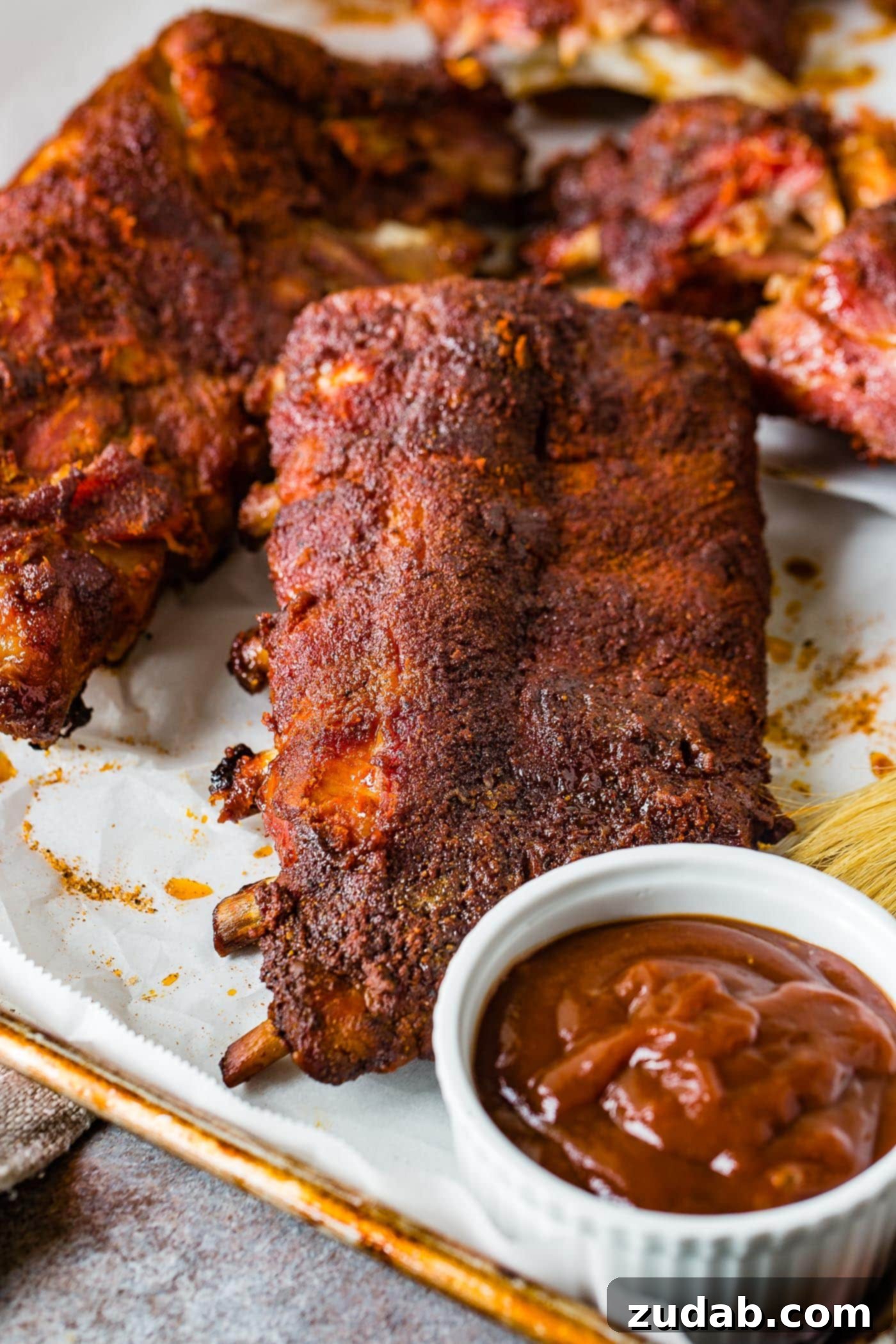
- Final Unwrapped Grill/Smoke Phase (30-60 Minutes): Carefully remove the ribs from their wrap and place them directly back onto the smoker grates. Increase the smoker temperature to 275-300°F (135-149°C) for 30 to 60 minutes. This final step allows the exterior of the ribs to develop a beautiful bark and gives them a slightly firmer, more appealing texture. You can also brush them with your favorite BBQ sauce during this stage for an added layer of flavor.
- Rest and Serve: Once the ribs have reached your desired tenderness (the meat should easily pull back from the bone and have a slight bend when lifted), remove them from the smoker. Let them rest uncovered for a few minutes before slicing and serving. This resting period allows the juices to redistribute, resulting in a more succulent and flavorful rib. Serve with your favorite barbecue sauce on the side!
Understanding the 3-2-1 Method for Smoking Ribs
This **Traeger smoked ribs recipe** is loosely based on the popular **3-2-1 method** for smoking ribs, a technique revered by barbecue enthusiasts for its consistent results in producing tender, flavorful ribs. The “3-2-1” refers to the three distinct phases of cooking time:
- 3 Hours of Smoking (Unwrapped): The initial phase focuses on infusing the ribs with deep smoky flavor and creating a vibrant smoke ring. During this time, the ribs are exposed directly to the smoke, and the dry rub begins to form a flavorful crust, known as a “bark.”
- 2 Hours of Smoking (Wrapped with Liquid): In the second phase, the ribs are tightly wrapped in butcher paper or foil along with a small amount of liquid (like apple cider, honey, and brown sugar in our recipe). This creates a steamy, braising environment that rapidly tenderizes the meat, ensuring that fall-off-the-bone texture. The added liquids also contribute moisture and flavor.
- 1 Hour of Grilling/Smoking (Unwrapped): The final hour sees the ribs returned to the smoker unwrapped, often at a slightly higher temperature. This stage is crucial for firming up the bark, allowing any applied barbecue sauce to set and caramelize, and achieving that perfect texture where the meat easily pulls away from the bone without being mushy.
Traditionally, the 3-2-1 method totals 6 hours of cooking. However, as noted in our recipe, we sometimes extend this method to 3-3-1 or even 3-4-1, especially for thicker racks of ribs or when a truly exceptional level of tenderness is desired. This adaptability ensures that your ribs reach optimal doneness, where the meat is incredibly tender but still holds its shape. Always use visual cues and the “bend test” (where the rack of ribs bends significantly without breaking when lifted with tongs) to confirm doneness rather than relying solely on time.
The Magic Behind Your Traeger Smoker: How It Works
A Traeger grill is more than just a grill; it’s a sophisticated wood pellet smoker that simplifies the art of low-and-slow cooking, delivering unmatched smoky flavor with remarkable ease. Understanding its mechanism helps appreciate why it’s so perfect for dishes like these **Traeger ribs**.
At its core, a Traeger operates by burning compressed hardwood pellets to produce heat and smoke. Here’s a breakdown of the key components and their functions:
- The Hopper: Located on the side of the grill, the hopper holds the wood pellets. These pellets come in various wood types, allowing you to choose the perfect smoky flavor for your food.
- The Auger: An electric auger screw automatically feeds pellets from the hopper into the fire pot. You set your desired cooking temperature on a digital controller, and the auger precisely controls the pellet flow – more pellets for higher temperatures, fewer for lower temperatures.
- The Fire Pot: Inside the main cooking chamber, the pellets are ignited by a hot rod in the fire pot. This creates the initial flame and smoke.
- The Fan: A convection fan circulates the heat and smoke evenly throughout the cooking chamber. This ensures consistent cooking on all sides of your food, similar to a convection oven, eliminating the need to constantly flip items like ribs.
- The Drip Tray and Heat Baffle: A metal baffle sits above the fire pot, deflecting direct flame away from the food and spreading the heat. A drip tray rests above the baffle, collecting any drippings while allowing heat and smoke to rise and circulate around the food.
The result is a consistent, indirect heat environment infused with the unmistakable aroma of real wood smoke. This precision control over temperature and smoke makes Traegers incredibly user-friendly and reliable for achieving perfectly cooked, flavorful barbecue without the constant tending often required by traditional smokers. They truly are a game-changer for anyone serious about elevating their outdoor cooking.
Choosing the Right Wood Pellets for Smoked Ribs
The type of wood pellets you choose significantly influences the final flavor of your **Traeger ribs**. Each wood imparts a unique smoky essence, allowing you to customize your barbecue experience. For smoking pork ribs, certain wood types are particularly well-suited:
- Hickory: This is a classic choice for pork and gives a strong, bacon-like smoky flavor. It’s bold and robust, perfect for those who love an intense smoke profile.
- Mesquite: Known for its very strong and distinct smoky flavor, mesquite is often associated with Texas BBQ. It pairs exceptionally well with rich meats like pork, offering a deep, earthy aroma. Use sparingly if you prefer a milder smoke.
- Oak: A versatile hardwood that provides a medium, consistent smoky flavor. Oak is less overpowering than hickory or mesquite, making it a great all-around choice that complements pork without dominating its natural taste.
- Blends: Many pellet manufacturers offer proprietary blends that combine several wood types to achieve a balanced and complex smoke flavor. These often include a mix of robust and milder woods.
Beyond these stronger flavors, other wood pellets can also create delicious results:
- Apple: Offers a sweet, fruity, and mild smoke flavor that is fantastic with pork, especially ribs. It adds a delicate sweetness that enhances the natural flavor of the meat.
- Cherry: Imparts a mild, sweet, and fruity smoke, similar to apple, but often with a slightly richer color on the meat (the “smoke ring”). It’s excellent for a visually appealing and flavorful rib.
- Pecan: Provides a rich, nutty, and subtly sweet smoke flavor. It’s milder than hickory but more pronounced than apple or cherry, making it a wonderful compromise for pork.
- Maple: Delivers a gentle, sweet, and somewhat subtle smoky flavor. It’s a good option if you want to add a hint of wood smoke without overwhelming the other seasonings.
For these **Traeger pork ribs**, we typically lean towards hickory, mesquite, or oak, or a combination of them, to achieve a bold, traditional smoked flavor. However, don’t hesitate to experiment with fruitwoods like apple or cherry if you prefer a sweeter, milder smoke. The beauty of a Traeger is the ability to easily swap out pellet types, allowing for endless flavor customization.
Frequently Asked Questions About Smoked Ribs
Can You Smoke Meat on a Regular Grill?
Yes, it is possible to smoke meat on a regular gas or charcoal grill, but it requires more effort and consistent monitoring to maintain low, indirect temperatures compared to a dedicated pellet smoker like a Traeger. To do so, you’ll need to create an indirect heat zone (e.g., placing wood chips in a smoker box over a lit burner on one side, and the meat on the unlit side of the grill). The key to smoking is cooking with indirect heat, allowing the smoke to slowly penetrate the meat without burning it.
Is Smoked Meat Cooked?
Absolutely. Smoked meat is indeed cooked, similar to how grilled or braised meat is cooked. The smoking process involves applying heat over an extended period, which breaks down tough muscle fibers and renders fat, making the meat tender and safe to eat. Like any other cooking method, smoked meat must reach safe internal temperatures before consumption to ensure food safety.
Is Smoked Meat Safe to Eat?
When prepared correctly and cooked to safe internal temperatures, smoked meat is perfectly safe to eat and incredibly delicious. The smoking process, done properly, enhances flavor and texture, resulting in a tender and juicy product. As with any meat, ensure it reaches the recommended internal temperature for pork (145°F/63°C for whole cuts, though ribs are often cooked to higher temperatures for tenderness) to eliminate harmful bacteria.
What Can You Substitute for Kosher Salt?
If you don’t have kosher salt on hand, a coarse sea salt can be a suitable substitute. However, it’s crucial to understand that kosher salt and common table salt are not interchangeable in terms of measurement due to their differing crystal sizes and densities. Table salt is much finer and denser, meaning you would use a significantly smaller amount if substituting it for kosher salt (typically about half or less). Always adjust to taste when using different types of salt.
Should You Flip Ribs in a Smoker?
No, there is generally no need to flip ribs when cooking them in a Traeger or other pellet smoker. Traeger grills utilize a convection fan that circulates heat and smoke evenly around the food. This creates a consistent cooking environment, ensuring the ribs cook uniformly on all sides without manual intervention. This “set it and forget it” aspect is one of the major advantages of using a pellet smoker for ribs.
Simplified Traeger Smoked Ribs Recipe
Get ready for a flavor explosion with these tender, smoky Traeger ribs!
Prep time: 15 minutes
Cook time: 7 hours
Total time: 7 hours 15 minutes
Yields: 6 servings
Ingredients:
For the Ribs:
- 2 Racks Pork Ribs (St. Louis style or baby back pork ribs)
For the Dry Rub:
- 1/4 Cup Smoked Paprika
- 1/2 Cup Dark Brown Sugar
- 1 Tablespoon Black Pepper
- 1 Tablespoon Garlic Powder
- 2 Teaspoons Cumin
- 1 Tablespoon Kosher Salt
- 1 Teaspoon Cayenne Pepper
For Cooking:
- 1/2 Cup Dijon Mustard
- 1/2 Cup Apple Cider (divided)
- 1/2 Cup Dark Brown Sugar (for wrapping)
- 1/3 Cup Honey
- Peach Butcher Paper or heavy-duty aluminum foil
Instructions:
For the Rub and Rib Preparation:
- In a small bowl, mix all dry rub ingredients thoroughly and set aside.
- Check the underside of the pork ribs. If a thin silver skin membrane is present, remove it. Use a butter knife to lift an edge, then grip with a paper towel and pull it off.
- In another small bowl, combine Dijon mustard and 1/4 cup of apple cider (reserve the remaining cider). Brush this mixture thinly on both sides of the ribs.
- Generously season both sides of the ribs with the prepared dry rub, ensuring full coverage.
To Smoke the Ribs:
- Preheat your Traeger smoker to 180°F (82°C) with the lid closed for 15 minutes.
- Place the seasoned ribs directly on the smoker grates, meat side up. Smoke for 3 hours.
- After 3 hours, transfer the ribs to a rimmed baking sheet. Increase the smoker temperature to 225°F (107°C).
- Tear off 4 long sheets of peach butcher paper or heavy-duty tin foil. Lay one piece down and place a rack of ribs on top. Pull up the sides of the paper/foil to contain the liquid.
- Sprinkle half of the reserved dark brown sugar on one rack, then drizzle with half of the honey and half of the remaining apple cider. Place another piece of butcher paper/foil on top and tightly crimp the edges to seal. Repeat for the second rack of ribs.
- Return the wrapped ribs to the smoker and cook for an additional 3-4 hours, until very tender.
- Remove the wrap from the ribs and place them directly back onto the grill grates. Increase smoker temperature to 275-300°F (135-149°C) and grill/smoke for 30-60 minutes, or until a nice bark has formed. You can brush with BBQ sauce during this stage if desired.
- Allow the ribs to rest for a few minutes before slicing and serving with your favorite barbecue sauce.
Recipe Notes:
Leftover ribs will keep for up to 4 days when stored properly in an airtight container in the refrigerator.
Nutrition Summary:
Based on approximately 4 ribs per serving (6 servings total), the nutritional content is roughly 1082 calories, 59g carbohydrates, 49g protein, and 73g fat. This is an approximation and can vary based on rib size and specific ingredients used.
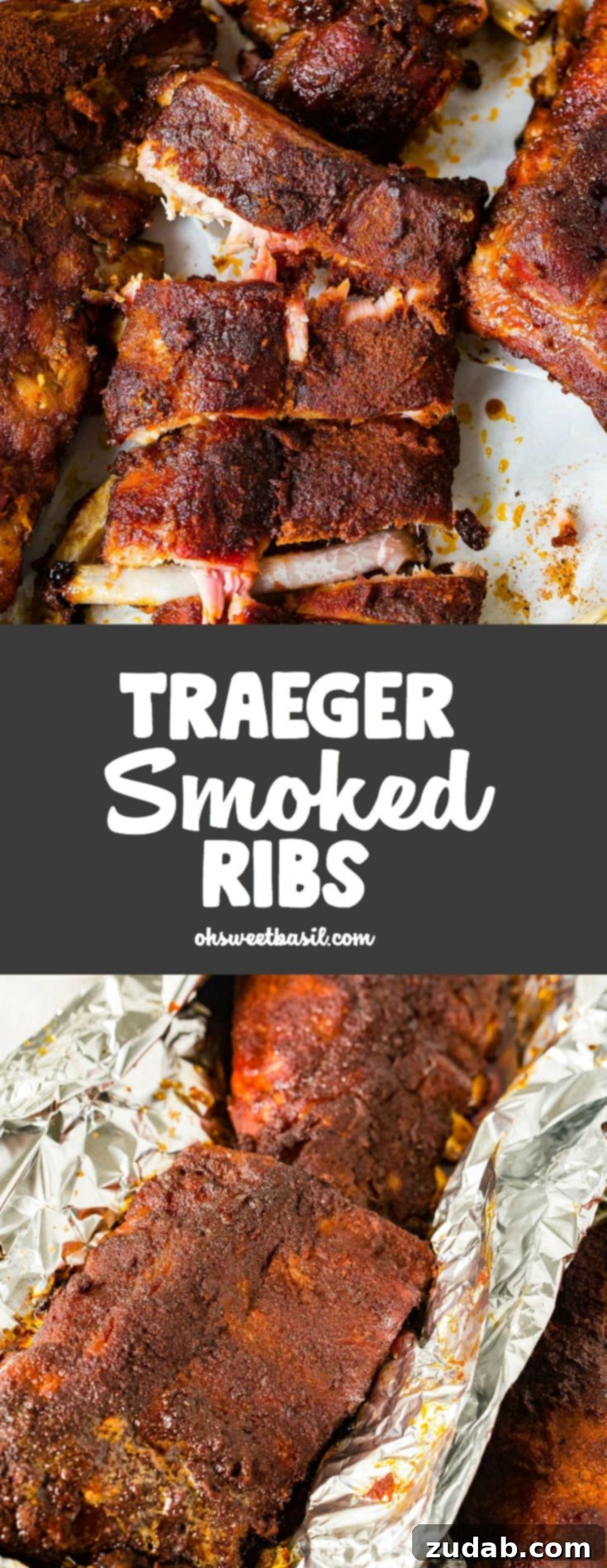
I am convinced that cooking ribs on a smoker, particularly a Traeger, is one of the best methods to achieve unparalleled flavor and texture. That signature smoky taste combined with fall-off-the-bone tenderness is truly unbeatable. You simply won’t be able to resist these succulent **smoked pork ribs**!
More Delicious Ribs Recipes to Explore:
- Smoky BBQ Instant Pot Ribs
- Instant Pot Country Style Ribs
- Braised Beef Short Ribs
- Sticky Instant Pot Bone-In Beef Short Ribs
- Asian Sticky Slow Cooker Ribs
- Mustard Carolina BBQ Sauce Instant Pot Beef Short Ribs
- Korean Oven Braised Short Ribs
- Easy BBQ Ribs (This would link to a recipe not provided in the original content for conversion)
- Blackberry Hoisin BBQ Ribs