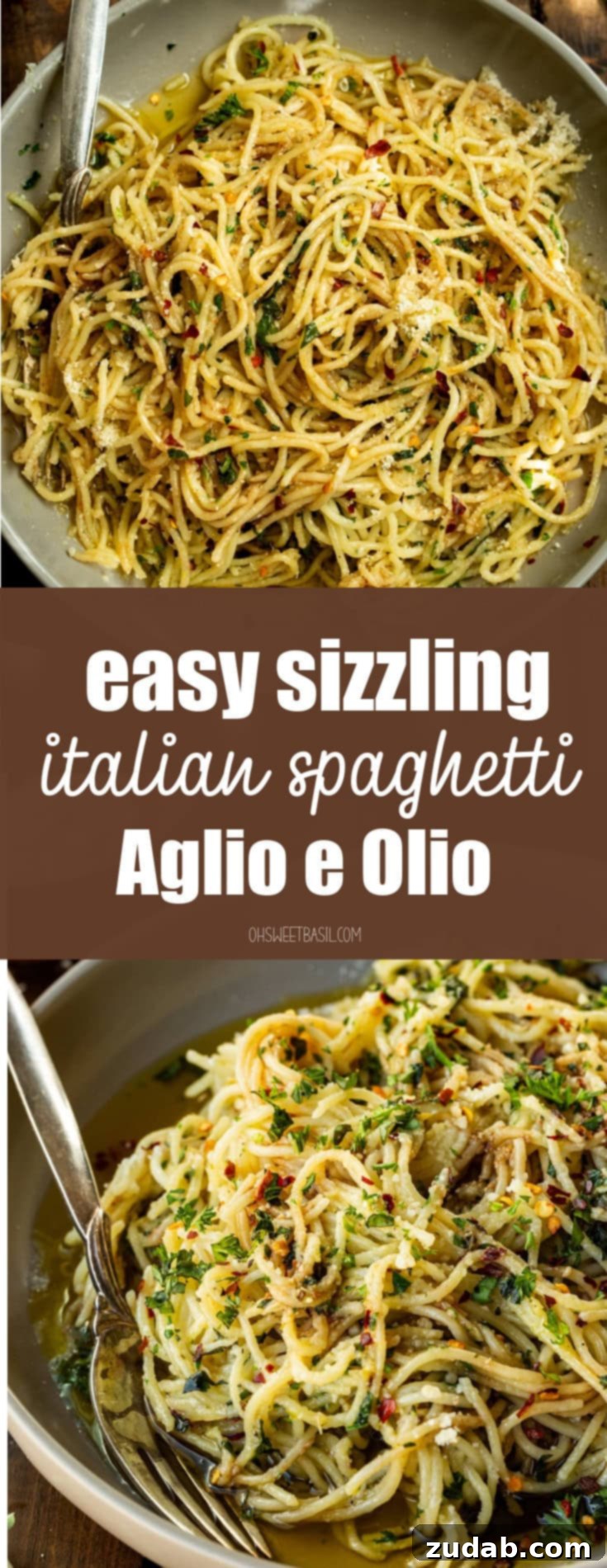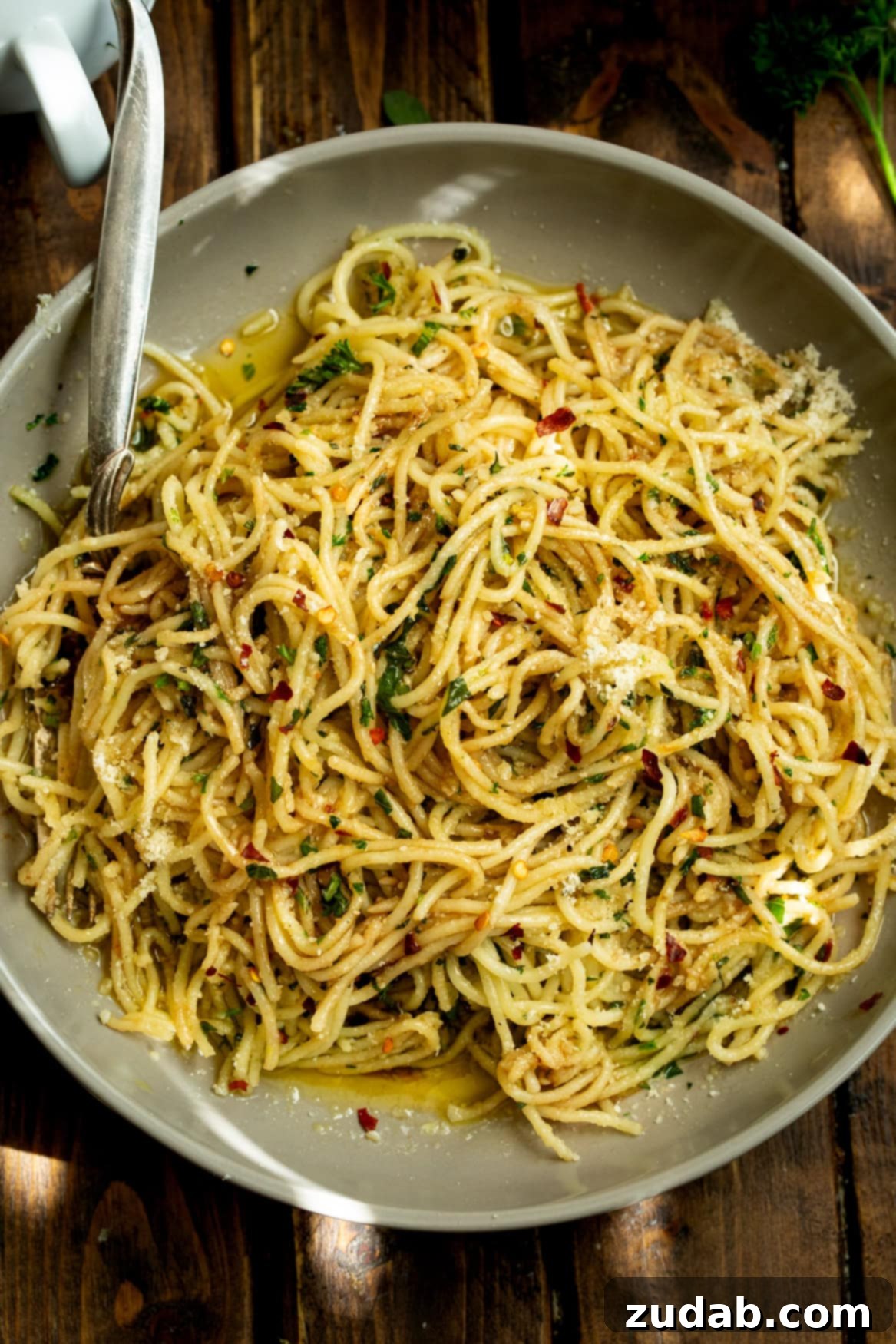
Unlock the secret to a lightning-fast, incredibly flavorful Italian meal that will become your new weeknight obsession: Spaghetti Aglio e Olio. This classic dish, built on the humble yet potent foundation of garlic and olive oil, transforms simple ingredients into a culinary masterpiece with a delightful sizzle in every bite. Forget lengthy preparations; this recipe brings authentic Italian taste to your table in mere minutes, proving that sometimes, less truly is more. Prepare to impress your taste buds and loved ones with the effortless elegance of this timeless pasta.
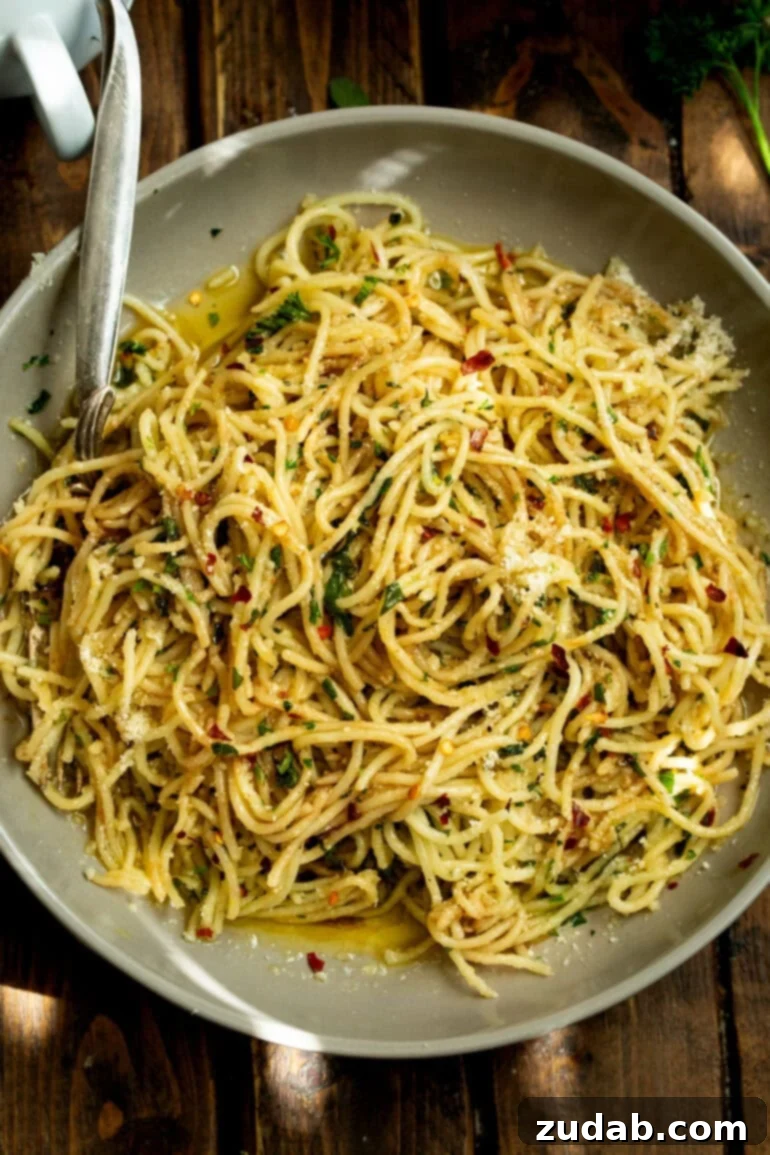
The inspiration for this particular rendition of Aglio e Olio was sparked by the overwhelming popularity of our sizzling Italian dipping oil on social media. It struck us: if this herbaceous, aromatic oil was a hit with bread, imagine the magic it could work when tossed with freshly cooked pasta! And indeed, the result was nothing short of outrageous. The entire family devoured this dish, and it has quickly secured a regular spot in our dinner rotation. We’re confident you’ll find it as irresistible as we do.
And the best part? It’s incredibly quick and straightforward to prepare. We’re talking about a complete, delicious dinner on the table in just 20 minutes! For busy parents and anyone seeking a flavorful yet efficient meal solution, this recipe is an absolute game-changer.
What Exactly is Spaghetti Aglio e Olio? A Dive into Italian Simplicity
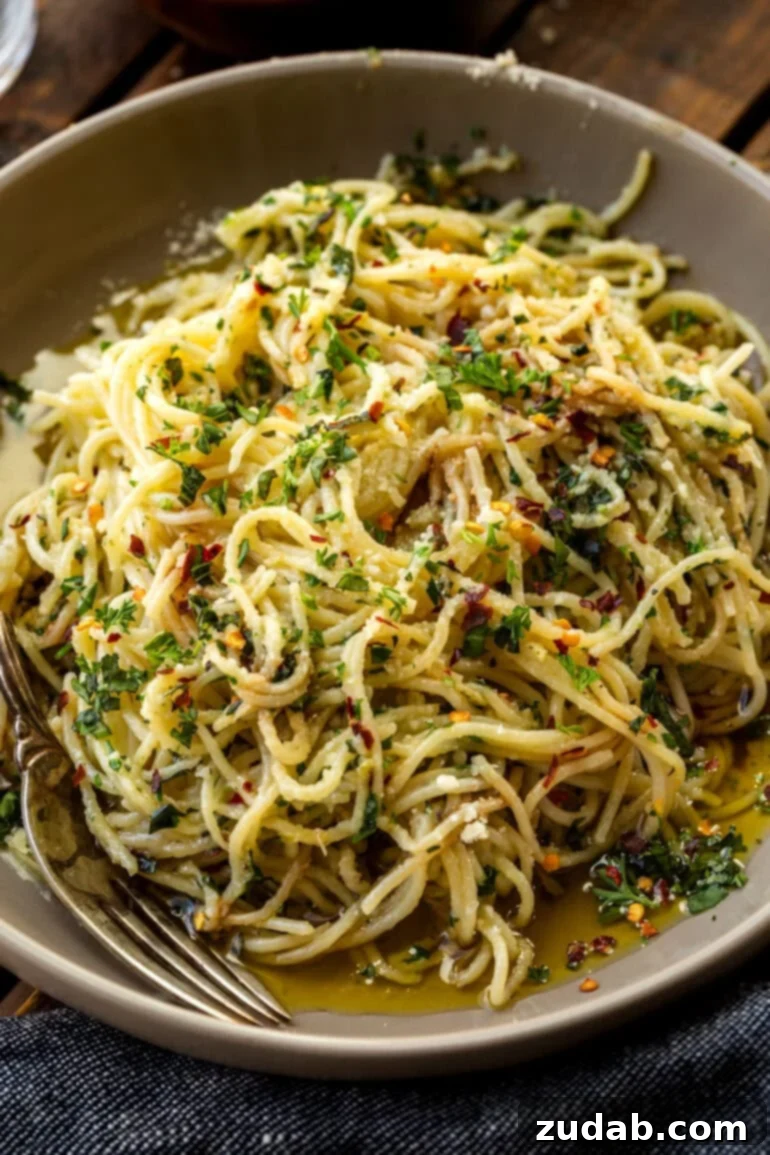
Directly translating from Italian, “spaghetti aglio e olio” means “spaghetti with garlic and oil.” It embodies the heart of Italian cuisine: taking a few high-quality, simple ingredients and transforming them into something extraordinary. This iconic pasta dish features spaghetti coated in an aromatic sauce made primarily from olive oil, garlic, and often a touch of red pepper flakes for warmth. Fresh parsley is typically added at the end, lending a vibrant freshness that brightens the entire dish.
The dish is sometimes affectionately referred to as “midnight spaghetti” because of its sheer speed and ease of preparation. When hunger strikes late at night, or you need a satisfying meal without much fuss, Aglio e Olio is the perfect solution. If this is the standard for Italian midnight snacks, then count us enthusiastically in!
Originating from Naples, this dish represents the essence of *cucina povera* – “poor kitchen” cooking, where resourcefulness and flavor are paramount. It’s a testament to how humble pantry staples can create an elegant and deeply satisfying experience. Over time, various regional interpretations have emerged, but the core elements of garlic, olive oil, and pasta remain sacred. It’s not just a dish; it’s a celebration of minimal ingredients yielding maximum flavor.
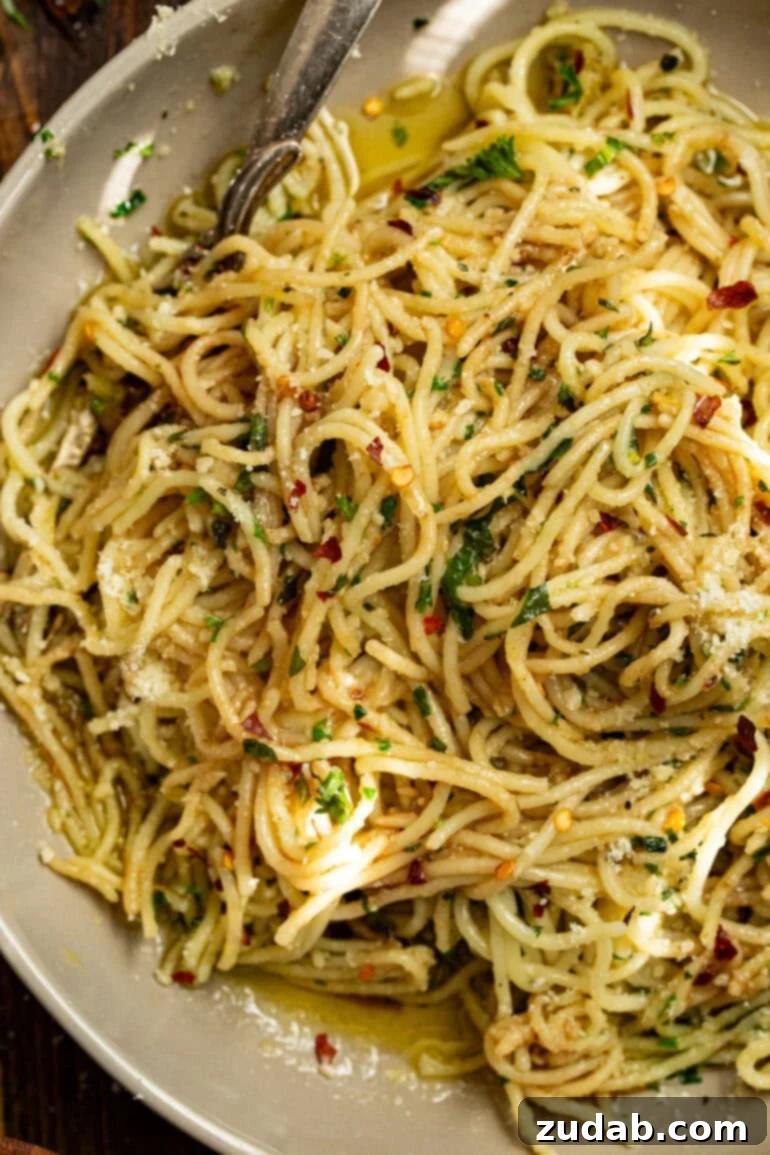
The Art of Simplicity: Key Ingredients for Authentic Spaghetti Aglio e Olio
Creating truly exceptional spaghetti aglio e olio relies on selecting a few high-quality ingredients, as each component plays a crucial role in the final flavor profile. A trip to your local produce section for fresh herbs is highly recommended, and then you’re just a few pantry staples away from a truly memorable simple pasta dinner:
- Extra Virgin Olive Oil: This is the backbone of your sauce. Opt for a good quality extra virgin olive oil with a rich, fruity flavor. It not only helps cook the garlic to perfection but also forms the luscious, glistening base that coats every strand of pasta. Its quality significantly impacts the dish’s overall taste and aroma.
- Fresh Garlic: The “aglio” in Aglio e Olio. There’s no substitute for fresh garlic here. Avoid pre-minced garlic as it lacks the vibrant, pungent flavor and often has a slightly metallic aftertaste. You’ll need a generous amount to achieve that signature garlicky kick.
- Fresh Herbs: A fragrant medley elevates this dish.
- Parsley: Adds a bright, clean, and herbaceous note. Essential for freshness.
- Oregano (or Marjoram): Provides earthy, slightly peppery undertones. Marjoram offers a milder, sweeter alternative.
- Rosemary: Contributes a wonderfully piney, aromatic depth that complements the garlic beautifully.
- Basil: Lends a sweet, peppery, and slightly anise-like aroma, rounding out the herb blend. Fresh herbs are paramount; if using dried, remember to use roughly half the quantity due to their concentrated flavor.
- Red Pepper Flakes: These tiny flakes are optional but highly recommended. They introduce a subtle warmth and a gentle kick that balances the richness of the oil and garlic without overpowering the delicate herb flavors. Adjust the amount to your preferred level of heat.
- Kosher Salt: Crucial for seasoning the pasta water and the sauce itself. Proper salting of the pasta water ensures the spaghetti is seasoned from within, laying the foundation for a flavorful dish.
- Balsamic Vinegar: A secret weapon that adds a touch of acidity and a hint of sweetness, cutting through the richness and brightening the overall flavor. A small drizzle makes a surprising difference.
- Fresh Spaghetti: While dried spaghetti works, fresh spaghetti offers a superior texture and flavor that truly elevates the experience. Its delicate bite and ability to absorb sauce make it an ideal choice. If making your own is an option, it’s highly recommended.
- Parmesan Cheese: A final flourish that brings a salty, umami-rich creaminess. While not strictly traditional in some purist Aglio e Olio recipes, it’s a beloved addition for many, enhancing the dish’s comfort factor. Freshly grated Parmesan is always best.
Precise measurements for each ingredient, along with detailed preparation instructions, are conveniently located in the recipe card at the conclusion of this post.
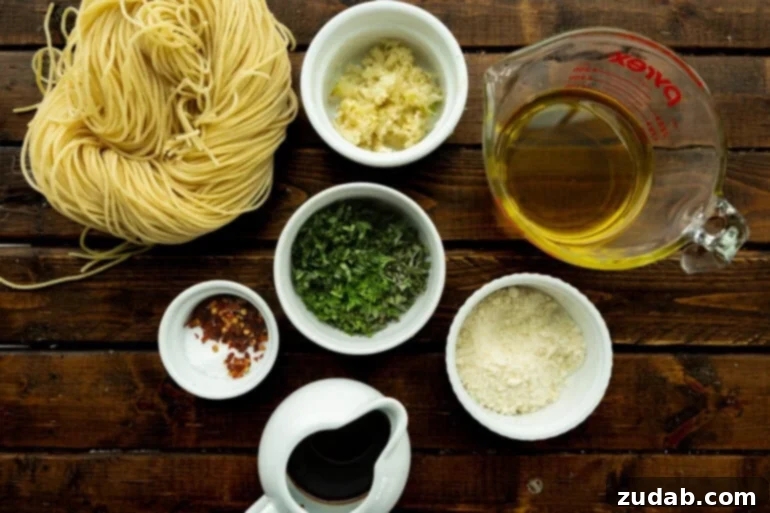
Crafting the Perfect Sizzle: Two Distinct Ways to Prepare Spaghetti with Garlic and Olive Oil
The beauty of this hot sizzling oil spaghetti lies not only in its simplicity but also in its versatility, particularly when it comes to preparing the “aglio” – the garlic. Depending on your preference for garlic flavor, you can choose between two equally delicious methods, both of which ensure dinner is on the table in just 20 minutes! Before you embark on either technique, ensure your pasta water is generously salted and brought to a rolling boil, ready to cook your spaghetti until perfectly *al dente*.
Method 1: Toasted Garlic Infusion
This method brings out a milder, nuttier, and deeply aromatic garlic flavor, as the garlic is gently cooked and toasted in the hot oil. It’s perfect for those who appreciate the subtle complexities that cooking imparts to garlic.
- Prepare the Aromatics: Begin by placing all your finely chopped fresh herbs (parsley, oregano, rosemary, basil) and red pepper flakes into a shallow, heatproof bowl. This setup ensures that when the hot oil is poured, it instantly infuses with the herbs, releasing their vibrant aromas.
- Infuse the Oil: Pour the extra virgin olive oil into a small saucepan (a butter warmer works perfectly for this quantity) and heat it over medium heat. Once the oil begins to shimmer, indicating it’s hot enough, add your minced garlic. Let the garlic gently toast, stirring occasionally.
- PRO TIP: Pay meticulous attention to the garlic. It transitions from golden to burnt very quickly. You’re aiming for a beautiful light golden-brown color, which signifies peak flavor and aroma. Remove from heat immediately once achieved to prevent burning, which can turn the garlic bitter.
- Combine Flavors: Promptly pour the sizzling, garlic-infused hot oil directly over the herb and spice mixture in your shallow bowl. The immediate sizzle and burst of fragrance are key. Stir thoroughly to ensure the hot oil fully extracts the essential oils from the fresh herbs. Finish with a generous drizzle of balsamic vinegar and a sprinkle of kosher salt to taste, creating a balanced and rich sauce base.
- Toss and Serve: Transfer your freshly cooked spaghetti, drained but not rinsed (a little pasta water cling helps the sauce emulsify), into a large serving bowl. Pour the aromatic oil mixture over the pasta. Toss vigorously to ensure every strand of spaghetti is glisteningly coated with the flavorful sauce. Garnish with a liberal sprinkle of freshly grated Parmesan cheese and serve immediately while the dish is warm and inviting.
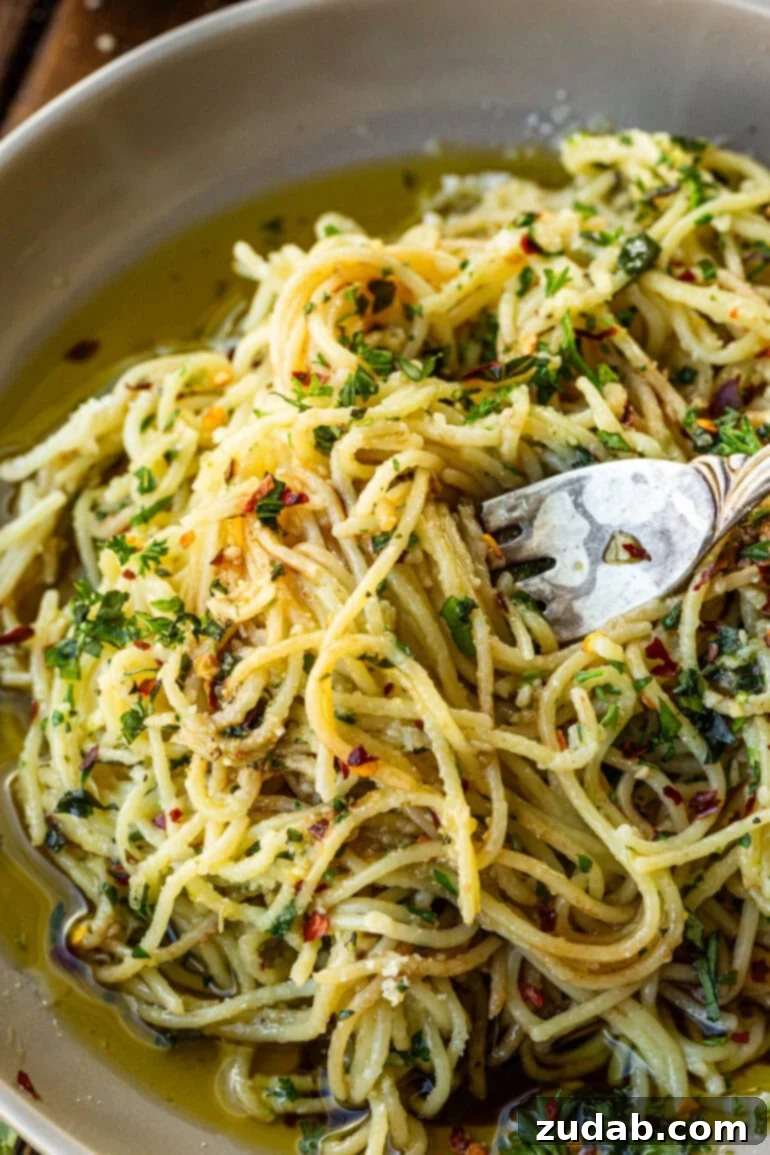
Method 2: Fresh Garlic Zing
For those who adore the bright, pungent, and more assertive flavor of raw-ish garlic, this method is ideal. The hot oil cooks the garlic just enough to mellow its raw edge slightly while preserving much of its vibrant, characteristic bite.
- Assemble Ingredients: Place your minced fresh garlic, all the finely chopped fresh herbs (parsley, oregano, rosemary, basil), and red pepper flakes in a shallow, heatproof bowl. This approach ensures that the garlic receives the full impact of the hot oil, cooking it gently rather than toasting it.
- Heat the Oil: Add the extra virgin olive oil to a small saucepan and heat it over medium heat. Wait until the oil is visibly shimmering, indicating it has reached the optimal temperature for infusing the flavors.
- Pour and Season: Carefully and quickly pour the hot, shimmering oil directly over the garlic and herb mixture in the bowl. You’ll hear a satisfying sizzle as the oil makes contact, instantly releasing the robust aromas of the garlic and herbs. Stir briefly, then add a drizzle of balsamic vinegar and sprinkle with kosher salt to taste, creating a lively and pungent sauce.
- Mix and Enjoy: Transfer the cooked spaghetti into a spacious serving bowl. Pour the newly created sizzling garlic and herb oil over the pasta. Toss diligently to ensure the pasta is thoroughly coated with the vibrant, aromatic sauce. A final sprinkle of freshly grated Parmesan cheese is the perfect finishing touch. Serve immediately to enjoy the garlic’s pronounced freshness.
The fundamental difference between these two preparation options is subtle in technique but yields a noticeably different flavor profile for the garlic. If your palate craves the mellow, deep notes of roasted garlic, the “Toasted Garlic” method will be your preference. If you prefer a sharper, more vibrant, and slightly pungent garlic presence, the “Fresh Garlic” method is the way to go. Personally, I find both approaches equally delightful, and my choice often simply depends on my mood or the overall flavor I’m aiming for. There’s no wrong answer here!
For a comprehensive guide including all ingredient measurements and step-by-step instructions, please continue scrolling down to the detailed recipe card found below.
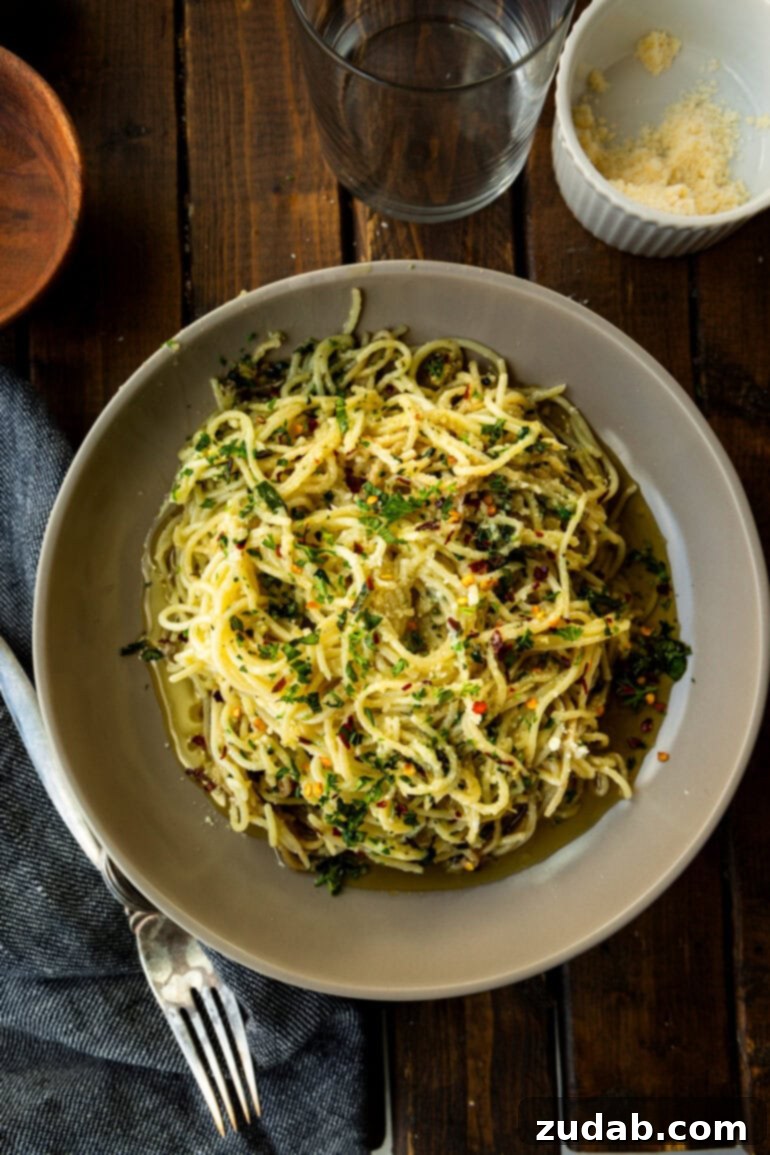
Beyond Tradition: Exploring Pasta Choices for Aglio e Olio
While spaghetti is the traditional and most common choice for Aglio e Olio, its long, thin strands perfectly designed to capture the delicate oil-based sauce, don’t feel limited! This versatile dish is incredibly forgiving and can be adapted to many other pasta types you might have on hand. The “e olio” (and oil) sauce is light enough to beautifully coat nearly any shape.
Consider experimenting with:
- Angel Hair Pasta (Capellini): For an even lighter, more delicate texture, angel hair pasta cooks incredibly fast and creates a very elegant presentation.
- Linguine or Fettuccine: These wider, flatter pasta shapes offer more surface area to cling to the garlicky oil and herbs, providing a slightly heartier bite.
- Penne or Rigatoni: Shorter, tubular pasta shapes are excellent for catching bits of garlic and herbs within their hollows, ensuring a burst of flavor in every forkful.
- Farfalle (Bowtie): Its unique shape makes for a fun and visually appealing alternative.
Ultimately, the key is to cook your chosen pasta *al dente* – firm to the bite – regardless of its shape. This prevents it from becoming mushy when tossed with the hot oil and ensures the best texture. However, it’s worth noting that the texture and nuanced flavor of truly fresh pasta are often far superior to dried varieties, making it worth the extra effort or expense if you have access to it. Fresh pasta tends to absorb sauces more readily and offers a delightful chewiness that enhances the overall experience of this simple yet profound dish.
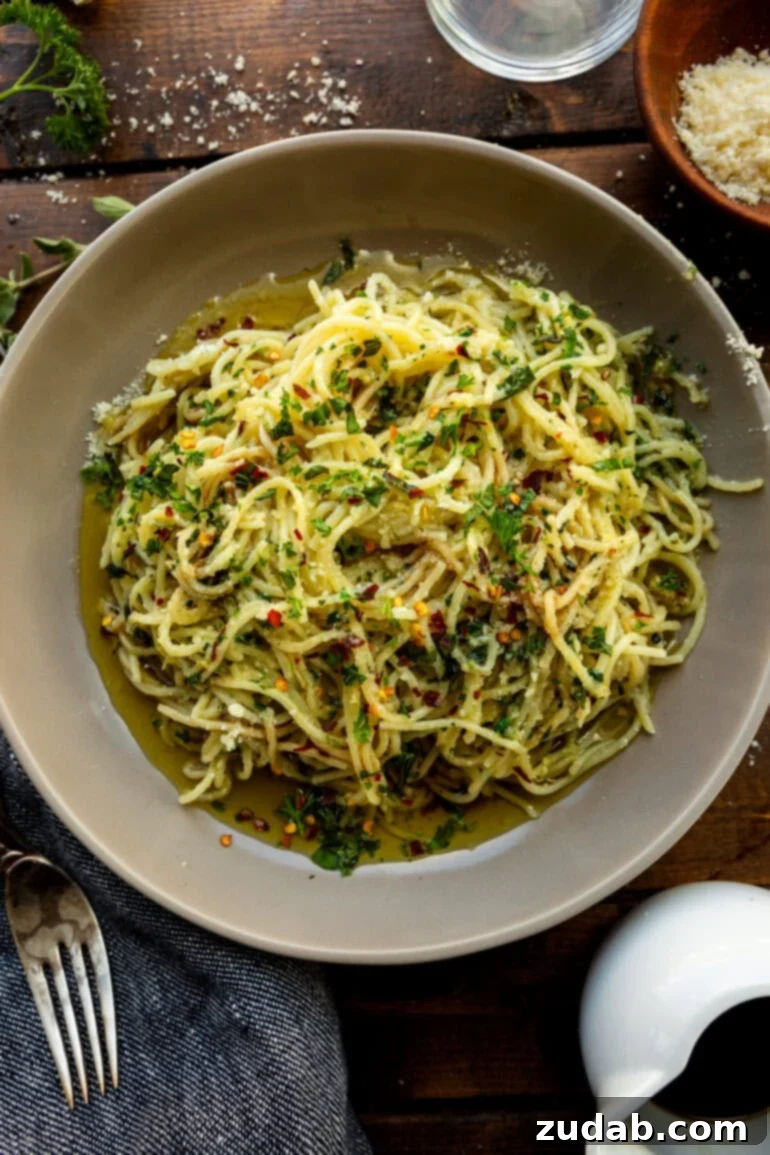
Creative Twists and Flavor Enhancements for Your Aglio e Olio
While classic spaghetti aglio e olio is perfect in its simplicity, this versatile dish serves as an excellent canvas for creative culinary experimentation. Don’t hesitate to adapt it to your taste preferences or whatever fresh ingredients you have on hand. Here are a few ways to elevate and customize your sizzling Italian pasta:
- For a Creamier Texture: If you desire a slightly richer, more emulsified sauce, reserve about 1/2 cup of the starchy pasta water before draining your spaghetti. After combining the pasta with the hot oil and herbs, gradually add a splash or two of this reserved pasta water, tossing continually. The starches in the water will help create a beautiful, light, and creamy coating on your pasta, without adding any actual cream.
- Boost with Fresh Vegetables: Aglio e Olio pairs wonderfully with a variety of vegetables, adding color, texture, and nutritional value. Consider stirring in:
- Sweet Peas: Add a pop of sweetness and vibrant green.
- Asparagus Tips: For a touch of spring and a tender-crisp texture.
- Cherry Tomatoes: Halved and tossed in at the end, they burst with juicy sweetness.
- Bell Peppers: Thinly sliced and lightly sautéed for a mild, sweet crunch.
- Broccoli Florets: Steamed or roasted until tender-crisp.
- Mushrooms: Sautéed until golden brown for an earthy depth.
- Spinach or Arugula: Wilted into the hot pasta for a fresh, leafy boost.
For best results, cook these vegetables separately (sauté, roast, or blanch) until tender-crisp, then toss them with the pasta and sauce at the very end.
- Add a Protein Power-Up: Transform your Aglio e Olio into a more substantial meal by incorporating your favorite cooked protein. This dish welcomes a variety of additions:
- Grilled or Pan-Seared Chicken: Sliced or diced chicken breast or thighs.
- Sautéed Shrimp: Quick-cooking and delicate, perfect with garlic and oil.
- Flank Steak or Sirloin: Thinly sliced for a more robust option.
- Italian Sausage: Crumbled and cooked until browned, adding savory depth.
- Canned Tuna or Anchovies: For a briny, umami-rich Mediterranean twist (anchovies can be dissolved in the hot oil for a subtle flavor boost).
Ensure your chosen protein is cooked ahead of time, then simply toss it into the hot pasta and sauce for a minute or two to warm through.
- Brighten with Citrus: A squeeze of fresh lemon juice or a sprinkle of lemon zest at the very end can add an incredible brightness and zing, cutting through the richness of the olive oil and enhancing the other flavors.
- Umami Infusion: For an extra layer of savory depth, consider adding a teaspoon of anchovy paste (it dissolves seamlessly into the hot oil) or a pinch of finely chopped sun-dried tomatoes to the oil as it heats.
Don’t be afraid to make this recipe your own! The core elements of garlic and oil provide a wonderful foundation, allowing you to tailor it to your dietary needs and flavor preferences.
Storing and Reheating Your Aglio e Olio Leftovers
One of the many benefits of spaghetti aglio e olio is that it holds up relatively well as leftovers, making it an excellent dish for meal prepping or enjoying throughout the week. Proper storage and reheating techniques will ensure your next meal is just as delicious as the first.
Storing Leftovers: Any leftover Aglio e Olio should be transferred to an airtight container and stored promptly in the refrigerator. When properly stored, it will maintain its quality and taste for up to 5 days. For longer storage, this dish freezes exceptionally well. Allow the pasta to cool completely to room temperature, then portion it into freezer-safe containers or heavy-duty ziploc bags, pressing out as much air as possible to prevent freezer burn. It will keep beautifully in the freezer for up to 3 months.
Reheating Leftovers: To revive your Aglio e Olio, you have a couple of excellent options:
- Stovetop Method (Recommended): This is generally my preferred method for reheating pasta dishes, as it helps retain the pasta’s texture and prevent it from drying out. Add a small amount of extra virgin olive oil (about 1-2 tablespoons per serving) to a pan over medium-low heat. Add the leftover pasta and a splash of water or, even better, chicken broth (1-2 tablespoons at a time). Toss gently and frequently until the pasta is heated through and coated in a light, refreshed sauce. The added liquid helps rehydrate the pasta and create a fresh sauce consistency.
- Microwave Method: For a quicker option, place your Aglio e Olio in a microwave-safe dish. Add a tablespoon or two of water or broth and cover loosely. Heat in short intervals (1-2 minutes), stirring between each, until thoroughly warmed. Be careful not to overheat, as this can make the pasta dry or rubbery.
No matter which reheating method you choose, a fresh sprinkle of finely chopped parsley or grated Parmesan cheese just before serving can work wonders to bring back that “just made” freshness and enhance the flavors.
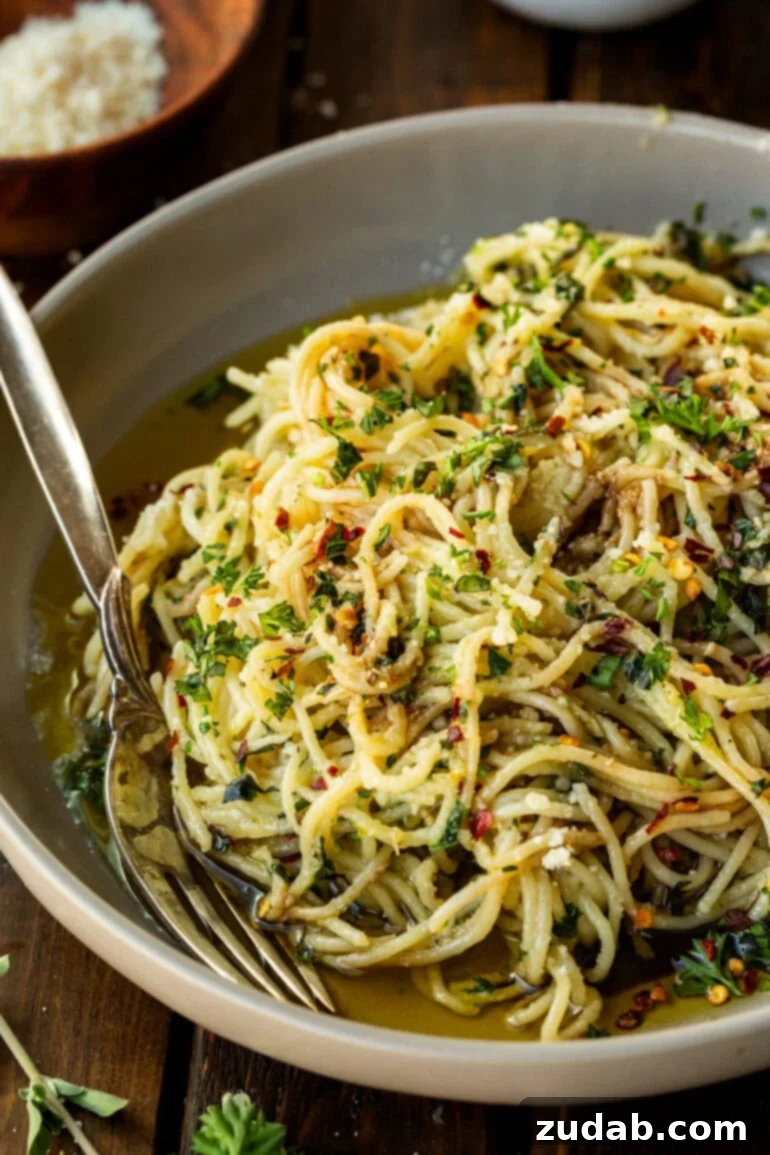
Finished with a delicate sprinkle of freshly grated Parmesan, this classic spaghetti aglio e olio stands as a true celebration of bold, simple ingredients. It’s a dish that effortlessly combines elegance with deep satisfaction, proving once and for all that culinary brilliance doesn’t require complexity. Whether you’re seeking a lightning-fast quick weeknight dinner or a comforting, cozy meal to share with friends, this recipe embodies the timeless principle that less is indeed more. Its irresistible charm and effortless preparation make it a staple you’ll return to again and again.
More Delightful Pasta Recipes for Every Occasion
If you’ve fallen in love with the ease and flavor of Spaghetti Aglio e Olio, you’ll be thrilled to discover more simple yet sensational pasta dishes that bring joy to the dinner table. Explore these other quick and easy recipes from our collection:
- Tomato Basil Angel Hair Pasta
- Lemon Orzo with Parmesan and Peas
- 15 Minute Pesto Pasta
- Italian Sausage and Peppers Penne
- Instant Pot Hamburger Helper
- Creamy Garlic Parmesan Orzo
- Ham and Asparagus Lemon Cream Pasta
Classic Italian Spaghetti Aglio e Olio Recipe
This simple and delicious Italian dish is perfect for a quick weeknight meal. Learn how to make spaghetti aglio e olio with just a few ingredients and enjoy a flavorful sizzle in every bite.
Prep Time: 10 mins | Cook Time: 10 mins | Total Time: 20 mins | Servings: 4
Ingredients
- 2/3 Cup Extra Virgin Olive Oil
- 8 Cloves Fresh Garlic, minced
- 3 teaspoons Fresh Parsley, finely chopped (Note: Use double the amount if using dried herbs.)
- 3 teaspoons Fresh Oregano (or Marjoram), finely chopped (Note: Use double the amount if using dried herbs.)
- 1 ½ teaspoon Fresh Rosemary, finely chopped (Note: Use double the amount if using dried herbs.)
- 4 teaspoons Fresh Basil, finely chopped (Note: Use double the amount if using dried herbs.)
- 2 teaspoon Red Pepper Flakes
- 2 teaspoon Kosher Salt, or to taste
- Balsamic Vinegar, for drizzling
- 1 Pound Fresh Spaghetti, cooked al dente
- 1-2 Tablespoons Fresh Parmesan, grated, for serving
Instructions
You can make the flavorful garlic and oil infusion in one of two ways. Both methods are equally simple and deliver a delicious result!
Toasted Garlic Method (for a Milder, Nutty Garlic Flavor)
- Prepare Herb Mixture: In a shallow, heatproof bowl, combine all the finely chopped fresh herbs (parsley, oregano, rosemary, basil) and red pepper flakes.
- Infuse and Toast Garlic: Heat the olive oil in a small saucepan over medium heat until it shimmers. Add the minced garlic and let it gently toast, stirring occasionally, until it turns a light golden-brown color. Watch carefully to avoid burning, as garlic browns quickly.
- Combine with Herbs: Immediately pour the hot, garlic-infused oil over the herb mixture in the shallow bowl. Stir thoroughly to combine, allowing the hot oil to release the vibrant essential oils from the herbs. Drizzle with balsamic vinegar and sprinkle with kosher salt to taste.
- Toss and Serve: Place the freshly cooked spaghetti (al dente) into a large serving bowl. Pour the prepared sizzling oil and herb mixture over the pasta and toss gently until every strand is beautifully coated. Garnish generously with freshly grated Parmesan cheese and serve hot.
Fresh Garlic Method (for a Sharper, More Pungent Garlic Flavor)
- Prepare Aromatics: In a shallow, heatproof bowl, combine the minced fresh garlic, all the finely chopped fresh herbs (parsley, oregano, rosemary, basil), red pepper flakes, and kosher salt.
- Heat the Oil: In a small saucepan, heat the olive oil over medium heat until it begins to shimmer.
- Pour and Season: Carefully and quickly pour the hot, shimmering oil directly over the garlic and herb mixture in the bowl. The immediate sizzle will be incredibly fragrant! Add a drizzle of balsamic vinegar.
- Mix and Enjoy: Transfer the cooked spaghetti to a large serving bowl. Pour the aromatic, sizzling oil mixture over the pasta and toss to ensure an even coating. Finish with a sprinkle of fresh Parmesan cheese and serve immediately.
Recipe Notes
- If using dried herbs instead of fresh, use approximately half the amount specified for fresh herbs, as dried herbs are more concentrated in flavor.
- Feel free to experiment with your favorite herb combinations. Italian parsley and basil are particularly classic choices.
Nutrition Information (Approximate)
The following nutrition information is an estimation per serving, assuming 4 servings per batch.
- Calories: 518 kcal
- Carbohydrates: 39g
- Protein: 8g
- Fat: 38g
- Saturated Fat: 5g
- Polyunsaturated Fat: 4g
- Monounsaturated Fat: 27g
- Cholesterol: 1mg
- Sodium: 1202mg
- Potassium: 115mg
- Fiber: 3g
- Sugar: 1g
- Vitamin A: 345IU
- Vitamin C: 2mg
- Calcium: 62mg
- Iron: 3mg
Nutrition information is automatically calculated and should only be used as an approximation. Individual results may vary based on exact ingredients and preparation.